While democratic opinion formation relies on citizens receiving vital information from the news, an increasing number of people consistently consume very little of it. To address this concern, we tracked the mobile news consumption of 382 young adults in Switzerland and combined it with survey data of the participants to determine the effect of topical interests, political attitudes, and media consumption habits on news usage. We found that interest in domestic politics was a strong predictor of news consumption. Additional predictors within our 18-25-year-old participant group were age and time spent online. These findings have implications for policymakers; fostering an informed citizenry may be more effective when targeting the underlying interest in politics rather than directly attempting to boost news use.
News consumption is often treated as static behavior, yet situational and temporal factors play a significant role in shaping how individuals consume news throughout their daily lives. Mobile phones have become a driving force of dynamic news habits, especially among younger audiences. This study aims to bridge the gap between static perceptions of news consumption and the dynamic realities of daily mobile usage. To investigate this, we tracked news usage on the mobile phones of 384 young adults in Switzerland over three weeks in 2021, in a period surrounding a national referendum. These data were combined with two surveys at the beginning and end of the tracking period to examine how a political referendum, daily schedules, and browsing habits are related to the amount of mobile news consumption. Using a Bayesian time-lagged model, we found an increase in news consumption on the day of the referendum, and a slight decrease on weekends and during working hours. We also found that participants read more news when they first opened their phones than as a browsing session continued, and that higher news consumption was substantially associated with the use of X/Twitter and Instagram, but only slightly with TikTok.
Previous research on political communication on Russia's most popular social network VK has concluded that most users avoid news by not following legacy-news accounts. In this study, we expand the universe of scrutinized accounts with the most-followed non-legacy-news accounts (>100,000 followers) that regularly publish what we theorize to be 'explicitly political content' (EPC; N = 355). We delineate a typology of six types of EPC accounts, calculate their aggregate follower counts, and determine how many of them were still (1) accessible from Russia and (2) publishing Kremlin-critical content in October 2022. Our findings indicate that non-critical accounts attracted 26 times more followers than Kremlin-critical accounts. Entertainment-focused EPC accounts had seven times more followers than legacy-news accounts. As a result, they became the primary means through which non-critical EPC reached news-avoidant mass audiences. We identify three dimensions through which autocrats can interweave propaganda and entertainment and highlight promising research paths.
The ongoing COVID-19 pandemic has led to an “infodemic” characterized by the widespread dissemination of conspiracy theories and calls for resistance against measures to combat the virus. Despite increased academic attention’s focus on conspiracy theories on Telegram, existing research has two major limitations: (1) a lack of combined examination of the distribution and reception of conspiracy theories, and (2) insufficient understanding of the relationship between the reception of conspiracy messages and political attitudes, conspiracy beliefs, or political engagement. To address these gaps, our study adopts a two-pronged approach, linking the distribution and reception of conspiracy theories and mobilization calls on Telegram while exploring the implications for recipients’ conspiracy beliefs and protest behavior. Our research design includes a manual content analysis of 3,162 Telegram posts from German conspiracy-related channels (Study 1), and a survey of 318 Telegram users in these channels and 320 traditional media users (Study 2). Our results reveal characteristics of Telegram fringe group users that make them susceptible to conspiratorial and mobilizing content, such as anti-system attitudes and a readiness for protest behavior. These findings have broader implications for understanding the role of digital media in the spread of conspiracy theories and the mobilization of resistance during crises, as well as the importance of continued research on the relationship between digital media use, political attitudes, and engagement to mitigate the negative impacts of conspiracy theories and preserve democratic values.
The news media are among the most important sources of information about political events, such as referendums. For young adults, the smartphone has become the main device for accessing news. However, we know little about the factors influencing mobile news consumption and how this consumption is related to political knowledge and political participation. This study investigates the antecedents of young individuals’ smartphone news consumption and how it is correlated with their knowledge about and participation in two referendums in Switzerland. We record the mobile internet usage of 309 young adults and link their digital trace data to survey data. We show that trust in news media and the use of broadcast media are positively correlated with the duration of mobile news consumption. The use of social media leads to more news source diversity. However, we find that the duration of mobile news consumption and news source diversity are not correlated with political knowledge about or participation in the referendum. As interest in politics is also positively correlated with the diversity of news sources used by individual participants, our study supports the idea that attentive audiences use a broader range of news sources to inform themselves about referendums.
The diversification of information sources has reignited the controversy on media-induced fragmentation endangering social integration. The media's capability to set the public agenda and create issues as a common core is a pivotal part of the public sphere and contributes fundamentally to society's cohesion. Algorithm-driven sources like social media that personalize content to the preferences of individuals and their social networks are considered agents of fragmentation of the public sphere. Politically extreme individuals relying on them may be particularly vulnerable to losing touch with society's common core. We employ an innovative operationalization of fragmentation on the individual level: “issue horizons”—comprising issue diversity, top issue focus, and issue overlap—to investigate how different information sources affect fragmentation. In a two-week daily diary, conducted 2016 in Germany, 356 participants named the two most important political issues of each day and reported the issue-specific sources of information. Results show that social media reliance neither increases nor decreases the compatibility of individuals' issue horizons, but news media reliance significantly increases the compatibility of issue horizons among the politically more extreme. Not relying on news media (but rather on social media) means that politically extreme persons are at risk of losing touch with society's mainstream. This attests to the news media's ongoing, indispensable integration function. Using multiple sources of political information—including the news media—appears to be of paramount importance in ensuring that most citizens are aware of the most important issues facing the nation.
Television offers an enticing glimpse into the world, but its perspective is often skewed. When societal groups are systematically excluded from appearing on the screen, they lose the chance to represent their characteristics and interests. Recipients may then form distorted perceptions and attitudes towards those groups. Empirical research on the prevalence of such biases - especially across stations, time, and genre - has been limited by the effort of manual content analyses. We develop and validate a deep-learning based method for measuring age and gender of faces in video material. An analysis of approximately 16 million faces from six years of German mainstream TV across six stations is fused with existing program metadata indicating timing and genre of broadcasts, including advertisements. Multilevel regression models show a consistent and temporally stable discrimination against women and elderly people, along with a double discrimination of elderly women. A significant amount of variation across genres and systematic differences between public and private broadcasters furthermore indicate previously undocumented heterogeneity in the representation of societal groups on TV. We discuss potential implications of a genre-specific differentiation against the backdrop of societal trends.
Diversity is a crucial precondition for a democratic public discourse. In today's high-choice media environments, exposure to diverse news is largely determined by individuals' personal selection. Yet these decisions are increasingly shaped by online platforms, whose curation mechanisms may serve to expand or contract the diversity of encountered content. In a major extension of existing research, we show that positive short-term effects of platforms mask detrimental long-term effects. Drawing on a four-month tracking dataset and a comprehensive content analysis covering the online news consumption of over 10,000 German citizens, we demonstrate that even though short-term usage of platforms uniformly increases exposure diversity, long-term reliance can lead to decreases. In addition, platforms vary in their influences: News aggregators are beneficial to exposure diversity, while Twitter and search engines have a limiting effect; Facebook offers no significant influence.
Social media (SM) are often regarded drivers of personalized echo chambers in which only ideas resonante that individuals already hold, leading to more extreme opinions and intensified opinion expression. However, recent theorizing and evidence has cast doubts on the universal applicability of the echo chamber metaphor, pointing out that communication effects on opinion expression are much more complex than the metaphor suggests. Using the refugee crisis in Germany as a background, the current study challenges four implicit premises of the echo chamber metaphor empirically. The findings show a more complex picture than the metaphor implies: (1) Ignoring other information sources beyond SM may lead to severe misinterpretations; seeming evidence for echo chambers disappears after controlling for news media use. (2) SM reliance does not generally stimulate opinion expression. (3) Attitude extremity moderates the effect of SM reliance, suggesting that people with more extreme views are susceptible to echo chamber effects. (4) Attitude position on the issue-at-hand moderates the effect of SM reliance, which suggests that echo chambers do not completely shield their users from the public discourse. We propose the Echo Chamber Continuum (ECCo) Model to stimulate developing the echo chamber metaphor into a theory suitable for studying opinion formation.
The pervasive use of mobile information technologies brings new patterns of media usage, but also challenges to the measurement of media exposure. Researchers wishing to, for example, understand the nature of selective exposure on algorithmically driven platforms need to precisely attribute individuals' exposure to specific content. Prior research has used tracking data to show that survey-based self-reports of media exposure are critically unreliable. So far, however, little effort has been invested into assessing the specific biases of tracking methods themselves. Using data from a multimethod study, we show that tracking data from mobile devices is linked to systematic distortions in self-report biases. Further inherent but unobservable sources of bias, along with potential solutions, are discussed.
News diversity in the media has for a long time been a foundational and uncontested basis for ensuring that the communicative needs of individuals and society at large are met. Today, people increasingly rely on online content and recommender systems to consume information challenging the traditional concept of news diversity. In addition, the very concept of diversity, which differs between disciplines, will need to be re-evaluated requiring a interdisciplinary investigation, which requires a new level of mutual cooperation between computer scientists, social scientists, and legal scholars. Based on the outcome of a multidisciplinary workshop, we have the following recommendations, directed at researchers, funders, legislators, regulators, and the media industry: 1. Do more research on news recommenders and diversity. 2. Create a safe harbor for academic research with industry data. 3. Optimize the role of public values in news recommenders. 4. Create a meaningful governance framework. 5. Fund a joint lab to spearhead the needed interdisciplinary research, boost practical innovation, develop. reference solutions, and transfer insights into practice.
This volume offers insights into current research on the reception and effects of the digital revolution in public communication in the field of communication science. The contributions it contains deal with questions about the use of news on Facebook, the articulation of opinions on the public Net and the influencing of opinions on social media (e.g. by influencers). They document the current state of research and knowledge in this field, answer current open questions on an empirical basis and provide suggestions for future research.With contributions byPatrick Weber, Frank Mangold, Miriam Steiner, Melanie Magin, Birgit Stark, Pascal Jürgens, Anna Sophie Kümpel, Larissa Leonhard, Veronika Karnowski, Claudia Wilhelm, Ines Engelmann, Stefan Geiß, German Neubaum, Manuel Cargnino, Davina Berthelé, Priska Breves, Helene Schüler, Benedikt Spangardt, Kerstin Thummes
Die Diversifikation politischer Informationsangebote wird vielfach als Gefahr für den gesellschaftlichen Zusammenhalt und die kollektive demokratische Selbstbestimmung betrachtet. Angebote, die Nachrichten automatisiert und basierend auf dem Onlineverhalten und dem sozialen Onlinenetzwerk personalisieren (z. B. Facebook), stehen im Verdacht, Fragmentierung Vorschub zu leisten. Personen mit extremen politischen Einstellungen gelten als besonders gefährdet, den Anschluss an die Gesamtgesellschaft zu verlieren, z. B. wenn sie in eine „Echokammer“ geraten. Anhand einer neuartigen Operationalisierung von Themenfragmentierung auf der Individualebene prüfen wir, ob die Nutzung solcher Informationsangebote - bei allen oder bei den politisch Extremeren - die Anschlussfähigkeit individueller Themenhorizonte verringert (geringere Themenvielfalt, Fokussierung und Themenschnittmengen mit anderen Personen) und damit zur Fragmentierung der Gesellschaft beiträgt. Grundlage ist eine 14-tägige Tagebuchstudie, in der die 333 Teilnehmer täglich Auskunft darüber gaben, welche beiden politischen Themen sie am wichtigsten fanden und aus welchen Quellen sie sich darüber unterrichtet hatten. Demnach verringern soziale Medien als Informationsquellen die Anschlussfähigkeit individueller Themenhorizonte nicht. Allerdings vergrößert die Nutzung von traditionellen Nachrichtenmedien die Anschlussfähigkeit. Das gilt umso mehr, je extremer die politische Einstellung des Nutzers ist. Wir diskutieren, was das für die Selbstbestimmung der Individuen und der Gesamtgesellschaft in der digitalen Welt bedeutet.
 Andreas Jungherr合作论文数University of Bamberg20
 Birgit Stark合作论文数16
 Melanie Magin合作论文数Dept Sociol & Polit Sci, Norwegian Univ Sci & Technol12
 Stefan Geiß合作论文数Dept Sociol & Polit Sci, Norwegian Univ Sci & Technol6
 Harald Schoen合作论文数Institut für Politikwissenschaft, Johannes Gutenberg-Universität Mainz6
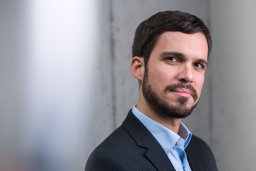 Daniel Vogler合作论文数Res Ctr Publ Sphere & Soc, Univ Zurich3
 Adrian Rauchfleisch合作论文数Grad Inst Journalism, Natl Taiwan Univ3
 Mark Eisenegger合作论文数Centre for Research on the Public Sphere and Society, University of Zurich3
 Katharina Anna Zweig合作论文数1Julia Kling合作论文数1Theresa Züger合作论文数1Thomas Koch合作论文数1Morley Weston合作论文数1Beata Klimkiewicz合作论文数1
 Simon Kruschinski合作论文数Johannes Gutenberg Univ Mainz1Lisa Schwaiger合作论文数Universität1Miriam Steiner合作论文数1
 Jan Nehring合作论文数DFKI GmbH, Language Technol Lab, Alt Moabit 91c, D-10559 Berlin, Germany1
 Sanne Vrijenhoek合作论文数University of Amsterdam, Amsterdam, Netherlands1
 Lucien Heitz合作论文数University of Zurich1
 Suzanne Tolmeijer合作论文数Vrije Univ Amsterdam, Dept Comp Sci, NL-1081 HV Amsterdam, Netherlands1Wolfgang Schulz合作论文数1
 Marc P. Hauer合作论文数Algorithm Accountability Lab, Department of Computer Science, Technische Universität Kaiserslautern, Kaiserslautern, Germany1Frank Mangold合作论文数Dept Commun, Univ Hohenheim1
 Anna Schnauber-Stockmann合作论文数Dept Commun, Johannes Gutenberg Univ Mainz1
 Christian Katzenbach合作论文数Alexander von Humboldt Inst Internet & Soc1
 Marko Bachl合作论文数Fachgebiet Kommunikat Wissensch Insbesondere Komm, Univ Hohenheim1
 Christine E. Meltzer合作论文数Dept Commun, Johannes Gutenberg Univ Mainz1
 Pablo Jost合作论文数Johannes Gutenberg Univ Mainz1
 Judith Moeller合作论文数Univ Amsterdam1
 Goran Radanovic合作论文数Ecole Polytechnique Federale de Lausanne Lausanne1
 Oliver Posegga合作论文数1
 Patrick Weber合作论文数1
 Aleksandra Gabryszak合作论文数German Research Center for Artificial Intelligence1
 Guy Shani合作论文数Ben Gurion University1
 Ye Sun合作论文数1
 Baohua Zhou (周葆华)合作论文数Shanghai Key Laboratory of Data Science, Fudan University;School of Journalism, Fudan University1
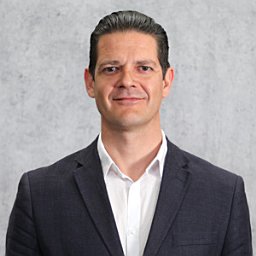 Matthias Hofer合作论文数1
 Abraham Bernstein合作论文数Department of Informatics, University of Zurich1
 Helena Bilandzic合作论文数Faculty of Philosophy and Social Sciences, Augsburg University1
 Aljoscha Burchardt合作论文数German Research Center for Artificial Intelligence (DFKI), Language Technology (LT), Berlin, Germany1
 Wiebke Loosen合作论文数Institut für Journalistik und Kommunikationswissenschaft, Universität Hamburg1
 Wouter Van Atteveldt合作论文数Cline Center for Advanced Social Research, College of Liberal Arts and Sciences, University of Illinois at Urbana-Champaign1
 Christian Baden合作论文数1
 Michael Scharkow合作论文数Institute of Communication Studies, University of Hohenheim1
 Holger Schramm合作论文数Institut für Publizistikwissenschaft und Medienforschung, Universität Zürich1
 Nava Tintarev合作论文数Bournemouth University1
 Carsten Wunsch合作论文数Institut für Kommunikations- und Medienwissenschaft, Universität Leipzig1
 Florian Toepfl合作论文数1




