ABSTRACT: “Socialism is the name of our desire,” Dissent’s founders stated in 1954. It was an ethical and moral demand, a compass rather than a map. It was a “vision,” they wrote, “that gives urgency to . . . criticism of the human condition in our time.” One purpose for Dissent was to rescue the idea of socialism from those who claimed it for authoritarian ends. And that points to a problem with our vocabulary. Across the globe, a few big concepts define political orientations: liberalism, socialism, capitalism. But each of these categories contains multiple meanings, including internally contradictory ones. There are struggles between ideological camps, of course, but there are also struggles within them over how to define these categories for the public. The ways that people understand the meaning of political words is, alas, derived less from the work of intellectual magazines and more from experiences with politicians who claim them.
ABSTRACT: Working on the foreign policy advisory group for the Bernie Sanders primary campaign in 2019 and 2020 changed the way that I process and think about politics. I saw up close the challenges that candidates face in channeling popular frustrations and demonstrating that they have the ability to address them. they have to bring together multiple majorities: in primaries, the general election, and Congress. They have to create the public that they need, though of course they do not do so under conditions of their own choosing.
ABSTRACT: At the 1968 Democratic National Convention, Chicago police (as well as the National Guard and regular army troops) responded to protests with a riot of their own. They beat protesters, chanting “kill, kill, kill.” Along Michigan Avenue, antiwar activists were clubbed and arrested. “The policeman isn’t there to create disorder,” Mayor Richard Daley announced as he spoke to reporters, before making a telling slip of the tongue: “The policeman is there to preserve disorder.” Delegates on the convention floor fought each other too.
ABSTRACT: During his five years in office, Andrés Manuel López Obrador, the president of Mexico, has rarely left the country. But in September 2023, AMLO, as he is commonly known, made a trip to Colombia and Chile, Latin American countries that are also currently governed by the left. In Colombia, AMLO met with President Gustavo Petro and participated in the Latin American and Caribbean Conference on Drugs, where Petro called for an end to the failed strategy of “viewing drugs as a military problem and not as a health problem for society.” AMLO said that preserving family unity and combating poverty are essential to that fight.
This article discusses efforts by the American Federation of Labor (AFL) to promote non-Communist trade unions in Latin America during the early Cold War. A great deal of scholarship has shed light on the AFL's activities in Europe in support of anti-Communist labor organizations. This article shifts the focus to Latin America, tracing both the similarities and the differences. Although labor unions in Latin America were weaker than those in Europe, the U.S. government and the AFL still considered it essential to weaken the influence of Communism in Latin American trade union confederations. In the first decade after 1945, they provided support to labor unions that were compatible with their vision for the postwar world. The amount of funding provided to European organizations by the AFL was much larger than the money transferred to Latin American unions, but it was enough to influence the politics of labor groupings and to counter Soviet-dominated workers’ federations.
Abstract:Because of the echoes in our times of the conditions that produced Cold War liberalism, it should not surprise us that recent years have brought a renewed interest in the tradition. Today, its inheritors warn ominously of the growing threats from the authoritarian right. But they are also concerned about the left’s drift toward a rejection of liberalism. The war in Ukraine has further enlivened their coalition. What should be made of this revival?
In recent years, historians have been in increased demand to use their expertise to help understand contemporary events. The forces that are driving news outlets and podcasts to enlist historians for their perspectives on the present are also drawing students into our college classes. This article explores how courses on contemporary US history can use students' desire for historical perspectives on their long now to teach them more broadly about the historian's craft. Working with and against the conceit of the “now,” courses on contemporary US history can provide students a novel way to learn historical theories and methods, identify and work with primary sources, interrogate periodization, and challenge different modes of ahistoricism. Properly conceived and executed, histories of the present offer a challenge to presentism by denaturalizing the familiar.
abstract:I am grateful to Aziz Rana for his thoughtful essay on left internationalism. I accept most of his arguments. I agree strongly that it is essential for those on the left to stand in opposition to both imperialism and authoritarianism, while also doing the work of thinking through how to produce conditions of greater global justice
Since 2017, Matt Duss has served as the foreign advisor to Senator Bernie Sanders. From that position, Duss, who has a background in U.S.-Middle East policy, has been able to draw attention to issues -- such as how U.S.-supplied arms to Saudi Arabia are contributing to humanitarian catastrophe in Yemen -- that often go unchallenged. But his path to his current position was an unusual one. In this interview, which has been edited for length and clarity, we talk about how his background informs his thinking, what the Biden administration is doing well and where it should be doing better, and how to build a more robust infrastructure for progressive foreign policy.
The Contradictions of AMLO Humberto Beck (bio) and Patrick Iber (bio) Click for larger view View full resolution AMLO supporters attend the Third State of the Union Report on December 1, 2021, in Mexico City. (Manuel Velasquez/Getty Images) [End Page 108] On December 1, 2021, Mexico City's central public square, the Zócalo, began to fill with supporters of President Andrés Manuel López Obrador. It had been two years since there had been a public gathering of this size. Buses arrived from around the country, some organized by municipalities governed by AMLO's party, Morena, and some by labor unions. After hours of musical performances, the president appeared. His supporters were happy to see someone that they looked up to both as a politician and as a moral authority. In his speech, AMLO highlighted the government's signature policies and plans for the future. "In three years," he said, "more than ever before, the mentality of the people has changed, and that is the most important thing of all." While AMLO's supporters celebrated and the president touted his respect for the Constitution, a much smaller group had gathered about ten miles from the city center. Outside the gates to the Centro de Investigación y Docencia Económicas, students had organized an occupation in protest of the government-appointed rector who has led the institution since November. CIDE is a prestigious public university that focuses on training students in the social sciences. While the Universidad Nacional Autónoma de México has more than 200,000 students, CIDE has just 400. It was founded in 1974 under left-wing nationalist President Luis Echeverría to train experts who could advise him on economic policy. In the 1990s, however, it became known for professors who completed doctorates abroad, which, in some cases, included training in market economics. AMLO alleges that during the neoliberal era that he so frequently criticizes, the institution "ended up abandoning public service." The CIDE students don't see it that way. And when the new rector arrived last fall and contravened established practices in the university regarding faculty promotion and retention, they went on strike. Many worry that in an environment in which AMLO tends to equate public service with support for his government, there is real danger to academic freedom for those involved in research or advocacy that diverges from the government's [End Page 109] plans and policies. These fears are connected to other attacks on academia. Earlier in 2021, the Mexican government drew international criticism over its handling of a corruption case against several scientists who had received state support; the government overruled court decisions that favored the scientists and threatened them with severe laws normally used against drug traffickers. Students and faculty alike worry that AMLO's administration has placed academics among its targets—and that it is using the politics of austerity to attack institutions that he perceives as hostile to his aims. AMLOFest and the student occupation at CIDE were hardly equal in scale, and the contrast between them suggests something of the nature of AMLO's government. Although the president continues to enjoy approval levels around 60 percent, his disapproval ratings have increased from a low of 14 percent in 2019 to 39 percent this February. While the government retains its popularity among broad swaths of the population, the president's actions have alienated an increasing number of voters. AMLO judges almost everything according to how it affects his image. He has boasted during one of his morning press conferences that his net favorability ratings are second only to Narendra Modi's on the world stage, apparently without awareness that it might be an unflattering comparison. AMLO reserves for himself the right to decide who belongs to the authentic people, and who is part of the self-interested elite. In his with-me-or-against-me logic, critics—including not just academics but also journalists and activists for various causes— are presented as motivated by the defense of their privileges and the old regime. Many of AMLO's supporters echo these criticisms; pro-Morena journalist Gibrán Ramírez dismissed the occupation of CIDE as...
 humberto beck合作论文数Hist, Colegio Mexico5Carlos Bravo Regidor合作论文数4Ramzi Kassem合作论文数1Jennifer Ratner-Rosenhagen合作论文数1Susie Linfield合作论文数1
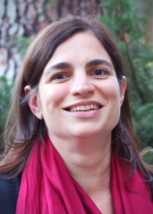 Aslı Ü. Bâli合作论文数The Promise Institute for Human Rights, School of Law, University of California, Los Angeles;Center for Near Eastern Studies, University of California, Los Angeles1
 Adom Getachew合作论文数Committee on International Relations, The University of Chicago1
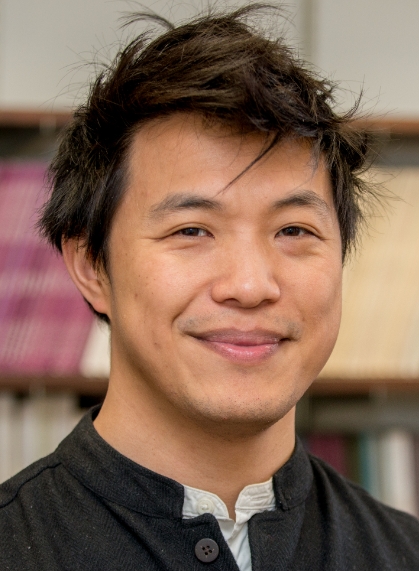 Darryl Li合作论文数Department of Anthropology, The University of Chicago1




