NERC TPL Standards govern contingency design to ensure system reliability and security. These transmission reliability studies can be leveraged by transmission operators to prioritize their contingencies and design mitigation solutions or Remedial Action Schemes (RAS). With this objective, this research was developed in collaboration with a transmission operator and proposes a reliability-driven framework to quantify the impact of each contingency by quantifying load at risk and expected energy not served. The work serves twofold. First, the results provide a rank of all TPL contingencies from most to least critical. Second, it is applied directly to design energy storage to mitigate this impact, serving as a sizing and placement method. Two energy storage applications are derived: (1) addressing the consequential load at risk through potential microgrids, and (2) addressing the non-consequential load at risk as a non-wires alternative.
Uncertainty in investment costs, particularly for emerging technologies like energy storage, and in hydroelectric power availability, due to factors such as climate variability, pose significant challenges for effective capacity expansion planning (CEP). Traditional CEP studies are generally deterministic, assuming grid planners have perfect foresight into future conditions. In practice, however, grid planners can only estimate the probabilities of these factors, as they are inherently uncertain. Stochastic programming (SP) provides a more realistic approach by incorporating this uncertainty into CEP, allowing for more adaptive and resilient investment strategies. This paper employs a 43-zone model of the Western Interconnection to analyze the impact of hydroelectric power output and storage capital expenditure (CAPEX) uncertainty on investment decisions. Key findings indicate that: (1) storage investments are positively correlated with lower storage costs, while investments in gas, solar, and wind are inversely correlated with decreasing storage costs; (2) lower hydropower output is associated with increased wind investments; and (3) storage plays a crucial role in flexible investments made in the initial time period (2030) within the stochastic model. Additionally, stochastic planning yields $242 million in savings over a 15-year planning horizon compared to deterministic approaches.
Extreme weather events pose significant risks to power grid stability due to their severe consequences and potential for widespread failures. Energy storage systems hold great potential for enhancing grid resilience against such events by providing reliable power during peak demand periods. However, accurately quantifying the size, location, and investment costs of new energy storage assets is a complex task, as energy storage planning decisions depend on the investment choices of other generation technologies and the integration new transmission projects. This paper presents a novel capacity expansion planning framework that simultaneously optimizes investments in energy storage, generation, and transmission, determining their optimal size, location, and type, while incorporating extreme weather events into long-term planning. More specifically, our stress-event-informed planning framework integrates the impact of heatwaves and wildfires into the planning process, identifying least-cost investment solutions that comply with policy goals and enhance grid resilience. The proposed framework employs machine-learning-based modeling to project heatwave-induced loads and performance-based risk assessment to evaluate wildfire-driven transmission line derates. Using industry-standard datasets to accurately represent the transmission topology of the Western Interconnection (WI) system, the proposed framework is applied to the WI 40-zone system, with investment decisions reported for the years 2030, 2035, and 2040. Simulation results reveal that with just a 10% increase in investment costs, resilience against extreme events can be significantly improved, with investment decisions heavily favoring energy storage, particularly 4-hour energy storage systems.
Following Hurricane Maria, the restoration of Puerto Rico’s transmission and distribution system revealed a significant difference in customer recovery. Last-mile customers, i.e., those located in distant areas were deprived of electricity for up to a year during the recovery process. The purpose of this work is to explore differences in power system recovery when maximizing customers served (MCS) as opposed to maximizing load served (MLS). This study leverages the optimizer Recovery Simulator and Analysis (RSA) to achieve this. System recovery evaluates Customer Hours of Lost Electricity Service (CHoLES) and compares. Results reveal that while the time to recover 100% of the customers is unchanged, the recovery time to restore 90% of the customers, which is the metric used to measure recovery time for major events, is improved. Study results suggest that the recovery objective selected can have significant impact on how quickly a majority of customers are recovered.
El Estudio de Resiliencia de la Red de Puerto Rico y Transiciones a Energia 100% Renovable (PR100) es un analisis integral basado en amplios aportes de las partes interesadas sobre posibles caminos para que Puerto Rico alcance su meta de 100% de energía renovable para 2050. PR100 fue un esfuerzo integrado que se baso en experiencia y capacidades de los laboratorios nacionales contribuyentes que exploraron posibles caminos para que Puerto Rico logre su objetivo de 100% de energía renovable en el largo plazo (para 2050), aumente la confiabilidad y la resiliencia en el plazo inmediato (dentro de los proximos anos), y trabajar hacia la justicia energetica. El proposito del estudio es brindar apoyo a las decisiones e informar las decisiones de inversion para los implementadores de la transicion energetica de Puerto Rico. See NREL/TP-6A20-88384 for the English translation of this report.
Amid the urgency to decarbonize power systems, while mitigating extreme weather events, capacity expansion models can play a vital role in reliably planning the expansion of power systems and facilitating the integration of renewable energy (RE) sources. Optimizing capacity expansion generally involves selecting surrogate representative days from forecasts of load and the generation profiles of variable RE resources. To properly select those representative days, we propose a novel input-based clustering approach that utilizes three unique operational characteristics: load shedding, renewable curtailment, and transmission congestion. The proposed method allows for more robust and cost-effective capacity planning. The method is validated using a capacity expansion model and a production cost model aligned with California Independent System Operator (CAISO)’s decarbonization goals, and results in significant cost reduction and substantial decreases in load shedding.
High-impact low-probability (HILP) events can wreak havoc on electric power systems without appropriate preparedness. In this paper, the recent development of a tool, named Recovery Simulator and Analysis (RSA), is described and demonstrated. While there are many issues to consider when recovering electric power systems, the focus of RSA is on the coordination of transmission and subtransmission recovery with generation dispatch to minimize unserved energy. RSA focuses on recovery simulation to evaluate resilience as part of a planning process. RSA is demonstrated on an approximately 1400-bus Puerto Rican power system for 100 simulated instances of Hurricane Maria. Analysis of the recovery determines how many lines are critical to the recovery and which loads may experience delayed recovery. The results demonstrate the potential uses of RSA for identifying recovery decisions with low unserved energy and for identifying assets critical to recovery which can then be hardened prior to a HILP event.
Power restoration is an urgent task after a black-out, and recovery efficiency is critical when quantifying system resilience. Multiple elements should be considered to restore the power system quickly and safely. This paper proposes a recovery model to solve a direct-current optimal power flow (DCOPF) based on mixed-integer linear programming (MILP). Since most of the generators cannot start independently, the interaction between black-start (BS) and non-black-start (NBS) generators must be modeled appropriately. The energization status of the NBS is coordinated with the recovery status of transmission lines, and both of them are modeled as binary variables. Also, only after an NBS unit receives cranking power through connected transmission lines, will it be allowed to participate in the following system dispatch. The amount of cranking power is estimated as a fixed proportion of the maximum generation capacity. The proposed model is validated on several test systems, as well as a 1393-bus representation system of the Puerto Rican electric power grid. Test results demonstrate how the recovery of NBS units and damaged transmission lines can be optimized, resulting in an efficient and well-coordinated recovery procedure.
El estudio de Resiliencia y Transiciones a 100% Energia Renovable de Puerto Rico (PR100) es un estudio de 2 anos de la Oficina de Movilizacion de la Red del Departamento de Energia y seis laboratorios nacionales para analizar exhaustivamente las rutas dirigidas por las personas interesadas hacia un futuro de energia limpia en Puerto Rico. En el Ano 1 del estudio, el equipo PR100, creo y analizo los modelos que alcanzan las metas de energia renovable para Puerto Rico y los objetivos de resiliencia energetica a corto y largo plazo. Este informe, que resume el progreso en el Ano 1, proporciona las consideraciones que pueden informar posibles decisiones de fondos e implementacion potenciales por parte de las agencias federales y locales clave y partes interesadas. El resumen de este informe sigue a la publicacion en julio 2022 de un Informe de Seis Meses de Progreso de PR100. (en ingles y espanol), asi como webinarios publicos en febrero 2022 para lanzar el estudio y julio 2022 para presentar la actualizacion a 6 meses. Un informe final por escrito y visuales por la web seran publicados a finales del 2023. Todas las publicaciones y eventos publicos asociados con el estudio estaran disponibles en ingles y espanol. This report is also available in English https://www.nrel.gov/docs/fy23osti/85018.pdf.
The Puerto Rico Grid Resilience and Transitions to 100% Renewable Energy Study (PR100) is a 2-year study by the U.S. Department of Energy's (DOE's) Grid Deployment Office and six national laboratories to comprehensively analyze stakeholder-driven pathways to Puerto Rico's clean energy future. In Year 1 of the study, the PR100 team rigorously modeled and analyzed scenarios that meet Puerto Rico's renewable energy targets and achieve short-term recovery goals and long-term energy resilience. This report, which summarizes PR100 progress in Year 1, provides considerations that can inform potential funding and implementation decisions by key federal and local agencies and stakeholders. The summary report follows the publication in July 2022 of a PR100 Six-Month Progress Update (in English and Spanish), as well as public webinars in February 2022 to kick off the study and in July 2022 to present the 6-month update. A final written report and web-based visuals will be published in late 2023. All publications and public events associated with the study will be available in Spanish and English. This report is also available in Spanish https://www.nrel.gov/docs/fy23osti/85144.pdf.
This work proposes a methodology for estimating recovery times for transmission lines and substations, and is demonstrated on a real-world 1269-bus power system model of Puerto Rico under 20 hurricane scenarios, or stochastic realizations of asset failure under the meteorological conditions of Hurricane Maria. The method defines base recovery times for system components and identifies factors that impact these base values by means of multipliers. While the method is tested on transmission lines and substation failures due to hurricanes, it is based on a generic process that could be applied to any system component or event as a general recovery time estimation framework. The results show that given the two failure modes under study (transmission towers and substations), transmission towers appear to have a greater impact on recovery time estimates despite substations being given longer base outage times. Additionally, average recovery times for the simulated hurricanes across 20 scenarios is 28,000 work crew days.
Puerto Rico se ha comprometido a satisfacer sus necesidades de electricidad con un 100% de energia renovable para 2050, junto con el cumplimiento de objetivos intermedios del 40% para 2025, el 60% para 2040, la eliminacion gradual de la generacion a base de carbon para 2028, y una mejora del 30% en la eficiencia energetica para 2040, segun lo establecido en la Ley de Politica Publica Energetica de Puerto Rico (Ley 17). Desde los huracanes Irma y Maria en septiembre de 2017, DOE y sus laboratorios nacionales han proporcionado a las partes interesadas del sistema energetico de Puerto Rico herramientas, adiestramiento y apoyo de modelaje para permitir la planificacion y el funcionamiento de la red electrica con mas resiliencia frente a nuevas interrupciones. El 2 de febrero de 2022, DOE, FEMA y seis laboratorios nacionales lanzaron el Estudio de Resiliencia de la Red Electrica de Puerto Rico y Transicion a la Energia 100% Renovable (PR100), de dos anos de duracion, para llevar a cabo un analisis exhaustivo de las vias impulsadas por las partes interesadas para el futuro energetico de Puerto Rico. El analisis energetico, solido y objetivo, comprende cinco actividades, con enfasis en la confiabilidad del sistema electrico, la resiliencia y la planificacion de la generacion. Esta presentacion se realizo en un seminario web publico el 21 de julio del 2022, proporcionando un resumen general del progreso en los primeros seis meses del Estudio, incluyendo la presentacion de cuatro escenarios iniciales definidos mediante un rol activo de las partes interesadas. This is the Spanish translation of NREL/PR-6A20-83431.
 Marcelo Elizondo合作论文数pacific northwest national laboratory12
 Xiaoyuan Fan合作论文数Key Laboratory of Northwest Water Resource, Environment and Ecology, Xían University of Architecture and Technology12
 Nate Blair合作论文数8Amanda Wachtel合作论文数8James Elsworth合作论文数8Prateek Joshi合作论文数8Haiku Sky合作论文数8Robin Burton合作论文数8Tom Harris合作论文数8Jeff Deason合作论文数Lawrence Berkeley Natl Lab8
 Vishvas Chalishazar合作论文数Pacific Northwest National Laboratory8
 Murali Baggu合作论文数Idaho Univ.;c;Idaho Univ.8
 Manajit Sengupta合作论文数8
 Harvey Cutler合作论文数Colorado State University Fort Collins8
 Peter Cappers合作论文数Environmental Energy Technologies8
 Matthew Lave合作论文数Dept. of Mechanical & Aerospace Eng., University of California, San Diego8
 Clayton Barrows合作论文数8Martin Shields合作论文数Colorado State University;Pennsylvania State University;Colorado State University, Pennsylvania State University8Margaret Pigman合作论文数7Michele Chait合作论文数7
 Xinda Ke合作论文数7Lawrence Paul Lewis合作论文数6Paritosh Das合作论文数6John Murphy合作论文数5Cameron Weiner合作论文数5Cody Newlun合作论文数5Joseph McKinsey合作论文数5Meng Zhao合作论文数5
 Vahan Gevorgian合作论文数National Renewable Energy Laboratory5Patrick D. Royer合作论文数5
 Fernando Bereta Dos Reis合作论文数5Jeremy F Keen合作论文数National Renewable Energy Laboratory5
 Jaemo Yang合作论文数Natl Renewable Energy Lab5
 Surya Chandan Dhulipala合作论文数National Renewable Energy Laboratory (NREL)5Olga Hart合作论文数4James Morris合作论文数4
 Kaveri Mahapatra合作论文数School of Electrical Engineering and Computer Science, Pennsylvania State University, State College, PA, USA4
 C. Birk Jones合作论文数Sandia Natl Labs4
 Yilu Liu合作论文数Min H. Kao Department of Electrical Engineering and Computer Science, Tickle College of Engineering, University of Tennessee, Knoxville;Center for Ultra-Wide-Area Resilientelectric Energy Transmission Networks, University of Tennessee, Knoxville4Ben Ollis合作论文数3Sydney P. Forrester合作论文数3
 Michael Abdelmalak合作论文数Department of Electrical and Biomedical Engineering, University of Nevada3
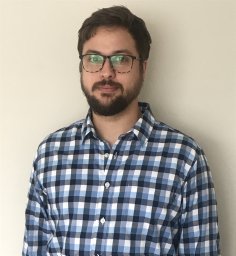 Thomaz Carvalhaes合作论文数Oak Ridge Natl Lab, Geospatial Sci & Human Secur Div3
 Saptarshi Bhattacharya合作论文数Rensselaer Polytech. Inst.;c;Rensselaer Polytech. Inst.3
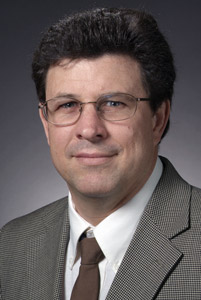 James D. Mccalley合作论文数Department of Electrical & Computer Engineering, College of Engineering, Iowa State University3P. K. Das合作论文数2Gabriel Zuckerman合作论文数2Richard Garrett合作论文数2Daniel Thom合作论文数2




