Thailand’s Deep South has been embroiled in exacerbated insurgency since 2004. In 2025 the region is experiencing an upsurge in violence. How did this conflict begin? Can it be diminished or concluded? This paper argues that the Thai state has possessed insufficient legitimacy for its peace policies to end the insurrection. Indeed, Thailand has followed an illiberal peacebuilding agenda in the Deep South. This paper then examines the conflict, analyzes to what extent it might continue, looks at potential methods to diminish it, and offers a conclusion.
This study interrogates the concept of Thailand's 'Lower North', asking whether the region possesses a singular political identity and examining the roles played by dynastic powerbrokers within each province. It argues that unlike the 'Upper North', the Lower North lacks any particular region-centred heritage and political identity. The Lower North's apparent peripheral status has appeared to make it either an appendage of Bangkok or of Chiangmai. In recent years, politicians from the Lower North have tended to stress either provincial (rather than regional) identity or 'pork barrel' materialist politics. The political cultures of most Lower North provinces remain dominated by 'strongmen' rather than by well-rooted political parties.
In 2025 subnational contestation and violence are alive and well in Southeast Asia in the form of continuing conflicts within at least five countries in the Southeast Asian region. This Special Issue takes a look at these crises, why they exist, what peace efforts have been tried, and potential paths to achieving conflict resolution and transformation of conflictual relationships. This Introduction offers a review of literature on peacebuilding particularly in Southeast Asia. Notably, peace is highly relevant in Southeast Asia because, though the region has become prosperous economically, greater stability necessitates that states work towards resolving civil wars, insurgencies, and people’s grievances. Peacebuilding can also facilitate improving the human security of peoples living in Southeast Asia’s conflict zones in terms of their standard of living as well as their access to health, education, and other areas. Moreover, this Introduction emphasizes how peacebuilding is a concept entangled with legitimation, recognition, redistribution and geopolitics. At the same time, there can be liberal peacebuilding and illiberal peacebuilding—both have been tried in Southeast Asia. Furthermore, the Introduction reflects on efforts by asean (the Association of Southeast Asian Nations) to help resolve conflicts in the region. It then summarizes the case-study articles in this Special Issue. In sum, this Introduction prefaces the Special Issue’s attempt to offer comparisons and contrasts of peacebuilding in Southeast Asia as well as offer hope that the cases discussed herein can provide lessons-learned in the difficulties of peacebuilding through Southeast Asian experiences so as to help others far and wide.
Thai political science scholarship has traditionally concentrated on democracy, national politics, and electoral dynamics, focusing predominantly on regions such as the metropolitan periphery, the Northeast, the Upper North. Conversely, the Lower North remains significantly understudied and is frequently misclassified within adjacent regions, resulting in a fragmented understanding of its distinct political landscape. Consequently, there is lack of a systematic analytical framework to comprehensively analyze political developments specific to this area. This study systematically reviews 695 publications from 1997 to 2024, retrieved from Scopus, Sage Journals, ThaiJo, and the King Prajadhipok’s Institute database, to examine how the Lower North has been analyzed in political research. The study identifies two main objectives: 1) to map the development of political research on the Lower North over the past 27 years, and 2) to highlight key gaps and underexplored themes that constrain understanding of the region’s politics. Findings reveal that since 2006, scholarly attention has largely concentrated on political behavior, particularly electoral patterns and voting strategies. Concurrently, research on political institutions, public administration, sociopolitical movements, and resistance groups has expanded significantly. However, foundational issues—such as economic structures, capital flows, historical influences, local power dynamics, and capitalist networks—remain notably understudied. This imbalance has produced a fragmented understanding of the region, privileging event-driven analyses over structural explanations of power and capital networks. The study contributes by proposing an agenda for future research that emphasizes structural political economy, balanced provincial representation, methodological diversity, and policy-relevant institutional analysis, positioning the Lower North as a crucial site for understanding Thailand’s evolving political landscape.
 Aurel Croissant合作论文数Institut für Politische Wissenschaft, Universität Heidelberg21
 Elfed Lewis合作论文数Department of Electronics & Computer Engineering, Faculty of Science & Engineering, University of Limerick;Optical Fibre Sensors Research Centre, University of Limerick;Limerick Digital Cancer Research Centre, University of Limerick20
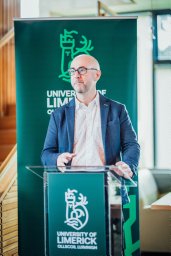 Colin Fitzpatrick合作论文数Optical Fibre Sensors Research Centre, University of Limerick19
 David Kuehn合作论文数GIGA German Institute of Global and Area Studies, Hamburg, Germany16Napisa Waitoolkiat合作论文数12
 Philip Lorenz合作论文数Heidelberg Univ12
 Gerard Dooly合作论文数Department of Electronic & Computer Engineering, University of Limerick10Srisompob Jitpiromsri合作论文数7E. Hawe合作论文数6
 Tong Sun合作论文数School of Engineering, City University6John Clifford合作论文数6
 John P. Dakin合作论文数Optoelectronics Research Centre, University of Southampton6Mj Gunning合作论文数5
 Kenneth Grattan合作论文数Department of Engineering, School of Science & Technology, City, University of London;Harbin Engineering University;Worshipful Company of Scientific Instrument Makers5Jim Mulrooney合作论文数5Nithi Nuangjamnong合作论文数4
 william berry lyons合作论文数Dundalk Institute of Technology4Eamonn Hawe合作论文数Optical Fibre Sensors Group, University of Limerick4
 Siegfried O. Wolf合作论文数South Asia Institute, Ruprecht-Karls-Universität Heidelberg4W Z Zhao合作论文数3J. Lucas合作论文数3Dakin, J.P.合作论文数3
 Neil M. White合作论文数Electronics and Computer Science, University of Southampton3
 Stephen Beeby合作论文数Centre for Flexible Electronics and E-Textiles, University of Southampton3
 Matthew A. Swabey合作论文数3
 Mark E Lutman合作论文数3
 John Chad合作论文数School of Biological Sciences, Faculty of Environmental and Life Sciences, University of Southampton3
 Steffen Lochmann合作论文数3G. Bramann合作论文数2
 Michael Degner合作论文数2e merlone borla合作论文数2H. Ewald合作论文数2C. Wei合作论文数2Ed Austin合作论文数2
 Andreas Ufen合作论文数2Philip Völkel合作论文数2
 N. J. Grabham合作论文数School of Electronics;Computer Science, and;University of Southampton;School of Electronics|and Computer Science, University of Southampton2D. Hitchen合作论文数2z j xin合作论文数2Martin Degner合作论文数1Razali Muda合作论文数1A. Al-Shamma’a合作论文数1gili flavia合作论文数1pou sovachana合作论文数1
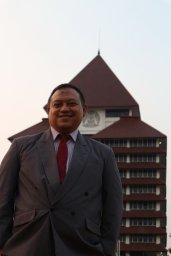 Heru Susetyo合作论文数Fakultas Hukum, Universitas Indonesia1
 Eva Pascal合作论文数St Michaels Coll, One Winooksi Pk 366, Colchester, VT 05439 USA1Md Mahbubul Haque合作论文数1
 Anna Christi Suwardi合作论文数Naresuan University1Katsuyuki Takahashi合作论文数Center of ASEAN Community Studies, Naresuan University1




