Peter Berger & Christoph Conrad, The past as history: National identity and historical consciousness in modern Europe (Basingstoke: PalgraveMacmillan 2015). 570 s.
Life stories and experiences are shaped within a broad range of uses of heavily institutionalized identity politics, mediated narratives and situational bodily experiences. Acting upon individual desires is a necessity for formation of collective identities and identification, communicatively constructing society. Examples from a variety of contexts will be used to argue that meaning is created through exchange between spheres of different logics: existential, political, market and institutional logics might openly oppose and contradict each other and crave for autonomy. When successful in establishing a powerful historical culture they do nevertheless more often reinforce each other when life experiences and new utopias are being shaped through narrating and negotiating memories to deal with contemporary challenges.
Introduction 1. Towards a Typology: the changing roles of Art Museums 2. Cultural History Museums and the making of Citizens and Communities 3. National Museums in between Regionalism, Nationalism and Imperialism, 1750 - 1914 4. Post-imperial Nations: new states, new borders and new unions 1914-2010 5. Conflicted Histories: museums, nations, empires, religions 6. National Museums and National Symbols: searching for the 'symbolic regimes' of Europe Conclusion: The National Museum as a Cultural Constitution
Europe's national museums have been at the centre of on-going nation-making processes, since their creation.These museums have successfully negotiated conflicts and contradictions to obtain the support of citizens and taxpayers, domestic and foreign visitors, scientists, art connoisseurs, and policy makers.National Museums and Nation-building in Europe 1750-2010 assess the national museum as a manifestation of cultural and political desires, rather than a straightforward representation of the historical facts of a nation.Examining the degree to which national museums have created models and representations of nations, their past, present and future, this book proceeds to assess the consequences of such attempts.Revealing how different types of nations and statesformer empires, monarchies, republics, pre-modern, modern or post-imperial entitiesdeploy and prioritise different types of museums in their making, it constitutes the first comprehensive and comparative perspective on national museums in Europe and their intricate relationship to the making of
National Museums is a major thematic collection of new research papers from around the world. The book is an interrogation of the origins, purpose, organisation, politics, narratives, philosophies ...
There is general increase on demand for research to be useful. This is more pronounced in the European funding than in traditional academic research. This paper problematizes and discusses the ways critical research can respond to these demands. The tendency is towards both specific calls driven by policy goals, and more diverse demands to formulate and communicate relevant knowledge to various stakeholders. There is a tension between unfettered critical research and the urgent contemporary quest for instrumental knowledge that needs to be respected, but also bridged. The positive dimension of EU:s call for research to be useful is accepting the need to share arguments, to stimulate dialogue, but the goal is not to produce consent but rather to trigger further investigation and disclosure of hitherto unknown or unobserved realms of culture.
Introduction : Performing Nordic Heritage: Institutional Preservation and Popular Practices
Research on uses of the past and cultural heritage has expanded during the last two decades. Themes are now running in several directions both within disciplines and as a tool to unite small departments and to answer large societal challenges. The Framework programmes in EU poses new formats for funding, where policy relevance needs to be developed. Though this presents challenges to disciplinary autonomy it also invites a much needed occasion for cultural research to interact in new ways with stakeholders.
 Peter Fritzson合作论文数Department of Computer and Information Science, Linkopings Universitet24
 Levon Saldamli合作论文数11
 Kaj Nyström合作论文数Department of Mathematics, Umeå University8
 Peter Bunus合作论文数B 3B:446 Building B, First Floor (Level 3)7magdalena hillstrom合作论文数5
 Gabriella Elgenius合作论文数University of Gothenburg5
 Adrian Pop合作论文数5Håkan Lundvall合作论文数5
 David Broman合作论文数Division of Software and Computer Systems, KTH Royal Institute of Technology;Department of Computer Science, KTH Royal Institute of Technology5
 Vadim Engelson合作论文数4Lizette Graden合作论文数3Simon J. Knell合作论文数Department of Museum Studies, University of Leicester3Arne Bugge Amundsen合作论文数3
 Peter Fritzon合作论文数3sheila watson合作论文数2andrew sawyer合作论文数2lill eilertsen合作论文数2Jocelyn Dodd合作论文数2kenneth johansson合作论文数2ceri jones合作论文数2
 Felicity Bodenstein合作论文数Tech Univ2
 Alexandra Bounia合作论文数2
 Bernhard Bachmann合作论文数2Dominique Poulot合作论文数2Maria Ågren合作论文数2Andreas Idebrant合作论文数2Bodil Axelsson合作论文数2
 Kristin Kuutma合作论文数2Constantin Iordachi合作论文数2asa magnusson合作论文数1gunnar silow合作论文数1zakia benjellountouimi合作论文数1kenneth stromberg合作论文数1
 Bodil Petersson合作论文数Linnaeus University;Linnaeus University1Andreas Nyblom合作论文数1
 Mart Kalm合作论文数Estonian Academy of Arts1Kristina Stenström合作论文数1Kristina Stenstrom合作论文数1Audrey Jardin合作论文数Laboratoire Ampère – UMR CNRS 5005, Institut National des Sciences Appliquées de Lyon1Daniel Bouskela合作论文数1Å. Magnusson合作论文数1Anders Sandholm合作论文数Department of Computer Science, University of Aarhus1
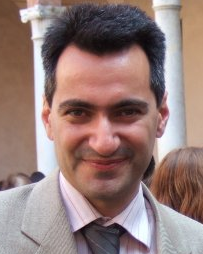 Francesco Casella合作论文数Polytechnic University of Milan,Department of Electronics, Information and Bioengineering1
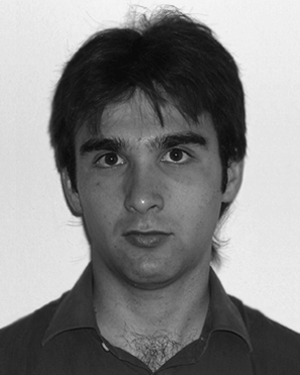 Filippo Donida合作论文数1Susan Ashley合作论文数Computing Department, The Royal Marsden NHS Trust1Bertil L. Hanson合作论文数1Gunlog Fur合作论文数1
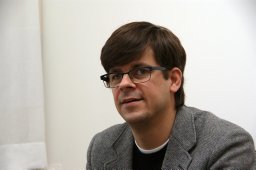 Patrik Aspers合作论文数Department of Sociology;Stockholm University;Department of Sociology, Stockholm University1
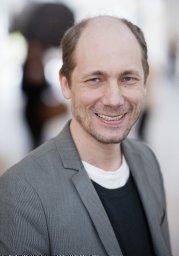 Ludvig Beckman合作论文数Department of Government;Uppsala University;Department of Government, Uppsala University1




