We propose a model-predictive control (MPC) approach to solve a human-in-the-loop control problem for a non-automatic networked system with uncertain dynamics. There are no sensors or actuators installed in the system and we involve humans in the loop to travel between various nodes in the network and to provide the remote controller with measurements as well as actuating the system according to the control requirements. We compute the time instants at which the measurements and actuations should take place to yield better performance with respect to current control methods. We present simulation results using a numerical model of a real canal, the West-M canal in Arizona, and we demonstrate the superiority of the new method over previously proposed ones for such setting.
We propose a model-predictive control (MPC)-based approach to solve a human-in-the-loop control problem for a network system lacking sensors and actuators to allow for a fully automatic operation. The humans in the loop are, therefore, essential; they travel between the network nodes to provide the remote controller with measurements and to actuate the system according to the controller's commands. Time instant optimization MPC is utilized to compute when the measurement and actuation actions are to take place to coordinate them with the network dynamics. The time instants also minimize the burden of human operators by tracking their energy levels and scheduling the necessary breaks. Fuel consumption related to the operators' travel is also minimized. The results in a digital twin of the Dez Main Canal illustrate that the new algorithm outperforms previous methods in terms of meeting operational objectives and taking care of human well-being, but at the cost of higher computational requirements.
Model Predictive Control (MPC) is one of the most advanced real-time control techniques that has been widely applied to Water Resources Management (WRM). MPC can manage the water system in a holistic manner and has a flexible structure to incorporate specific elements, such as setpoints and constraints. Therefore, MPC has shown its versatile performance in many branches of WRM. Nonetheless, with the in-depth understanding of stochastic hydrology in recent studies, MPC also faces the challenge of how to cope with hydrological uncertainty in its decision-making process. A possible way to embed the uncertainty is to generate an Ensemble Forecast (EF) of hydrological variables, rather than a deterministic one. The combination of MPC and EF results in a more comprehensive approach: Multi-scenario MPC (MS-MPC). In this study, we will first assess the model performance of MS-MPC, considering an ensemble streamflow forecast. Noticeably, the computational inefficiency may be a critical obstacle that hinders applicability of MS-MPC. In fact, with more scenarios taken into account, the computational burden of solving an optimization problem in MS-MPC accordingly increases. To deal with this challenge, we propose the Adaptive Control Resolution (ACR) approach as a computationally efficient scheme to practically reduce the number of control variables in MS-MPC. In brief, the ACR approach uses a mixed-resolution control time step from the near future to the distant future. The ACR-MPC approach is tested on a real-world case study: an integrated flood control and navigation problem in the North Sea Canal of the Netherlands. Such an approach reduces the computation time by 18% and up in our case study. At the same time, the model performance of ACR-MPC remains close to that of conventional MPC. (C) 2017 Elsevier Ltd. All rights reserved.
A variety of methods are in use for the design of controllers for adjusting canal gate positions to maintain a constant water level immediately upstream from check gates. These methods generally rely on a series of tests on the water level's response to changes in canal gate position or flow, either by simulation or on the canal itself. This paper presents a method for tuning these controllers based on wave celerity through use of the integrator delay zero (IDZ) model. These equations can be used to determine the resonance peak height and resonance frequency. Unsteady-flow canal simulation models are used to show the response of controller design using these theoretical equations with a test case for ASCE Test Canal 1. A novel method is presented for avoiding disturbance amplification by considering the delay times in all canal pools downstream.
Open water systems such as irrigation canals are used to transport and deliver water from the source to the user. Water loss in these systems by seepage, leakage, evaporation, or unknown water offtakes can be large. If this loss is unknown to the model used, it will not be considered by the controller and create a real system model mismatch. This mismatch will affect the water level directly and create an offset from the reference set point of the water level. A control configuration for open water canals, model predictive control (MPC) based on moving horizon estimation (MHE-MPC), to deal with offset problems resulting from real system-model mismatch is described in this paper. MHE uses the past predictions of the model and the past measurements of the system to estimate unknown disturbances and systematically removes the offset in the controlled water level. This control configuration is numerically tested on an accurate hydrodynamic model of the Control Algorithms Test Canal of the Technical University of Catalonia (UPC-PAC). The results presented in this paper show that MHE-MPC can realize offset-free control and the results are better than those of the well-known disturbance modelling offset-free control scheme.
We present a novel, simple and cost-effective strategy for control of irrigation canals to aid water deliveries to the users through the canal. The method enhances water deliveries through the canal by incorporating, alongside local PI controllers maintaining water levels in each canal pool at some predefined setpoints, a higher-layer centralized controller. The purpose of that centralized controller is to coordinate the local controllers by modifying the setpoints in individual pools. This speeds up the delivery process so that water is available to users faster than when only local controllers are used. Because the higher-layer centralized controller is invoked only when deliveries are requested and in normal operating conditions the canal is maintained merely by the local upstream PI controllers, the method is computationally efficient and resilient to temporary communication failures. We use Time Instant Optimization Model Predictive Control as the main control framework to design the higher-layer centralized controller and present a simulation study to illustrate the method proposed in this paper.
Barriers between experts and lay people are fading. Budget cuts and the demand for societal relevance of research induce the involvement of citizens. At the same time small, cheap sensors are widely available in mobile phones. This provides opportunities for mobile crowd sensing in water management. The fresh water demand is increasing, while several factors threaten the quantity and quality of the supply. Citizen science may enhance science by data collection, analysis or interpretation and could serve as education mean. A common challenge is ensuring sufficient quality of data. In this study the potential of citizen science in mobile crowd sensing in water quality monitoring was explored, by using a mobile crowd sensing application for water quality measurements. This consists of a colorimetric analysis using smartphone cameras and citizens to collect the data. Purposes of citizen science, target audiences, possible substances, opportunities, challenges and key success factors were identified based on nine interviews with representatives of Dutch water boards, nature managers and citizen associations. The results were compared to literature findings.
The Netherlands lies in the delta area, which is formed by the Rivers Rhine, Meuse and Scheldt. Being a low-lying country, dikes and other water-retaining structures have been constructed for the purposes of flood protection (transport of water), water supply (transport of water), and navigation (transport over water). All of these objectives are important within the total operational water management. In order to achieve these objectives and make them explicit, we propose a water management approach in which each goal is addressed specifically by a term in a cost function. We assume one centralized Model Predictive Controller, which can determine the balance among the different objectives, as the control strategy for determining which actions to take when controlling the Dutch water system, especially in droughts. Simulation experiments are used to illustrate the potential of this approach under different scenarios in the dry season.
The safety of low-lying deltas is threatened not only by riverine flooding but by storm-induced coastal flooding as well. For the purpose of flood control, these deltas are mostly protected in a man-made environment, where dikes, dams and other adjustable infrastructures, such as gates, barriers and pumps are widely constructed. Instead of always reinforcing and heightening these structures, it is worth considering making the most of the existing infrastructure to reduce the damage and manage the delta in an operational and overall way. In this study, an advanced real-time control approach, Model Predictive Control, is proposed to operate these structures in the Dutch delta system (the Rhine-Meuse delta). The application covers non-linearity in the dynamic behavior of the water system and the structures. To deal with the non-linearity, a linearization scheme is applied which directly uses the gate height instead of the structure flow as the control variable. Given the fact that MPC needs to compute control actions in real-time, we address issues regarding computational time. A new large time step scheme is proposed in order to save computation time, in which different control variables can have different control time steps. Simulation experiments demonstrate that Model Predictive Control with the large time step setting is able to control a delta system better and much more efficiently than the conventional operational schemes. (C) 2014 Elsevier Ltd. All rights reserved.
In this study a novel configuration of the Water Level Difference Error method is introduced to speed up the error sharing in the context of Model Predictive Control (MPC). The potential application of the controller is examined. The main objective of this controller is fair distribution of water between upstream and downstream users in main canals suffering from water shortages. The scheme uses the Integrator-Delay (ID) model for canal pool responses in a model predictive controller. The designed controller is tested on an accurate simulation model of a large canal system, using four test scenarios. The scenarios suffer from limited water supply conditions that are imposed by a limitation on the canal inflow. The results show fast reactions in equitable sharing of water level deviations from target throughout the canal. Since, all the pools are involved in optimally managing the water shortage, significant improvements in operational performance of the canal are achieved. In addition, the operational performance of the designed controller is remarkably improved by applying a new strategy of target-bands instead of target-levels in the canal pools as it increases the flexibility of the controller in making appropriate decisions.
Frequent and more accurate water level measurement will allow for a more efficient distribution of water, resulting in less water loss. Therefore in this paper we propose a novel method for accurate water level detection and measurement applied on images of staff gauges, retrieved from mobile device camera. In the first step, we propose fast segmentation of the staff gauge using a 2-class random forest classifier based on a feature vector of textons. To obtain bars and numbers we apply Gaussian Mixture Model segmentation followed by optical character recognition based on random forest classifier and bar detection using shape moments. Based on the recognized lines and numbers a quadratic function for the water level measurement to obtain metric values is introduced. Finally, we propose a novel step for the water level line detection. The water level function and the detected water line provide the value of the water level based on the units on the staff-gauge. The water level can then be uploaded to a central server to determine if water flow needs to increase or decrease. Testing with a real world images from Dutch canals show very accurate detection with many different staff-gauge locations despite complex challenges of viewpoints variations, low quality images as well as changing illumination conditions.
In this paper, we present the concept of a hierarchical predictive controller used for irrigation canals. The motivation behind this paper is the need in the field of irrigation to deliver water to farmers fast, but with minimal resources involved, as the communication links in the field are not dependable in practice. In response to such a control problem, we propose a hierarchical controller: the lower control layer is formed by decentralized proportional integral (PI) controllers and the higher control layer is constituted by a centralized predictive controller, the purpose of which is to control the inflow to the canal and, importantly, to coordinate the local controllers by modifying their setpoints. Having in mind the restrictions on the available communication infrastructure and the control equipment already present, the scheme is designed to be event driven, i.e., activated when there are either delivery requests or non-delivery-related events of any sort, requiring special care on top of the control provided by the PI controllers. We also study a time-driven formulation with an additional postprocessing step to avoid excessive negligible setpoint modifications. We compare the event-driven formulation and the time-driven formulation theoretically as well as by means of a simulation study for the West-M irrigation canal in Phoenix, Arizona, illustrating the findings of this paper. It is shown that the event-driven controller is able to provide a good balance between the control performance and the required update frequency of the control settings.
In the paper we discuss the recently introduced Mobile Model Predictive Control (Mobile MPC) approach for an irrigation canal. Mobile MPC is a configuration of MPC that explicitly incorporates the role of the human operator traveling between the gates as ordered by a remote centralized controller. The operator provides the controller with up-to-date measurements from the locations visited and acts as the actuator as required by the remote controller. Mobile MPC provides a solution in between fully manual and fully automatic canal operation, as the first one may give poor performance and the second one might be impracticable in some situations, where it is not possible to rely on the equipment installed in the field. In the current paper we improve the performance of the original Mobile MPC approach by allowing the controller to decide the exact time instants when the operator should arrive at a specific gate and change the gate's settings as well as we include a penalty in the objective function for the controller to minimize the workload of the human operator. We show that the new approach yields enhanced performance in comparison to the previous method, and we demonstrate the benefits of the new method as opposed to the previous one in a case study.
Fig. 5. Performance of the MPC operation with perfect forecasts (PF), deterministic forecasts (DF), and ensemble forecasts (EF) over a flood event in 2007, averaged over monitoring stations: (a) loss in performance due to forecast uncertainty (with respect to perfect forecasts); (b) total number of days with violation of the (alert) thresholds; (c) mean duration of violation events; (d) maximum duration of violation events; (e) maximum flow exceedance with respect to the alert thresholds; (f) number of monitoring stations with at least one violation event over the simulation horizon
We discuss the problem of controlling an irrigation canal to accommodate fast changes in the canal state in response to events such as offtakes announced with no time lag or sudden weather changes. Our proposed approach comprises a hierarchical controller consisting of two layers with decentralized PI controllers in the lower layer and a centralized MPC-based event-driven controller in the higher layer. By incorporating the hierarchical controller structure we achieve a better performance than with the PI controllers only as currently in use in the real world, while barely increasing the communication requirements and remaining robust to temporary communication link breakdowns as the lower layer can work independently of the higher layer when the links are being restored. The operation of the higher-layer controller relies on controlling the head gate and modifying the settings of the local controllers. This way, an acceleration of water transporting is attained as the controller allows for rapid reactions to the need for more water or less water at a location. Specifically, when there is a sudden need for water, the storage in some of the pools is used to temporarily borrow water. Alternatively, when there is too much water at a location, it can be stored for some time in upstream or downstream pools before the PI controllers manage to remove the water.
•Ensemble forecasts can be effectively used for optimal operation of water systems.•We propose a control algorithm in which the ensemble forecast is structured in a tree.•The tree is used to set up a Multistage Stochastic Programming.•The method is tested on Salto Grande reservoir, with real ensemble forecast data.•The proposed method performs better than other comparable optimal control methods.
 Bart De Schutter合作论文数Delft Center for Systems and Control, Delft University of Technology17
 Rudy Negenborn合作论文数Section of Transport Engineering & Logistics, Department of Maritime and Transport Technology, Delft University of Technology16
 Nick Van De Giesen合作论文数Faculty of Civil Engineering and Geosciences, Delft University of Technology14
 Anna Sadowska合作论文数11
 J.M. Maestre合作论文数University of Seville11
 Luciano Raso合作论文数10
 Dirk Schwanenberg合作论文数Deltares, Dept Operat Water Management, Delft, Netherlands8
 Xin Tian合作论文数8
 Seied Mehdy Hashemy Shahdany合作论文数7Albert J. Clemmens合作论文数5
 Andrea Ficchi合作论文数Dept Geog & Environm Sci, Univ Reading4
 Hua Zhong合作论文数Delft University of Technology, Delft Univ of Technology4M. Xu合作论文数4
 M. J. Monem合作论文数4
 David Dorchies合作论文数4
 Pierre-Olivier Malaterre合作论文数UMR G-eau4R. J. Strand合作论文数4
 P. H. A. J. M. Van Gelder合作论文数Department of Values, Technology & Innovation, Faculty of Technology, Policy and Management, Delft University of Technology4Maxime Jay-Allemand合作论文数3
 Boran Ekin Aydin合作论文数Operational Water Management, Nelen & Schuurmans3
 Steven Weijs合作论文数Department of Civil Engineering, Faculty of Applied Science, The University of British Columbia3
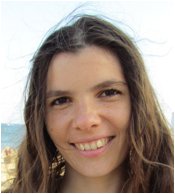 Klaudia Horvath合作论文数URIA, Mines Douai;c;URIA, Mines Douai3S. Isapoor合作论文数3
 Charles M. Burt合作论文数Irrigation Training and Research Center;California Polytechnic State University;Irrigation Training and Research Center, California Polytechnic State University3Francesca Pianosi合作论文数–Politecnico di Milano3h van ekeren合作论文数2
 Eduard Galvis合作论文数Facultad de Ingeniería, Universidad EAN2
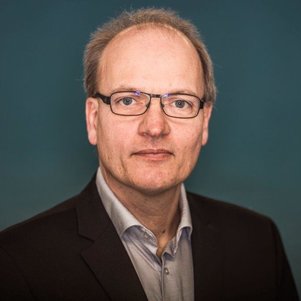 Erik Mostert合作论文数Department of Water Management, Faculty of Civil Engineering and Geosciences, Delft University of Technology2
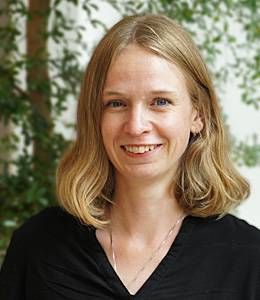 Ellen Minkman合作论文数Faculty of Civil Engineering and Geosciences, Delft University of Technology2R. Brouwer合作论文数2Aliasghar Montazar合作论文数Department of Irrigation and Drainage Engineering, University of Tehran2
 Rolf Hut合作论文数Department of Water Management, Faculty of Civil Engineering and Geosciences, Delft University of Technology2
 José Rodellar合作论文数CoDAlab, Universitat Politècnica de Catalunya (UPC),2
 Xavier Litrico合作论文数SUEZ2
 Xavier Bombois合作论文数Delft Center for Systems and Control;Delft University of Technology;Delft Center for Systems and Control, Delft University of Technology2c d erdbrink合作论文数1
 Ties Rijcken合作论文数1
 M. Akbari合作论文数1os van a g合作论文数1albert goedbloed合作论文数1
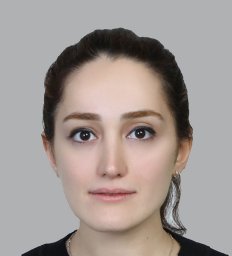 Roza Ranjbar合作论文数Civil Engineering Department, K. N. Toosi University of Technology1
 W. J. Klerk合作论文数Deltares, Delft, Netherlands1Dekens, B.合作论文数1Aswin Chandarr合作论文数1
 Tamás Keviczky合作论文数Delft Center for Systems and Control, Faculty of Mechanical, Maritime and Materials Engineering, Delft University of Technology1
 Bas Jonkman合作论文数Hydraulic Structures and Flood Risk, Department of Hydraulic Engineering, Faculty of Civil Engineering and Geosciences, Delft University of Technology1
 Guus Stelling合作论文数Stelling Hydraulics1
 Maarten C.A. van der Sanden合作论文数Department of Science Education and Communication, Faculty of Applied Sciences, Delft University of Technology1
 Abbas Afshar合作论文数Shahid Abbaspoor University, Iran University of Science and Technology1




