Laparoscopic navigation systems increasingly leverage augmented reality (AR) to overlay preoperative anatomical data in real time, enhancing surgical precision. However, reliable navigation requires accurate camera pose estimation and high-fidelity 3D organ reconstruction. To address these challenges, we propose LA-SLAM, a real-time visual SLAM system specifically designed for laparoscopic surgery. The system incorporates three key innovations: 1) An optical-flow-based depth-pose joint estimation module. This module establishes accurate dense correspondences between images through the introduced global correlation softmax, providing sufficiently strong constraints for subsequent optimization to achieve high-precision pose and depth estimation with only a single update, significantly improving computational efficiency; 2) a hybrid loop closure strategy that integrates projection flow and dense optical flow for reliable detection, and introduces a Sim(3)-based optimization using 3D point cloud feature matching; and 3) a refined 3D reconstruction strategy combining depth consistency validation with statistical and gradient-based filtering to address laparoscopic challenges, including specular reflections, occlusions, and tissue deformation. Evaluations on standard SLAM datasets (TUM-RGBD, EuRoC) and laparoscopic datasets (SCARED, DePoLL, StereoMIS) demonstrate that LA-SLAM achieves tracking accuracy comparable to state-of-the-art SLAM systems while maintaining significant advantages in computational efficiency. It also produces geometrically faithful and visually robust reconstructions. These results highlight LA-SLAM's potential for integration into real-time surgical navigation systems.
Decomposition methods, such as complete ensemble empirical mode decomposition with adaptive noise (CEEMDAN), effectively address the non-stationary and intermittent nature of time series in wind power and wind speed forecasting, enhancing prediction accuracy. However, the residual noise in the subsequences generated by these decomposition methods can degrade predictive performance. Furthermore, most existing predictive models rarely address the reduction of redundant nonlinear operations in the neuron activation functions within the regression subnetwork, which can lead to high computational costs and diminished prediction accuracy. To address these issues, this paper proposes a novel decomposition-based deep stacked residual convolutional recurrent neural network (DB-DSRC-RNN) for wind speed and wind power forecasting. DB-DSRC-RNN first uses CEEMDAN to decompose non-stationary wind speed or power data into stable subsequences. Then, a deep stacked residual convolutional recurrent neural network (DSRC-RNN) learns the underlying spatio-temporal features in each subsequence. In DSRC-RNN, a residual convolution threshold denoising block is designed to mitigate the impact of residual noise in the subsequences of CEEMDAN for the first time, while extracting spatial features. A bidirectional long short-term memory is also integrated into DSRC-RNN to capture temporal features. Additionally, a regression subnetwork with a dense dendrite module is designed to further enhance the model's performance by reducing the computational complexity associated with nonlinear activation functions. Extensive experiments demonstrate that the proposed DB-DSRC-RNN outperforms eight benchmark models in terms of predictive accuracy, generalization ability, and robustness for ultra-short-term wind power and wind speed forecasting in energy systems.
Traditional magnetic tactile sensors often suffer from external magnetic field interference. To address this issue, we first theoretically derived, through mathematical formulations, the fundamental cause of magnetic field interference, providing a solid basis for interference mitigation. Building on this understanding, this work proposes and designs a dual-modal soft magnetic skin with the capabilities to mitigate magnetic field interference. Inspired by the sensory mechanism of human skin, the designed magnetic skin can simultaneously capture dual-modal information, namely magnetic and force tactile information across spatiotemporal domains. A bi-convolutional neural network-multilayer perceptron (Bi-CNN-MLP) is constructed to fuse the dual-modal tactile information. To reduce the impact of external magnetic field interference, a novel dynamic weighting coefficient layer (DWCL) is proposed, which dynamically assigns optimal weights to each modality based on real-time input characteristics. Specifically, by analyzing temporal discrepancies between modalities during pre-contact sensing and quantifying the magnetic field strength of target objects, the DWCL autonomously adjusts fusion ratios to prioritize the modality with higher reliability under varying interference conditions. Furthermore, extensive experimental evaluations from multiple perspectives demonstrate that the proposed electronic skin exhibits robust multiscale perception capabilities, thereby enabling accurate and stable tactile sensing, while the DWCL achieves substantial improvements in interference resistance compared with traditional fusion strategies.
Laparoscopic liver surgery is a newly developed minimally invasive technique and represents an inevitable trend in the future development of surgical methods. By using augmented reality (AR) technology to overlay preoperative CT models with intraoperative laparoscopic videos, surgeons can accurately locate blood vessels and tumors, significantly enhancing the safety and precision of surgeries. Point cloud registration technology is key to achieving this effect. However, there are two major challenges in registering the CT model with the point cloud surface reconstructed from intraoperative laparoscopy. First, the surface features of the organ are not prominent. Second, due to the limited field of view of the laparoscope, the reconstructed surface typically represents only a very small portion of the entire organ. To address these issues, this paper proposes the keypoint correspondence registration network (KCR-Net). This network first uses the neighborhood feature fusion module (NFFM) to aggregate and interact features from different regions and structures within a pair of point clouds to obtain comprehensive feature representations. Then, through correspondence generation, it directly generates keypoints and their corresponding weights, with keypoints located in the common structures of the point clouds to be registered, and corresponding weights learned automatically by the network. This approach enables accurate point cloud registration even under conditions of extremely low overlap. Experiments conducted on the ModelNet40, 3Dircadb, DePoLL demonstrate that our method achieves excellent registration accuracy and is capable of meeting the requirements of real-world scenarios.
Accurate prediction of grasp stability is crucial for reliable and precise operations with multi-fingered robotic hands. Traditional methods tend to oversimplify tactile information and pay equal attention to all regions of the data. This can obscure subtle yet critical variations and introduce noise, increasing the risk of stability assessment errors. To address these challenges, a novel self-supervised method, Adversarial Subgraph Contrastive Learning (ASCL), is proposed. It constructs an instance graph from the spatial distribution and features of perceptual nodes. It employs a bi-level adversarial strategy to enhance latent data representations by maximizing the mutual information between the instance graph and its semantic subgraphs, while minimizing it with its noisy subgraphs. To prevent trivial solutions and continuous relaxation of semantic subgraphs, node confidence and edge connection terms are incorporated to ensure stabilization. From an information-theoretic perspective, ASCL exhibits notable advantages on unlabeled or sparsely labeled data, well outperforming existing methods in empirical tests with robotic hands.
Most existing multimodal point-view fusion models for 3-D shape recognition typically improve recognition accuracy through complex feature fusion mechanisms. However, these mechanisms significantly increase the model's complexity and computational cost. To address this issue, a novel multimodal point-view fusion model based on a parameter adaptive stacked broad learning system (PV-PASBLS) for 3-D shape recognition is proposed. This model avoids complex feature fusion mechanisms, thereby reducing computational cost and increasing flexibility. Specifically, PV-PASBLS employs a backbone network for point cloud and multiview feature extraction to effectively capture the relevant features. Simple concatenation is then used for feature fusion. Importantly, PV-PASBLS is adaptive, allowing the backbone network to be replaced or adjusted to meet specific task requirements. Since PV-PASBLS avoids complex fusion mechanisms, the responsibility for achieving high-accuracy recognition is shifted to its classification network. To achieve this, a novel classification network, named the parameter adaptive stacked broad learning system (PASBLS), is proposed. PASBLS utilizes a new interval adaptive hyperparameter optimization (IAHPO) algorithm based on MARS. By constructing a surrogate model for a stacked broad learning system (SBLS) in PASBLS, IAHPO can quickly and efficiently identify the optimal hyperparameters, ensuring that PV-PASBLS maintains high recognition accuracy and mitigates potential accuracy losses due to the absence of complex fusion mechanisms. To validate the effectiveness of PV-PASBLS, comprehensive experiments were conducted on the public 3-D shape datasets ModelNet40 and ScanObjectNN, comparing it with state-of-the-art methods. Experimental results demonstrate that PV-PASBLS outperforms its competitors, achieving higher accuracy and improved training efficiency. In addition, the IAHPO algorithm was evaluated on the NORB classification dataset and ten UCI regression datasets, showing that it can achieve better hyperparameters with a lower computational cost.
Robot errors, inherent in manufacturing processes and progressively worsening through operational wear, critically impact system precision through accumulated inaccuracies. Current calibration methods face significant challenges due to measurement limitations and the time-varying nature of errors, while conventional kinematic model-based approaches prove inadequate in addressing dynamic error components and often result in deteriorating accuracy. To overcome these limitations, this work presents an innovative compensation framework combining three key elements: 1) raw parameter-based inverse kinematics calculations that eliminate dependency on joint angle measurements; 2) a novel broad-deep fusion network (BDFN) architecture integrating broad learning system (BLS) and deep belief network (DBN) capabilities; and 3) an incremental learning mechanism for adaptive correction of time-varying errors including angular backlash. The proposed method achieves efficient error compensation using minimal end-effector (EE) data, overcoming conventional measurement limitations. Experimental results verify its effectiveness, demonstrating substantially improved positioning accuracy while maintaining real-time performance capabilities. This integrated approach successfully addresses the critical trade-off between precision and practicality in robotic error compensation, offering a robust solution to persistent challenges in industrial robotic applications.
We explore how large language models (LLMs) can expedite and automate the learning process for autonomous driving tasks. This involves harnessing LLM knowledge to shape a learning framework and utilizing LLMs to guide the learning process. We conduct a case study to demonstrate LLMs' ability to export driving rules. LLM outputs may not be entirely reliable for the direct handling of driving decisions due to potential inaccuracies and inconsistencies. To address these issues, we propose integrating LLM knowledge with statistical learning. This enables LLMs to export task-specific knowledge as symbolic rules, forming the initial learning structure. Rule weights are calculated based on statistical salience derived from training data, resulting in a set of weighted rules for robust decision making. Furthermore, this set of weighted rules preserves strong semantics, allowing LLMs to comprehend and make modifications based on varying needs. Simulations using a highway driving simulator validate the effectiveness of our approach.
An aerial manipulator (AM) system for thickness measurement of metal facilities is introduced in this article, which includes a fully actuated flying platform and an end effector. The AM utilizes the fully actuated advantage of the flying platform to apply controlled contact forces to the environment without the need for complex robotic manipulators. An end effector is designed, which includes an ultrasonic thickness (UT) probe mounted on a spring-damping buffer, and a coupling agent injection device allows the coupling to be applied during the inspection process. We divide the aerial inspection process into two phases: the approach phase and the contact phase. In the approach phase, we design a yaw control assistance method to ensure that the AM can contact the target surface with the desired yaw, even outside the operator's line of sight. In the contact phase, a parallel force/velocity controller tailored to the motion characteristic of the AM is proposed to achieve precise contact force control. A switching function is designed to ensure stable transitions between the motion control and force control. The control effectiveness and the ability to measure the thickness of the metal facility of the AM system are demonstrated by practical experiments.
Most EEG classification algorithms based on steady-state visual evoked potentials (SSVEP-EEG) require filtering for denoising. However, manually set thresholds may inadvertently remove useful information, leading to a loss of significant signal features. Additionally, most deep learning-based SSVEP-EEG classification models have limited global feature extraction capabilities, and the self-attention mechanism in Transformers increases computational costs. To address these challenges, this paper proposes a novel SSVEP-EEG classification algorithm, SSVEPPoolformer. SSVEPPoolformer integrates an adaptive denoising algorithm with an improved Poolformer algorithm, enhancing both denoising performance and classification accuracy. The adaptive denoising algorithm dynamically adjusts the threshold using a compensation and adaptive adjustment mechanism, effectively filtering noise while retaining critical signal features. The improved Poolformer algorithm replaces the self-attention mechanism with an average pooling operation, reducing computational costs while maintaining performance. It also uses adaptive average pooling to integrate cross-channel feature information and extract global fine-grained features, improving global feature extraction. The SSVEPPoolformer model’s efficacy was validated on two public datasets. Experimental results demonstrate that compared with other state-of-the-art methods, SSVEPPoolformer has higher classification accuracy and Information Transfer Rate (ITR) in both intra-class and inter-class recognition scenarios, and has lower computational cost.
Burn injuries, resulting from thermal, chemical, and electrical mechanisms, require prompt and accurate assessment for effective treatment. The primary method, relying on visual and tactile evaluations, offers 50%-80% accuracy, while noninvasive methods such as laser Doppler imaging (LDI) reach up to 97% accuracy. This article presents a machine learning (ML) pipeline for assessing burn severity and segmenting affected skin regions. We trained a convolutional neural network (CNN) to classify four burn severities: superficial (SPF), superficial partial thickness (SPT), deep partial thickness (DPT), and full thickness (FT). In addition, we introduced boundary attention mapping (BAM), a saliency mapping method that leverages the trained CNN to accurately segment burn regions. Our pipeline was validated using two datasets: a Burn Injury Image dataset with 1385 images and an LDI dataset with 184 images. The CNN achieved 80% accuracy, a 79.5% average F1-score, and 95% ROC in classifying burn severities. Comparing BAM with LDI, our method achieved 91.39% accuracy, 78.12% sensitivity, and 95.07% specificity in segmenting burn regions. These findings demonstrate the robustness of our AI model and its potential clinical application.
Traditional magnetic tactile sensors are highly susceptible to external magnetic field interference, limiting their reliability in practical applications. To address this challenge, we propose a dual-modal soft magnetic skin capable of simultaneously acquiring magnetic and force tactile information across spatiotemporal domains, inspired by the sensory mechanisms of human skin. The system integrates a Convolutional Neural Network-Convolutional Neural Network-Multilayer Perceptron (CNN-CNN-MLP) architecture to fuse these dual-modal signals effectively. Furthermore, we introduce a novel Dynamic Weighting Coefficient Layer (DWCL) to dynamically optimize fusion weights for each modality based on real-time input characteristics, thereby enhancing robustness against magnetic interference. The DWCL leverages temporal discrepancies between modalities during pre-contact sensing and quantifies the magnetic field strength of target objects to autonomously adjust fusion ratios, prioritizing the more reliable modality under varying interference conditions. Extensive experimental evaluations demonstrate that the proposed DWCL significantly improves interference resistance compared to conventional fusion methods, advancing the feasibility of magnetic tactile sensing in real-world environments.
The event-based finite-time [Formula: see text] filtering problem for networked systems is concerned. A novel hybrid attack model is introduced considering denial-of-service and deception attacks in the communication channel between sampler and filter with an aperiodic form. In order to increase the effectiveness of data transmission in network communication channel and enable the filtering system against attack, an adaptive event–triggered mechanism is proposed. Sufficient condition for ensuring exponential mean-square finite-time boundedness of the filtering error system with an expected [Formula: see text] disturbance attenuation index is obtained. The design of the filter and the adaptive event–triggered mechanism is derived. A practical example is given to demonstrate the effectiveness of the proposed filtering scheme in an active suspension system.
Despite the availability of guide dogs and sticks, visually impaired people still have difficulties in traveling and sometimes may encounter dangers. This article presents a novel head-mounted haptic navigation device, for which vibrotactile stimulation is employed at different locations of the head helmet. A set of different navigation instructions is provided through coding the sequential stimuli to the visually impaired people, assisting them in their daily activities. Experiments show that the frontal and temporal regions of the head are more sensitive to vibrotactile stimuli than the top, and the difference thresholds of vibration duration for different parts of the head were derived. The subject's accuracy and reaction time to navigation direction cues were tested in both indoor and outdoor environments. The results showed that the overall navigation accuracy was around 80%, and the response time was around 1.5 s.
Medical imaging robots typically use technologies, such as X-ray, magnetic resonance imaging (MRI), and computed tomography (CT), to generate images of the human body interior. These generated images are complex and contain a large amount of noise and interference, which requires high-precision and real -time fast image analysis algorithms to extract significant information, including tumour area, tumour location, organ and tissue, and blood vessel information. This paper proposes a novel lightweight neural network to perform tumour segmentation in brain MRI images, which could realize the high-accuracy and fast execution. To meet the real -time requirements, a lightweight module based on channel attention mechanism is presented, which constitutes an encoder-deco der architecture for the segmentation task. To enrich the feature map information, this paper designs a spatial attention mechanism to concatenate the output feature maps of the encoder and decoder correspondingly, which could realize the better fusion of high-level and low-level semantic features extracted by the network. The comparison experiments and ablation studies are conducted to improve the effectiveness of the proposed model, which could represent a higher performance. The computational cost of the proposed model shows the possibility of a real -time implementation.
The multi-dimensional force/torque decoupling and calibration is extremely crucial to increase the accuracy of the Wheel Force Transducer/Sensor (WFT). A novel interpretable nonlinear decoupling and calibration approach to WFT is presented. A physical interpretable prime-error framework is developed such that the linear prime part accounts for most force-voltage responses while the nonlinear error part accounts for the gross error deviation. The conventional least-square decoupling is improved with the delicate nonlinear error modeling using a polynomial base module and a hyperbolic activation function. The developed framework is proved to be mathematically solvable and physically feasible by a two-step calibration scheme. A two-axis WFT is tested and compared with the proposed interpretable nonlinear decoupling model (IND), the least-square-based method (LSM), and the error-based neural network model (eNN). Results demonstrate that the proposed IND provides an accurate, practical, and effective scheme for modeling and calibrating WFTs and maintains a good balance among accuracy, generalization ability, and computational efficiency for real applications.
Fine-tuning language models~(LMs) on human-generated data remains a prevalent practice. However, the performance of such models is often limited by the quantity and diversity of high-quality human data. In this paper, we explore whether we can go beyond human data on tasks where we have access to scalar feedback, for example, on math problems where one can verify correctness. To do so, we investigate a simple self-training method based on expectation-maximization, which we call ReST$^{EM}$, where we (1) generate samples from the model and filter them using binary feedback, (2) fine-tune the model on these samples, and (3) repeat this process a few times. Testing on advanced MATH reasoning and APPS coding benchmarks using PaLM-2 models, we find that ReST$^{EM}$ scales favorably with model size and significantly surpasses fine-tuning only on human data. Overall, our findings suggest self-training with feedback can substantially reduce dependence on human-generated data.
This paper addresses the stabilization problem of linear impulsive systems with beyond-interval delays, for which state correlation exists between the current interval’s impulse state estimation and the historical feedback, making it difficult to obtain stability conditions for the system. In order to solve this problem, we develop a novel impulsive control method called interval partitioning, for which sufficient conditions for system stability are obtained. It indicates that time delays in impulses potentially contribute to the stabilization of linear systems with unstable system matrix, if there exist some historical state feedback. The effectiveness of the proposed approach is demonstrated through three examples.
In this article, the issue of adaptive fuzzy finite-time command filtered control is discussed for nonlinear stochastic systems subject to unknown dead-zone constraints and unmodeled dynamics. The packaged unknown nonlinearities are approximated by introducing fuzzy logic systems. An improved technique is introduced to cope with unknown functions with the structure of nonstrict-feedback in the operation of controller design. Under the criterion of finite-time stability, a novel fast convergent control scheme is developed. Additionally, the effect of filter errors bought by the command filters is diminished via applying corresponding error compensating signals and a measurable dynamic signal is adopted to handle unmodeled dynamics. The improved designed controller not only guarantees all the closed-loop signals remain finite-time bounded, but also makes the system output follows the given desirable trajectory under the bounded error. The usefulness of the designed strategy can be verified through the numerical and practical examples.
While many capabilities of language models (LMs) improve with increased training budget, the influence of scale on hallucinations is not yet fully understood. Hallucinations come in many forms, and there is no universally accepted definition. We thus focus on studying only those hallucinations where a correct answer appears verbatim in the training set. To fully control the training data content, we construct a knowledge graph (KG)-based dataset, and use it to train a set of increasingly large LMs. We find that fora fixed dataset, larger and longer-trained LMs hallucinate less. However, hallucinating on≤5% of the training data requires an order of magnitude larger model, and thus an order of magnitude more compute, than Hoffmann et al. (2022) reported was optimal. Given this costliness, we study how hallucination detectors depend on scale. While we see detector size improves performance on fixed LM’s outputs, we find an inverse relationship between the scale of the LM and the detectability of its hallucinations.
 Huanqing Wang (王焕清)合作论文数College of Mathematical Sciences, BoHai University70
 Chunquan Li (李春泉)合作论文数School of Sciences, Southwest Petroleum University43
 Shafiqul Islam合作论文数Professor in Robotics and Mechatronics, Intelligent Robotics, Mechatronics, and Autonomous Systems Lab, Xavier University of Louisiana35
 Abdulmotaleb El Saddik合作论文数School of Electrical Engineering and Computer Science, University of Ottawa32
 Shichao Liu合作论文数23
 Guanglong Du (杜广龙)合作论文数School of Computer Science and Engineering, South China University of Technology20
 Yanni Zou (邹艳妮)合作论文数School of Software, Nanchang University19
 Minhua Zheng (郑敏华)合作论文数School of Mechanical, Electronic and Control Engineering, Beijing Jiaotong University19
 Max Q.-H. Meng (孟慶虎)合作论文数Department of Electronic Engineering, The Chinese University of Hong Kong;Department of Electronic and Electrical Engineering, Southern University of Science and Technology19
 Jason Gu (顾建军)合作论文数Department of Electrical and Computer Engineering, School of Biomedical Engineering, Faculty of Medicine, Dalhousie University19
 Feng Ding (丁锋)合作论文数School of Internet of Things Engineering, Jiangnan University18
 Shaoping Xu (徐少平)合作论文数School of Mathematics and Computer Sciences, Nanchang University17
 Mqh Meng合作论文数16
 Pengwen Xiong (熊鹏文)合作论文数School of Advanced Manufacturing, Nanchang University16
 Aiguo Song (宋爱国)合作论文数School of Instrument Science and Engineering, Southeast University14
 Xiaohui Yang合作论文数14
 F. Richard Yu合作论文数Department of Systems and Computer Engineering, Faculty of Engineering and Design, Carleton University;School of Information Technology, Faculty of Engineering and Design, Carleton University13
 Shijia Kang合作论文数12
 Jinfeng Gao (高金凤)合作论文数School of Mechanical Engineering, Zhejiang Sci-Tech University;School of Mechanical Engineering & Automation, Zhejiang Sci-Tech University11
 Shengrong Bu合作论文数Brock University11
 Simon X. Yang合作论文数Advanced Robotics & Intelligent Systems Lab, School of Engineering, University of Guelph11Lingyan Hu合作论文数10
 Song Ling合作论文数School of Mechanical, Electronic and Control Engineering, Beijing Jiaotong University10
 Xueqian Wang (王学谦)合作论文数Center for Artificial Intelligence and Robotic, Graduate School at Shenzhen, Tsinghua University10
 Ilia G. Polushin合作论文数Dept Elect & Comp Engn, Univ Western Ontario10Ke Xu (徐科)合作论文数9Chao Hu合作论文数9
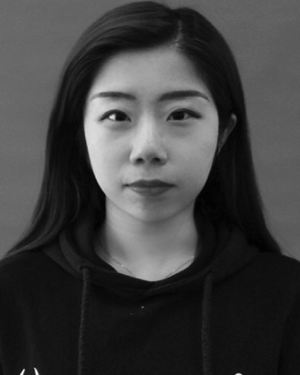 Wen Bai合作论文数School of Computer Science, South China Normal University, Guangzhou 510631, China9
 Chung-Horng Lung (龍中弘)合作论文数Department of Systems and Computer Engineering, Carleton University9
 Rong Liu (刘蓉)合作论文数School of Biomedical Engineering, Dalian University of Technology9
 Changchun Hua (华长春)合作论文数School of Electrical Engineering, Yanshan University;School of Electrical Engineering, Hebei University of Science and Technology9M Meng合作论文数8
 Kang Su (苏康)合作论文数School of Information and Communication Engineering, Hainan University8
 Jiehui Huang合作论文数Sch Informat Engn, Nanchang Univ8
 Libin Wang合作论文数8
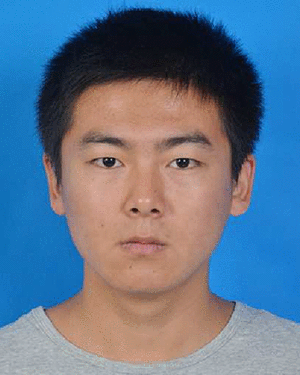 Jialei Bao合作论文数School of Mechanical, Electronic and Control Engineering, Beijing Jiaotong University, Beijing, China8
 Wenguo Hou合作论文数8
 Xiufen Ye (叶秀芬)合作论文数College of Intelligent Systems Science and Engineering, Harbin Engineering University8Weixing Lin (林卫星)合作论文数Faculty of Electrical Engineering and Computer Science, Ningbo University8
 Guangjun Liu合作论文数Systems and Control Laboratory, Department of Aerospace Engineering, Faculty of Engineering, Architecture and Science, Ryerson University;Department of Aerospace Engineering, Toronto Metropolitan University8Xiaoyu Wang合作论文数7
 Di Li (李迪)合作论文数School of Mechanical & Automotive Engineering, South China University of Technology7
 Shaohua Teng (滕少华)合作论文数School of Computer Science and Technology, Guangdong University of Technology7
 Mohammad Saleh合作论文数Google7
 Zhijun Zhang (张智军)合作论文数School of Automation Science and Engineering, South China University of Technology7
 Rafik A. Goubran合作论文数Department of Systems and Computer Engineering, Carleton University7
 Jason P. Rhinelander合作论文数7
 Xiaochuan He合作论文数7
 Junzhi Yu (喻俊志)合作论文数College of Engineering, Peking University6




