Corn particle size (PS) affects feed milling parameters, amino acid (AA) digestibility, and broiler performance. However, there is limited work on soybean meal (SBM) PS. Three experiments were conducted to determine the effects of SBM PS on d21 apparent ileal AA digestibility (AIAAD), feed milling efficiency, pellet quality (PQ), and d1 to 42 broiler performance. A hammermill fitted with one of three screens (2.4-mm, 5.6-mm, 7.9-mm) was used to process the SBM used in all experiments. In experiment 1, an indigestible marker, titanium dioxide, was added to the diet and its concentration in digesta was used to calculate AIAAD. D 21 AIAAD was influenced by SBM PS where fine SBM (2.4 mm-screen) reduced AA digestibility for all AA compared to other treatments (P < 0.05). In experiment 2, SBM PS did not affect hot pellet temperature or production rate (P > 0.05). However, PQ improvements were apparent when the fine SBM was used (P < 0.05). In experiment 3, SBM PS impacted broiler performance in all feeding phases (P < 0.05). Overall (d1–42) FI, BWG, and FCR increased when fine SBM was fed compared to when medium (5.6-mm screen) and coarse (7.9 mm-screen) SBM was fed (P < 0.05). Finally, SBM PS did not affect gizzard size (P > 0.05). These experiments suggest that although finely ground SBM improves PQ between 5 and 8%, the fine SBM PS reduces AIAAD and worsens broiler FCR.
House fly (Musca domestica L.) (Diptera: Muscidae) populations can negatively impact poultry layer facilities, posing a risk to human and animal health and egg food safety. House flies quickly develop resistance to traditional chemical control methods; therefore, improved biological control may provide opportunities for improved integrated pest management (IPM) programs. Biological control methods currently used include augmentative releases of pteromalid pupal parasitoids and application of the fungal entomopathogen Beauveria bassiana (Balsamo) Vuillemin. This study used bioassays to compare the impact of different B. bassiana strains on survival of house flies and of 3 species of filth fly parasitoids. The B. bassiana that were compared were 3 new field-collected isolates, an older field-collected isolate (L90), and a common commercially available strain (GHA). Flies and parasitoids were exposed to filter paper treated with 1.5 × 10⁹ spores of each strain and a control. All field-isolated strains induced lower mean survival times in house flies than GHA did. The results for all species of parasitoids demonstrated less difference among the treatment groups and the control than in-house flies. Although there was some effect of B. bassiana exposure on parasitoid mortality, the expected spatial separation of parasitoids from areas of application may offer some protection. Using the most effective tested strains of B. bassiana and filth fly parasitoids jointly could be a biological component of an IPM plan for fly control in poultry facilities.
Reducing the particle size (PS) of feed ingredients is necessary and requires substantial energy expenditure. A majority of research on ingredient PS has considered the effects of corn and wheat PS on poultry performance. However, there is limited research investigating the effects of soybean meal (SBM) PS. Two experiments were conducted using expeller extruded SBM to measure the energy required to reduce soybean meal cake PS at the processor (experiment 1) and to determine the effects of various SBM PS on pullet performance from 0 to 17 weeks of age (experiment 2). The PS of SBM used in the current study was reduced using a hammermill fitted with one of three screens (2.4 mm, 5.6 mm, 7.9 mm) which represent the three treatments used in experiments 1 and 2. In experiment 1, hammermill screen size influenced motor load and power usage of the hammermill motor. The 2.4 mm screen required more energy and power to reduce the PS of SBM cake compared to all other screen sizes (P < 0.001). Experiment 2 used three identical diets that varied only in SBM PS. Overall, mash diets varying in SBM PS did not influence the measured pullet performance parameters which included FI, BWG, and FCR (P > 0.05). These data indicate that SBM may be manufactured using larger screen sizes to reduce energy usage at soybean processing facilities with no impact on ready-to-lay pullet development.
The current ventilation designs of poultry barns have been present deficiencies with respect to the capacity to protect against disease exposure, especially during epidemic events. An evolution of ventilation options is needed in the egg industry to keep pace with the advancing transition to cage-free production. In this study, we analyzed the performances of four ventilation schemes for constraining airborne disease spread in a commercial cage-free hen house using computational fluid dynamics (CFD) modeling. In total, four three-dimensional models were developed to compare a standard ventilation configuration (top-wall inlet sidewall exhaust, TISE) with three alternative designs, all with mid-wall inlet and a central vertical exhaust. A one-eighth scale commercial floor-raised hen house with 2365 hens served as the model. Each ventilation configuration simulated airflow and surrogate airborne virus particle spread, assuming the initial virus was introduced from upwind inlets. Simulation outputs predicted the MICE and MIAE models maintained a reduced average bird level at 47% and 24%, respectively, of the standard TISE model, although the MIRE model predicted comparable virus mass fraction levels with TISE. These numerical differences unveiled the critical role of centrally located vertical exhaust in removing contaminated, virus-laden air from the birds housing environment. Moreover, the auxiliary attic space in the MIAE model was beneficial for keeping virus particles above the bird-occupied floor area.
There was an error in the original publication [...]
This work investigated alternative ventilation schemes to help define a proper ventilation system design in cage-free hen houses with the goal of assuring bird welfare through comfortable conditions. Computational fluid dynamics (CFD) modeling was employed to simulate indoor and outdoor airflows to quantify the effectiveness of ventilation systems in maintaining suitable and uniform living conditions at the hen level. Four three-dimensional CFD models were developed based on a full-scale floor-raised layer house, corresponding to ventilation schemes of the standard top-wall inlet, sidewall exhaust, and three alternatives: mid-wall inlet, ceiling exhaust; mid-wall inlet, ridge exhaust; and mid-wall inlet, attic exhaust with potential for pre-treatment of exhaust air. In a sophisticated and powerful achievement of the analysis, 2365 birds were individually modeled with simplified bird-shapes to represent a realistic number, body heat, and airflow obstruction of hens housed. The simulated ventilation rate for the layer house models was 1.9–2.0 m3/s (4100 ft3/min) in the desired range for cold weather (0 °C). Simulation results and subsequent analyses demonstrated that these alternative models had the capacity to create satisfactory comfortable temperature and air velocity at the hen level. A full-scale CFD model with individual hen models presented robustness in evaluating bird welfare conditions.
Recently, the US FDA and Association of American Feed Control Officials approved Black Soldier Fly larvae (BSFL) as a feed ingredient for poultry. The objectives of this work were 1) to evaluate the nutritional profile of BSFL oil and meal in laying hens, and 2) measure the impact of the BSFL treatments on hen performance and egg quality. In 2 experiments, BSFL oil and meal were fed to replicate hens from 43 to 47 wk and from 51 to 55 wk of age. The hens were fed isocaloric, isonitrogenous diets with 3 treatment levels of BSFL oil (1.5, 3, and 4.5%, Exp. 1) or BSFL meal (8, 16 and 24%, Exp. 2). Data were analyzed by one-factor ANOVA for the main effect of diet and Tukey's multiple comparison for mean separation when significant. Exp. 1 results suggest BSFL oil could readily substituted for soybean oil with commercial hens at inclusion levels up to 4.5%. ADFI, BW, egg production, FCR, and egg weight were not impacted by the oil treatments (P > 0.05). Yolk color among hens fed the BSFL oil was greater averaging 7.88 compared to 7.37 from Control hen eggs (P = 0.0001). Exp. 2 diet formulation replaced soybean oil and meal with BSFL meal, and some additional corn was used in the higher BSFL diets. Diet amino acid balance at the highest level of inclusion (24% BSFL meal) indicates arginine and tryptophan are limiting and ADFI, BW and egg production were reduced (P < 0.05). Egg production averaged 85.14% for the Control, 8 and 16% BSFL meal hens and was significantly greater than hens fed 24% meal at 77.01%. However, 8 and 16% BSFL meal levels had no negative impact on performance and were not significantly different than the Controls. Yolk color was again higher among the meal treatments compared to the control (P = 0.0351). These experiments indicate that BSFL oil and meal can be used as dietary energy, protein and amino acids for hen maintenance, egg production and yolk coloration, although there may be upper limits of dietary inclusion.
Unpasteurized liquid egg can be contaminated with pathogenic microorganisms and may cause foodborne outbreaks. Thus, it is essential to decontaminate the liquid egg to ensure food safety. Pulsed UV light is one of the emerging technologies for food decontamination in recent years. This static treatment system has been studied previously in our laboratory. However, continuous processing using a flow-through treatment system needs to be evaluated for potential commercial applications. Therefore, in this study, a flow-through treatment system of pulsed UV light was evaluated and optimized for inactivation of Escherichia coli K12NSR for liquid egg white decontamination. Treatment factors including flow rate (40 to 80 mL/min), number of passes (one to three passes), and distance from the sample to the pulsed UV light strobe (5 to 13 cm) were optimized using response surface methodology. This methodology suggested three passes with 40 mL/min flow rate and a 5-cm distance as the optimum conditions. The model was then validated for the maximum reduction of E. coli K12NSR, which was measured as 1.57 log CFU/mL at the optimal conditions. The energy doses of the pulsed UV light and temperature changes of the liquid egg white during the treatment were measured. Furthermore, several quality parameters were assessed at the optimum treatment conditions to determine the impact of the flow-through pulsed UV processing on the quality of liquid egg white. The results showed significant differences in pH, lipid oxidation, turbidity, and color between control and pulsed UV light-treated samples (P, 0.05). However, there was no significant difference in foaming ability or foam stability between pulsed UV light-treated samples and the control. Overall, this study demonstrated the potential of flow-through pulsed UV light to decontaminate liquid egg white, but further research is needed for optimal enhancement.
In the United States, every year an average of 287.1 eggs are consumed per person, and over 14.1 billion eggs are set in hatchery incubators to produce chicks destined for the egg and meat bird industries. By reducing the microbial load on eggs, food-borne–associated outbreaks can be reduced while good chick health is maintained. Pulsed ultraviolet (PUV) light system delivers an energy-intense broad spectrum (100–1,100 nm) pulse derived from a xenon flashlamp. In recent years, PUV light has been shown to reduce microbial pathogens on the surface of shell eggs by using a static PUV light system. In this study, shell eggs were surface inoculated with Escherichia coli or Enterococcus faecium and treated with PUV light using a modified egg candling conveyor that provided complete rotation of eggs under a flashlamp. Pulsed UV light treatment inactivated both microbial strains, with greater energy resulting in a greater germicidal response (P < 0.05). Treatments of 1.0, 2.4, 3.1, and 4.9 J/cm2 resulted in microbial reductions (Log10 CFU/cm2) of 3.83, 4.26, 4.28, and 4.62 for E. coli and 2.04, 3.12, 3.11, and 3.82 for E. faecium, respectively. This study also evaluated the effects of PUV light treatment of hatching eggs (commercial Leghorn hybrids) on both embryo and chick growth parameters. Using the same system, 4 replicates of 125 fertile eggs per rep were treated with 0 (control), 4.9, 24.4, or 48.8 J/cm2 of PUV light. After processing, eggs were placed in a commercial incubator under normal incubation conditions. There was no significant effect of the PUV light treatment on percent fertility, hatchability, or hatch (P > 0.05). Furthermore, there were no significant effects on posthatch observations, including livability and average bird weight at hatch or at 42 d of age (P > 0.05). In conclusion, this study supports the application of PUV light as an effective antimicrobial intervention for both table and hatching eggs.
Poultry facilities are going through an evolution in design due to growing demands for cage-free eggs and egg products without unified guidelines to accommodate these transitions. The goal of this study was to help builders and egg producers assess current ventilation design within cage-free production facilities for conditions that impact hen comfort and welfare. The method of evaluation was simulation of the indoor environment of a hen house via computational fluid dynamics (CFD) modeling with individual hens modeled at a typical stocking density. This paper describes the development of a three-dimensional model of a commercial floor-raised cage-free hen house that is cross-ventilated to document current environmental conditions. A one-eighth section of the barn was modeled at full-scale using existing ventilation schemes with each bird represented by a hen-shaped, heated, solid body. A conventional top-wall inlet, side-wall exhaust (TISE) ventilation configuration was modeled for this study. The simulated ventilation rate for the hen house was approximately 3 m3/h (1.77 ft3/min) per hen resulting in 7092 m3/h (4174 ft3/min) for the 2365 birds, which falls at the higher end of the desired cold weather (0 °C) ventilation range. Contours of airflow, temperature, and pressure were generated to visualize results. Three two-dimensional planes were created at representative cross-sections to evaluate the contours inside and outside the barn. Five animal-occupied zones within each of the model planes were evaluated for practical hen comfort attributes. The simulation output suggested the TISE standard ventilation system could limit air speed to a comfortable average of 0.26 m/s (51 ft/min) and the temperature could be maintained between 18 and 24 °C on average at the bird level. Additionally, the indoor static pressure difference was very uniform averaging −25 Pascal (0.1 inches of water), which falls in the normal range for a floor-raised hen house with negative-pressure ventilation during cold weather conditions. Findings confirmed that CFD modeling can be a powerful tool for studying ventilation system performance at the bird level, particularly when individual animals are modeled, to assure a comfortable indoor environment for animal welfare in poultry facilities.
This study evaluated the pulsed UV light treatment for the inactivation of Escherichia coli K12 and Salmonella Enteritidis in liquid egg white. Three parameters (treatment time, volume of liquid egg white, and distance from the sample to the pulse UV strobe) have been optimized for log reductions of microorganisms using response surface methodology. The maximum log reductions obtained after 40 s of treatment time at a 5 cm of distance (the energy dose equals 45.6 J/cm(2)) were 1.28 log CFU/ml of E. coli K12 and 1.98 log CFU/ml of S. Enteritidis in 5 ml of fresh liquid egg white. A significant temperature increase of the egg white sample (from 24 to 70 degrees C) was observed at the extreme treatment condition (5 cm, 40 s). Quality evaluations indicate that pulsed UV light does not change foaming ability or foam stability of liquid egg white. However, the changes in pH, lipid oxidation, turbidity, and color of the egg white were correlated with the intensity of the treatment. Practical applications Heat pasteurization is currently being used to decontaminate liquid egg white. However, alternative methods are desired to improve decontamination as well as maintain the quality of liquid egg white. This study demonstrated the potential of pulsed UV light for the inactivation of pathogens in liquid egg white.
This study evaluated reduced dietary CP and supplementing amino acid analogs to sustain growth and carcass weight in 0- to 21-day-old Cobb × Avian-48 male broiler chicks. A total of 6 diets with 3 levels of CP (22.5, 19.5, and 16.5%) and 2 sources of AA analogs, either synthetic amino acids (SA) or keto-/hydroxy-acids (KA), were assigned randomly to 36 cages (8 chicks/cage) in a 3 × 2 factorial design. For SA diets, DL-Met, DL-Met + L-Ile, and D-Met + L-Ile + L-Val were used to supplement 22.5, 19.5, and 16.5% CP diets, respectively, and for corresponding KA diets, DL-Met was replaced with methionine hydroxy analog (MHA), L-Ile was replaced with keto-Ile, and L-Val was replaced with keto-Val. Water and all isocaloric diets (3,050 kcal ME/kg) were given ad libitum. Lowering dietary CP to 16.5% reduced BW at 7, 14, and 21 D (P ≤ 0.0001) and feed intake at 8 to 14, 15 to 21, and 0 to 21 D (P ≤ 0.001). Body weight gain (BWG) was reduced and feed-to-gain ratio (FGR) was increased (P ≤ 0.003 to 0.0001) at all times for chicks fed 16.5% CP; however, chicks fed 22.5 and 19.5% CP had comparable performance. Differences in 0 to 7 D BWG (SA, 122.9 vs. KA, 113.9 g/bird; P ≤ 0.04), a 0 to 21 D FGR cumulative effect (1.45 vs. 1.51; P ≤ 0.02), and a 15 to 21 D (P ≤ 0.04) and 0 to 21 D (P ≤ 0.05) CP × AA interaction were also observed. Greater liver weight among 16.5 vs. 19.5 or 22.5% CP fed chicks was found at 14 and 21 D (P ≤ 0.0001 and P = 0.06, respectively). Lower dietary CP reduced spleen weight on day 21 birds (P ≤ 0.0005) with lighter spleens among 16.5 and 19.5% vs. the 22.5% CP fed group (0.090, 0.095, 0.119 g/100 g BW, respectively). Breast weight at 21 D was significantly less for 16.5 vs. 22.5% CP fed chicks. Fat pad weight on day 21 was heaviest among 16.5% chicks (P ≤ 0.0004). Overall, lowering dietary CP to 16.5% had a negative effect, but keto-acid supplementation supported 0 to 21 D broiler growth compared to SA; however, transamination efficiency of KA may be lower for 0 to 7D old chicks compared to older birds.
Creatine is a central constituent in energy metabolism, especially in cells with variable energy demand, such as muscle cells. Animal proteins such as fish meal, poultry meal, and meat meal may provide adequate amounts of creatine when included in diet formulation. Guanidinoacetic acid (GAA) is an immediate precursor of creatine and should be considered for use in animal nutrition. An experiment was conducted to describe broiler performance and carcass yield effects when GAA was provided to broilers consuming diets containing either animal protein or nonanimal protein. Treatments were arranged in a 2 x 2 factorial varying in basal ingredients (conventional [CON] or nonanimal protein [NAP]) and GAA inclusion (0 or 0.06%), provided as CreAmino, in a randomized complete block design. Treatments were applied to 12 replicate pens of 36 Hubbard x Cobb 500 straight-run broilers from hatch through d 42. Overall (d1-42) results indicate 0.019 FCR improvement when GAA was included to broiler diets (P = 0.0024). Similar results were apparent in each feed phase period (P < 0.05). Processing yield results indicate a 45-g increase in breast weight when GAA was included in broiler diets (P = 0.0354). Basal ingredients and GAA inclusion effects interacted, which affected d42 breast yield (BY) (P = 0.0443). The inclusion of GAA in NAP diets did not affect BY; however, BY was reduced by 1.78 percentage points when broilers were provided the CON diet devoid of GAA. GAA has the potential to improve broiler performance and BY when included in broiler diets with basal ingredients including conventional animal protein.
ABSTRACT. Poultry facilities are going through perhaps the largest evolution in design due to demands for a wide range of building configurations to accommodate cage-free, enriched cages, and organic standards. An Egg Industry Center project is developing practical recommendations for modern hen housing ventilation systems by working with commercial builders and poultry company management. The method for evaluation is simulation of poultry house environment via Computation Fluid Dynamics (CFD). This paper outlines the development of a two-dimensional model of a commercial-scale floor-raised cage-free hen house as a first step in documenting current conditions and exploring options for ventilation improvements. A thin slice of the building cross section was modelled with realistic geometry and representative hen shapes with heated surface areas. Of concern was that the ventilation system components of this thin two-dimensional slice were not representative of real conditions. Uneven airflow resulted from limitations of the two-dimensional simulation because the complete ventilation flow field could not be fully modeled in a 2-D slice. In spite of the limitations of the 2-D simulation, modeling of hen house and individual birds' geometries provided fundamentals for further investigation, such as a fully three-dimensional CFD simulation. In addition, an extended computational domain enabled investigation of the relationship between ventilation inside the hen house and the outside atmosphere. For animal welfare concerns and disease spread control, deeper and more realistic investigations are being conducted in three-dimensions based on the preliminary findings of this 2-D simulation.
Vegetated filter strips (VFSs) are a best management practice (BMP) commonly implemented adjacent to row-cropped fields to trap overland transport of sediment and other constituents present in agricultural runoff. Although they have been widely adopted, insufficient data exist to understand their short and long-term effectiveness. High inter-event variability in performance has been observed, yet the majority of studies report average removal efficiencies over observed or simulated events, ignoring the disproportional effects of loads into and out of VFSs over longer periods of time. We argue that due to positively correlated sediment concentration-discharge relationships, disproportional contribution of runoff events transporting sediment over the course of a year (i.e., temporal inequality), decreased performance with increasing flow rates, and effects of antecedent moisture condition, VFS removal efficiencies over annual time scales may be significantly lower than reported per-event averages. By applying a stochastic approach, we investigated the extent of disparity between reporting average efficiencies from each runoff event over the course of 1 year versus the total annual load reduction. Additionally, we examined the effects of soil texture, concentration-discharge relationship, and VFS slope in contributing to this disparity, with the goal of revealing potential errors that may be incurred by ignoring the effects of temporal inequality in quantifying VFS performance. Simulation results suggest that ignoring temporal inequality can lead to overestimation of annual performance by as little as < 2% and to as much as > 20%, with the greatest disparities observed for soils with high clay content.
The United States organic poultry industry is currently facing a limitation on dietary inclusion of synthetic methionine (Met). This study investigated Brazil nut protein powder (BNPP), spray-dried egg white (SDEW), and spray-dried egg blend (70:30 albumen: yolk) (SDEB) as alternatives to synthetic Met in organic laying hen diets. A total of 270 Hy-Line Brown laying hens was fed 5 diets from 22 to 38 wk of age, with 6 replicates of 3 adjacent cages per diet and 3 hens per cage. Diets included a commercial control (COM) (non-organic with standard CP and synthetic Met), an organic control (ORG) (with no synthetic Met, but higher CP to meet Met requirements), and 3 organic treatment diets with no synthetic Met, but including BNPP, SDEW, or SDEB at levels to meet Met requirements. Egg production and quality, body weight (BW), feed intake, and manure nutrients and ammonia were assessed. Data were analyzed using the PROC MIXED procedure of SAS, with Tukey's test used for multiple mean comparisons, and P ≤ 0.05 was deemed statistically significant. Body weight was greatest for the COM diet, and feed conversion improved for hens fed egg-based diets compared to controls. Egg weight and production did not differ between COM and treatment diets. The SDEW diet had greater albumen height and Haugh units compared to ORG and BNPP diets and greater percent albumen compared to COM and BNPP diets. Specific gravity was greatest for BNPP fed hens. Manure DM and potash were highest from COM and BNPP diets, respectively. Both egg-based diets increased ammonia flux relative to the COM diet. The BNPP and egg-based diets were lower in cost for $/metric tonne, $/dozen eggs, and $/kg of eggs compared to the ORG diet. The ingredients assessed herein could, therefore, cost-effectively replace synthetic Met in organic hen diets without negatively impacting egg production.
Consumption of shell eggs has been associated with Salmonella Enteritidis (SE) infections in humans in the United States. Because of this, the Pennsylvania Egg Quality Assurance Program (PEQAP) was developed and implemented in 1994. The PEQAP involves periodic flock testing and management practices to minimize SE contamination of shell eggs. Subsequently, the U.S. Food and Drug Administration (FDA) introduced a mandatory federal program in 2010 and 2012 for shell egg producers modeled closely after PEQAP to reduce the incidence and prevalence of SE during production, storage, and transport nationwide. In this study, a retrospective epidemiologic analysis was conducted by characterizing SE isolated from commercial layer environment samples and shell eggs submitted to the Animal Diagnostic Laboratory at The Pennsylvania State University using phage typing and pulsed-field gel electrophoresis (PFGE). The objective of this study was to determine the relatedness of SE isolates from hen house environments and shell eggs and to optimize the existing protocols of egg quality assurance programs by identifying the best layer-house environmental sampling time points in order to minimize SE contamination of shell eggs. A total of 94 SE isolates from 65 hen flocks on 35 premises in Pennsylvania recovered during 2007 to 2015 were used in this study. The SE phage type 8 and PFGE fingerprint type JEGX01.0004 most commonly associated with human SE infection was also the predominant type present in layer-house environments and shell eggs. This reconfirms hen house environmental monitoring is an effective method to identify SE-infected flocks. Further, the PEQAP program allowed SE detection of infected flocks earlier than the FDA program as it included an additional environmental test at 29-31 wk of age, enabling the earlier prevention of SE-contaminated shell eggs going to the market. Therefore, it is recommended to refine the sampling time points of the current FDA Egg Rule by adding hen house environmental testing at 29-31 wk of age.
The livestock industries are a major contributor to the economy of the northeastern United States. Climate models predict increased average maximum temperatures, days with temperatures exceeding 25 °C, and higher annual precipitation in the Northeast. These environmental changes combined with increased atmospheric CO 2 concentration are expected to either increase or decrease forage productivity depending on the crop, and may decrease protein content and forage digestibility. Winter damage to sensitive forage species may also increase. Predicted temperature increases are expected to reduce fertility in dairy cattle and heat stress-induced inflammation may limit energy available for productive functions. Additional loss in milk production due to decreased feed intake is estimated to be up to 1% of the projected annual milk production through 2100. The effects of climate change on the beef industry in the Northeast are expected to be minimal. Broiler production in the region may benefit from warmer winter and summer temperatures, but future housing will require greater insulation and ventilation fan capacity. Providing adequate housing and ventilation to offset climate changes will also be important for the layer industry and will likely increase the price of eggs. Climate change is expected to have an economic impact on the horse industry in the region through additional management of land and forage resources, building of shelters, and heat abatement at equine events. Increased temperatures and more intense storms will increase nutrient losses and gaseous emissions from animal manure. Uncertainties about how host animals, pathogens, and disease vectors will respond to climate change highlight the need for continued animal health monitoring.
Organic agriculture has increased greatly over the past several years as consumer demand for these products has risen. Organic meat production, including poultry, has grown especially quickly, resulting in increasingly stringent guidelines being put in place to ensure safe, uniform, and ideal products for these consumers. Feed formulation and manufacturing for organic poultry in the United States are strictly regulated by the United States Department of Agriculture National Organic Program. Currently, no synthetic amino acids are allowed to be used in organic poultry diets in the United States except for limited quantities of synthetic methionine since it is typically considered the first or second limiting amino acid in corn and soybean meal based poultry diets and it is a critical nutrient for maintaining bird growth and productive performance, especially regarding egg size in laying hens. The aim of the review here in is to discuss the impacts that current organic regulations on synthetic methionine have on diet formulation when using readily available ingredients. High levels of crude protein must be used to meet bird methionine requirements with this restriction in place, which both increases feed costs and can have negative impacts on bird health and on air quality and the surrounding environment due to increased ammonia emissions. Atypical feed formulation strategies have been explored to address this issue, including such methods as feeding alternative ingredients and providing forage materials. Another possibility would be to use an average lifetime maximum inclusion rate for synthetic methionine, which may allow for better flexibility to provide sufficient methionine throughout various phases of growth and production since the requirements of the bird change with age.
 R Michael Hulet合作论文数19
 Terri Cravener合作论文数11
 A. Adrizal合作论文数11
 Woo Kyun Kim合作论文数Mechanical Engineering, University of Michigan11
 Ali Demirci合作论文数Department of Agricultural and Biological Engineering, The Pennsylvania State University10H. K. Burley合作论文数9
 Kenneth E Anderson合作论文数8James B Carey合作论文数7
 Ken Koelkebeck合作论文数7Michael J Darre合作论文数7Robert M Bates合作论文数6
 Dong U Ahn合作论文数Department of Animal Science, College of Agriculture and Life Sciences, Iowa State University6DR KUNEY合作论文数5RA ERNST合作论文数5Vm Puri合作论文数5Long Chen合作论文数5
 Kariyawasam Subhashinie合作论文数Penn State Univ, University Pk5
 Ahmet Y Pekel合作论文数Faculty of Veterinary Medicine, Istanbul University5Deana R Jones合作论文数5
 John M Cimbala合作论文数Dept . of Mechanical Engineering;Pennsylvania State University;University Park;Dept . of Mechanical Engineering, Pennsylvania State University5M. Hulet合作论文数4Eileen E Fabian-Wheeler合作论文数4
 Steve Ricke合作论文数Department of Animal and Dairy Sciences, College of Agricultural and Life Sciences, University of Wisconsin-Madison4Niyazi Acar合作论文数4Dan Hofstetter合作论文数3J.W. Boney合作论文数3Eva Wallner-Pendleton合作论文数3R. Bates合作论文数3
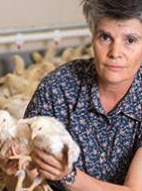 Clara Roselina Angel合作论文数Department of Animal and Avian Sciences, College of Agriculture & Natural Resources, University of Maryland3Jayarao Bhushan M合作论文数Penn State Univ, University Pk3
 Thomas Denagamage合作论文数College of Agricultural Sciences, The Pennsylvania State University3Martin G P合作论文数3
 Hasan Bugra Coban合作论文数Department of Agricultural and Biological Engineering, The Pennsylvania State University3Terri L Cravener合作论文数3
 Ryan J. Elias合作论文数Chenoweth Laboratory, University of Massachusetts3Virendra M. Puri合作论文数3A. M. Lyons合作论文数2Beining Ouyang合作论文数2won keun kim合作论文数2Daniel Hofstetter合作论文数Dept Agr & Biol Engn, Univ Florida2
 Trampel Darrell W合作论文数College of Veterinary Medicine, Iowa State University2
 Keklik Nene M合作论文数Department of Agricultural and Biological Engineering, The Pennsylvania State University2
 Atkins Hannah M合作论文数Department of Veterinary and Biomedical Sciences, Texas A&M College of Veterinary Medicine, College Station, Texas, USA.2G.L Hendricks合作论文数2E. F. Wheeler合作论文数2Patrick a Topper合作论文数2C. A. B. Myers合作论文数2
 Stephen Knabel合作论文数2Patrick A. Topper合作论文数2




