Due to the extended duration and highly nonlinear Mars aerobraking dynamics, state prediction via numerical integration is computationally prohibitive for predictive guidance. In this paper, a residual learning method for autonomous predictive guidance is proposed. The orbital state of the spacecraft governed by high-fidelity Mars aerobraking dynamics is demonstrated to consist of a simplified two-body component and a residual component. The solution for the simplified two-body component is first analytically derived, while the residual component arising from the nonspherical gravitational perturbations and aerodynamic accelerations is compensated by a neural network. With its specially designed structure, the neural network achieves better physical consistency with the integration process. Compared to directly learning the orbital states, it is proved that learning the residual mitigates the vanishing gradient problem, thereby improving prediction accuracy. Leveraging the residual learning method, a predictive guidance method is developed. By predicting the spacecraft’s orbital states over future revolutions, the velocity increments are optimized to maximize aerodynamic deceleration while ensuring compliance with the heat flux constraint. The guidance method is also proved to be asymptotically stable. Finally, the effectiveness of the proposed method is validated through Mars aerobraking numerical simulations.
Due to the weak gravitational field and the uneven topography of asteroids, the conventional rigid lander is prone to rebound and overturn during the landing process. In comparison, a flexible lander can alleviate this problem with its flexible structure and improve the success rate of the landing mission. For the flexible lander as a whole, when designing navigation methods for the flexible lander, internal structural interactions should be considered. Nevertheless, these interactions are governed by deformations of flexible materials and are challenging to characterize. In this article, an autonomous navigation method assisted by relative information is proposed for a flexible lander with a multinode configuration. Building upon independently estimated states at each node, relative states between nodes are incorporated to characterize structural interactions and enhance overall estimation accuracy. To accurately predict these relative states, a flexible proprioceptive network (FPN) is developed. By embedding structural constraints into its design, the FPN achieves high prediction accuracy while offering improved interpretability. After that, an optimal multisource heterogeneous information block-diagonal fusion method is derived. By integrating heterogeneous information from overlapping field of view between nodes and the predictions provided by the FPN, the accuracy of relative state estimation is further improved. Numerical simulations demonstrate that incorporating the relative states improves the state estimation accuracy of the flexible lander. It is also shown that the proposed method maintains reasonable performance by leveraging the introduced relative information under sparse observation conditions.
Flexible landing on small celestial bodies involves mixed state constraints arising from bounded structural deformation and unitquaternion attitude representation. Incorporating these constraints into unbiased minimum-variance (UMV) filtering is challenging because the corresponding gain-design problem is high-dimensional and nonconvex. This article develops a UMV-constrained filter for flexible landing with mixed state constraints. It is shown that, by introducing an increment vector and a tailored objective function, the original gain-design problem can be reformulated, without loss of optimality, as a bilevel optimization problem. The bilevel problem comprises an inner problem with a closed-form solution and an outer problem that optimizes over the low-dimensional increment vector, thereby enabling dimensionality reduction in the optimization variables. By analyzing the structure of its solution space, a spatial decomposition strategy is developed to split the outer problem into three subproblems. Two subproblems admit closed-form solutions derived via the Lagrange multipliers method, whereas the remaining one is solved numerically. In the considered flexible-landing scenario, the proposed bilevel reformulation and spatial decomposition strategy enable efficient computation of the UMV-constrained estimate, with an average runtime of 1.23 & times; 10(-2)s. Simulation results further demonstrate that the proposed filter explicitly satisfies the mixed constraints and provides more accurate position and attitude estimates than the unconstrained filter and the estimated projection method.
Compared to rigid landers, a flexible lander can reduce the landing risks in small celestial body missions by taking advantage of its soft structure. In this article, we focus on the autonomous navigation problem of the flexible lander. Particularly, we consider the utilization of the additional information provided by the inherent state constraints of the landing system, i.e., the flexible deformation constraints, into the design of the navigation filter. To involve such nonlinear inequality constraints, we develop a constrained filtering algorithm with theoretically guaranteed performance. By exploiting the geometrical relationship between the state estimates and the constraint region, we establish the estimation refinement theorem. This theorem presents the sufficient condition for improving estimation accuracy through the inclusion of constraints. Guided by this theorem, we devise a constrained filter where a maximum margin separating hyperplane is optimized to refine the state estimate. Further, we demonstrate that the constrained estimation error is exponentially bounded. At last, we validate the proposed filter through a 433 Eros-based flexible landing simulation.
During the landing of extraterrestrial bodies, landmark features, such as craters on the celestial body's surface, are important observational targets for autonomous optical navigation. They provide absolute navigation information for the estimation of the lander's state. However, such features may not be abundant in the neighborhood of a flat landing area. Besides, as the lander descends, the camera's field of view shrinks, and the features that were once observable would gradually go out of the field of view. These conditions would lead to the issue of sparse features and hinder the autonomous optical navigation performance of the lander. To solve the problem of sparse features, this article proposes the concept of "feature derivation" to enrich the navigation information. On this basis, a derived feature-based estimation method is developed. Two feature derivation models are established by using the sequence images captured by the camera and the spatiotemporal correlations of the features, respectively. Based on the error analysis of the derivation models, the derived results are fused to improve the feature derivation accuracy. The angles between the derived and actual features are computed and adopted for decoupled estimation of the lander's position and attitude. Finally, a set of numerical simulations is devised to demonstrate the performance of the proposed method and verify the feasibility of using the derived features for state estimation.
The Mars landing and sampling return missions are restricted by the key factor of fuel. The use of Mars aerobraking for orbital descent is an important means to save fuel. During the process of aerobraking, the spacecraft needs to enter and exit the Mars atmosphere many times, and the highly uncertain density of the Martian atmosphere brings challenges for autonomous navigation. In order to realize precise state estimation, a multi-information assisted optical navigation method for Mars aerobraking is proposed in this paper. By establishing a segment dynamic model for Mars aerobraking, this method integrates IMU, radio and camera measurement information in a flexible manner. Considering the visibility of the orbiter and the changes of the objects observed by the camera, the autonomous switching criteria of the integrated navigation scheme are designed, achieving autonomous navigation in various situations during the aerobraking process. The simulation results show that this method can reduce the influence of atmosphere uncertainty, realize the high precision autonomous navigation of the whole process of Mars aerobraking, providing a feasible scheme for the state estimation of Mars aerobraking.
In view of the potential landing risks in small celestial body landing missions, the concept of flexible landing has been proposed in recent years. By employing a flexible lander with structural compliance to complex surface topography, the risks of rebound or overturning upon touchdown can be reduced. During flexible landing, the overall motion of the flexible lander is controlled by several nodes embedded in the flexible structure. Due to the flexible deformation, the motion among the nodes is intricately coupled, posing challenges to the control algorithm design. To address this problem, an intelligent cooperative control method for flexible landing is proposed in this paper. By decomposing the flexible internal force into a low-order principal term with specific physical interpretation and an unmodeled high-order residual term, the coupling relationship among the nodes is characterized. On this basis, the low-order dynamics system is reconstructed into a piecewise affine system, upon which a multi-node cooperative optimal controller is designed. A long-short-term memory recurrent neural network is further established to compensate for the unmodeled high-order term. Through the combination of the low-order principal control and the high-order intelligent compensation, a feasible approach for achieving flexible landing is obtained. Finally, the effectiveness of the proposed control method is verified via 433 Eros-based flexible landing simulations.
The recently developed flexible lander offers a potential option for future asteroid landing missions due to its advantages in suppression of rebound and overturning. The strong nonlinear dynamics and control constraints of the flexible lander hinder the online implementation of optimal attitude feedback control. To generate the optimal attitude control rapidly, a constrained inhomogeneous approximating sequence of Riccati equations (CI-ASRE) method is proposed. The saturation function is firstly constructed to incorporate control magnitude constraints into dynamics so that the constraints can be analytically handled. Subsequently, to avoid singularity, a partial factorization strategy is proposed to convert the constrained dynamics into two parts, a pseudolinear term and an inhomogeneous term. This factorization enables the nonlinear problem to be expressed as the limit of a sequence of inhomogeneous linear quadratic problems while avoiding local linearization. At last, the analytical CI-ASRE is newly derived to iteratively solve these problems to rapidly obtain optimal feedback control. The computational simplicity and effectiveness of the CI-ASRE method overcome difficulties of optimal attitude control problems of the flexible lander associated with control constraints, strong nonlinearity, and online feedback control generation. The effectiveness of the proposed method for the flexible lander is verified using a landing scenario on asteroid 433 Eros.
Due to the limited onboard computational capacity, offline landmark sequence selection is widely considered to be beneficial to improve the observability, and thus estimation accuracy of asteroid landing visual navigation. Because of the inevitable pose uncertainty of spacecraft, conventional offline selected landmarks may be invalid and cause severe failure. To this end, the concept and calculation method of visual field intersection set (VFIS) are proposed considering the influence of pose uncertainty. By selecting the interior landmarks via VFIS, the effectiveness of offline landmark selection can be significantly improved. To further improve efficiency of the landmark sequence selection, repeated landmark observation based landmark selection index is proposed for performing further time series optimization on the observability-optimal landmark sequence. It is shown that the effectiveness of landmark selection is improved while ensuring high navigation accuracy. The feasibility and performance of the proposed method are verified through 4769 Castalia based numerical simulations.
For asteroid landing missions in uncertain environments, the thrust commands determined by a feedback control and a fuel-optimal landing trajectory may exceed the allowable thrust magnitude, which affects the stability of the controller. In contrast to the traditional method that designs the nominal trajectory and feedback control law separately, a novel closed-loop guidance method that generates an optimal trajectory while designing a stable feedback control law within the thrust limit is proposed. The method incorporates the feedback control design into the nominal trajectory optimization by shaping controlled trajectory bundles into a contractive invariant set centered on the nominal trajectory. To shape the trajectory bundles, the contractive invariant criterion is derived and augmented into the optimization with the feedback gain as an optimization variable. Then, the corresponding feedback control, expressed by the feedback gain and contractive invariant set, is introduced to form a stability-related control constraint, which keeps closed-loop thrust within the limit and ensures control stability. In addition, to improve the collision avoidance capability in uncertain terrains, a three-dimensional convex curvature constraint is proposed by constraining the geometric relationship between position and velocity vectors, and used as a soft constraint in the optimization. Finally, the proposed method is simulated using a landing mission on asteroid 433 Eros, which validates the superiority in the tracking performance and the collision avoidance capability.
针对大规模星座轨道预报存在卫星数量多、摄动方程强非线性等难题,提出一种基于平均速率矩阵的多星同步快速轨道预报算法.该算法首先基于哈密顿力学理论建立了二阶带谐项摄动下的轨道动力学模型,其次,利用无奇异轨道根数提出了一种近圆无奇异解析轨道预报模型,并基于Fourier-Bessel级数理论消除真近点角使模型只含有平近点角,简化预报计算过程,在此基础上,基于矩阵理论构造了多星轨道同步预报算法,实现多星轨道同步快速预报.以"星链"卫星星座为例进行仿真,结果表明:提出的方法能够将计算速度提高一个数量级,7天的轨道预报误差小于2.7 km.
针对探测器在小天体附着任务中面临的弱引力环境下易反弹和倾覆问题,论述了柔性附着方式,并探讨了柔性附着的关键技术.首先分析了小天体附着任务的特点和由此引发的主要技术问题;进而结合已实施的小天体附着任务,探讨了现有的"刚性+缓冲"方式与"接触即走"方式的特点及不足,并介绍新型的"柔性附着"方式.在此基础上,围绕柔性附着方式,对自主导航与制导控制等关键技术的研究进展与难点进行了总结和分析,并讨论了未来研究方向.
This paper investigates the trajectory design for landing on a small celestial body with a flexible lander. The flexible lander features a flexible structure that increases surface contact area and facilitates the dissipation of residual kinetic energy. Compared with rigid landing, flexible landing, which utilizes a flexible lander to execute the landing process, offers enhanced safety during the landing operation. However, the introduced nonlinear flexible force will degrade the convergence of landing trajectory optimization. To address this challenge, the homotopic approach is employed to smoothly connect the trajectory optimization problem from rigid landing to flexible landing. Then, the connection between the optimal solution of the rigid problem and the flexible problem is revealed in detail with the presented theorem. Based on this theorem, the flexible landing fuel optimal trajectory is generated by iteratively solving a sequence of convexified and discretized homotopic problems. The effectiveness of the proposed algorithm is demonstrated through 433 Eros flexible landing mission based numerical simulations.
基于行星定点软着陆探测任务的需求,围绕复杂形貌行星着陆过程环境特点,首先分析了行星着陆复杂形貌特征匹配与自主导航所面临的主要技术挑战,随后综述了行星着陆复杂形貌特征匹配与自主导航的研究现状,并概括了行星着陆复杂形貌特征匹配与自主导航所涉及的关键技术.最后对未来行星着陆探测复杂形貌特征匹配与自主导航发展方向进行了展望.
针对小天体附着过程易发生倾覆、反弹导致任务失败问题,提出"柔性附着"概念,替代传统小天体探测的刚性附着模式,为提高小天体附着任务可靠性提供新的解决思路和技术途径.在此基础上,针对柔性着陆器的状态估计问题展开研究.首先建立了柔性着陆器近似模型,提出了柔性着陆器"等效面"概念及柔性着陆器姿态的近似表征方式,进而提出了柔性附着状态协同估计方法,并通过数值仿真检验了柔性着陆器状态协同估计的可行性.
Future asteroid landing and sample return missions will seek for landing sites with high scientific value, such as hazardous terrains, which means that the spacecraft needs the ability of autonomous hazard avoidance. Nowadays, the guidance algorithm based on artificial potential function plays an increasingly important role in hazard avoidance, but the local minimum problem makes that the spacecraft cannot reach the desired target landing point in some complex terrains. In this paper, a novel hazard avoidance guidance method which improves the traditional artificial potential function is developed. This method focuses on the impact zone analysis of hazards and defines anti-collision zone. In addition, a new repulsive potential function in logarithmic form is designed with continuity and fast numerical change rate in the anti-collision zone on this basis, and the problem of spacecraft falling into local minimum zone in complex terrains can be effectively avoided. Considering the practical application of constant thrust engine, the hazard avoidance control law with constant thrust sliding mode is designed to reduce switching frequency and fuel consumption. The performance of the proposed guidance law is verified through a set of simulations, as well as the global stability of the control system under uncertainty and perturbation conditions.
Considering the requirement of avoiding obstacles in different planetary landing missions, this article presents a generalized method dealing with the obstacle avoidance constrained landing trajectory optimization problem with vectorized strategy, i.e., vector trajectory method (VTM). By introducing a trajectory direction constraint with vectorized description, the character of the obstacle avoidance trajectory can be more specifically depicted. Moreover, by satisfying proper trajectory direction constraint, the lander's particular performances, such as the observation to the target or probability of a safe flight, can be improved. To this end, the VTM and relevant theorem are first developed, revealing the relationship between the two aspects of obstacle avoidance constraint (i.e., distance constraint and trajectory direction constraint). Then, both aspects of constraints are uniformly transformed as the auxiliary angle magnitude constraint with the vectorized strategy, which significantly simplifies the solving procedure of obstacle avoidance constrained trajectory optimization problem. Finally, the proposed VTM is illustrated in detail through the examples with the planetary landing background of atmospheric entry and powered descent landing.
Autonomous landing in complex and hazardous terrains is a critical stage of planetary in-situ exploration and sample-return missions. The design of the landing trajectory has to seek a balance between safety and fuel economy. Based on the theorems of convex trajectory and curvature guidance law, this paper proposes an obstacle avoidance guidance method with an adaptive curvature adjusting mechanism. The method remains the advantage in obstacle avoidance of the existed curvature guidance, and can further minimize fuel consumption by adopting a global optimization technique with a specific curvature constraint. Firstly, the nonconvex curvature constraint is transformed into a second-order cone constraint to construct a standard convex programming problem. The curvature adjustment strategy is then designed to adapt the trajectory to varying terrain conditions. By introducing the successive convex technique, the adaptive curvature guidance strategy is also suitable for small celestial body landing problems in nonlinear dynamic environments. Simulations of typical planetary landing scenarios are conducted to verify the effectiveness of the proposed method in improving safety and fuel efficiency.
 Hutao Cui (崔祜涛)合作论文数School of Astronautics, Harbin Institute of Technology141
 Shengying Zhu (朱圣英)合作论文数School of Aerospace Engineering, Beijing Institute of Technology92
 Dong Qiao (乔栋)合作论文数School of Aerospace Engineering, Beijing Institute of Technology53
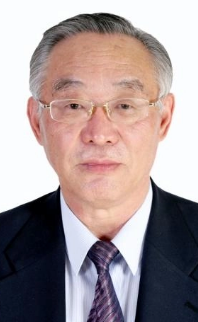 Enjie Luan (栾恩杰)合作论文数Harbin Institute of Technology50
 Rui Xu (徐瑞)合作论文数Beijing Institute of Technology48
 Yangzhou Chen (陈阳舟)合作论文数Faculty of Information Technology, Beijing University of Technology36
 Ai Gao (高艾)合作论文数School of Aerospace Engineering, Beijing Institute of Technology31
 Hehua Ju (居鹤华)合作论文数College of Aerospace Engineering, Nanjing University of Aeronautics and Astronautics31
 Haibin Shang (尚海滨)合作论文数School of Aerospace Engineering, Beijing Institute of Technology27
 Zhengshi Yu (于正湜)合作论文数Beijing Institute of Technology27
 Dantong Ge (葛丹桐)合作论文数School of Aerospace Engineering, Beijing Institute of Technology21
 Fujun Pei (裴福俊)合作论文数Faculty of Information Technology, Beijing University of Technology17
 Jiateng Long (龙嘉腾)合作论文数School of Aerospace Engineering, Beijing Institute of Technology17
 Yuan Ren合作论文数13
 Zexu Zhang (张泽旭)合作论文数School of Astronautics, Harbin Institute of Technology13
 Cao Meng-long合作论文数11
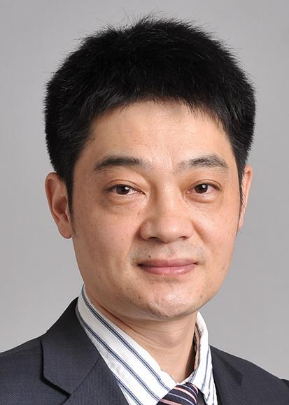 Liguo Zhang (张利国)合作论文数Beijing University of Technology11
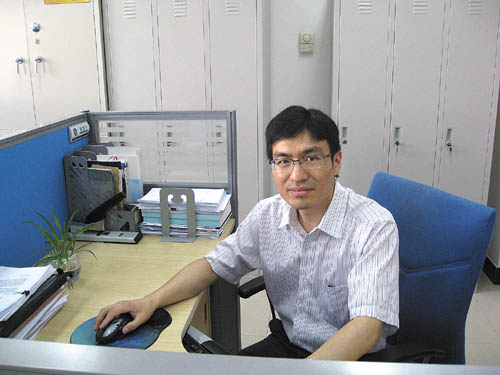 Xiangyu Huang (黄翔宇)合作论文数五院502所11Xiao-Hua Chang合作论文数11
 Yamin Wang (王亚敏)合作论文数Chinese Acad Sci, Innovat Acad Microsatellites10Fuzhan Yue合作论文数10XueYan Shi (史雪岩)合作论文数9
 Shuang li (李爽)合作论文数Department of Astronautics Engineering, College of Astronautics, Nanjing University of Aeronautics and Astronautics9
 Zixuan Liang (梁子璇)合作论文数School of Aerospace Engineering, Beijing Institute of Technology9RongChun Zang (臧荣春)合作论文数8Tianlai Xu合作论文数8
 Tong Qin (秦同)合作论文数School of Information and Electronics, Beijing Institute of Technology7
 Zhaoyu Li (李朝玉)合作论文数School of Aerospace Engineering, Beijing Institute of Technology7JunHua Feng合作论文数6
 Zhao Z合作论文数6Xiaorui Huang合作论文数6Hai-jing HU (胡海静)合作论文数6YanJun Zhang (张彦军)合作论文数6
 Fanyu Zhao (赵凡宇)合作论文数Institute of Advanced Technology, Zhejiang University6Zunhui Zhao合作论文数5Xizhen GAO (高锡珍)合作论文数5Yufei Liu合作论文数5Wei Shao合作论文数5BaoHua Lian (连葆华)合作论文数5YouAn Zhang (张友安)合作论文数5Xu Zha合作论文数5Xiaoming Wang (王晓明)合作论文数School of Instrumentation Science and Engineering, Harbin Institute of Technology5
 Xiaofei Xu (徐晓飞)合作论文数Faculty of Computing, Harbin Institute of Technology5Yulong Tian合作论文数5Chiping Zhang (张池平)合作论文数School of Mathematics, Harbin Institute of Technology5Ma Haibo合作论文数4Tian Yang合作论文数4He Jia (贾贺)合作论文数4Dongyue Zhao (赵冬越)合作论文数4




