We study d-way balanced allocation, which assigns each incoming job to the lightest loaded among d randomly chosen servers. While prior work has extensively studied the performance of the basic scheme, there has been less published work on adapting this technique to many aspects of large-scale systems. Based on our experience in building and running planet-scale cloud applications, we extend the understanding of d-way balanced allocation along the following dimensions: (i) Bursts: Events such as breaking news can produce bursts of requests that may temporarily exceed the servicing capacity of the system. Thus, we explore what happens during a burst and how long it takes for the system to recover from such bursts. (ii) Priorities: Production systems need to handle jobs with a mix of priorities (e.g., user facing requests may be high priority while other requests may be low priority). We extend d-way balanced allocation to handle multiple priorities. (iii) Noise: Production systems are often typically distributed and thus d-way balanced allocation must work with stale or incorrect information. Thus we explore the impact of noisy information and their interactions with bursts and priorities. We explore the above using both extensive simulations and analytical arguments. Specifically we show, (i) using simulations, that d-way balanced allocation quickly recovers from bursts and can gracefully handle priorities and noise; and (ii) that analysis of the underlying generative models complements our simulations and provides insight into our simulation results.
When large language models (LLMs) use in-context learning (ICL) to solve a new task, they seem to grasp not only the goal of the task but also core, latent concepts in the demonstration examples. This begs the question of whether transformers represent latent structures as part of their computation or whether they take shortcuts to solve the problem. Prior mechanistic work on ICL does not address this question because it does not sufficiently examine the relationship between the learned representation and the latent concept, and the considered problem settings often involve only single-step reasoning. In this work, we examine how transformers disentangle and use latent concepts. We show that in 2-hop reasoning tasks with a latent, discrete concept, the model successfully identifies the latent concept and does step-by-step concept composition. In tasks parameterized by a continuous latent concept, we find low-dimensional subspaces in the representation space where the geometry mimics the underlying parameterization. Together, these results refine our understanding of ICL and the representation of transformers, and they provide evidence for highly localized structures in the model that disentangle latent concepts in ICL tasks.
Prabhakar Raghavan has given a Keynote Talk at The ACM Web Conference 2022 on Wednesday 27th April 2022. This paper provides a summary of the topics he addressed during his talk.
Most of the text mining methods use term-based mining. All those methods are affected by common problems such as synonymy and polysemy. Mining of patterns have more advantage than other term based methods. Pattern Taxonomy Mining can be used to increase the effectiveness in the discovery of useful patterns. In addition to solving the common problems in term based mining, this paper tries to address the low occurring problems as well. Algorithms to deploy patterns and to evolve inner pattern are used to improve the effectiveness of pattern discovery. RCV1 text collection is used for experiments in this paper. Performance and execution of text categorization have significantly enhanced without any lose in the accuracy rate.
This chapter presents an evaluation of the proposed image mining systems via average precision-recall curves of proposed image retrieval systems for Pascal database, average precision of top-ranked results after the ninth feedback for the Corel database, average recall of top-ranked results after the ninth feedback for the Corel database, average precision of proposed methods for different semantic classes for the Pascal database, average recall of proposed methods for different semantic classes for the Pascal database, average precision of top-ranked results after the ninth feedback for information retrieval (IR) with summarization and IR without summarization for the Pascal database, average execution time of proposed methods (in seconds), and performance analysis of top retrieval results obtained with the proposed image retrieval systems. Average The experiment on Corel and Vistex image database …
In this paper we introduce a mathematical model that captures some of the salient features of recommender systems that are based on popularity and that try to exploit social ties among the users. We show that, under very general conditions, the market always converges to a steady state, for which we are able to give an explicit form. Thanks to this we can tell rather precisely how much a market is altered by a recommendation system, and determine the power of users to influence others. Our theoretical results are complemented by experiments with real world social networks showing that social graphs prevent large market distortions in spite of the presence of highly influential users.
Metrics of energy, area, and time are defined for a graph-theoretic model or VLSI computation. A number of "technological constant factors" are introduced in order to account for the effects of using different technologies for implementing logic circuits. Different constant factors are seen to be appropriate for different logic families. We examine seven such families: NMOS, CMOS, CMOS-SOS, I2L, GaAs HEMT, JJ-CIL, and JJ-CS.
The social sciences are at a remarkable confluence of events. Advances in computing have made it feasible to analyze data at the scale of the population of the world. How can we combine the depth of inquiry in the social sciences with the scale and robustness of statistics and computer science? Can we decompose complex questions in the social sciences into simpler, more robustly testable hypotheses? We discuss these questions and the role of machine learning in the social sciences.
Graphs resulting from human behavior (the web graph, friendship graphs, etc.) have hitherto been viewed as a monolithic class of graphs with similar characteristics; for instance, their degree distributions are markedly heavy-tailed. In this paper we take our understanding of behavioral graphs a step further by showing that an intriguing empirical property of web graphs --- their compressibility--- cannot be exhibited by well-known graph models for the web and for social networks. We then develop amore nuanced model for web graphs and show that it does exhibit compressibility, in addition to previously modeled web graph properties.
Rajeev Motwani was a pre-eminent theoretical computer scientist of his generation, a technology thought leader, an insightful venture capitalist, and a mentor to some of the most influential entrepreneurs in Silicon Valley in the first decade of the 21st century. This article presents an overview of Rajeev’s research, and provides a window to his early life and the various influences that shaped his research and professional career—it is a small celebration of his wonderful life and many achievements. ACM Classification: K.2/People, F.2.2 AMS Classification: 01A70, 68-00
User modeling on the Web has rested on the fundamental assumption of Markovian behavior --- a user's next action depends only on her current state, and not the history leading up to the current state. This forms the underpinning of PageRank web ranking, as well as a number of techniques for targeting advertising to users. In this work we examine the validity of this assumption, using data from a number of Web settings. Our main result invokes statistical order estimation tests for Markov chains to establish that Web users are not, in fact, Markovian. We study the extent to which the Markovian assumption is invalid, and derive a number of avenues for further research.
Part of PPG’s Impact of Social Sciences project focuses on how academic research in the social sciences influences decision-makers in business, government and civil society. We will cover a series of salient viewpoints emerging from this interview programme on the blog over the next three months. To launch the series Rebecca Mann talked to Prabhakar Raghavan, who is Vice President of Strategic Technologies at Google, and Consulting Professor of Computer Science at Stanford. He explains the role that social scientists are already playing in the development of the tech sector in Silicon Valley, and discusses the opportunities for impact and some remaining obstacles to collaboration.
A strong query for a target document with respect to an index is the smallest query for which the target document is returned by the index as the top result for the query. The strong query problem was first studied more than a decade ago in the context of measuring search engine overlap. Despite its simple-to-state nature and its longevity in the field, this problem has not been sufficiently addressed in a formal manner. In this paper we provide the first rigorous treatment of the strong query problem. We show an interesting connection between this problem and the set cover problem, and use it to obtain basic hardness and algorithmic results. Experiments on more than 10K documents show that our proposed algorithm performs much better than the widely-used word frequency-based heuristic. En route, our study suggests that less than four words on average can be sufficient to uniquely identify web pages.
 Christopher Manning合作论文数Department of Linguistics, Stanford University;Department of Computer Science, Stanford University;AIX Ventures48
 Hinrich Schütze合作论文数Fakultät Für Mathematik, Informatik Und Statistik, Ludwig-Maximilians-Universität München;Institut Für Informatik, Ludwig-Maximilians-Universität München;Data Science Lab, Ludwig-Maximilians-Universität München;Center for Information and Language Processing, Ludwig-Maximilians-Universität München40
 Andrew Tomkins合作论文数Google40
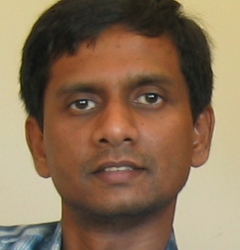 Ravi Kumar合作论文数Google Research32
 Sridhar Rajagopalan合作论文数Almaden Research Lab, IBM28
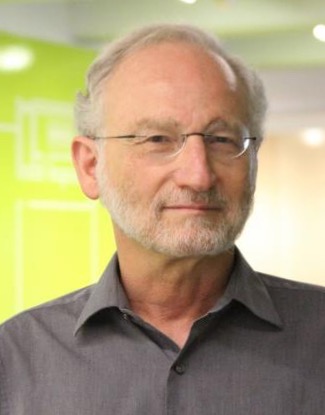 Eli Upfal合作论文数Department of Computer Science, Brown University26
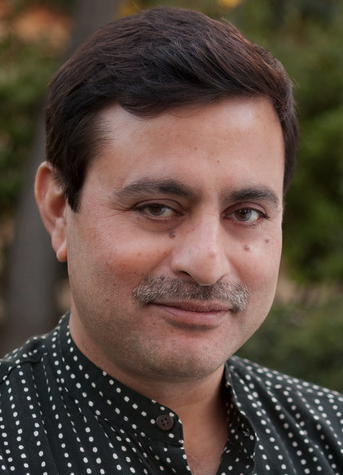 Rajeev Motwani合作论文数Department of Computer Science, Stanford University26
 Jon Kleinberg合作论文数Department of Computer Science, Cornell University;Department of Information Science, Cornell University24
 Soumen Chakrabarti合作论文数Department of Computer Science and Engineering, Indian Institute of Technology Bombay15
 Andrei Broder合作论文数Google13
 Jasmine Novak合作论文数Apple11
 David Gibson合作论文数10
 Byron Dom合作论文数Yahoo! Labs, Sunnyvale, CA, USA9
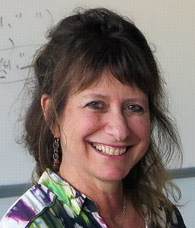 Anna R. Karlin合作论文数Allen School of Computer Science & Engineering, University of Washington8
 Allan Borodin合作论文数Department of Computer Science, University of Toronto8
 Christos Papadimitriou合作论文数Department of Computer Science, Fu Foundation School of Engineering and Applied Science, Columbia University8shanmugasundaram ravikumar合作论文数7Clark D. Thompson合作论文数7
 Flavio Chierichetti合作论文数Dipartimento di Informatica, Sapienza University of Rome7
 Rakesh Agrawal合作论文数Data Insights Laboratories7
 Don Coppersmith合作论文数IDA Center for Communications Research6
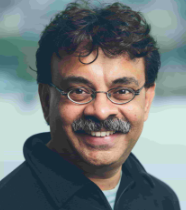 Madhu Sudan合作论文数John A. Paulson School of Engineering and Applied Sciences, Harvard University6
 Walter L. Ruzzo合作论文数Paul G. Allen School of Computer Science & Engineering, University of Washington;Fred Hutchinson Cancer Research Center5
 Martin Tompa合作论文数Paul G. Allen School of Computer Science & Engineering, University of Washington5
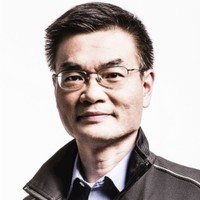 Jianchang (JC) Mao合作论文数Fellows Fund5
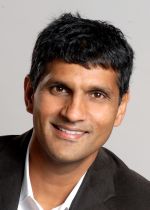 Satish Rao合作论文数Department of Electrical Engineering & Computer Sciences, University of California, Berkeley5
 Hisao Tamaki (玉木久夫)合作论文数Graduate School of Science and Technology, Meiji University5
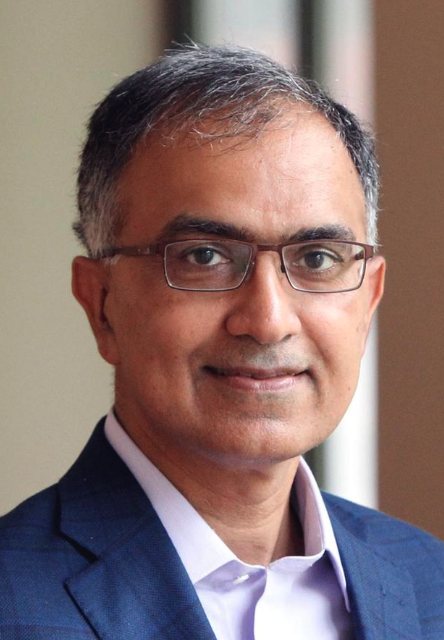 Sanjeev Arora合作论文数Department of Computer Science, Princeton University4
 Alessandro Panconesi合作论文数Dipartimento di Informatica Sapienza Universita di Roma4
 David Peleg合作论文数Department of Computer Science and Applied Mathematics, Weizmann Institute of Science4
 D. Sivakumar合作论文数Tonita4
 Avrim Blum合作论文数Toyota Technological Institute at Chicago4Joseph Magnani合作论文数4
 Ron Fagin合作论文数IBM Almaden Research Center4
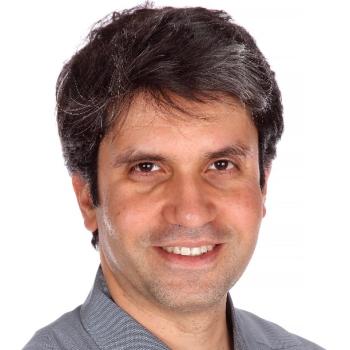 Moses Charikar合作论文数Department of Computer Science, Stanford University4Micah Dubinko合作论文数4Rajat Mukherjee合作论文数3
 Jean-Claude Latombe合作论文数Computer Science Department, School of Engineering, Stanford University;Department of Applied Informatics and Multimedia, Asia University Taichung3
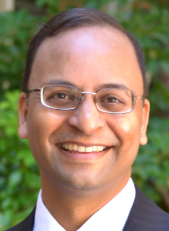 Amit Sahai合作论文数Department of Computer Science, University of California, Los Angeles3
 Baruch Schieber合作论文数Department of Computer Science, Ying WU College of Computing, New Jersey Institute of Technology;Institute for Future Technologies, New Jersey Institute of Technology3
 Alan Frieze合作论文数Department of Mathematical Sciences, Mellon College of Science, Carnegie Mellon University3
 Uriel Feige合作论文数Department of Computer Science and Applied Mathematics, The Weizmann Institute of Science3
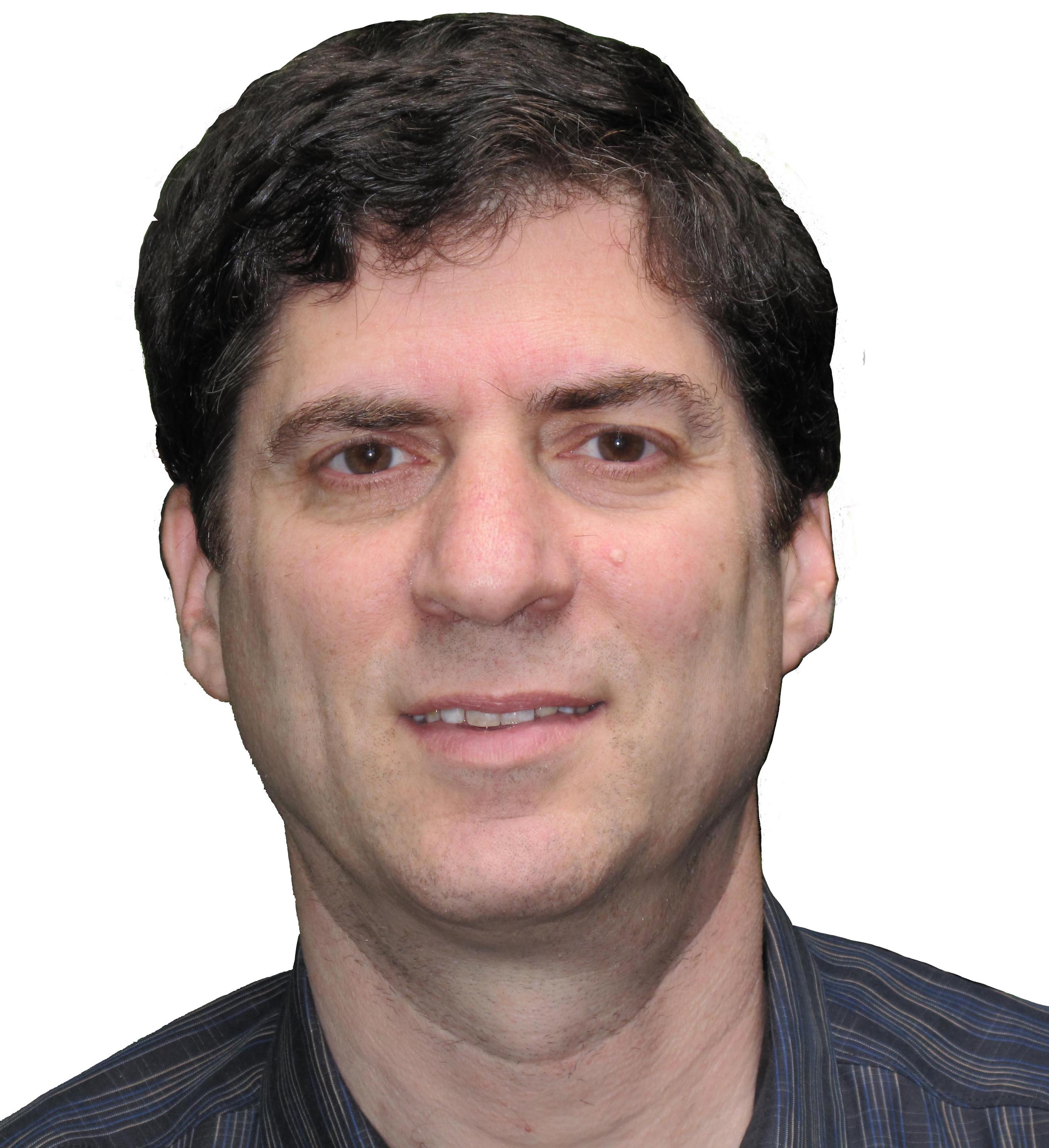 Paul Beame合作论文数Department of Computer Science & Engineering, Paul G. Allen School of Computer Science & Engineering, University of Washington3
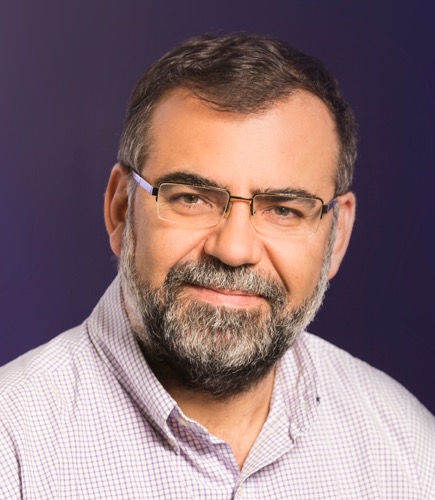 Ricardo Baeza-Yates合作论文数David R. Cheriton School of Computer Science, University of Waterloo;KTH Royal Institute of Technology;Chalmers University of Technology;Theodora AI3
 Johannes Gehrke合作论文数Microsoft3
 Dimitrios Gunopulos合作论文数Department of Informatics and Telecommunications, National and Kapodistrian University of Athens3
 Martin Dyer合作论文数School of Computing, University of Leeds3
 Silvio Lattanzi合作论文数Algorithm & Optimization Group, Google Research3Sergio A. Felperin合作论文数Computer Research and Advanced Applications Group, IBM3