Biomass is the face of green energy today. It had a prominent role in the preindustrial age but lost that with the advent of coal. Its share in the energy mix and in other areas is rising again. Biomass, although used primarily for energy conversion, has many other uses. It can produce almost everything that is currently produced from fossil fuels. This chapter explains the benefits biomass could bring to the society and to the industry. A brief description of different thermochemical conversion processes, ranging from combustion to chemical production, is presented. Special mention is made for the reduction in carbon emission through carbon capture and storage, cofiring, and the new option of biochar production and biomass burial.
This article provides a comprehensive overview of outsourcing in pharmaceutical manufacturing. It discusses the motivation of the industry to leverage outsourcing advantages, especially to China and India, but also related disadvantages. Key facts about quality issues related to outsourcing are outlined with examples. The increasing complexity of pharmaceutical manufacturing supply chains and an aggravated oversight of suppliers with the loose of control are just one explanation for that. Furthermore, the article describes how outsourcing impacts quality risks and draws on examples from the past. To mitigate these, practical advice for supplier due diligence, contractor selection and assessment process, and how to achieve operational excellence in outsourcing operations are provided. Lastly, a comparison of outsourcing and internal manufacturing is drawn from a cost and risk perspective.
Waste seaweed that is collected at coastal regions of maritime provinces in Canada is creating ecological problems as it promotes an anoxic event, which produces nearly zero dissolved oxygen in water along with hydrogen sulfide emission. The work done in this study attempts to address this issue by producing a coal-like solid hydrochar and nutritious liquid slurry (processed water) by employing a rather recent thermo-chemical process called hydrothermal carbonization (HTC) on the seaweed. The HTC was carried out in a batch reactor system for three different reaction temperatures, 180 °C, 200 °C, 220 °C, and three different reaction times, 30, 60, and 120 min. Each of the produced hydrochars was characterized by different analytical methods. The effects of the process conditions on the yield and the properties of the hydrochar and process water were examined. The hydrochar produced at 220 °C and 120 min showed the highest carbon content (48.5%) and heating value (18.93 MJ/kg). The energy density and carbon to nitrogen (C/N) ratio in the hydrochar increased significantly as compared to raw seaweed. Moreover, HTC reduced the ash yield and volatile compounds of the seaweed. Thus, hydrochar can be used as a fuel for direct combustion, in soil remediation, or in carbon sequestration applications.
Silver (Ag) based front contact metallisation is a crucial process step in industrial Si solar cell fabrication. Lesser front metal coverage leads to high resistive losses, whereas higher coverage results in shadowing loss as well as increased metal-induced recombination losses. Both scenarios impede the power conversion efficiency of solar cells. Therefore, it is essential to monitor the shadow, resistive, and metal-induced recombination losses associated with the design of front Ag contact. In this work, we demonstrate the application of photoluminescence (PL) imaging technique in association with the other conventional characterization techniques used in the optimization of front contact metallisation.
In recent years, there is a growing interest in reducing the various losses occurring at the rear surface of passivated emitter and rear contact (PERC) silicon solar cells through process optimization including chemical polishing, dielectric passivation and contact geometry etc. to realize the possible improvements in power conversion efficiency. In this contribution, a detailed investigation on recombination and resistive losses at rear surface of PERC solar cells using advanced imaging techniques for spatial distribution and allied characterization approaches are performed for better understanding of loss mechanisms and possible routes for their mitigation. Our analysis identifies that spreading resistance (R-spr) and reverse saturation current density due to first diode (J(01)) are the two key parameters in quantifying the efficiency improvement in PERC solar cells. For rear dielectric opening of 45 mu m, optimized circular contact geometry was found to exhibit lower R-spr, as well as J(01), when compared with the linear scheme. Our calculation also suggests an additional possible improvement of absolute 1.29% in power conversion efficiency through appropriate selection of starting wafer resistivity and improved passivation uniformity across the solar cell area.
Low cost metal assisted chemical etching (MACE) based black silicon (b-Si) texturization process is demonstrated for diamond wire sawn (DWS) multi-crystalline (mc-Si) wafers. Acid etching followed by diluted alkaline solution based polishing processes are used for modifying the b-Si surface for suppressing the heavy recombination associated with b-Si surfaces. Surface modification of b-Si results in random inverted pyramid textures with balanced optical and electrical properties. Correlation between surface morphology and its opto-electronic properties are investigated in detail. Low weighted average reflectance of 16.8% (without ARC) and minority carrier lifetime of 72 μs is reported for optimized b-Si modified textured mc-Si wafers.
Diamond-wire-sawing (DWS) technique allows slicing of silicon ingots to produce wafers at cheaper price due to its reduced kerf-loss and increased cutting rate. However, there is no cost-effective and industrially viable method available for texturing DWS wafers, especially for multicrystalline silicon (mc-Si) wafers. Currently additive-based acid texturing process is availed by PV manufacturing units for texturing DWS me-Si wafers. An additive-free, low cost and energy-efficient acid texturing process is demonstrated for DWS me-Si wafers in industrial production line. Nearly 10% absolute reduction in weighted average reflectance values (WAR) are noticed for the newly textured wafers from that of as-cut DWS me-Si wafers and the WAR values are comparable to that of existing additive-based acid textured me-Si wafers. An absolute reduction in emitter saturation current density by similar to 17 fA - cm(-2) and improved implied open circuit voltage of similar to 5 mV (absolute) are reported for lifetime sample fabricated using newly textured wafers when compared to the additive-based acid textured lifetime samples. An impressive batch average efficiencies of 18.20% and 18.24% are achieved for the additivefree and existing additive-based acid textured me-Si cells, respectively. Detailed analysis conclude that similar to 1.5% (relative) enhancement in short circuit current density can be achieved by further process optimization. Cost analysis indicates that 60% of the chemical cost involved the texturing process can be cut down by replacing the existing additive-based acid process with the new method using the same process equipment. Hence, the texturing process presented has great potential for producing large area high efficiency me-Si cells favoring cost considerations without compromising performance.
A simple single-step kinetic model consisting of two parallel reactions is proposed for torrefaction of small biomass particles. The model is validated against experimental data on torrefaction of poplar wood fines. Comparison of experimental data and model prediction shows that the results predicted by the proposed simplified model are as accurate as those from the models of Di Blasi and Lanzetta (1997) and Rousset et al. (2006) which involve larger numbers of model parameters - eight and sixteen, respectively - compared to four in the proposed model. This makes it suitable for incorporation into the overall reactor model. At 493 and 553 K, the relative mean errors are found to be 0.056, 0.080, 0.051 and 0.050, 0.100, 0.048 for the proposed model, Rousset et al.'s (2006) model and Blasi and Lanzetta's (1997) model, respectively. The effect of particle size, temperature and residence time on torrefaction of biomass is investigated. A transformation of rate-controlling regime from kinetic to heat transfer is identified with an increase in particle size and temperature. Sensitivity analysis shows that the dimensionless groups such as pyrolysis number, dimensionless heat of reaction and dimensionless activation energy have significant influence on the particle temperature and torrefaction behaviour.
This report presents the findings from three years of Quality Metrics Research and builds on seminal outcomes from earlier operations and quality management research, e.g. Voss et al. (Voss, Blackmon, Hanson, & Oak, 1995), Ferdows and De Meyer (Ferdows & De Meyer, 1990), Deming (Deming, 1986). The work undertaken in year 3 has deepened the insights and enhanced the models developed in the first two years of Quality Metrics Research by the University of St.Gallen (Friedli, Kohler, Buess, Basu, & Calnan, 2017, 2018). The following main results are highlighted below and are further described in more detail in this report in the relevant chapters noted.
Photoluminescence (PL) imaging has emerged as an important tool for obtaining the spatial variation of the electronic and electrical parameters of Si wafer and solar cells. Since this is a contactless measurement, spatial lifetime maps can be obtained at different stages of processing. This paper consists of two parts. In the first part we describe a low cost PL imaging tool developed at NCPRE. Improvements in image quality using both hardware and software approaches will be presented. In the second part, we present various case studies of how processing affects minority carrier lifetime and series resistance.
A novel low cost process for texturing the diamond wire sawn (DWS) multi-crystalline silicon (mc-Si) wafers is demonstrated. The proposed scheme does not use any additives or metals and can be integrated into any standard industrial acid texturing tool. This process can be carried out at temperature ranges from 13–17 °C, which is normally higher than the temperature used for the conventional acid texturization process and thus making the process energy efficient. In this work, authors use HF rich acid solution for the generation of the porous silicon (Por-Si) layer, it is then followed by Por-Si dilution in an alkali solution. Process generates less porous, inverted rounded structures on the mc-Si wafer surfaces with excellent light trapping properties. Textured surfaces yield weighted average reflectance of 22.5
Ontario biomass could be thermochemically processed by dry and wet torrefaction to produce high quality solid biofuel. These solid fuels or raw biomass could also be gasified to produce syngas. This study analyzes and demonstrates a successful and efficient way of producing bioethanol from syngas fermentation using Clostridium ljungdahlii in a laboratory scale continuous stirred tank bioreactor having an innovative gas supply and effluent extraction structures. At the beginning of the experiment, a batch process was conducted to grow microorganisms and allow the growth of the microorganisms to reach to maximum cell density in a reactor without supplying a gas. Ethanol production was observed by supplying two different gas compositions which included 100% CO and simulated syngas, mimicking the composition of syngas extracted from lignocellulosic biomass having 60% CO, 35% H-2, and 5% CO2. CO and syngas were fermented with different gas flow (5-15 mL/min), effluent flow (0.25-0.75 mL/min), and media flow rates and stirrer speed (300-500 rpm) at atmospheric pressure and 37 degrees C. The gas flow rate, media and effluent flow rate, pH level, and stirrer speed were controlled during the fermentation process. The exhaust gas was reused for the improvement of residence time using a loop-back system for improving the gas-liquid mass transfer. Excessive foam was observed during the fermentation process which was controlled using diluted antifoam-204. Maximum cell concentration reached 2.4 g/L. The mass transfer coefficient showed better performance during syngas fermentation than CO fermentation. More bioethanol production was observed by syngas fermentation than CO fermentation. CO fermentation produced 0.17-1.33 g/L-effluent ethanol and 8.92-23.67 g/L-effluent acetic acid whereas syngas fermentation produced 0.85-3.75 g/L-effluent ethanol and 8.89-14.97 g/L-effluent acetic acid.
A high efficiency (>\(18\%\)) industrial large area crystalline silicon wafer solar cell fabrication process generally requires industrial equipment with large footprint, high capital and running costs. Stricter processing window, continuous monitoring and automated functioning are the reasons for it. However, for any conventional laboratory (lab) it is always difficult to manage these requirements with limited available lab space or insufficient fund and other related resources. In this work, we report a novel way to fabricate high efficiency full area aluminium back surface field monocrystalline silicon wafer solar cells in our lab using low-cost processing with small-footprint fabrication tools for 6 inch pseudo-square industrial wafers. The novelty of our work includes optimization of every fabrication process step, e.g., texturization, emitter diffusion, emitter passivation and anti-reflection coating deposition, edge-isolation, screen printing and co-firing individually. These modifications include tuning of processing tools and processes, utility changes and inclusion of additional process steps. Beaker-based chemical processes, manual diffusion furnace, introduction of low temperature oxidation, low temperature silicon nitride deposition processes, plasma-edge isolation tool, single manual screen printer, single oven drying of metal pastes and co-firing using rapid thermal processing tools were used at our lab. For our cells, actual and active area efficiencies of 18.5 and 19% (measured under AM1.5G 1 Sun condition), respectively, were achieved.
In this work, we report a low-cost, industrially viable chemical oxidation process (named as NCPRE-oxide process) using sodium hypochlorite (NaOCl) solution applicable to 5-inch pseudo-square monocrystalline silicon Al-BSF solar cells. Introduction of this new ultrathin oxide layer in between silicon nitride layer and silicon shows the improvement in the open circuit voltage and thereby the efficiency of solar cells.
Velocity and pressure distribution in the air duct system and that over the grate of a potato-rock separator of Alan Equipment, PEI was analysed utilizing computational fluid dynamics.COMSOL software using appropriate boundary conditions was used for rapid analysis of flow through the system.To calibrate the theoretical results velocity, pressure and flow rates were measured on the actual full-scale unit.These tests were carried out using pitot tube, digital manometer and special duct flow measurer.Experimental result was compared with the obtained simulation result.The effect of duct geometry on the velocity distribution through the grate was established through this exercise.We make use of CFD software to understand the pattern of the air flow in the air plenum for various designs.Thereafter different design options were analysed using CFD.The best option was chosen and was implemented in the modification of design of the full-scale rock-potato separator.Experiment was carried out on the modified unit.The measurements showed good distribution of air as predicted by the CFD simulation.
Partial replacement of coal with carbon neutral biomass is an effective practical and inexpensive means of reduction in carbon emission from existing coal fired power plants. This chapter discusses different means of cofiring biomass with coal and highlights some important issues involved in this process. Torrefaction pretreatment of biomass could significantly enhance the percentage replacement of coal with biomass. Operating problems of cofired boiler is also discussed here.
 Animesh Dutta合作论文数University of Guelph21
 Bishnu Acharya合作论文数Dalhousie University21
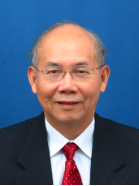 Kefa Cen (岑可法)合作论文数College of Energy Engineering, Zhejiang University;Institute for Thermal Power Engineering, Zhejiang University20
 Louis Jestin合作论文数Department Equipment, Electricite de France20
 Ashok Kumar Sharma合作论文数9
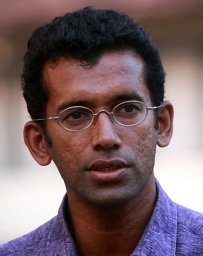 Anil Kottantharayil合作论文数indian institute of technology bombay9
 Thomas Friedli合作论文数8
 Scott A. Fraser合作论文数7
 Sreejith K P合作论文数6Nuala Calnan合作论文数5
 Siddharth Behera合作论文数National Centre for Photovoltaic Research and Education (NCPRE), Indian Institute of Technology5
 Daya R Nhuchhen合作论文数Mech Engn, Dalhousie Univ5
 Alok Dhungana合作论文数Greenfield Research Incorporated5James W. W. Butler合作论文数4
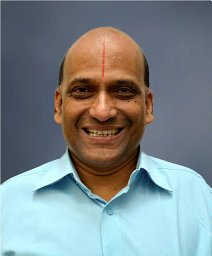 K. L. Narasimhan合作论文数Corresponding author.4
 Tarun S. Yadav合作论文数Dept Elect Engn, Indian Inst Technol4
 Sandeep Kumbhar合作论文数National Centre for Photovoltaic Research and Education (NCPRE),, IIT Bombay4Brij Arora合作论文数Tata Institute of Fundamental Research4shailendra rao合作论文数3
 Priyanka Kaushal合作论文数3
 Anup Kumar Sadhukhan合作论文数3
 Parthapratim Gupta合作论文数3jakkapong udomsirichakorn合作论文数2
 P. Abdul Salam合作论文数2Akash Kulshreshtha合作论文数2Biswajit Kamila合作论文数Department of Chemical Engineering, National Institute of Technology Durgapur2
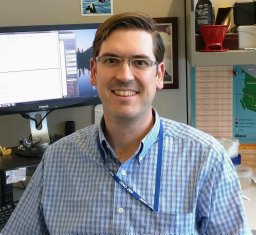 James W Butler合作论文数National Research Council Canada2
 D.A. Granados合作论文数Fac Minas, Univ Nacl Colombia Medellin2
 Mettanant, V.合作论文数Dept. of Mech. Eng., Silpakorn Univ.;c2
 Armin Gerhard Aberle合作论文数Department of Electrical & Computer Engineering, College of Design and Engineering, National University of Singapore;Solar Energy Research Institute of Singapore, National University of Singapore2
 Dominic Groulx合作论文数Département de génie mécanique, Université de Sherbrooke2L. Lafanechere合作论文数1thomas gronauer合作论文数1Richard S. Thomas合作论文数1S Jacob Melvin Boby合作论文数1
 Thomas C. Mueller合作论文数1Anantkumar Patel合作论文数1
 Christian Mander合作论文数1Paul Buess合作论文数1andrej boskovic合作论文数1Lyle Gauthier合作论文数1Rainer Lee合作论文数1Marten Ritz合作论文数1jurgen werani合作论文数1daniel bellm合作论文数1Almouzzam Khan合作论文数1
 Ajay Sharma合作论文数1
 R. Mahesh合作论文数1
 Raj Kumar Dahal合作论文数Sch Sustainable Design Engn, Univ Prince Edward Isl1




