The multi-millennium question of whether biological systems can attain mind-independent knowledge can be informatively recast as a boundary problem. Living systems interact with their environments through finite, boundary-mediated interfaces. As a consequence, biological information is necessarily incomplete, internally generated, and organizationally constrained. We argue that living systems are unable to obtain observer-independent knowledge of external reality. This constitutive limitation arises from three obligatory cellular conditions sufficient to constrain access to independent reality. First, all biological information is inherently ambiguous for living observers because all environmental signals are subject to obligatory noise and must be sampled within bandwidth-limited channels, ensuring that external states are intrinsically underdetermined. Second, biologically meaningful information can only be generated through cellular infoautopoiesis, as the exclusive self-referential cellular means for evaluating environmental signals. Third, the cell's external membrane enforces organizational constraint closure, preventing external validation of internally generated informational states without disrupting the system, constituting a unique Biological Markov Blanket and Boundary. We show that these conditions are intrinsically bound in the cellular form, imposing an effective epistemic boundary on biological observers. Within those obligatory constraints, each cellular interpretant self-constructs its own reality as an individual, exclusive Platonic cave, based on its self-referential internal representational map, generated through an exclusive recursive epistemic loop. Although these constraints are distinctive and unavoidable for all cellular beings, they also necessarily apply to all our current proxies since they are cell-based constructs placed into technological forms. We further argue that our ultimate understanding of the absolute conscious state of any cellular being is limited by an Uncertainty Principle of Consciousness, which imposes precise limits on characterizing internal conscious states. Given the obligatory cell-based underpinnings of consciousness at all scales, any attempt to measure an individual cellular being's immediate conscious state with absolute precision will inevitably skew the processes that enable conscious apprehension.
This paper is motivated by the need to provide a more realistic account of the relationship between artificial intelligence (AI) and living systems, particularly in light of recent claims that an AI revolution will transform not only human society but also its domain of existence, including large parts of the biosphere. Rather than examining AI in isolation, we situated it within the broader framework of Cognitive Science (CogSci), which emerged in the 1950s from information theory, computer science, and cybernetics. From this perspective, AI and CogSci are conceptually and technically inseparable, with AI representing one expression of the broader CogSci paradigm. We contrasted this paradigm with the Cognition-Based Biology (CBB) framework, which treats cognition as a biological universal rather than a uniquely human or computational phenomenon. This comparison enabled us to establish criteria for genuine agency, providing a more comprehensive account of living systems based on cells and demonstrating that current AI systems satisfy the conditions only for artificial agency. We also introduced the concept of hybrid agency to describe systems that combine biological and artificial components, including human-engineered living systems and interventions at the scale of the biosphere. Finally, we argue that the machine metaphor of life is inadequate for understanding living systems because it overlooks the autopoietic, senomic and self-referential organisation that characterises biological cognition. We propose replacing this metaphor with a broader conception of technology as a biosphere-wide process of natural engineering, through which living systems actively construct their worlds by interacting with their environments. This perspective is grounded in the biocivilisation framework, which provides a unified conceptual basis for understanding cognition, technology, and evolution across all forms of life.
The presumption that experiential consciousness requires a nervous system and brain has been central to the debate on the possibility of developing a conscious form of artificial intelligence (AI). The likelihood of future AI consciousness or devising tools to assess its presence has focused on how AI might mimic brain-centered activities. Currently, dual general assumptions prevail: AI consciousness is primarily an issue of functional information density and integration, and no substantive technical barriers exist to prevent its achievement. When the cognitive process that underpins consciousness is stipulated as a cellular attribute, these premises are directly contradicted. The innate characteristics of biological information and how that information is managed by individual cells have no parallels within machine-based AI systems. Any assertion of computer-based AI consciousness represents a fundamental misapprehension of these crucial differences.
The Constructal Law states that 'for a finite-size flow system to persist in time (to live) it must evolve such that it provides greater and greater access to the currents that flow through it.' Arising from thermodynamics, this illuminating principle explains the properties and design features of many physical systems. It is now proposed that the definition of 'currents that flow' within the Constructal Law should be recognized to include the flow of information in living systems as a biogenic corollary. As the foundation of our biological system, cells seek to maximize their effective information about their external and internal environment. As their constructs, multicellular organisms reflect this requirement, accounting for living forms and their anatomic features. The cellular senome represents the crucial element of this flow, acting as the bioactive interface between environmental syntactic information and the internally-generated cellular semantic information upon which cellular actions depend. A Biogenic Principle as a corollary of the Constructal Law is presented, stating that for any finite-size living system to persist in time (to live), it must evolve to provide greater and greater access to the flow of information between itself and its environment, balanced against the constraining flow dynamics of natural physical systems. Within this biogenic principle, a Central Axiom of Biological Information can be identified: there is no unilateral flow of information in living systems.
Cells represent the basic units of life, not only as structural building blocks, but also as cognitive agents endowed with subjective cellular feelings, sentience (consciousness), and cognitive infocomputatioal competence. Living cells act as ‘Kantian Wholes’: All of its parts exist for and by means of the whole system, allowing cells to use sentient agency for solving existential problems and evolve as living self-organizing units. Cell sentience is based on its excitable plasma membrane generating bioelectromagnetic fields that link to a whole-cell sensory architecture. This cellular sensory apparatus, termed its senome, represents the totality of cellular self-referential information obtained by cells via their sensory systems, including the subjective cellular inside and the cell’s self-referential appraisal of its external environment. The plasma membrane was ‘invented’ by the very first cells and has been uninterruptedly inherited by cells for billions of years through successive cell divisions.
Natural selection has a formal definition as the natural process that results in the survival and reproductive success of individuals or groups best adjusted to their environment, leading to the perpetuation of those genetic qualities best suited to that organism's environmental niche. Within conventional Neo-Darwinism, the largest source of those variations that can be selected is presumed to be secondary to random genetic mutations. As these arise, natural selection sustains adaptive traits in the context of a 'struggle for existence'. Consequently, in the 20th century, natural selection was generally portrayed as the primary evolutionary driver.. The 21st century offers a comprehensive alternative to Neo-Darwinian dogma within Cognition-Based Evolution. The substantial differences between these respective evolutionary frameworks have been most recently articulated in a revision of Crick's Central Dogma, a former centerpiece of Neo-Darwinism. The argument is now advanced that the concept of natural selection should also be comprehensively reappraised. Cognitive selection is presented as a more precise term better suited to 21st century biology. Since cognition began with life's origin, natural selection represents cognitive selection.
Our previous efforts to probe the complex, rich experiential lives of unicellular species have focused on the origins of consciousness (Reber, 2019) and the biomolecular processes that underlie sentience (Reber et al., 2023). Implied, but unexplored, was the assumption that these cognitive functions and associated unicellular organismal behaviors were linked with and often driven by affect, feelings, sensual experiences. In this essay we dig more deeply into these valenced (We're using the term valence here to cover the aspects of sensory experiences that have evaluative elements, are experienced as positive or negative ─ those where this affective, internal representation is an essential element in how the input is interpreted and responded to.) self-referencing features. In the first part, we examine the empirical evidence for various sensual experiences that have been identified. In the second part, we look at other features of prokaryote life that appear to also have affective, valenced elements but where the data to support the proposition aren't as strong. We engage in some informed speculation about these phenomena.
Recent papers have emphasized the primary role of cellular information management in biological and evolutionary development. In this framework, intelligent cells collectively measure environmental cues to improve informational validity to support natural cellular engineering as collaborative decision-making and problem-solving in confrontation with environmental stresses. These collective actions are crucially dependent on cell-based memories as acquired patterns of response to environmental stressors. Notably, in a cellular self-referential framework, all biological information is ambiguous. This conditional requirement imposes a previously unexplored derivative. All cellular memories are imperfect. From this atypical background, a novel theory of aging and death is proposed. Since cellular decision-making is memory-dependent and biology is a continuous natural learning system, the accumulation of previously acquired imperfect memories eventually overwhelms the flexibility cells require to react adroitly to contemporaneous stresses to support continued cellular homeorhetic balance. The result is a gradual breakdown of the critical ability to efficiently measure environmental information and effect cell-cell communication. This age-dependent accretion governs senescence, ultimately ending in death as an organism-wide failure of cellular networking. This approach to aging and death is compatible with all prior theories. Each earlier approach illuminates different pertinent cellular signatures of this ongoing, obliged, living process.
Aims: Azacitidine, a drug that epigenetically modifies DNA, is widely used to treat haematological malignancies. However, at low doses, it demethylates DNA, and as a result, can alter gene expression. In our previous publication, we showed that low doses of azacitidine induce telomere length elongation in breast cancer cells. In this study, we aim to identify the mechanisms which lead to telomere length increases. Methods: Breast cancer cell lines representing different molecular sub-types were exposed to 5-aza-2 '-deoxycytidine (5-aza) in 2 and 3D cultures, followed by DNA, RNA, and protein extractions. Samples were then analysed for telomere length, DNA damage, telomerase, and ALT activity. Results: We show that treatment of the cell lines with 5-aza for 72 h induced DNA damage at the telomeres and increased ALT activity 3-fold. We also identified a gene, POLD3, which may be involved in the ALT activity seen after treatment. Conclusion: Our results indicate that while 5-aza is a useful drug for treating haematological cancers, surviving cancer cells that have been exposed to lower doses of the drug may activate mechanisms such as ALT. This could lead to cancer cell survival and possible resistance to 5-aza clinically.
A range of studies published in the last few decades promotes the cognitive aspects of life: all organisms, from bacteria to mammals, are capable of sensing/perception, decision-making, problem-solving, learning, and other cognitive functions, including sentience and consciousness. In this paper I present a scientific and philosophical synthesis of these studies, leading to an integrated view of cognitive biology. This view is expressed through the four principles applicable to all living systems: (1) sentience and consciousness, (2) autopoiesis, (3) free energy principle and relational biology, and (4) cognitive repertoire. The principles are circular, and they reinforce themselves. The circularity is not rigid, meaning that hierarchical and heterarchical shifts are widespread in the biosphere. The above principles emerged at the dawn of life, with the first cells, bacteria and archaea. All biogenic forms and functions that emerged since then can be traced to the first cells - indivisible units of biological agency. Following these principles, I developed the concept of biocivilisations to explain various forms of social intelligence in different kingdoms of life. The term biociviloisations draws on the human interpretation of the concept of civilisation, which searches for non-human equivalents of communication, engineering, science, medicine, art, and agriculture, in all kingdoms of life by applying the principles of cognitive biology. Potential avenues for testing the concept of biocivilisations are highlighted.
The Cellular Basis of Consciousness (CBC) model of biological consciousness is based on the assumption that life and conscious sentience are coterminus. All living organisms, are conscious, self-aware, and have valenced sensory and perceptual experiences.
Supplementary Video 1 from Senescence-Associated Oxidative DNA Damage Promotes the Generation of Neoplastic Cells
We examined frequencies of radiation-induced chromosomal aberrations, using classical cytological methods, and DNA damage in interphase and metaphase cells, using a combination of FISH, CO-FISH, TIF (telomere dysfunction induced assay) and simultaneous detection of DNA damage and telomeric sequences in metaphase chromosomes, in Chinese hamster cells defective in BRCA2 and control cells. Given that the Chinese hamster genome contains large blocks of interstitial telomeric sites, our results allow us to examine the role of BRCA2 in the potential fragility of these sites, but also whether BRCA2 affects DNA repair within terminal telomeric sequences. BRCA2 defective cells exhibited greater frequencies of DNA damage within interstitial telomeric sites, as well as within terminal telomeric sites, relative to control cells. Therefore, BRCA2 deficiency contributes to the telomere dysfunction phenotype in Chinese hamster cells.
As the SARS-CoV-2 pandemic is nearing its eventual end we focus on what we believe are two key omissions from the mainstream scientific literature and which have significant implications for how mankind manages the next global pandemic. We therefore review data, observations, analyses and conclusions from our series of papers published through 2020 and 2021 on its likely cometary origin and global spread. We also revisit our long held understanding of the superior effectiveness of intra-nasal vaccines against respiratory tract pathogens that involve induction of dimeric secretory IgA antibodies. While these two oversights seem disparate, together they provide us with new insights into our collective awareness of how we might view and address the next global pandemic. We begin with our hypothesis of the likely cometary origin of the SARS-CoV-2 virus via a bolide strike in the stratosphere on the night of October 11 2019 on the 40o N line over Jilin in NE China. Further global spread most likely occurred via prevailing wind systems transporting both the pristine cometary virus followed by continuing strikes from the same primary source as well as prior human-passaged virus transmitted by person to person spread and through contaminated dust in global wind systems. We also include a discussion of our prior work on data relating to vaccine protective efficacy. Finally we review the totality of evidence concerning the likely origin and global spread of the predominant variants of the virus ‘Omicron' (+Delta mix?) from early to mid-December 2021 and extending into the first week January 2022. We describe the striking data showing the large numbers of infectious cases per day and outline the scale of what appears to be a global pandemic phenomenon, the causes of which are unclear and not completely understood. Firstly, these essentially simultaneous and sudden global-wide epidemic COVID-19 out breaks, appear to be largely correlated with events external to the Earth, probably causing globally correlated precipitation events. They appear related broadly to "Space Weather” events that render the Earth vulnerable to cosmic pandemic pathogen attack particularly during times of the minima of the Sunspot Solar Cycle which we are now currently passing through. Secondly, we argue that these sudden global-wide epidemic outbreaks of COVID-19 are specifically largely influenced by global wind transport and deposition mechanisms, the physics of which we need to further explore and comprehend. We conclude on an optimistic note for mankind. Given our prior knowledge of the effectiveness against respiratory tract pathogens of mucosal immunity involving induction of dimeric secretory IgA antibodies, we consider that the recently published intra-nasal vaccine data from laboratories based at the University of California, San Francisco and, independently at Yale University. These latter studies hold out great promise for the future development of both panspecific and specific immunity against future pandemics caused by suddenly emergent respiratory pathogens, whether viral, bacterial or fungal. © 2022 by World Scientific Publishing Co. Pte. Ltd.
By critically analysing and exploding the key foundation myths that have arisen around the origin, mode of spread and immunity on COVID-19 we lay out the evidence and critical arguments supporting an immediate end to all COVID-19 justified lockdowns. These emergency laws, invoked by many previously free and democratic societies, involve social distancing, obligatory wearing of masks, limited crowd sizes and gatherings (funerals, weddings, religious gatherings, sporting fixtures etc), the closures of schools and many small and large businesses not deemed necessary to containing the virus, border closures, and thus free travel movements, domestic and international. The basic premise in all these dictums is that the primary mechanism of spread of COVID-19 is assumed via person-to-person contacts only. We show this premise to be false. Our recommendations are anchored in the key relevant evidence and observations of the past two years gathered by us and published in a series of papers through 2020 and 2021. Our analysis documents the plausible putative first cause to the arrival of COVID-19 from space in a carbonaceous meteorite bolide in the stratosphere over China on October 11 2019;and then its blanket China-wide viral-laden meteorite dust contamination through November-December 2019 followed by further global dispersal of these viral-laden meteorite dust clouds by prevailing stratospheric and tropospheric wind systems, including human passaged virus aerosol-plumes adding to lower level (tropospheric) viral laden clouds. We explain why all lockdowns of any type cannot possibly work in principle against viral dispersal and transportation of this type - emergence of new clusters of disease, with poor evidence of connectivity through contact, clearly does not support person-to-person infections as the primary cause of spread. The initiation of mass infective events ("Mystery Cases”) in each regional and localised COVID-19 epidemic is caused by unsuspecting victims most likely catching the virus by rubbing up against a virus contaminated environment. We also deal with the efficacy of current vaccination roll outs on population-wide scales. It is most unfortunate that currently available mRNA expression vector vaccines, delivered by the intramuscular route ("Jab in the Arm”), may not only be dangerous in inducing many putative adverse reactions as their human safety is untested, they also cannot protect in principle against common cold and other respiratory pathogen infections like COVID-19 that arrive via the oral-nasal route. That evidence is discussed along with our recommendations for mankind's preparedness for future suddenly emerging pandemics of this type. © 2022 by World Scientific Publishing Co. Pte. Ltd.
All SETI (Search for Extraterrestrial Intelligence) programmes that were conceived and put into practice since the 1960s have been based on anthropocentric ideas concerning the definition of intelligence on a cosmic-wide scale. Brain-based neuronal intelligence, augmented by AI, are currently thought of as being the only form of intelligence that can engage in SETI-type interactions, and this assumption is likely to be connected with the dilemma of the famous Fermi paradox. We argue that high levels of intelligence and cognition inherent in ensembles of bacteria are much more likely to be the dominant form of cosmic intelligence, and the transfer of such intelligence is enabled by the processes of panspermia. We outline the main principles of bacterial intelligence, and how this intelligence may be used by the planetary-scale bacterial system, or the bacteriosphere, through processes of biological tropism, to connect to any extra-terrestrial microbial forms, independently of human interference.
 Adayapalam T Natarajan合作论文数J.A. Cohen Institute, Interuniversity Institute for Radiopathology and Radiation Protection14
 Peter Edward Bryant合作论文数12
 Hemad Yasaei合作论文数School of Health Sciences and Social Care, Brunel University8
 Frantisek Baluska合作论文数Institute for Cellular and Molecular Botany, University of Bonn8
 William B. Miller合作论文数Department of Plant Sciences, University of Arizona7
 Manoor Prakash Hande合作论文数Department of Physiology, Yong Loo Lin School of Medicine, National University of Singapore;Mangalore University;VIT University;Tembusu College, National University of Singapore7
 Robert Temple合作论文数6
 Reginald M. Gorczynski合作论文数Medical Professional Corporation6Hiu-Pak Wong合作论文数6Y. Xiao合作论文数6
 Edward J. Steele合作论文数Department of Biology, University of Wollongong6Gensuke Tokoro合作论文数6
 Nalin Chandra Wickramasinghe合作论文数6
 Arthur S. Reber合作论文数Department of Psychology, Faculty of Arts, The University of British Columbia6
 Terry Roberts合作论文数Biosci, Brunel Univ London5
 Gordana Joksic合作论文数5
 Sara Anjomani Virmouni合作论文数5
 Laure Sabatier合作论文数5
 Simon Bouffler合作论文数UK Health Security Agency5E. Cabuy合作论文数5Brig Klyce合作论文数4
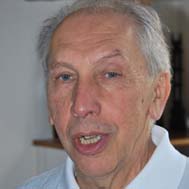 Bernard Dutrillaux合作论文数Institut de Systématique, Évolution, Biodiversité Equipe Diversité Périspécifique, Spéciations, Intéractions, Invasions4
 Andreja Leskovac合作论文数Department of Physical Chemistry, Vinca Institute of Nuclear Sciences, University of Belgrade4
 Marija Guc-Scekic合作论文数4Max K Wallis合作论文数4Suliman Al-Wahiby合作论文数4C. Newton合作论文数4Dragana Vujic合作论文数4Firouz Darroudi合作论文数4P Finnon合作论文数3N Kikyo合作论文数3Chantal Vercamer合作论文数3J. F. Dallas合作论文数3E E Radford合作论文数3W. N. De Vries合作论文数3
 Yaghoub Gozaly-Chianea合作论文数3Scott J Bright合作论文数3John Murnane合作论文数Microbiology and Immunology, University of California Los Angeles3
 Carol J. Bult合作论文数The JAX Cancer Center, The Jackson Laboratory;School of Graduate Biomedical Sciences, Tufts University;Graduate School of Biomedical Sciences and Engineering, University of Maine3
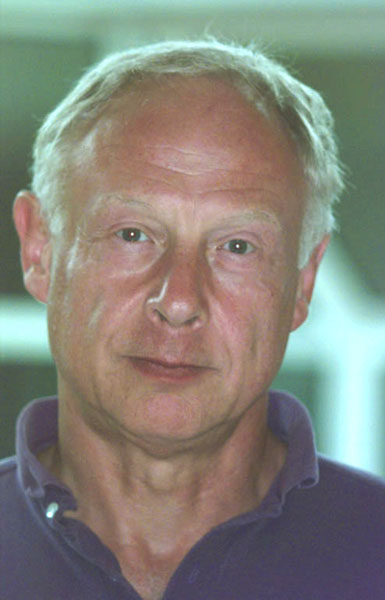 Davor Solter合作论文数Department of Developmental Biology, Max Planck Institute of Immunobiology and Epigenetics;University of Zagreb Medical School3
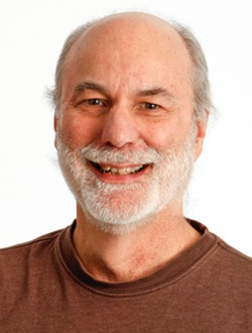 John Eppig合作论文数The Jackson Laboratory3
 Munira A Kadhim合作论文数3Kolas N K合作论文数3
 Myriam Hemberger合作论文数Placenta and Reproductive Health Research Group, Cumming School of Medicine, University of Calgary3Edwin H. Goodwin合作论文数3Martine Yerle合作论文数3Eveline S. Litscher合作论文数3
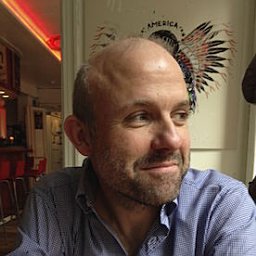 Luca Jovine合作论文数Department of Molecular, Cell and Developmental Biology, Mount Sinai School of Medicine3Dmitri Churikov合作论文数3




