Large-scale quantum networks will enable entirely new applications of quantum information science in fields such as quantum communication, distributed quantum computing, sensing, and metrology. To build nodes of such networks, diamond color defects are one of the promising candidates. Their excellent optical properties, fast spin-qubit control, and long spin coherence times make them well-suited for quantum information processing and quantum memory applications. Additionally, recent advances in the heterogeneous integration of diamond nanophotonic structures with photonic integrated circuits have made these systems more efficient and well-suited for scalable quantum processor architectures. In this comprehensive review, we discuss the optical and spin properties of these systems, recent progress in the building blocks of quantum networks, and demonstrations of metropolitan-scale quantum networks, as well as the challenges associated with these systems at both the fundamental and experimental levels, along with potential solutions.
Compatibility with existing classical network infrastructure offers a scalable path towards deploying large-scale quantum networks. Here, we demonstrate O-band polarization-encoded quantum entanglement distribution over an installed 24.4-km fiber while coexisting with a state-of-the-art fully-loaded C-band classical communications line system and a picosecond-level precision L-band synchronization signal. The classical system carries two 800-Gbps channels while the remainder of the C-band is filled with amplified spontaneous emission, as is standard for such state-of-the-art communications systems. We examine the spontaneous Raman scattering spectrum generated from this broadband C-band light and offer insights into wavelength allocation for O-band quantum channels. Optimal wavelength selection and narrow filtering enable well-preserved Bell state fidelity when coexisting with 21.4-dBm aggregate launch power across the C-band suitable for 36-Tbps transmission. To the best of our knowledge, this is the first implementation of entanglement-based quantum communications between two remote nodes coexisting with independent classical communications traffic. We demonstrate coexistence of quantum entanglement with ultra-high power levels and record classical bandwidth, offering promise for real-world entanglement-based networking integrated within high-capacity communications infrastructure.
We demonstrate Hong-Ou-Mandel interference between a coherent state and a heralded single photon from a microring on an integrated silicon platform. We investigate the causes of imperfect visibility like single-photon fidelity.
We present a model to detect a classical state mixed with an idler photon from a polarization-entangled pair. A weak coherent light with a well-defined polarization, matched in wavelength to the idler photon, is injected into the idler channel. Quantum state tomography is then performed on both the classically mixed idler photon and its entangled signal partner. The reconstructed state is modeled as a combination of an X - quantum state and a classical-quantum (CQ) state. In this framework, the weak coherent light acts as a measurement apparatus performing a local polarization measurement on the idler channel, thereby inducing a classical state. The density matrix of the classical state is identified via algorithmic analysis of the diagonal and off-diagonal elements of the reconstructed density matrix. This approach could advance techniques for classical-quantum coexistence in networking applications - such as quantum wrapping - as well as future quantum key distribution protocols based on the coexistence of weak coherent states and entangled photon states.
Quantum networks are expected to be heterogeneous systems, combining distinct qubit platforms, photon wavelengths, and device timescales to achieve scalable, multiuser connectivity. Building and iterating on such systems is costly and slow, motivating hardware-faithful simulations to explore architecture design space and justify implementation decisions. This paper presents a framework for simulating heterogeneous quantum networks based on SeQUeNCe, a discrete-event simulator of quantum networks. We introduce faithful device models for two representative platforms - Ytterbium atoms and superconducting qubits. On top of these models, we implement entanglement generation and entanglement swapping protocols for time-bin encoded photons that account for disparate clock rates and quantum frequency conversion and transducer losses/noise brought by the heterogeneity. Using extensive simulations, we map the rate-fidelity trade space and identify the dominant bottlenecks unique to heterogeneous systems. The models are open source and extensible, enabling reproducible evaluation of future heterogeneous designs and protocols.
Quantum communications have progressed significantly, moving from a theoretical concept to small-scale experiments to recent metropolitan-scale demonstrations. As the technology matures, it is expected to revolutionize quantum computing in much the same way that classical networks revolutionized classical computing. Quantum communications will also enable breakthroughs in quantum sensing, metrology, and other areas. However, scalability has emerged as a major challenge, particularly in terms of the number and heterogeneity of nodes, the distances between nodes, the diversity of applications, and the scale of user demand. This article describes InterQnet, a multidisciplinary project that advances scalable quantum communications through a comprehensive approach that improves devices, error handling, and network architecture. InterQnet has a two-pronged strategy to address scalability challenges: InterQnet-Achieve focuses on practical realizations of heterogeneous quantum networks by building and then integrating first-generation quantum repeaters with error mitigation schemes and centralized automated network control systems. The resulting system will enable quantum communications between two heterogeneous quantum platforms through a third type of platform operating as a repeater node. InterQnet-Scale focuses on a systems study of architectural choices for scalable quantum networks by developing forward-looking models of quantum network devices, advanced error correction schemes, and entanglement protocols. Here, we report our current progress toward achieving our scalability goals.
Filtering is commonly used in quantum optics to reject noise photons, and also to enable interference between independent photons. However, filtering the joint spectrum of photon pairs can reduce the inherent coincidence probability or loss-independent heralding efficiency. Here we investigate filtering for multiphoton applications based on entanglement and interference (e.g., quantum teleportation). We multiplex C-band entangled photons and C-band classical communications into the same long-distance fibers, which enables scalable low-loss quantum networking but requires filtering of spontaneous Raman scattering noise from classical light. Using tunable-bandwidth filters, low-jitter detectors, and polarization filters, we distribute wavelength-degenerate time-bin entangled photons in the C band (1536.5 nm) over 25 km/25 km standard fibers (50 km) each carrying 10 Gbit/s C-band classical data signals. Narrow filtering enables milliwatt-level C-band power, which exceeds the power achieved by comparable studies by roughly an order of magnitude and could feasibly support terabit per second classical rates. We evaluate how performance depends on pump and filter bandwidths, multipair emission, filter shapes, loss, phase matching, and how quantum information is measured. We find a trade-off between reducing noise impact and increasing single-mode purity, and discuss mitigation methods toward optimal multiphoton applications. Importantly, these results apply to noise in free space and in quantum devices (sources, frequency converters, switches, detectors, etc.) and provide insight into filter-induced degradation of single-photon purity and rates even in noise-free environments.
From QKD to teleportation, quantum technologies are increasingly operating alongside classical data in deployed fiber infrastructure.
Quantum Noise Stream Cipher (QNSC) has emerged as a physical-layer encryption technique that exploits quantum noise and non-orthogonal coherent-state modulation to secure optical communication. However, the security of QNSC relies exceedingly on the secrecy and freshness of its seed key. Quantum Key Distribution (QKD), on the other hand, provides information-theoretically secure key exchange rooted in the laws of quantum mechanics. The convergence of these two paradigms, i.e., integrated QKD-QNSC architectures, offers a compelling solution to each of their limitations. In such integrated systems, QKD continuously supplies and refreshes the secret seed key that governs QNSC modulation. Thus, governing a unified security framework that couples provably secure key establishment with high-speed quantum-enhanced physical-layer encryption. This work presents a comprehensive review of QNSC systems, examining their operating principles, security models under various attacks, and their integration with QKD systems. We analyze the security interplay between the key generation and encryption layers and survey experimental demonstrations and architectural progress toward practical deployment. Furthermore, we identify the open challenges and future research directions that must be addressed to realize fully integrated, quantum-secured optical communication networks at a practical scale.
We distribute entanglement over a 24-km deployed fiber alongside a synchronization channel and high-power (21 dBm), fully-loaded C-band classical optical communications. Through wavelength engineering, we maintain high visibilities with little difference due to coexisting light.
While researchers in both industry and academia are racing to build quantum computing (QC) platforms with viable performance and functionality, the environmental impacts of this endeavor, such as its carbon footprint, e-waste generation, mineral use, and water and energy consumption, remain largely unknown. A similar oversight occurred during the semiconductor revolution and continues to have disastrous consequences for the health of our planet. As we build the quantum computing stack from the ground up, it is crucial to comprehensively assess it through an environmental sustainability lens for its entire lifecycle: production, use, and disposal. In this article, we highlight the need and challenges in establishing a QC sustainability benchmark that enables researchers to make informed architectural design decisions and celebrate the potential “quantum climate advantage.” We propose a carbon-aware quantum computing (CQC) framework that provides the foundational methodology and open research questions in calculating the total life-cycle carbon footprint of a QC platform. Our call to action to the research community is the establishment of a new research direction known as sustainable quantum computing (SQC) that promotes quantum computing for both sustainability-oriented applications and the sustainability of quantum computing itself.
Quantum wrapper networking (QWN) is an emerging quantum networking protocol that wraps qubits in classical header bits to enable switching/routing, monitoring, and control without detecting the quantum signal. In this work, we encode header bits with two nonorthogonal polarization references to track and actively compensate for the changing birefringence of a 48 km deployed fiber link. Our method is analytical and deterministic, using motorized waveplates and a variable phase retarder to accurately and stably compensate the channel. We verify successful compensation by measuring the polarization stability of single photon qubits and the visibility of entangled photon pairs under both slow birefringence drift due to environmental fluctuations and large sudden changes designed to emulate those that occur during packet switching and rerouting over different fiber paths. For large, sudden changes, our compensator recovers the Stokes vector of single photons to within 10 degrees of the target state on the Poincaré sphere and restores two-photon interference visibilities to better than 79
We demonstrate routing polarization-entangled photon payloads multiplexed with classical datagram headers. Our testbed quantum network guarantees > 77% interference visibility as a quality of transmission metric by monitoring single-photon level noise due to coexisting classical traffic.
We characterize single photon transmission through a ~ 48 km underground fiber link. Using an integrated source, we measure delay variations in the timing correlations between the photon-pairs of 40 ps over 90 minutes, compared to 200 ps in a 50 km spool kept in the laboratory, showing the suitability of buried fiber for quantum networks.
Integrating quantum and classical signals into the same optical fiber links in a network can improve scalability by allowing efficient use of the fiber infrastructure and can also enhance quantum performance via classical lightbased time synchronization, which is key for realizing quantum teleportation with high-rate entangled photon sources. Such integration is challenging due to spontaneous Raman scattering (SpRS) noise photons produced by the classical signals. Recently, we have shown for the first time the coexistence of quantum teleportation with classical communications, demonstrating a key operation for next generation quantum networks. Here, we present experimental and theoretical progress on teleportation and entanglement swapping coexisting with classical communications in shared fibers. Our model includes realistic imperfections of quantum sources (such as multi-pair emission) and incorporates SpRS from the coexisting classical signals. We evaluate how quantumclassical wavelength allocations (e.g., O-band vs. C-band), time-frequency filtering methods, and the photon statistics of the sources impact the fidelity of quantum operations.
Silicon photonics could soon be used to create the vast numbers of physical qubits needed to achieve useful quantum information processing by leveraging mature complementary metal–oxide–semiconductor (CMOS) manufacturing to miniaturize optical devices for generating and manipulating quantum states of light. However, the development of practical silicon quantum-photonic integrated circuits faces challenges related to high sensitivity to process and temperature variations, free-carrier and self-heating nonlinearities, and thermal crosstalk. These issues have been partially addressed with bulky off-chip electronics, but this sacrifices many benefits of a chip-scale platform. Here we report an electronic–photonic quantum system-on-chip that consists of quantum-correlated photon-pair sources stabilized via on-chip feedback control circuits and is fabricated in a commercial 45-nm CMOS microelectronics foundry. We use non-invasive photocurrent sensing in a tunable microring cavity photon-pair source to actively lock it to a fixed-wavelength pump laser while operating in the quantum regime, enabling large-scale microring-based quantum systems. We also show that these sources maintain stable quantum properties and operate reliably in a practical setting with many adjacent photon-pair sources creating thermal disturbances on the same chip. Such dense integration of electronics and photonics enables implementation and control of quantum-photonic systems at the scale needed to achieve useful quantum information processing with CMOS-fabricated chips. An electronic–photonic quantum system-on-chip—fabricated in a 45-nm complementary metal–oxide–semiconductor microelectronics foundry—provides scalable control of microring resonator quantum photon-pair sources through the monolithic integration of silicon quantum photonics with complex control electronics on the same die.
To fulfill their promise, quantum networks must transform from isolated testbeds into scalable infrastructures for distributed quantum applications. In this paper, we present a prototype orchestrator for the Argonne Quantum Network (ArQNet) testbed that leverages design principles of software-defined networking (SDN) to automate typical quantum communication experiments across buildings in the Argonne campus connected over deployed, telecom fiber. Our implementation validates a scalable architecture supporting service-level abstraction of quantum networking tasks, distributed time synchronization, and entanglement verification across remote nodes. We present a prototype service of continuous, stable entanglement distribution between remote sites that ran for 12 hours, which defines a promising path towards scalable quantum networks.
We demonstrate automated polarization compensation of quantum datagrams leveraging classical headers as a polarization probe, thereby advancing the functionality of quantum wrapper networking. We furthermore observe minimal performance degradation from Raman scattering noise.
We compare single-photon transmission to Hong-Ou-Mandel interference for teleportation in fibers when coexisting classical communications in the same telecom band generate strong Raman scattering noise, providing insights on teleportation-based networking in noisy environments relative to direct communications.
The non-Markovian effect is studied on a two-photon polarization entangled state, in which one photon from the pair is stored in a fiber delay-line buffer. A model of a photonic qubit coupled to fiber birefringence and a fiber reservoir representing the environment is proposed. Analytically, a non-Markovian probability function is derived for the buffered photon and its paired photon. To verify the probability function, full quantum state tomography of the photon pairs is performed. The probability function fits well with the experimental data and physical values. These results indicate that the quantum system operates slightly above the threshold for a non-Markovian transition. We observe a unique polarization dynamic of the buffered photon. Measures of quantum mutual information are further exploited to study the quantumness of the photon pairs. Werner's well-known separability criterion occurs at a buffer time of about 0.9 ms. These results imply that quantum discord can surpass Werner's criterion, and hence, quantum bi-partite correlation can exist for buffer times greater than 0.9 ms.
 Gregory S. Kanter合作论文数76
 Yu-Ping Huang合作论文数52Joseph B. Altepeter合作论文数39
 Michael Vasilyev合作论文数Department of Electrical Engineering, University of Texas at Arlington39Kim Fook Lee合作论文数38
 Jay E. Sharping合作论文数University of California, Merced37
 Paul L Voss合作论文数School of Electrical and Computer Engineering, College of Engineering, Georgia Institute of Technology36Jun Chen合作论文数32
 Eric Corndorf合作论文数Center for Photonic Communication and Computing;Department of Electrical and Computer Engineering;Northwestern University;Center for Photonic Communication and Computing, Northwestern University28Chuang Liang合作论文数25
 Horace Yuen合作论文数Department of Electrical Engineering and Computer Science, McCormick School of Engineering, Northwestern University22
 William L. Kath合作论文数Department of Engineering Sciences and Applied Mathematics, McCormick School of Engineering, Northwestern University21Renyong Tang合作论文数20Matthew A. Hall合作论文数19
 A. Ramesh合作论文数Dept. of Electrical and Computer Eng., Northwestern University18
 Marco Fiorentino合作论文数Hewlett-Packard Laboratories18
 Jeffrey Shapiro合作论文数Department of Electrical Engineering & Computer Science, Massachusetts Institute of Technology16
 Jordan M Thomas合作论文数Division of Animal Sciences, University of Missouri16Preetpaul S Devgan合作论文数16Milja Medic合作论文数16Ruo-Ding Li合作论文数15Jacob Lasri合作论文数15
 Neal N. Oza合作论文数EECS Dept., Northwestern Univ.;c;EECS Dept., Northwestern Univ.13Abijith Kowligy合作论文数Vector Atomic13
 Giacomo Mauro D'Ariano合作论文数QUIT Group;Dipartimento di Fisica;QUIT Group|Dipartimento di Fisica13
 Joaquín Chung合作论文数13Monika Patel合作论文数13
 Gamze Gul合作论文数Graduate Program in Applied Physics, Northwestern University12Velev, Vesselin G.合作论文数12Shin Myunghun合作论文数12
 Imbert Wang合作论文数Photonics Center, Boston University11
 Selim M. Shahriar合作论文数Department of Electrical and Computer Engineering, Northwestern University11Vladimir S Grigoryan合作论文数11
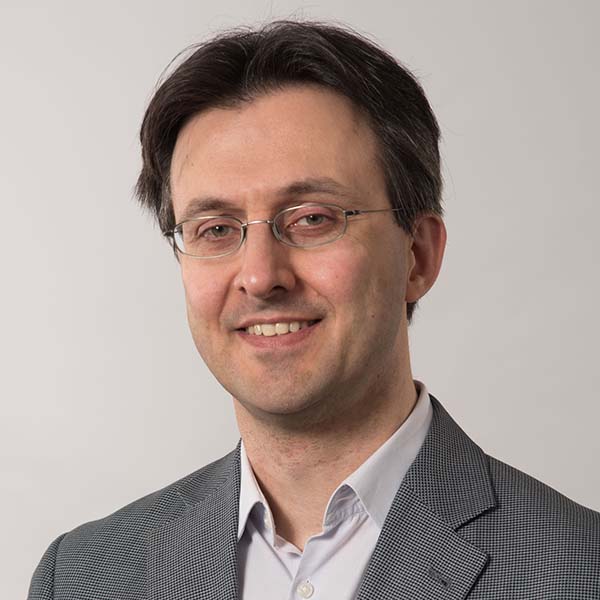 Miloš Popović合作论文数College of Engineering, Boston University11
 Rajkumar Kettimuthu合作论文数Data Science and Learning Division, Argonne National Laboratory;Consortium for Advanced Science and Engineering, University of Chicago;Northwestern-Argonne Institute of Science and Engineering, Northwestern University11
 S. J. Ben Yoo合作论文数Department of Electrical and Computer Engineering, College of Engineering, University of California, Davis;Lawrence Berkeley National Lab11Josep M. Fargas Cabanillas合作论文数10
 D. Kramnik合作论文数Department of Electrical Engineering and Computer Sciences, UC Berkeley10muthiah annamalai合作论文数10
 Roberto Proietti合作论文数10
 Xiaoying Li (李小英)合作论文数School of Precision Instrument and Opto-electronics Engineering, Tianjin University10
 Yikai Su (苏翼凯)合作论文数Photoelectric Materials and Devices Center, Department of Electronic Engineering, Shanghai Jiaotong University10Geraldo Barbosa合作论文数10
 Vladimir Stojanovic合作论文数Berkeley Wireless Research Center, University of California, Berkeley;Center for Energy Efficient Electronics Science, University of California, Berkeley;Berkeley Emerging Technologies Research Center, University of California, Berkeley10Chao-Hsiang Chen合作论文数9Sheng Feng合作论文数9Robert S. Windeler合作论文数OFS Laboratories9
 Martin M. Fejer合作论文数Fejer Group, Edward L. Ginzton Laboratory, Stanford University9




