The Convolution Neural Network (CNN) has demonstrated the unique advantage in audio, image and text learning; recently it has also challenged Recurrent Neural Networks (RNNs) with long short-term memory cells (LSTM) in sequence-to-sequence learning, since the computations involved in CNN are easily parallelizable whereas those involved in RNN are mostly sequential, leading to a performance bottleneck. However, unlike RNN, the native CNN lacks the history sensitivity required for sequence transformation; therefore enhancing the sequential order awareness, or position-sensitivity, becomes the key to make CNN the general deep learning model. In this work we introduce an extended CNN model with strengthen position-sensitivity, called PoseNet. A notable feature of PoseNet is the asymmetric treatment of position information in the encoder and the decoder. Experiments shows that PoseNet allows us to improve the accuracy of CNN based sequence-to-sequence learning significantly, achieving around 33-36 BLEU scores on the WMT 2014 English-to-German translation task, and around 44-46 BLEU scores on the English-to-French translation task.
The 8th International Workshop on Business Intelligence for the Real-Time Enterprise (BIRTE) was held on September 1, 2014 in conjunction with the VLDB 2014 Conference in Hangzhou, China. Like in previous years, the workshop was well attended by an engaged audience from both academia and industry, breaking an attendance record in the history of the BIRTE workshop series with more than 80 participants during the keynote session. In addition to the keynote speech, the workshop included two invited industrial talks, and four presentations of peer-reviewed papers covering a wide range of real-time BI topics with an overarching emphasis on big data analytics. The workshop developed as follows: After the official opening of the workshop, two papers were presented one on BI analytics on graph-structured data and another on contextual analysis in temporal databases. The invited industrial talks session that followed included a talk from Microsoft Research about their data processing solutions for complex big data analytics and a talk from HP Labs about a new fault tolerance technique that they developed for distributed stream processing. The afternoon sessions opened with the highlight of the workshop: Dr. C. Mohan’s keynote speech providing a critical survey of the current big data landscape. The workshop closed with a session that consisted of the two remaining papers one on exploratory OLAP over linked data and another on data stream partitioning.
Combining data warehousing and stream processing technologies has great potential in offering low-latency data-intensive analytics. Unfortunately, such convergence has not been properly addressed so far. The current generation of stream processing systems is in general built separately from the data warehouse and query engine, which can cause significant overhead in data access and data movement, and is unable to take advantage of the functionalities already offered by the existing data warehouse systems.In this work we tackle some hard problems in integrating stream analytics capability into the existing query engine. We define an extended SQL query model that unifies queries over both static relations and dynamic streaming data, and develop techniques to extend query engines to support the unified model. We propose the cut-and-rewind query execution model to allow a query with full SQL expressive power to be applied to stream data by converting the latter into a sequence of "chunks", and executing the query over each chunk sequentially, but without shutting the query instance down between chunks for continuously maintaining the application context across the execution cycles as required by sliding-window operators. We also propose the cycle-based transaction model to support Continuous Querying with Continuous Persisting (CQCP) with cycle-based isolation and visibility.We have prototyped our approach by extending the PostgreSQL. This work has resulted in a new kind of tightly integrated, highly efficient system with the advanced stream processing capability as well as the full DBMS functionality. We demonstrate the system with the popular Linear Road benchmark, and report the performance. By leveraging the matured code base of a query engine to the maximal extent, we can significantly reduce the engineering investment needed for developing the streaming technology. Providing this capability on proprietary parallel analytics engine is work in progress.
Support transaction property and fault-tolerance is the key to applying stream processing to industry-scale applications; however the corresponding latency overhead must be minimized for accommodating real-time analytics. This issue has been studied in various contexts. In this work we develop the backtrack failure recovery mechanism to allow a task to roll forward without waiting for acknowledgement from its downstream target tasks in the failure-free case, but to request its upstream source tasks to resend the missing tuples only during failure recovery which is the rare case thus has limited impact on the overall performance. For further reduced latency we extend our solution in another dimension by applying the notion of optimistic checkpointing to stream processing, and propose the Continued stream processing with Window - based Checkpoint and Recovery (CWCR) approach, allowing a task to emit results tuple by tuple continuously but checkpoint in batch, and acknowledge, only once per window (e.g. time window). We also tackle the hard problems found in implementing a transactional layer on-top of an existing stream processing platform. We have implemented the proposed mechanisms on Fontainebleau, the distributed stream analytics infrastructure we built on top of the open-sourced Storm platform. Our experiment results reveal the novelty of the proposed technologies and the feasibility to support fault-tolerance with minimal latency overhead for real-time stream processing.
 Meichun Hsu合作论文数Oracle89
 Umeshwar Dayal合作论文数Hitachi, Ltd.37
 Ren Wu合作论文数11Bin Zhang合作论文数9
 Malu Castellanos合作论文数HP Laboratories, Palo Alto6Mc Hsu合作论文数5Qinghu Li合作论文数5Hans Zeller合作论文数4Tao Yu合作论文数4
 Jian Pei合作论文数School of Computing Science, Faculty of Applied Sciences, Simon Fraser University;Department of Computer Science, Trinity College of Arts & Sciences, Duke University;Department of Electric and Computer Engineering, Pratt School of Engineering, Duke University;Amazon4Helen Pinto合作论文数3
 Matthias J. Sax合作论文数Humboldt-Universität zu Berlin3maria g castellanos合作论文数2V Mehta合作论文数2Martin Griss合作论文数Universidade Federal de Pernambuco2
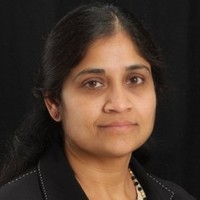 Parvathi Chundi合作论文数Computer Science Department, College of Information Science & Technology, University Of Nebraska Omaha2Behzad Mortazavi-Asl合作论文数School of Computing Science, Simon Fraser University2
 Jerry Z. Shan合作论文数2Andy Therber合作论文数2Igor Kleyner合作论文数2
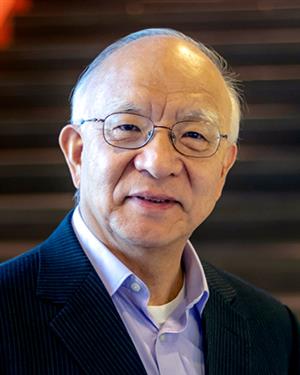 Jiawei Han (韩家炜)合作论文数Siebel School of Computing and Data Science, The Grainger College of Engineering, University of Illinois Urbana-Champaign2
 Yahiko Kambayashi合作论文数School of Infomatics, Kyoto University2T Kunishima合作论文数1B Mortazavi-Asl合作论文数1
 Roland Wagner合作论文数1
 Zhiyong Peng (彭志勇)合作论文数School of Computer Science, Wuhan University1
 Robert M. Kessler合作论文数Department of Radiology, Vanderbilt University School of Medicine1
 Nesime Tatbul合作论文数Computer Science and Artificial Intelligence Laboratory, Massachusetts Institute of Technology;Data Systems and AI Lab, Massachusetts Institute of Technology;Parallel Computing Lab, Intel Labs1
 Biao Qin (覃飙)合作论文数School of Information, Renmin University of China1
 Qiuyue Wang (王秋月)合作论文数School of Information, Renmin University of China1
 Abdelkader Hameurlain合作论文数Institut de Recherche en Informatique de Toulouse, Paul Sabatier University1
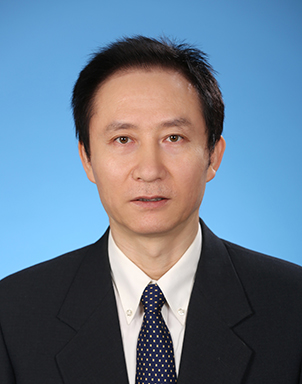 Jianyong Wang (王建勇)合作论文数Department of Computer Science and Technology, Tsinghua University1
 Xiaoyong Du (杜小勇)合作论文数School of Information, Renmin University of China;Key Laboratory of Data Engineering and Knowledge Engineering, Renmin University of China1
 Wei Liu (刘伟)合作论文数School of Materials Science and Engineering, Tsinghua University1
 Shan Wang (王珊)合作论文数School of Information, Renmin University of China1
 Rui Liu合作论文数University of Waterloo1
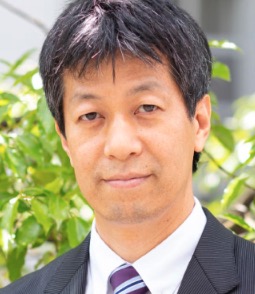 Takahiro Hara (原隆浩)合作论文数Department of Multimedia Engineering, Graduate School of Information Science and Technology, Osaka University1
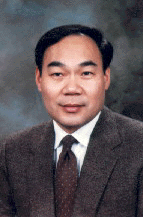 Wesley W. Chu合作论文数Department of Computer Sciencet, University of California1
 Ke Wang合作论文数School of Computing Science, Simon Fraser University1Weihong Wang (王卫红)合作论文数Computer Science Department at Dartmouth College,1Manuela Popescu合作论文数1
 Damianos Chatziantoniou合作论文数Athens University of Economics and Business1Hewlett Packard合作论文数1
 Leon Osterweil合作论文数University of Massachusetts;Department of Computer Science1




