Each nuclear weapon test contributes to a global burden of released radioactivity. Between 1945 and 1996, more than 2,000 nuclear tests were conducted, three-quarters of which were underground. Underground nuclear tests involved placing the nuclear device in a cavity drilled or excavated beneath the surface. The goal was to contain the explosion and its effects to the immediate vicinity of the detonation point, ultimately minimizing the release of radioactive materials into the atmosphere. While these tests successfully curtailed the atmospheric release and radioactive fallout, they created dynamic responses within crustal formations caused by local shock waves from the explosion. This paper discusses the legacy of underground nuclear testing, addressing issues from containment failure to the phenomenological effects after underground detonations and the pathways of subsequent dispersal of radionuclides to the environment.
Minerals are solid state nuclear track detectors - nuclear recoils in a mineral leave latent damage to the crystal structure. Depending on the mineral and its temperature, the damage features are retained in the material from minutes (in low-melting point materials such as salts at a few hundred degrees C) to timescales much larger than the 4.5 Gyr-age of the Solar System (in refractory materials at room temperature). The damage features from the $O(50)$ MeV fission fragments left by spontaneous fission of $^{238}$U and other heavy unstable isotopes have long been used for fission track dating of geological samples. Laboratory studies have demonstrated the readout of defects caused by nuclear recoils with energies as small as $O(1)$ keV. This whitepaper discusses a wide range of possible applications of minerals as detectors for $E_R \gtrsim O(1)$ keV nuclear recoils: Using natural minerals, one could use the damage features accumulated over $O(10)$ Myr$-O(1)$ Gyr to measure astrophysical neutrino fluxes (from the Sun, supernovae, or cosmic rays interacting with the atmosphere) as well as search for Dark Matter. Using signals accumulated over months to few-years timescales in laboratory-manufactured minerals, one could measure reactor neutrinos or use them as Dark Matter detectors, potentially with directional sensitivity. Research groups in Europe, Asia, and America have started developing microscopy techniques to read out the $O(1) - O(100)$ nm damage features in crystals left by $O(0.1) - O(100)$ keV nuclear recoils. We report on the status and plans of these programs. The research program towards the realization of such detectors is highly interdisciplinary, combining geoscience, material science, applied and fundamental physics with techniques from quantum information and Artificial Intelligence.
The effect of defects on the high-pressure behavior of materials is fundamental to understanding and designing materials for extreme environments. Previous work has demonstrated that radiation damage can enhance phase stability or alter the transformation pathway. Here, we report the high-pressure phase stability of CeO2 irradiated by swift heavy ions. CeO2 is of particular interest because it can be used as a non-radioactive surrogate for UO2 and PuO2. High-pressure Raman spectroscopy shows that low-fluence ion irradiated CeO2 exhibits nearly the same high-pressure behavior as unirradiated CeO2; whereas, after high-fluence irradiation, the phase stability of CeO2 is significantly enhanced, with the critical phase transition pressure increased from 31.7 to 37.3 GPa and only about 7% high-pressure phase transition fraction at 45.1 GPa. In comparison with the high-pressure Raman results of pre-irradiated CeO2 before and after 573, 1073, and 1 273 K annealing in air, we propose that large interstitial-type defect clusters, such as dislocation loops formed in heavily-irradiated CeO2, are predominately responsible for the increased phase stability at high pressures.
Much of the available data on nuclear activities in North Korea comes from Earth observation satellites. However, with increased coverage and higher resolution satellite images, analysts face challenges in systematically analyzing large-scale image datasets. In this case study, we report on an automated analysis of over 800 satellite images that tracked vehicular traffic as a proxy for activity levels at the core North Korean nuclear facilities, as well as international trade at border crossings between China and North Korea. Geospatial artificial intelligence and automated image analysis improves the efficiency of collecting analytical metrics, yielding results more quickly and of higher quality.
Zircon (ZrSiO 4 : I4 1 /amd ) can accommodate actinides, such as thorium, uranium, and plutonium. The zircon structure has been determined for several of the end member compositions of other actinides, such as plutonium and neptunium. In this talk, we will discuss two thermodynamic discoveries of these orthosilicate compounds related to waste application. First is the recent experimentally determined enthalpy of formation of stetindite (CeSiO 4 ), a surrogate of PuSiO 4 , along with those of coffinite and thorite, from which we developed an empirical energetic relation for actinide orthosilicates. The predicted enthalpies of formation of AnSiO 4 are important for evaluating the thermodynamic stability of immobilizing Pu or minor actinides in the zircon structure. Second, we report the thermodynamic non-ideality when multiple cations (e.g, U, Th, Pu, Ce) mix in the cation sublattice, and its benefits in stabilizing the metastable matrix when actinides are incorporated. This non-ideality could be primarily an electronic effect from the removal of An 5f-O 2p
Geologic disposal remains the most investigated and generally accepted strategy for dealing with the disposal of highly radioactive nuclear waste. Burial of low activity radioactive waste in shallow, near-surface structures/trenches and deep borehole disposal of high-activity waste are variants of the geologic disposal approach, and each may be appropriate for specific waste stream types. There are many challenges to geologic disposal: (i) the waste radionuclides may be mixed such that the radiochemistry is complex, thus, the appropriate disposal conditions for long-term disposal are difficult to attain; (ii) the composition of the waste stream changes over time due to radioactive decay, and, in some cases, the radionuclides may be mixed with chemically toxic elements; (iii) the geologic disposal system must be effective for hundreds of thousands of years—an unprecedented period for standard engineering design; (iv) public acceptance is especially difficult due to concerns for the effects of low-levels of ionizing radiation and the very long time scales of the safety assessments. In the face of these challenges, the basic tenet of geologic disposal is the use of multiple barriers—engineered barriers in the near-field and geologic barriers in the far-field. Depending on the type of geologic environment that is selected, the importance of the different barriers may vary as each country develops its own unique strategy. There are many different approaches to geologic disposal, but as with all man-made solutions, some will be successful, and others will fail. The challenge is to discern the differences between possible outcomes that stretch to the far distant future.
The paper presents supplementary information about the framework and method for the socio-technical multi-criteria evaluation (STMCE) of spent fuel management strategies (Sci Total Environ, In press; Available on EarthArXiv at DOI:10.31223/X5459S). The STMCE approach consists of (i) a multi-criteria evaluation that provides an ordinal ranking of alternatives based on a list of criterion measurements; and (ii) a social impact analysis that provides an outranking of options based on the assessment of their impact on concerned social actors. STMCE can handle quantitative, qualitative or both types of information. It can also integrate stochastic uncertainty on criteria measurements and fuzzy uncertainty on assessments of social impacts. This paper presents (1) a detailed discussion about the social multi criteria evaluation framework on which STMCE is based; (2) a review of existing multi-criteria techniques and previous applications to nuclear waste management; and (3) a detailed description of the mathematical procedures used in the STMCE method.
In the absence of a federal geologic repository or consolidated, interim storage in the United States, commercial spent fuel will remain stranded at some 75 sites across the country. Currently, these include 18 “orphaned sites” where spent fuel has been left at decommissioned reactor sites. In this context, local communities living close to decommissioned nuclear power plants are increasingly concerned about this legacy of nuclear power production and are seeking alternative options to move the spent fuel away from those sites. In this paper, we present a framework and method for the socio-technical multi-criteria evaluation (STMCE) of spent fuel management strategies. The STMCE approach consists of (i) a multi-criteria evaluation that provides an ordinal ranking of alternatives based on a list of criterion measurements; and (ii) a social impact analysis that provides an outranking of options based on the assessment of their impact on concerned socio-technical actors. STMCE can handle quantitative, qualitative or both types of information. It can also integrate stochastic uncertainty on criteria measurements and fuzzy uncertainty on assessments of social impacts. We provide a numerical example to illustrate the outputs generated by the STMCE method using published data. The STMCE method provides a new way to compare nuclear waste management strategies and support the search for compromise solutions.
the synthesis of coffinite, been investigated and its thermodynamic stability established. The key findings are that coffinite can form in anoxic conditions, at alkaline pH and in silica-rich solutions and that coffinite is metastable with respect UO 2 (cr). We have investigated the pathways for the formation of coffinite from UO 2 at alkaline pH, in the presence of silica-rich solutions under anoxic conditions. This has been done by a combination of solution chemistry, spectrophotometric and electron microbeam techniques (SEM and TEM). The results demonstrate that coffinite forms from UO 2+x at surface layers under these conditions.
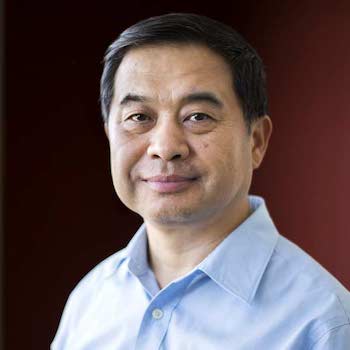 Lumin Wang (王鲁闽)合作论文数Department of Materials Science and Engineering, University of Michigan188
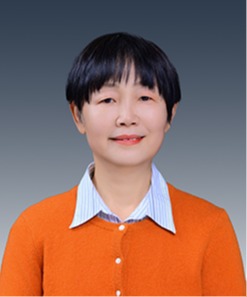 Jie Lian (连洁)合作论文数School of Information Science and Engineering, Shandong University133
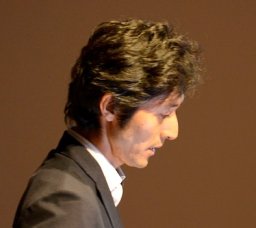 Satoshi Utsunomiya合作论文数University of Michigan94
 Udo Becker合作论文数Department of Earth and Environmental Sciences, College of Literature, Science, and the Arts, University of Michigan-Ann Arbor80
 Maik Lang合作论文数Gesellschaft für Schwerionenforschung (GSI), Planckstr. 1, D-64291 Darmstadt, Germany68
 Jiaming Zhang合作论文数Department of Geological Sciences, University of Michigan54
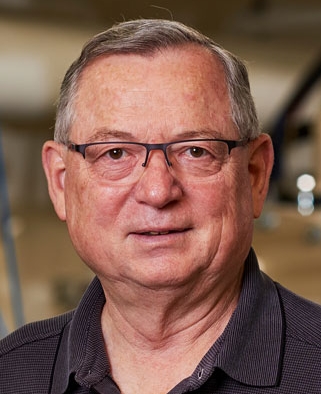 William Weber合作论文数Department of Materials Science and Engineering, Tickle College of Engineering, The University of Tennessee48
 Lynn A Boatner合作论文数Materials Science and Technology Division, Oak Ridge National Laboratory40
 shan x wang合作论文数35
 Christina Trautmann合作论文数Materials Research Department, GSI Helmholtzzentrum für Schwerionenforschung GmbH;Department of Materials Sciences, Technische Universität Darmstadt;Helmholtz Forschungsakademie Hessen für FAIR34
 Fuxiang Zhang (章福祥)合作论文数State Key Laboratory of Catalysis, Dalian Institute of Chemical Physics, Chinese Academy of Sciences;University of Chinese Academy of Sciences29
 Sergey V Yudintsev合作论文数28
 A. P. Deditius合作论文数Department of Geological Sciences, University of Michigan26
 Alkiviathes Meldrum合作论文数Faculty of Science, University of Alberta/Grayflare Inc.25
 Zhang Fei合作论文数Department of Geological Sciences, University of Michigan24K. B. Helean合作论文数20Sergei V Stefanovsky合作论文数19Weixing Li (李伟星)合作论文数18
 Kai Sun合作论文数College of Literature, Science, and the Arts, University of Michigan-Ann Arbor17
 Donglu Shi合作论文数College of Engineering and Applied Science, University of Cincinnati17
 Jianwei Wang合作论文数Department of Geology, University of Illinois17
 Werner Felix Lutze合作论文数16
 Fengyuan Lu合作论文数16
 Xiaotao Zu (祖小涛)合作论文数School of Physics, University of Electronic Science and Technology of China15Guokui Liu合作论文数15
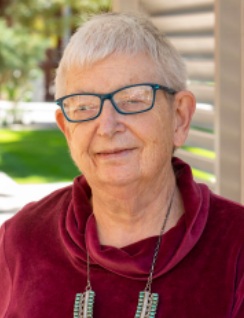 Alexandra Navrotsky合作论文数School of Molecular Sciences, Arizona State University;School for Engineering of Matter, Transport and Energy, Arizona State University14
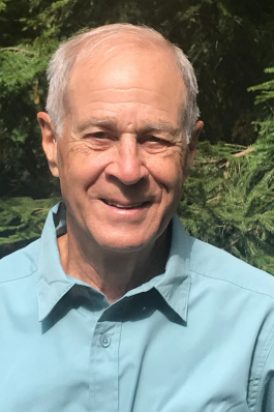 Stephen E. Kesler合作论文数College of Literature Science, and the Arts, University of Michigan;Center for Sustainable Systems, University of Michigan14
 Robert J. Finch合作论文数Sandia National Laboratories14
 Christopher Palenik合作论文数13
 Patrick Kluth合作论文数Research School of Physical Sciences and Engineering, Australian National University13
 Gregory R. Lumpkin合作论文数Department of Earth Sciences, University of Cambridge13
 Ekhard Salje合作论文数Department of Earth Sciences, University of Cambridge13
 Lindsay C. Shuller-Nickles合作论文数12Wei Wang合作论文数12
 Martin Reich合作论文数Facultad de Ciencias Físicas y Matemáticas, Universidad de Chile12
 Bernd Grambow合作论文数IMT Atlantique;UMR_C 6457 Laboratoire de Physique Subatomique et des Technologies Associees, University of Nantes11
 Peter C. Burns合作论文数Department of Chemistry & Biochemistry, College of Science, University of Notre Dame;Center for Sustainable Energy, University of Notre Dame11Sha Zhu合作论文数11
 Frank C. Hawthorne合作论文数Department of Earth Sciences, Clayton H. Riddell Faculty of Environment, Earth, and Resources, University of Manitoba11Devon Renock合作论文数11Weiliang Gong合作论文数Vitreous State Laboratory, The Catholic University of America11M. D. Rodriguez合作论文数10Zhongyun Dong合作论文数10Boshra Afra合作论文数Research School of Physics and Engineering, Australian National University10
 Hoonsung Cho合作论文数University of Cincinnati, University of Cincinnati10B. X. Gu合作论文数9
 Yan Guo合作论文数9
 Tracy Cameron L合作论文数Department of Materials Science and Engineering, University of Michigan9




