There is a current need to develop sensitive and chemically specific sensors for the detection of nitric acid for in-situ measurements in the atmosphere. Polymer coatings have been synthesized and tested for their sensitivity and selectivity to nitric acid. A primary requirement for these polymers is detectability down to the parts per trillion range. The results of studies using these polymers as coatings for quartz crystal microbalances (QCM) and surface acoustic wave (SAW) devices will be presented.
Click to increase image sizeClick to decrease image size Additional informationNotes on contributorsRoger RevelleRoger Revelle is chairman of the Center for Population and World Resources at Harvard University. The following article is based upon a paper prepared for the Pugwash Conference on Science and World Affairs, September 1967, Ronneby, Sweden.
It is characteristic of our time that its most profound problems are global, involving all men, yet the nations into which men have divided themselves have never been as numerous nor as sharply diverse. A hundred years ago poverty was the common lot of most human beings; today we find two sets of nations staring at each other across the oceans, one rich and one poor, with a growing gap between them. The technological revolution has continuously improved the levels of living in the rich countries; in the poor ones its principal effect has been to multiply human misery by causing a rise in human numbers at rates higher than ever before experienced.
All mammals play when they are young, and some, particularly those we like to think of as most intelligent (seals, porpoises, dogs, bears, monkeys, and men) play off and on throughout their lives. Other species are more serious-minded, although some birds seem to play some of the time. Our fellow mammals appear to play to vent their sheer exuberance or to satisfy their curiosity. Human beings share these drives, but the sense of beauty and mystery and the urge to fulfill or forget ourselves also enter into our play. Lewis Mumford has pointed out that early man was more than Homo faber?man the tool-maker: He was also man the dancer and singer, the artist and inventor of ritual, the entertainer and decorator who used not only the environment, but his own wonder fully plastic body as a medium of joy and art.1 Man the tool-maker, the mammoth-chaser, and the fire-builder learned that he could observe, analyze, and predict events, and act on the basis of his predictions. To maintain himself, to attain security and power, he had to be rational ( even though the rationale consisted partly of casting magical spells) and to be concerned with the future. But the cave painters, the body painters and scarifiers, the trance dancers and singers looked inward into imagination and mystery. They were concerned with the unseen and with memory, rather than with the rational future. Their spirits persist deep within us, their descendants, and they rise to the surface in our play, which today, as in the
“In essence, we are dealing with qualitative and not quantitative questions; with the quality of human life and only incidentally with the quantity of people. In the long run, population studies must focus on the drama of living human beings, rather than on their entrances and their exits on the stage of life.”Roger Revelle is professor of population policy, and director, Center for Population Studies, Harvard University. This article is based upon a paper which appears in Harvard Today, November 1965.
The significance of international scientific activities to the relations between nations is perhaps the most important of the roles science and scientists can play in today's embittered and divided world—not a new role in the sense that international activities of science are part of the life-blood of science; but new in its potential impact on political relations.For science is today one of the few common languages of mankind; it can provide a basis for understanding and communication of ideas between people… independent of political boundaries and of ideologies. Science also provides a sometimes unique opportunity for cooperative endeavors that can contribute in a major way to the reduction of tension between nations.George B. Kistiakowsky
 Lj Duhl合作论文数4Sr Graubard合作论文数4H Kahn合作论文数4Fc Ikle合作论文数4
 Daniel A. Bell (贝淡宁)合作论文数Faculty of Law, The University of Hong Kong4H Orlans合作论文数3
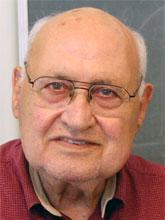 Martin Shubik合作论文数Department of Economics, Yale University3Gc Quarton合作论文数2Da Schon合作论文数2M Malia合作论文数2E Weil合作论文数2T Parsons合作论文数2Dp Moynihan合作论文数2Hs Perloff合作论文数2Lk Frank合作论文数2
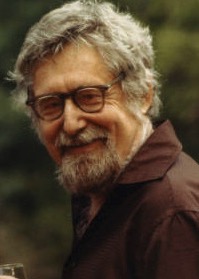 Clifford James Geertz合作论文数School of Social Science, Institute for Advanced Study2Kw Deutsch合作论文数1A Pifer合作论文数1G Holton合作论文数1Gm Woodwell合作论文数1kenneth s tollett合作论文数1Er Piore合作论文数1Ej Shoben合作论文数1Rc Wood合作论文数1C. David Kelling合作论文数1Nr Rudenstine合作论文数1Se Diamant合作论文数1Pj Caws合作论文数1Pc Ritterbush合作论文数1Wp Metzger合作论文数1Jr Silber合作论文数1
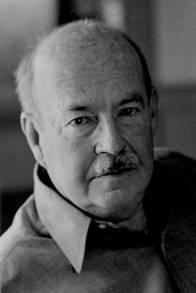 Talcott Parsons合作论文数Harvard University1
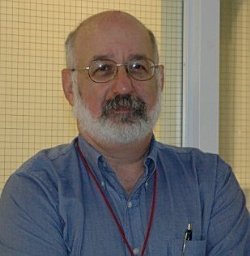 Steven Pollack合作论文数Center for Bio/Molecular Science & Engineering, Code 6950, Naval Research Laboratory, Washington, DC 20375-5348, USA1
 Vernon Morris合作论文数Department of Chemistry, University of California, Davis1




