The present study investigates school context effects on psychosocial characteristics (academic self-concept, peer relations, school satisfaction, and school anxiety) of high-achieving and gifted students. Students who did or did not make an early transition from elementary to secondary schools for high-achieving and gifted students in 5th grade in Berlin, Germany, are compared in their psychosocial development. The sample comprises 155 early-entry students who moved to an academically selective secondary school (Gymnasium) and 3,169 regular students who remained in elementary school until the end of 6th grade. Overall, a complex pattern of psychosocial development emerged for all students, with both positive and negative outcomes being observed. Specifically, the transition into academically selective learning environments seemed to come at some cost for psychosocial development. Propensity score matching analysis isolating the effects of selective school intake and the school context effect itself revealed negative contextual effects of early transition to Gymnasium on academic self-concept and school anxiety; additionally, the positive trend in peer relations observed among regular students was not discernible among early-entry students.
The present study investigates school context effects on psychosocial characteristics (academic self-concept, peer relations, school satisfaction, and school anxiety) of high-achieving and gifted students. Students who did or did not make an early transition from elementary to secondary schools for high-achieving and gifted students in 5th grade in Berlin, Germany, are compared in their psychosocial development. The sample comprises 155 early-entry students who moved to an academically selective secondary school (Gymnasium) and 3,169 regular students who remained in elementary school until the end of 6th grade. Overall, a complex pattern of psychosocial development emerged for all students, with both positive and negative outcomes being observed. Specifically, the transition into academically selective learning environments seemed to come at some cost for psychosocial development. Propensity score matching analysis isolating the effects of selective school intake and the school context effect itself revealed negative contextual effects of early transition to Gymnasium on academic self-concept and school anxiety; additionally, the positive trend in peer relations observed among regular students was not discernible among early-entry students.
The aim of this paper is to shed light on the structural relationships between basic academic competencies as acquired in German secondary schools and the achievement levels attained in the specific learning contexts of apprenticeships in the commercial sector.
Germany has relied on its well-established tradition of preparing the workforce through the so-called dual system of practical in-firm training (apprenticeships) and theoretical foundations conveyed by vocational schools. Believing in the high quality of academic school programmes that prepare a small elite for university studies, the German public remained convinced until well into the 1990s that there was little need for innovation and improvement in German education. Although there had been earlier signs of concern, this conviction remained unchanged until the publication of the outcomes of the International Association for the Evaluation of Educational Achievement (IEA) Third International Mathematics and Science Study (TIMSS) in 1996. The 'TIMSS shock', reinforced by later studies, has resulted in a host of changes in educational policy, perhaps best characterised by the late Hermann Lange as the 'turn towards evidence-based educational policy making'. Hallmarks of this trend were the decision by all 16 federal states in Germany to participate regularly in international large-scale assessments (ILSAs), including interstate comparisons (taken in 1997); the decision to define standards of educational performance (corresponding to the federally recognised school leaving certificates); the initiation of academic study programmes intended to foster the development of the required advanced technical skills; and the founding and/or expansion of agencies for quality management (including systems of reports on the state of education, both at the federal and the state levels). In this article, the role of ILSAs (including both IEA and others) in these policy changes are described and examined from a critical perspective.
This article examines the development of social and ethnic disparities in academic achievement in elementary schooling. It investigated whether reading and mathematics development in 136 mixed-ability classes shows path-dependent processes of cumulative advantage (Matthew effects) from Grades 4 to 6 (Grade 4 mean age = 10.62, SD = 0.57) resulting in growing inequality. Status-dependent processes of cumulative advantage, their interaction with path-dependent processes, and consequences for the degree of social and ethnic inequality are examined. Two complementary methods for analyzing multilevel data are used: growth curve and quasi-simplex models. No evidence for a Matthew effect was found in either domain. A compensation effect emerged for reading, to the benefit of ethnic minorities. A fan-spread effect was found for mathematics, partly attributable to status-dependent processes of cumulative advantage.
Wohl kein Begriff hat die bildungs- und berufsbildungspoli- tische Debatte der letzten Jahre so bestimmt wie der der Kompetenz. In unterschiedlichen Kontexten und Konnota- tionen - ob als Kompetenzorientierung, Kompetenz- entwicklung oder Kompetenzmessung - hat er Eingang in bildungspolitische Debatten und Programme sowie in wis- senschaftliche Diskurse gefunden. Noch weitgehend unter- entwickelt ist indessen die empirische Fundierung dieser Diskussionen. Sie ist jedoch dringend erforderlich, um eine evidenzbasierte Steuerung beruflicher Bildung zu unterstüt- zen. Mit dem vorliegenden Konzept für ein Forschungspro- gramm soll ein Anstoß für eine systematische Förderstrate- gie zur Kompetenzmessung in der Berufsbildung gegeben werden. Zu den Initiatoren und Autoren zählen Berufsbil- dungsforscher aus Universitäten und Forschungsinstituten. Sie repräsentieren unterschiedliche Forschungsansätze und Forschungstraditionen. Die Umsetzung des Konzepts kann sowohl in einem eigenständigen Forschungsprogramm als auch durch entsprechende Schwerpunkte im Rahmen beste- hender Forschungsprogramme erfolgen. Vorrangig wenden sich die Antragsteller an das Bundesministerium für Bildung und Forschung, daneben aber auch an alle, die in der Förde- rung der Bildungsforschung engagiert sind. Im hier vorgeschlagenen Forschungsprogramm werden sowohl der wissenschaftliche als auch der politische Kontext thematisiert und die Relevanz von Ergebnissen beruflicher Kompetenzdiagnostik in verschiedenen Anwendungsberei- chen aufgezeigt. Dem Programm liegt ein ausdifferenziertes Kompetenzverständnis zugrunde, das Optionen öffnet, das Leistungsvermögen beruflicher Handlungsakteure abzuschät- zen. Es nimmt damit Bezug auf das Ziel der beruflichen Handlungsfähigkeit, wie es im Berufsbildungsgesetz formu- liert ist. Im vorliegenden Papier werden relevante For- schungsfragen, die vordringlich bearbeitet werden sollten, aufgezeigt und es werden Vorschläge für die Strukturierung eines Forschungsprogramms sowie zur Förderung der wissen- schaftlichen Infrastruktur unterbreitet.
Students in Germany are tracked into different forms of secondary schooling based on teachers' recommendations. The literature shows that school tracking is largely affected by academic achievement levels, but neglects the influence of individual achievement growth. The authors used data from the Berlin study ELEMENT (N = 2242) to characterize math growth trajectories, obtain reliability-adjusted measures of individual growth, and evaluate their effect on teacher's recommendations. The findings suggest that teachers reward math growth while issuing track recommendations. Females, immigrants, and higher SES students are more likely to obtain a college track recommendation other things being equal. And, the probability of a college track recommendation decreases in classes with higher achievement levels and smaller proportion of immigrants.
Results of the study "Mathematics Teaching in the 21st Century" (MT21), a comparative studyon teacher education across six countries, showed for the German sampIe that future high-school teachers on average developed higher knowledge than future primary and lower-secondary teachers. However, the latter performed relatively weil on some items, other items were less difficult for them in relation to the whole item-pool. In contrast, there were items on which future high-school teachers achieved test scores way above the average difference. In this paper, we analyze the two sets of items that showed differential item functioning in order to work out the specific strengths of future primary and lower-secondary teachers as weH as of future high-school teachers.
Die international-vergleichenden Studie zur Leistungsfähigkeit der Lehrerausbildung „Mathematics Teaching in the 21st Century” (MT21) zeigt für die deutsche Stichprobe auf, dass das mathematische und mathematikdidaktische Wissen angehender Mathematiklehrkräfte für das Gymnasium im Mittel deutlich umfangreicher ist als das angehender Lehrkräfte für Grund-, Haupt- und Realschulen. Nichtsdestotrotz werden einige Items von der Gruppe angehender deutscher Lehrkräfte für Grund-, Haupt- und Realschulen relativ häufiger gelöst als von der Gruppe der angehenden Gymnasiallehrkräfte, andere fallen ihnen in Relation zu den übrigen Items des Itempools deutlich leichter. Umgekehrt lassen sich Items finden, bei denen der Leistungsvorsprung angehender Gymnasiallehrkräfte besonders groß ist. Im vorliegenden Beitrag wird untersucht, was die beiden Item-Sets auszeichnet, die entsprechende differenzielle Itemfunktionen aufweisen. Auf diese Weise kann das besondere Leistungspotenzial sowohl angehender angehender Lehrkräfte für Grund-, Haupt- und Realschulen als auch angehender Gymnasiallehrkräfte herausgearbeitet werden.
A handful of studies have found evidence of a gap in academic achievement between students of high- and low-socioeconomic status (SES) families. Furthermore, some scholars argue that the gap tends to widen as students get older. Evidence is, however, inconclusive and relies mostly on limited methodological designs. Drawing on the Hamburg School Achievement Census 1996 to 2000 (LAU 5, 7, and 9), the authors examined the trajectory of the math and reading achievement gap associated with SES from the age of 10 to 15 years by means of cross-random-effects, panel data, and hierarchical linear models (HLM). The use of 3 time points and statistical techniques well suited to the longitudinal data contribute to the methodological advance of measurement of the gap trend. The findings indicate a narrowing gap over the course of secondary school years and are interpreted in light of the relatively open and egalitarian school policies in Hamburg.
Der Übergang in die verschiedenen Bildungsgänge des Sekundarschulsystems ist eine zentrale Statuspassage im Leben junger Menschen. Der vorliegende Beitrag untersucht die Lernkompetenzeinschätzungen von Lehrkräften am Ende der Grundschule. Neben dem prädiktiven Effekt individueller Leistungsmerkmale sowie von Indikatoren des sozialen Hintergrunds wurde untersucht, ob die Lernkompetenzeinschätzung der Lehrkräfte in einem systematischen Zusammenhang mit der mittleren Leistungsstärke einer Klasse steht. Die empirischen Analysen basieren auf einer Stichprobe von 976 Schülerinnen und Schülern am Ende der Grundschulzeit in Berlin. In Mehrebenenanalysen waren Leistungsindikatoren sowie der sozioökonomische Status erwartungsgemäss positiv mit der Lernkompetenzeinschätzung assoziiert. Darüber hinaus fand sich bei Kontrolle der individuellen Leistung ein negativer Regressionskoeffizient des mittleren Leistungsniveaus der Klasse auf die Lernkompetenzeinschätzung, der als Referenzgruppeneffekt interpretiert werden kann.
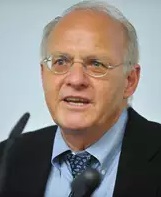 Jürgen Baumert合作论文数Max Planck Institute for Human Development;Humboldt University;Free University of Berlin;International Max Planck Research School of the Life Course36
 Olaf Köller合作论文数Department of Educational Research and Educational Psychology, Leibniz Institute for Science and Mathematics Education/Kiel University11
 manfred lehrke合作论文数8johanna neubrand合作论文数8
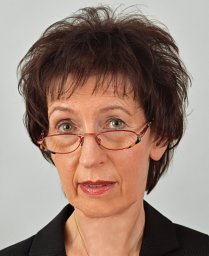 Gabriele Kaiser合作论文数University of Hamburg8Sigrid Blömeke合作论文数Michigan State University8ingmar hosenfeld合作论文数7
 Ulrich Schiefele合作论文数Educational Psychology, University of Potsdam7Jürgen Rost合作论文数7Manfred Prenzel合作论文数7
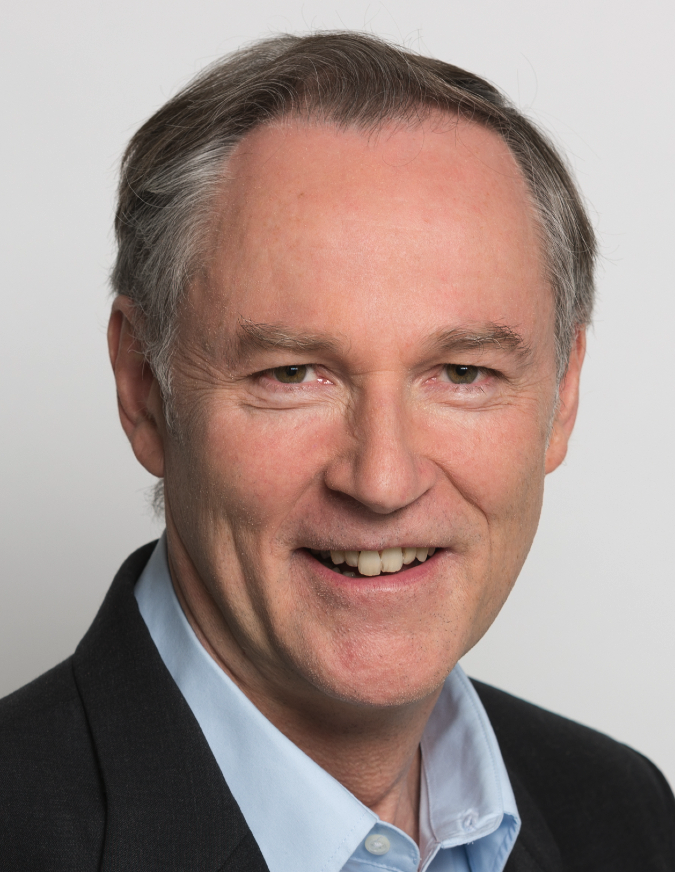 Reinhard Pekrun合作论文数Department of Psychology, University of Essex;Australian Catholic University7
 Werner Blum合作论文数Department of Mathematics, University of Kassel7
 H. C. Detlev Leutner合作论文数Institut für Psychologie, Fakultät für Bildungswissenschaften, Universität Duisburg-Essen7
 Susan Seeber合作论文数Georg-August-Universität Göttingen6
 Michael Neubrand合作论文数6Marten Clausen合作论文数6Wilfried Bos合作论文数6
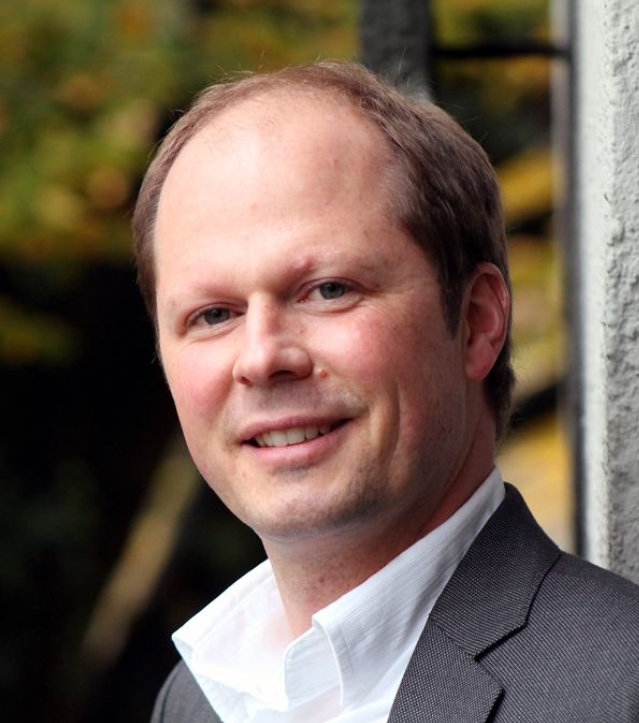 Ulrich Trautwein合作论文数Hector Research Institute of Education Sciences and Psychology, Department of Social Sciences, Faculty of Economics and Social Sciences, University of Tübingen5Pisa-Konsortium Deutschland合作论文数5
 Oliver Lüdtke合作论文数Department of Educational Measurement and Data Science, Leibniz Institute for Science and Mathematics Education;Kiel University4
 Johannes Konig合作论文数3ute suhl合作论文数3
 Nils Buchholtz合作论文数Universität Hamburg, University of Hamburg3
 Kai Maaz合作论文数Max-Planck-Institut für Bildungsforschung, Universität Göttingen3
 Michael Becker合作论文数Dept Educ Governance, German Inst Int Educ Res3Björn Schwarz合作论文数3
 Eckhard Klieme合作论文数German Institute for International Educational Research3Martina Döhrmann合作论文数2
 Henrike Knoppick合作论文数2
 Julia Tetzner合作论文数Leibniz Institute for Science and Mathematics Education, Germany2
 Daniel Caro合作论文数2Rainer Watermann合作论文数2Heiko Jungclaus合作论文数2Anja Felbrich合作论文数2Petra Stanat合作论文数2Sigrid Patjens合作论文数2
 Marko Neumann合作论文数2Jens Brockmann合作论文数1gunther thome合作论文数1konrad schroder合作论文数1heiner willenberg合作论文数1Oliver Walter合作论文数1Susanne Boese合作论文数1marko neumann合作论文数1wolfgang eichler合作论文数1
 Susanne Böse合作论文数DIPF Leibniz Inst Res & Informat Educ1
 Esther Winther合作论文数1wilfried bos合作论文数1bernhard schmitz合作论文数1




