High-fidelity sensor simulation of light-based sen- sors such as cameras and LiDARs is critical for safe and accurate autonomy testing. Neural radiance field (NeRF)-based methods that reconstruct sensor observations via ray-casting of implicit representations have demonstrated accurate simulation of driving scenes, but are slow to train and render, hampering scalability. 3D Gaussian Splatting (3DGS) has demonstrated faster training and rendering times through rasterization, but is primarily restricted to pinhole camera sensors, preventing usage for realistic multi-sensor autonomy evaluation. Moreover, both NeRF and 3DGS couple the representation with the rendering procedure (implicit networks for ray-based evaluation, particles for rasterization), preventing interoperability, which is key for general usage. In this work, we present Sparse Local Fields (SaLF), a novel volumetric representation that supports rasterization and raytracing. SaLF represents volumes as a sparse set of 3D voxel primitives, where each voxel is a local implicit field. SaLF has fast training (<30 min) and rendering capabilities (50+ FPS for camera and 600+ FPS for LiDAR), has adaptive pruning and densification to easily handle large scenes, and can support non-pinhole cameras and spinning LiDARs. We demonstrate that SaLF delivers realism comparable to existing self-driving sensor simulation methods while improving efficiency and enhancing capabilities, thereby enabling more scalable simulation.
Autonomous vehicles (AVs) require extensive testing in simulation, but test case generation for driving scenarios is laborious. The desired scenarios are often out-of-distribution and have precise requirements on interactions with the AV policy under test. Manually programming scenarios allows for precise controllability but is difficult to scale. On the other hand, statistical models can leverage compute and data, but struggle with precise controllability when out-of-distribution. We cast scenario orchestration as a constraint-solving problem and present a language-in, simulation-out scenario orchestrator for closed-loop testing AVs. Our approach leverages foundation model reasoning to translate general, natural language descriptions into a set of constraints as a scenario representation. This then allows us to leverage off the shelf solvers to solve for actor behaviors which meet precise testing intentions in closed-loop. Under a benchmark of carefully crafted and diverse scenario descriptions, our approach greatly outperforms our baselines in orchestration success rate. We further show that our closed-loop approach is especially important for scenarios which require ego-reactive specifications.
Accurately modeling agent behaviors is an important task in self-driving. It is also a task with many symmetries, such as equivariance to the order of agents and objects in the scene or equivariance to arbitrary roto-translations of the entire scene as a whole; i.e., SE(2)-equivariance. The transformer architecture is a ubiquitous tool for modeling these symmetries. While standard self-attention is inherently permutation equivariant, explicit pairwise relative positional encodings have been the standard for introducing SE(2)-equivariance. However, this approach introduces an additional cost that is quadratic in the number of agents, limiting its scalability to larger scenes and batch sizes. In this work, we propose DriveGATr, a novel transformer-based architecture for agent modeling that achieves SE(2)-equivariance without the computational cost of existing methods. Inspired by recent advances in geometric deep learning, DriveGATr encodes scene elements as multivectors in the 2D projective geometric algebra ℝ^*_2,0,1 and processes them with a stack of equivariant transformer blocks. Crucially, DriveGATr models geometric relationships using standard attention between multivectors, eliminating the need for costly explicit pairwise relative positional encodings. Experiments on the Waymo Open Motion Dataset demonstrate that DriveGATr is comparable to the state-of-the-art in traffic simulation and establishes a superior Pareto front for performance vs computational cost.
Urban scene reconstruction from real-world observations has emerged as a powerful tool for self-driving development and testing. While current neural rendering approaches achieve high-fidelity rendering along the recorded trajectories, their quality degrades significantly under large viewpoint shifts, limiting the applicability for closed-loop simulation. Recent works have shown promising results in using diffusion models to enhance quality at these challenging viewpoints and distill improvements back into 3D representations. However, they often require costly per-scene optimization, and the distilled representations remain fragile and fail to generalize beyond limited synthesized views. To address these limitations, we propose GenRe, a novel diffusion-guided generalizable enhancer for urban scene reconstruction. GenRe takes as input any pretrained 3D Gaussian representation and fixes the deficiencies within a few minutes. By learning to distill generative priors across diverse scenes, GenRe produces robust and high-fidelity representation efficiently that generalizes reliably to challenging unseen viewpoints (e.g., lane change). Experiments show that GenRe outperforms existing methods in both quality and efficiency and benefits various downstream tasks, enabling robust and scalable sensor simulation for autonomous driving.
Safety-critical scenarios are essential for the development of autonomous vehicles (AVs) but are rare in real-world driving data. While simulation offers a way to generate such scenarios, manually designed test cases lack scalability, and adversarial optimization often produces unrealistic behaviors. In this work, we introduce a conditional latent flow matching approach for scalable and realistic safety-critical scenario generation. Our method uses distribution matching to transform nominal scenes into safety-critical rollouts. Furthermore, we demonstrate that incorporating both simulation and real-world data enables our framework to efficiently generate diverse, data-driven scenarios. Experimental results highlight that our approach is able to more consistently and realistically generate novel safety-critical scenarios, making it a valuable tool for training and benchmarking AV systems.
We present DIO, a flexible world model that can estimate the scene occupancy-flow from a sparse set of LiDAR observations, and decompose it into individual instances. DIO can not only complete instance shapes at the present time, but also forecast their occupancy-flow evolution over a future horizon. Thanks to its flexible prompt representation, DIO can take instance prompts from off-the-shelf models like 3D detectors, achieving state-of-the-art performance in the task of 4D semantic occupancy completion and forecasting on the Argoverse 2 dataset. Moreover, our world model can easily and effectively be transferred to downstream tasks like LiDAR point cloud forecasting, ranking first compared to all baselines in the Argoverse 4D occupancy forecasting challenge.
To perceive, humans use memory to fill in gaps caused by our limited visibility, whether due to occlusion or our narrow field of view. However, most 3D object detectors are limited to using sensor evidence from a short temporal window (0.1s-0.3s). In this work, we present a simple and effective add-on for enhancing any existing 3D object detector with long-term memory regardless of its sensor modality (e.g., LiDAR, camera) and network architecture. We propose a model to effectively align and fuse object proposals from a detector with object proposals from a memory bank of past predictions, exploiting trajectory forecasts to align proposals across time. We propose a novel schedule to train our model on temporal data that balances data diversity and the gap between training and inference. By applying our method to existing LiDAR and camera-based detectors on the Waymo Open Dataset (WOD) and Argoverse 2 Sensor (AV2) dataset, we demonstrate significant improvements in detection performance (+2.5 to +7.6 AP points). Our method attains the best performance on the WOD 3D detection leaderboard among online methods (excluding ensembles or test-time augmentation).
Reconstructing large-scale dynamic scenes from visual observations is a fundamental challenge in computer vision, with critical implications for robotics and autonomous systems. While recent differentiable rendering methods such as Neural Radiance Fields (NeRF) and 3D Gaussian Splatting (3DGS) have achieved impressive photorealistic reconstruction, they suffer from scalability limitations and require annotations to decouple actor motion. Existing self-supervised methods attempt to eliminate explicit annotations by leveraging motion cues and geometric priors, yet they remain constrained by per-scene optimization and sensitivity to hyperparameter tuning. In this paper, we introduce Flux4D, a simple and scalable framework for 4D reconstruction of large-scale dynamic scenes. Flux4D directly predicts 3D Gaussians and their motion dynamics to reconstruct sensor observations in a fully unsupervised manner. By adopting only photometric losses and enforcing an "as static as possible" regularization, Flux4D learns to decompose dynamic elements directly from raw data without requiring pre-trained supervised models or foundational priors simply by training across many scenes. Our approach enables efficient reconstruction of dynamic scenes within seconds, scales effectively to large datasets, and generalizes well to unseen environments, including rare and unknown objects. Experiments on outdoor driving datasets show Flux4D significantly outperforms existing methods in scalability, generalization, and reconstruction quality.
In order to navigate complex traffic environments, self-driving vehicles must recognize many semantic classes pertaining to vulnerable road users or traffic control devices. However, many safety-critical objects (e.g., construction worker) appear infrequently in nominal traffic conditions, leading to a severe shortage of training examples from driving data alone. Recent vision foundation models, which are trained on a large corpus of data, can serve as a good source of external prior knowledge to improve generalization. We propose FOMO-3D, the first multi-modal 3D detector to leverage vision foundation models for long-tailed 3D detection. Specifically, FOMO-3D exploits rich semantic and depth priors from OWLv2 and Metric3Dv2 within a two-stage detection paradigm that first generates proposals with a LiDAR-based branch and a novel camera-based branch, and refines them with attention especially to image features from OWL. Evaluations on real-world driving data show that using rich priors from vision foundation models with careful multi-modal fusion designs leads to large gains for long-tailed 3D detection. Project website is at https://waabi.ai/fomo3d/.
High-quality 3D assets for traffic participants are critical for multi-sensor simulation, which is essential for the safe end-to-end development of autonomy. Building assets from in-the-wild data is key for diversity and realism, but existing neural-rendering based reconstruction methods are slow and generate assets that render well only from viewpoints close to the original observations, limiting their usefulness in simulation. Recent diffusion-based generative models build complete and diverse assets, but perform poorly on in-the-wild driving scenes, where observed actors are captured under sparse and limited fields of view, and are partially occluded. In this work, we propose a 3D latent diffusion model that learns on in-the-wild LiDAR and camera data captured by a sensor platform and generates high-quality 3D assets with complete geometry and appearance. Key to our method is a "reconstruct-then-generate" approach that first leverages occlusion-aware neural rendering trained over multiple scenes to build a high-quality latent space for objects, and then trains a diffusion model that operates on the latent space. We show our method outperforms existing reconstruction and generation based methods, unlocking diverse and scalable content creation for simulation. Please visit https://waabi.ai/genassets for more details.
Learning world models can teach an agent how the world works in an unsupervised manner. Even though it can be viewed as a special case of sequence modeling, progress for scaling world models on robotic applications such as autonomous driving has been somewhat less rapid than scaling language models with Generative Pre-trained Transformers (GPT). We identify two reasons as major bottlenecks: dealing with complex and unstructured observation space, and having a scalable generative model. Consequently, we propose Copilot4D, a novel world modeling approach that first tokenizes sensor observations with VQVAE, then predicts the future via discrete diffusion. To efficiently decode and denoise tokens in parallel, we recast Masked Generative Image Transformer as discrete diffusion and enhance it with a few simple changes, resulting in notable improvement. When applied to learning world models on point cloud observations, Copilot4D reduces prior SOTA Chamfer distance by more than 65% for 1s prediction, and more than 50% for 3s prediction, across NuScenes, KITTI Odometry, and Argoverse2 datasets. Our results demonstrate that discrete diffusion on tokenized agent experience can unlock the power of GPT-like unsupervised learning for robotics.
Self-driving vehicles (SDVs) require accurate calibration of LiDARs and cameras to fuse sensor data accurately for autonomy. Traditional calibration methods typically leverage fiducials captured in a controlled and structured scene and compute correspondences to optimize over. These approaches are costly and require substantial infrastructure and operations, making it challenging to scale for vehicle fleets. In this work, we propose UniCal, a unified framework for effortlessly calibrating SDVs equipped with multiple LiDARs and cameras. Our approach is built upon a differentiable scene representation capable of rendering multi-view geometrically and photometrically consistent sensor observations. We jointly learn the sensor calibration and the underlying scene representation through differentiable volume rendering, utilizing outdoor sensor data without the need for specific calibration fiducials. This "drive-and-calibrate" approach significantly reduces costs and operational overhead compared to existing calibration systems, enabling efficient calibration for large SDV fleets at scale. To ensure geometric consistency across observations from different sensors, we introduce a novel surface alignment loss that combines feature-based registration with neural rendering. Comprehensive evaluations on multiple datasets demonstrate that UniCal outperforms or matches the accuracy of existing calibration approaches while being more efficient, demonstrating the value of UniCal for scalable calibration. For more information, visit waabi.ai/unical.
Perceiving the world and forecasting its future state is a critical task for self-driving. Supervised approaches leverage annotated object labels to learn a model of the world—traditionally with object detections and trajectory predictions, or temporal bird's-eye-view (BEV) occupancy fields. However, these annotations are expensive and typically limited to a set of predefined categories that do not cover everything we might encounter on the road. Instead, we learn to perceive and forecast a continuous 4D (spatiotemporal) occupancy field with self-supervision from Li-DAR data. This unsupervised world model can be easily and effectively transferred to downstream tasks. We tackle point cloud forecasting by adding a lightweight learned renderer and achieve state-of-the-art performance in Argoverse 2, nuScenes, and KITTI. To further showcase its transferability, we fine-tune our model for BEV semantic occupancy forecasting and show that it outperforms the fully supervised state-of-the-art, especially when labeled data is scarce. Finally, when compared to prior state-of-the-art on spatio-temporal geometric occupancy prediction, our 4D world model achieves a much higher recall of objects from classes relevant to self-driving.
A self-driving vehicle must understand its environment to determine the appropriate action. Traditional autonomy systems rely on object detection to find the agents in the scene. However, object detection assumes a discrete set of objects and loses information about uncertainty, so any errors compound when predicting the future behavior of those agents. Alternatively, dense occupancy grid maps have been utilized to understand free-space. However, predicting a grid for the entire scene is wasteful since only certain spatio-temporal regions are reachable and relevant to the self-driving vehicle. We present a unified, interpretable, and efficient autonomy framework that moves away from cascading modules that first perceive, then predict, and finally plan. Instead, we shift the paradigm to have the planner query occupancy at relevant spatio-temporal points, restricting the computation to those regions of interest. Exploiting this representation, we evaluate a candidate trajectory around key factors such as collision avoidance, comfort, and progress for safety and interpretability. Our approach achieves better highway driving quality than the state-of-the-art on high-fidelity closed-loop simulations.
We consider the task of traffic scene generation. A common approach in the self-driving industry is to use manual creation to generate scenes with specific characteristics and automatic generation to generate canonical scenes at scale. However, manual creation is not scalable, and automatic generation typically use rules-based algorithms that lack realism. In this paper, we propose SceneControl, a framework for controllable traffic scene generation. To capture the complexity of real traffic, SceneControl learns an expressive diffusion model from data. Then, using guided sampling, we can flexibly control the sampling process to generate scenes that exhibit desired characteristics. Our experiments show that SceneControl achieves greater realism and controllability than the existing state-of-the-art. We also illustrate how SceneControl can be used as a tool for interactive traffic scene generation.
The tasks of object detection and trajectory forecasting play a crucial role in understanding the scene for autonomous driving. These tasks are typically executed in a cascading manner, making them prone to compounding errors. Furthermore, there is usually a very thin interface between the two tasks, creating a lossy information bottleneck. To address these challenges, our approach formulates the union of the two tasks as a trajectory refinement problem, where the first pose is the detection (current time), and the subsequent poses are the waypoints of the multiple forecasts (future time). To tackle this unified task, we design a refinement transformer that infers the presence, pose, and multi-modal future behaviors of objects directly from LiDAR point clouds and high-definition maps. We call this model DETRA, short for object Detection and Trajectory forecasting. In our experiments, we observe that DETRA outperforms the state-of-the-art on Argoverse 2 Sensor and Waymo Open Dataset by a large margin, across a broad range of metrics. Finally, we perform extensive ablation studies that show the value of refinement for this task and that key design choices were made.
Large-scale data is crucial for learning realistic and capable driving policies. However, it can be impractical to rely on scaling datasets with real data alone. The majority of driving data is uninteresting, and deliberately collecting new long-tail scenarios is expensive and unsafe. We propose asymmetric self-play to scale beyond real data with additional challenging, solvable, and realistic synthetic scenarios. Our approach pairs a teacher that learns to generate scenarios it can solve but the student cannot, with a student that learns to solve them. When applied to traffic simulation, we learn realistic policies with significantly fewer collisions in both nominal and long-tail scenarios. Our policies further zero-shot transfer to generate training data for end-to-end autonomy, significantly outperforming state-of-the-art adversarial approaches, or using real data alone. For more information, visit waabi.ai/selfplay.
Large scale 3D scene reconstruction is important for applications such as virtual reality and simulation. Existing neural rendering approaches (e.g., NeRF, 3DGS) have achieved realistic reconstructions on large scenes, but optimize per scene, which is expensive and slow, and exhibit noticeable artifacts under large view changes due to overfitting. Generalizable approaches are fast, but primarily work for small scenes/objects and often produce lower quality rendering results. In this work, we introduce G3R, a generalizable reconstruction approach that can efficiently predict high-quality 3D scene representations for large scenes. We propose to learn a reconstruction network that takes the gradient feedback signals from differentiable rendering to iteratively update a 3D scene representation, combining the benefits of high photorealism from per-scene optimization with data-driven priors from fast feed-forward prediction methods. Experiments on large-scale urban-driving and drone datasets show that G3R accelerates the reconstruction process by at least 10x while achieving comparable or better realism compared to 3DGS, and also being more robust to large view changes.
Reconstructing objects from real world data and rendering them at novel views is critical to bringing realism, diversity and scale to simulation for robotics training and testing. In this work, we present NeuSim, a novel approach that estimates accurate geometry and realistic appearance from sparse in-the-wild data captured at distance and at limited viewpoints. Towards this goal, we represent the object surface as a neural signed distance function and leverage both LiDAR and camera sensor data to reconstruct smooth and accurate geometry and normals. We model the object appearance with a robust physics-inspired reflectance representation effective for in-the-wild data. Our experiments show that NeuSim has strong view synthesis performance on challenging scenarios with sparse training views. Furthermore, we showcase composing NeuSim assets into a virtual world and generating realistic multi-sensor data for evaluating self-driving perception models. The supplementary material can be found at the project website: https://waabi.ai/research/neusim/
The prevailing way to test a self-driving vehicle (SDV) in simulation involves non-reactive open-loop replay of real world scenarios. However, in order to safely deploy SDVs to the real world, we need to evaluate them in closed-loop. Towards this goal, we propose to leverage the wealth of interesting scenarios captured in the real world and make them reactive and controllable to enable closed-loop SDV evaluation in what-if situations. In particular, we present MIXSIM, a hierarchical framework for mixed reality traffic simulation. MIXSIM explicitly models agent goals as routes along the road network and learns a reactive route-conditional policy. By inferring each agent's route from the original scenario, MIXSIM can reactively re-simulate the scenario and enable testing different autonomy systems under the same conditions. Furthermore, by varying each agent's route, we can expand the scope of testing to what-if situations with realistic variations in agent behaviors or even safety critical interactions. Our experiments show that MIXSIM can serve as a realistic, reactive, and controllable digital twin of real world scenarios. For more information, please visit the project website: https://waabi.ai/research/mixsim/
 Sanja Fidler合作论文数University of Toronto50
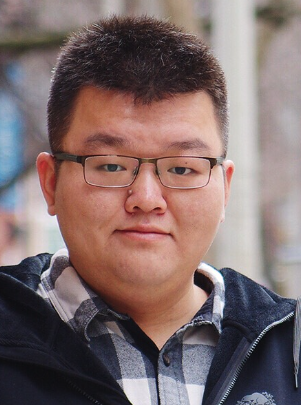 Shenlong Wang (王申龙)合作论文数Department of Computer Science, The Grainger College of Engineering, University of Illinois at Urbana-Champaign40
 Sergio Casas合作论文数Perception and Behavior Reasoning Team, Waabi34
 Renjie Liao (廖仁杰)合作论文数Department of Electrical and Computer Engineering, Faculty of Applied Science, The University of British Columbia;Google Brain30
 Mengye Ren合作论文数Department of Computer Science, New York University28
 Bin Yang (杨斌)合作论文数MiniMax28
 Siva Manivasagam合作论文数University of Toronto26
 Alexander Schwing合作论文数Coordinated Science Laboratory, Computer Science Department, University of Illinois in Urbana-Champaign;Department of Electrical and Computer Engineering, The Grainger College of Engineering, University of Illinois in Urbana-Champaign25
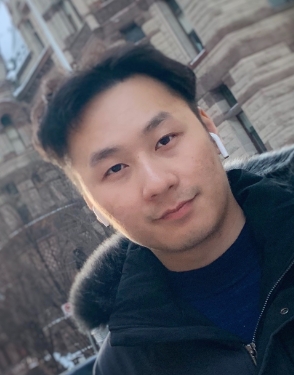 Yuwen Xiong (熊郁文)合作论文数Machine Learning Group, Department of Computer Science, University of Toronto24
 Wei-Chiu Ma (馬惟九)合作论文数Department of Computer Science, College of Computing and Information Science, Cornell University;University of Washington23
 Richard Zemel合作论文数Department of Computer Science, Faculty of Arts and Science, University of Toronto;Vector Institute for Artificial Intelligence23
 Wenyuan Zeng合作论文数Ubiquant22
 Jingkang Wang (王靖康)合作论文数Waabi19Ming Liang (梁鸣)合作论文数18
 Yun Chen合作论文数Department of Computer Science, University of Toronto;Waabi.AI17
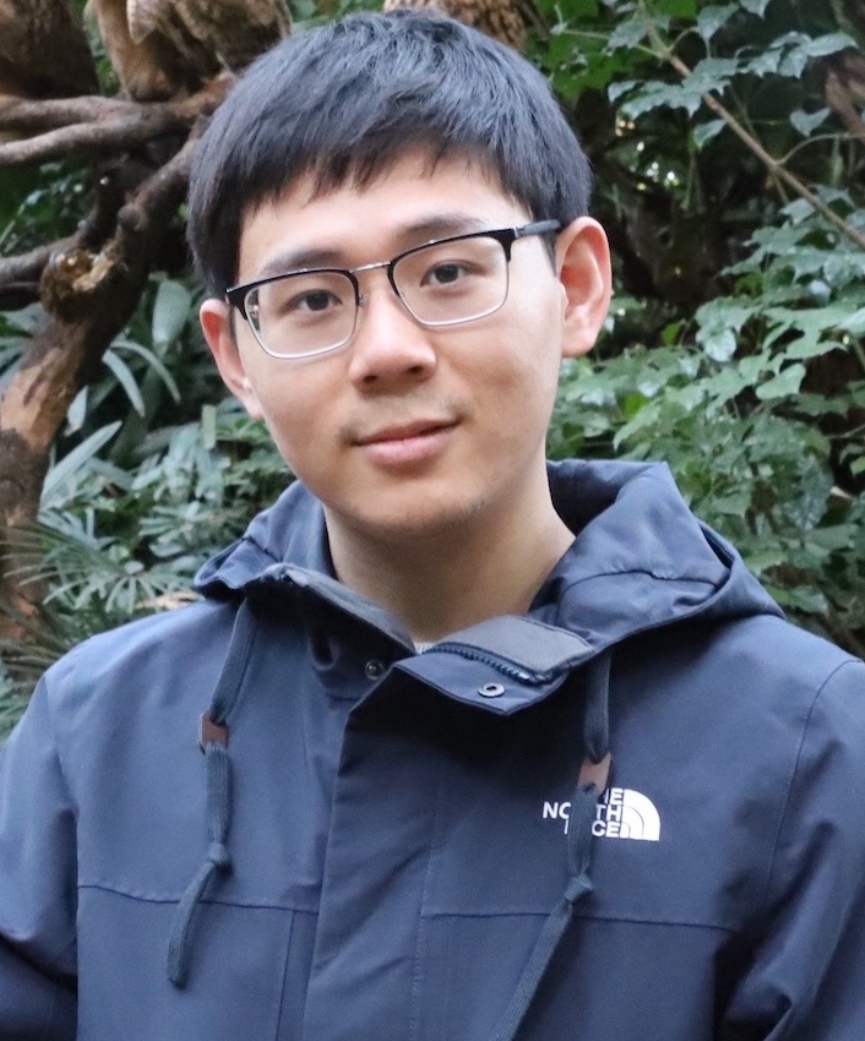 Ze Yang (杨泽)合作论文数Department of Computer Science, University of Toronto;Waabi;Vector Institute16
 Kelvin Wong合作论文数Waabi16
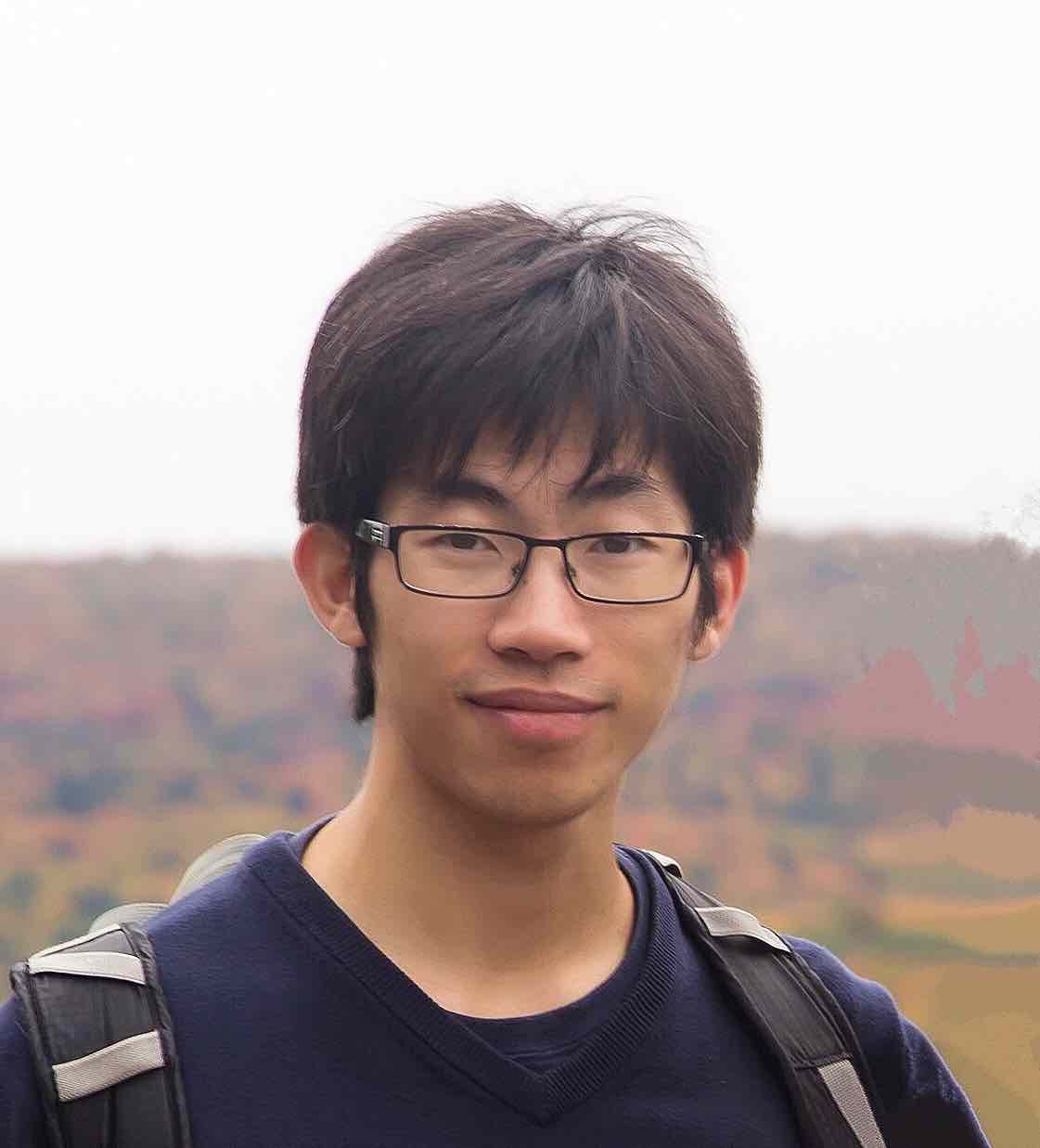 Wenjie Luo (骆文杰)合作论文数Waymo16
 Trevor Darrell合作论文数Department of Electrical Engineering and Computer Science, University of California, Berkeley16
 Rui Hu合作论文数Waabi14
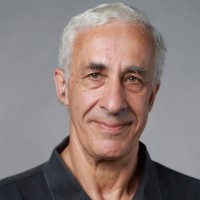 Pascal Fua合作论文数Computer Vision Laboratory, Institute of Computer and Communication Sciences, School of Computer and Communication Sciences, Ecole Polytechnique Fédérale de Lausanne;IC - Computer Science Section, School of Computer and Communication Sciences, Ecole Polytechnique Fédérale de Lausanne;Neural Concept14
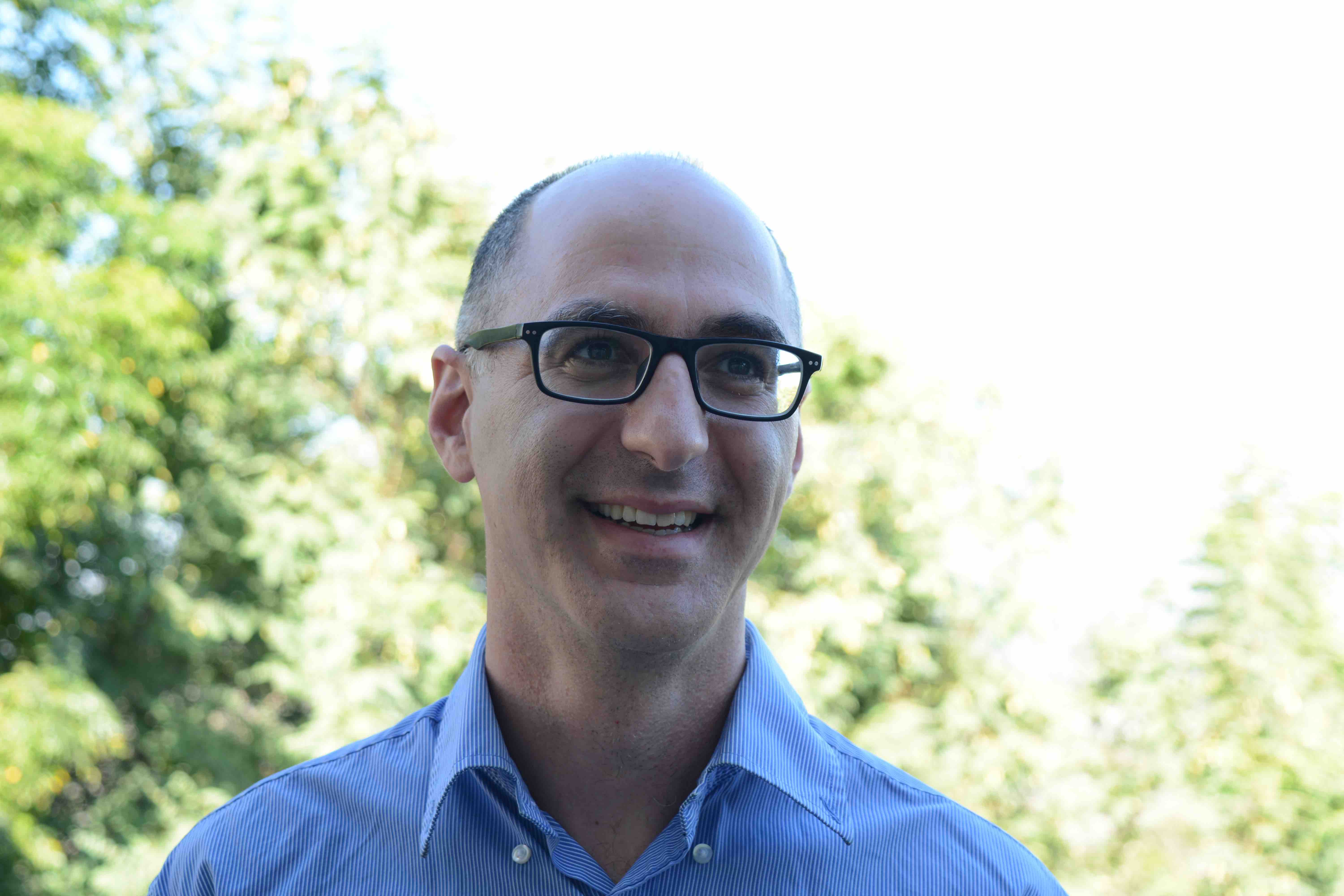 Tamir Hazan合作论文数Sunbit;Technion - Israel Institute of Technology14
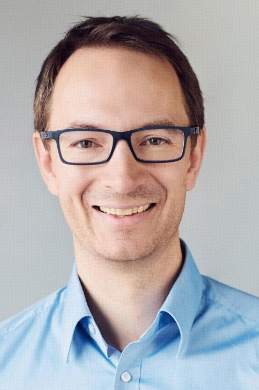 Andreas Geiger合作论文数Department of Computer Science, University of Tübingen13
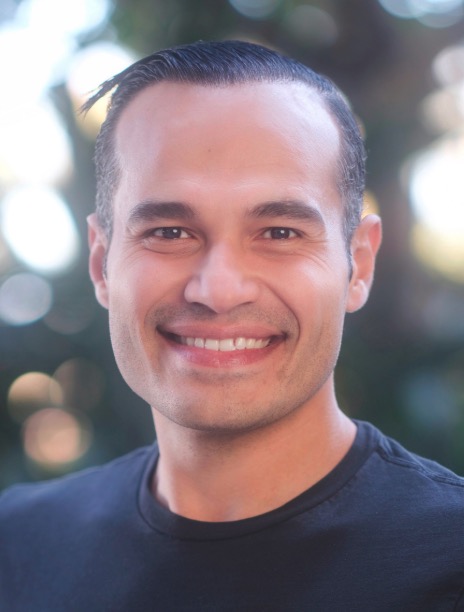 Ersin Yumer合作论文数Adobe12
 Mathieu Salzmann合作论文数Ecole Polytechnique Federale de Lausanne12
 Abbas Sadat合作论文数Waabi12
 Simon Suo合作论文数LlamaIndex11
 James Tu合作论文数University of Toronto;Waabi11
 Namdar Homayounfar合作论文数Waabi10
 Marc Pollefeys合作论文数Computer Vision and Geometry Lab, Institute of Visual Computing, Department of Computer Science, ETH Zurich;Mixed Reality and AI Lab, Microsoft10
 Min Bai合作论文数Amazon Web Services10
 Chris Zhang合作论文数Waabi Innovation Inc;Machine Learning Group, University of Toronto9
 Justin Liang合作论文数Waabi9
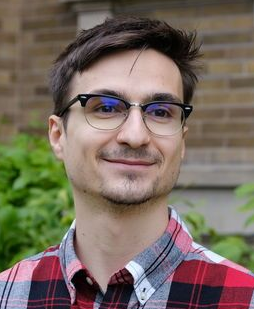 Andrei Bârsan合作论文数Waabi AI9
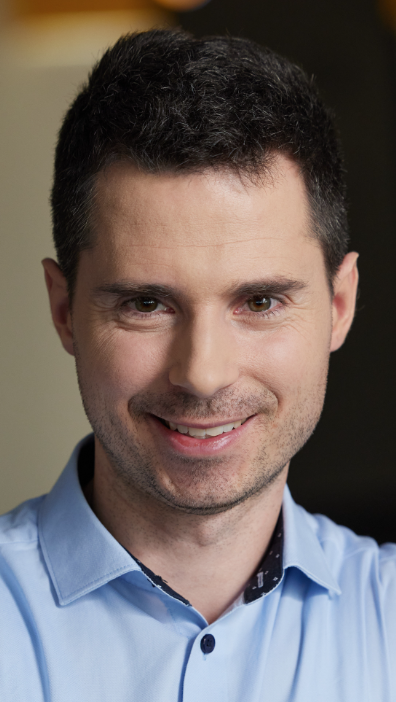 Gellért Máttyus合作论文数Deligo Vision Technologies8
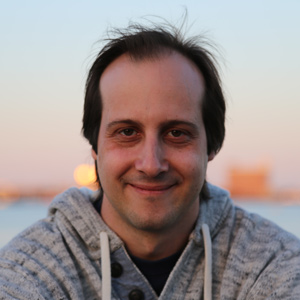 Antonio Torralba合作论文数Computer Science and Artificial Intelligence Laboratory, Department of Electrical Engineering and Computer Science, School of Engineering, Massachusetts Institute of Technology8Anqi Joyce Yang合作论文数7
 Sean Segal合作论文数Uber Advanced Technologies Group TAB7
 David J. Fleet合作论文数Department of Computer Science, University of Toronto;Department of Computer and Mathematical Sciences, University of Toronto Scarborough;Google Research;Vector Institute for Artificial Intelligence7
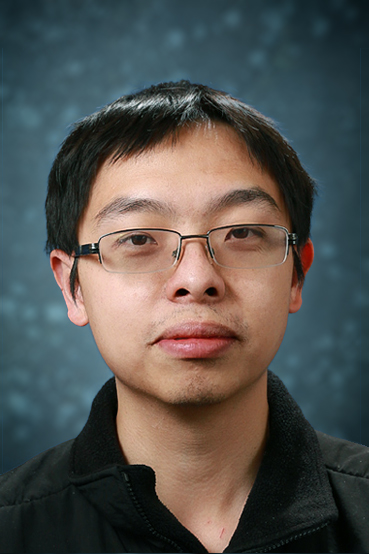 Dahua Lin (林達華)合作论文数Department of Information Engineering, The Chinese University of Hong Kong;Shanghai Artificial Intelligence Laboratory7
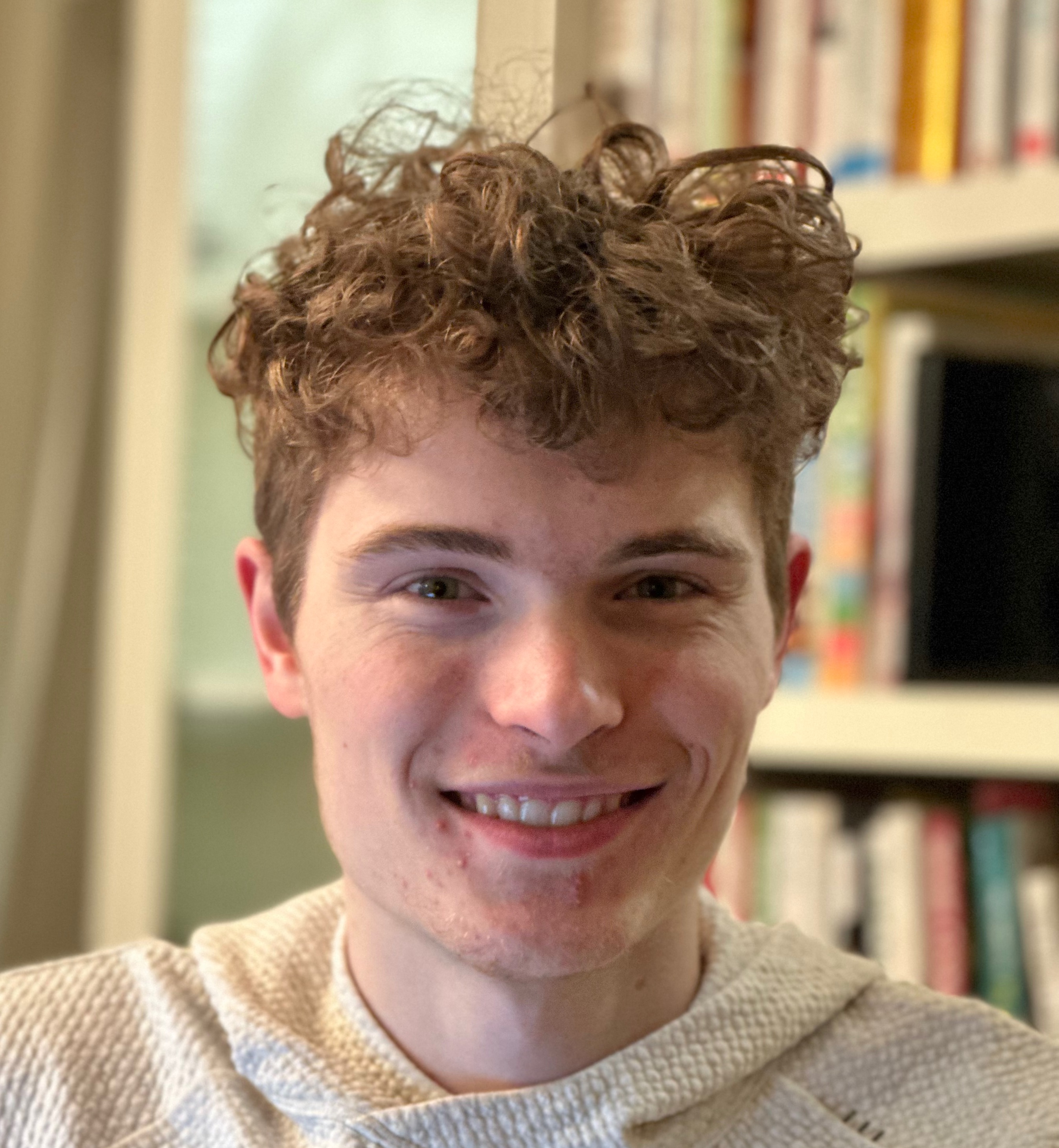 Ben Agro合作论文数Waabi;University of Toronto6
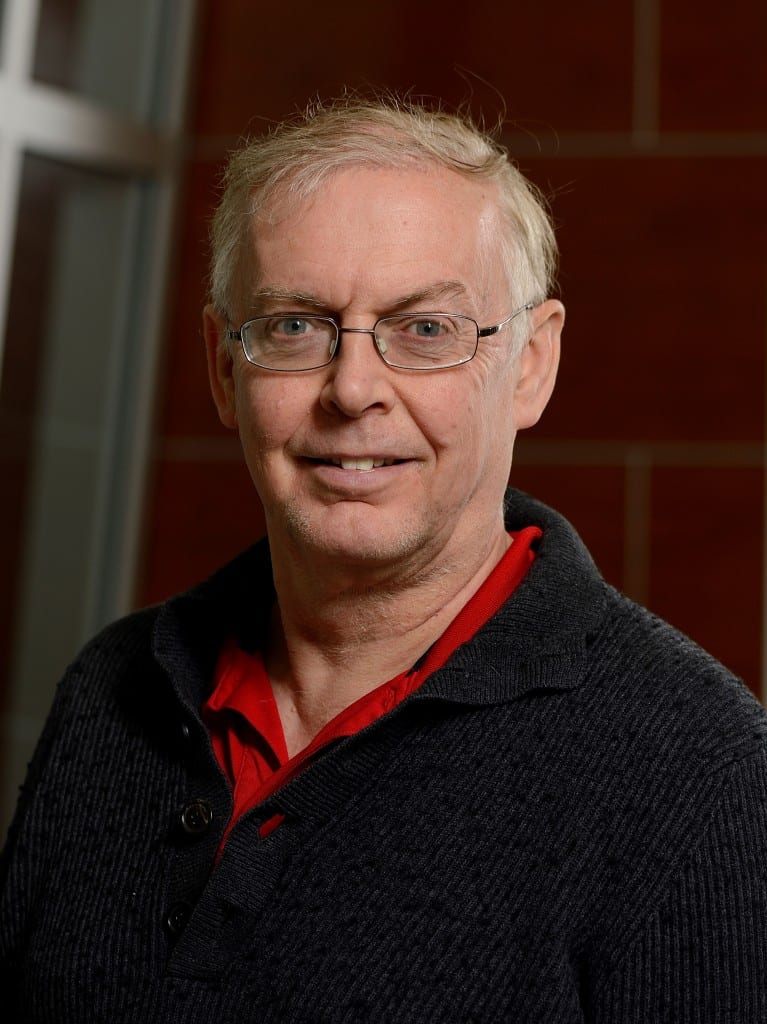 Alan L. Yuille合作论文数Department of Cognitive Science, Krieger School of Arts & Sciences, Johns Hopkins University6
 Xinchen Yan (严欣辰)合作论文数Luma AI6
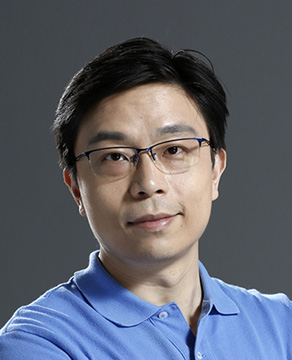 Jiaya Jia (贾佳亚)合作论文数Department of Computer Science and Engineering, The Hong Kong University of Science and Technology6
 Yukun Zhu合作论文数Google6
 David McAllester合作论文数Toyota Technological Institute at Chicago6
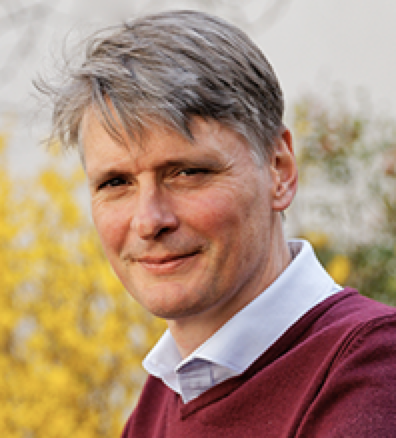 Neil Lawrence合作论文数Department of Computer Science and Technology, University of Cambridge;Department of Computer Science, The University of Sheffield6
 Andrei Pokrovsky合作论文数Startup6
 Kaustav Kundu合作论文数Meta6