The expansion from material heritage – pleasing sight and to a lesser extent touch (for very often material heritage may be touched only within limits) – to the realm of the intangible indicates an increase in the reflexive consideration of the full sensorium. With the ratification of the 2003 Intangible Heritage Convention, we have turned to select for heritage status cultural practices and perceptions entailing the body and the senses more fully: music and dance, as well as craft traditions exemplifying the knowledge in hands and the skill of touch.The new French sensory heritage law could be a significant marker in the changing dynamic of valorizing selected aspects of culture.
Los acrónimos en el título significan “conocimiento tradicional” y “expresiones culturales tradicionales”. Son evidencia lingüística de cómo vastos componentes de las prácticas culturales fueron agrupados, con el fin de facilitar hablar sobre ellos en las negociaciones internaciones en la Organización Mundial de la Propiedad Intelectual (World Intellectual Property Organization- WIPO, por sus siglas en inglés) . Este artículo traza el camino del conocimiento cultural inmaterial un repositorio dinámicamente cambiante disponible para todos dentro de una comunidad hasta su potencial pasaje selectivo a la propiedad y el uso económico exclusivo. Hay numerosas razones que han fomentado el interés en la protección legal de selecciones de cultura; una de ellas reside en el proceso de creación de patrimonio que destaca ciertos intangibles dentro de la cultura como dignos de protección y celebración, otro es el uso ilegítimo de conocimientos tradicionales por actores no nativos en varias industrias. Basándose en ejemplos de las sesiones de WIPO, el artículo rastrea los difíciles esfuerzos para generar definiciones que se presten para elaborar marcos legales consuetudinarios en la ley de propiedad intelectual y pide una participación más activa de los estudiosos de la cultura para acompañar críticamente tales desarrollos normativos.
a brief but consequential war began between Israel and the countries of the Arab League led by Egypt's President
Sensory matters have crossed paths with cultural scholarship for more than two centuries and have, during the past two decades, received renewed attention in ethnological fields and various publishing ventures. The working of the senses in tandem with cognition facilitates the experience of pleasure and pain, fear and elation – but to what extent can (or should) this realm, situated between individual experience and social coding, be accessible to cultural research? The paper probes a number of examples and methodological issues in grasping experiences and sites of interaction where sensations are expressed in a culturally shared fashion and explores which areas of research may profit particularly from an expanded ethnographic sensibility.
This experimental section includes some parts of the performative event "The materiality of transformations: Listening to objects", which closed the 14th SIEF conference held in Santiago de Compostela in 2019. Barbara Kirshenblatt-Gimblett, Regina Bendix, Dorothy Noyes, Sharon Roseman and Francisco Cruces conversed on stage about the cultural meanings of a selection of personal objects. By unveiling the stories contained in mezuzahs, hair, a serving platter and a shawl, they put the methodological power of the object/story couplet to the test. The benefits of articulating narrativity with materiality; the silent power of things in everyday life; the embedded character of storytelling, and some of its affective, moral and celebratory virtues were highlighted.
Esta sección experimental incluye algunas partes del evento performativo “La materialidad de las transformaciones: escuchar a los objetos”, que clausuró el XIV congreso de SIEF celebrado en Santiago de Compostela en 2019. Barbara Kirshenblatt-Gimblett, Regina Bendix, Dorothy Noyes, Sharon Roseman y Francisco Cruces conversaron sobre los significados culturales de una selección de objetos personales. Al desvelar las historias contenidas en mezuzahs, cabello, una fuente o un chal, se puso a prueba el poder metodológico del par objeto / historia, los beneficios de articular la narratividad con la materialidad y el silencioso poder de las cosas en la vida cotidiana. Se destacó el carácter incorporado de la narración y algunas de sus virtudes afectivas, morales y celebratorias. Este evento performativo se puede ver en from minute 00:52:50 to 01:31:00.
The vast number of human remains in scientific research, museum and teaching collections bring the multifaceted terms ‘custody’ and ‘custodianship’ into view. The question of ‘custodianship’ and ‘curation’ is part and parcel of the language of collection, yet human remains push the question of ownership to a more elementary level. The authors look at the meanings of custodianship as used (and not yet used) within the framework of an interdisciplinary project on academic collections of human remains. They suggest that expanding from custodial protection, representation and expertise to custodial responsibility and care may offer a lens for framing the past and for ‘letting go’ in the future.
As an interviewee in a research project on the remembrance of the 1967 war, Ali, a resident and service provider ofJerusalem's Old City, shared exceptionally vibrant stories in Hebrew with an Israeli interviewer. Later, a Palestinian interviewer interviewed Ali about the same events in his native Arabic. Leading up to a presentation of a number of Ali's stories told in these interviews, the article examines the conditions of interviewing within and across conflict lines and the capacity of the narrating space created in dialogue to offer conditions of truth. The parallel analysis of the two interviews and a selection of stories contained therein examines Ali's rhetoric o f sincerity. It allowed for different points of emphasis with each interviewer while maintaining Ali's sense of inner truth.
Interdisciplinary collaboration is a sensible approach for addressing complex problems. However, academic training and the resulting disciplinary habitus (and competition) often leave such collaborative skills woefully underdeveloped. This contribution outlines how ethnographic sensibilities and skills may contribute to overcoming borders between disciplinary practitioners and enhancing self-awareness within and across scientific and scholarly practice. It thus proposes ethnographic attention as interdisciplinary midwifery.
The David Buchan Lecture 2018 examines a range of small memorial interventions from occupational culture to Holocaust markers. Rather than working with large figures on pedestals, they are designed to subtly disrupt everyday perception. What are the motives behind such initiatives? Who pays for them? What kinds of materials are they made of and how do they seek to imprint their message onto present and future generations? Drawing from American and German cases, similar questions present themselves: who is entitled to decide what should be publicly remembered and in what form? How effective are small memorial interventions in stirring public discussion of the past? How does intentional memorial activity compare to actual evidence of historical events in everyday life?
 Kilian Bizer合作论文数Economic Policy and SME Research, University of Göttingen12
 Dorothy Noyes合作论文数Ohio State Univ9M Kraul合作论文数7
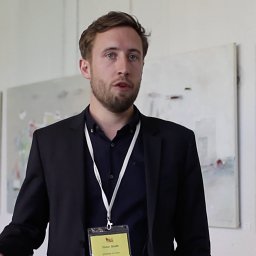 Stefan Groth合作论文数Ctr Global Cooperat Res, Univ Duisburg Essen6K Kostlin合作论文数3Ulrich Marzolph合作论文数3katja koch合作论文数2SM Shrake合作论文数2Michaela Nietert合作论文数2Aditya Eggert合作论文数2Sharon R. Roseman合作论文数2Hagar Salamon合作论文数2
 Francisco Cruces Villalobos合作论文数2Gottfried Korff合作论文数2G Welz合作论文数1Mirjam Nast合作论文数1Rolf W. Brednich合作论文数1Mary Beth Stein合作论文数1Hermann Bausinger合作论文数1Markus Tauschek合作论文数1mary koske合作论文数1
 Catharina I. Keßler合作论文数1Chiara Bortolotto合作论文数Ecole Hautes Etud Sci Sociales EHESS, Inst Interdisciplinaire Anthropol Contemporain II, Paris, France1Nicolas Adell合作论文数Dept Anthropol, Univ Toulouse Jean Jaures1
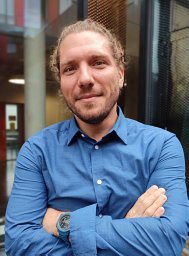 Jonatan Kurzwelly合作论文数Cultural Anthropol European Ethnol, Univ Gottingen1
 Emanuele Buratti合作论文数Molecular Pathology Laboratory, International Centre for Genetic Engineering and Biotechnology;Universita degli Studi di Trieste1
 Thilo Dörk-Bousset合作论文数Clinics of Obstetrics and Gynecology, Hannover Medical School;Department of Obstetrics and Gynaecology, Hannover Medical School1Lee Haring合作论文数1
 Tilman Allert合作论文数1Elliott Oring合作论文数1Cristiana Stuani合作论文数International Centre for Genetic Engineering and Biotechnology1
 Kaspar Maase合作论文数1Veronika Görög-Karady合作论文数1Geneviève Calame-Griaule合作论文数1
 Valdimar Hafstein合作论文数Faculty of Social Sciences, University of Iceland1
 Francisco Baralle合作论文数1Alois Wierlacher合作论文数1Franco Pagani合作论文数1




