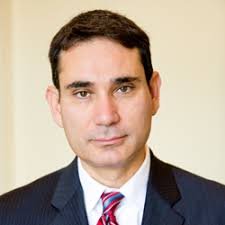
Click to increase image sizeClick to decrease image size Additional informationNotes on contributorsRichard J. KilroyRichard J. Kilroy, Jr., is Professor of Political Science at Coastal Carolina University. He is also a nonresident scholar in the Baker Institute for Public Policy's Center for the United States and Mexico at Rice University. He received his Ph.D. from the University of Virginia. He spent 23 years on active duty as an Army intelligence and Latin America foreign area officer. The author can be reached at rkilroy@coastal.edu.Notes1 My oldest daughter, also an Army brat, was born in the same military hospital as Ana in Nurnberg, Germany.2 Montes had visited the base weeks before the attack and is believed to have provided the Cubans intelligence on the Salvadoran unit disposition of forces and base security measures, although she never admitted this. She also disclosed the name of a covert U.S. intelligence officer working in Cuba.3 She completed her undergraduate degree in Foreign Affairs in 1979, the year I arrived at University of Virginia for my master's degree program in the same department. Because there were few Latin Americanists at that time, we would have had the same faculty members. The department was quite conservative then. The more radical Latin Americanists were in the History Department.4 Aldrich Ames at the CIA in 1994 and Robert Hanssen at the Federal Bureau of Investigation (FBI) in 2001 were both convicted of spying for the Soviet Union and later Russia. Ames is reported to have been paid $2.5 million for his espionage. Hanssen was paid $600,000, but ego, rather than money, appeared to be his main motivation—that he was smarter than everyone else. The only known payment that Montes received from the Cubans was to pay off her graduate school debt and to buy a laptop and radio equipment used in her communication.5 For example, the John Walker spy case included his son, brother, and a close Navy friend, Jerry Whitworth, who was actually a student of mine when I taught Latin American history in the federal penitentiary at Leavenworth, Kansas, in the 1990s. My students want to know what grade I gave him. I say, "An A because he earned it, like you need to do!"6 Another senior intelligence officer for the DIA, Robert Montaperto, was the lead analyst for China responsible for producing DIA's intelligence assessments of China in the early 2000s. He was later convicted of spying for China, also for ideological reasons. Ironically, I also knew Bob, because I was involved in our department hiring him to teach classes on China at East Carolina University—before he was convicted, not after!7 A search of the National Security Archives and CIA Archives could not locate a redacted version of this document. There is a declassified 2005 Department of Defense study on Ana Montes, titled Review of the Actions Taken to Deter, Detect and Investigate the Espionage Activities of Ana Belen Montes (U). https://nsarchive.gwu.edu/document/15951-document-37-office-inspector-general
When one thinks of the Cold War, they often visualize a conflict between the United States and the Soviet Union, primarily conducted by intelligence agencies through espionage, deception, and intri...
The Paris (2015) and Brussels (2016) terrorist attacks reignited the debate over security vs. liberty in the fight against terrorism in democratic societies. In the United States, the controversy began again in 2012, as a result of revelations coming from Edward Snowden about the National Security Agency’s (NSA) domestic and foreign intelligence collection programs. The collection of telephony metadata by the NSA raised the issue about the legal provisions of section 215 of the USA Patriot Act, and section 702 of the Foreign Intelligence Surveillance Act, concerning the collection of phone records of U.S. citizens. The USA Freedom Act was meant to address some of these concerns over the use of technology domestically in the fight against terrorism, but does it? This article argues that the use of advanced technologies in domestic intelligence and information collection by intelligence agencies does not significantly enhance security and prevent the possibility of terrorist attacks, as much as good police work and information sharing. Also, the article addresses the broader issue of the role of the governments in the use of information and communication technology in democratic societies for intelligence purposes, suggesting that as technology advances and the fear over new threats increases, the potential for democratic governments to use that technology to their own detriment also increases.
This article re-evaluates earlier work done by the authors on Regional Security Complex Theory (RSCT) in North America, using sectoral analysis initially developed by Buzan and Waever, but also adding the variables of institutions, identity, and interests. These variables are assessed qualitatively in the contemporary context on how they currently impress upon the process of securitization within sectoral relations between Canada, Mexico, and the United States. The article reviews the movement from bilateral security relations between these states to the development of a trilateral response to regional security challenges post- 9/11. It further addresses the present period and what appears to be a security process derailed by recent political changes and security inequalities, heightened by the election of Donald Trump in 2016. The article argues that while these three states initially evinced a convergence of regional security interests after 9/11, which did create new institutional responses, under the current conditions, divergence in political interests and security inequalities have reduced the explanatory power of RSCT in North America. Relations between states in North American are becoming less characterized by the role of institutions and interests and more by identity politics in the region.
The term "perimeter defense" has come back into vogue recently, with regard to security strategies for North America. The United States' concern primarily with the terrorist threat to its homeland subsequent to September 11, 2001 (9/11) is generating this discussion with its immediate neighbors of Mexico and Canada (and to some extent some Caribbean nations—the "third border"). The concept is simply that by pushing defenses out to the "perimeter" nations, then security will be enhanced, since the United States visions itself as more vulnerable to international terrorism than its neighbors. However, Canada and Mexico have not been very happy about the perimeter defined by Washington since 9/11. These nations have sought to define the trilateral relationship beyond just discussions of terrorism to include natural disasters and international organized crime as a component of a broader trilateral agenda. Eight years later these three nations continue to look for some convergence of security interests, although there remains a degree of tension and hesitancy towards achieving a "common security agenda" in the Western Hemisphere.This article examines the concept of "perimeter defense" within the context of the new security challenges that the United States, Mexico, and Canada face today. Questions to be addressed in the article include: Do all these nations share the same "threat" perception? Where exactly is the "perimeter?" What security arrangements have been tried in the past? What are the prospects for the future for increased security cooperation? The main focus of this article is at the sub-regional level in North America and whether a new "trilateral" strategic security relationship between the United States, Canada, and Mexico can emerge in North America.
This article examines the state of federalism in the Bush Administration from the perspective of the policy area of homeland security and disaster response. The article uses the International City and County Management Association homeland security survey completed in the spring and summer of 2005 as a source of data. The article argues that while it is tempting to look for one single agency to control homeland security and disaster response, a networked model is better supported by the survey data and by recent experience in terrorist and natural disaster response.