The global ocean harbors millions of unique species, many of which help to provide food and nutrients for nearly half of the world's human population. Yet, the continued viability of this critical food source is uncertain as unsustainable exploitation has eroded marine biodiversity, and ecosystems are affected by a changing climate. Efforts to rebuild overexploited fisheries, restore marine biodiversity, and build climate resilience are underway, following international policy commitments. Here we analyze global progress in implementing these commitments through the expansion of protected area coverage (GBF Target for 2030: 30%) and sustainable fisheries management (GBF Target for 2030: 100%) under the Kunming-Montreal Global Biodiversity Framework (GBF) in 2022. When comparing GBF objectives, we show that as of 2025, achieving fisheries targets has progressed significantly further relative to protected area targets. On average, 62% of assessed industrialized fisheries were reported within sustainable limits across nineteen FAO major fishing areas, while protected area coverage averaged 10% across the same areas, with 3% highly or fully protected. Notably, we find little evidence for the integration of targets related to these two objectives. Given this, we propose an integrated assessment framework by which the biodiversity outcomes of both fisheries and conservation measures can be evaluated in relation to common reference points, helping to ensure their individual effectiveness and maximizing their joint co-benefits. Thereby we aim to help resolve disparate and sometimes conflicting agendas in marine conservation and move towards more integrated policies for protected area expansion and sustainable fisheries management.
The functioning of high-diversity ecosystems, such as coral reefs, is intrinsically tied to the integrity and efficiency of the trophic pathways within these systems. Coral reef productivity depends, in part, on the input of external nutrients, primarily zooplankton, that is assimilated by extraordinarily diverse fish communities. The plankton-planktivore trophic pathway is thus crucial for sustaining the productivity that exemplifies coral reef ecosystems; however, it remains poorly understood at large spatial scales. Here we explore global patterns in reef fish community structure, revealing a major discrepancy between the Indo-Pacific and Caribbean in the productivity and fisheries potential of planktivorous reef fishes. Indo-Pacific reefs support 6.6 times more planktivorous fish biomass and 3.4 times greater productivity than the Caribbean, a difference largely due to the marked contribution of species that feed on gelatinous plankton in the Indo-Pacific. Although species that feed on gelatinous plankton constitute only 4% of the planktivorous fish abundance in the Indo-Pacific, they account for one-third of the biomass and one-quarter of the productivity. This divergence reflects the contrasting biogeographic histories of the two realms, with Indo-Pacific oceanography fostering diversification, while repeated extinction events and trophic erosion may have constrained planktivory in the Caribbean. Ultimately, these differences in energy flow translate into fundamental differences in coral reef functioning and, potentially, their capacity to support ecosystem services, including fisheries.
Abstract The metabolic processes sustaining coral reefs, from carbonate and primary production to secondary production, remain poorly integrated and rarely quantified simultaneously at global scales. This hampers our ability to predict global responses to accelerating human pressures and manage coral reef functioning. Using metabolic scaling and bioenergetic models applied to surveys from 1,100 reefs worldwide, we provide a global, standardized quantification of 14 ecosystem functions spanning benthic (corals and algae) and fish communities. Our analysis reveals a continuous functional spectrum of global coral reefs organized along four dominant axes: 1) primary production, 2) calcification and habitat structure, 3) secondary biomass production and consumption, and 4) biomass turnover. Functions mediated by fish and benthic communities show weak associations at the global scale rather than tight coupling. Climate stressors reduced calcification and local human impacts lowered secondary production. Yet these directional effects unfolded against a backdrop of substantial natural variability in reef functional configurations, such that heavily and minimally impacted reefs overlap substantially in the global functional space. Temporal analyses across three representative reef systems further revealed that functional trajectories following disturbance are context-dependent, with no universal pattern of recovery across locations. This continuous and context-dependent functional spectrum challenges the notion of universal functional benchmarks and supports locally tailored conservation strategies.
Marine ecosystems are increasingly threatened by overfishing, pollution, coastal development and climate change, underscoring the need for long-term, representative information on key fish populations and habitats to inform management and policy. Underwater fish observation (UFObs) techniques, such as Underwater Visual Census (UVC), stereo-Baited Remote Underwater Video (stereo-BRUV) and Remotely Operated Vehicles (ROVs), play a key role in sustaining long-term data collection. Despite technological advancements, gaps persist in understanding research focus, geographic distribution and methodological biases inherent in these methods. We conducted a scientometric analysis of 1443 peer-reviewed publications (1953-2023), employing natural language processing and network analysis to map the research landscape. We identified 15 knowledge clusters, including marine protected areas, apex predator conservation and reef ecosystems. Our findings reveal increasing use of BRUVS and ROVs in studies of marine protected areas and subsea infrastructure, while UVC remains prevalent in shallow coral reef research. Geographic representation is skewed, with the field dominated by researchers based in Australia and the United States, and underrepresented in Africa and Southeast Asia. This imbalance highlights the need for more inclusive, globally coordinated monitoring and reporting. Our results underscore the urgency of standardising protocols within each observation method and developing interoperable reporting frameworks across techniques to maximise data comparability and foster international collaboration. Addressing these challenges will strengthen the field's capacity to inform global conservation strategies and support sustainable fisheries management.
Predicting marine species distribution and abundance is essential for effective conservation and management. Yet, it remains challenging in data-limited regions where traditional biodiversity surveys are logistically or financially constrained. Combining underwater visual census and eDNA fish sampling across the northwestern Mediterranean Sea, we tested a novel modelling framework that uses eDNA metabarcoding sequences to complement socio-environmental covariates in predicting species-specific local abundances. The eDNA-derived community proxies revealed ecological gradients complementary to visual census data, helping to distinguish sites dominated by coastal demersal fishes versus offshore predators, territorial reef fishes versus mobile dispersers and benthic versus pelagic species. Using joint Species Distribution Models (jSDMs), within the Hierarchical Modelling of Species Communities (HMSC) framework, we compared the predictive performance of models based solely on socio-environmental covariates with those that additionally incorporated eDNA-based information. Including eDNA information significantly improved model fit for 16 out of 26 species, including the endangered dusky grouper (Epinephelus marginatus), and contributed to one-third of explained variance in species local abundances on average. Synthesis and applications. This study demonstrates that integrating eDNA metabarcoding data into species distribution models can improve fish abundance predictions, especially for site-attached and reef-associated species. This approach provides a scalable and cost-effective tool for monitoring, impact assessment, spatial planning and adaptive management of marine resources.Read the free Plain Language Summary for this article on the journal's .
Global climate change is shifting thermal gradients in the world's oceans, resulting in the redistribution of species and thermophilisation of reefs. In the Southwest Pacific, warming has underpinned the range extension and population increase of the habitat-modifying sea urchin, Centrostephanus rodgersii. Eastern Tasmania and Northeastern Aotearoa New Zealand (NZ) lie at the forefront of these changes, with increases in C. rodgersii driving declines in kelp in these regions. However, the extent of C. rodgersii increases in both regions remains unclear, although given well-established thermal limits of C. rodgersii there appears greater potential for increases in the warmer waters of NZ than in the cooler waters of Tasmania. Here we leverage a combination of broad spatial scale data and region-specific depth-stratified data to examine regional C. rodgersii abundance changes in recent decades and their relation to minimum sea surface temperature (SST). The abundance of C. rodgersii increased 1.7-fold between 2001/02 and 2016/17 for Tasmania and 3.3-fold between 2012 and 2024 for NZ. Larger C. rodgersii abundance changes in NZ align with predictions based on their modelled abundance against SST. Moreover, modelled estimates suggest C. rodgersii abundance in NZ have the potential to increase further into the future (by ∼2.7-fold at 8.1 m). While the increase in Tasmania has been well documented, these findings demonstrate a greater increase in population density in Northeastern NZ and potential for further increases. Ultimately, increase in C. rodgersii abundance in both regions call for the establishment, or ramping up, of management programs to curb population increases.
Identification of threatened species in the marine environment is hindered by high access costs and difficulties collecting population trend and geographical distribution data. These challenges have resulted in a poor coverage of marine species among assessments for the IUCN Red List of Threatened Species, reducing the potential value of the Red List for guiding conservation action in marine systems, including rocky and coral reefs. To quantify knowledge gaps in reef species threat assessments, we assessed population trends for 626 common shallow reef species at 869 sites around Australia from 1992 to 2024 using time series data from standardised ecological monitoring programs. A total of 82 of 229 species (36 %) with declining populations had rates of decadal decline that would qualify them as threatened based on Red List criteria. Over a third (38 %, n = 31/82) of these provisionally threatened species are endemic to the study region (Australia), with 5 currently listed as Least Concern and 26 Not Evaluated. Temperate macroalgae (12 species) and mobile macro-invertebrates (23 species: 14 Echinoderms, 8 Gastropods, 1 Malacostracan) are over-represented among provisionally threatened species and under-represented on the Red List. Expansion of monitoring and reporting programs, and more timely risk assessments that lead to improved management strategies, are required to better accommodate threats affecting speciose marine taxa, with the ultimate goal to allow proactive management, thereby reducing extinction risk.
Aim: How communities of organisms come together has long fascinated scientists, with renewed interest in using functional and evolutionary patterns to infer mechanisms of community assembly. Ecological theory predicts that biotic interactions could lead to either divergence in the event of niche partitioning or convergence through the exclusion of competitively inferior species, but most macroecological studies attribute the latter to environmental influences. Here, we investigated the relative importance of these two opposing mechanisms across broad spatial gradients. We hypothesised stronger signals of: (i) convergence at high latitude owing to ecological generalism and (ii) divergence at low latitudes owing to specialisation. Major Taxa Studied: Reef-associated bony fishes. Location: Global.Time Period2006-2019. Methods: We used a global dataset on marine reef fish assemblages comprising 2476 species at 3325 sites to disentangle the biotic drivers of community assembly across > 100 degrees of latitude. We then applied a framework to remove environmental influences before examining whether any signs of biotic interactions remained in the trait and phylogenetic diversity of local communities relative to the (environmentally constrained) regional species pool, drawing on six functional traits and a phylogeny of bony fishes. Results: Local fish assemblages were more functionally and phylogenetically similar to each other than expected based on the regional species pool at higher latitude reefs (i.e., show greater convergence). This pattern was evident after accounting for major sources of local environmental variation, suggesting exclusion of weak competitors. Functional convergence was mainly driven by traits related to resource acquisition, with high-latitude assemblages converging towards more energetic carnivorous and planktivorous diets. Main Conclusions: Our results suggest that biotic interactions drive greater trait and phylogenetic convergence from tropical to temperate zones. Likely mechanisms include increasing generalism and overlap in ecological strategies towards the poles, leading to the exclusion of weak competitors.
Context Eastern blue groper (Achoerodus viridis) is an iconic Australian fish and a trial prohibition of fishing for it has been implemented in New South Wales (NSW). A review of available data on this species is needed to inform future management.Aims To assess the temporal and spatial patterns in the abundance of A. viridis.Methods Data collected across four NSW bioregions from two systematic sampling programs, namely, baited remote underwater video (2010-23) and underwater visual census (2008-23), were analysed with the inclusion of two other common wrasse species as references.Key results Achoerodus viridis showed strong latitudinal variation: being least abundant in the warmer northern bioregion and peaking in abundance in the central Manning and southern Batemans Bioregions. Temporal trajectories for A. viridis were mixed with significant declines on shallow reefs in the Manning and Hawkesbury Bioregions, whereas abundances on deeper reefs were stable. Similar patterns of decline were observed for the two reference species, although both species were far more abundant than was A. viridis.Conclusions Achoerodus viridis, like other temperate wrasse, appears to be declining because of warming oceans, although depth may provide a thermal refugeImplications These analyses should assist decision-making for future management regulations for A. viridis.
Differences amongst diver-based underwater visual census (UVC) methods may influence how fish assemblages are described and interpreted ecologically. Here we compared 2 common UVC protocols across 32 tropical and 10 temperate reef sites spanning Australia to assess observational biases associated with diver counts. Specifically, we examined how fish data collected whilst deploying a transect tape (reel-out survey) compared to observations made along the transect tape following deployment (pre-laid survey). Each method produced comparable community structures for both biomass and abundance. No differences in species richness, family richness, abundance, or biomass were evident in assessments within realms (i.e. tropical and temperate) or protection status (i.e. fished and no-take). Nevertheless, pooling the data at the continental scale revealed 57% more biomass observed during reel-out surveys than pre-laid surveys, primarily due to more large fishes (>= 20 cm) from 3 tropical families and subfamilies: Carcharhinidae, Lethrinidae and Scarinae. Differences in biomass estimates by method altered the contributions of diver-affected families to reef fish trophic structures, with the reel-out method recording more biomass for primary consumers and higher-order predators. Overall, our findings indicate that tape laying prior to UVC has minimal detectable influence on fish community metrics but highlights that methodological differences can affect the interpretation and reporting of ecological patterns when examined over broad biogeographic scales. Pre-diver baselines of fish abundances, including by application of alternative methodologies such as remote underwater cameras, are needed to disentangle observational biases caused by diver-shy and diver-curious fishes, and thus allow more accurate depiction of reef food webs.
On shallow rocky and coral reefs, cultural and recreational values, like aesthetics, are critical aspects of Nature's Contributions to People (NCP) that support human well-being and provide billions of dollars in tourism revenue. Quantifying the aesthetic value of reef ecosystems and uncovering the conditions that enhance it could support NCP-based management. Here, we combine a global dataset of reef fish surveys, species-level aesthetic values, and causal modeling to assess the global status and drivers of reef fish assemblage aesthetic value. We find that aesthetic value is inherently linked to species richness, displaying a latitudinal gradient with peaks in the tropics, but varies strongly with the presence of exceptionally beautiful or less-beautiful species. Sea surface temperature, primary productivity, human gravity, and protection status are the strongest drivers of assemblage-level aesthetic value. Protection against human impacts consistently enhances aesthetic value by boosting taxonomic and phylogenetic diversity, and this effect is greatest in species-rich, tropical ecoregions. Economic development has little influence, indicating that low-income countries are not constrained from maintaining beautiful fish assemblages. Our results therefore suggest that marine protected areas (MPAs) can support multiple NCPs simultaneously, particularly in developing tropical countries. While we highlight the effectiveness of MPAs, given the low level of marine protection globally and the sensitivity of aesthetic value to environmental conditions, the beauty of the world's reefs appears severely threatened. Aesthetic value should be immediately integrated into reef conservation and management plans.
Chain moorings are widely used for securing vessels in coastal zones worldwide but can cause environmental damage to the seabed. Although Environmentally Sensitive (ES) mooring alternatives are available, wide-scale adoption and replacement of existing chain moorings have been limited. Adoption may have been hindered by a lack of information relating to the performance and movement characteristics of ES moorings in contrast to chain moorings. The engineering performance of both chain and ES moorings, including tension loading and horizontal movement, was explored using a quasi-static time series model. The performance of chain moorings depended on weather conditions; in simulated extreme weather conditions, chain moorings experienced a surprisingly high tensile load, more than double (118%) the working load limit. However, in mild weather conditions, chain moorings had the lowest tension loads compared to all tested designs. ES moorings experienced lower peak loads compared to chain moorings (47%-61%) in extreme weather but had higher base loads in mild conditions. The lighter, neutrally buoyant mooring line of ES moorings resulted in an increased movement range of the moored vessels under both weather scenarios. Additionally, this study modeled the clearance between ES moorings and neighboring chain moorings, which can be critical knowledge for planning the replacement of only some chain moorings within existing mooring fields. Using an existing mooring field as a case study, only 18% of the moorings have sufficient clearance with their neighboring moorings to be replaced with ES moorings. This study identified better load handling performance of ES than chain moorings under extreme weather conditions, suggesting when designed properly, ES moorings can function as intended to moor vessels. Yet the difference in clearance requirement between mooring designs indicates that careful planning is needed when replacing individual moorings with ES mooring in dense mooring fields. Replacement of chain moorings will need to incorporate a wider spatial perspective, considering differences in movement and spacing required between moorings to minimize the risk of contact between moored vessels. ES moorings could be effective both in their ability to conserve benthic habitats and at securing vessels in extreme conditions, however, the replacement process will require an adaptive management approach and careful consideration of mooring engineering requirements and mooring field spacing.
Benthic biogenic habitats are crucial for coastal marine ecosystems, supporting food and shelter for a large range of marine species, but they are increasingly threatened by increasing anthropogenic impacts. While large-scale monitoring data are increasingly available, tools to describe benthic habitat changes in standardised and yet finely resolved manner are still needed. The aim of this study was to define reef benthic habitat states and explore their spatial and temporal variability on a global scale using an innovative clustering pipeline. For this purpose, we used substrate cover data collected along 6554 transects worldwide by citizen scientists contributing to the Reef Life Survey program. We applied an innovative clustering pipeline that combines three algorithms — Uniform Manifold Approximation and Projection (UMAP) for dimension reduction; Hierarchical Density-Based Spatial Clustering of Applications with Noise (HDBSCAN) — to identify benthic habitat states and Shapley values to interpret the clusters identified. This unsupervised pipeline identified 17 distinct clusters worldwide, representing typical temperate and tropical benthic habitats such as large canopy forming algae and branching corals, respectively, as well as transitional states between different habitat states. Temporal site-specific analyses further demonstrated the pipeline's effectiveness in capturing fine-scale habitat dynamics. By providing a standardised, scalable approach, this work enables consistent tracking of benthic habitat changes across spatial and temporal scales worldwide. This study also showcases the potential of integrating the UMAP-HDBSCAN pipeline with Shapley values for clustering noisy ecological data from citizen science initiatives.
Temperature perturbations from climate change affect ecosystems through short-term pulse events, such as heatwaves, and chronic long-term shifts. Temperate rocky reef ecosystems have been observed to show substantial ecological change as a result of short-term temperature fluctuations, but the longer-term impacts of temperature change remain poorly understood. Here, we investigate temperate reef fishes and mobile invertebrates along Tasmania's east coast, contrasting trends in species richness, abundance, and community structure across seasons within a year to those observed over three decades of warming. Fishes exhibited dynamic seasonal shifts, but interannual changes in richness and abundance balanced out over decades with limited overall net change. In contrast, invertebrate communities changed little seasonally but suffered significant long-term losses. Our study revealed short-term ecological changes driven by temperature to be incongruent with long-term shifts. Species responded in varying ways, depending on life history and ecology. Fishes apparently tracked short temperature pulses, while less mobile invertebrates, such as echinoderms and molluscs, tolerated short-term fluctuations but exhibited long-term decline. Multi-scale studies across a broad range of taxa are needed to clarify thermal responses. The most vulnerable taxa-those facing long-term thermal stress-may be overlooked through decisions based on short-term studies, risking major biodiversity loss.
Cascading human pressures and environmental change are affecting the natural dynamics of animal populations. Forecasting population abundances from time‐series data provides an important avenue for testing competing ecological theories and for supporting conservation planning and sustainable use, yet changing system dynamics may lead to erroneous predictions. Predictions from a model fitted and tested on historical system dynamics may become irrelevant if system dynamics change. Here we describe methods to test predictability in rapidly changing systems where model parameters are likely to be non‐stationary. We presented two ways to split time series into training and test datasets so that training data were (1) contemporary to the testing data (‘modern split’) and (2) not contemporary to the testing data (‘legacy split’). As a case study, we compare the predictability of four temperate reef species in a global warming hotspot. The case study and simulation tests confirmed low predictability in the legacy split when compared to the modern split. We found that the legacy split had errors that could be more than four times larger for a species that had a rapid collapse in abundance and non‐stationary population dynamics. As expected for the species with rapid collapse, the legacy split estimated much lower predictability than the modern split. Our approach is applicable to any time‐series forecasting method and a large range of species and systems, including fisheries and threatened species population modelling, where rapidly changing environments present threats to both the species and management efficacy. Accumulated lessons from across species and systems should shed light on critical generalities that precede broader ecosystem change.
Animal body size distributions result from interactions of growth, mortality and recruitment. In ecology and fisheries science, theoretical models of fish body size distributions are widely used but rely on life-history parameters-growth coefficient (K) and natural mortality rate (M)-that remain unknown for most species and are challenging to estimate. Analysing data from underwater visual surveys and exhaustive sampling, representing 3068 populations across 797 species of shallow-water, mostly unfished marine fishes, we demonstrate that post-recruitment body length distributions exhibit a consistent unimodal shape across species and populations. When scaled to the mean body length, these distributions are strikingly similar across all teleost and elasmobranch species, with diverse life histories and maximum body sizes ranging from 1 cm to 3 m. Observed size structure can be approximated by a truncated normal distribution with a coefficient of variation of similar to 0.34 (SE = 0.002). Such consistent observed body size distributions could be aligned with Beverton-Holt population dynamics theory, if assuming an M/K ratio of similar to 1.5 and logistic observational selectivity with 50% detectability at similar to 40% of maximum body length. Alternatively, observed distributions could reflect deviations from theoretical expectations, and reconciling the unimodal distributions with theory may require relaxing some model assumptions, such as continuous recruitment, constant density-independent growth or constant natural mortality. Overall, the consistency of population- and species-level body length distributions means that unfished size structure could be predicted from a single body size parameter. It also suggests evolutionary convergence of diverse growth and mortality processes towards a narrow range of viable outcomes.
MotivationHere, we make available a second version of the BioTIME database, which compiles records of abundance estimates for species in sample events of ecological assemblages through time. The updated version expands version 1.0 of the database by doubling the number of studies and includes substantial additional curation to the taxonomic accuracy of the records, as well as the metadata. Moreover, we now provide an R package (BioTIMEr) to facilitate use of the database.Main Types of Variables IncludedThe database is composed of one main data table containing the abundance records and 11 metadata tables. The data are organised in a hierarchy of scales where 11,989,233 records are nested in 1,603,067 sample events, from 553,253 sampling locations, which are nested in 708 studies. A study is defined as a sampling methodology applied to an assemblage for a minimum of 2 years.Spatial Location and GrainSampling locations in BioTIME are distributed across the planet, including marine, terrestrial and freshwater realms. Spatial grain size and extent vary across studies depending on sampling methodology. We recommend gridding of sampling locations into areas of consistent size.Time Period and GrainThe earliest time series in BioTIME start in 1874, and the most recent records are from 2023. Temporal grain and duration vary across studies. We recommend doing sample-level rarefaction to ensure consistent sampling effort through time before calculating any diversity metric.Major Taxa and Level of MeasurementThe database includes any eukaryotic taxa, with a combined total of 56,400 taxa.Software Formatcsv and. SQL.
Marine protected areas (MPAs) are the most widely applied tool for marine biodiversity conservation, yet many gaps remain in our understanding of their species-specific effects, partly because the socio-environmental context and spatial autocorrelation may blur and bias perceived conservation outcomes. Based on a large data set of nearly 3000 marine fish surveys spanning all tropical regions of the world, we build spatially explicit models for 658 fish species to estimate species-specific responses to protection while controlling for the environmental, habitat and socio-economic contexts experienced across their geographic ranges. We show that the species responses are highly variable, with ~40% of fishes not benefitting from protection. When investigating how traits influence species' responses, we find that rare top-predators and small herbivores benefit the most from MPAs while mid-trophic level species benefit to a lesser extent, and rare large herbivores experience adverse effects, indicating potential trophic cascades.
 Graham Edgar合作论文数Institute for Marine and Antarctic Studies, University of Tasmania140
 Neville S. Barrett合作论文数Tasmanian Aquaculture and Fisheries Institute, University of Tasmania46
 Amanda E Bates合作论文数Portobello Marine Laboratory, University of Otago39
 Jemina F. Stuart-Smith合作论文数School of Zoology;University of Tasmania;School of Zoology, University of Tasmania22
 David Mouillot合作论文数Unité mixte de recherche Ecologie des Systèmes Marins Côtiers, Université de Montpellier;ARC Centre of Excellence for Coral Reef Studies, James Cook University22
 Scott D. Ling合作论文数School of Zoology;Tasmanian Aquaculture & Fisheries Institute;University of Tasmania;Tasmanian Aquaculture & Fisheries Institute, University of Tasmania18
 Jonathan S. Lefcheck合作论文数Coll William & Mary, Virginia Inst Marine Sci16
 Russell Thomson合作论文数Menzies Research Institute, University of Tasmania16
 Nick Graham合作论文数Lancaster Environment Centre, Lancaster University15
 Camille Mellin合作论文数IRD UR 128, BPA5 98848 Nouméa cedex New Caledonia14
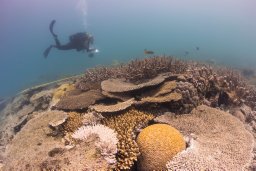 Eva Maire合作论文数Univ Montpellier, IFREMER, CNRS, MARBEC,IRD, Montpellier, France13
 Laurent Vigliola合作论文数French Institute for Development Research13
 Joshua E. Cinner (Joshua Cinner)合作论文数ARC Centre of Excellence for Coral Reef Studies, James Cook University12
 Stuart Kininmonth合作论文数MSO, Australian Institute of Marine Science12
 Nicole A Hill合作论文数School of Biological Earth and Environmental Sciences, University of New South Wales12
 Michel Kulbicki合作论文数Institut de Recherche Pour le Développement11
 Matthew McLean合作论文数Univ Guam, Marine Lab, UOG Stn, Mangilao, GU 96923 USA10
 J. Emmett Duffy (Emmett Duffy)合作论文数Tennenbaum Marine Observatories Network, Smithsonian Institution10
 Maria Beger合作论文数The School of Biological Sciences, The University of Queensland10
 Alan Friedlander合作论文数Hawaii Institute of Marine Biology, Department of Biology, School of Life Sciences, University of Hawai‘i at Manoa10
 Julia L. Blanchard合作论文数Centre for Environment, Fisheries and Aquaculture Science, Lowestoft Fisheries Laboratory10
 Freddie J. Heather合作论文数9
 Oh Elizabeth S合作论文数9Nicolas Loiseau合作论文数9
 Valeriano Parravicini合作论文数Centre de Recherche Insulaire et Observatoire du Pacifique, École Pratique des Hautes Études9
 Asta Audzijonyte合作论文数University of Helsinki Finnish Museum of Natural History9
 Andrew Hoey合作论文数College of Science and Engineering, James Cook University;Arc Centre of Excellence for Coral Reef Studies9
 Conor Waldock合作论文数Landscape Ecol, Swiss Fed Inst Technol8Cooper Antonia T合作论文数8
 David Booth合作论文数Centre for Environmental Sustainability, School of the Environment, University of Technology Sydney;School of Life Sciences, University of Technology Sydney8
 Aaron Macneil合作论文数National Marine Fisheries Service Southeast Fisheries Science Center8
 Amelia E. Fowles合作论文数Inst Marine & Antarctic Studies, Univ Tasmania7
 Chris Brown合作论文数Australian Rivers Institute, Griffith University7
 Shaun Wilson合作论文数Australian Institute of Marine Science7
 Simon Johannes Brandl合作论文数Australian Research Council Centre of Excellence for Coral Reef Studies, James Cook University7Laurent Wantiez合作论文数University of New Caledonia7
 Tim P. Lynch合作论文数Jervis Bay Marine Park7
 Nathan A. Knott合作论文数School of Biological, Earth and Environmental Sciences, University of New South Wales7
 German Soler合作论文数7
 Stewart Frusher合作论文数Australian Institute of Marine Science7
 Mikel Becerro合作论文数Centre for Advanced Studies (CSIC) Camí de Sta. Bàrbara s/n 17300 Blanes (Girona) Spain7
 Elisabeth M A Strain合作论文数University of Bologna, Universit�� di Bologna7
 Andrew J Brooks合作论文数Marine Science Institute, University of California Santa Barbara7
 Alison Green合作论文数National CJD Surveillance Unit, The University of Edinburgh7
 Olivia J Johnson合作论文数Dept Nat Resources & Environm, Univ Connecticut6
 Jordan Alan合作论文数Fisheries Research, NSW Department of Primary Industries6
 Tomas J Bird合作论文数School of Geography and Environment, University of Southampton6
 L. Benedetti Cecchi合作论文数Department of Biology, University of Pisa6
 Pascale Chabanet合作论文数Institute of Research for Development6




