For applications involving optical beam propagation through the atmosphere, knowledge of the path extinction can be a critical measurement. Measurement of this parameter has been performed in a variety of ways in the past. These approaches have been effective but require careful calibration and expensive Focal Plane Arrays (FPAs) for imaging. In this work, we describe the development of a Near-Infrared (NIR) imaging device utilizing a single detector element, forming a type of single-pixel camera specialized for extinction measurements. This approach somewhat simplifies the calibration process and avoids the expense of an FPA. We demonstrate the capability of the device to measure path extinction through extended real-world testing.
The Rytov approximation is used with different initial beam radius of curvature in orthogonal directions to approximate optical refractivity with an anisotropic nonKolmogorov spectrum in weak turbulence. Results are compared to experimental data.
A single pixel infrared camera is developed utilizing digital micromirror technology. The imager is applied to determination of atmospheric extinction and other meteorological parameters. Experimental evidence demonstrates agreement with forward-scatter based visibility measurements.
Scintillation index for a Gaussian beam calculated from data taken over a runway in August 2017 is presented which shows evidence of anisotropic conditions early and late in the day and isotropic conditions during midday.
Researchers from the University of Central Florida recently carried out a series of measurements over a concrete runway and a grass range using a 632.8 nm Gaussian beam propagated for 100 or 125 m at a height of 2 m. Mean intensity and scintillation index contours varied significantly throughout these measurements in ways that corresponded to more than simple isotropy or anisotropy of optical turbulence. A simple theory is developed to show the effect of a nonlinear index of refraction gradient in addition to the possibility of anisotropic turbulence. Theoretical contours are compared to experimental results which seem to indicate the presence of a beam shaping phenomena near the ground in addition to anisotropy.
Ground to air temperature gradients drive the creation and evolution of optical turbulence in the atmospheric boundary layer. Ground composition is an important factor when observing and measuring the generated optical turbulence. Surface roughness and thermal characteristics influence the formation of optical turbulence eddies. The Space Shuttle Landing Facility (SLF) at The Kennedy Space Center offers a unique opportunity to measure the generation and evolution of these turbulent eddies, while also providing a temperature gradient "Step Function" after which turbulence evolution can be analyzed. We present the analysis of data collected on the SLF during May of 2018. Mobile towers instrumented with sonic anemometers are used to examine the statistics of turbulent eddies leaving the increased heat gradient of the runway. This data is compared to an optical scintillometer and other local weather station data. Point and path average C-n(2) data are calculated and attention is given to turbulence spectrum as a function of height above ground.
The turbulence in the atmosphere can strongly affect propagation optical waves. The turbulence is created by a variety of atmospheric conditions. Using a mathematical model the fluctuations the statistical fluctuations and wave parameters are computed.
Recently, the number of optical systems that operate along near horizontal paths within a few meters of the ground has increased rapidly. Examples are LIDAR or optical sensors imbedded in a vehicle, long range surveillance or optical communication systems, a LIFI network, new weather monitoring stations, as well as directed energy systems for defense purposes. Near ground turbulence distortion for optical waves used in those systems cannot be well described by conventional turbulence and beam propagation theory. Phenomena such as anisotropy, micro mirage effects, a temporal negative relation between diurnal dips and altitude, and condensation induced measurement errors are frequently involved. As a result, there is a high risk of defective designs or even failures in those optical systems if the near ground turbulence effects are not well considered. To illustrate such risk, we make Cn2 measurements by different approaches and cross compare them with associated working principles. By demonstrating the reasons for mismatched Cn2 results, we point out a few guidelines regarding how to use the general anisotropy theorem and the risk of ignoring it. Our conclusions can be further supported by an advanced plenoptic sensor that provides continuous wavefront data.
Image distortions caused by atmospheric turbulence are often treated as unwanted noise or errors in many image processing studies. Our study, however, shows that in certain scenarios the turbulence distortion can be very helpful in enhancing image processing results. This paper describes a novel approach that uses the scintillation traits recorded on a video clip to perform object ranging with reasonable accuracy from a single camera viewpoint. Conventionally, a single camera would be confused by the perspective viewing problem, where a large object far away looks the same as a small object close by. When the atmospheric turbulence phenomenon is considered, the edge or texture pixels of an object tend to scintillate and vary more with increased distance. This turbulence induced signature can be quantitatively analyzed to achieve object ranging with reasonable accuracy. Despite the inevitable fact that turbulence will cause random blurring and deformation of imaging results, it also offers convenient solutions to some remote sensing and machine vision problems, which would otherwise be difficult.
General anisotropy leads to different effects along the horizontal axis of a propagating beam than along the vertical axis. To better understand these effects, we developed theoretical models for beam diameter, mean intensity, and scintillation index of a Gaussian-beam wave. Two methods, valid in both weak and strong fluctuation regimes, are compared to determine beam diameter. Scintillation-index contours exhibit an elliptical shape corresponding to anisotropy while mean-intensity contours vary with path length and have no such obvious correspondence. The mean-intensity and scintillation-index analyses are based on weak-irradiance-fluctuation theory.
Angle of arrival Fluctuations for Laser Beam Propagation through non Kolmogorov turbulence / ITALO TOSELLI; LARRY C. ANDREWS; RONALD L. PHILLIPS; FERRERO V.. Proceedings Vol. 6551(2007), pp. 65510E-1-65510E-18. ((Intervento presentato al convegno SPIE: Defense & Security Symposium, Atmospheric Propagation IV tenutosi a Orlando, Florida nel April 2007. Original Angle of arrival Fluctuations for Laser Beam Propagation through non Kolmogorov turbulence
Abstract: Turbulent cell spectral models ignore inner and outer scales or use formulations that are difficult analytically. We present a spectral model and PDF that account for scales and whose statistics have closed-form solutions.
The usage of long-range optical systems for tracking applications encounters regions of deep turbulence throughout propagation. Such conditions lead to the inability to remain on target for a tracked object due to scintillation. To mitigate this issue, a double pass optical system is utilized as a means of tracking enhanced backscatter (EBS) and thus keeping alignment while characterizing turbulent conditions. EBS is detected through image processing algorithms that capture the returning constructive interference from the target. This paper evaluates EBS optical systems using a retro-reflector at a 1 kilometer distance in order to validate theoretical models that typify atmospheric turbulence regarding low-ground propagation. Meteorological conditions are also included in the empirical data obtained for the analysis of atmospheric conditions that contribute to non-homogenous turbulent conditions along the path.
In order to better understand laser beam propagation through the analysis of the fluctuations in scintillation data, images from a 30 frame per second monochrome camera are utilized. Scintillation is the effect of atmospheric turbulence which is known to disrupt and alter the intensity and formation of a laser signal as it propagates through the atmosphere. To model and understand this phenomenon, recorded video output of a laser upon a target screen is inspected to determine how much of an effect the atmospheric turbulence has disrupted the laser signal as it has been propagated upon a set distance. The techniques of data processing outlined in this paper moves toward a software-based approach of determining the effects of propagation and detection of a laser based on the visual fluctuations caused by the scintillation effect. With the aid of such visual models, this paper examines the idea of implementing mathematical models via software that is then validated by the gathered video data taken at Kennedy Space Center.
Mathematical models for a Gaussian-beam wave propagating through anisotropic non-Kolmogorov turbulence have been developed in the past by several researchers. In previous publications, the anisotropic spatial power spectrum model was based on the assumption that propagation was in the z direction with circular symmetry maintained in the orthogonal xy-plane throughout the path. In the present analysis, however, the anisotropic spectrum model is no longer based on a single anisotropy parameter-instead, two such parameters are introduced in the orthogonal xy-plane so that circular symmetry in this plane is no longer required. In addition, deviations from the 11/3 power-law behavior in the spectrum model are allowed by assuming power-law index variations 3 < alpha < 4. In the current study we develop theoretical models for beam spot size, spatial coherence, and scintillation index that are valid in weak irradiance fluctuation regimes as well as in deep turbulence, or strong irradiance fluctuation regimes. These new results are compared with those derived from the more specialized anisotropic spectrum used in previous analyses.
The purpose of this research is to evaluate scintillation fluctuations on optical communication lasers and evaluate potential system improvements to reduce scintillation effects. This research attempts to experimentally verify mathematical models developed by Andrews and Phillips [1] for scintillation fluctuations in atmospheric turbulence using two different transmitting wavelengths. Propagation range lengths and detector quantities were varied to confirm the theoretical scintillation curve. In order to confirm the range and wavelength dependent scintillation curve, intensity measurements were taken from a 904nm and 1550nm laser source for an assortment of path distances along the 1km laser range at the Townes Laser Institute. The refractive index structure parameter (Cn(2)) data was also taken at various ranges using two commercial scintillometers. This parameter is used to characterize the strength of atmospheric turbulence, which induces scintillation effects on the laser beam, and is a vital input parameter to the mathematical model. Data was taken and analyzed using a 4-detector board array. The material presented in this paper outlines the verification and validation of the theoretical scintillation model, and steps to improve the scintillation fluctuation effects on the laser beam through additional detectors and a longer transmitting wavelength. Experimental data was post processed and analyzed for scintillation fluctuations of the two transmitting wavelengths. The results demonstrate the benefit of additional detectors and validate a mathematical model that can be scaled for use in a variety of communications or defense applications. Scintillation is a problem faced by every free space laser communication system and the verification of an accurate mathematical model to simulate these effects has strong application across the industry.
The alternative Bendersky, Kopeika, and Blaunstein (BKB) model of measuring the refractive structure index parameter, Cn2 has proven to be a reliable, well-used means of quantifying and characterizing the atmospheric turbulence in a given environment. This model relies on various meteorological parameters such as temperature, wind speed, relative humidity, and time of day in order to procure the resulting Cn2 quantity. Using experimentally confirmed results from a desert environment, the utility of this model may be extended to other climates by adapting temporal hour weights used within the model. The adaptation of these weighted parameters are shown to have a relationship with the unique weather conditions of a given region which are demonstrated by data points collected from two testing ranges located in Florida in addition to archived weather data. The resulting extended model is then compared to commercial scintillometer data for validation.
Utilizing a retro-reflector from a target point, the reflected irradiance of a laser beam traveling back toward the transmitting point contains a peak point of intensity known as the enhanced backscatter (EBS) phenomenon. EBS is dependent on the strength regime of turbulence currently occurring within the atmosphere as the beam propagates across and back. In order to capture and analyze this phenomenon so that it may be compared to theory, an imaging system is integrated into the optical set up. With proper imaging established, we are able to implement various post-image acquisition techniques to help determine detection and positioning of EBS which can then be validated with theory by inspection of certain dependent meteorological parameters such as the refractive index structure parameter, Cn2 and wind speed.
Expressions related to the buffer requirements of an optical communication system in atmospheric turbulence are developed from the channel signal fade time statistics. Laser irradiance data were recorded over the course of one day by a receiving aperture of variable diameter at the Townes Institute Science and Technology Experimentation Facility (TISTEF) 1km laser range located within the Kennedy Space Center at Cape Canaveral, FL. Fade statistics of collected data and scintillometer measurements were compared to the derived model gamma-gamma fade model. Parallel to the laser instrumentation was a commercial scintillometer unit which reported the refractive index structure coefficient, Cn2 and the inner-scale of atmospheric turbulence, l0. The atmospheric parameters inferred from the collected laser data and the commercial instruments were compared. Mean and variance of the fade times were found to agree well with theory for smaller apertures where effects of aperture averaging are not present and in cases where scintillation is weak to moderate. It is suggested that a more appropriate PDF, with a heavier focus on aperture averaging, may be applied in future studies of free space optical communication system fade statistics.
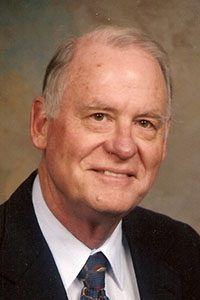 Larry C Andrews合作论文数Department of Mathematics, The College of Optics and Photonics, University of Central Florida/Center for Research and Education in Optics and Lasers, University of Central Florida121
 david t wayne合作论文数13
 Joseph T. Coffaro合作论文数Expt Facil, Univ Cent Florida13Robert Crabbs合作论文数10t leclerc合作论文数9
 Melissa Beason合作论文数9Ma Al-Habash合作论文数8paul sauer合作论文数7Christopher Smith合作论文数7
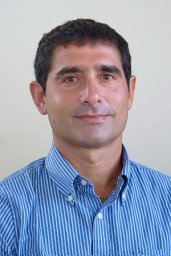 Italo Toselli合作论文数Mechanical and Astronautical Engineering Department, Naval Postgraduate School7
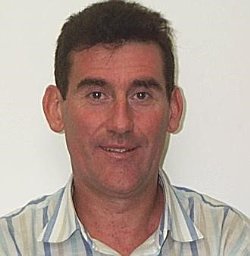 Valter Ferrero合作论文数PhotonLab, Politecnico di Torino7sara b belichki合作论文数6James E. Harvey合作论文数Center for Research and Education;University of Central Florida;Center for Research and Education, University of Central Florida6
 Arthur R. Weeks合作论文数Department of Electrical and Computer Engineering, College of Engineering and Computer Science, University of Central Florida6michael g panich合作论文数5Bruce Berry合作论文数5
 Frank Sanzone合作论文数5Franklin Titus合作论文数5
 Robert F. Crabbs合作论文数5robert a murphy合作论文数5jing xu合作论文数5
 Olga Korotkova合作论文数Department of Physics, University of Miami5Gisele Welch合作论文数5Cy Hopen合作论文数4darren j galus合作论文数4j kiriazes合作论文数NASA Kennedy Space Ctr, Kennedy Space Ctr4
 Michael Borbath合作论文数4
 Cynthia Y. Young合作论文数4brad griffis合作论文数3Stephen P. Reddy合作论文数3
 R. Glenn Sellar合作论文数3
 C. Martin Stickley合作论文数School of CREP, University of Central Florida3
 Bhimsen Shivamoggi合作论文数Los Alamos National Laboratory3A Kotha合作论文数2john s stryjewski合作论文数2frank m tucker合作论文数2Jonathon Spychalski合作论文数2robert pescatore合作论文数2Jonathan Spychalsky合作论文数CREOL, Univ Cent Florida2Daniel Albert Paulson合作论文数2
 Chensheng Wu合作论文数KBR2
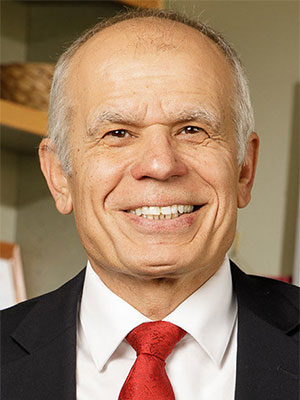 Christos Christodoulou合作论文数Antenna & RF Lab, Department of Electrical and Computer Engineering, School of Engineering, The University of New Mexico2G. Luvera合作论文数2C. Gagge合作论文数2Philip Gatt合作论文数2Geoffrey L. Burdge合作论文数2
 Christopher C. Davis合作论文数Electrical and Computer Engineering, University of Maryland2william g harris合作论文数1




