General capabilities, largely derived from international developments of twentieth-century skills, form one of the three basic dimensions of the Australian Curriculum, but the integration of the capabilities into a subject-based curriculum presents significant challenges. This article reviews the development of the general capabilities in the Australian Curriculum and their implementation in state curricula and considers their prospects for success. It examines key criticisms of the approach and challenges to its success, such as the problem of a matrix approach to curriculum and the critique of their concept of knowledge. The article concludes by assessing the future prospects of the capabilities.
Healthcare Providers: Through scouting and analytical research of providers across the country, we systematically assess and validate high value healthcare delivery approaches by considering factors such as organizational attribute, type of patient, or clinical condition. Employers and Insurers: We engage with employers and health insurance plans to find innovative approaches in health benefits design and management-labor partnerships that effectively improve value for both the employer and employee, and support more informed care decisions for patients. State-Level Systems: As large purchasers and regulators of healthcare, states are well-positioned to improve quality and lower costs. We work with key stakeholders in state and local governments to develop public-private partnerships and initiatives that improve performance.
This paper argues that the concept of discourse offers productive ways of understanding the process of disadvantage in education. The discussion reviews conventional approaches to the study of educational disadvantage, and points out important inadequacies in their approach, especially in their neglect of the concept of difference. It then shows how a concept of discourse offers perspectives on disadvantage which go some way to resolving the conventional difficulties.
A global education reform movement has recently converged in a number of countries on a series of common policy initiatives aimed at increasing the competitiveness of education systems. Characterised by accountability measures such as standardised curriculum, national testing, international benchmarking of achievement, school league tables, teacher evaluation and performance pay, these measures, associated with economic priorities and neoliberal policies more generally, have been enacted by governments on both left and right.This issue of Social Alternatives aims to uncover the tensions between aspects of the contemporary reform agenda and an alternative educational ethos and practice which have characterised progressive approaches to education and educational policy.
Successful curriculum development in any school subject requires a clear and established set of elements: agreed and widely appreciated goals; effective criteria for the selection of important knowledge content; and an explicit and well-integrated explanatory base for authentic problem-solving related to the subject goals. The article shows that the history discipline faces particular challenges in meeting these requirements. The diversity of approaches to history complicates the task of establishing consensus around a clear set of goals. Its association in popular discourse with facts and narrative predisposes history to a descriptive approach, and is not helpful in clarifying the foundational ideas on which historical explanation is based. The article considers each of these issues and the extent to which they are resolved in the development of the Australian history curriculum. It concludes that these issues remain a challenge that could put at risk high-quality curriculum outcomes in history.
This paper identifies the ways in which the Productive Pedagogies framework has been refined as a research tool for evaluating classroom practice within a current study into issues of school reform in Queensland. Initially emerging from the landmark Queensland School Reform Longitudinal Study (1998–2001), the Productive Pedagogies has been taken up widely in Australia and internationally as both a research tool and metalanguage to support teachers to critically reflect on their practice. In this paper, following a brief description of the model’s four dimensions, we detail how we have addressed some methodological concerns in using and modifying the framework for the present study. In response to critiques by other researchers and debates within our own research team, we justify our use of the framework. To these ends, we present a refined methodology that addresses the importance of pedagogical process, substantiates the inclusion of particular items within the framework, supports a critical approach to issues of difference, includes students’ perspectives and recognises the significance of content knowledge in the assessment of quality pedagogy.
In the Western political tradition, the history of citizenship has been intimately bound up with the nation state as the site of civil and political power. This concept of citizenship emphasises that when a person becomes a member of a state, either by birth or naturalisation, a set of legal rights and obligations comes into play; this relationship is the defining core of citizenship. In Australia, for instance, a government inquiry illustrated this idea in the following way. Citizenship is the legal bond between an individual and a state which establishes that the individual legally is a member of a state. Citizenship is conferred on an individual by a state ... The status brings with it rights which can be enjoyed and obligations which need to be fulfilled ... Citizenship is the mechanism by which states differentiate between those who acquire rights as a citizen and those who are treated as aliens. (Joint Standing Committee on Migration, 1994, pp. 11-13) The history of citizenship education has been equally national in character. Educational programmes based on this concept of citizenship tend to emphasise the history of the state and its institutions, especially parliament. Such programmes may laud the state as a source of protection of the rights of citizens, and promote the moral duty of citizens in return to be loyal to the state and its institutions. This often leads to an uncritical glorification of the state in which its history is presented as a continuous story of progress in the name of democracy and the people. It can also lead to the boredom of a descriptive history of abstract institutions based on a deficit model of student knowledge (Osler and Starkey, 2003)-an approach which has given civics and citizenship education such a bad name in the past. This approach to citizenship is flawed, for it is an inadequate basis for the kinds of connections among people which are implied by the democratic ideal. If this approach is to be anything more than uncritical indoctrination into a particular national tradition, the proponents of national identity as the base for citizenship must find a moral basis for selecting the traditions to be promoted as the collective national memory. Without this, there can be no way of identifying the democratic rights and obligations, which need to be fulfilled. However, the advocates of this exclusive national concept of democratic citizenship face a dilemma. The dilemma is that any genuine search for national traditions which will promote the welfare of all their people can be satisfied only by universal humanitarian and democratic principles; but these must then undermine any attempt to promote the welfare of the nation's members over the welfare of those outside it. In other words, the principles of democracy cannot be argued only for a select group. National identity may be an important basis for explaining the attempts by a certain collectivity to promote human welfare (if that has been its aim), but in a time of increasing globalisation, the moral high ground will more and more be the territory of the internationalists. This becomes an important criterion by which to test the theories and practices of education for citizenship. Promoted as they are by nation states, and historically grounded in such a strong tradition of grand narratives of progress through the story of the nation (Gilbert, 1992; Lyotard, 1984), traditional programmes in education for citizenship will surely find the concept of world citizenship difficult to accept and even more difficult to reconcile with a nationalist agenda. However, citizenship as an international phenomenon is increasingly recognised. Not only are international agencies and agreements becoming more important, it is also now possible to speak of a global civil society engaging in global citizen action. In issues like international finance, trade, human rights, development, the environment, and landmine eradication, campaigns have been based on citizen alliances which extend beyond national boundaries and interests (Edwards and Gaventa, 2001). The broadening of citizen action into the global sphere recognises a new contemporary reality in which power relations at local and global levels are increasingly intertwined and in which 'governance involves more than the state, community involves more than the nation, and citizenship involves more than national entitlements and obligations'. (Gaventa, 2001, p. 275; Scholte, 1999, p. 22) In short, the notion of education for global citizenship, or what has been called cosmopolitan citizenship (Delanty, 2000; Osler and Starkey, 2003) is a logical consequence of both the democratic ideal and the developing reality of citizens' experiences. There are signs that students themselves are registering this development. Osler and Starkey (2003, p. 252) report an interview study with students in the United Kingdom in which young people 'demonstrated multiple and dynamic identities, embracing local, national and international perspectives'. Grundy and Jamieson (2003) report a survey of the extent to which young European adults were familiar with the idea of global citizenship. In Spain, over 50% of young people surveyed said that they thought of themselves as a global citizen 'always' or 'often'; almost half the German respondents said the same, although the British respondents were quite low on this measure. The recognition of a global dimension of citizenship is an increasing trend among researchers and commentators, extending to young people themselves. It is important therefore to ask what education for citizenship in this new context might mean. The survey which was the stimulus for this volume is an important contribution to answering this question. What follows is an analysis of the survey results and its implications for curriculum development. Drawing on a range of research and development in education for citizenship theory and practice, the analysis outlines a form of education for global or cosmopolitan citizenship.
[Extract] The past decade has seen unprecedented scrutiny of the purposes and practices of doctoral education as a form of research training. Regarded as the pinnacle of university scholarship, the doctorate has faced a growing range of challenges to its traditional forms and status. Of particular importance are concerns about the quality and breadth of research training in Australian universities expressed in a number of government reports and inquiries (Review Committee on Higher Education Financing and Policy (West Report), 1998; Kemp, 1999; Gallagher, 2000). However, these same issues have been raised across national boundaries and fields of study, indicating that, rather than being a problem in any particular system of higher education or research training, the concerns signal deep-seated and wide-ranging challenges to the traditions of the doctoral curriculum.
This paper proposes a framework for evaluating the doctoral curriculum. Noting that much previous research and evaluation in doctoral education have focused on the outputs of the degree or the supervisory process, the paper identifies the content of the training students receive in particular fields of study, the doctoral curriculum, as in need of further scrutiny. Based on concepts from curriculum evaluation, a framework is proposed to identify the research questions and data sources which might guide such a study.
These words, describing the last Australian Prime Minister and his government, and written by his speechwriter and close confidant, offer a rare inside glimpse of Australian political culture. They crystallize an important challenge to citizenship educators involved in introducing the political system to young people. While the practices they describe are unlikely to be unique to Australia, the attention recently given to citizenship education in Australia makes them particularly pertinent.
Generic or transferable skills as outcomes of research higher degrees have been the subject of considerable development and debate in universities in recent times. The development of generic skills has been motivated by the belief that there are skills which all graduates should possess, and which would be applicable to a wide range of tasks and contexts beyond the university setting. This paper reviews these developments and debates drawing on a literature from the USA, the UK, with particular reference to Australia. It cites examples of generic skills programs and considers evidence of students' responses to them. Reviewing criticisms which have been levelled at the idea of generic skills in research higher degrees, the discussion identifies a number of questions which need to be addressed if this development is to succeed.
This article explores the gender dynamics of boys' responses to one particular aspect of English teaching: oral performance work. It focuses on the possibility that the requirement to perform publicly in dramatic and other oral tasks may be an important factor in the rejection of English by many boys, and may contribute to boys' relatively poor achievement in English. The article provides a study of boys' engagement in English oral activities in two classrooms, and identifies a number of factors influencing boys' English learning. In particular, it shows that there is no simple relation between the performance requirements of English learning activities and boys' disengagement with English.
causation that lead to the globalization of a regulatory regime. The authors list seven mechanisms of globalization. In a simple table (p. 532) they summarize the impact of each of the 13 case studies of the middle section. This summary then supports the empirical claim that ‘modelling’ is important in all the regimes that have globalized and essential to the explanation of globalization (p. 578). Modelling is not just imitation. It is a concept developed by cognitive psychology and involves ‘observational learning with a symbolic content, not just the simple response mimicry implied by the term “imitation”’ (p. 580). But models for global regulation do not just spread by osmosis or diffusion. They move through the networks (or webs) of contact created by international agencies, forums and other transnational contacts. Based on an almost universal consensus among their interviewees, Braithwaite and Drahos argue that it is networks promoting dialogue and cooperation that are effective, rather than networks advocating coercion and reward. Second, they outline the strategies, such as ‘forum-shifting’ (Chapter 24), that keep a proposal moving forward. The concluding chapters (Chapters 25 and 26) present a powerful statement of political purpose. The importance and efficacy of modeling reverses realist or Marxist derived politics where the struggle over ideas is a reflection of competing interests or structural contradictions. If modeling is essential to the formation of global regimes, then citizens (or social movements) can engage in the process and gain empowerment. How best to do this, how best to influence the networks of dialogue among the multiple actors involved, is then a matter of strategy. There are lifetimes of scholarship and theoretical debate embedded in this book. It is an unusually complete response to a variety of current public concerns around the issues of globalization. It opens a whole new field of research and debate on globalization and no one with any interest in this topic can afford to ignore it. But there is a wealth of material for intellectual interests beyond this. For sociologists, in particular, there is a treasure trove of information about the establishment of many forms of social regulation, their history and international dimensions and the role of social movements and professionals in their promulgation and enforcement. For readers of this journal the chapter on drugs (Chapter 15) is one such chapter and it alone is worth the price of the book.
Section 1 Boys and masculinities - current debates: what about the boys? heroes and villains - schooling and theories of masculinity. Section 2 Boys and contemporary culture: playing the game sons and lovers. Section 3 boys and schooling masculinity goes to school masculinity on the margins bad boys boys and books strategies for change.
 Pam Gilbert合作论文数8
 Kim Nichols合作论文数School of Education, Faculty of Humanities and Social Sciences, The University of Queensland2
 Martin Mills合作论文数School of Education, The University of Queensland2
 Merrilyn Goos合作论文数School of Education, Faculty Of Education & Health Sciences, University of Limerick2
 Eileen Honan合作论文数The University of Queensland2Tony Wright合作论文数2
 Hilary Louise Whitehouse合作论文数James Cook University2
 Nola Alloway合作论文数2
 Sue Monk合作论文数Griffith Inst Educ Res, Griffith Univ1Turner Phil合作论文数1
 Karen E Sheppard合作论文数Medical Research Centre, Prince Henry's Hospital1
 Amanda Keddie合作论文数School of Education, Faculty of Arts and Education, Deakin University1Balatti Jo合作论文数1
 Deanne Gannaway合作论文数1
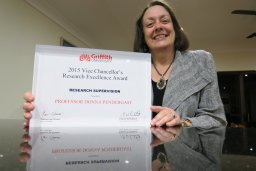 Donna Pendergast合作论文数University of Queensland1
 Sandy Muspratt合作论文数Monash University1
 Robyn Henderson合作论文数Queensland University of Technology1
 Shelly Dole合作论文数University of Queensland1Peter D. Renshaw合作论文数Griffith University1Leanne Dalley-Trim合作论文数1




