People create new technologies and industries to meet human needs more effectively and at lower cost. Innovation is a major agent of progress, and yet innovators’ incomplete knowledge sometimes leads to undesirable side effects. Such unforeseen consequences of new inventions are not unique to the feverish industrialization of the 19th and 20th centuries. The ancient Greek myths tell of Pandora and the box full of plagues, of Prometheus punished for stealing fire from the gods and of Icarus, who plummeted from the sky when the sun’s heat melted the wax of his wings. In historical times the shift from rawhide to tanned leather, although it made for garments and tools that lasted much longer and were more comfortable to wear and use, brought stenches and disease, so that tanneries had to be segregated from the communities they served.
An industrial ecosystem is a synthetic analog of a natural ecosystem where connections through the flux of materials and energy between the various firms/production units define the system. In natural ecology, observation and analysis need to be carried out at different levels of aggregation to understand and predict system behavior. Similarly, a systems perspective applied to the analysis of the complex industrial ecosystems may help better understand the interactions between the various entities, and their overall interactions with the natural environment. Such an analysis can also assist in the efforts to effectively mitigate the environmental impacts of industrial production. In addition, insights from natural ecological studies might also hold valuable lessons applicable to the efforts to guide industrial production towards a sustainable future.
Naval Engineers JournalVolume 100, Issue 4 p. 88-94 THE ISHERWOOD LECTURE SERIES DR. ROBERT A. FROSCH, DR. ROBERT A. FROSCH Robert A. Frosch, vice president of General Motors Research Laboratories in Warren, Mich., was born in New York City in 1928 where he graduated from Columbia University with a theoretical physics degree in 1947. After receiving his bachelor's degree he continued at Columbia University to earn his master's degree before completing his doctorate in theoretical physics in 1952. Following graduation he worked as a research scientist for Columbia Unviversity and held increasingly responsible positions with the Advanced Research Projects Agency before being named Assistant Secretary of the Navy for Research and Development in 1966. In 1973 he became Assistant Executive Director of the United Nations Environment Programme and two years later began serving as Associate Director for Applied Oceanography at the Woods Hole Oceanographic Institution. In 1977 he was appointed NASA Administrator and served at NASA until becoming President of the American Association of Engineering Societies in 1981. Since 1982 he has been vice president, General Motors Corporation, General Motors Research Laboratories. Dr. Frosch's many professional memberships include the Society of Naval Architects and Marine Engineers, National Academy of Engineering, Marine Technology Society, American Institute of Aeronautics and Astronautics, and he is a Fellow of the Institute of Electrical and Electronics Engineers. Among his recent awards are the Michigan Science Trailblazer A ward from the Detroit Science Center, the Industrial Research Institute's Maurice Holland A ward, the Centennial Medal from the Institute of Electrical and Electronics Engineers and John F. Kennedy Astronautics Award from the American Astronautical Society. He received the NASA Dk- tinguished Service Medal in 1981.Search for more papers by this author DR. ROBERT A. FROSCH, DR. ROBERT A. FROSCH Robert A. Frosch, vice president of General Motors Research Laboratories in Warren, Mich., was born in New York City in 1928 where he graduated from Columbia University with a theoretical physics degree in 1947. After receiving his bachelor's degree he continued at Columbia University to earn his master's degree before completing his doctorate in theoretical physics in 1952. Following graduation he worked as a research scientist for Columbia Unviversity and held increasingly responsible positions with the Advanced Research Projects Agency before being named Assistant Secretary of the Navy for Research and Development in 1966. In 1973 he became Assistant Executive Director of the United Nations Environment Programme and two years later began serving as Associate Director for Applied Oceanography at the Woods Hole Oceanographic Institution. In 1977 he was appointed NASA Administrator and served at NASA until becoming President of the American Association of Engineering Societies in 1981. Since 1982 he has been vice president, General Motors Corporation, General Motors Research Laboratories. Dr. Frosch's many professional memberships include the Society of Naval Architects and Marine Engineers, National Academy of Engineering, Marine Technology Society, American Institute of Aeronautics and Astronautics, and he is a Fellow of the Institute of Electrical and Electronics Engineers. Among his recent awards are the Michigan Science Trailblazer A ward from the Detroit Science Center, the Industrial Research Institute's Maurice Holland A ward, the Centennial Medal from the Institute of Electrical and Electronics Engineers and John F. Kennedy Astronautics Award from the American Astronautical Society. He received the NASA Dk- tinguished Service Medal in 1981.Search for more papers by this author First published: July 1988 https://doi.org/10.1111/j.1559-3584.1988.tb00794.x AboutPDF ToolsExport citationAdd to favoritesTrack citation ShareShare Give accessShare full text accessShare full-text accessPlease review our Terms and Conditions of Use and check box below to share full-text version of article.I have read and accept the Wiley Online Library Terms and Conditions of UseShareable LinkUse the link below to share a full-text version of this article with your friends and colleagues. Learn more.Copy URL Share a linkShare onEmailFacebookTwitterLinkedInRedditWechat Volume100, Issue4July 1988Pages 88-94 RelatedInformation
Naval Engineers JournalVolume 93, Issue 3 p. 57-60 BANQUET ADDRESS: TECHNOLOGY IS FUN, IT'S THE OTHER THINGS… Doctor Robert A. Frosch, Doctor Robert A. Frosch President American Association of Engineering Societies, Inc Dr. Robert A. Frosch born in New York City on 22 May 1928, attended Columbia University from which he received his B.A. degree in 1947, his M.A. degree in 1949, and his Ph.D. degree in 1952, all in the field of Theoretical Physics. While completing his studies for his doctorate, he joined Columbia's Hudson Laboratories in 1951 and worked on naval research projects as a Research Scientist until 1958 when he became the Director, Hudson Laboratories, a post he held until 1963. From 1965 to 1966, he was Deputy Director, Advanced Research Projects Agency (APRA), Department of Defense (DOD), having first joined ARPA in 1963 as the Director for Nuclear Test Detection, the position he held until 1965. Since 1969, he also has served as the DOD member of the Committee for Policy Review, National Council of Marine Resources and Engineering Development, and in 1967 and 1970 as the Chairman of the U.S. Delegation to the Intergovernmental Oceanographic Commission meetings at UNESCO in Paris. In addition, he was the Assistant Secretary of the Navy for Research & Development from 1966 to 1973; Assistant Executive Director of the United Nations Environment Program, with the rank of Assistant Secretary General of the United Nations, from 1973 to 1975; and Assistant Director for Applied Oceanography at the Woods Hole Oceanographic Institution from 1975 until mid-1977. In June 1977, he became the Administrator of the National Aeronautics and Space Agency (NASA), the position he held prior to joining the American Association of Engineering Societies (AAES), Incorporated. On 20 January 1981 he was elected to his present post as President, AAES. Additionally, he was the Sea Grant Lecturer for the Massachusetts Institute of Technology in 1974, and currently is a National Lecturer for Sigma Xi. During his distinguished career, Dr. Frosch has been the recipient of numerous awards, among which are the Arthur S. Flemming Award in 1966; the Navy Distinguished Public Service Award in 1969; the Defense Meritorious Civilian Service Medal in 1973; and the Neptune Award for the American Oceanic Organization in 1973. Besides his membership in the honorary fraternities Phi Beta Kappa and Sigma Xi, Dr. Frosch is a Fellow of the American Association for the Advancement of Science, the Acoustical Society of America, and the Institute of Electrical and Electronics Engineers. His other memberships in professional societies include: National Academy of Engineering; American Physical Society; Seismological Society of America; Marine Technology Society; Society of Naval Architects and Marine Engineers; Society of Exploration Geophysicists; and the American Geophysical Union.Search for more papers by this author Doctor Robert A. Frosch, Doctor Robert A. Frosch President American Association of Engineering Societies, Inc Dr. Robert A. Frosch born in New York City on 22 May 1928, attended Columbia University from which he received his B.A. degree in 1947, his M.A. degree in 1949, and his Ph.D. degree in 1952, all in the field of Theoretical Physics. While completing his studies for his doctorate, he joined Columbia's Hudson Laboratories in 1951 and worked on naval research projects as a Research Scientist until 1958 when he became the Director, Hudson Laboratories, a post he held until 1963. From 1965 to 1966, he was Deputy Director, Advanced Research Projects Agency (APRA), Department of Defense (DOD), having first joined ARPA in 1963 as the Director for Nuclear Test Detection, the position he held until 1965. Since 1969, he also has served as the DOD member of the Committee for Policy Review, National Council of Marine Resources and Engineering Development, and in 1967 and 1970 as the Chairman of the U.S. Delegation to the Intergovernmental Oceanographic Commission meetings at UNESCO in Paris. In addition, he was the Assistant Secretary of the Navy for Research & Development from 1966 to 1973; Assistant Executive Director of the United Nations Environment Program, with the rank of Assistant Secretary General of the United Nations, from 1973 to 1975; and Assistant Director for Applied Oceanography at the Woods Hole Oceanographic Institution from 1975 until mid-1977. In June 1977, he became the Administrator of the National Aeronautics and Space Agency (NASA), the position he held prior to joining the American Association of Engineering Societies (AAES), Incorporated. On 20 January 1981 he was elected to his present post as President, AAES. Additionally, he was the Sea Grant Lecturer for the Massachusetts Institute of Technology in 1974, and currently is a National Lecturer for Sigma Xi. During his distinguished career, Dr. Frosch has been the recipient of numerous awards, among which are the Arthur S. Flemming Award in 1966; the Navy Distinguished Public Service Award in 1969; the Defense Meritorious Civilian Service Medal in 1973; and the Neptune Award for the American Oceanic Organization in 1973. Besides his membership in the honorary fraternities Phi Beta Kappa and Sigma Xi, Dr. Frosch is a Fellow of the American Association for the Advancement of Science, the Acoustical Society of America, and the Institute of Electrical and Electronics Engineers. His other memberships in professional societies include: National Academy of Engineering; American Physical Society; Seismological Society of America; Marine Technology Society; Society of Naval Architects and Marine Engineers; Society of Exploration Geophysicists; and the American Geophysical Union.Search for more papers by this author First published: June 1981 https://doi.org/10.1111/j.1559-3584.1981.tb00517.x AboutPDF ToolsExport citationAdd to favoritesTrack citation ShareShare Give accessShare full text accessShare full-text accessPlease review our Terms and Conditions of Use and check box below to share full-text version of article.I have read and accept the Wiley Online Library Terms and Conditions of UseShareable LinkUse the link below to share a full-text version of this article with your friends and colleagues. Learn more.Copy URL Share a linkShare onFacebookTwitterLinkedInRedditWechat Volume93, Issue3June 1981Pages 57-60 RelatedInformation
Marine plastic debris has evolved from being a problem to a cross-cutting crisis impacting natural and human environments across the world. Holistic approaches are needed to address the multifaceted, wide-spread and complex nature of this issue. We argue that a new global governance approach is essential, however, it needs to be aligned with interdisciplinary solutions – sound science and data collection; changes to behavioural psychology; utilising education as a tool; and through changes to management and policy processes. We argue that truly effective prevention is a long-term process that must begin at the ground level with smarter consumer choices, industrial consciousness and responsibility, and an overarching local to global governance framework.
Naval Engineers JournalVolume 82, Issue 3 p. 44-47 BANQUET ADDRESS HONORABLE ROBERT A. FROSCH, HONORABLE ROBERT A. FROSCH Robert A. Frosch was appointed Assistant Secretary of the Navy for Research and Development on July 1, 1966. In this capacity he is responsible for formulation and management of the Navy's Research, Development, Test and Evaluation program. In addition, he is responsible for policy guidance of Navy work in Oceanography. In July 1966 he was designated Chairman of the Interagency Committee on Oceanography, which was reconstituted in July 1967 as the Interagency Committee on Marine Research, Education and Facilities (ICMREF). This Committee reports directly to the National Council on Marine Resources and Engineering Development, chaired by the Vice President. As Chairman of ICMREF, Dr. Frosch has contributed to the national oceanographic program and to the Navy's role in ocean sciences and engineering. In November 1967 Dr. Frosch was Chairman of the United States Delegation to the Fifth Session of the Intergovernmental Oceanographic Commission which met in Paris. Dr. Frosch entered Government service in 1963 when he joined the Department of Defense as Director of Nuclear Test Detection (Project VELA), Advanced Research Projects Agency. In 1965 he became Deputy Director of the Advanced Research Projects Agency and remained in that position until becoming Assistant Secretary of the Navy. Prior to completing graduate work, Dr. Frosch joined Hudson Laboratories of Columbia University in 1951 as a scientist. He held various positions of increasing responsibility until appointed Director in 1956, which position he held until 1963. While at Hudson Laboratories he was involved in cooperative research with the Office of Naval Research on projects in underwater sound and related marine matters applicable to undersea warfare. He took part in various seagoing research projects. He served as a member of various anti-submarine warfare and oceanographic advisory committees to the Navy and to the Department of Defense. He has written numerous scientific and technical articles. In early 1966 Dr. Frosch received the Arthur S. Flemming Award honoring outstanding young men in the Federal Government. Dr. Frosch is a member of the Visiting Committee to Earth Sciences at Massachusetts Institute of Technology; Fellow, American Association for the Advancement of Science; Fellow, Institute of Electrical and Electronic Engineers; and a member of the following: Phi Beta Kappa, Sigma Xi, American Physical Society, American Geophysical Union, Seismological Society of America, Society of Exploration Geophysical and Marine Technology Society.Search for more papers by this author HONORABLE ROBERT A. FROSCH, HONORABLE ROBERT A. FROSCH Robert A. Frosch was appointed Assistant Secretary of the Navy for Research and Development on July 1, 1966. In this capacity he is responsible for formulation and management of the Navy's Research, Development, Test and Evaluation program. In addition, he is responsible for policy guidance of Navy work in Oceanography. In July 1966 he was designated Chairman of the Interagency Committee on Oceanography, which was reconstituted in July 1967 as the Interagency Committee on Marine Research, Education and Facilities (ICMREF). This Committee reports directly to the National Council on Marine Resources and Engineering Development, chaired by the Vice President. As Chairman of ICMREF, Dr. Frosch has contributed to the national oceanographic program and to the Navy's role in ocean sciences and engineering. In November 1967 Dr. Frosch was Chairman of the United States Delegation to the Fifth Session of the Intergovernmental Oceanographic Commission which met in Paris. Dr. Frosch entered Government service in 1963 when he joined the Department of Defense as Director of Nuclear Test Detection (Project VELA), Advanced Research Projects Agency. In 1965 he became Deputy Director of the Advanced Research Projects Agency and remained in that position until becoming Assistant Secretary of the Navy. Prior to completing graduate work, Dr. Frosch joined Hudson Laboratories of Columbia University in 1951 as a scientist. He held various positions of increasing responsibility until appointed Director in 1956, which position he held until 1963. While at Hudson Laboratories he was involved in cooperative research with the Office of Naval Research on projects in underwater sound and related marine matters applicable to undersea warfare. He took part in various seagoing research projects. He served as a member of various anti-submarine warfare and oceanographic advisory committees to the Navy and to the Department of Defense. He has written numerous scientific and technical articles. In early 1966 Dr. Frosch received the Arthur S. Flemming Award honoring outstanding young men in the Federal Government. Dr. Frosch is a member of the Visiting Committee to Earth Sciences at Massachusetts Institute of Technology; Fellow, American Association for the Advancement of Science; Fellow, Institute of Electrical and Electronic Engineers; and a member of the following: Phi Beta Kappa, Sigma Xi, American Physical Society, American Geophysical Union, Seismological Society of America, Society of Exploration Geophysical and Marine Technology Society.Search for more papers by this author First published: June 1970 https://doi.org/10.1111/j.1559-3584.1970.tb04340.x AboutPDF ToolsExport citationAdd to favoritesTrack citation ShareShare Give accessShare full text accessShare full-text accessPlease review our Terms and Conditions of Use and check box below to share full-text version of article.I have read and accept the Wiley Online Library Terms and Conditions of UseShareable LinkUse the link below to share a full-text version of this article with your friends and colleagues. Learn more.Copy URL Volume82, Issue3June 1970Pages 44-47 RelatedInformation
The system idea驴solution of a complete problem in its full environment by systematic assembly and matching of parts to solve the whole problem in the context of the lifetime use of the system, considering all aspects驴is one of the most important ideas of modern times. It has made possible the solution of complicated problems that previously could not be touched. However, there exists a rising tide of problems and general disgruntlement (expressed by many people) that indicates trouble. Therefore, the author speaks as an ``engineering critic'' (intended in the sense of a music critic: ``Are we turning in a good performance?'') and, contrary to the many who are taking the positive side of systems engineering, offers the negative side of the controversy.
Naval Engineers JournalVolume 81, Issue 4 p. 19-24 THE EMERGING SHAPE OF POLICIES FOR THE ACQUISITION OF MAJOR SYSTEMS HON. ROBERT A. FROSCH, HON. ROBERT A. FROSCHSearch for more papers by this author HON. ROBERT A. FROSCH, HON. ROBERT A. FROSCHSearch for more papers by this author First published: August 1969 https://doi.org/10.1111/j.1559-3584.1969.tb04627.xAboutPDF ToolsExport citationAdd to favoritesTrack citation ShareShare Give accessShare full text accessShare full-text accessPlease review our Terms and Conditions of Use and check box below to share full-text version of article.I have read and accept the Wiley Online Library Terms and Conditions of UseShareable LinkUse the link below to share a full-text version of this article with your friends and colleagues. Learn more.Copy URL Share a linkShare onFacebookTwitterLinkedInRedditWechat Volume81, Issue4August 1969Pages 19-24 RelatedInformation
This paper is the transcript of an address by The Honorable Robert A. Frosch, Assistant Secretary of the Navy (Research and Development), given at the Association of Senior Engineers Annual Technical Symposium Banquet, Washington, D.C., March 28, 1969. The same ideas were delivered in substantially the same form before the Institute of Electrical and Electronics Engineers, Inc., on March 26, 1969.
Naval Engineers JournalVolume 74, Issue 2 p. 207-214 NAVY RESEARCH AND DEVELOPMENT REAR ADMIRAL C. E. WEAKLEY USN, REAR ADMIRAL C. E. WEAKLEY USN THE AUTHOR graduated from the Naval Academy and commissioned Ensign in 1929. As a Midshipman, he received the award as“… that Midshipman of his class who has contributed most by his officerlike qualities and positive character to the development of naval spirit and loyalty within the regiment by Midshipmen.”Search for more papers by this author REAR ADMIRAL C. E. WEAKLEY USN, REAR ADMIRAL C. E. WEAKLEY USN THE AUTHOR graduated from the Naval Academy and commissioned Ensign in 1929. As a Midshipman, he received the award as“… that Midshipman of his class who has contributed most by his officerlike qualities and positive character to the development of naval spirit and loyalty within the regiment by Midshipmen.”Search for more papers by this author First published: May 1962 https://doi.org/10.1111/j.1559-3584.1962.tb05551.x He advanced through the grades to Rear Admiral in which he was confirmed as of 1 January 1946. He served at sea in the USS Omaha, USS Lea (DD-118), USS Talbot (DD-114), USS New Mexico, USS Sampson (DD-394) and in command of USS Goff (DD-247), USS Cambria (APA-66) and USS Northampton (CLC-1). He completed a postgraduate course in Engineering Design at the Postgraduate School. This was followed by two years of general engineering study at Cambridge, England. During World War 11, he received the Legion of Merit with Combat “V” for his outstanding performance as a convoy escort commander; and the Bronze Star for his meritorious service in command of anti-submarine forces. Admiral Weakley has served in many posts ashore and afloat including Commander Destroyer Force, U.S. Atlantic Fleet and positions in the Navy Department. He is one of the Navy's recognized ASW experts. Presently, he is Assistant Chief of Naval Operations (Development). Admiral Weakley is married. He and Mrs. Weakley have two daughters. AboutPDF ToolsExport citationAdd to favoritesTrack citation ShareShare Give accessShare full text accessShare full-text accessPlease review our Terms and Conditions of Use and check box below to share full-text version of article.I have read and accept the Wiley Online Library Terms and Conditions of UseShareable LinkUse the link below to share a full-text version of this article with your friends and colleagues. Learn more.Copy URL Share a linkShare onFacebookTwitterLinked InRedditWechat Volume74, Issue2May 1962Pages 207-214 RelatedInformation
Research Article| May 01, 1962 Bermuda-New England Seamount Arc J FRASSETTO; J FRASSETTO Marine Physical Laboratory of the Scripps Institution of Oceanography, University of California, San Diego, Calif Search for other works by this author on: GSW Google Scholar R. A NORTHROP; R. A NORTHROP Columbia University, Hudson Laboratories, Dobbs Ferry, N. Y Search for other works by this author on: GSW Google Scholar R FROSCH R FROSCH SACLANT ASW Research Center, La Spezia, Italy Search for other works by this author on: GSW Google Scholar GSA Bulletin (1962) 73 (5): 587–594. https://doi.org/10.1130/0016-7606(1962)73[587:BESA]2.0.CO;2 Article history received: 10 Sep 1961 first online: 02 Mar 2017 Cite View This Citation Add to Citation Manager Share Icon Share Twitter LinkedIn Tools Icon Tools Get Permissions Search Site Citation J FRASSETTO, R. A NORTHROP, R FROSCH; Bermuda-New England Seamount Arc. GSA Bulletin 1962;; 73 (5): 587–594. doi: https://doi.org/10.1130/0016-7606(1962)73[587:BESA]2.0.CO;2 Download citation file: Ris (Zotero) Refmanager EasyBib Bookends Mendeley Papers EndNote RefWorks BibTex toolbar search Search Dropdown Menu toolbar search search input Search input auto suggest filter your search All ContentBy SocietyGSA Bulletin Search Advanced Search Abstract The seamounts that are known to exist along the 1000-mile arc between Bermuda and Georges Banks are believed to be extinct volcanoes that erupted on the ocean floor prior to Cretaceous time. A chart of the area showing the results of a joint effort by Hudson Laboratories, the Woods Hole Oceanographic Institution, and the Navy Hydrographic Office is presented and shows 24 seamounts to be definitely located. The whole sea-mount arc is called the Bermuda-New England Seamount Arc, and the seamounts are classified into two groups, single-peaked and multiple-peaked mounts. The single-peaked mounts are generally somewhat smaller and lie on the New England end of the arc. Gravity anomalies are associated with two of these seamounts (Shurbet and Worzel, 1955). The largest seamount occurs where the trend of the arc changes from northeasterly out of Bermuda to northwesterly toward Cape Cod. The abrupt angle that the seamounts' flanks make with the surrounding abyssal plain suggests that sediment has filled up the intermount areas and has lapped up on the seamounts' flanks. The sediment is thought to be transported to the area by turbidity currents that flow down the canyons in the continental shelf. One of these canyons is described. This content is PDF only. Please click on the PDF icon to access. First Page Preview Close Modal You do not have access to this content, please speak to your institutional administrator if you feel you should have access.
Recent bathymetric surveys of the North America Basin have shown that numerous seamounts exist off the Northeastern United States' continental shelf as far south as Bermuda and eastward to the foothills of the Mid-Atlantic Ridge. The three seamounts described in this report show typically their conical shape, isolated position, mountainous proportions, 15–20 degree sloping sides and abrupt rise from the flat abyssal plain of the deep-sea floor. The seamounts' location, morphology and association with the Bermuda volcanics indicate that they are extinct volcanoes which probably erupted during the Early Tertiary along lines of weakness set up by previous tangential stresses on the earth's crust.
 J NORTHROP合作论文数2Nicholas E. Gallopoulos合作论文数2
 James McCarthy合作论文数Harvard University1
 Sheila Jasanoff合作论文数John F. Kennedy School of Government, Harvard University1
 Ambuj Sagar合作论文数School of Public Policy, Indian Institute of Technology Delhi1
 Kelly Sims Gallagher合作论文数Climate Policy Laboratory, Center for International Environment and Resource Policy, The Fletcher School of Law and Diplomacy, Tufts University;Lawrence Berkeley National Laboratory;Center for Environment, John F. Kennedy School of Government, Harvard University1
 David Guston合作论文数School for the Future of Innovation in Society, Arizona State University1Henry Lee合作论文数1
 Tim Berners-Lee合作论文数World Wide Web;Department of Computer Science, University of Oxford;Laboratory for Computer Science and Artificial Intelligence, Department of Electrical Engineering and Computer Science, School of Engineering, Massachusetts Institute of Technology;Open Data Institute;Inrupt.com1
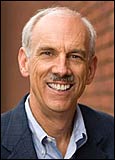 Robert O. Keohane合作论文数Princeton University,Woodrow Wilson School of Public and International Affairs1
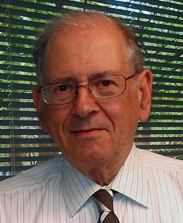 Robert E. Kahn (罗伯特·卡恩)合作论文数Corporation for National Research Initiatives1
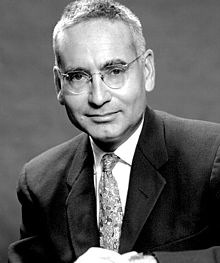 Alvin Martin Weinberg合作论文数ORAU1
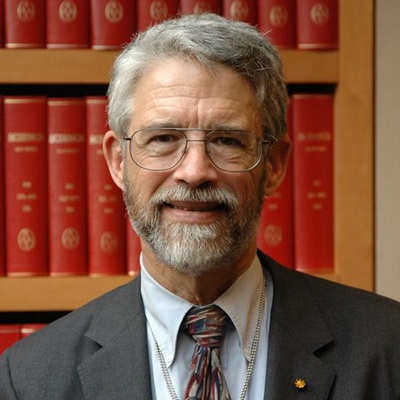 John P. Holdren合作论文数Harvard Kennedy School, Harvard University;Department of Earth and Planetary Sciences, Harvard University;School of Engineering and Applied Sciences, Harvard University1K E L Lyrehgallagsmis合作论文数1Clark Miller合作论文数1David T. Suzuki合作论文数1
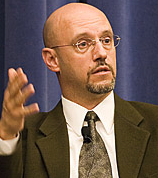 Alexander E. Farrell合作论文数University of California Berkeley1U. S. Transportation Sector合作论文数1Edward T. Hall合作论文数Veterinary Division Health Services Command Department of the Army Fort Mead Md.1H E N Ryeel合作论文数1Discussion Paper合作论文数1David Macaulay合作论文数1Ronald B. Mitchell合作论文数Department of Political Science, University of Oregon1Gustavo Collantes合作论文数1G U S Tavosetnalloc合作论文数1Irving S. Bengelsdorf合作论文数1Roberto Frassetto合作论文数1Natalie Angier合作论文数1J O H N P.Nerdloh合作论文数1Philip H. Abelson合作论文数1
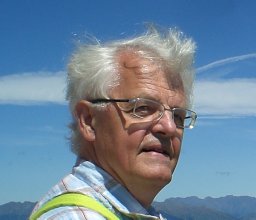 Leen Hordijk合作论文数International Institute for Applied Systems Analysis (IIASA), A-2361 Laxenburg, Austria1Walter E. Massey合作论文数1
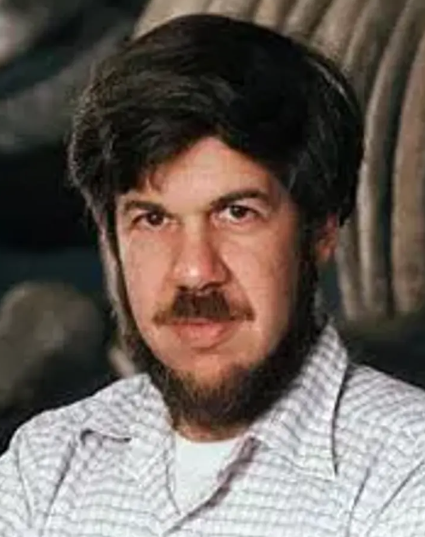 Stephen J. Gould合作论文数Harvard University1Edward R. Tufte合作论文数Virginia Military Institute1
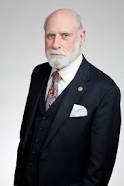 Vinton Gray Cerf (文特·瑟夫)合作论文数Google1John Holdren合作论文数1Felice Frankel合作论文数1Carolyn Leach Huntoon合作论文数1
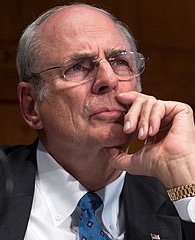 Norman R. Augustine合作论文数Princeton University1
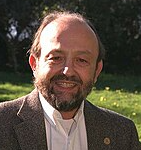 Charles F. Goldfarb合作论文数1Satoshi Hayakawa合作论文数1
 William Clark合作论文数John F. Kennedy School of Government, Harvard University1Barbara Connolly合作论文数1Martin Meyerson合作论文数1
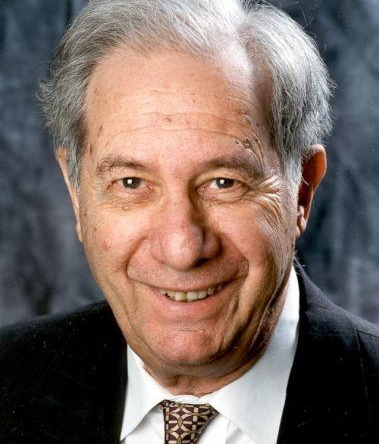 Murray Weidenbaum合作论文数Washington University1Ro B E Rt F Rohcs合作论文数1R. Buckminster Fuller合作论文数1
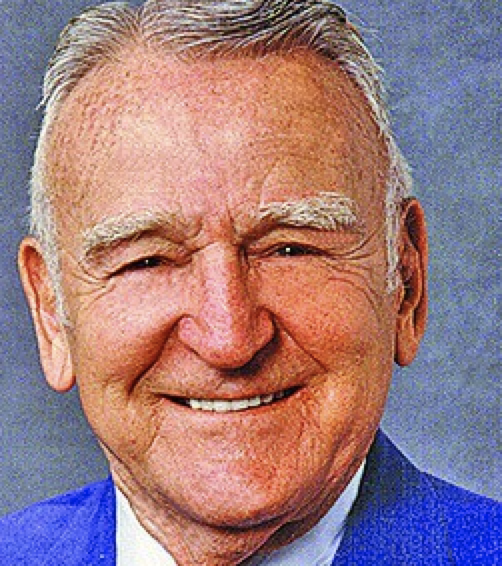 John J. Mcketta合作论文数Department of Chemical Engineering, University of Texas1




