Sequential information processing by animals is a fundamental component of understanding cognition in nonhuman species. Auditory processing is especially important given its implications for acoustic communication, language, and music evolution. In two experiments using an auditory go/no-go procedure, we examined how pigeons processed same/different (S/D) sound sequences. Experiment 1 tested three pigeons with blocked, recurring, or cyclic organizations of two, three, four, or six elements within sequential presentations of 12 1.5-s sounds. Experiment 2 tested four pigeons and examined how midsequence S/D transitions affected ongoing discrimination using contrasting priming strings of varying lengths. Both experiments revealed the birds' ongoing sensitivity to auditory S/D presentations, with the strongest influence exerted by more recently experienced items. The experimental data and subsequent computational modeling suggested pigeons used working memory limited to the last three to four sounds, spanning 4-6 s, to judge the S/D property. These results have important implications for different hypotheses regarding the structure and processing of cross- and multimodal S/D discriminations. (PsycInfo Database Record (c) 2026 APA, all rights reserved).
The study of animal cognition has hosted a long debate about the nature of mental representation. Specifically, whether spatial (map-like) or associative (node-like) models better explain learning and behavior. To explore this, the present experiments tested three pigeons using a novel spatial discrimination task to assess how they learn to discriminate different multidimensional geometric structures. Each trial involved a go/no-go procedure in which a 1.5 cm green target appeared at a random location in an unmarked 15 × 15 cm touchscreen display area. Food reinforcement depended on the target's location. Across experiments, pigeons were tested on discriminations defined by three invisible spatial structures of varying complexity. In the first two experiments, they successfully learned discriminations based on well-formed geometric divisions involving either a vertical or a diagonal discriminative boundary, respectively. In contrast, they failed to learn a mosaic discrimination involving complex, irregular, non-linear divisions of the space. These findings indicate pigeons can learn invisible multidimensional visuospatial discriminations and do so better when the underlying structure is geometrically coherent. Further, this learning appears independent of the discriminative boundary's orientation. The latter matches previous findings testing analogous rule-based (vertical) and information-integration (diagonal) organizations using visual dimensions. It is consistent with the hypothesis that a single non-analytic associative mechanism mediates learning in both cases. Implications for understanding the discriminative representations used by pigeons in solving problems involving fundamental dimensions, like space, are considered.
Music is a ubiquitous feature of human behavior. Yet the origins of human musicality remain poorly understood. One attractive approach has investigated the distribution and components of musicality among nonhuman animals. Here I tested four highly trained pigeons in three experiments for their capacity to discriminate the intervals of the chromatic scale. Using an auditory go/no-go same/different task, the pigeons discriminated intervals spanning different numbers of semitones on each trial as synthesized with two musical instruments (cello and organ). Experiment 1 examined this discrimination using a successive melodic context, while Experiment 2 used a simultaneous harmonic context. Experiment 3 tested pure tones in both contexts. The pigeons were sensitive to the distance among the pitch intervals, but examination of specific diagnostic intervals revealed little evidence for any contribution of human-like musical consonance (perfect fifth and octave) and dissonance (tritone and major seventh) to the discrimination. Although more accomplished in the auditory modality than widely assumed, the current state of the evidence suggests pigeons, while sensitive to the pitched nature of sound, lack essential capacities needed for music perception. The evolutionary implications for the comparative psychology of music are considered. (PsycInfo Database Record (c) 2025 APA, all rights reserved).
Midsession reversal examines behavioral flexibility by requiring animals to reverse a discrimination midway within a session. This reversal behavior is controlled by changing temporal factors over the session. We tested behavioral flexibility in pigeons by reversing the contingencies within a session from a visual matching-to-sample (MTS) task to a non-matching-to-sample (NMTS) task. To examine how visual context influenced the reversal, the stimuli were assigned according to two different mapping conditions. In the bounded mapping condition, different stimuli exclusively appeared in either the MTS or NMTS for half of the session, and in the unbounded condition, the stimuli appeared across both the MTS and NMTS halves of a session. In the unbounded condition, pigeons showed a modest switching function, from matching to non-matching, at the reversal boundary. In contrast, in the bounded condition, the pigeons learned the contingences faster and to a higher accuracy and exhibited a more precise switching function at the reversal. The latter outcome suggests there was little or no temporal interference, as the different visual contexts allowed the MTS and NMTS tasks to be segregated within a session. These contrasting results show that reversal interference in the midsession reversal task is influenced by context and temporal factors, with corresponding implications for behavioral flexibility.
Separating and isolating the contributions of perception to concept formation in animals has been a long-standing and persistent challenge. Here we describe a novel approach to assessing this question by using equivalence training consisting of unrelated images as the basis for subsequent same/different (S/D) learning. Following equivalence class training, two groups of pigeons attempted to learn a go/no-go discrimination task constructed from these classes. In the go/no-go task, a consistent group was given an S/D assignment that aligned with this prior training (same vs. different classes). An inconsistent group was given go/no-go assignments that were misaligned with their established classes. The consistent group exhibited better learning and stimulus control in their S/D task than did the inconsistent group. These results suggest that pigeons can use trained properties derived from class-based information to learn an S/D task without the aid of perceptual similarity. This novel approach holds promise for helping to evaluate the contribution of perceptual similarity to different types of concept learning. (PsycInfo Database Record (c) 2024 APA, all rights reserved).
Telling that one object or moment is different from another one is fundamental to cognition and intelligent behavior. Most investigations examining same/different (S/D) concepts in animals have relied on testing static visual stimuli. To move beyond this limitation, we investigated how five pigeons learned and performed a motion S/D discrimination. Using a go/no-go task, dynamic motion fields built from dot elements were presented in sequence to display repeating (same) or changing (different) motions. Each trial consisted of 10 motion segments presented in succession using the direction and rate of dot movement in the motion field to exemplify the S/D relations. The pigeons learned this motion S/D discrimination. We further tested their performance by varying the number and persistence of the dots in the motion fields. The results indicated the pigeons likely extracted globally integrated perceptual summaries of the motions for comparison across the segments. Testing differing organizations of the S/D relations across segments indicated that this discrimination could be determined from as few as two segments and involved an updating comparison of at least four or more segments of the sequence during their presentation. Collectively, the experiments establish for the first time that pigeons can use motion features to classify sequential same and different experiences. (PsycInfo Database Record (c) 2023 APA, all rights reserved).
Correctly and efficiently selecting among options is critical to the organization of behavior across different time scales (minutes, days, seasons). As a result, understanding the mechanisms underlying the sequential behavior of animals has been a long-standing aim. In three experiments, four pigeons were tested in a four-choice simultaneous color discrimination. Across a session, they had to sequentially select a colored stimulus, and the correct color changed over four 24-trial phases (A→B→C→D). After learning this ABCD within-session sequence, tests identified that both timing and outcome feedback mechanisms contributed to the organization of pigeons' behavior. Different representational mechanisms are considered as accounts for the pigeons' observed sequential behavior.
Most animals engage in complex activities that are the combination of simpler actions expressed over a period of time. The mechanisms organizing such sequential behavior have been of long-standing biological and psychological interest. Previously, we observed pigeons’ anticipatory behavior with a within-session sequence involving four choice alternatives suggestive of a potential understanding of the overall order and sequence of the items within a session. In that task, each colored alternative was correct for 24 consecutive trials as presented in a predictable sequence (i.e., A first, then B, then C, then D). To test whether these four already-trained pigeons possessed a sequential and linked representation of the ABCD items, we added a second four-item sequence involving new and distinct colored choice alternatives (i.e., E first for 24 trials, then F, then G, then H) and then alternated these ABCD and EFGH sequences over successive sessions. Over three manipulations, we tested and trained trials composed of combinations of elements from both sequences. We determined that pigeons did not learn any within-sequence associations among the elements. Despite the availability and explicit utility of such sequence cues, the data suggest instead that pigeons learned the discrimination tasks as a series of temporal associations among independent elements. This absence of any sequential linkage is consistent with the hypothesis that such representations are difficult to form in pigeons. This pattern of data suggests that for repeated sequential activities in birds, and potentially other animals including humans, there are highly effective, but underappreciated, clock-like mechanisms that control the ordering of behaviors.
An important challenge for animal and artificial visual systems is separating the system's own motions from the movements of other animals or events. To examine this issue in birds, we conducted three experiments testing four pigeons in a go/no-go action discrimination. The pigeons discriminated whether a digital human model was exhibiting an extended series of articulated motions or one of a set of static poses from the same video. They were required to do so while the rendering camera's perspective changed continually during each trial's 20-s video presentation. Experiment 1 found that pigeons easily discount the camera's continuous motion. Experiments 2 and 3, by testing novel sequences of the behavior, novel behaviors, silhouettes, and a form of conditional discrimination, revealed this to be a general capacity. Overall, the discrimination was predominantly mediated by global action cues, although a small contribution of image-based statistical features was detected. Collectively, the experiments reveal pigeons can readily separate and discount constantly changing perspectives while processing others' actions. (PsycInfo Database Record (c) 2023 APA, all rights reserved).
Identifying the behaviors of organisms is essential for an animal’s survival. This ability is particularly challenged when the “actors” are dynamically occluded by other objects and become fragmented as they move through an environment. Even when fragmented in time and across space, humans readily recognize the behavior of these dynamically occluded objects and actors. How animals process such fragmented information, especially when involving motion, remains uncertain. In three experiments, we investigated the ability of six pigeons to discriminate between the running and walking actions of digital animal models when dynamically occluded. The pigeons were tested in a go/no-go procedure using three models that transited behind multiple occluders in a semirealistic scene. Without ever seeing the entirety of the animal model at one time, all the pigeons learned to discriminate among these two behaviors. This discrimination transferred to an unfamiliar model, transit direction, transiting rates, camera perspectives, and occluders. Tests with different static and dynamic features indicated that the pigeons relied on motion features for the discrimination, especially articulated motion. These experiments demonstrate that pigeons, like humans, can discriminate actions even when their view of the actor is fragmented in time and space.
Detecting global patterns in the environment is essential to object perception and recognition. Consistent with this, pigeons have been shown to readily detect and locate geometrically arranged, structured targets embedded in randomized backgrounds. Here we show for the first time that pigeons can detect and localize trial-unique targets derived solely from global patterns resulting from periodicity, symmetry and their combination using randomly generated segments of black and white local elements. The results indicate pigeons can perceptually segment and detect a wide variety of emergent global structures and do so even when they are unique to each trial. The perceptual and cognitive mechanisms underlying this discrimination likely play important roles in the abilities of how pigeons, and likely other birds, detect and categorize the properties of natural objects at different spatial scales.
An innovative adaptive discrimination procedure examined how two bird species, pigeons and starlings, recognize and discriminate two-dimensional (2D) visual shapes. Prior results suggest a comparative divergence between mammals and birds in their relative reliance on vertices versus line segments to mediate discrimination. To address this potentially important difference, four pigeons and five starlings were tested with a square versus triangle discrimination in two experiments. An adaptive genetic algorithm guided the selection and organization of the training and test stimuli. Both species showed considerable flexibility in accurately selecting triangles despite wide variation in stimulus appearance and location. Most critically, Experiment 2 revealed that both bird species relied more on the figures' vertices during successful discrimination than their connecting line segments. This reliance was revealed by both traditional accuracy differences using contour-deleted displays and genetic algorithm-based shifts in "gene values" caused by the birds' selection. These results, in contrast to previous findings, indicate that mammals and birds likely converge in their reliance on vertices as a highly critical feature in visual shape discrimination. (PsycInfo Database Record (c) 2021 APA, all rights reserved).
To study comparative attentional allocation strategies, pigeons and humans were tested using simultaneously available discrimination tasks. Given visual search displays containing 32 items from two orthogonal dimensions, participants were reinforced for selecting the eight brightest (or darkest) of 16 brightness items and the eight most vertical (or horizontal) of 16 orientation items. Consistent with a sequential dimensional strategy, humans preferentially chose items from one dimension before switching to the other to complete the search. In contrast, the pigeons did not preferentially stay within one dimension over consecutive choices. Instead, they chose the items most likely to yield reward based on item discriminability. Computational models that incorporated a "dimensional staying" factor accounted best for the human data, while simulations using only discriminability reproduced the pigeons' data. These results suggest that humans are sensitive to the benefits of attentional staying and the costs of switching between dimensional tasks, while there was no evidence that these factors influenced the pigeons' choice behavior. These findings suggest fundamental differences in how pigeons and humans allocate attention in complex choice situations. (PsycInfo Database Record (c) 2022 APA, all rights reserved).
Across Eurasia, horse transport transformed ancient societies. Although evidence for chariotry is well dated, the origins of horse riding are less clear. Techniques to distinguish chariotry from riding in archaeological samples rely on elements not typically recovered from many steppe contexts. Here, the authors examine horse remains of Mongolia's Deer Stone-Khirigsuur (DSK) Complex, comparing them with ancient and modern East Asian horses used for both types of transport. DSK horses demonstrate unique dentition damage that could result from steppe chariotry, but may also indicate riding with a shallow rein angle at a fast gait. A key role for chariots in Late Bronze Age Mongolia helps explain the trajectory of horse use in early East Asia.
Several animal species have demonstrated same/different concept learning. In the case of the pigeon, that concept has been investigated through multiple distinct methodologies. These approaches to same/different learning have each been evaluated thoroughly for their support of concept transfer and the nature of their controlling features. This now extensive literature has the distinct limitation that the breadth of same/different concept learning has not been compared by looking at transfer between these methodologies. Towards this end of examining the general abstractness of same/different concepts, we discuss several methods for exploring relationships between the same/different concepts from these diverse paradigms and the possible existence of modality-independent same/different representations.
The current experiments used categorical mid-session reversal (MSR) to examine how eight pigeons utilized categorical and item-specific mechanisms to learn and solve a novel variation of this task. Employing a fixed order of trial-unique pictorial items from two categories (flowers and cars) on each simultaneous discrimination trial, categorical and item-specific information was available during each session's 80 trials. Choices to one category were rewarded for the first 40 trials, after which the correct category was reversed (e.g., car correct early → flower correct late). This procedure selectively impacts the time-modulated utility of categorical identification, but leaves exclusively item-specific information intact. Results revealed that categorical control emerged rapidly and before item-specific memorization, which came after extended experience. Both types of control occurred within a session, with control modulated by their time-based relative utility. The implications for the timing, ordering, and attention by animals to categorical and item-specific information is considered.
This paper considers the effect of geometric nonlinearity on gust load analyses of high-aspect-ratio commercial aircraft. Three variants of a conceptual aircraft, featuring wing aspect ratios of 10, 18, and 26, are sized using an industrially inspired procedure to obtain realistic structures of existing and future designs. These aircraft are modeled in a nonlinear aeroelastic framework, featuring a geometrically exact beam formulation coupled with unsteady aerodynamics, and subjected to a gust loads process adapted for nonlinear systems. The gust analysis is also carried out using a linear approach (linearizing the equations of motion about an undeformed or trimmed geometry) to understand how nonlinearities influence the loads and dynamic behavior of aircraft as the aspect ratio increases. Load envelopes show that vertical shear and bending moments are predicted well by the linear analyses, even for the aspect-ratio-26 case, providing that the linearization is performed about the trimmed geometry. In contrast, the in-plane and axial loads are significantly underestimated using linear analyses. Torque behavior is problem specific and therefore difficult to generalize. Even on the aspect-ratio-10 case, which would traditionally be considered as a linear problem, it can be shown that the torque loads are considerably affected by nonlinearity.
Behavior requires an actor. Two experiments using complex conditional action discriminations examined whether pigeons privilege information related to the digital actor who is engaged in behavior. In Experiment 1, each of two video displays contained a digital model, one an actor engaged in one of two behaviors (Indian dance or martial arts) and one a neutrally posed bystander. To correctly classify the display, the pigeons needed to conditionally process the action in conjunction with distinctive physical features of the actor or the bystander. Four actor-conditional pigeons learned to correctly discriminate the actions based on the identity of the actors, whereas four bystander-conditional birds failed to learn. Experiment 2 established that this failure was not due to the latter group's inability to spatially integrate information across the distance between the two models. Potentially, the colocalization of the relevant model identity and the action was critical due to a fundamental configural or integral representation of these properties. These findings contribute to our understanding of the evolution of action recognition, the recognition of social behavior, and forms of observational learning by animals.
The perception of a complex scene requires visual mechanisms that include identifying objects and their relative placement in depth. To examine apparent depth perception in birds, we tested four pigeons with a novel multiple-sequential-choice procedure. We created 3D-rendered scene stimuli containing three objects located at different apparent depths based on a variety of pictorial cues and placed small circular target response areas on them. The pigeons were trained to sequentially choose among the multiple response areas to report the object closest in apparent depth (ordinal position; front then middle object). After the pigeons learned this sequential depth discrimination, their use of three different monocular depth cues (occlusion, relative size, height in field) was tested, and their flexibility evaluated using three novel objects. In addition to the contribution to understanding apparent depth perception in birds, the use of more flexible open-ended choice discriminations, as employed here, has considerable promise for creating informative production-like tasks in nonverbal animals.
 Qadri Muhammad A J合作论文数Department of Psychology, Tufts University43
 Matthew S Murphy合作论文数12Anthony A. Wright合作论文数12Daniel I. Brooks合作论文数12
 Jeffrey S. Katz合作论文数Department of Psychology, Auburn University11
 Aaron P. Blaisdell合作论文数Department of Psychology, College of Life Sciences, University of California, Los Angeles8
 Carl Erick Hagmann合作论文数Department of Psychology, Tufts University8
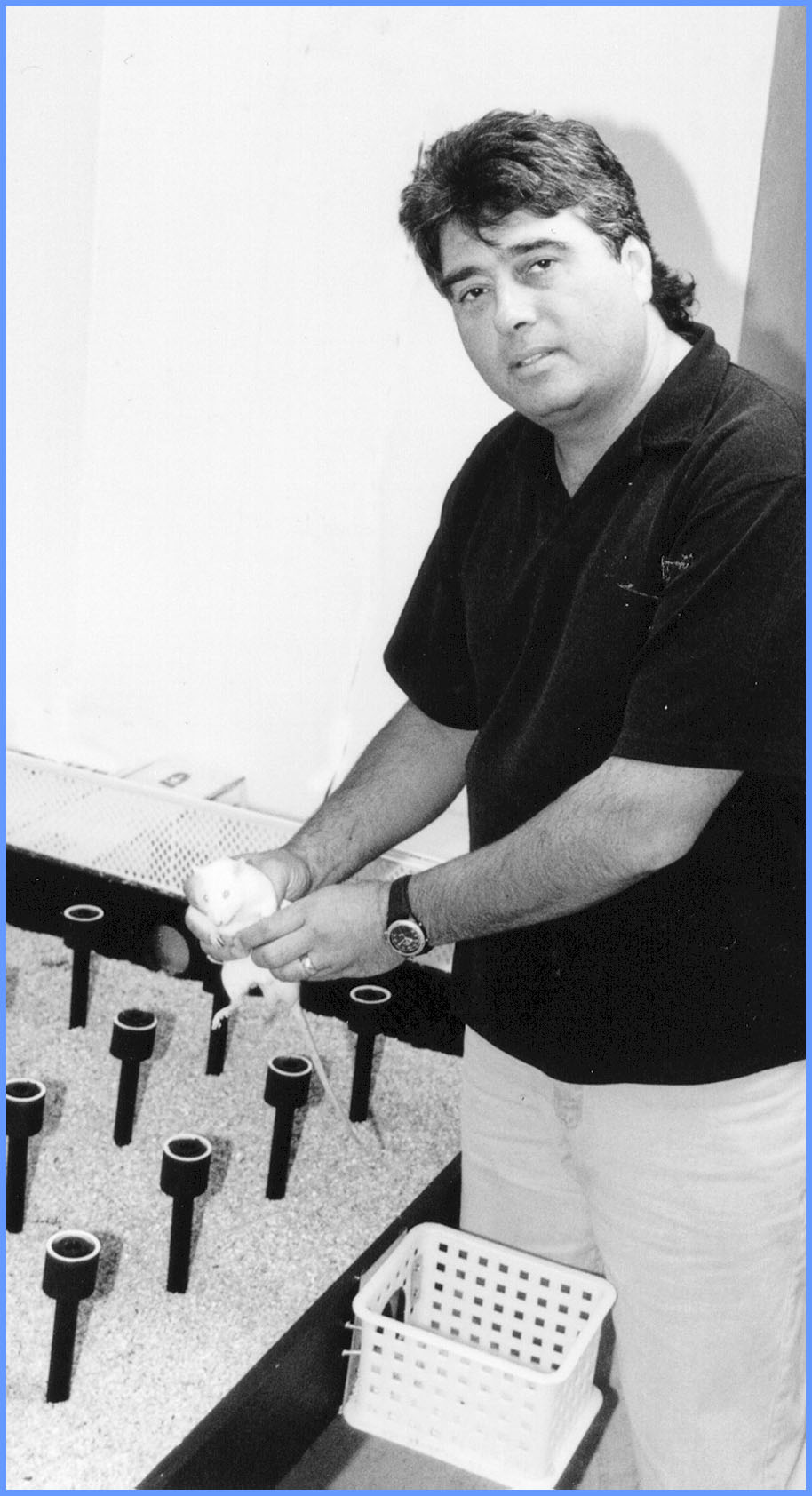 Michael F. Brown合作论文数Psychology Department Villanova University8Christopher B Sturdy合作论文数7
 Jonathan Cooper合作论文数Department of Aerospace Engineering, University of Bristol7
 Lauren M Guillette合作论文数Dept Psychol, Univ Alberta7
 Marisa Hoeschele合作论文数Department of Psychology;University of Alberta;Department of Psychology, University of Alberta7J. David Smith合作论文数6
 F. Gregory Ashby合作论文数Department of Psychological and Brain Sciences, University of California, Santa Barbara6
 Alfred I Geller合作论文数6Guo-Rong Zhang (张国荣)合作论文数6Xiaodan Wang合作论文数5M JITSUMORI合作论文数5Yael Klein合作论文数5Sayde Justin M合作论文数5
 Marvin R. Lamb合作论文数Research 151, Veterans Administration Medical Center5Brian R. Cavoto合作论文数5DA RILEY合作论文数4SF SANDS合作论文数4Hua Zhao合作论文数4
 Werner Hacke合作论文数Department of Neurology, University of Heidelberg4
 Edward Wasserman合作论文数Department of Psychological and Brain Sciences, College of Liberal Arts and Sciences, The University of Iowa4
 Allison H Hahn合作论文数Department of Psychology, University of Alberta4
 Harold Adams合作论文数Department of Neurology, Carver College of Medicine, University of Iowa Health Care4C. Wales合作论文数4Donald A. Riley合作论文数4Debbie M. Kelly合作论文数Department of Psychology;University of Saskatchewan;Department of Psychology, University of Saskatchewan4Mark E. Berg合作论文数3J Leclerc合作论文数3B Oemar合作论文数3t b patton合作论文数3Eui M Choi合作论文数3J Cooper合作论文数3A Davalos合作论文数3
 Rebecca Rayburn-Reeves合作论文数3
 Thomas A. Daniel合作论文数Department of Psychology, Auburn University3Gray Suzanne合作论文数3Svestka Michael合作论文数3Ann L. Gaitonde合作论文数3
 Dorian Jones合作论文数3
 Angie Koban合作论文数3
 Brian J Spiering合作论文数Department of Psychology, University of California3
 Randolph C. Grace合作论文数Department of Psychology, University of Canterbury3Kimberley K. Cavoto合作论文数3




