We describe the Stagger Code for simulations of magneto-hydrodynamic (MHD) systems. This is a modular code with a variety of physics modules that will let the user run simulations of deep stellar atmospheres, sunspot formation, stellar chromospheres and coronae, proto-stellar disks, star formation from giant molecular clouds and even galaxy formation. The Stagger Code is efficiently and highly parallelizable, enabling such simulations with large ranges of both spatial and temporal scales. We, describe the methodology of the code, and present the most important of the physics modules, as well as its input and output variables. We show results of a number of standard MHD tests to enable comparison with other, similar codes. In addition, we provide an overview of tests that have been carried out against solar observations, ranging from spectral line shapes, spectral flux distribution, limb darkening, intensity and velocity distributions of granulation, to seismic power-spectra and the excitation of p modes. The Stagger Code has proven to be a high fidelity code with a large range of uses.
Context. Trees of fragmenting granules (TFG) and associated flows are suspected to play a major role in the formation of the network in the quiet Sun. We investigate the counterparts, in terms of dynamics, of surface structures detectable by high resolution observations in deeper layers up to 15 Mm, which are only available from numerical simulations. Aims. The first aim is to demonstrate that TFG can be evidenced either from surface intensitites, vertical (Vz), or Doppler (Vdop) velocities. The second is to show that horizontal flows, which are derived from intensities or Vz/Vdop flows, are in good agreement, and that this is the case for observations and numerical simulations. The third objective is to apply this new Vz-based method to a 3D simulation to probe relationships between horizontal surface flows, TFG, and deep vertical motions. Methods. The TFG were detected after oscillation filtering of intensities or Vz/Vdop flows, using a segmentation and labelling technique. Surface horizontal flows were derived from local correlation tracking (LCT) and from intensities or Vz/Vdop flows. These methods were applied to Hinode observations, 2D surface results of a first simulation, and 3D Vz data of a second simulation. Results. We find that TFG and horizontal surface flows (provided by the LCT) can be detected either from intensities or Vz/Vdop component, for high resolution observations and numerical simulations. We apply this method to a 3D run providing the Vz component in depth. This reveals a close relationship between surface TFG (5 Mm mesoscale) and vertical downflows 5 Mm below the surface. We suggest that the dynamics of TFG form larger scales (the 15–20 Mm supergranulation) associated with 15 Mm downflowing cells below the surface. Conclusions. The TFG and associated surface flows seem to be essential to understanding the formation and evolution of the network at the meso and supergranular scale.
We analyse the effect on adiabatic stellar oscillation frequencies of replacing the near-surface layers in 1D stellar structure models with averaged 3D stellar surface convection simulations. The main difference is an expansion of the atmosphere by 3D convection, expected to explain a major part of the asteroseismic surface effect, a systematic overestimation of p-mode frequencies due to inadequate surface physics. We employ pairs of 1D stellar envelope models and 3D simulations from a previous calibration of the mixing-length parameter, a. That calibration constitutes the hitherto most consistent matching of 1D models to 3D simulations, ensuring that their differences are not spurious, but entirely due to the 3D nature of convection. The resulting frequency shift is identified as the structural part of the surface effect. The important, typically non-adiabatic, modal components of the surface effect are not included in this analysis, but relegated to future papers. Evaluating the structural surface effect at the frequency of maximum mode amplitude,.max, we find shifts from delta v = -0.8 mu Hz for giants at log g = 2.2 to -35 mu Hz for a (T-eff = 6901 K, log g = 4.29) dwarf. The fractional effect delta v(v(max))/v(max),ranges from -0.1 per cent for a cool dwarf (4185 K, 4.74) to -6 per cent for a warm giant (4962 K, 2.20).
We have constructed a grid of 3D hydrodynamic simulations of deep convective and line-blanketed atmospheres. We have developed a new consistent method for computing and employing T(τ) relations from these simulations, as surface boundary conditions for 1D stellar structure models. These 1D models have, in turn, had their mixing-length, α, calibrated against the averaged structure of each of the simulations. Both α and T(τ) vary significantly with Teff and log g.
The Solar Dynamics Observatory/Helioseismic and Magnetic Imager (SDO/HMI) filtergrams, taken at six wavelengths around the Fe i 6173.3 Å line, contain information about the line-of-sight velocity over a range of heights in the solar atmosphere. Multi-height velocity inferences from these observations can be exploited to study wave motions and energy transport in the atmosphere. Using realistic convection-simulation datasets provided by the STAGGER and MURaM codes, we generate synthetic filtergrams and explore several methods for estimating Dopplergrams. We investigate at which height each synthetic Dopplergram correlates most strongly with the vertical velocity in the model atmospheres. On the basis of the investigation, we propose two Dopplergrams other than the standard HMI-algorithm Dopplergram produced from HMI filtergrams: a line-center Dopplergram and an average-wing Dopplergram. These two Dopplergrams correlate most strongly with vertical velocities at the heights of 30 – 40 km above (line center) and 30 – 40 km below (average wing) the effective height of the HMI-algorithm Dopplergram. Therefore, we can obtain velocity information from two layers separated by about a half of a scale height in the atmosphere, at best. The phase shifts between these multi-height Dopplergrams from observational data as well as those from the simulated data are also consistent with the height-difference estimates in the frequency range above the photospheric acoustic-cutoff frequency.
We study the effects of different descriptions of the solar surface convection on the eigenfrequencies of p modes. 1D evolution calculations of the whole Sun and 3D hydrodynamic and magnetohydrodynamic simulations of the current surface are performed. These calculations rely on realistic physics. Averaged stratifications of the 3D simulations are introduced in the 1D solar evolution or in the structure models. The eigenfrequencies obtained are compared to those of 1D models relying on the usual phenomenologies of convection and to observations of the Michelson Doppler Imager instrument aboard the Solar Heliospheric Observatory (SoHO). We also investigate how the magnetic activity could change the eigenfrequencies and the solar radius, assuming that, 3 Mm below the surface, the upgoing plasma advects a 1.2 kG horizontal field. All models and observed eigenfrequencies are fairly close below 3 mHz. Above 3 mHz the eigenfrequencies of the phenomenological convection models are above the observed eigenfrequencies. The frequencies of the models based on the 3D simulations are slightly below the observed frequencies. Their maximum deviation is approximate to 3 mu Hz at 3 mHz but drops below 1 mu Hz at 4 mHz. Replacing the hydrodynamic by the magnetohydrodynamic simulation increases the eigenfrequencies. The shift is negligible below 2.2 mHz and then increases linearly with frequency to reach approximate to 1.7 mu Hz at 4 mHz. The impact of the simulated activity is a 14 mas shrinking of the solar layers near the optical depth unity.
Relations between temperature, T, and optical depth, tau, are often used for describing the photospheric transition from optically thick to optically thin in stellar structure models. We show that this is well justified, but also that currently used T(tau) relations are often inconsistent with their implementation. As an outer boundary condition on the system of stellar structure equations, T(tau) relations have an undue effect on the overall structure of stars. In this age of precision asteroseismology, we need to re-assess both the method for computing and for implementing T(tau) relations, and the assumptions they rest on. We develop a formulation for proper and consistent evaluation of T(tau) relations from arbitrary 1D or 3D stellar atmospheres, and for their implementation in stellar structure and evolution models. We extract radiative T(tau) relations, as described by our new formulation, from 3D simulations of convection in deep stellar atmospheres of late-type stars from dwarfs to giants. These simulations employ realistic opacities and equation of state, and account for line-blanketing. For comparison, we also extract T(tau) relations from 1D MARCS model atmospheres using the same formulation. T(tau)-relations from our grid of 3D convection simulations display a larger range of behaviours with surface gravity, compared with those of conventional theoretical 1D hydrostatic atmosphere models. Based on this, we recommend no longer to use scaled solar T(tau) relations. Files with T(tau) relations for our grid of simulations are made available to the community, together with routines for interpolating in this irregular grid. We also provide matching tables of atmospheric opacity, for consistent implementation in stellar structure models.
We perform a calibration of the mixing length of convection in stellar structure models against realistic 3D radiation-coupled hydrodynamics (RHD) simulations of convection in stellar surface layers, determining the adiabat deep in convective stellar envelopes. The mixing-length parameter $\alpha$ is calibrated by matching averages of the 3D simulations to 1D stellar envelope models, ensuring identical atomic physics in the two cases. This is done for a previously published grid of solar-metallicity convection simulations, covering from 4200 K to 6900 K on the main sequence, and 4300-5000 K for giants with logg=2.2. Our calibration results in an $\alpha$ varying from 1.6 for the warmest dwarf, which is just cool enough to admit a convective envelope, and up to 2.05 for the coolest dwarfs in our grid. In between these is a triangular plateau of $\alpha$ ~ 1.76. The Sun is located on this plateau and has seen little change during its evolution so far. When stars ascend the giant branch, they largely do so along tracks of constant $\alpha$, with $\alpha$ decreasing with increasing mass.
Aims. We present the Stagger-grid, a comprehensive grid of time-dependent, three-dimensional (3D), hydrodynamic model atmospheres for late-type stars with realistic treatment of radiative transfer, covering a wide range in stellar parameters. This grid of 3D models is intended for various applications besides studies of stellar convection and atmospheres per se, including stellar parameter determination, stellar spectroscopy and abundance analysis, asteroseismology, calibration of stellar evolution models, interferometry, and extrasolar planet search. In this introductory paper, we describe the methods we applied for the computation of the grid and discuss the general properties of the 3D models as well as of their temporal and spatial averages (here denoted < 3D > models).Methods. All our models were generated with the STAGGER-code, using realistic input physics for the equation of state (EOS) and for continuous and line opacities. Our similar to 220 grid models range in effective temperature, T-eff, from 4000 to 7000 K in steps of 500 K, in surface gravity, log g, from 1.5 to 5.0 in steps of 0.5 dex, and metallicity, [Fe/H], from -4.0 to +0.5 in steps of 0.5 and 1.0 dex.Results. We find a tight scaling relation between the vertical velocity and the surface entropy jump, which itself correlates with the constant entropy value of the adiabatic convection zone. The range in intensity contrast is enhanced at lower metallicity. The granule size correlates closely with the pressure scale height sampled at the depth of maximum velocity. We compare the < 3D > models with currently widely applied one-dimensional (1D) atmosphere models, as well as with theoretical 1D hydrostatic models generated with the same EOS and opacity tables as the 3D models, in order to isolate the effects of using self-consistent and hydrodynamic modeling of convection, rather than the classical mixing length theory approach. For the first time, we are able to quantify systematically over a broad range of stellar parameters the uncertainties of 1D models arising from the simplified treatment of physics, in particular convective energy transport. In agreement with previous findings, we find that the differences can be rather significant, especially for metal-poor stars.
Present grids of stellar atmosphere models are the workhorses in interpreting stellar observations and determining their fundamental parameters. These models rely on greatly simplified models of convection, however, lending less predictive power to such models of late-type stars. We present a grid of improved and more reliable stellar atmosphere models of late-type stars, based on deep, three-dimensional (3D), convective, stellar atmosphere simulations. This grid is to be used in general for interpreting observations and improving stellar and asteroseismicmodeling. We solve the Navier Stokes equations in 3D and concurrent with the radiative transfer equation, for a range of atmospheric parameters, covering most of stellar evolution with convection at the surface. We emphasize the use of the best available atomic physics for quantitative predictions and comparisons with observations. We present granulation size, convective expansion of the acoustic cavity, and asymptotic adiabat as functions of atmospheric parameters.
The Sun lies at the center of space weather and is the source of its variability. The primary input to coronal and solar wind models is the activity of the magnetic field in the solar photosphere. Recent advancements in solar observations and numerical simulations provide a basis for developing physics-based models for the dynamics of the magnetic field from the deep convection zone of the Sun to the corona with the goal of providing robust near real-time boundary conditions at the base of space weather forecast models. The goal is to develop new strategic capabilities that enable characterization and prediction of the magnetic field structure and flow dynamics of the Sun by assimilating data from helioseismology and magnetic field observations into physics-based realistic magnetohydrodynamics (MHD) simulations. The integration of first-principle modeling of solar magnetism and flow dynamics with real-time observational data via advanced data assimilation methods is a new, transformative step in space weather research and prediction. This approach will substantially enhance an existing model of magnetic flux distribution and transport developed by the Air Force Research Lab. The development plan is to use the Space Weather Modeling Framework (SWMF) to develop Coupled Models for Emerging flux Simulations (CMES) that couples three existing models: (1) an MHD formulation with the anelastic approximation to simulate the deep convection zone (FSAM code), (2) an MHD formulation with full compressible Navier-Stokes equations and a detailed description of radiative transfer and thermodynamics to simulate near-surface convection and the photosphere (Stagger code), and (3) an MHD formulation with full, compressible Navier-Stokes equations and an approximate description of radiative transfer and heating to simulate the corona (Module in BATS-R-US). CMES will enable simulations of the emergence of magnetic structures from the deep convection zone to the corona. Finally, a plan will be summarized on the development of a Flux Emergence Prediction Tool (FEPT) in which helioseismology-derived data and vector magnetic maps are assimilated into CMES that couples the dynamics of magnetic flux from the deep interior to the corona.
How our ideas about the nature of the p-mode oscillations have evolved will be discussed first. In the beginning, two basic models were considered: the effect of the acoustic cutoff frequency on mode excitation and propagation and the existence of a resonant cavity. The issue with the latter was the location of the cavity. Next the evolution of our ideas on the excitation of the modes will be described. Initially, the oscillations were thought to be driven by convection. Then the possibility of overstability was explored. Now we are back to the initial idea of stochastic excitation by convective turbulence.
Magnetoconvection simulations on meso-granule and granule scales near the solar surface are used to study small scale dynamo activity, the emergence and disappearance of magnetic flux tubes, and the formation and evolution of micropores.From weak seed fields, convective motions produce highly intermittent magnetic fields in the intergranular lanes which collect over the boundaries of the underlying meso-granular scale cells. Instances of both emerging magnetic flux loops and magnetic flux disappearing from the surface occur in the simulations. We show an example of a flux tube collapsing to kG field strength and discuss how the nature of flux disappearance can be investigated. Observed Stokes profiles of small magnetic structures are severely distorted by telescope diffraction and seeing.Because of the strong stratification, there is little recycling of plasma and field in the surface layers. Recycling instead occurs by exchange with the deep layers of the convection zone. Plasma and field from the surface descend through the convection zone and rise again toward the surface. Because only a tiny fraction of plasma rising up from deep in the convection zone reaches the surface due to mass conservation, little of the magnetic energy resides in the near surface layers. Thus the dynamo acting on weak incoherent fields is global, rather than a local surface dynamo.
Magnetoconvection can produce an active region without an initial coherent flux tube. A simulation was performed where a uniform, untwisted, horizontal magnetic field of 1 kG strength was advected into the bottom of a computational domain 48 Mm wide by 20 Mm deep. The up and down convective motions produce a hierarchy of magnetic loops with a wide range of scales, with smaller loops riding "piggy-back" in a serpentine fashion on larger loops. When a large loop approaches the surface, it produces a small active region with a compact leading spot and more diffuse following spots.
The emergence of minimally structured (uniform and horizontal) magnetic field from a depth of 20 Mm has been simulated. The field emerges first in a mixed polarity pepper and salt pattern, but then collects into separate, unipolar concentrations and produces pores. The field strength was then artificially increased to produce spot-like structures. The field strength at continuum optical depth unity peaks at 1 kG, with a maximum of 4 kG. Where the vertical field is strong, the spots persist (at present an hour of solar time has been simulated). Where the field is weak, the spot gets filled in and disappears. Stokes profiles have been calculated and processed with the Hinode annular mtf, the slit diffraction and frequency smoothing. These data are available at steinr.pa.msu.edu/~bob/stokes.
Pores form spontaneously in flux emergence simulations where minimally structured (uniform, untwisted, horizontal) magnetic field rises from a depth of 20 Mm. With 1 kG incident field pores formed after about a turnover time (2 days). To compare what ATST will see with current telescopes a very high resolution (6 km) magneto-convection simulation was carried out with an initially uniform, vertical field. Stokes V-profiles were compared for the simulation and as modified for the diffraction pattern for the ATST and the SST.
 Åke Nordlund合作论文数Niels Bohr Institute, University of Copenhagen124
 Mats Carlsson合作论文数Rosseland Centre for Solar Physics, Institute of Theoretical Astrophysics, The Faculty of Mathematics and Natural Sciences, University of Oslo35
 Dali Georgobiani合作论文数32
 Axel Brandenburg合作论文数Nordic Institute for Theoretical Physics;KTH Royal Institute of Technology;Stockholm University30
 Regner Trampedach合作论文数25
 Martin Asplund合作论文数Research School of Astronomy and Astrophysics, Australian National University13
 Alexander G Kosovichev合作论文数Department of Physics, New Jersey Institute of Technology13I. Tuominen合作论文数9Cindy Simon Rosenthal合作论文数9David Benson合作论文数8
 Jørgen Christensen-Dalsgaard合作论文数Department of Physics and Astronomy, Aarhus University;Danish AsteroSeismology Centre, Aarhus University8
 Viggo Haraldson Hansteen合作论文数Rosseland Centre for Solar Physics, Institute of Theoretical Astrophysics, The Faculty of Mathematics and Natural Sciences, University of Oslo8U Torkelsson合作论文数8Mariejo Goupil合作论文数7R. Samadi合作论文数7A. D. Mcmurry合作论文数6
 Remo Collet合作论文数VELUX6
 Scott McIntosh合作论文数Lynker6
 Tom Bogdan合作论文数6Pekka Pulkkinen合作论文数Department of Public Health, University of Helsinki5
 Gordon Ogilvie合作论文数Department of Applied Mathematics and Theoretical Physics, University of Cambridge;Centre for Mathematical Sciences, University of Cambridge5R. L. Jennings合作论文数5
 Anders Lagerfjard合作论文数4Junwei Zhao (赵俊渭)合作论文数School of Marine Science and Technology, Northwestern Polytechnical University4
 Göran Scharmer合作论文数Department of Astronomy, Stockholm University;Institute for Solar Physics, Stockholm University;Royal Swedish Academy of Sciences4I. Roxburgh合作论文数4jeffrey r kuhn合作论文数3
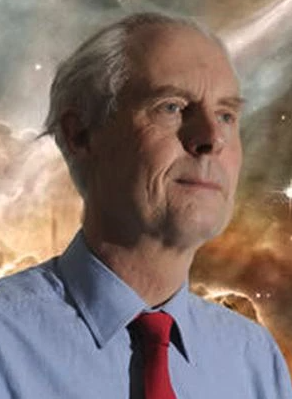 James Pringle合作论文数Institute of Astronomy, University of Cambridge;Emmanuel College, University of Cambridge3
 Richard I. Klein合作论文数Department of Astronomy, University of California, Berkeley;Lawrence Livermore National Laboratory3
 Ej Zita合作论文数3
 Nagi N. Mansour合作论文数NASA Ames Research Center;M / S;NASA Ames Research Center3Laurent Piau合作论文数3Klaus Galsgaard合作论文数3Boris Dintrans合作论文数3
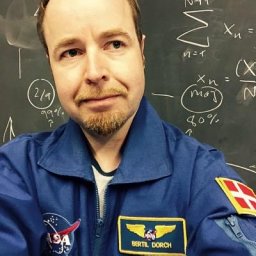 Søren Bertil Fabricius Dorch合作论文数Institute for Astronomy;Physics and Geophysics;Physics and Geophysics, Institute for Astronomy3
 Sylvaine Turck-Chieze合作论文数3Andrew McMurry合作论文数3
 John Leibacher合作论文数National Solar Observatory3SBF Dorch合作论文数2david john benson合作论文数2
 Sami K. Solanki合作论文数Department Sun and Heliosphere, Max-Planck Institute for Solar System Research2
 Philip Goode合作论文数New Jersey Institute of Technology2
 Michel Rieutord合作论文数Laboratoire d'Astrophysique de Toulouse2
 Juri Toomre合作论文数Department of Astrophysical and Planetary Sciences;University of Colorado;Department of Astrophysical and Planetary Sciences, University of Colorado2
 Aaron Birch合作论文数2Maria Loukitcheva合作论文数Astronomical Institute, St. Petersburg University2
 Zazralt Magic合作论文数2
 Wassim Hayek合作论文数2




