Errors quoted on results are often given in asymmetric form. An account is given of the two ways these can arise in an analysis, and the combination of asymmetric errors is discussed. It is shown that the usual method has no basis and is indeed wrong. For asymmetric systematic errors, a consistent method is given, with detailed examples. For asymmetric statistical errors a general approach is outlined.
With the ever increasing beam power at particle accelerator-based facilities for nuclear and particle physics, radioactive isotope production, and nuclear engineering, it becomes increasingly important to have targets that can withstand this power, and shielding to block the secondary particles produced. Here we present Monte Carlo (MC) calculations using the well-established Geant4 software to predict the antineutrino yield of a 8Li Decay-At-Rest (DAR) source. The source relies on 600 kW of beam power from a continuous wave proton beam impinging on a beryllium target, where spallation neutrons are captured by 7Li to produce the 8Li. We further present an in-depth treatment of the neutron shielding surrounding this target. We show that we can produce the high antineutrino flux needed for the discovery-level experiment IsoDAR, searching for "sterile" neutrinos (predicted new fundamental particles) and other beyond standard model physics, while maintaining a neutron flux in the detector that is below natural backgrounds. The methods presented in this paper are easily transferable to other high-power targets and their associated shielding.
This Preliminary Design Report (PDR) describes the IsoDAR electron-antineutrino source in two volumes which are mostly site-independent and describe the cyclotron driver providing a 60 MeV, 10 mA proton beam (Volume I); and the medium energy beam transport line (MEBT) and target (this Volume). The IsoDAR driver and target will produce about 1.15·10^23 electron-antineutrinos over five calendar years. Paired with a kton-scale liquid scintillator detector, this will enable a broad particle physics program including searches for new symmetries, new interactions and new particles. Here in Volume II, we describe the medium energy beam transport line, the antineutrino source beam-target and surrounding sleeve, shielding, and plans for monitoring and installation.
A sample of pp collision data, corresponding to an integrated luminosity of 5.4 fb(-1) and collected by the LHCb experiment during LHC Run 2, is used to measure the ratio of the lifetime of the Xi(0)(b) baryon to that of the Lambda(0)(b) baryon, r(tau) equivalent to tau(Xi 0b)/tau(Lambda 0b). The value r(tau)(Run 2) = 1.004 +/- 0.009 +/- 0.006 is obtained, where the first uncertainty is statistical and the second systematic. This value is averaged with the corresponding value from Run 1 to obtain r(tau) = 1.004 +/- 0.008 +/- 0.005. Multiplying by the known value of the Lambda(0)(b) lifetime yields tau(Xi 0b) = 1.475 +/- 0.012 +/- 0.008 +/- 0.009 ps, where the last uncertainty is due to the limited knowledge of the Lambda(0)(b) lifetime. This measurement improves the precision of the current world average of the Xi(0)(b) lifetime by about a factor of two, and is in good agreement with the most recent theoretical predictions.
The normalised decay rate of $B^+ \to J/ψ(\to μ^+μ^-) K^+$ is measured as a function of the lepton helicity angle using a data sample corresponding to an integrated luminosity of $1.1 \text{fb}^{-1}$ collected during October 2024 with the upgraded (Upgrade I) LHCb detector. This angular distribution can be parameterised by two coefficients, the forward-backward asymmetry, $A_{FB}$, and the flatness parameter, $F_{H}$, whose values are constrained by conservation of angular momentum. These coefficients are measured both integrated and differentially across various kinematic and detector-response variables, and the results are found to be in good agreement with expectations. These measurements show that the detector response of the LHCb Upgrade I experiment is understood to the precision required to reliably extract the angular coefficients associated with rare $b \to s μ^+μ^-$ and $b \to d μ^+μ^-$ transitions, which are particularly sensitive to physics beyond the Standard Model.
Muons offer a unique opportunity to build a compact high-energy electroweak collider at the 10 TeV scale. A Muon Collider enables direct access to the underlying simplicity of the Standard Model and unparalleled reach beyond it. It will be a paradigm-shifting tool for particle physics representing the first collider to combine the high-energy reach of a proton collider and the high precision of an electron-positron collider, yielding a physics potential significantly greater than the sum of its individual parts. A high-energy muon collider is the natural next step in the exploration of fundamental physics after the HL-LHC and a natural complement to a future low-energy Higgs factory. Such a facility would significantly broaden the scope of particle colliders, engaging the many frontiers of the high energy community. The last European Strategy for Particle Physics Update and later the Particle Physics Project Prioritisation Panel in the US requested a study of the muon collider, which is being carried on by the International Muon Collider Collaboration. In this comprehensive document we present the physics case, the state of the work on accelerator design and technology, and propose an R&D project that can make the muon collider a reality.
Charged-hadron distributions in heavy-flavor jets are measured in proton-proton collisions at a center-of-mass energy of $\sqrt{s}$ = 13 TeV collected by the LHCb experiment. Distributions of the longitudinal momentum fraction, transverse momentum, and radial profile of charged hadrons are measured separately in beauty and charm jets. The distributions are compared to those previously measured by the LHCb collaboration in jets produced back-to-back with a $Z$ boson, which in the forward region are primarily light-quark-initiated, to compare the hadronization mechanisms of heavy and light quarks. The observed differences between the heavy- and light-jet distributions are consistent with the heavy-quark dynamics expected to arise from the dead-cone effect, as well as with a hard fragmentation of the heavy-flavor hadron as previously measured in single-hadron fragmentation functions. This measurement provides additional constraints for the extraction of collinear and transverse-momentum-dependent heavy-flavor fragmentation functions and offers another approach to probing the mechanisms that govern heavy-flavor hadronization.
This Preliminary Design Report (PDR) describes the IsoDAR electron-antineutrino source in two volumes which are mostly site-independent and describe the cyclotron driver providing a 60 MeV, 10 mA proton beam (Volume I); and the Medium Energy Beam Transport (MEBT) line and target (this Volume). The IsoDAR driver and target will produce about $$1.15\cdot 10^{23}$$ 1.15 · 10 23 electron-antineutrinos over 5 calendar years. Paired with a kton-scale liquid scintillator detector, this will enable a broad particle physics program including searches for new symmetries, new interactions and new particles. Here in Volume II, we describe the Medium Energy Beam Transport line, the antineutrino source beam-target and surrounding sleeve, shielding, and plans for monitoring and installation.
Measurements are presented of the cross-section for the central exclusive production of J/psi -> mu(+) mu(-) and psi(2S) -> mu(+)mu(-) processes in proton-proton collisions at root s = 13 TeV with 2016-2018 data. They are performed by requiring both muons to be in the LHCb acceptance (with pseudorapidity 2 < eta(mu +/-) < 4.5) and mesons in the rapidity range 2.0 < y < 4.5. The integrated cross-section results are sigma(J/psi ->mu+ mu-) (2.0 < y(J/psi) < 4.5, 2.0 < eta(mu +/-) < 4.5) = 400 +/- 2 +/- 5 +/- 12 pb, sigma(psi(2S)->mu+mu-)(2.0 < y(psi(2S)) < 4.5, 2.0 < eta(mu +/-) < 4.5) = 9.40 +/- 0.15 +/- 0.13 +/- 0.27 pb, where the uncertainties are statistical, systematic and due to the luminosity determination. In addition, a measurement of the ratio of psi(2S) and J/psi cross-sections, at an average photon-proton centre-of-mass energy of 1 TeV, is performed, giving sigma(psi(2S))/sigma(J/psi) = 0.1763 +/- 0.0029 +/- 0.0008 +/- 0.0039, where the first uncertainty is statistical, the second systematic and the third due to the knowledge of the involved branching fractions. For the first time, the dependence of the J/psi and psi(2S) cross-sections on the total transverse momentum transfer is determined in pp collisions and is found consistent with the behaviour observed in electron-proton collisions.
This document is comprised of a collection of consolidated parameters for the key parts of the muon collider. These consolidated parameters follow on from the October 2024 Preliminary Parameters Report. Attention has been given to a high-level consistent set of baseline parameters throughout all systems of the complex, following a 10 TeV center-of-mass design. Additional details of the designs contributing to this baseline design are featured in the appendix. Likewise, explorative variations from this baseline set can be found in the appendix. The data is collected from a collaborative spreadsheet and transferred to overleaf.
A measurement of the branching fraction for the decay $\mathitΛ \to p μ^- \overlineν_μ$ is presented using $\textit{pp}$ collision data collected by the LHCb experiment at a centre-of-mass energy of 13 TeV. The analysis is based on data recorded between 2016 and 2018, corresponding to an integrated luminosity of $5.4 \ \text{fb}^{-1}$. The result is obtained using $\mathitΛ \to p π^-$ decays as a normalisation channel. The measured branching fraction is $B(\mathitΛ \to p μ^- \overlineν_μ)= (1.462 \pm 0.016 \pm 0.100 \pm 0.011 ) \times 10^{-4}$, where the uncertainties are statistical, systematic, and due to the limited knowledge of the normalisation mode branching fraction, respectively. This result improves the precision of the branching fraction measurement by a factor of two compared to the previous best measurement and sets a more stringent bound on lepton flavour universality in $s \to u$ quark transitions. It is consistent with previous measurements, and the extracted lepton flavour universality test observable, $R^{μe} = \frac{Γ(\mathitΛ \to p μ^- \overlineν_μ)}{Γ(\mathitΛ \to p e^- \overlineν_e)} = 0.175 \pm 0.012$, agrees with the Standard Model prediction.
This Preliminary Design Report (PDR) describes the IsoDAR electron-antineutrino source in two volumes which are mostly site-independent and describe the cyclotron driver providing a 10 mA/60 MeV proton beam (this Volume); and the medium energy beam transport line (MEBT) and target (Volume II). The IsoDAR driver and target will produce about 1.15 × 10^23 electron-antineutrinos over 5 years while operating with the anticipated 10 mA/60 MeV beam at an estimated 80
A search for hidden-charm pentaquark states decaying to a range of ΣcD¯ and Λc+D¯ final states, as well as doubly charmed pentaquark states to ΣcD and Λc+D, is made using samples of proton-proton collision data corresponding to an integrated luminosity of 5.7 fb−1 recorded by the LHCb detector at s=13 TeV. Since no significant signals are found, upper limits are set on the pentaquark yields relative to that of the Λc+ baryon in the Λc+→pK−π+ decay mode. The known pentaquark states are also investigated, and their signal yields are found to be consistent with zero in all cases. © 2024 CERN, for the LHCb Collaboration 2024 CERN
The LHCb collaboration measures production of the exotic hadron χ_c1(3872) in proton-nucleus collisions for the first time. Comparison with the charmonium state ψ(2S) suggests that the exotic χ_c1(3872) experiences different dynamics in the nuclear medium than conventional hadrons, and comparison with data from proton-proton collisions indicates that the presence of the nucleus may modify χ_c1(3872) production rates. This is the first measurement of the nuclear modification factor of an exotic hadron.
For accurate determination of particle masses accurate knowledge of the momentum scale of the detectors is crucial. The procedure used to calibrate the momentum scale of the LHCb spectrometer is described and illustrated using the performance obtained with an integrated luminosity of $1.6~ fb^{-1}$ collected during 2016 in $pp$ running. The procedure uses large samples of $J/\psi \rightarrow \mu^+ \mu^-$ and $B^+ \rightarrow J/\psi K^+$ decays and leads to a relative accuracy of $3 \times 10^{-4}$ on the momentum scale.
Abstract The Λ b 0 $$ {\Lambda}_b^0 $$ → D + D − Λ decay is observed for the first time using proton-proton collision data collected by the LHCb experiment at a center-of-mass energy of 13 TeV, corresponding to an integrated luminosity of 5.3 fb −1. Using the B 0 → D + D − K S 0 $$ {D}^{+}{D}^{-}{K}_S^0 $$ decay as a reference channel, the product of the relative production cross-section and decay branching fractions is measured to be R = σ Λ b 0 σ B 0 = B Λ b 0 → D + D − Λ B B 0 → D + D − K S 0 = 0.179 ± 0.022 ± 0.014 , $$ \mathcal{R}=\frac{\sigma_{\Lambda_b^0}}{\sigma_{B^0}}=\frac{\mathcal{B}\left({\Lambda}_b^0\to {D}^{+}{D}^{-}\Lambda \right)}{\mathcal{B}\left({B}^0\to {D}^{+}{D}^{-}{K}_{\textrm{S}}^0\right)}=0.179\pm 0.022\pm 0.014, $$ where the first uncertainty is statistical and the second is systematic. The known branching fraction of the reference channel, B B 0 → D + D − K S 0 $$ \mathcal{B}\left({B}^0\to {D}^{+}{D}^{-}{K}_{\textrm{S}}^0\right) $$ , and the cross-section ratio, σ Λ b 0 / σ B 0 $$ {\sigma}_{\Lambda_b^0}/{\sigma}_{B^0} $$ , previously measured by LHCb are used to derive the branching fraction of the Λ b 0 $$ {\Lambda}_b^0 $$ → D + D − Λ decay B Λ b 0 → D + D − Λ = 1.24 ± 0.15 ± 0.10 ± 0.28 ± 0.11 × 10 − 4 , $$ \mathcal{B}\left({\Lambda}_b^0\to {D}^{+}{D}^{-}\Lambda \right)=\left(1.24\pm 0.15\pm 0.10\pm 0.28\pm 0.11\right)\times {10}^{-4}, $$ where the third and fourth contributions are due to uncertainties of B B 0 → D + D − K S 0 $$ \mathcal{B}\left({B}^0\to {D}^{+}{D}^{-}{K}_{\textrm{S}}^0\right) $$ and σ Λ b 0 / σ B 0 $$ {\sigma}_{\Lambda_b^0}/{\sigma}_{B^0} $$ , respectively. Inspection of the D +Λ and D + D − invariant-mass distributions suggests a rich presence of intermediate resonances in the decay. The Λ b 0 $$ {\Lambda}_b^0 $$ → D *+ D − Λ decay is also observed for the first time as a partially reconstructed component in the D + D − Λ invariant mass spectrum.
The first measurement of the Z boson production cross-section at centre-of-mass energy v s = 5.02TeV in the forward region is reported, using pp collision data collected by the LHCb experiment in year 2017, corresponding to an integrated luminosity of 100 +/- 2 pb-1. The production cross-section is measured for final-state muons in the pseudorapidity range 2.0 <. < 4.5 with transverse momentum pT > 20 GeV/c. The integrated cross-section is determined to be sZ.mu+mu- = 39.6 +/- 0.7(stat) +/- 0.6(syst) +/- 0.8(lumi) pb for the di-muon invariant mass in the range 60 < M mu mu < 120 GeV/c2. This result and the differential cross-section results are in good agreement with theoretical predictions at next-to-next-to-leading order in the strong coupling constant. Based on a previous LHCb measurement of the Z boson production cross-section in pPb collisions at v sNN = 5.02TeV, the nuclear modification factor RpPb is measured for the first time at this energy. The measured values are 1.2+0.5 -0.3(stat) +/- 0.1(syst) in the forward region (1.53 < y* mu < 4.03) and 3.6+1.6 -0.9(stat)+/- 0.2(syst) in the backward region (-4.97 < y* mu < -2.47), where y* mu represents the muon rapidity in the centre-of-mass frame.
Abstract A measurement of CP-violating observables associated with the interference of B0→ D0K⋆(892)0 and $$ {B}^0\to {\overline{D}}^0{K}^{\star }{(892)}^0 $$ B 0 → D ¯ 0 K ⋆ 892 0 decay amplitudes is performed in the D0→ K∓π±(π+π−), D0→ π+π−(π+π−), and D0→ K+K− final states using data collected by the LHCb experiment corresponding to an integrated luminosity of 9 fb−1. CP-violating observables related to the interference of $$ {B}_s^0\to {D}^0{\overline{K}}^{\star }{(892)}^0 $$ B s 0 → D 0 K ¯ ⋆ 892 0 and $$ {B}_s^0\to {\overline{D}}^0{\overline{K}}^{\star }{(892)}^0 $$ B s 0 → D ¯ 0 K ¯ ⋆ 892 0 are also measured, but no evidence for interference is found. The B0 observables are used to constrain the parameter space of the CKM angle γ and the hadronic parameters $$ {r}_{B^0}^{DK\star } $$ r B 0 DK ⋆ and $$ {\delta}_{B^0}^{DK\star } $$ δ B 0 DK ⋆ with inputs from other measurements. In a combined analysis, these measurements allow for four solutions in the parameter space, only one of which is consistent with the world average.
A study of resonant structures in B^{+}→D^{*+}D^{-}K^{+} and B^{+}→D^{*-}D^{+}K^{+} decays is performed, using proton-proton collision data at center-of-mass energies of sqrt[s]=7, 8, and 13 TeV recorded by the LHCb experiment, corresponding to an integrated luminosity of 9 fb^{-1}. A simultaneous amplitude fit is performed to the two channels with contributions from resonances decaying to D^{*-}D^{+} and D^{*+}D^{-} states linked by C parity. This procedure allows the C parities of resonances in the D^{*±}D^{∓} mass spectra to be determined. Four charmonium or charmoniumlike states are observed decaying into D^{*±}D^{∓}: η_{c}(3945), h_{c}(4000), χ_{c1}(4010), and h_{c}(4300), with quantum numbers J^{PC} equal to 0^{-+}, 1^{+-}, 1^{++}, and 1^{+-}, respectively. At least three of these states have not been observed previously. In addition, the existence of the T_{c[over ¯]s[over ¯]0}^{*}(2870)^{0} and T_{c[over ¯]s[over ¯]1}^{*}(2900)^{0} resonances in the D^{-}K^{+} mass spectrum, already observed in the B^{+}→D^{+}D^{-}K^{+} decay, is confirmed in a different production channel.
A study of prompt Xi(+)(c) production in proton-lead collisions is performed with the LHCb experiment at a centerof-mass energy per nucleon pair of 8.16 TeV in 2016 in pPb and Pbp collisions with an estimated integrated luminosity of approximately 12.5 and 17.4 nb(-1), respectively. The Xi(+)(c) roduction cross section, as well as the Xi(+)(c) to Lambda(+)(c) production cross-section ratio, are measured as a function of the transverse momentum and rapidity and compared to the latest theory predictions. The forward-backward asymmetry is also measured as a function of the Xi(+)(c) ransverse momentum. The results provide strong constraints on theoretical calculation and are a unique input for hadronization studies in different collision systems.
 George Lafferty合作论文数School of Physics and Astronomy, The University of Manchester2286
 Abolhassan Jawahery合作论文数Department of Physics, College of Computer, Mathematical, & Natural Sciences, University of Maryland2049
 Concezio Bozzi合作论文数Istituto Nazionale di Fisica Nucleare Sezione di Ferrara2047
 Antimo Palano合作论文数University of Bari1766
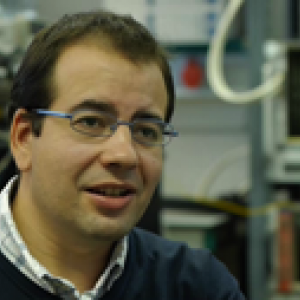 Eugeni Graugés Pous合作论文数Department of Quantum Physics and Astrophysics, Facultat de Física, Universitat de Barcelona1684
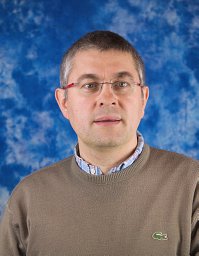 Vincent Tisserand合作论文数Laboratoire de Physique Corpusculaire de Clermont-Ferrand1645
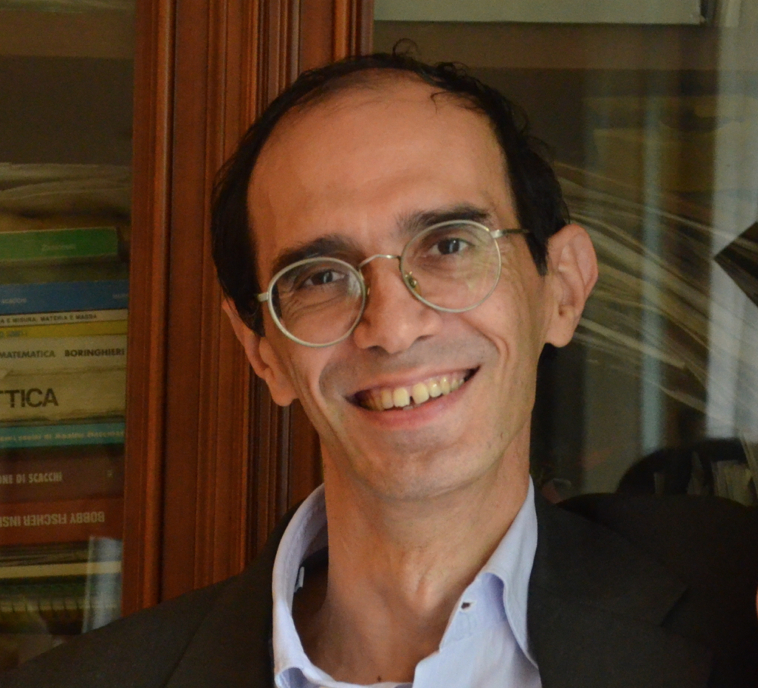 Roberto Calabrese合作论文数Dipartimento Di Fisica E Scienze Della Terra, Università degli Studi di Ferrara;Istituto Nazionale di Fisica Nucleare1637
 Glen Cowan合作论文数Centre for Particle Physics and Astronomy, Department of Physics, Royal Holloway, University of London1612
 David Hutchcroft合作论文数Department of Physics, School of Physical Sciences, Faculty of Science and Engineering, University of Liverpool1610
 Steve Playfer合作论文数School of Physics and Astronomy, University of Edinburgh;Institute for Particle and Nuclear Physics, University of Edinburgh1606
 Eleonora Luppi合作论文数Dipartimento di Fisica e Scienze della Terra, Università degli Studi di Ferrara1572Bernhard Spaan合作论文数1540Gp Wormser合作论文数1528
 Fergus Wilson合作论文数Particle Physics Division A, Science and Technology Facilities Council1521M. Rotondo合作论文数1508G. Mancinelli合作论文数1496
 Ulrich Uwer合作论文数Fakultät für Physik und Astronomie, Physikalisches Institut, Universität Heidelberg1479
 Gabriele Simi合作论文数Dipartimento di Fisica e Astronomia, Università degli Studi di Padova1474
 Michael Sokoloff合作论文数Department of Physics, University of Cincinnati1469
 Marie-Hélène Schune合作论文数Laboratoire De L’accélérateur Linéaire, CNRS1423
 Frédéric Blanc合作论文数Institute of Physics, School of Basic Sciences, Ecole Polytechnique Fédérale De Lausanne1414
 Arantza Oyanguren合作论文数Institute of Corpuscular Physics, University of Valencia1398L. Del Buono合作论文数LPNHE, Universités Paris VI and VII, IN2P3-CNRS, Paris, France1379M. Pappagallo合作论文数1378C. Patrignani合作论文数1376
 David Leith合作论文数Stanford Linear Accelerator Center1344M. Rama合作论文数1344Jean-Pierre Lees合作论文数Laboratoire d'Annecy-le-Vieux de Physique des Particules1339
 Blair Ratcliff合作论文数SLAC National Accelerator Laboratory;Stanford University1304R. Cenci合作论文数1293
 Roland Waldi合作论文数Institut für Physik, Universität Rostock1284
 Alberto Lusiani合作论文数Science Department, Scuola Normale Superiore;INFN Sezione di Pisa1274J.W. Gary合作论文数1258
 Masahiro Morii合作论文数Department of Physics, Harvard University1249
 Fernando Palombo合作论文数Department of Physics, University of Milan1247
 Franz Muheim合作论文数Institute for Particle and Nuclear Physics, School of Physics and Astronomy, The University of Edinburgh1236
 Bob Kowalewski合作论文数Victoria Subatomic Physics & Accelerator Research Centre, Department of Physics and Astronomy, Faculty of Science, University of Victoria1215
 Nigel Watson合作论文数School of Physics and Astronomy, The University of Birmingham;Higher Education Academy;STEM.org1198
 John Back合作论文数Department of Physics, University of Warwick1190
 Valerie Gibson合作论文数The Cavendish Laboratory, Department of Physics, University of Cambridge1185P. Taras合作论文数1184
 Philip J Clark合作论文数Institute for Particle and Nuclear Physics, School of Physics and Astronomy, The University of Edinburgh1181
 Ulrik Egede合作论文数Department of Physics, Faculty of Natural Sciences, Imperial College London;School of Physics & Astronomy, Faculty of Science, Monash University;Monash Data Futures Institute, Monash University1181
 Carlo Dallapiccola合作论文数Department of Physics, College of Natural Sciences, University of Massachusetts Amherst1177
 Fernando Martinez Vidal合作论文数Department of Atomic, Molecular and Nuclear Physics, University of Valencia;Instituto de Física Corpuscular1175
 Gerald Eigen合作论文数Department of Physics and Technology, University of Bergen1158
 Mirco Andreotti合作论文数Istituto Nazionale di Fisica Nucleare, Sezione di Ferrara1158
 Tara Shears合作论文数Department of Physics, School of Physical Sciences, Faculty of Science and Engineering, University of Liverpool1132
 j a mckenna合作论文数University of British Columbia1128




