Answering complex natural language questions often necessitates multi-step reasoning and integrating external information. Several systems have combined knowledge retrieval with a large language model (LLM) to answer such questions. These systems, however, suffer from various failure cases, and we cannot directly train them end-to-end to fix such failures, as interaction with external knowledge is non-differentiable. To address these deficiencies, we define a ReAct-style LLM agent with the ability to reason and act upon external knowledge. We further refine the agent through a ReST-like method that iteratively trains on previous trajectories, employing growing-batch reinforcement learning with AI feedback for continuous self-improvement and self-distillation. Starting from a prompted large model and after just two iterations of the algorithm, we can produce a fine-tuned small model that achieves comparable performance on challenging compositional question-answering benchmarks with two orders of magnitude fewer parameters.
This paper reveals a curious observation that modern large-scale machine learning models with Transformer architectures have sparse activation maps. By activation map we refer to the intermediate output of the multi-layer perceptrons (MLPs) after a ReLU activation function, and by “sparse” we mean that on average very few entries (e.g., 3.0% for T5-Base and 6.3% for ViT-B16) are nonzero for each input to MLP. Moreover, larger Transformers with more layers and wider MLP hidden dimensions are sparser as measured by the percentage of nonzero entries. Through extensive experiments we demonstrate that the emergence of sparsity is a prevalent phenomenon that occurs for both natural language processing and vision tasks,on both training and evaluation data, for Transformers of various configurations,at layers of all depth levels. We discuss how sparsity immediately implies a way to significantly reduce the FLOP count and improve efficiency for Transformers.Moreover, we demonstrate perhaps surprisingly that enforcing an even sparser activation via Top-$k$ thresholding with a small value of $k$ brings a collection of desired but missing properties for Transformers, namely less sensitivity to noisy training data, more robustness to input corruptions, and better calibration for their prediction confidence.
This paper introduces SOAR: Spilling with Orthogonality-Amplified Residuals, a novel data indexing technique for approximate nearest neighbor (ANN) search. SOAR extends upon previous approaches to ANN search, such as spill trees, that utilize multiple redundant representations while partitioning the data to reduce the probability of missing a nearest neighbor during search. Rather than training and computing these redundant representations independently, however, SOAR uses an orthogonality-amplified residual loss, which optimizes each representation to compensate for cases where other representations perform poorly. This drastically improves the overall index quality, resulting in state-of-the-art ANN benchmark performance while maintaining fast indexing times and low memory consumption.
This paper introduces SOAR: Spilling with Orthogonality-Amplified Residuals, a novel data indexing technique for approximate nearest neighbor (ANN) search. SOAR extends upon previous approaches to ANN search, such as spill trees, that utilize multiple redundant representations while partitioning the data to reduce the probability of missing a nearest neighbor during search. Rather than training and computing these redundant representations independently, however, SOAR uses an orthogonality-amplified residual loss, which optimizes each representation to compensate for cases where other representations perform poorly. This drastically improves the overall index quality, resulting in state-of-the-art ANN benchmark performance while maintaining fast indexing times and low memory consumption.
The approximate nearest neighbor (ANN) search problem is fundamental to efficiently serving many real-world machine learning applications. A number of techniques have been developed for ANN search that are efficient, accurate, and scalable. However, such techniques typically have a number of parameters that affect the speed-recall tradeoff, and exhibit poor performance when such parameters aren't properly set. Tuning these parameters has traditionally been a manual process, demanding in-depth knowledge of the underlying search algorithm. This is becoming an increasingly unrealistic demand as ANN search grows in popularity. To tackle this obstacle to ANN adoption, this work proposes a constrained optimization-based approach to tuning quantization-based ANN algorithms. Our technique takes just a desired search cost or recall as input, and then generates tunings that, empirically, are very close to the speed-recall Pareto frontier and give leading performance on standard benchmarks.
This paper studies the curious phenomenon for machine learning models with Transformer architectures that their activation maps are sparse. By activation map we refer to the intermediate output of the multi-layer perceptrons (MLPs) after a ReLU activation function, and by sparse we mean that on average very few entries (e.g., 3.0% for T5-Base and 6.3% for ViT-B16) are nonzero for each input to MLP. Moreover, larger Transformers with more layers and wider MLP hidden dimensions are sparser as measured by the percentage of nonzero entries. Through extensive experiments we demonstrate that the emergence of sparsity is a prevalent phenomenon that occurs for both natural language processing and vision tasks, on both training and evaluation data, for Transformers of various configurations, at layers of all depth levels, as well as for other architectures including MLP-mixers and 2-layer MLPs. We show that sparsity also emerges using training datasets with random labels, or with random inputs, or with infinite amount of data, demonstrating that sparsity is not a result of a specific family of datasets. We discuss how sparsity immediately implies a way to significantly reduce the FLOP count and improve efficiency for Transformers. Moreover, we demonstrate perhaps surprisingly that enforcing an even sparser activation via Top-k thresholding with a small value of k brings a collection of desired but missing properties for Transformers, namely less sensitivity to noisy training data, more robustness to input corruptions, and better calibration for their prediction confidence.
This paper presents a novel nearest neighbor search algorithm achieving TPU (Google Tensor Processing Unit) peak performance, outperforming state-of-the-art GPU algorithms with similar level of recall. The design of the proposed algorithm is motivated by an accurate accelerator performance model that takes into account both the memory and instruction bottlenecks. Our algorithm comes with an analytical guarantee of recall in expectation and does not require maintaining sophisticated index data structure or tuning, making it suitable for applications with frequent updates. Our work is available in the open-source package of Jax and Tensorflow on TPU.
Language models can be augmented with a context retriever to incorporate knowledge from large external databases. By leveraging retrieved context, the neural network does not have to memorize the massive amount of world knowledge within its internal parameters, leading to better parameter efficiency, interpretability and modularity. In this paper we examined a simple yet effective architecture for incorporating external context into language models based on decoupled Encoder Decoder architecture. We showed that such a simple architecture achieves competitive results on auto-regressive language modeling and open domain question answering tasks. We also analyzed the behavior of the proposed model which performs grounded context transfer. Finally we discussed the computational implications of such retrieval augmented models.
Factorized models, such as two tower neural network models, are widely used for scoring (query, document) pairs in information retrieval tasks. These models are typically trained by optimizing the model parameters to score relevant ``positive" pairs higher than the irrelevant ``negative" ones. While a large set of negatives typically improves the model performance, limited computation and memory budgets place constraints on the number of negatives used during training. In this paper, we develop a novel negative sampling technique for accelerating training with softmax cross-entropy loss. By using cached (possibly stale) item embeddings, our technique enables training with a large pool of negatives with reduced memory and computation. We also develop a streaming variant of our algorithm geared towards very large datasets. Furthermore, we establish a theoretical basis for our approach by showing that updating a very small fraction of the cache at each iteration can still ensure fast convergence. Finally, we experimentally validate our approach and show that it is efficient and compares favorably with more complex, state-of-the-art approaches.
Quantization based techniques are the current state-of-the-art for scaling maximum inner product search to massive databases. Traditional approaches to quantization aim to minimize the reconstruction error of the database points. Based on the observation that for a given query, the database points that have the largest inner products are more relevant, we develop a family of anisotropic quantization loss functions. Under natural statistical assumptions, we show that quantization with these loss functions leads to a new variant of vector quantization that more greatly penalizes the parallel component of a datapoint's residual relative to its orthogonal component. The proposed approach achieves state-of-the-art results on the public benchmarks available at \url{this http URL}.
Recently, in response to the major challenges in energy development and environmental issues, tremendous efforts are being devoted to developing electrochemical energy storage devices based on green sustainable resources. As a class of green materials, nanocellulose (NC) has received extensive attention. In this review, we summarize the research progress of NC derived materials in electrochemical energy storage. Specifically, we first introduce various synthesis methods based on NC and the pretreatment process to increase the conductivity. Then we focus on the specific application of NC in electrochemical energy storage devices. Finally, we summarize the previously reported work and put forward views on the further development of NC in the field of electrochemical energy storage.
Quantization based methods are popular for solving large scale maximum inner product search problems. However, in most traditional quantization works, the objective is to minimize the reconstruction error for datapoints to be searched. In this work, we focus directly on minimizing error in inner product approximation and derive a new class of quantization loss functions. One key aspect of the new loss functions is that we weight the error term based on the value of the inner product, giving more importance to pairs of queries and datapoints whose inner products are high. We provide theoretical grounding to the new quantization loss function, which is simple, intuitive and able to work with a variety of quantization techniques, including binary quantization and product quantization. We conduct experiments on public benchmarking datasets \url{http://ann-benchmarks.com} to demonstrate that our method using the new objective outperforms other state-of-the-art methods. We are committed to release our source code.
We characterize the minimum noise amplitude and power for noise-adding mechanisms in $(\epsilon, \delta)$-differential privacy for single real-valued query function. We derive new lower bounds using the duality of linear programming, and new upper bounds by proposing a new class of $(\epsilon,\delta)$-differentially private mechanisms, the \emph{truncated Laplacian} mechanisms. We show that the multiplicative gap of the lower bounds and upper bounds goes to zero in various high privacy regimes, proving the tightness of the lower and upper bounds and thus establishing the optimality of the truncated Laplacian mechanism. In particular, our results close the previous constant multiplicative gap in the discrete setting. Numeric experiments show the improvement of the truncated Laplacian mechanism over the optimal Gaussian mechanism in all privacy regimes.
One major goal of vision is to infer physical models of objects, surfaces, and their layout from sensors. In this paper, we aim to interpret indoor scenes from one RGBD image. Our representation encodes the layout of orthogonal walls and the extent of objects, modeled with CAD-like 3D shapes. We parse both the visible and occluded portions of the scene and all observable objects, producing a complete 3D parse. Such a scene interpretation is useful for robotics and visual reasoning, but difficult to produce due to the well-known challenge of segmentation, the high degree of occlusion, and the diversity of objects in indoor scenes. We take a data-driven approach, generating sets of potential object regions, matching to regions in training images, and transferring and aligning associated 3D models while encouraging fit to observations and spatial consistency. We use support inference to aid interpretation and propose a retrieval scheme that uses convolutional neural networks to classify regions and retrieve objects with similar shapes. We demonstrate the performance of our method on our newly annotated NYUd v2 dataset (Silberman et al., in: Computer vision-ECCV, 2012, pp 746–760, 2012) with detailed 3D shapes.
Inverted file and asymmetric distance computation (IVFADC) have been successfully applied to approximate nearest neighbor search and subsequently maximum inner product search. In such a framework, vector quantization is used for coarse partitioning while product quantization is used for quantizing residuals. In the original IVFADC as well as all of its variants, after residuals are computed, the second production quantization step is completely independent of the first vector quantization step. In this work, we seek to exploit the connection between these two steps when we perform non-exhaustive search. More specifically, we decompose a residual vector locally into two orthogonal components and perform uniform quantization and multiscale quantization to each component respectively. The proposed method, called local orthogonal decomposition, combined with multiscale quantization consistently achieves higher recall than previous methods under the same bitrates. We conduct comprehensive experiments on large scale datasets as well as detailed ablation tests, demonstrating effectiveness of our method.
Many emerging use cases of data mining and machine learning operate on large datasets with data from heterogeneous sources, specifically with both sparse and dense components. For example, dense deep neural network embedding vectors are often used in conjunction with sparse textual features to provide high dimensional hybrid representation of documents. Efficient search in such hybrid spaces is very challenging as the techniques that perform well for sparse vectors have little overlap with those that work well for dense vectors. Popular techniques like Locality Sensitive Hashing (LSH) and its data-dependent variants also do not give good accuracy in high dimensional hybrid spaces. Even though hybrid scenarios are becoming more prevalent, currently there exist no efficient techniques in literature that are both fast and accurate. In this paper, we propose a technique that approximates the inner product computation in hybrid vectors, leading to substantial speedup in search while maintaining high accuracy. We also propose efficient data structures that exploit modern computer architectures, resulting in orders of magnitude faster search than the existing baselines. The performance of the proposed method is demonstrated on several datasets including a very large scale industrial dataset containing one billion vectors in a billion dimensional space, achieving over 10x speedup and higher accuracy against competitive baselines.
Nickel sulfide (Ni3S4) has been recognized as one of the most advanced anode materials for sodium-ion batteries (SIBs) on account of its cost effectiveness, commendable redox reversibility and high theoretical capability. However, like other metal sulfide (MS) anodes, the Ni3S4 suffers from poor cycle life and inferior rate capability owing to large volume changes during the repeated Na thorn de/insertion process and unsatisfied electronic conductivity. Herein, we fabricated porous Ni3S4/carbon aerogels (Ni3S4/CAs) using carrageenan-Ni hydrogels as the precursor via the pyrolysis route. The sulfate groups located uniformity and confinement for Ni2+ ions in carrageenan double-helix structures converted into uniform Ni3S4 nanoparticles (NPs) embedded in porous carbon through the decomposition. Remarkably, the asprepared Ni3S4/CAs-1 sample as the anode material for SIBs exhibits a high reversible capacity of 297 mAh g(-1) at a current density of 1 A g(-1) after 100 cycles. This work develops a facile way to synthesize Ni3S4/CAs as a promising anode material for SIBs from marine biomass resources. (C) 2019 Elsevier Ltd. All rights reserved.
We derive the optimal $(0, \delta)$-differentially private query-output independent noise-adding mechanism for single real-valued query function under a general cost-minimization framework. Under a mild technical condition, we show that the optimal noise probability distribution is a uniform distribution with a probability mass at the origin. We explicitly derive the optimal noise distribution for general $\ell^p$ cost functions, including $\ell^1$ (for noise magnitude) and $\ell^2$ (for noise power) cost functions, and show that the probability concentration on the origin occurs when $\delta > \frac{p}{p+1}$. Our result demonstrates an improvement over the existing Gaussian mechanisms by a factor of two and three for $(0,\delta)$-differential privacy in the high privacy regime in the context of minimizing the noise magnitude and noise power, and the gain is more pronounced in the low privacy regime. Our result is consistent with the existing result for $(0,\delta)$-differential privacy in the discrete setting, and identifies a probability concentration phenomenon in the continuous setting.
We derive a class of noise probability distributions to preserve $(epsilon, delta)$-differential privacy for single real-valued query function. The proposed noise distribution has a truncated exponential probability density function, which can be viewed as a truncated Laplacian distribution. We show the near-optimality of the proposed emph{truncated Laplacian} mechanism in various privacy regimes in the context of minimizing the noise amplitude and noise power. Numeric experiments show the improvement of the truncated Laplacian mechanism over the optimal Gaussian mechanism by significantly reducing the noise amplitude and noise power in various privacy regions.
 Sanjiv Kumar合作论文数Google23
 David Simcha合作论文数google9Felix Chern合作论文数6
 Felix X. Yu合作论文数6
 Derek Hoiem合作论文数Department of Electrical & Computer Engineering, The Grainger College of Engineering, University of Illinois at Urbana-Champaign;Reconstruct Inc5
 Quan Geng合作论文数Citadel Securities5
 Phil Sun合作论文数Google Research5
 Zonglin Li合作论文数Google Research4
 Daliang Li合作论文数Google Research4
 Sashank Reddi合作论文数Google DeepMind4
 Guangcheng Shao (邵光成)合作论文数College of Agricultural Science and Engineering, Hohai University;College of Soil and Water Conservation, Hohai University4Dave Dopson合作论文数3
 Chong You合作论文数Google DeepMind3Xiang Wu合作论文数3
 Srinadh Bhojanapalli合作论文数Google Research3
 Ke Ye合作论文数Google2Wei Ding合作论文数2
 Chuhang Zou合作论文数Amazon Fashion2
 Dongjiang Yang (杨东江)合作论文数Qingdao University2
 Erik M Lindgren合作论文数Databricks2
 Shuangen Yu (俞双恩)合作论文数College of Agricultural Science and Engineering, Hohai University2
 Ankit Singh Rawat合作论文数Google Research2Hirotomo Aso合作论文数Graduate School of Engineering;Department of Electrical and Communication Engineering2
 Shengjin Wang (王生进)合作论文数Department of Electronic Engineering, Tsinghua University1
 Mihajlo Velimirović合作论文数1Yu Wang合作论文数1Dan Holtmann-Rice合作论文数1Renat Aksitov合作论文数1
 Xiaoliang Zhao (赵小亮)合作论文数School of Environment and Geography, Qingdao University1Na Liu合作论文数1Zheng Gao (高正)合作论文数1James Lyon合作论文数1
 Kavya Kopparapu合作论文数1David Majnemer合作论文数1Sheila Babayan合作论文数1Sushant Prakash合作论文数1
 Zachary Fisher合作论文数Perimeter Inst Theoret Phys, Waterloo, ON N2L 2Y5, Canada1Jingjing Lan (蓝晶晶)合作论文数1Xu Zhang合作论文数1
 Blake Hechtman合作论文数Google1ChangRen Chen (陈昌仁)合作论文数1HuaWei Zhang (张华伟)合作论文数1
 Xiaoli Zhang (张晓俐)合作论文数School of Science, RMIT University1
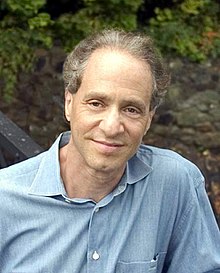 Ray Kurzweil合作论文数Google1
 Andy Davis合作论文数Boeing1
 Marvin Ritter合作论文数Google DeepMind1
 Liwei Wang合作论文数Department of Computer Science and Engineering, The Chinese University of Hong Kong1Daohao Li合作论文数1




