Study Objective: The COVID-19 pandemic has resulted in widespread shortages in personal protective equipment, including N95 respirators. While basic surgical facemasks are more commonly available, their efficacy is limited due primarily to their poor face seal. This pilot study examined the impact of a rubber band mask brace on a basic surgical mask, as determined by quantitative fit testing. Methods: Subjects wearing a basic surgical facemask and the rubber band mask brace underwent quantitative fit testing using machinery designed to certify N95 mask fit. Subjects were tested with the brace anchored behind their eyes, with a paperclip behind the head, and on the side knobs of their face shields. The primary outcome measure was whether the subject passed the quantitative fit test at or above the OSHA verified standard for N95 masks. Results: Subjects (n=11) were 54.5% female, with a median height of 70 inches (IQR 68-74), weight of 170 lbs (IQR 145-215) and BMI of 24.6 (IQR 22.2-27.2), and encompassing 5 distinct N95 mask fit types. We found that 45%, 100% and 100% of subjects passed the quantitative fit test when the brace was anchored behind the ears, with a paperclip and on a face shield respectively. Conclusion: Of the 11 subjects included in the analysis, across a range of body habitus and N95 mask fit types, all passed the quantitative fit test when the mask brace was anchored on either face shield or with a paperclip. This data suggests the brace would offer an improved margin of safety when worn with a basic surgical mask.
A review of the uses and evidence for the Alberta Stroke Program Early CT Score, which determines middle cerebral artery stroke severity using available computed tomography data.
A review of the uses and evidence for the NEXUS criteria for C-spine imaging, which are used to clear patients from cervical spine fracture clinically, without imaging.
A review of the uses and evidence for the National Institutes of Health Scale/Score, which is used to quantify stroke severity.
The modified Rankin Scale (mRS) for neurologic disability measures the degree of disability or dependence in the daily activities of people who have suffered a stroke.
Author(s): Runde, Daniel; Mohr, Nicholas; Christians, Benjamin; Baker, Olesya; Carlson, Jestin; Golz, Dustin
The ASPECTS determines middle cerebral artery stroke severity using available computed tomography data.
Cirrhotic patients often develop bleeding from gastric or esophageal varices that occur secondary to portal hypertension. Gastrointestinal (GI) bleeding is fatal in approximately 20% of these episodes and bacterial infections are an important contributor to this mortality. Patients with cirrhosis are also known to have impaired immune function and also at higher risk of translocation of bacteria from the gut into the bloodstream.1 Therefore, the administration of prophylactic antibiotics during the bleeding event might help prevent such infections.
Author(s): Pomeranz, Kaila; Runde, Daniel; Buresh, Christopher; Takacs, Michael; Hansen, Nikki; Swanson, Morgan Bobb; Harland, Karisa; Obr, Brooks
The NEXUS criteria for C-spine imaging clear patients from cervical spine fracture clinically, without imaging.
A review of the uses and evidence for the Canadian C-spine rule, which can be used to clinically clear cervical spine fracture without imaging.
This clinical policy from the American College of Emergency Physicians addresses key issues in opioid management in adult patients presenting to the emergency department. A writing subcommittee conducted a systematic review of the literature to derive evidence-based recommendations to answer the following clinical questions: (1) In adult patients experiencing opioid withdrawal, is emergency department-administered buprenorphine as effective for the management of opioid withdrawal compared with alternative management strategies? (2) In adult patients experiencing an acute painful condition, do the benefits of prescribing a short course of opioids on discharge from the emergency department outweigh the potential harms? (3) In adult patients with an acute exacerbation of noncancer chronic pain, do the benefits of prescribing a short course of opioids on discharge from the emergency department outweigh the potential harms? (4) In adult patients with an acute episode of pain being discharged from the emergency department, do the harms of a short concomitant course of opioids and muscle relaxants/sedative-hypnotics outweigh the benefits? Evidence was graded and recommendations were made based on the strength of the available data.
The American College of Emergency Physicians (ACEP) organized a multidisciplinary effort to create a clinical practice guideline specific to unscheduled, time-sensitive procedural sedation, which differs in important ways from scheduled, elective procedural sedation. The purpose of this guideline is to serve as a resource for practitioners who perform unscheduled procedural sedation regardless of location or patient age. This document outlines the underlying background and rationale, and issues relating to staffing, practice, and quality improvement.
The NIHSS is used to quantify the severity of ischemic stroke.
Objectives: The objectives were to critically appraise the emergency medicine (EM) medical education literature published in 2016 and review the highest-quality quantitative and qualitative studies. Methods: A search of the English language literature in 2016 querying MEDLINE, Scopus, Education Resources Information Center (ERIC), and PsychInfo identified 510 papers related to medical education in EM. Two reviewers independently screened all of the publications using previously established exclusion criteria. The 25 top-scoring quantitative studies based on methodology and all six qualitative studies were scored by all reviewers using selected scoring criteria that have been adapted from previous installments. The top-scoring articles were highlighted and trends in medical education research were described. Results: Seventy-five manuscripts met inclusion criteria and were scored. Eleven quantitative and one qualitative papers were the highest scoring and are summarized in this article. Conclusion: This annual critical appraisal series highlights the best EM education research articles published in 2016.
This review compares liberal and conservative oxygen therapy in acutely ill adults and their effect on mortality (in-hospital, 30-day, and longest follow-up) and morbidity (disability at longest follow-up, risk of hospital-acquired pneumonia, any hospital-acquired infection, and length of hospital stay).
Consecutive articles addressing paths of research pioneers by Coates et al1Coates W.C. Yarris L.M. Clarke S.O. et al.Research pioneers in emergency medicine—reflections on their paths to success and advice to aspiring researchers: a qualitative study.Ann Emerg Med. 2019; 73: 555-564Abstract Full Text Full Text PDF Scopus (4) Google Scholar and fragility of randomized controlled trials in emergency medicine by Brown et al2Brown J. Lane A. Cooper C. et al.The results of randomized controlled trials in emergency medicine are frequently fragile.Ann Emerg Med. 2019; 73: 565-576Abstract Full Text Full Text PDF PubMed Scopus (14) Google Scholar in the June 2019 edition of Annals illustrate a major hurdle for aspiring researchers of new areas of emergency medicine research–overcoming limits on how we define emergency medicine research in the first place. The intent of the former article was to inform conditions that would promote success of researchers of a new area of emergency medicine study (ie, medical education). The latter article reported results of a systematic review of randomized controlled trials in emergency medicine. In terms of my own focus, I noted that neither study mentioned research of infectious diseases in emergency departments (EDs) as emergency medicine research. Perhaps missing the covered wagon period, this work still represented 3 decades of ED-based investigations, including multiple randomized controlled trials that are the basis for current treatment guidelines.3Santibanez S. Fisher L.S. Krishnadasan A. et al.EMERGEncy ID NET: review of a 20-year multi-site emergency department emerging infections research network.Open Forum Infect Dis. 2017; 4: ofx218Google Scholar, 4Talan D.A. Stamm W.E. Hooton T.M. et al.Comparison of ciprofloxacin (7 days) and trimethoprim/sulfamethoxazole (14 days) for acute uncomplicated pyelonephritis in women: a randomized trial.JAMA. 2000; 283: 1583-1590Crossref PubMed Scopus (370) Google Scholar, 5Moran G.J. Krishnadasan A. Gorwitz R.J. et al.Methicillin-resistant S aureus infections among patients in the emergency department.N Engl J Med. 2006; 355: 666-674Crossref PubMed Scopus (1968) Google Scholar, 6Talan D.A. Mower W.R. Krishnadasan A. et al.Trimethoprim-sulfamethoxazole versus placebo for uncomplicated skin abscess.N Engl J Med. 2016; 374: 823-832Crossref PubMed Scopus (157) Google Scholar, 7Moran G.J. Mower W.R. Krishnadasan A. et al.Effect of cephalexin plus trimethoprim-sulfamethoxazole vs cephalexin alone on clinical cure of uncomplicated cellulitis: a randomized clinical trial.JAMA. 2017; 317: 2088-2096Crossref PubMed Scopus (58) Google Scholar, 8Talan D.A. Saltzman D.J. Mower W.R. et al.Antibiotics-first vs surgery for appendicitis: a US pilot randomized controlled trial allowing outpatient antibiotic management.Ann Emerg Med. 2017; 70: 1-11Abstract Full Text Full Text PDF PubMed Scopus (58) Google Scholar I recall in the 1980s when I met with my new department chair, who was a toxicologist, and he asked about my goals. I said I wanted to study the intersection of infectious diseases and emergency medicine. His response was something like, “That's the stupidest idea I've ever heard,” or at least that's what I remember hearing. He explained that, unlike toxicology, infectious diseases was not encompassed by emergency medicine, there already being infectious disease specialists in the Department of Medicine. Talk about feeling like an underdog, the term Coates et al used to describe a common feeling among our research pioneers. But for me, it was not only that federal granting agencies doubted whether clinical trials could be conducted in EDs, which were viewed as chaotic and frequented by patients not easy to follow, but also that there was doubt about the core value of my type of research within my own specialty. In the June issue, we see the more typical focus on topics such as cardiac arrest and trauma. Aspiring emergency medicine medical education researchers may face the same type of rejection that might have stopped me in my tracks. Instead, I proceeded to get more training, find mentors, and network, the same steps identified by the interviewed research pioneers pursuing the authors' more limited definition of emergency medicine research in 2019. The point is that among our biggest challenges to promoting success of new investigators of new disciplines is expanding how we think of the bounds of emergency medicine research, from emergency medicine researchers of research to department chairs to emergency medicine professional society grant committee members to journal editors. Any area that could importantly affect care of ED patients is a legitimate research priority that should be supported, including the education of those who provide it. If we thought appendicitis research should only be done by surgeons, then we'd have missed the emerging realization that peritonitis and not appendicitis is a surgical emergency, as well as the potential for ED management and discharge on antibiotics.8Talan D.A. Saltzman D.J. Mower W.R. et al.Antibiotics-first vs surgery for appendicitis: a US pilot randomized controlled trial allowing outpatient antibiotic management.Ann Emerg Med. 2017; 70: 1-11Abstract Full Text Full Text PDF PubMed Scopus (58) Google Scholar Similarly, we shouldn't assume that medical education research is the exclusive domain of nonclinicians in the Dean's office. We need education researchers from our specialty to help us know how best to teach unique simultaneously applied skills of efficiency, pattern recognition (and how not to impose one that doesn't fit), and rapid and accurate decisionmaking and procedural competence. A broader vision of the scope of our research agenda has already allowed leadership in research and its clinical application for other areas (eg, ultrasonography) once considered solely within the realm of other specialists blind to the unique needs of patients in our setting. This broader vision will be increasingly important in promoting our specialty's advancement. Research Pioneers in Emergency Medicine—Reflections on Their Paths to Success and Advice to Aspiring Researchers: A Qualitative StudyAnnals of Emergency MedicineVol. 73Issue 6PreviewResearch in basic, translational, and clinical emergency medicine has made great strides since the formalization of emergency medicine as a specialty. Our objective is to identify and analyze strategies used by emergency medicine research pioneers to inform further advancement of research in emergency medicine, particularly for aspiring researchers and those in emerging areas, using emergency medicine medical education as one example. Full-Text PDF In reply:Annals of Emergency MedicineVol. 74Issue 6PreviewIn his Letter to the Editor,1 Dr. Talan echoed the most prevalent themes we identified during our interviews with research pioneers in emergency medicine.2 To establish the now-recognized field of emergency care research, the pioneers we interviewed recounted similar frustrations of gaining respect for their research, in which emergency care intersected with more established disciplines and their funding agencies. Two examples that were new to our pioneers decades ago are traumatic brain injury research and cardiovascular diseases research, both of which have a high prevalence of patients in emergency medicine and were noted by Dr. Full-Text PDF
Editor's note: CJEM has partnered with a small group of selected journals of international emergency medicine societies to share from each a highlighted research study, as selected monthly by their editors. Our goals are to increase awareness of our readership to research developments in the international emergency medicine literature, promote collaboration among the selected international emergency medicine journals, and support the improvement of emergency medicine world-wide, as described in the WAME statement at http://www.wame.org/about/policy-statements#Promoting%20Global%20Health . Abstracts are reproduced as published in the respective participating journals and are not peer reviewed or edited by CJEM .
 Yarris Lalena M合作论文数Dept Emergency Med, Oregon Hlth & Sci Univ12Jordan Jaime合作论文数the David Geffen School of Medicine, Harbor-UCLA Medical Center12
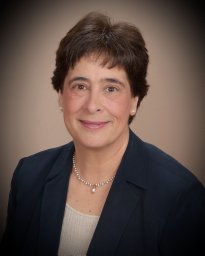 Wendy C Coates合作论文数Harbor-UCLA Medical Center, Los Angeles Biomedical Institute11Emilie Fowlkes合作论文数8
 Clarke Samuel合作论文数Department of Emergency Medicine, UC Davis School of Medicine;samuel.clarke@ucdmc.ucdavis.edu.;Department of Emergency Medicine, UC Davis School of Medicine8Jacqueline Kurth合作论文数5
 Dan Wiener合作论文数4David Newman合作论文数4
 Jarone Lee合作论文数Department of Emergency Medicine, St. Luke’s Roosevelt Hospital Center4J. Kurth合作论文数3
 Kaushal Shah合作论文数Department of Emergency Medicine, Weill Cornell Medicine, Cornell University3
 Karisa K Harland合作论文数Roy J. and Lucille A. Carver College of Medicine, University of Iowa;College of Public Health, University of Iowa;University of Iowa, University of Iowa3Kirschner Jonathan合作论文数Department of Emergency Medicine, Indiana University School of Medicine3Todd A Guth合作论文数2Michael Takacs合作论文数2Christopher J Solie合作论文数2
 Resa E. Lewiss合作论文数2
 Amy Miller Juve合作论文数2
 Nicholas M Mohr合作论文数Roy J. and Lucille A. Carver College of Medicine, University of Iowa2Godbout Brandon合作论文数2
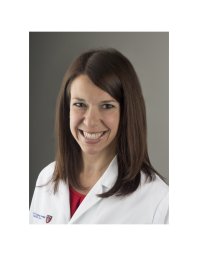 Dubosh Nicole合作论文数Department of Emergency Medicine, Beth Israel Deaconess Medical Center;Harvard Medical School, Boston, Massachusetts.;Harvard Medical School, Beth Israel Deaconess Medical Center2Rougas Steven合作论文数2
 Jonathan Robert Brewster Fisher合作论文数Department of Emergency Medicine, Beth Israel Deaconess Medical Center2
 Sally A Santen合作论文数Department of Higher Education Leadership, Vanderbilt Peabody College2Edward A. Ullman合作论文数Beth Israel Deaconess Medical Center2Jessica Miller合作论文数1Graham A Walker合作论文数1Eric Ketcham合作论文数1Kaila Pomeranz合作论文数1Joshua Beiner合作论文数1Ling-Pong Leung合作论文数1Patricia Van Leer合作论文数1Nathan Vafaie合作论文数1sonny ruff合作论文数1Margaret Rallo合作论文数1Kit-Ling Fan合作论文数1Josefa González-Santos合作论文数1O. Baker合作论文数1
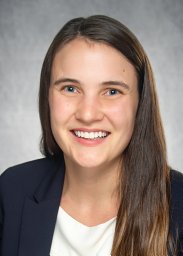 Morgan Bobb Swanson合作论文数Roy J and Lucille A Carver College of Medicine, The University of Iowa1Brooks J. Obr合作论文数1Josh Kornegay合作论文数1Raúl Soto-Cámara合作论文数Red de Investigación de Emergencias Prehospitalarias (RINVEMER),, Sociedad Española de Urgencias y Emergencias (SEMES),1Fan Min合作论文数1
 Patrick T O'Shaughnessy合作论文数Dept Occupat & Environm Hlth, Univ Iowa1
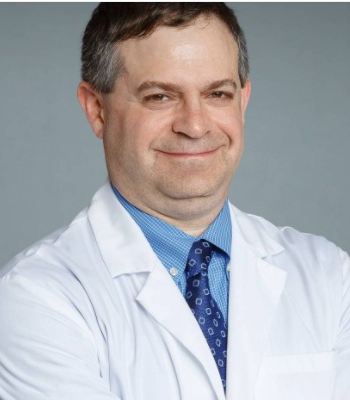 Stephen P. Wall合作论文数Department of Emergency Medicine, Grossman School of Medicine, New York University1
 Donald M. Yealy合作论文数Department of Emergency Medicine, School of Medicine, University of Pittsburgh1
 Dean A Seehusen合作论文数Department of Family and Community Medicine, Eisenhower Army Medical Center1
 John Vargo合作论文数Cleveland Clinic1Saul Turandot合作论文数1




