Pachycephalosaurian dinosaurs are represented in the fossil record primarily by their taphonomically resistant frontoparietal domes that developed fully only at maturity. Consequently, the postcranial record of Pachycephalosauria is poor, particularly for immature forms. Here, we describe the ontogenetically youngest known, and Canada's second-most complete, pachycephalosaur postcranium, collected from the uppermost Maastrichtian Frenchman Formation, Saskatchewan. Despite its small size (estimated total length similar to 90 cm), the skeleton shows several characters diagnostic of Pachycephalosauria, including a double ridge-and-groove articulation on the pre- and postzygapophyses of the dorsal neural arches, a medial flange on the postacetabular process of the ilium, and a highly reduced pubis that contributes only minimally to the acetabular margin. Histological sectioning of the crural bones shows an immature woven bone texture. The absence of cyclical or annual growth indicators suggests that this specimen was less than a year old at the time of death. Phylogenetic analysis recovers the specimen as a member of Pachycephalosaurinae, perhaps related to Prenocephale, but the lack of cranial data for our specimen and the complementary lack of postcranial data for other pachycephalosaurs make this determination tenuous. Spatiotemporal considerations suggest a possible but currently untestable affiliation with Sphaerotholus buchholtzae. The relatively long hindlimbs of the juvenile compared with those of adult pachycephalosaurs indicate probable negative ontogenetic allometry in the hindlimbs.
Although the holotype of Chasmosaurus russelli Sternberg, 1940, from the upper Dinosaur Park Formation of southern Alberta, shares features with other Chasmosaurus Lambe, 1914 specimens from Dinosaur Provincial Park as well as various chasmosaurine taxa from the southwest United States, it also possesses unique features of the premaxilla and frill epiossifications. An iterative phylogenetic analysis, scoring only the holotype (CMNFV 8800), produces three consensus topologies, one of which places CMNFV 8800 closer to Chasmosaurus than to Pentaceratops, another in which CMNFV 8800 is closer to Pentaceratops than to Chasmosaurus, and a final topology in which these relationships are unresolved. Under current definitions, CMNFV 8800 cannot be accommodated within Chasmosaurus or any other known chasmosaurine genus. Consequently, we erect Cryptarcus gen. nov. to receive it. Cryptarcus russelli comb. nov. may represent a migrant originating from the southern “Pentaceratops clade”, but it may also be part of a lineage more closely related to Chasmosaurus in which Pentaceratops-like features (e.g., frill wider anteriorly than posteriorly, deep parietal embayment, and first epiparietals nearly touch at the midline) evolved convergently. None of our phylogenetic topologies support an anagenetic trend from Cryptarcus russelli through Pentaceratops to produce Terminocavus Fowler and Freedman Fowler, 2020, as has been recently hypothesized.
The late Campanian nodosaurid Panoplosaurus mirus Lambe 1919 was named on the basis of a complete skull and partial postcranium. However, as is typical of ankylosaurs, the constituent elements of the holotype skull (CMN 2759) are obscured both by their extensive co-ossification and by the overlying bony caputegulae, complicating taxonomic referral of other material. The holotype skull is re-examined here using computed tomography (CT) imaging, revealing new information about the internal anatomy. Previously unknown regions of the skull are described, including the basicranium and palate, and the internal anatomy in Panoplosaurus is examined from CT-rendered models of the brain and nasal cavities. The occurrence of a vomerine canal or groove and convoluted nasal passages are confirmed in Panoplosaurus, while decreased brain flexure relative to other nodosaurids suggests there is greater variability in the paleoneurology of Nodosauridae than previously appreciated. The unique pattern of cranial ornamentation in Panoplosaurus is also determined to be taxonomically significant (as it is in Ankylosauridae), and the generic separation of Panoplosaurus and the closely related Edmontonia is supported. Further, intraspecific variation in the cranial ornamentation of Panoplosaurus is revealed, based on the presence or absence of the internasal caputegulum, although the nature of this variation (e.g., ontogeny, sexual dimorphism, individual variation) remains elusive.
Lambeosaurines are abundant in the Dinosaur Park Formation of Alberta, but are poorly known from the underlying Oldman Formation (Upper Cretaceous: Campanian). A new partial skull roof and braincase from the Comrey Sandstone Zone (middle Oldman) at the Milk River Ridge Reservoir locality in southern Alberta represents the first diagnostic material of an adult lambeosaurine from this formation. Derived characters of the frontal platform and braincase (including the steeply inclined frontal platform, boomerang-shaped dorsal surface of the frontals, and pendent alar processes of the basisphenoid) support the referral of this specimen to Parasaurolophini, as the stratigraphically lowest specimen with the skull roof and braincase preserved. The recognition of a new taxon is supported by a unique combination of characters, some resembling the inferred plesiomorphic condition for corythosaurians, including a triangular plateau on the parietal separating the interfrontal process from the sagittal crest, and the anterolaterodorsal orientation of the postorbital process of the laterosphenoid. Despite the large size and fused interfrontal contact, the prefrontal–postorbital contact is not strongly elevated, and the posterior margin of the frontal platform does not overhang the parietal, resembling the condition described in an immature Parasaurolophus from Dinosaur Provincial Park, and providing support for heterochrony in the evolution of the parasaurolophin skull roof. As one of relatively few diagnostic Albertan hadrosaurids older than the Dinosaur Park Formation, the new taxon provides significant new data on the diversification of Corythosauria, and the evolution of hadrosaurid communities in Laramidia.
Evolution of the ceratopsid dinosaur Triceratops has been hypothesized to have proceeded anagenetically, with the geologically older Triceratops horridus Marsh, 1889 having directly given rise to the younger Triceratops prorsus Marsh, 1890. This evolutionary scenario is based primarily on the upper Maastrichtian fossil record of the Hell Creek Formation in Montana. The Canadian fossil record affords an opportunity to test this hypothesis beyond the geographic bounds where it was originally developed. The Canadian strata (lower Scollard Formation of Alberta and Frenchman Formation of Saskatchewan) are roughly contemporaneous with the upper third of the Hell Creek Formation where Triceratops prorsus is found. On the anagenesis hypothesis, the Canadian strata should, therefore, uniquely contain that species. Our exhaustive survey of the Canadian Triceratops material, supported by cladistic and ordination analyses, confirms the presence of a single species, Triceratops prorsus, in Canada, yielding robust support for the anagenesis hypothesis conceived for the genus.
The herbivorous dinosaur clade Ceratopsia flourished in the northern hemisphere during the Late Jurassic to Late Cretaceous. Previous palaeobiogeographic studies have suggested that their initial diversification occurred in Asia, with early-branching neoceratopsians extending their geographical range to North America sometime during the Barremian to Albian. However, the specific timing and mode of their dispersal from Asia to North America remains unknown. Here we describe a new, early-branching neoceratopsian, Sasayamagnomus saegusai gen. et sp. nov., from the Albian Ohyamashimo Formation in southwestern Japan, representing the easternmost fossil record of ceratopsians in Asia. Sasayamagnomus exhibits three diagnostic features in the jugal, squamosal and coracoid, respectively, and also has a unique combination of characters in the lacrimal. Our phylogenetic analysis indicates that Sasayamagnomus forms a clade with Aquilops americanus, one of the earliest neoceratopsians from North America, followed by the sister taxon Auroraceratops rugosus from China. The present time-calibrated phylogenetic tree indicates that the immigration of neoceratopsians from Asia to North America occurred during the latest Aptian or early Albian, refining the previously suggested timeframe. This aligns with fragmentary neoceratopsian fossil records from the Lower Cretaceous of North America and the initial formation of the Bering land bridge. Furthermore, the simultaneous occurrence of global warming (which enabled the development of extensive forests in the Arctic region) and the emergence of the Bering land bridge during the Aptian-Albian, probably played a crucial role in facilitating the immigration of neoceratopsians from Asia to North America.
CMN 8917 is a small, partial skull of a duck-billed dinosaur from the upper Campanian Dinosaur Park Formation in what is now Dinosaur Provincial Park, Alberta. It represents one of the few nestling-sized juvenile hadrosaurines known to date. Support for this phylogenetic placement includes a narial vestibule not enclosed within the premaxillary dorsal and lateral processes, the presence of an anterodorsal maxillary process, and a maxillary dorsal process that is longer anteroposteriorly than dorsoventrally. The skull also possesses tooth traits traditionally associated with lambeosaurines, such as secondary ridges on some maxillary and dentary tooth crowns, and denticulation on some maxillary tooth crowns. The occurrence of these features in a juvenile hadrosaurine suggests that they were modified during ontogeny, calling into question their taxonomic utility for identifying juvenile specimens. The dentary teeth of CMN 8917 are similar to those of many adult hadrosaurids in that they possess a concave occlusal surface with steeper lingual and shallower buccal wear zones. This differs from the occlusal surface morphology present in some other juvenile hadrosaurids, which suggests interspecific differences in dental battery development—possibly reflective of dietary differences—occurred during early ontogeny in some taxa.
The Foremost Formation of southern Alberta, Canada, is the basal member of the Cretaceous (Campanian) Belly River Group and has been understudied relative to the overlying Oldman and Dinosaur Park formations of this group. Here we describe and analyze the sedimentology, foraminiferal micropaleontology, vertebrate microsite paleoecology, and paleoenvironmental conditions of the Foremost Formation. Outcrop of the Foremost Formation is characterized by estuarine and shallow marine facies that transition upward into coastal/fluvial facies that accumulated during the Claggett marine regression of the Western Interior Seaway (WIS). This is consistent with at least two rapid transgressive events driven by local subsidence interrupting the overall regressive phase of the Claggett marine cycle, creating the aggrading profile in the lower portion of the sections measured here, and suggesting that orogenic buildup in the Rocky Mountains and its associated basin subsidence were a controlling factor of local deposition in the WIS. A low abundance, low diversity agglutinated benthic foraminiferal fauna suggests frequently stressed oxygen and salinity conditions in marginal marine environments. Vertebrate microsite faunas display a mixed freshwater to brackish water environmental influence, with an increase in diversity upsection in conjunction with increased freshwater influence. Among dinosaurs, ceratopsids and ankylosaurs experience notable relative abundance decreases through the Foremost Formation and into the lower Oldman Formation, potentially reflecting preference for coastal habitats and/or plant resources relative to other terrestrial herbivores.
The early centrosaurine ceratopsid, Wendiceratops pinhornensis, was discovered in Alberta, Canada in a medium density monodominant bonebed from the Oldman Formation (mid-Campanian, ~79 Ma). The bonebed contains abundant, well-preserved, adult-sized and some juvenile-sized postcranial material, allowing for the first description of a number of elements of the postcrania of this basal centrosaurine ceratopsid. The postcranial elements described are generally consistent with postcrania described for more derived centrosaurine taxa. However the rectangular-shaped distal terminus of the ischium previously considered to be an apomorphy of Wendiceratops. is shown to also be present in Medusaceratops, and thus may be a synapomorphy of basal centrsaurines. The bonebed represents a lag deposit within a mudstone-bearing overbank facies and contains individuals from multiple age classes. It contains over 95% ceratopsid remains, with all identifiable elements referable to Wendiceratops. The elements are completely disarticulated, but have undergone little weathering or abrasion (both Stage 0), although the ends of long bones and processes capped by cartilage in life frequently exhibit evidence of wet rot and breakage by hydrological reworking after decomposition. The taphonomy of the bonebed is consist with other monodominant centrosaurine bonebeds that have been interpreted as mass death assemblages preserving evidence of gregarious (herding) behavior. At approximately 79 million years old, the Wendiceratops bonebed is approximately two million years older than other ceratopsid bonebeds indicating that this bonebed is the oldest documented evidence of herding behavior in a ceratopsid.
The pre-Campanian trionychid fossil record in North America is composed of highly fragmentary specimens, which are often not identifiable beyond Pan-Trionychidae. Here, we describe a new species of plastomenid soft-shelled turtle based on a partial shell (ROM 56647) from the Santonian Milk River Formation of southern Alberta, estimated at approximately 84 Ma. This represents the oldest relatively complete shell of a trionychid from North America. Plastomenidae, a pan-trionychid clade known only from the fossil record, is classically characterized by the complete suturing of its posterior plastral bones along the midline, a crescent-shaped entoplastron, and enlarged costals VIII. ROM 56647 has a unique combination of plastomenid characters (i.e., mid-line contact of hypoplastra and xiphiplastra, anteroposteriorly long eighth costal) and apomorphies (an emarginate nuchal, enlarged tubercles on the carapace, a wide pygal notch with a straight anterior edge, and a fused hyo-hypoplastron) that allows us to identify it as a new taxon, Jimemys glaebosus gen. et sp. nov. Phylogenetic analysis places J. glaebosus within Plastomenidae as the sister taxon to a clade containing Plastomenus, Helopanoplia, and Hutchemys. This phylogenetic position implies that Aspideretoides foveatus Leidy, 1856, Atoposemys, and Gilmoremys, all of which are more basal within Plastomenidae, had ghost lineages extending at least to the Santonian. As the oldest pan-trionychid that is diagnostic to the species level in North America, J. glaebosus provides new insights into both the early evolution of trionychids in North America and the biodiversity of southern Alberta during a poorly sampled time in the Late Cretaceous of North America.
In this study, we use an exceptional skeleton of the pachycephalosaur Stegoceras validum (UALVP 2) to inform a comprehensive appendicular muscle reconstruction of the animal, with the goal of better understanding the functional morphology of the pachycephalosaur postcranial skeleton. We find that S. validum possessed a conservative forelimb musculature, particularly in comparison to early saurischian bipeds. By contrast, the pelvic and hind limb musculature are more derived, reflecting peculiarities of the underlying skeletal anatomy. The iliotibialis, ischiocaudalis, and caudofemoralis muscles have enlarged attachment sites and the caudofemoralis has greater leverage owing to the distal displacement of the fourth trochanter along the femur. These larger muscles, in combination with the wide pelvis and stout hind limbs, produced a stronger, more stable pelvic structure that would have proved advantageous during hypothesized intraspecific head-butting contests. The pelvis may have been further stabilized by enlarged sacroiliac ligaments, which stemmed from the unique medial iliac flange of the pachycephalosaurs. Although the pubis of UALVP 2 is not preserved, the pubes of other pachycephalosaurs are highly reduced. The puboischiofemoralis musculature was likely also reduced accordingly, and compensated for by the aforementioned improved pelvic musculature.
A monodominant Gryposaurus sp. bonebed in the lower unit of the Campanian Oldman Formation of southern Alberta is the oldest hadrosauroid bonebed documented in the province and the first described from the formation. The sedimentology of the locality and the taphonomy of the hadrosaurid material indicates that the bonebed represents an assemblage of juvenile-sized individuals that were probably transported only a short distance from where they died to where they were finally deposited and preserved in a fine-grained mudstone within an overbank sequence. Histological examination of six limb elements confirms that all individuals are juveniles, with two age classes (<1 and <2 years of age at the time of death) that likely died in the same event. Bone microstructure data indicate that Gryposaurus experienced rapid growth over the 2-year life spans documented, equivalent to other Late Cretaceous hadrosaurids in North America. The parautochthonous nature of the bonebed, and the lack of small neonate (newborn) material and almost complete lack of large adult material, suggests that the bonebed represents a segregated group of juveniles. This group of immature individuals may have been an autonomous unit that had separated itself from a larger social grouping, possibly in an effort to increase their survivability.
Goniopholididae is a group of basal neosuchian crocodyliforms closely related to Paralligatoridae and Eusuchia that lived during the Jurassic and Early Cretaceous. Goniopholidids have the long, flat snout and secondary palate of modern crocodylians, the acquisition of which is regarded as a key feature in the early evolution of crocodylian body plan and their aquatic adaptation. Here, we report a new species, Amphicotylus milesi, with the description from the best-preserved specimen to date of Goniopholididae from Wyoming, USA. Its posterior extension of the nasopharyngeal passage (pterygoid secondary palate) and the shortening and dorsal deflection of the ceratobranchial suggest that basal neosuchians could raise their gular valve to separate oral and pharyngeal cavities as in modern crocodylians. The anatomy of Amphicotylus milesi sheds light on the acquisition of this new respiratory system in the crocodyliform evolution and their early aquatic adaptation, leading to modern crocodylians.
Vertebrate Anatomy Morphology Palaeontology 9:1–39 4 Message from the Organizing Committee Greetings to our members across Canada and around the world What kind of year has it been? Travel restrictions and work-from-home orders have limited our abilities to meet, use lab facilities, and conduct fieldwork. Regardless, vertebrate palaeontology research has adapted and progressed, though maybe in different directions than were anticipated at the beginning of 2020. This year’s annual meeting finds us at a sensitive crossroads during the Covid-19 pandemic, balanced between the increasing availability of vaccines and the concerns over the spread of new variants. Staying connected and inspired may be particularly important during these uncertain times, and so the Society felt it was important to have an annual meeting this year. Therefore we are venturing into the realm of digital conferencing. The CSVP 2021 meeting will be held on May 26–28th with an introductory guest lecture by Dr. Grant Zazula on May 25th. The oral presentations will be given live using Zoom (a video conference software), and digital posters will be available throughout the meeting with a live session for questions and discussions. The Virtual Organizing Committee and the Executive Committee are aware of just how much of our interactions take place via similar media these days, and so the decision was made to limit the conference to a few hours each afternoon/evening. We hope this makes the annual meeting accessible to all our members without being overwhelming. The reduced time did limit the number of presentations we were able to accept, and so we hope that members of the Society understand our choice to prioritize students and early career researchers. There are, of course, aspects of an in-person conference that we cannot replicate virtually. However, without the need to pay for travel or accommodations, the virtual format of CSVP 2021 has attracted interest from students and researchers across Canada and from as far afield as Europe and Asia. We are grateful for the dedication, patience, and flexibility the members of our community have shown to each other and to the Society over the past fifteen months. We hope members can make the best of the virtual meeting this year, and we look forward to our next opportunity to meet in person, Your Virtual Organizing Committee,
Elasmosaurid plesiosaurian remains have been documented from non-marine to paralic (fluvial to estuarine) sediments of the upper Campanian Dinosaur Park Formation (DPF) of southern Alberta since 1898. Despite this long collection history, this material has received relatively little research attention, largely due to the highly fragmentary nature of most recovered specimens. However, this assemblage is significant, as it constitutes a rare occurrence of plesiosaurian remains in a non-marine depositional environment. This study reports on a recently collected and prepared specimen, which represents the most complete elasmosaurid yet collected from the DPF. This specimen preserves the trunk region, the base of the neck and tail, a partial fore and hind limb, and tooth, and is sufficiently complete to be assigned as the holotype of a new genus and species. This new taxon is diagnosed by a distinctive character state combination including a boomerang-shaped clavicular arch with acute anterior process, convex anterolateral margin, deeply embayed posterior margin, and pronounced ventral keel, together with the presence of 22 dorsal vertebrae, and the anterior dorsal centra bearing a ventral notch. The DPF plesiosaurian fossils were recovered from both estuarine/bay and fluvial palaeochannel sediments. The holotype skeleton represents an osteologically mature individual with an estimated body length of around 5 m, although the largest referred DPF elasmosaurid might have been closer to 7 m, which is considerably larger than other plesiosaurians reported from non-marine deposits. This suggests small-body lengths relative to typical elasmosaurids from marine settings, but is consistent with other plesiosaurians recovered from non-marine sediments. The identification of a distinct elasmosaurid taxon in the DPF might be evidence of niche-partitioning among the predominantly oceanic members of the ubiquitous plesiosaurian clade.
A new articulated postcranial specimen of an indeterminate ankylosaurid dinosaur from the Upper Cretaceous (middle-upper Campanian) Baruungoyot Formation from Hermiin Tsav, southern Gobi Desert, Mongolia includes twelve dorsal vertebrae, ribs, pectoral girdles, forelimbs, pelvic girdles, hind limbs, and free osteoderms. The new specimen shows that Asian ankylosaurids evolved rigid bodies with a decreased number of pedal phalanges. It also implies that there were at least two forms of flank armor within Ankylosauridae, one with spine-like osteoderms and the other with keeled rhomboidal osteoderms. Unique anatomical features related to digging are present in Ankylosauridae, such as dorsoventrally flattened and fusiform body shapes, extensively fused series of vertebrae, anteroposteriorly broadened dorsal ribs, a robust humerus with a well-developed deltopectoral crest, a short robust ulna with a well-developed olecranon process, a trowel-like manus, and decreased numbers of pedal phalanges. Although not fossorial, ankylosaurids were likely able to dig the substrate, taking advantage of it for self-defence and survival.
Hadrosaurids are a diverse and widely distributed group of ornithischian dinosaurs that are particularly well represented in the upper Campanian Dinosaur Park Formation of the Belly River Group of Alberta. However, the origin of this hadrosaurid diversity in Alberta is poorly understood, as the lower Campanian terrestrial deposits of the underlying Oldman and Foremost formations of the group have produced comparatively few body fossils. Here we provide the first description of a partially articulated hadrosaurid and hadrosaurid material from a bonebed from the Foremost Formation and refer it to the brachylophosaurin Probrachylophosaurus sp. indet. The material represents the oldest occurrence of Brachylophosaurini in Alberta and the oldest known hadrosaurid diagnostic to the genus level from Canada. In Alberta, Hadrosaurinae display a distinct pattern of replacement with the tribes Brachylophosaurini and Kritosaurini being confined to the lower to middle Campanian strata (below the marine Bearpaw Formation) and replaced above the Bearpaw Formation by members of Saurolophini (Prosaurolophus, Saurolophus) and Edmontosaurini (Edmontosaurus), with the latter clade persisting to the end of the Maastrichtian. Although the worldwide stratigraphic distribution of the Hadrosaurinae is complex, this pattern generally holds true for northern Laramidian hadrosaurine tribes, suggesting that their pattern of evolution and replacement may be driven by some common underlying factor such as an environmental response to fluctuations in the margins of the Western Interior Seaway due to sea level change.
We describe a new partial skull with braincase of a maiasaurin hadrosaurid from the Milk River Ridge Reservoir near Warner, southern Alberta, as the first diagnostic occurrence of Maiasaura in Canada. This material was collected in the Oldman Formation, at approximately the same stratigraphic level as a nearby bonebed of the ceratopsid Coronosaurus brinkmani. The assignment of this specimen to Maiasaura, rather than to Brachylophosaurus, is supported by the narrow and acute posterior margin of the external naris, the relationship between the postorbital and squamosal in the supratemporal bar, and the morphology of the frontals, which are greatly thickened and elevated anteriorly, with the dorsal surface not completely covered by the nasofrontal contact at adult size. The occurrence of both Maiasaura and Brachylophosaurus in approximately similar-aged deposits of the Comrey Sandstone zone in southern Alberta provides support for some cladogenesis in the evolutionary history of Maiasaurini. Geographically, the more western distribution of Maiasaura localities with respect to all Brachylophosaurus localities is consistent with the hypothesis that a preference for more inland versus seaway-adjacent habitats may have influenced the phylogenetic divergence of these taxa.
Ceratopsids are among the most ubiquitous dinosaur taxa from the Late Cretaceous terrestrial formations of the Western Interior of North America, comprising two subfamilies, Chasmosaurinae and Centrosaurinae. The Two Medicine Formation of northwestern Montana has produced numerous remains of centrosaurine dinosaurs, which represent three taxa previously considered valid: Rubeosaurus ovatus, Einiosaurus procurvicornis and Achelousaurus horneri. Here, we reassess the previous referral of specimens to Rubeousaurus ovatus and demonstrate that this taxon is represented solely by its holotype specimen, which was first diagnosed as Styracosaurus ovatus. One of the specimens previously referred to ‘Rubeosaurus’ ovatus instead represents a new eucentrosauran centrosaurine taxon diagnosed here, Stellasaurus ancellae gen. et sp. nov. Stellasaurus expresses a unique combination of eucentrosauran centrosaurine characters, including an elongate nasal horncore, diminutive supraorbital horncores, and a parietal bearing straight, elongate P3 processes, semi-elongate P4 processes and non-elongate P5, P6 and P7 processes. Within the stratigraphic succession of Eucentrosaura, Stellasaurus occurs intermediate to Styracosaurus albertensis and Einiosaurus, and likewise reflects intermediate morphology. Assessed within the stratigraphic, geographical, taphonomic, ontogenetic and phylogenetic framework of Unified Frames of Reference, we fail to reject the hypothesis that Stellasaurus ancellae represents a transitional taxon within an anagenetic lineage of eucentrosauran centrosaurines.
Scabby Butte is an isolated exposure of Upper Cretaceous (uppermost Campanian to lowermost Maastrichtian) strata of the St. Mary River Formation. These rocks have produced a diverse assemblage of both terrestrial and aquatic vertebrates, although hadrosaurid and ceratopsid dinosaurs represent the largest component by volume. Almost all of these dinosaur remains were collected from a single bonebed (Site 2) at Scabby Butte and have been referred to the hadrosaurid Edmontosaurus regalis Lambe, 1917 and the ceratopsid Pachyrhinosaurus canadensis Sternberg, 1950. This study presents a quantitative taphonomic reanalysis of the originally published data, providing new information previously overlooked and important information about the age-class structure of the dinosaur fauna preserved at the site. Site 2 is a lag deposit with a minimum number of 11 individuals (two ceratopsid, nine hadrosaurid), with three-quarters of the material being adult-sized based on size-class analysis. Most elements have undergone moderate to severe breakage and abrasion, and are completely disarticulated, suggesting that they were transported from where they died; post-mortem scavenging is also a possibility, as evidenced by the presence of tooth marks and trample marks on several elements. Burial took place soon after scavenging, as there is little evidence of subaerial weathering.
 David Evans合作论文数Department of Ecology and Evolutionary Biology, Faculty of Arts and Science, University of Toronto38
 Philip J. Currie合作论文数Department of Biological Sciences, Faculty of Science,
University of Alberta12
Philip J. Currie合作论文数Department of Biological Sciences, Faculty of Science,
University of Alberta12 David Eberth合作论文数Royal Tyrrell Museum12
 Robert B. Holmes合作论文数12
 Jordan C. Mallon合作论文数11
 Caleb Marshall Brown合作论文数Royal Tyrrell Museum of Palaeontology11
 Thomas M. Cullen合作论文数Department of Earth Sciences, Carleton University10
 Claudia Schroder-Adams合作论文数10James A Campbell合作论文数9Bradley McFeeters合作论文数7Eugene Brown合作论文数7
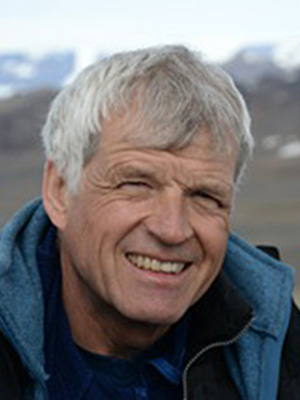 Philip J.Currie合作论文数University of Alberta,Biological Sciences7Yoshitsugu Kobayashi合作论文数7
 Eric Lawitz合作论文数Department of Medicine, University of Texas Health Science Center in San Antonio;Transplant Center, University of Texas Health Science Center in San Antonio;Texas Liver Institute, University of Texas Health Science Center in San Antonio7H G Khorana合作论文数6R Belagaje合作论文数6Chiba Kentaro合作论文数6
 Eric Snively合作论文数6Eliot Godofsky合作论文数6Ira M Jacobson合作论文数6Donald B. Brinkman合作论文数6A. P. Russell合作论文数5
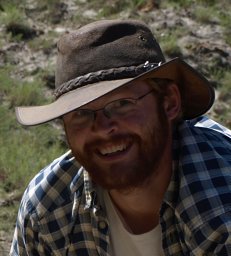 Derek W. Larson合作论文数Royal BC Museum5
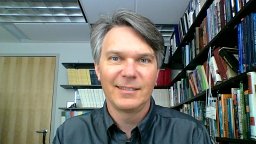 Jason Anderson合作论文数Department of Comparative Biology and Experimental Medicine, University of Calgary5
 K. Rajender (Raj) Reddy合作论文数Department of Medicine, Perelman School of Medicine, University of Pennsylvania;Division of Gastroenterology, University of Pennsylvania5
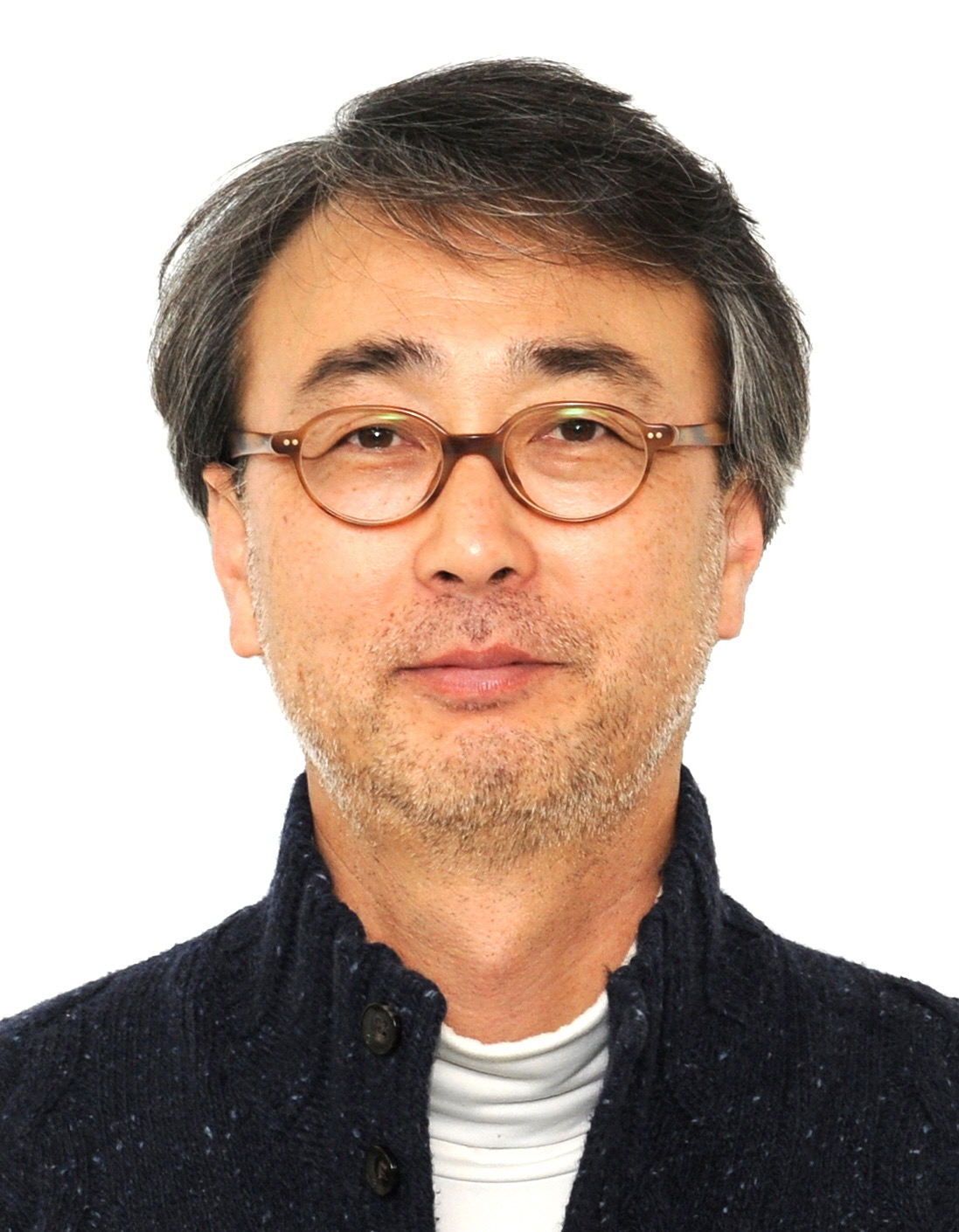 Yuong-Nam Lee合作论文数School of Earth and Environmental Sciences, Seoul National University4James O Peggins合作论文数4Mark Loewen合作论文数4
 Steven Flamm合作论文数Department of Internal Medicine, RUSH Medical College, RUSH University;Division of Digestive Diseases and Nutrition, RUSH Medical College, RUSH University4
 David C. Evans合作论文数Royal Ontario Museum;Royal Ontario Museum4
 Michael John Bennett合作论文数Department of Pathology and Laboratory Medicine, Perelman School of Medicine, University of Pennsylvania4
 Fred Poordad合作论文数Hepatology University Transplant Center, The University of Texas Health Science Center at San Antonio;Cedars Sinai Medical Center, Department of Hepatology and Liver Transplantation, The University of Texas Health Science Center at San Antonio;Department of Medicine, The University of Texas Health Science Center at San Antonio4
 Bruce R. Bacon合作论文数Saint Louis University School of Medicine;B.R. Bacon Consulting, LLC4Jerry D Johnson合作论文数4
 Stephen Harrison合作论文数Radcliffe Department of Medicine, University of Oxford;Pinnacle Clinical Research4Hans-Joachim Fritz合作论文数4
 Andrew A. Farke合作论文数Raymond M. Alf Museum of Paleontology4
 Khishigjav Tsogtbaatar合作论文数4
 Anthony Russell合作论文数Department of Biological Sciences, The University of Calgary4
 Hillary C Maddin合作论文数4
 Nicholas R. Longrich合作论文数Dept Biol & Biochem, Univ Bath4R. Sjogren合作论文数4
 John Mchutchison合作论文数Tune Therapeutics4R. Ghalib合作论文数4M. Sjogren合作论文数4R Strauss合作论文数3C Peine合作论文数3g poleynard合作论文数3M Mailliard合作论文数3




