Estimating the chemical and physical properties that govern the emergence of superconductivity remains a central challenge in condensed matter physics, in part because a universal indicator/descriptor analogous to band structure does not yet exist. Historically, simple empirical relations, such as the Wiedemann-Franz law first described in 1853, linked seemingly disparate phenomena like thermal and electrical conductivities in metals long before a comprehensive theoretical understanding was established. Regarding superconductivity, in this work, we introduce a phenomenological real-space approach grounded in local potential energy calculations that uses only elemental composition and atomic positions to partition superconductors from non-superconductors. These inputs are also used in Density Functional Theory (DFT), but our method eliminates the need for complex reciprocal-space computations or empirical fitting. By systematically analyzing electrostatic interactions within repeated bond units in relation to unit cell volumes, our strategy yields a discrete, integer-based classification that reliably distinguishes superconductors from non-superconductors with high accuracy. This computationally efficient and physically transparent framework offers a robust alternative to traditional approaches and provides a fresh electrostatic perspective on superconductivity. This study prioritizes a data-centric methodology to drive superconductor discovery. It is formulated in the spirit of historical empirical rules (e.g., the Wiedemann-Franz relation metals) and does not aim to affirm or dispute BCS theory.
Kagome metals with the Fermi energy tuned near the van Hove singularities (vHss) have shown to host exotic phases including unconventional superconductivity and a chiral flux phase arising from a charge density wave. However, most quantum oscillations studies of the electronic structure of kagome metals focus on compounds which electronically or magnetically order, obscuring the unperturbed vHs. Here we present quantum oscillation measurements of YV$_6$Sn$_6$ which contains a pristine kagome lattice free from long range order. We discovered quantum oscillations corresponding to a large orbit ($\approx$70% of the Brillouin Zone area) with the heaviest mass ever observed in vanadium based kagome metals ($\approx3.3 m_e$), consistent with a Fermi pocket whose Fermi level is near the vHs. Comparing with first principles calculations suggests that the effective mass of this pocket is highly sensitive to the position of Fermi level. Our study establishes the enhanced density of states associated with a vHs in a kagome metal, allowing further insight into a potential driving mechanism for the unconventional electronic orderings in this class of materials.
Superconductivity is a phenomenon arising from cooperative electron behavior. However, correlations among (1) the minimum tuning parameter required for emergence, (2) the superconducting transition temperature resulting from minimal tuning, and (3) the host's physical/chemical properties still elude the scientific community. Recent empirical investigations, such as those revealing ideal gas-like correlations at the onset of superconductivity in intercalated superconductors, motivate this study. Our investigation reports similar findings in systems (>170 compounds) exhibiting superconductivity through other perturbative means, such as single- element doping. In general, statistical measures, including distance correlation analyses (not equal linear regression fit) of thermodynamic variables, indicate the presence of empirical relationships near the superconducting onset of systematically tuned compounds. These relations involve unit cell volume (V), the number of valence electrons (N), and the superconducting transition temperature (Tc). Note: The author's primary aim is not to validate or challenge BCS theory; it is instead to focus on leveraging methodology led by available data to enhance the exploration and development of innovative and cost-effective superconductors.
Kagome metals with the Fermi energy tuned near the van Hove singularities (vHss) have shown to host exotic phases including unconventional superconductivity and a chiral flux phase arising from a charge density wave. However, most quantum oscillations studies of the electronic structure of kagome metals focus on compounds which electronically or magnetically order, obscuring the unperturbed vHs. Here we present quantum oscillation measurements of YV6Sn6 which contains a pristine kagome lattice free from long-range order. We discovered quantum oscillations corresponding to a large orbit (approximate to 70% of the Brillouin Zone area) with the heaviest mass ever observed in vanadium-based kagome metals (approximate to 3.3me), consistent with a Fermi pocket whose Fermi level is near the vHs. Comparing with first-principle calculations suggests that the effective mass of this pocket is highly sensitive to the position of Fermi level. Our study establishes the enhanced density of states associated with a vHs in a kagome metal, allowing further insight into a potential driving mechanism for the unconventional electronic orderings in this class of materials.
Superconductivity in two single-element intercalated compounds has been investigated with the van der Waals equation. For CuxTiSe2 and YBa2Cu3O6+x, the van der Waals term characterizing the attractive energy per particle (i.e., electrons), aN/V, is calculated from concentration-dependent transition temperature plots derived from experiment. It is shown that two times the attractive energy per intercalant valence electron (2aNval/Vunit) is equal to the energy gap predicted by BCS theory (Δ) for these superconductors. This realization allows another way to estimate the energy gap of superconducting intercalated insulators and semiconductors, this time, directly from physical real-space properties of the superconductor and the applied external pressure. The physical properties of importance are shown to be the intercalant concentration, transition temperature, and the number of intercalant valence electrons per unit cell volume.
Superconductivity in the new compound, MgTa2S5, is reported. Its crystal structure was indexed to space group C2/m, which is monoclinic with lattice parameters a = 5.784(5) angstrom, b = 12.680(3) angstrom, and c = 6.106(5) angstrom, with beta = 112.64 degrees. Electrical resistivity reveals metallic behavior with rho(296 K) = 5.2 m omega cm and bulk superconductivity below T-c = 1 K. Measurements of the specific heat C reveal the electronic specific heat coefficient gamma = 11.1(5) mJ/mol K-2, a jump in C at T-c illustrating bulk superconductivity, and an energy gap associated with the superconducting state of E-g = 0.25(3) meV. MgTa2S5 can be classified as a BCS superconductor. An unidentified minority phase present in the sample (similar to 4%) exhibits a superconducting phase transition near 2.6 K.
Single crystals of Ba2Nb3S8I have been grown using iodine-vapor transport in fused-quartz tubes. The crystals form as flakes with typical areas of 5-10 mm(2) and thicknesses of 5-11 mu m. The crystal structure was determined using single-crystal x-ray diffraction with the aid of an APEX II CCD diffractometer. The structure shows trigonal symmetry with space group P31c and lattice parameters a = b = 10.0156(5) angstrom and c = 25.1414(15) angstrom. Compositional analysis via x-ray spectroscopy confirms the presence of iodine. Superlattice reflections are evident in x-ray precession images. Measurements of the electrical resistivity reveal a metallic temperature dependence and superconductivity near 1 K. Polycrystalline samples of Ba2Nb3S8I were made in order to have samples large enough for other bulk physical properties measurements. Magnetic susceptibility reveals antiferromagnetism below 275 K. The coexistence of antiferromagnetism and superconductivity is surprising. Specific heat measurements reveal the electronic coefficient gamma = 3.95(66) mJ/mol K-2. The jump in the specific heat at the superconducting transition temperature T-c (Delta C/gamma T-c = 1.4(2)) and the energy gap associated with the superconducting state (E-g = 0.405(17) meV) agree well with BCS theory.
Synthesis routes to forming novel materials are oftentimes complicated and indirect. For example, Ta2S5 has only been found as an unwanted byproduct of certain chemical reactions, and its properties were unknown. However, here we demonstrate the growth of Ta2S5 wires with steel-like tensile strength, which are also precursors for the first controlled synthesis of long, mesoscopic Ta2O5 wires and superconducting Ta2O5–xSx wires. Single-crystal wires of tantalum pentasulfide, Ta2S5, were first grown using vapor transport from polycrystalline XTa2S5, sulfur, and TeCl4 in fused-quartz tubes, where X = Ba or Sr. Crystals form as long wires with lengths on the order of a few centimeters and varying cross sections as small as 25 μm2. They were found to have steel-like tensile strength, and their crystal structure was determined using X-ray diffraction to be monoclinic with space group P2/m and with lattice parameters a = 9.91(7) Å, b = 3.82(5) Å, and c = 20.92(2) Å. Electrical resistivity measurements reveal Ta2S5 to be a narrow band gap semiconductor with Eg = 110 meV, while a Debye temperature ΘD = 97.0(5) K is observed in specific heat. Tantalum pentasulfide wires were then converted to insulating tantalum pentoxide (Ta2O5) wires after calcinating them for 30 min in air at 900 °C. Finally, tantalum pentoxide wires were converted to tantalum oxysulfide (Ta2O5–xSx) wires after annealing them in CS2 vapor for 30 min at 900 °C. The oxysulfide crystal structure was determined using X-ray diffraction to be that of β-Ta2O5. Electrical and magnetic measurements reveal Ta2O5–xSx to be metallic and superconducting with Tc = 3 K.
To predict whethera compound will superconduct and to predictits transition temperature T (c) prior tomeasurement have always been desires of the materials science community.Matthias was first to report the necessary conditions for the occurrenceof superconductivity in elements, compounds, and alloys in terms ofdensity (valence electrons per atom). This current report is motivatedby somewhat similar empirical observations concerning the importanceof valence electrons per unit cell; more specifically, dopant valenceelectrons per unit cell within intercalated insulators. In this article,though not exhaustive, a representative list of 40 superconductorswill be used to show that the onset of superconductivity (insulator-superconductorboundary) within intercalated insulators can easily be modeled, almostexactly, by the ideal gas law equation. Given this observation, incontrast to Matthias, interactions are semiclassically accounted forto ultimately determine the single-element onset concentration neededto bring about superconductivity within many intercalated insulatorsknown to date. The 13 compounds which were previously intercalatedand will be discussed include inorganics, TiSe2, C-60, YBa2Cu3O6, IrTe2, Bi2Se3, MoS2, ZrNCl, HfNCl, BP(black phosphorus), HoTe3, and Y2Te5, and organics, C22H14 and C14H10. In essence, the overall objective of this report is tooffer a slightly different viewpoint on superconductivity, led byempirical observations, which seemingly leads to predictable experimentaloutcomes. If newly discovered materials further validate this approachto intercalated superconductors, with minor refinements, a route topurposefully designing superconductors may be accessible through onsetconditions outlined in this article.
SrTa2S5 is revealed to be a BCS superconductor with bulk superconducting transition temperature T-c = 2.27(3) K, as determined from specific heat. The superconducting transition from electrical resistivity rho measurements is 2.40(16) K; the slightly higher value is associated with filamentary superconductivity. Intergranular conductivity dominates rho, as surmised from its large magnitude (rho(3 K) = 454 mu Omega cm). The magnetic susceptibility is paramagnetic and temperature independent with a large Van Vleck contribution (estimated at chi(vv) = 1.93(2)x10(-4) cm(3)/mol); below T-c the Meissner effect is observed. Hall effect measurements show that the majority charge carriers are holes with charge-carrier concentration n (5 K) = 2.75(15) x 10(20) cm(-3). The electronic specific heat coefficient is observed to be gamma = 7.62(14) mJ/mol K-2. The energy gap associated with the superconducting state is found to be E-g = 0.575(15) meV. Measurements of rho(T) in magnetic field allow an estimate of the superconducting coherence length xi similar to 3.3 angstrom. SrTa2S5 is classified as a Type II BCS superconductor.
(BEDT-TTF)2I3nanoparticles of 2–6 nm have been isolated, and they exhibit a superconducting behaviour and encouraging thermoelectric properties.
Resumen del trabajo presentado al APS March Meeting, celebrado en Baltimore, Maryland (USA) del 14 al 18 de marzo de 2016.
The magnetic susceptibilities of nanoparticle assemblies of two Bechgaard salts (TMTSF)(2)PF6 and (TMTSF)(2)ClO4, have been studied vs temperature and magnetic field. In the bulk these materials exhibit a spin density wave formation (T-SDW = 12 K) and superconductivity (T-c = 1.2 K), respectively. We show from inductive (susceptibility) measurements that the nanoparticle assemblies exhibit ground-state phase transitions similar to those of randomly oriented polycrystalline samples of the parent materials. Resistivity and diamagnetic shielding measurements yield additional information on the functional nanoparticle structure in terms of stoichiometric and nonstoichiometric composition.
Co-crystallization of a cationic Fe(II) complex with a partially charged TCNQ(.δ-) (7,7',8,8'-tetracyanoquinodimethane) radical anion has afforded molecular materials that behave as narrow band-gap semiconductors, [Fe(tpma)(xbim)](X)(TCNQ)(1.5)⋅DMF (X=ClO4(-) or BF4(-); tpma=tris(2-pyridylmethyl)amine, xbim=1,1'-(α,α'-o-xylyl)-2,2'-bisimidazole). Remarkably, these complexes also exhibit temperature-and light-driven spin crossover at the Fe(II) center, and are thus the first structurally defined magnetically bistable semiconductors assembled with the TCNQ(.δ-) radical anion. Transport measurements reveal the conductivity of 0.2 S cm(-1) at 300 K, with the low activation energy of 0.11 eV.
By varying the ultrasonication and ultracentrifugation conditions, single-walled carbon nanotube (SWCNT) dispersions with a broad range of SWCNT length and diameter (L = 342-3330 nm; d = 0.5-12 nm) were prepared and characterized by a preparative ultracentrifuge method (PUM) and dynamic light scattering (DLS) technique. The well-characterized dispersions were then fabricated into SWCNT thin films by spray coating. Combined optical, spectroscopic, and temperature-dependent electrical measurements were performed to study the effect of SWCNT structures on the charge transport behavior of SWCNT thin films. Regardless of SWCNT size in the dispersion and the thin film thickness, the three-dimensional variable range hopping (3D VRH) conduction model was found to be appropriate in explaining the temperature-dependent sheet resistance results for all SWCNT thin films prepared in this study. More importantly, with the SWCNT structural information determined by the PUM method, we were able to identify a strong correlation between the length of SWCNTs and the 3D VRH parameter T0, the Mott characteristic temperature. When the SWCNT length is less than ∼700 nm, the T0 of SWCNT thin films shows a drastic increase, but when the length is greater than ~700 nm, T0 is only weakly dependent on the SWCNT length. Under the framework of traditional VRH, we further conclude that the electron localization length of SWCNT thin films shows a similar dependence on the SWCNT length.
 James S. Brooks合作论文数9
 Eden Steven合作论文数Physics Dept . and National High Magnetic Field Laboratory;Florida State University;Physics Dept . and National High Magnetic Field Laboratory, Florida State University6
 John Neumeier合作论文数Department of Physics, College of Letters & Science, Montana State University5
 Phan Hoa合作论文数4
 Michael Shatruk合作论文数Department of Chemistry & Biochemistry, Florida State University4
 Laurel E. Winter合作论文数4M.G. Smith合作论文数3
 Lydie Valade合作论文数3
 Belén Ballesteros合作论文数Inorganic Chemistry Laboratory;University of Oxford;Inorganic Chemistry Laboratory, University of Oxford3
 Jordi Fraxedas合作论文数Centre d' Investigació en Nanociència i Nanotecnologia, Universidad Autónoma de Barcelona3
 Kane Jacob合作论文数3imane chtioui合作论文数2Alisa K. Drenner合作论文数2
 J. M. DeStefano合作论文数2Elliott Rosenberg合作论文数Dept Phys, Univ Washington2Chaowei Hu合作论文数2Yue Shi合作论文数2Yongbin Lee合作论文数2Christophe Faulmann合作论文数2
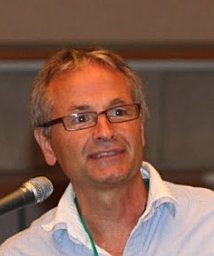 Claude Bourbonnais合作论文数Departement de Physique;Universite de Sherbrooke;Departement de Physique, Universite de Sherbrooke2
 P. Schlottmann合作论文数Department of Physics, Florida State University2
 Jiun-Haw Chu (曲君浩)合作论文数Department of Physics, University of Washington2
 Dominique de Caro合作论文数Laboratoire de Chimie de Coordination, CNRS UPR 82412
 David E Graf合作论文数Department of Physics, Florida State University;National High Magnetic Field Laboratory, Florida State University2Liqin Ke合作论文数2Dominique de合作论文数1A. Carella合作论文数1E. Yvenou合作论文数1I. Chtioui-Gay合作论文数1Nathaniel Rieders合作论文数1Marta Carvalho de Almeida合作论文数Universidade de São Paulo1Dalal N S合作论文数1
 Michael E. Smith合作论文数Department of Biology, Western Kentucky University1
 Zachary J. Huba合作论文数1
 Jeff Lengyel合作论文数1
 Lee Minseong合作论文数1
 Jeremy J. Hrudka合作论文数1
 Sida Luo (罗斯达)合作论文数Department of Material Processing and Controlling, School of Mechanical Engineering & Automation, Beihang University1
 Manuel Almeida合作论文数Departamento de Quı́mica, Instituto Tecnológico e Nuclear1
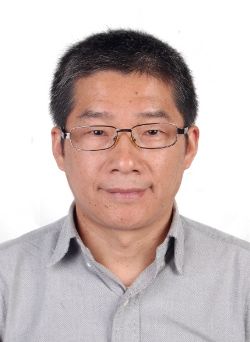 Tao Liu (刘涛)合作论文数College of Chemistry, Chemical Engineering and Materials Science, Soochow University1
 Everett E Carpenter合作论文数Department of Chemistry, College of Humanities and Sciences, Virginia Commonwealth University1
 Jean-Pierre Simonato合作论文数CEA-Liten;Carnot Energies du futur1Ben Kain合作论文数1Christopher Freund合作论文数1
 Eun Sang Choi合作论文数Natl High Magnetic Field Lab, Florida State University;Department of Physics, Florida State University1
 Qisheng Lin合作论文数Department of Chemistry and Chemical Biology, The State University of New Jersey1
 Tarek M. Abdel-Fattah合作论文数Department of Biology, Chemistry and Environmental Science, Christopher Newport University1
 Silvina Pagola合作论文数Department of Physics and Astronomy, SUNY at Stony Brook1




