Three dimensional electron microscopy is becoming a very data-intensive field in which vast amounts of experimental images are acquired at high speed. To manage such large-scale projects, we had previously developed a modular workflow system called Scipion (de la Rosa-Trevín et al., 2016). We present here a major extension of Scipion that allows processing of EM images while the data is being acquired. This approach helps to detect problems at early stages, saves computing time and provides users with a detailed evaluation of the data quality before the acquisition is finished. At present, Scipion has been deployed and is in production mode in seven Cryo-EM facilities throughout the world.
The centrality dependence of the mean charged-particle multiplicity as a function of pseudorapidity is measured in approximately 1 mu b(-1) of proton-lead collisions at a nucleon-nucleon centre-of-mass energy of root s(NN) = 5.02 TeV using the ATLAS detector at the Large Hadron Collider. Charged particles with absolute pseudorapidity less than 2.7 are reconstructed using the ATLAS pixel detector. The p + Pb collision centrality is characterised by the total transverse energy measured in the Pb-going direction of the forward calorimeter. The charged-particle pseudorapidity distributions are found to vary strongly with centrality, with an increasing asymmetry between the proton-going and Pb-going directions as the collisions become more central. Three different estimations of the number of nucleons participating in the p + Pb collision have been carried out using the Glauber model as well as two Glauber-Gribov inspired extensions to the Glauber model. Charged-particle multiplicities per participant pair are found to vary differently for these three models, highlighting the importance of including colour fluctuations in nucleon-nucleon collisions in the modelling of the initial state of p + Pb collisions.
Measurements of the total and differential cross sections of Higgs boson production are performed using 20.3 fb$^{-1}$ of $pp$ collisions produced by the Large Hadron Collider at a center-of-mass energy of $\sqrt{s} = 8$ TeV and recorded by the ATLAS detector. Cross sections are obtained from measured $H \rightarrow \gamma \gamma$ and $H \rightarrow ZZ ^{*}\rightarrow 4\ell$ event yields, which are combined accounting for detector efficiencies, fiducial acceptances and branching fractions. Differential cross sections are reported as a function of Higgs boson transverse momentum, Higgs boson rapidity, number of jets in the event, and transverse momentum of the leading jet. The total production cross section is determined to be $\sigma_{pp \to H} = 33.0 \pm 5.3 \, ({\rm stat}) \pm 1.6 \, ({\rm sys}) \mathrm{pb}$. The measurements are compared to state-of-the-art predictions.
Over the past decade, a large number of jet substructure observables have been proposed in the literature, and explored at the LHC experiments. Such observables attempt to utilize the internal structure of jets in order to distinguish those initiated by quarks, gluons, or by boosted heavy objects, such as top quarks and W bosons. This report, originating from and motivated by the BOOST2013 workshop, presents original particle-level studies that aim to improve our understanding of the relationships between jet substructure observables, their complementarity, and their dependence on the underlying jet properties, particularly the jet radius and jet transverse momentum. This is explored in the context of quark/gluon discrimination, boosted W boson tagging and boosted top quark tagging.
A search for the decay to a pair of new particles of either the 125 GeV Higgs boson (h) or a second charge parity (CP)-even Higgs boson (H) is presented. The data set corresponds to an integrated luminosity of 20.3 fb−1 of pp collisions at √s=8 TeV recorded by the ATLAS experiment at the LHC in 2012. The search was done in the context of the next-to-minimal supersymmetric standard model, in which the new particles are the lightest neutral pseudoscalar Higgs bosons (a). One of the two a bosons is required to decay to two muons while the other is required to decay to two τ leptons. No significant excess is observed above the expected backgrounds in the dimuon invariant mass range from 3.7 to 50 GeV. Upper limits are placed on the production of h→aa relative to the standard model gg→h production, assuming no coupling of the a boson to quarks. The most stringent limit is placed at 3.5% for ma=3.75 GeV. Upper limits are also placed on the production cross section of H→aa from 2.33 to 0.72 pb, for fixed ma=5 GeV with mH ranging from 100 to 500 GeV.Received 8 May 2015DOI:https://doi.org/10.1103/PhysRevD.92.052002This article is available under the terms of the Creative Commons Attribution 3.0 License. Further distribution of this work must maintain attribution to the author(s) and the published article's title, journal citation, and DOI.© 2015 CERN, for the ATLAS Collaboration
The jet energy scale (JES) and its systematic uncertainty are determined for jets measured with the ATLAS detector using proton-proton collision data with a centre-of-mass energy of [Formula: see text] TeV corresponding to an integrated luminosity of [Formula: see text][Formula: see text]. Jets are reconstructed from energy deposits forming topological clusters of calorimeter cells using the anti-[Formula: see text] algorithm with distance parameters [Formula: see text] or [Formula: see text], and are calibrated using MC simulations. A residual JES correction is applied to account for differences between data and MC simulations. This correction and its systematic uncertainty are estimated using a combination of in situ techniques exploiting the transverse momentum balance between a jet and a reference object such as a photon or a [Formula: see text] boson, for [Formula: see text] and pseudorapidities [Formula: see text]. The effect of multiple proton-proton interactions is corrected for, and an uncertainty is evaluated using in situ techniques. The smallest JES uncertainty of less than 1 % is found in the central calorimeter region ([Formula: see text]) for jets with [Formula: see text]. For central jets at lower [Formula: see text], the uncertainty is about 3 %. A consistent JES estimate is found using measurements of the calorimeter response of single hadrons in proton-proton collisions and test-beam data, which also provide the estimate for [Formula: see text] TeV. The calibration of forward jets is derived from dijet [Formula: see text] balance measurements. The resulting uncertainty reaches its largest value of 6 % for low-[Formula: see text] jets at [Formula: see text]. Additional JES uncertainties due to specific event topologies, such as close-by jets or selections of event samples with an enhanced content of jets originating from light quarks or gluons, are also discussed. The magnitude of these uncertainties depends on the event sample used in a given physics analysis, but typically amounts to 0.5-3 %.
Citation Aad, G., B. Abbott, J. Abdallah, S. Abdel Khalek, O. Abdinov, R. Aben, B. Abi, et al. 2015. “Erratum to: Search for production of WW / WZ resonances decaying to a lepton, neutrino and jets in pp collisions at documentclass[12pt]{minimal} usepackage{amsmath} usepackage{wasysym} usepackage{amsfonts} usepackage{amssymb} usepackage{amsbsy} usepackage{mathrsfs} usepackage{upgreek} setlength{oddsidemargin}{-69pt} begin{document}$$sqrt{s}=8$$end{document}s=8 TeV with the ATLAS detector.” The European Physical Journal. C, Particles and Fields 75 (8): 370. doi:10.1140/epjc/s10052-0153593-4. http://dx.doi.org/10.1140/epjc/s10052-015-3593-4.
A search for the decays of the Higgs and Z bosons to J/ψγ and ϒ(nS)γ (n=1,2,3) is performed with pp collision data samples corresponding to integrated luminosities of up to 20.3 fb^{-1} collected at sqrt[s]=8 TeV with the ATLAS detector at the CERN Large Hadron Collider. No significant excess of events is observed above expected backgrounds and 95% C.L. upper limits are placed on the branching fractions. In the J/ψγ final state the limits are 1.5×10^{-3} and 2.6×10^{-6} for the Higgs and Z boson decays, respectively, while in the ϒ(1S,2S,3S)γ final states the limits are (1.3,1.9,1.3)×10^{-3} and (3.4,6.5,5.4)×10^{-6}, respectively.
The online version of the original article can be found under doi:10.1140/epjc/s10052-015-3425-6. The online version of the original article can be found at http://dx.doi.org/10.1140/epjc/s10052-015-3425-6.
The results of a dedicated search for pair production of scalar partners of charm quarks are reported. The search is based on an integrated luminosity of 20.3 fb^{-1} of pp collisions at sqrt[s]=8 TeV recorded with the ATLAS detector at the LHC. The search is performed using events with large missing transverse momentum and at least two jets, where the two leading jets are each tagged as originating from c quarks. Events containing isolated electrons or muons are vetoed. In an R-parity-conserving minimal supersymmetric scenario in which a single scalar-charm state is kinematically accessible, and where it decays exclusively into a charm quark and a neutralino, 95% confidence-level upper limits are obtained in the scalar-charm-neutralino mass plane such that, for neutralino masses below 200 GeV, scalar-charm masses up to 490 GeV are excluded.
 Tancredi Carli合作论文数CERN97Guramy G Arabidze合作论文数Department of Physics and Astronomy, Michigan State University96
 Nir Amram合作论文数ZoomInfo95
 Dante Amidei合作论文数Department of Physics, College of Literature, Science, and the Arts, University of Michigan95
 Lydia Iconomidou-Fayard合作论文数Laboratoire de l'Accélérateur Linéaire95
 Andrea Coccaro合作论文数INFN Sezione di Genova95
 F. Filthaut (Frank)合作论文数Department of Experimental High Energy Physics, Radboud University95Davide Boscherini合作论文数Sezione di Bologna, Istituto Nazionale di Fisica Nucleare95
 Tim Adye合作论文数Particle Physics Department, Rutherford Appleton Laboratory95
 Jonathan Butterworth合作论文数Department of Physics and Astronomy, Faculty of Mathematical & Physical Sciences, University College London;CERN95
 Frédéric Derue合作论文数Laboratoire De Physique Nucléaire Et De Hautes énergies94
 Andrea Formica合作论文数IRFU/SEDI, CEA/Saclay94
 Jiří Chudoba合作论文数Division of Elementary Particle Physics, Institute of Physics of the Czech Academy of Sciences;Department of Detector Development and Data Processing, Institute of Physics of the Czech Academy of Sciences94
 Markus Elsing合作论文数Experimental Physics Department, European Organization for Nuclear Research94Gabizon O合作论文数94
 Attilio Andreazza合作论文数Dipartimento di Fisica, Università degli studi di Milano;Laboratorio di Trattamento Numerico dei Dati Sperimentali, Università degli studi di Milano;Istituto Nazionale di Fisica Nucleare94
 Alessandro De Salvo合作论文数Istituto Nazionale di Fisica Nucleare Sezione di Roma;CERN94
 Daniel Dobos合作论文数Swisscom;Lancaster University;CERN93
 Jens Dopke合作论文数Department of Physics, University of Oxford;STFC Rutherford Appleton Laboratory93
 Steve Ahlen合作论文数Physics Department, College of Arts and Sciences, Boston University93
 Giorgio Cortiana合作论文数Max-Planck-Institute for Physics;E.ON Digital Technology;European Organization for Nuclear Research93Gianpaolo Carlino合作论文数Istituto Nazionale di Fisica Nucleare93K. Bos合作论文数93Rinat Fakhrutdinov合作论文数Experimental Physics Department, Institute for High Energy Physics93
 Arnaud Ferrari合作论文数Department of Physics and Astronomy, Uppsala University;CERN93
 Driss Benchekroun合作论文数Faculté des Sciences Ain Chock, Université Hassan II de Casablanca;Réseau Universitaire de Physique des Hautes Energies93
 Amir Farbin合作论文数Department of Physics, College of Science, The University of Texas at Arlington93Didier Ferrere合作论文数Département De Physique Nucléaire Et Corpusculaire, Faculty of Science, Université de Genève93
 Lorenzo Feligioni合作论文数Centre de Physique des Particules de Marseille, Aix-Marseille University93
 M. Cobal合作论文数Dipartimento di Chimica, Fisica e Ambiente, Università di Udine93M. Escalier合作论文数93
 Carlo Dallapiccola合作论文数Department of Physics, College of Natural Sciences, University of Massachusetts Amherst93
 Gianluca Alimonti合作论文数Istituto Nazionale di Fisica Nucleare;University of Milan93
 Oleg Brandt合作论文数The Cavendish Laboratory, Department of Physics, University of Cambridge93Fiascaris M合作论文数93
 Andrew Brandt合作论文数Department of Physics, College of Science, The University of Texas at Arlington93
 Phil Allport合作论文数School of Physics and Astronomy, University of Birmingham93
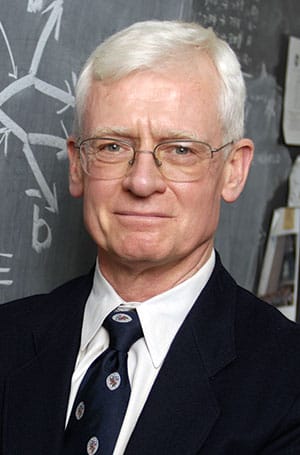 Bruce Barnett合作论文数William H. Miller III Department of Physics and Astronomy, Krieger School of Arts and Sciences, Johns Hopkins University93F. Djama合作论文数Centre de Recherche Nucléaire, IN2P3 - CNRS/ULP - BP20, F-67037 Strasbourg Cedex, France93
 Zdenek Dolezal合作论文数Institute of Particle and Nuclear Physics, Faculty of Mathematics and Physics, Charles University93Ariella Cattai合作论文数CERN93Ph Farthouat合作论文数93
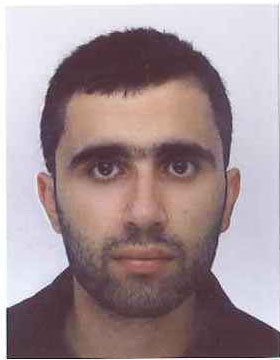 Georges Aad合作论文数Aix-Marseille University93
 Elisabetta Barberio合作论文数School of Physics, Faculty of Science, The University of Melbourne;Arc Centre of Excellence for Dark Matter Particle Physics93
 Calin Alexa合作论文数Horia Hulubei National Institute of Physics and Nuclear Engineering93
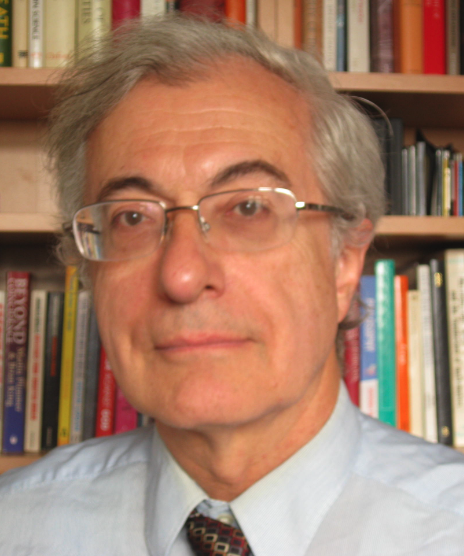 Peter J. Bussey合作论文数School of Physics & Astronomy, University of Glasgow92S. Chouridou合作论文数92M. Fraternali合作论文数92L. Bugge合作论文数92




