We present measurements of B+ -> rho(+) gamma and B-0 -> rho(0) gamma. decays using a combined data sample of 772 x 10(6) B (B) over bar pairs collected by the Belle experiment and 387 x 10(6) B (B) over bar pairs collected by the Belle II experiment in e(+) e(-) collisions at the Upsilon(4S) resonance. After an optimized selection, a simultaneous fit to the Belle and Belle II datasets yields 114 +/- 12 B+ -> rho(+) gamma. and 99 +/- 12 B-0 -> rho(0) gamma decays. The measured branching fractions are (13.1(-1.9-1.2)(+2.0+1.3)) x 10(-7) and (7.6 +/- 1.3(-0.8)(+1.0)) x 10(-7) for B+ -> rho(+) gamma. and B-0 -> rho(0) gamma. decays, respectively, where the first uncertainty is statistical and the second is systematic. We also measure the isospin asymmetry A(I)(B -> rho gamma) = (10.9(-11.7-7.3)(+11.2+7.8))% and the direct CP asymmetry A(CP)(B+ -> rho(+) gamma) = (-8.2 +/- 15.2(-1.3)(+2.0))%.
Abstract We report measurements of the absolute branching fractions $$\mathcal{B}\left({B}_{s}^{0}\to {D}_{s}^{\pm }X\right)$$ , $$\mathcal{B}\left({B}_{s}^{0}\to {D}^{0}/{\overline{D} }^{0}X\right)$$ , and $$\mathcal{B}\left({B}_{s}^{0}\to {D}^{\pm }X\right)$$ , where the latter is measured for the first time. The results are based on a 121.4 fb −1 data sample collected at the Υ(10860) resonance by the Belle detector at the KEKB asymmetric-energy e + e − collider. We reconstruct one $${B}_{s}^{0}$$ meson in $${e}^{+}{e}^{-}\to \Upsilon\left(10860\right)\to {B}_{s}^{*}{\overline{B} }_{s}^{*}$$ events and measure yields of $${D}_{s}^{+}$$ , D 0, and D + mesons in the rest of the event. We obtain $$\mathcal{B}\left({B}_{s}^{0}\to {D}_{s}^{\pm }X\right)=\left(68.6\pm 7.2\pm 4.0\right)\%$$ , $$\mathcal{B}\left({B}_{s}^{0}\to {D}^{0}/{\overline{D} }^{0}X\right)=\left(21.5\pm 6.1\pm 1.8\right)\%$$ , and $$\mathcal{B}\left({B}_{s}^{0}\to {D}^{\pm }X\right)=\left(12.6\pm 4.6\pm 1.3\right)\%$$ , where the first uncertainty is statistical and the second is systematic. Averaging with previous Belle measurements gives $$\mathcal{B}\left({B}_{s}^{0}\to {D}_{s}^{\pm }X\right)=\left(63.4\pm 4.5\pm 2.2\right)\%$$ and $$\mathcal{B}\left({B}_{s}^{0}\to {D}^{0}/{\overline{D} }^{0}X\right)=\left(23.9\pm 4.1\pm 1.8\right)\%$$ . For the $${B}_{s}^{0}$$ production fraction at the Υ(10860), we find $${f}_{s}=\left({21.4}_{-1.7}^{+1.5}\right)\%$$ .
The Module-0 Demonstrator is a single-phase 600 kg liquid argon time projection chamber operated as a prototype for the DUNE liquid argon near detector. Based on the ArgonCube design concept, Module-0 features a novel 80k-channel pixelated charge readout and advanced high-coverage photon detection system. In this paper, we present an analysis of an eight-day data set consisting of 25 million cosmic ray events collected in the spring of 2021. We use this sample to demonstrate the imaging performance of the charge and light readout systems as well as the signal correlations between the two. We also report argon purity and detector uniformity measurements, and provide comparisons to detector simulations.
We report measurements of time-dependent CP asymmetries in B^{0}→K_{S}^{0}π^{0}γ decays based on a data sample of (388±6)×10^{6} BB[over ¯] events collected at the ϒ(4S) resonance with the Belle II detector. The Belle II experiment operates at the SuperKEKB asymmetric-energy e^{+}e^{-} collider. We measure decay-time distributions to determine CP -violating parameters S and C. We determine these parameters for two ranges of K_{S}^{0}π^{0} invariant mass: m(K_{S}^{0}π^{0})∈(0.8,1.0) GeV/c^{2}, which is dominated by B^{0}→K^{*0}(→K_{S}^{0}π^{0})γ decays, and a complementary region m(K_{S}^{0}π^{0})∈(0.6,0.8)∪(1.0,1.8) GeV/c^{2}. Our results have improved precision as compared to previous measurements and are consistent with theory predictions.
We search for the rare decay B+ -> K+ v (v) over bar in a 362 fb(-1) sample of electron-positron collisions at the Upsilon(4S) resonance collected with the Belle II detector at the SuperKEKB collider. We use the inclusive properties of the accompanying B meson in Upsilon(4S) -> B (B) over bar events to suppress background from other decays of the signal B candidate and light-quark pair production. We validate the measurement with an auxiliary analysis based on a conventional hadronic reconstruction of the accompanying B meson. For background suppression, we exploit distinct signal features using machine learning methods tuned with simulated data. The signal-reconstruction efficiency and background suppression are validated through various control channels. The branching fraction is extracted in a maximum likelihood fit. Our inclusive and hadronic analyses yield consistent results for the B+ -> K+ v (v) over bar branching fraction of [2.7 +/- 0.5(stat) +/- 0.5(syst)] x 10(-5) and [1.1(-0.8)(+0.9)(stat)(-0.5)(+0.8)(syst)] x 10(-5), respectively. Combining the results, we determine the branching fraction of the decay B+ -> K+ v (v) over bar to be [2.3 +/- 0.5_stat)(-0.4)(+0.5)(syst)] x 10(-5), providing the first evidence for this decay at 3.5 standard deviations. The combined result is 2.7 standard deviations above the standard model expectation.
We report measurements of the e(+)e(-) -> B (B) over bar, B (B) over bar*, and B*(B) over bar* cross sections at four energies, 10653, 10701, 10746 and 10805 MeV, using data collected by the Belle II experiment. We reconstruct one B meson in a large number of hadronic final states and use its momentum to identify the production process. In the first 2 - 5 MeV above B* B* threshold, the e(+)e(-) -> B*(B) over bar* cross section increases rapidly. This may indicate the presence of a pole close to the threshold.
ProtoDUNE Single-Phase (ProtoDUNE-SP) is a 770-ton liquid argon time projection chamber that operated in a hadron test beam at the CERN Neutrino Platform in 2018. We present a measurement of the total inelastic cross section of charged kaons on argon as a function of kaon energy using 6 and 7 GeV/$c$ beam momentum settings. The flux-weighted average of the extracted inelastic cross section at each beam momentum setting was measured to be 380$\pm$26 mbarns for the 6 GeV/$c$ setting and 379$\pm$35 mbarns for the 7 GeV/$c$ setting.
We report a determination of the CKM angle ϕ3, also known as γ, from a combination of measurements using samples of up to 711 fb−1 from the Belle experiment and up to 362 fb−1 from the Belle II experiment. We combine results from analyses of B+ → DK+, B+ → Dπ+, and B+ → D*K+ decays, where D is an admixture of D0 and D^0 mesons, in a likelihood fit to obtain ϕ3 = (75.2 ± 7.6)°. We also briefly discuss the interpretation of this result.
We present GFlaT, a new algorithm that uses a graph-neural-network to determine the flavor of neutral B mesons produced in Upsilon(4S) decays. It improves previous algorithms by using the information from all charged final-state particles and the relations between them. We evaluate its performance using B decays to flavor-specific hadronic final states reconstructed in a 362 fb(-1) sample of electron-positron collisions collected at the Upsilon(4S) resonance with the Belle II detector at the SuperKEKB collider. We achieve an effective tagging efficiency of (37.40 +/- 0.43 +/- 0.36%), where the first uncertainty is statistical and the second systematic, which is 18% better than the previous Belle II algorithm. Demonstrating the algorithm, we use B-0 -> J/psi K-S(0) decays to measure the mixing-induced and direct CP violation parameters, S = (0.724 +/- 0.035 +/- 0.009) and C = (-0.035 +/- 0.026 +/- 0.029).
We describe a measurement of charge-parity (CP) violation asymmetries in B^0→η'K^0_S decays using Belle II data. We consider η'→η(→γγ)π^+π^- and η'→ρ(→π^+π^-)γ decays. The data were collected at the SuperKEKB asymmetric-energy e^+e^- collider between the years 2019 and 2022, and contain (387± 6) × 10^6 bottom-antibottom meson pairs. We reconstruct 829±35 signal decays and extract the CP violating parameters from a fit to the distribution of the proper-decay-time difference between the two B mesons. The measured direct and mixing-induced CP asymmetries are C_η'K^0_S = -0.19 ± 0.08 ± 0.03 and S_η'K^0_S = +0.67 ± 0.10 ± 0.04, respectively, where the first uncertainties are statistical and the second are systematic. These results are in agreement with current world averages and standard model predictions.
Abstract We present a measurement of the ratio $$ {R}_{\mu }=\mathcal{B}\left({\tau}^{-}\to {\mu}^{-}{\overline{\nu}}_{\mu }{\nu}_{\tau}\right)/\mathcal{B}\left({\tau}^{-}\to {e}^{-}{\overline{\nu}}_e{\nu}_{\tau}\right) $$ R μ = B τ − → μ − ν ¯ μ ν τ / B τ − → e − ν ¯ e ν τ of branching fractions $$ \mathcal{B} $$ B of the τ lepton decaying to muons or electrons using data collected with the Belle II detector at the SuperKEKB e+e− collider. The sample has an integrated luminosity of 362 ± 2 fb−1 at a centre-of-mass energy of 10.58 GeV. Using an optimised event selection, a binned maximum likelihood fit is performed using the momentum spectra of the electron and muon candidates. The result, Rμ = 0.9675 ± 0.0007 ± 0.0036, where the first uncertainty is statistical and the second is systematic, is the most precise to date. It provides a stringent test of the light-lepton universality, translating to a ratio of the couplings of the muon and electron to the W boson in τ decays of 0.9974 ± 0.0019, in agreement with the standard model expectation of unity.
AbstractWe present measurements of the branching fractions of eight $$ {\overline{B}}^0 $$ B ¯ 0 → D(*)+K−$$ {K}_{(S)}^{\left(\ast \right)0} $$ K S ∗ 0 , B− → D(*)0K−$$ {K}_{(S)}^{\left(\ast \right)0} $$ K S ∗ 0 decay channels. The results are based on data from SuperKEKB electron-positron collisions at the Υ(4S) resonance collected with the Belle II detector, corresponding to an integrated luminosity of 362 fb−1. The event yields are extracted from fits to the distributions of the difference between expected and observed B meson energy, and are efficiency-corrected as a function of m(K−$$ {K}_{(S)}^{\left(\ast \right)0} $$ K S ∗ 0 ) and m(D(*)$$ {K}_{(S)}^{\left(\ast \right)0} $$ K S ∗ 0 ) in order to avoid dependence on the decay model. These results include the first observation of $$ {\overline{B}}^0 $$ B ¯ 0 → D+K−$$ {K}_S^0 $$ K S 0 , B− → D*0K−$$ {K}_S^0 $$ K S 0 , and $$ {\overline{B}}^0 $$ B ¯ 0 → D*+K−$$ {K}_S^0 $$ K S 0 decays and a significant improvement in the precision of the other channels compared to previous measurements. The helicity-angle distributions and the invariant mass distributions of the K−$$ {K}_{(S)}^{\left(\ast \right)0} $$ K S ∗ 0 systems are compatible with quasi-two-body decays via a resonant transition with spin-parity JP = 1− for the K−$$ {K}_S^0 $$ K S 0 systems and JP = 1+ for the K−K*0 systems. We also present measurements of the branching fractions of four $$ {\overline{B}}^0 $$ B ¯ 0 → D(*)+$$ {D}_s^{-} $$ D s − , B− → D(*)0$$ {D}_s^{-} $$ D s − decay channels with a precision compatible to the current world averages.
We present a measurement of |V_ub| from a simultaneous study of the charmless semileptonic decays B^0→π^- ℓ^+ ν_ℓ and B^+→ρ^0 ℓ^+ν_ℓ, where ℓ = e, μ. This measurement uses a data sample of 387 million BB meson pairs recorded by the Belle II detector at the SuperKEKB electron-positron collider between 2019 and 2022. The two decays are reconstructed without identifying the partner B mesons. We simultaneously measure the differential branching fractions of B^0→π^- ℓ^+ ν_ℓ and B^+→ρ^0 ℓ^+ν_ℓ decays as functions of q^2 (momentum transfer squared). From these, we obtain total branching fractions B(B^0→π^- ℓ^+ ν_ℓ) = (1.516 ± 0.042 (stat) ± 0.059 (syst)) × 10^-4 and B(B^+→ρ^0 ℓ^+ν_ℓ) = (1.625 ± 0.079 (stat) ± 0.180 (syst)) × 10^-4. By fitting the measured B^0→π^- ℓ^+ ν_ℓ partial branching fractions as functions of q^2, together with constraints on the non-perturbative hadronic contribution from lattice QCD calculations, we obtain |V_ub| = (3.93 ± 0.09 ± 0.13 ± 0.19) × 10^-3. Here, the first uncertainty is statistical, the second is systematic, and the third is theoretical.
The ratio of branching fractions R(D*) = B((B) over bar -> D* tau(-) (nu) over bar (tau))/B((B) over bar -> D* l(-)(nu) over bar (l)), where l is an electron or muon, is measured using a Belle II data sample with an integrated luminosity of 189 fb(-1) at the SuperKEKB asymmetric-energy e(+)e(-) collider. Data is collected at the Upsilon(4S) resonance, and one B meson in the Upsilon(4S) -> B (B) over bar decay is fully reconstructed in hadronic decay modes. The accompanying signal B meson is reconstructed as (B) over bar -> D* tau(-) (nu) over bar (tau)using leptonic t decays. The normalization decay, (B) over bar -> D* l(-)(nu) over bar (l,) produces the same observable final-state particles. The ratio of branching fractions is extracted in a simultaneous fit to two signal-discriminating variables in both channels and yields R(D*) = 0.262(-0.039)(+0.041) (stat)(-0.032)(+0.035) (syst). This result is consistent with the current world average and with Standard Model predictions.
We report on a search for a resonance $X$ decaying to a pair of muons in $e^{+}e^{-}\rightarrow \mu^+ \mu^- X$ events in the 0.212-9.000 GeV/$c^{2}$ mass range, using 178 fb$^{-1}$ of data collected by the BelleII experiment at the SuperKEKB collider at a center of mass energy of 10.58 GeV. The analysis probes two different models of $X$ beyond the standard model: a $Z^{\prime}$ vector boson in the $L_{\mu}-L_{\tau}$ model and a muonphilic scalar. We observe no evidence for a signal and set exclusion limits at the 90\% confidence level on the products of cross section and branching fraction for these processes, ranging from 0.046 fb to 0.97 fb for the $L_{\mu}-L_{\tau}$ model and from 0.055 fb to 1.3 fb for the muonphilic scalar model. For masses below 6 GeV/$c^{2}$, the corresponding constraints on the couplings of these processes to the standard model range from 0.0008 to 0.039 for the $L_{\mu}-L_{\tau}$ model and from 0.0018 to 0.040 for the muonphilic scalar model. These are the first constraints on the muonphilic scalar from a dedicated search.
We present the results of a search for the b→dℓ^{+}ℓ^{-} flavor-changing neutral-current rare decays B^{+,0}→(η,ω,π^{+,0},ρ^{+,0})e^{+}e^{-} and B^{+,0}→(η,ω,π^{0},ρ^{+})μ^{+}μ^{-} using a 711 fb^{-1} data sample that contains 772×10^{6} BB[over ¯] events. The data were collected at the ϒ(4S) resonance with the Belle detector at the KEKB asymmetric-energy e^{+}e^{-} collider. We find no evidence for signal and set upper limits on branching fractions at the 90% confidence level in the range (3.8-47)×10^{-8} depending on the decay channel. The obtained limits are the world's best results. This is the first search for the channels B^{+,0}→(ω,ρ^{+,0})e^{+}e^{-} and B^{+,0}→(ω,ρ^{+})μ^{+}μ^{-}.
We present the result of a search for the charged-lepton-flavor violating decay tau(-) -> mu(-)mu(+)mu(-) using a 424 fb(-1) sample of data recorded by the Belle II experiment at the SuperKEKB e(+)e(-) collider. The selection of e(+)e(-) -> tau(+)tau(-) events is based on an inclusive reconstruction of the non-signal tau decay, and on a boosted decision tree to suppress background. We observe one signal candidate, which is compatible with the expectation from background processes. We set a 90% confidence level upper limit of 1.9 x 10(-8) on the branching fraction of the tau(-)-> mu(-)mu(+)mu(-) decay, which is the most stringent bound to date.
Abstract We report measurements of the e + e − → B B ¯ $$ B\overline{B} $$ , B B ¯ ∗ $$ B{\overline{B}}^{\ast } $$ , and B ∗ B ¯ ∗ $$ {B}^{\ast }{\overline{B}}^{\ast } $$ cross sections at four energies, 10653, 10701, 10746 and 10805 MeV, using data collected by the Belle II experiment. We reconstruct one B meson in a large number of hadronic final states and use its momentum to identify the production process. In the first 2 – 5 MeV above B ∗ B ¯ ∗ $$ {B}^{\ast }{\overline{B}}^{\ast } $$ threshold, the e + e − → B ∗ B ¯ ∗ $$ {B}^{\ast }{\overline{B}}^{\ast } $$ cross section increases rapidly. This may indicate the presence of a pole close to the threshold.
The international collaboration designing and constructing the Deep Underground Neutrino Experiment (DUNE) at the Long-Baseline Neutrino Facility (LBNF) has developed a two-phase strategy toward the implementation of this leading-edge, large-scale science project. The 2023 report of the US Particle Physics Project Prioritization Panel (P5) reaffirmed this vision and strongly endorsed DUNE Phase I and Phase II, as did the European Strategy for Particle Physics. While the construction of the DUNE Phase I is well underway, this White Paper focuses on DUNE Phase II planning. DUNE Phase-II consists of a third and fourth far detector (FD) module, an upgraded near detector complex, and an enhanced 2.1 MW beam. The fourth FD module is conceived as a "Module of Opportunity", aimed at expanding the physics opportunities, in addition to supporting the core DUNE science program, with more advanced technologies. This document highlights the increased science opportunities offered by the DUNE Phase II near and far detectors, including long-baseline neutrino oscillation physics, neutrino astrophysics, and physics beyond the standard model. It describes the DUNE Phase II near and far detector technologies and detector design concepts that are currently under consideration. A summary of key R&D goals and prototyping phases needed to realize the Phase II detector technical designs is also provided. DUNE's Phase II detectors, along with the increased beam power, will complete the full scope of DUNE, enabling a multi-decadal program of groundbreaking science with neutrinos.
We describe a measurement of charge-parity (CP) violation asymmetries in B-0 -> eta ' K-S(0) decays using Belle II data. We consider eta ' -> eta (->gamma gamma)pi(+)pi(-) and eta ' -> rho(-> pi(+)pi(-))gamma decays. The data were collected at the SuperKEKB asymmetric-energy ethorne- collider between the years 2019 and 2022, and contain (387 +/- 6) x 10(6) bottom-antibottom meson pairs. We reconstruct 829 +/- 35 signal decays and extract the CP violating parameters from a fit to the distribution of the proper-decay-time difference between the two B mesons. The measured direct and mixing-induced CP asymmetries are C-eta ' KS0 = -0.19 +/- 0.08 +/- 0.03 and S-eta ' KS0 = +0.67 +/- 0.10 +/- 0.03, respectively, where the first uncertainties are statistical and the second are systematic. These results are in agreement with current world averages and standard model predictions.
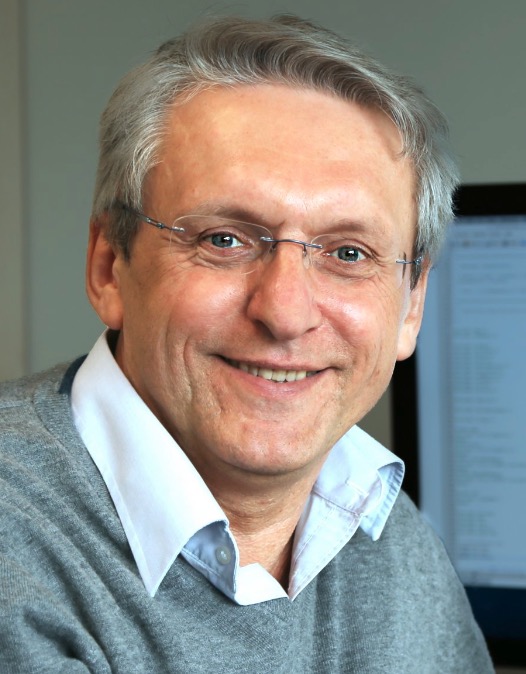 Ivan Kisel合作论文数Frankfurt Institute for Advanced Studies;GSI Helmholtz Center for Heavy Ion Research243
 Anders Knospe合作论文数Department of Physics, College of Arts and Sciences, Lehigh University235
 Thomas J. Humanic合作论文数Department of Physics, College of Arts and Sciences, The Ohio State University231
 S. Choudhury合作论文数228
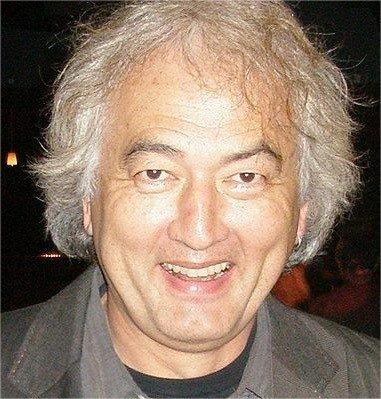 John Harris合作论文数Department of Physics, Yale University225
 Rene Bellwied合作论文数Department of Physics, College of Natural Sciences and Mathematics, University of Houston223
 Evgeni L. Kryshen合作论文数European Organization for Nuclear Research215
 Mauro Rogério Cosentino合作论文数Centro de Ciências Naturais e Humanas, Universidade Federal do ABC214
 Zubayer Ahammed合作论文数Variable Energy Cyclotron Centre214M. Kowalski合作论文数213Jana Bielcikova合作论文数213
 Alberto Martin Gago Medina合作论文数Departamento de Ciencias, Pontificia Universidad Católica del Perú212
 Michael Lisa合作论文数Department of Physics, College of Arts and Sciences, The Ohio State University210
 Helen Caines合作论文数Wright Laboratory, Department of Physics, Yale University;Brookhaven National Laboratory208
 Paola La Rocca合作论文数Department of Physics and Astronomy "Ettore Majorana", University of Catania208
 Christina Markert合作论文数Department of Physics, College of Natural Sciences, The University of Texas at Austin207R. Lea合作论文数207
 Jennifer Klay合作论文数Physics Department, Bailey College of Science & Mathematics, California Polytechnic State University, San Luis Obispo205
 Podist Kurashvili合作论文数National Centre for Nuclear Research;European Organization for Nuclear Research204
 Sarah L La Pointe合作论文数Goethe Universität Frankfurt203
 Adam Kisiel合作论文数Zakład Fizyki Jądrowej, Faculty of Physics, Warsaw University of Technology203
 Péter Lévai合作论文数WIGNER Research Centre for Physics, Hungarian Academy of Sciences;Theoretical Department, KFKI RMKI201
 Mikhail Ippolitov合作论文数National Research Nuclear University MEPhI;Quark Matter Laboratory, Kurchatov Institute201
 Lokesh Kumar合作论文数200
 Yuri Kharlov合作论文数Experimental Physics Division, National Research Centre “Kurchatov Institute”;Laboratory of Fundamental Interactions, Moscow Institute of Physics and Technology200M. Krzewicki合作论文数199E. López Torres合作论文数198
 Łukasz Graczykowski合作论文数Nuclear Physics Division, Faculty of Physics, Warsaw University of Technology198
 Taku Gunji (郡司卓)合作论文数Center for Nuclear Study, Graduate School of Science, The University of Tokyo196I. León Monzón合作论文数196
 Adela Kravčáková合作论文数Institute of Physics, Faculty of Science, Univerzita Pavla Jozefa Šafárika v Košiciach195
 Peter Hristov合作论文数CERN195Jaroslav Bielcik合作论文数for the STAR Collaboration194Vladimir Kovalenko合作论文数Saint Petersburg State University193
 P. Ganoti合作论文数Dept Phys, Natl & Kapodistrian Univ Athens193A. Jusko合作论文数192
 Austin Harton合作论文数Chicago State University192A. Maire合作论文数Institut Pluridisciplinaire Hubert Curien (IPHC), Université de Strasbourg192F. Manso合作论文数192Alexander Kurepin合作论文数Institute for Nuclear Research, Russian Academy of Sciences192
 Madan M. Aggarwal合作论文数Department of Physics, Panjab University192Roman Lietava合作论文数192B. Hippolyte合作论文数191
 Smbat Grigoryan合作论文数Veksler and Baldin Laboratory of High Energy Physics, Joint Institute for Nuclear Research191martino gagliardi合作论文数190S. Kirsch合作论文数190
 Alessandro De Falco合作论文数Dipartimento di Fisica, Università di Cagliari190Peter Kaliňák合作论文数Institute of Experimental Physics, Slovak Academy of Sciences190A. Lardeux合作论文数190




