As one of the strategies to mitigate climate change and increase resource use efficiency, there is a need to improve energy recovery and recycling. Then, sector-coupling methods between industries are expected to improve resource recycling efficiency.This study considered the supply of extracted steam from waste treatment plants (WTP) to neighboring factories. We focused on the fact that the company names contained characteristic terms depending on the type of industry. The target factories of the steam supply were classified into industry types by the LSTM method based on the database of company names, and we estimated spatial steam demand using developed models However, they lack of spatial energy demand data could not validate this model result. From this situation, the process database of industries for matching recyclable resources and the list of company names for estimating the location of industries would need to be developed. Therefore, it is necessary to establish a beneficial system to provide data for validation.Based on the knowledge obtained from estimating the location of industries based on the company names and estimating the distribution of industrial steam demand, we developed a database arrangement model system.. In this context, trial consideration of the industrial process with Resource Description Framework (RDF) formatting was conducted to enable the data collection and retrieval of process data through a knowledge base.
Japan’s municipal waste-treatment regionalization policy addresses treatment continuity, facility renewal, operational efficiency, and public-health protection under population decline. This study examined how this framework could incorporate industrial steam demand while retaining municipal waste-treatment responsibilities. Three configurations for Ibaraki Prefecture in 2050 were compared using a scenario-based facility-level technoeconomic accounting framework: public-sector consolidation through 11 waste-to-energy facilities, decentralized integration with four industrial steam-demand areas, and centralized integration with a petrochemical complex. The analysis evaluated annual costs and energy-related benefits, facility-level electricity balances, industrial steam supply, operational avoided CO₂, and average and incremental abatement costs. Public-sector consolidation achieved 35.6 kt-CO₂/year of net operational avoided CO₂, with a net annual cost burden of 13.31 billion JPY/year. The decentralized configuration had the lowest net annual cost burden, at 2.52 billion JPY/year. The centralized configuration achieved the highest net operational avoided CO₂, at 199.3 kt-CO₂/year, and the lowest base-case average abatement cost, at 14,038 JPY/t-CO₂. Industrial steam substitution accounted for most operational avoided CO₂ in both integration configurations. Sensitivity analysis showed that their relative cost-effectiveness depended mainly on industrial steam utilization, the capital-cost annualization period, heat-recovery efficiency, and avoided fuel expenditure. No configuration was preferable under all criteria. Incorporating industrial heat demand into regionalization planning would require coordination of waste supply, infrastructure investment, steam off-take, and cost and risk allocation. The assessment was limited to predefined configurations and operational energy-substitution effects and did not evaluate optimization, complete life-cycle emissions, or stakeholder-specific financial viability.
The incineration of waste for power generation, the utilisation of cogeneration, and the application of heating represent promising approaches to the decarbonisation of a future carbon-neutral society. Nevertheless, given the context of global carbon neutrality promotion and growing interest from countries in the potential of waste as a substitute for fossil fuels, the comparative efficacy of the three waste energy recovery mechanisms remains uncertain. In order to address this uncertainty, this study has devised five scenarios, the differential performance of which has been evaluated through the application of a difference-in-difference methodology. The cogeneration scenario, which represent the cogeneration mechanism, evinces superior performance with respect to energy and environmental outcomes in comparison to the power generation scenarios, which represent the power generation mechanism. Concurrently, the theoretical basis for the large-scale heating (medium T&P) scenario, representing the heating mechanism, was validated through the differential performance of the scenarios, which demonstrated that it is superior to the cogeneration scenario. Furthermore, it was demonstrated that the high T&P heating scenario, which transports steam at 15 MPa and 550 °C, resulted in a reduction of fossil fuel consumption by 66 GJ/h in comparison to the 4 MPa and 400 °C scenario. This study presents a comprehensive examination of the obstacles hindering the expansion of green hydrogen production. The findings suggest that self-produced green hydrogen systems remain cost-effective in comparison to externally sourced green hydrogen.
To enhance the efficient utilization of urban resources and optimize regional metabolic networks, the concept of Urban-industrial symbiosis (UIS) has been introduced as a strategic approach within the waste management sector. However, current assessments of municipal solid waste management often overlook the potential environmental burden associated with products. Therefore, this study, using Tokyo Metropolis as the case study area, integrates the Input-Output (IO) model, Emergy Analysis, and Life Cycle Assessment (LCA) to comprehensively evaluate both the direct hazards and the implicit environmental burdens of waste management. This integrated approach addresses the limitations of individual assessment methods, providing a more holistic understanding of the environmental and ecological impacts of urban waste management. The results show that the contribution rate of carbon emissions from upstream sectors to the waste management industry was 0.09 % in 2011, which decreased to 0.06 % in 2018. In 2011, the carbon emissions reduction from the waste management sector accounted for 40.59 % of the total carbon reduction gains, which increased to 58.69 % in 2018 (increasing at a rate of 1.57E+05 tCO2e/yr). Furthermore, all of the implementation of circular economy practices in Tokyo metropolis saved 7.44 x 1028 sej emergy in 2011 and 2.28 x 1028 sej emergy in 2018, respectively. And the environmental service required for the reduction of CO2e emissions in Tokyo metropolis due to its circular economy practices was 3.94 x 10¹³ in 2011 and 3.90 x 10¹³, in 2018. Indicating the significant benefits of resource and emergy conservation. Additionally, this study found that from an emergy-saving perspective, recycling materials such as urban sludge and sand exhibits greater environmental emergy-saving benefits, while from a carbon emission reduction perspective, recycling plastics, paper, and glass show greater carbon benefits. Based on these findings, the research proposes different policy recommendations for waste recycling.
Tetra Pak, a typical low-value waste, is one of the great challenges faced by municipal solid waste management but is rarely investigated. Therefore, this study takes Shanghai, China as a case to evaluate the life cycle environmental impacts and costs of Tetra Pak recycling technologies. The indicator of social cost that integrates life cycle environmental impact and economic cost is innovatively proposed. We found the three recycling technologies all exhibit better environmental performance than incineration. Chemical Separation (technology 2) has the largest environmental mitigation impacts, with climate change and resource consumption mitigation being 2.5 times and 3.8 times that of incineration, respectively. From an economic perspective, plastic-wood technology is the optimal, with a net economic benefit of 2900 RMB/ton Tetra Pak. While from social cost perspective, technology 2 is the best, achieving 6731 RMB/ton benefit. We suggest promoting Tetra Pak recycling technology 2, establishing recycling system, and strengthening end-of-pipe companies.
Community co-creation is critical for tackling complex challenges and building a sustainable future, and necessitates collaboration between public and private sectors to co-create value chains. This paper highlights existing frameworks and proposes a heuristic approach that integrates Collective Impact (CI), Social Impact Assessment (SIA), and Community Capital (CC). Through a narrative review, the paper explores how SIA and CC can empower CI by aligning objective data with community context, ensuring solutions that resonate with local needs, promoting equity by fostering inclusive participation and understanding diverse perspectives, and revealing valuable resources within communities and leveraging their strengths for sustainable development. Although the paper delves into roles and responsibilities for each sector involved in co-creation, it acknowledges limitations in areas such as leadership-capacity building for effective collaboration and long-term commitment, impact measurement methodologies that capture nuanced social change over time, and inclusion of diverse participation methods to ensure all voices are heard and represented. By addressing these limitations, the paper calls for further research and development to strengthen community-driven social change.
本記事は、産業共生及びエコ産業団地が産業の脱炭素化にむけた動向を報告することを目的とする。まず、近年の取り組みの中での位置づけを記述し、2023 年に行われた関連シンポジウム及び現地視察の紹介をする。その後、エコ産業団地の先進事例である韓国の取り組みを概説し、国際機関の支援イニシアティブを紹介する。産業団地の脱炭素化にむけては、個別の取り組みのみならず、他の産業団地との協働、国際的な連携が重要だと示唆した。
Waste incineration provides a feasible decarbonization approach for the industrial heat sector. However, a lack of theoretical models hampers the analysis of waste generation’s differential performance in heating and power generation. This study explores two scenarios: kitchen waste sorting and recycling, and photovoltaic (PV) hydrogen production, using the life cycle carbon neutrality (LCCN) concept to assess kitchen waste’s impact on waste incineration heating and the potential for clean energy in regional heating. Three waste incineration power generation types were compared with LCCN-based heating types. In the waste sorting and recycling scenario, the LCCN-ready (LCCN-R) heating outperformed the three types of power generation types, environmentally and economically. In the PV and hydrogen production scenarios, high solar radiation from March to August can generate hydrogen with PV power offseting heavy oil consumption of the chemical complex. The analysis suggests that integrating hydrogen with PV power is a feasible solution for industrial decarbonization.
Total CO2 emissions from the cement industry approximately correspond to 8% of the global CO2 emissions. In this chapter, we compare and contrast the co-evolutionary trajectories of eco-cement technology and policy in the Netherlands, China and Japan. We reveal that the transition processes away from Ordinary Portland Cement (OPC) to eco-cement follow different conjunctural causation patterns and temporalities due to "multiple stream determinants" emanating from varying degrees of (i) intervention capacities and capabilities of actors in politico-administrative and sociocultural domains, (ii) socio-technical alignment of the policy stream to techno-economic and scientific possibilities, and (iii) the nature of market demand with regard to both traditional and alternative cements. A common target in each context is to reduce the contribution of this basic industry in overall carbon dioxide (CO2) emissions, with circular economy policies playing a significantly increasing role in each trajectory.
環境先進都市・まちづくり先進都市と呼ばれる都市・地域が存在し,それらの中には多主体の共創的プロセスにより地域の課題が克服され,新たな価値が創出されている事例も見られる.しかしながら,情報を包括的に整理・共有する枠組みが未整備であるため,得られた知見はそれぞれの現場で共有されるに留まっている.本研究では,環境・まちづくり先進都市である岩手県紫波町,宮城県女川町,宮崎県日南市の資料文献調査及び政策担当者へのインタビュー調査に基づき,その地域づくりの過程において特徴的に現れる要素を抽出し,パターン・ランゲージの枠組みに基づいてパターンとして記述した.さらに,抽出されたパターンから先進事例に共通するプロセスの構造と地域ごとの特殊性について検討し,先進地域から他地域へと持続可能な地域づくりの技術・知識・経験を展開するための枠組みを提案した.
Global warming mitigation requires worldwide action in a wide range of fields, including waste treatment and management. In Japan, demands to transform waste into energy as a greenhouse gas emissions reduction strategy are increasing. The use of steam generated from waste treatment plants as a source of energy in industries is a promising energy recovery method. In recent years, the feasibility and economic potential of conversion of waste into energy have been evaluated; however, economic efficiency is not always achieved. Therefore, it is necessary to classify steam supply targets based on profitability. Herein, we selected appropriate industries from different types and scales of industries for steam supply based on analyses carried out in Aichi Prefecture. Therefore, industries were classified based on their production shipment value. We also calculated the maximum profit potential from steam supply from waste treatment plants and the steam demand potential of each mesh. We applied data envelopment analysis (DEA) to evaluate energy efficiency and regression analysis to evaluate the potential effects on growth. The appropriate industry was estimated through decision tree analysis based on DEA scores for the mixed industries cluster. We extracted four appropriate industries: pulp, textiles, ceramics, and steel. For each industry, we calculated the number of firms required in the mesh for economic benefit. We also selected industries that could be used to explore the potential of adopting the developed methodology for other regions and industries and for identification of waste treatment plants that could participate in steam supply.
LCA 研究が、地域循環共生圏の形成にどのような貢献ができるのかを論じている。これまでの日本 LCA 学会の特集号のテーマを土台に、地域スケールの LCA 研究の蓄積から課題と展望を整理し、オープン・イノベーションを通じたインベントリ構築、ライフサイクル・デザイン思考、地域の資本形成の重要性を提起する。
脱炭素化の潮流の中,複数業種間の連携による地域循環共生圏の形成が重要な課題となっている.本論では,産業共生研究とエキスパートインタビューに基づく調査をもとに,熱エコインダストリアルパーク(EIP)事業が成立する際の障壁,突破する動機と障壁の緩和策を,フェーズ1のポテンシャルの特定,フェーズ2の簡易実態可能性調査(FS),フェーズ3の詳細FSとビジネスモデルの構築,フェーズ4の地域展開と国内普及ごとに解析し,産業都市における地域循環共生圏の形成方策を考察した.結論として,熱EIP事業の形成過程の主要な障壁として個別事業の知見と経験の不足,地域に展開するための事業主体の不在があり,主な対応策は,段階的な事業化の知見の集積と,地域EIPセンターの創設にあるとした.
Waste-to-energy treatment is an efficient energy recovery method and an important countermeasure against global warming. The supply of steam from waste treatment plants to industrial sectors presents a higher energy recovery efficiency than traditional waste-to-energy methods. However, its technical potential and economic benefits are not fully understood by policymakers. Furthermore, the regional characteristics and effects of neighboring land use, which affect the heat supply and demand, are not commonly analyzed. Therefore, this study evaluates the spatial steam demand of industries in the Aichi Prefecture by using the steam demand unit value per production shipment and the spatial value of manufactured goods shipments. In addition, this study evaluates the steam supply potential from waste treatment plants to industrial sectors based on the estimated spatial steam demand and the transportable distances. The results show that the steam supply from waste treatment plants to the industries has a great physical potential in Aichi Prefecture. From a cost–benefit perspective, plans considering a 1 km range can be profitable, but the profitability decreases as the distance increases and the no-profitability mesh number increases. To improve the energy recovery efficiency from waste, the location of waste treatment plant should be changed, and the efficiency of steam transport on both supply and demand sides should be increased.
Efficient energy recovery from burnable solid waste is considered an important component in a low-carbon society. Herein, we discuss the optimization of energy recovery from waste and how to reduce the environmental load of waste. First, we introduce the concept of upgrading waste-to-energy (WtE) processes to improve the exergy efficiency of society as a whole and provide guidance for selecting and combining the most appropriate technology for transforming waste-to-energy. We then propose a methodology called resource life-cycle assessment (LCA) that can be used to properly evaluate the effect of upgrading WtE processes and to optimize waste utilization not only within a given factory or municipality but also within society as a whole. Finally, we present two case studies with which we examine the direct and indirect upgrading of WtE processes and use resource LCA to quantitatively analyze the CO2 reduction achieved by upgrading WtE processes compared with that achieved by conventional WtE processes. The analysis of these case studies shows that upgrading WtE processes would result in approximately 50%–100% greater reduction in fossil fuel input compared with conventional waste power generation, which means that we expect a 50% to 100% greater reduction in CO2 emissions and the concomitant savings in fuel cost. The concept of upgrading WtE processes and resource LCA is useful for selecting a cost-effective option to improve the exergy efficiency both in developed countries and in developing countries, many of which need to contribute to their Nationally Determined Contribution under the Paris Agreement.
広域処理計画の支援や発電・熱利用等のエネルギー回収の要望から,収集運搬を含む総合評価システムの構築が求められている。しかし,収集運搬評価に用いられてきた従来のグリッドシティモデルは,非線形性をもつため,広域化・エネルギー回収の検討に応えきれず,地域特性評価が困難であった。そのため,地域特性等を含めかつ広域適用可能で,簡易に計算可能な収集運搬モデルを構築する必要性がある。 本研究では,従来モデルの修正モデルを開発した。そのケーススタディとして愛知県を対象地とし,運搬は最適化問題,収集は重回帰モデルを用いて,公開の統計情報によって収集運搬による費用および CO2 排出量を計算・評価可能な収集運搬モデルの構築を行った。 その結果,いくつかの労働時間給区分で再現性の高い回帰モデルを構築し,線形の収集運搬モデルを開発でき,収集運搬による費用・CO2 排出量,地域特性を評価可能なモデルを開発できた。
 Hiroshi Kasanuki合作论文数47Minoru Fujii合作论文数32
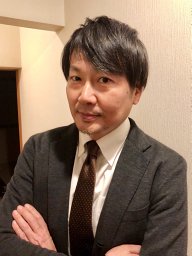 Tsuyoshi Fujita合作论文数Suntory Institute for Bioorganic Research26Saichi Hosoda合作论文数21
 Morio Shoda合作论文数Department of Cardiology, Graduate School of Medical Science, Tokyo Women's Medical University18Jun Umemura合作论文数18Liang Dong (董亮)合作论文数17
 Lu Sun (孙露)合作论文数School of Human Settlement and Civil Engineering, Xi'an Jiaotong University11
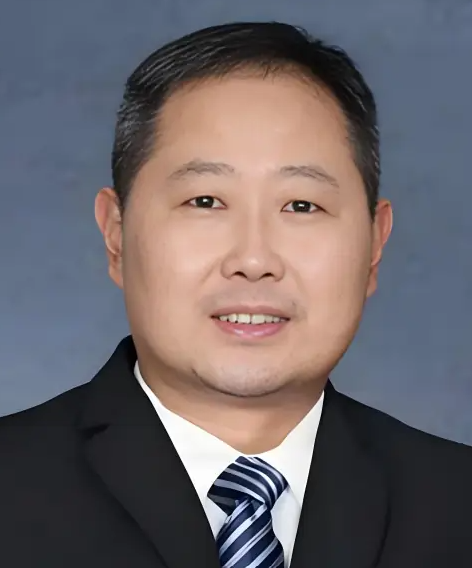 Yong Geng (耿涌)合作论文数China-UK Low Carbon College, Shanghai Jiao Tong University;School of Environmental Science and Engineering, Shanghai Jiao Tong University;School of International and Public Affairs, Shanghai Jiao Tong University11Koshichiro Hirosawa合作论文数11Takuya Togawa合作论文数9Shigeki Inaba合作论文数9
 Huijuan Dong (董会娟)合作论文数School of Environmental Science and Engineering, Shanghai Jiao Tong University9Shin Suzuki合作论文数8Nobuhisa Magosaki合作论文数8Takashi Nirei合作论文数8
 Yi Dou合作论文数7Yasuhiro Endoh合作论文数7M SAKAI合作论文数6Seiya Maki合作论文数6Hitoshi Koyanagi合作论文数6So Yabuki合作论文数6Kiyoshi Seki合作论文数6Etsuko Tanaka合作论文数5Yo Kojima合作论文数5
 Shigeharu Kamado (鎌土重晴)合作论文数Nagaoka University of Technology5kazutoshi sekihara合作论文数4H Hirai合作论文数4Manami Sato合作论文数4Yasuhiro Endo合作论文数4
 Shigeyuki Yokoyama合作论文数RIKEN4Tohru Tanaka合作论文数4Nobuhisa Hagiwara (萩原誠久)合作论文数Department of Internal Medicine, Tokyo Women's Medical University;Division of Cardiology, Tokyo Women's Medical University4
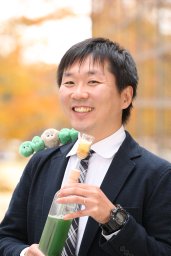 Satoru Watanabe合作论文数Department of Bioscience, Tokyo University of Agriculture4Takanori Kigawa合作论文数Tokyo Institute of Technology4Xudong Chen合作论文数4Naohiro Goto合作论文数4Seizo Koshiba合作论文数4Takushi Harada合作论文数4Eiji Ohtaki合作论文数4
 David Robert Shortle合作论文数Department of Biophysics and Biophysical Chemistry, School of Medicine, Johns Hopkins University4Naoya Tochio合作论文数4
 Kyoko Ito合作论文数4Ryuta Asano合作论文数4Naohisa Yamaguchi合作论文数3Hui Zhang (张辉)合作论文数3
 Shohei Koide合作论文数Department of Biochemistry and Molecular Pharmacology, Grossman School of Medicine, New York University;Perlmutter Cancer Center, New York University Langone Health3Kazuo Hoshino合作论文数3Isogai K合作论文数3




