RESUMO Objetivo desenvolver códigos computacionais para modificação automatizada de grandes quantidades de sentenças gravadas, que realizem modificações de formato, filtragens, simulem o processamento dos sinais sonoros em implantes cocleares e ajustem as médias quadráticas de amplitude, a fim de equalizar o volume sonoro percebido entre sentenças. Métodos para os diferentes processamentos pretendidos, foram desenvolvidos códigos em Python, usando as interfaces Spyder e pacotes tais como o pydub, soundfile, os e numpy. Os códigos foram testados em dois conjuntos de arquivos de áudio gravados previamente em português brasileiro, nos formatos .MP3 e .WAV. Resultados foram implementados códigos para modificação do formato dos arquivos, ajuste de fade-in e fade-out, filtragem de passa-alta, vocoderização opcional e ajuste das médias quadráticas das amplitudes. Os testes dos códigos desenvolvidos em dois conjuntos de sentenças disponíveis em .WAV e .MP3 na língua portuguesa demonstraram resultados consistentes com o esperado. Conclusão desenvolveram-se códigos na linguagem Python para modificação de maneira automatizada de arquivos de áudio, disponíveis no site GitHub para adaptações e aprimoramentos por terceiros.
Angesichts struktureller Umbrüche und politischer Verschiebungen sind klassische Modellwelten der Finanzierungstheorie, die auf vollkommenen Märkten spielen, nicht mehr zeitgemäß. Heute muss die Lehre zu Theorie und Praxis der Finanzierungspolitik beide Sphären miteinander verbinden - wie es das Konzept dieses Lehrbuchs verfolgt: Aus der strategischen Sicht der Finanzleitung, sei es als Vorstand im Konzern oder auf einer Managementebene im Mittelstand, werden die zentralen Themen der unternehmerischen Finanzierungspolitik aufgezeigt: Investitionsrechnung, Nutzung von Finanzmärkten, -intermediären und -instrumenten, finanzielles Risikomanagement, Finanzkommunikation, Gestaltung von Unternehmensstruktur und -kontrolle. Das Lehrbuch zeichnet sich durch zahlreiche Anwendungsbeispiele und Einblicke in die Praxis aus. Der modulare Aufbau ermöglicht eine systematische Prüfungsvorbereitung. Die insgesamt 18 Module wurden in der 2. Auflage insbesondere hinsichtlich der drei zentralen Megatrends ausgebaut: Nachhaltigkeit, Digitalisierung und KI sowie Krisen und Suche nach Resilienz.
Ocean bottom nodes (OBNs) are a recent technological solution used for seismic data acquisition. Despite of various advantages compared to conventional methods of measurement, the amount of data acquired in OBNs campaigns poses challenges to energy management and data transmission, ultimately limiting the time the device can acquire data on the seabed. To deal with these disadvantages, compression techniques and prediction models have been proposed in the literature and in both approaches the type of trace is an important information. In this work, strategies for developing seismic trace classifier models are assessed aiming to classify seismic traces from ocean bottom nodes into active, passive and microseism. The models were developed based on the machine learning algorithms decision tree and neural networks. Moreover, different features were used in the training process in order to analyze physical quantity dependent and agnostic classifier models. Five different datasets and thousands of traces were used for training and testing the models developed. Models outputs are explored in terms of confusion matrix, accuracy, precision and recall. Results have shown that the use of acceleration and velocity data for classification of microseism and passive traces led to a lower accuracy when compared to the use of sound pressure data. In addition, no relevant difference was found between the decision tree and neural networks for the classification task.
BACKGROUND:Although the dynamics of the middle ear (ME) have been modeled since the mid-twentieth century, only recently stochastic approaches started to be applied. In this study, a stochastic model of the ME was utilized to predict the ME dynamics under both healthy and pathological conditions. METHODS:The deterministic ME model is based on a lumped-parameter representation, while the stochastic model was developed using a probabilistic non-parametric approach that randomizes the deterministic model. Subsequently, the ME model was modified to represent the ME under pathological conditions. Furthermore, the simulated data was used to develop a classifier model of the ME condition based on a machine learning algorithm. RESULTS:The ME model under healthy conditions exhibited good agreement with statistical experimental results. The ranges of probabilities from models under pathological conditions were qualitatively compared to individual experimental data, revealing similarities. Moreover, the classifier model presented promising results. DISCUSSION:The results aimed to elucidate how the ME dynamics, under different conditions, can overlap across various frequency ranges. Despite the promising results, improvements in the stochastic and classifier models are necessary. Nevertheless, this study serves as a starting point that can yield valuable tools for researchers and clinicians.
In the 1980s, Commerzbank was increasingly forced to become much more international if it wanted to be perceived as a relevant player in the field of investment banking, which was considered particularly attractive. This article focuses on the bank's initially cautious, then strongly accelerated turn toward this new field of business - especially in the form of asset management - and the opportunities it opened up as well as the resulting burdens.
In the 1980s, Commerzbank was increasingly forced to become much more international if it wanted to be perceived as a relevant player in the field of investment banking, which was considered particularly attractive. This article focuses on the bank’s initially cautious, then strongly accelerated turn toward this new field of business – especially in the form of asset management – and the opportunities it opened up as well as the resulting burdens.
Assessing the acoustical performance of building floor systems relies on the impact source to be utilized and on the type of floor cover used. Besides that, a reliable assessment should consider the listeners’ judgments of the sounds transmitted through floors or radiated by them. Objective ratings measured can help to foresee tenant satisfaction provided that they are well correlated with the listeners’ judgments. The main objective of this study was to compare objective and subjective evaluations, using two types of impact sources and two types of floor covers, to try and determine which objective variables could be used to predict subject evaluation and to validate the use of an alternative impact source to be used in more realistic measurements. An objective evaluation was carried out employing impact noise insulation measurements according to ISO 10140:2010, evaluating different types of floors, resilient materials, and impact sound sources (a standardized tapping machine and a calibrated tire). In the analysis of the measured samples, several parameters were evaluated according to the sound source used. Simultaneously, "sound samples" were recorded to be used in a subjective evaluation based on the judgments of 29 listeners about the Noise Annoyance and the Loudness Sensation in response to the two impact sources. The magnitude estimation method was used. Results demonstrate that tapping machine measurements correlate very well with the subjective evaluation measurements and the calibrated tire presents well-correlated results in a specific measurement set-up. In addition, linear regression analysis of the objective and subjective variables shows alternative single number quantities for ratings of impact noise insulation
RESUMO Objetivo Adaptar listas de sentenças para avaliar o reconhecimento de fala em adultos. Método Foram atualizadas 200 sentenças balanceadas foneticamente que passaram por duas etapas de revisão. Na primeira etapa, foi enviado um questionário on-line para 60 juízes analisarem as sentenças em relação aos critérios de familiaridade, significado e previsibilidade. Para análise da consistência interna do questionário foi aplicado coeficiente Alfa de Cronbach. Na segunda etapa, três juízes especialistas analisaram se as mesmas estavam de acordo com os parâmetros indicados pela literatura para a construção de sentenças e organizaram em 10 listas de 20 sentenças cada, a fim de facilitar a avaliação clínica do reconhecimento de fala. Foi realizado um estudo piloto com três indivíduos jovens e normo-ouvintes. Resultados Na primeira etapa foram analisadas as respostas de 15 juízes que preencheram todo o questionário. Verificou-se que a concordância entre os juízes foi alta para todos os critérios. Foram indicadas 71 sentenças para serem modificadas na primeira etapa, sendo a previsibilidade o critério que teve maior ocorrência de modificação. Na segunda etapa foram identificadas mais 28 sentenças passíveis de ajustes, sendo a presença de nome próprio o critério mais frequente. No estudo piloto os jovens apresentaram alto índice de reconhecimento de fala. Conclusão Concluiu-se que a maioria das modificações realizadas nas sentenças deste estudo possibilitou a criação de um material fidedigno para a prática clínica fonoaudiológica que contribuirá na padronização da avaliação da percepção da fala de indivíduos normo-ouvintes e com perda auditiva.
Several mathematical models of the human middle ear dynamics have been studied since the mid-twentieth century. Despite different methods applied, all of these models are based on deterministic approaches. Experimental data have shown that the middle ear behaves as an uncertain system due to the variability among individuals. In this context, stochastic models are useful because they can represent a population of middle ears with its intrinsic uncertainties. In this work, a nonparametric probabilistic approach is used to model the human middle ear dynamics. The lumped-element method is adopted to develop deterministic baseline models, and three different optimization processes are proposed and applied to the adjustment of the stochastic models. Results show that the stochastic models proposed can reproduce the experimental data in terms of mean and coefficient of variation. In addition, this study shows the importance of properly defining the acceptable range of each input parameter in order to obtain a reliable stochastic model.
Many experimental data on the human middle ear (ME) mechanics and dynamics can be found in the literature. Nevertheless, discussions about the uncertainties of these data are scarce. The present study compiles experimental data on the mechanical properties of the human ME. The summary statistics of mean and standard deviation of the data were collected and the coefficients of variation were computed and pooled. Moreover, the linear correlation and distribution were assessed for the ossicles' mass. Results show that, generally, the uncertainties of the stiffness properties of the tympanic membrane, ligaments, and tendons are larger than the uncertainties of the ossicles' mass. In addition, the uncertainties of the ME response vary across frequency. The vibration measures, such as the stapes' velocity normalized by the sound pressure at the tympanic membrane, are more uncertain than ME input impedance and reflectance. It is expected that the results presented in this study will provide the basis for the development of probabilistic models of the human ME.
Banana slices were dehydrated by Conductive Multi-Flash Drying (KMFD) and stored at different relative humidities. A sensory panel determined the bananas' crispness and PCA correlated these results to mechanical and acoustic properties from compression and puncture tests. The BET model predicted the monolayer moisture as 0.0723 g/g with aw 0.388 as a supposed condition for good storage stability. However, based on crispiness, the sensory panel suggests a critical aw between 0.225 and 0.327. In the Spectrum crispness scale (intensity 0 to 15), the trained panel rated samples at aw 0.035 to 0.529 from 9.06 to 0.12, respectively. The number of acoustic peaks for the SPL bands depended on type and speed of the mechanical test. In compression, the parameters that correlated well to sensory crispness were moisture, number of force peaks, linear distance, and all acoustic parameters, independently of the acoustic filter (Arimi or FIR). In puncture test, the number of acoustic peaks highly correlated with sensory crispness. The striking correlation between the mechano-acoustic analyses and the sensory panel allows the reliable use of instrumental analyses in predicting the banana snacks crispness at different aw. It directly applies to industrial quality control since instrumental analyses are cheaper and faster than sensory panels.
PURPOSE:Adapt a list of sentences for a speech intelligibility test.METHODS:A speech material data base consisting of 200 phonetically balanced sentences was analyzed and partially updated. In the first stage, 60 reviewers, specialists in linguistics and speech and hearing science, analyzed the sentences in relation to the parameters of familiarity, meaning and predictability using an on-line questionnaire. Cronbach's Alpha coefficient was used to analyze the internal consistency of the questionnaire. In the second stage, the reviewers analyzed whether they were in accordance with the criteria indicated by the literature for the construction of sentences.RESULTS:In the first stage, the responses of 15 reviewers who completed the entire questionnaire were analyzed. Agreement between reviewers was high for all criteria. 71 sentences were recommended for modification in the first stage, with predictability being the most indicated parameter as requiring change. In the second stage, 28 more sentences were selected for adjustment, with the presence of a proper name in the sentence being the most frequently cited criterion.CONCLUSION:It was possible to adapt a list of sentences in order to provide speech language therapists with a free of charge speech perception protocol. It is hoped that this new test can assist in standardizing assessment for normal hearing adults and individuals with hearing loss in Brazilian Portuguese.
Along the advent of 4D seismic exploration, the need to properly compensate spatio-temporal variations in the water column has become of utterly importance for the adequate characterization of reservoirs changes during their exploration phase. In this study we revisit a previously suggested processing flow that is focused on the recovery of oceanographic coherent structures (DAGNINO et al., 2017), and propose some modifications. The main reason for this is our restriction to work with already processed (by 3rd parties) data, that was mostly guided to proper characterization of sub-sea floor geologic structures. We found that our re-processing flow is able to recover signatures of oceanic thermohaline structures, thus having a potential for further inversion focused on detailed water layer velocity reconstruction. Introduction Reservoir management, including reservoir monitoring and surveillance, is a core part of oilfield development strategies and carbon dioxide storage projects. It provides industry experts with methods to optimize and track hydrocarbon recovery rates, or to supervise CO2 storage capacity. An ideal reservoir management tool should be able to observe and track the internal fluid movement, estimate the effect of its displacement, locate and predict future distributions of fluid (SAMBO et al., 2020). In this context, 4D seismography is a complementary tool for reservoir management (LUMLEY, 2001), especially to obtain measures of the speed of sound in the water column. The most common methods include: picking zerooffset traveltime to the seabed, measurements of the travel time change of the sub-sea reflector with offset, and conventional velocity analysis to obtain averaged velocities in the water column (BRIGHT et al., 2015). However, a somewhat new approach, focused on highresolution estimation of the sound velocity in the water column considers the processing of ocean thermohaline reflections, generated by the impedance contrasts that occur within the water column (BRIGHT et al., 2015). Regarding the particular care required to process such small thermohaline reflections, (DAGNINO et al., 2017) proposed a wave-form preserving workflow to filter and separately process parts of the seismic data in order to recover highly detailed termohaline structures. Figure 1 displays a general scheme of this workflow, which can be divided into four main blocks: 1) Noise attenuation with Butterworth filter and padding, 2) SVD, after linear (normalized) move-out correction, separating direct wave and reflections, 3) Direct wave treatment, with trace flagging and amplitude control, and 4) Treatment of the reflections, with amplitude control, normal move-out correction, dip filter and trace flagging. Figure 1: General workflow of (DAGNINO et al., 2017) Although the main idea behind this workflow can be maintained, differences in the results are expected when input data is used that has been already processed for reservoir exploration. In this preprocessed data some artifacts in the portion of the data that represent the water column require additional re-processing to recover the oceanic structure’s signature. The complete list of the processing applied by a third party to our input data is as follows:
Cochlear implants (CI) are the most successful electronic prostheses for human beings. They almost completely restore the communication capability in profound-to-severe hearing losses under quiet conditions. However, noisy scenarios still impose critical intelligibility limitations. Time-frequency masks have been widely used to improve signal to noise conditions (SNR) and, as a consequence, increase the speech intelligibility. The most studied methods in the literature are the Binary mask (BM) and the Wiener filter (WF), which were not originally designed for this application. This work analyzes the performance of the minimum mean square error (MMSE) magnitude estimator for increasing intelligibility in CI applications. Objective measures and psychoacoustic experiments with normal hearing volunteers and vocoded signals, as well as CI users indicate that the MMSE method outperfoms the intelligibility performance obtained by both BM and WF time-frequency masks, especially in low SNR conditions (SNR < 8 dB). This observation can be explained by the fact that CIs do not provide speech temporal-fine-structure information to the CI user, and that hard masks may suppress important speech information under low SNR. As a result, we provide strong indications that the MMSE magnitude-based time-frequency mask is more suitable to CI noise reduction applications, as compared to WF and BM, whenever the additional computation burden is tolerable by the CI processor. (C) 2020 Elsevier Ltd. All rights reserved.
Modelos de parâmetros concentrados têm servido ao estudo da dinâmica orelha média humana desde a metade do século XX. Em geral, o ajuste dos modelos é fundamentado em dados experimentais, sendo que ele pode ser feito a partir de uma função de objetivo único ou que envolve múltiplos objetivos. O ajuste dos parâmetros físicos por uma função de objetivo único pode interferir na representatividade dos modelos, fazendo-os menos capazes de corresponder à fisiologia da orelha média normal e sob condições patológicas. Este artigo apresenta um modelo de parâmetros mecânicos concentrados da orelha média humana e um estudo sobre o ajuste deste modelo, preliminarmente, por otimização única de cada grandeza dinâmica proposta, seguida por uma otimização com múltiplos objetivos destas grandezas. As soluções obtidas são, então, comparadas a dados experimentais de referência a fim de avaliar a melhor representatividade do modelo a partir de um ajuste multiobjetivo.
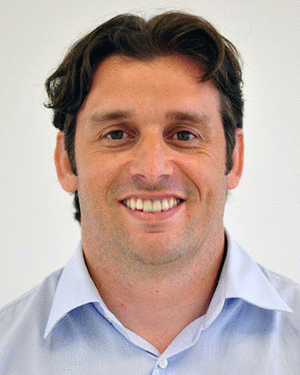 Julio A. Cordioli合作论文数ESI US R&D Inc.25
 Lucas Lobato合作论文数12
 Bernardo Murta合作论文数6
 Stefan Stein合作论文数Department of Statistics, University of Warwick Coventry6Daniel Kaltofen合作论文数6wim kosters合作论文数Fakultät für Wirtschaftswissenschaft, Ruhr-Universität Bochum6
 Andre Loch Gesing合作论文数Department of Mechanical Engineering, Federal University of Santa Catarina6
 Andrey R da Silva合作论文数Computational Acoustic;Modeling Laboratory - Music Technology;McGill University;Modeling Laboratory - Music Technology, McGill University6
 Christoph M. Schmidt合作论文数RWI – Leibniz-Institut für Wirtschaftsforschung;RuhrUniversität Bochum6
 Bernardo H P Murta合作论文数5
 Erasmo F. Vergara合作论文数Federal University;Mechanical Engineering;Dept .;Dept ., Federal University5
 Ricardo Brum合作论文数4
 Diego Calero合作论文数4
 Andriele Panosso合作论文数4
 Eric Brandao合作论文数4André Uhde合作论文数4Simon Schumacher合作论文数3Marc Lange合作论文数3Ticiana Matar De Lello合作论文数3
 talita pozzer合作论文数3fabian prystav合作论文数3
 Gustavo Mourao合作论文数3
 Rafael Chiea合作论文数Dept Elect Engn, Univ Fed Santa Catarina3
 zargos neves masson合作论文数Department of Mechanical Engineering, Federal University of Santa Catarina3
 Sergio Luiz Aguirre合作论文数3
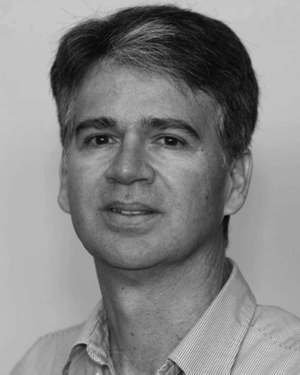 Fabio Alves合作论文数3
 Maria Madalena canina Pinheiro合作论文数3
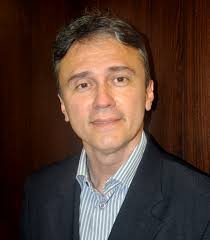 Roberto Moraes Cruz合作论文数Departamento de Psicologia;Universidade Federal de Santa Catarina;Departamento de Psicologia, Universidade Federal de Santa Catarina3
 Christina Boll合作论文数3
 Alexsandro Andrade合作论文数3
 Márcio Holsbach Costa合作论文数Department of Electrical Engineering, Federal University of Santa Catarina3Martin Junkernheinrich合作论文数3
 Tobias Kitlinski合作论文数2philipp doering合作论文数2Pamela Andreani合作论文数2ansgar belke合作论文数2Lara Malafaia Vieira合作论文数2olmiro c de souza合作论文数2Fernanda Marros合作论文数2Kauê Werner合作论文数2lucinara camargo合作论文数2Isabel Kuniyoshi合作论文数2tobias korner合作论文数2Oliver Müller合作论文数2Michele Gindri Vieira合作论文数2Isadora Koerich合作论文数2Isadora Rosseto合作论文数2
 Cristiane Lazzarotto-Volcão合作论文数UFSC - Florianópolis (SC, Universidade Federal de Santa Catarina2




