We report an improved measurement of the valence u and d quark distributions from the forward-backward asymmetry in the Drell-Yan process using 8.6 fb(-1) of data collected with the D0 detector in p (p) over bar collisions at root s = 1.96. This analysis provides the values of new structure parameters that are directly related to the valence up and down quark distributions in the proton. In other experimental results measuring the quark content of the proton, d quark contributions are mixed with those from other quark flavors. In this measurement, the u and d quark contributions are separately extracted by applying a factorization of the QCD and electroweak portions of the forward-backward asymmetry.
AbstractWe present measurements of the branching fractions of eight $$ {\overline{B}}^0 $$ B ¯ 0 → D(*)+K−$$ {K}_{(S)}^{\left(\ast \right)0} $$ K S ∗ 0 , B− → D(*)0K−$$ {K}_{(S)}^{\left(\ast \right)0} $$ K S ∗ 0 decay channels. The results are based on data from SuperKEKB electron-positron collisions at the Υ(4S) resonance collected with the Belle II detector, corresponding to an integrated luminosity of 362 fb−1. The event yields are extracted from fits to the distributions of the difference between expected and observed B meson energy, and are efficiency-corrected as a function of m(K−$$ {K}_{(S)}^{\left(\ast \right)0} $$ K S ∗ 0 ) and m(D(*)$$ {K}_{(S)}^{\left(\ast \right)0} $$ K S ∗ 0 ) in order to avoid dependence on the decay model. These results include the first observation of $$ {\overline{B}}^0 $$ B ¯ 0 → D+K−$$ {K}_S^0 $$ K S 0 , B− → D*0K−$$ {K}_S^0 $$ K S 0 , and $$ {\overline{B}}^0 $$ B ¯ 0 → D*+K−$$ {K}_S^0 $$ K S 0 decays and a significant improvement in the precision of the other channels compared to previous measurements. The helicity-angle distributions and the invariant mass distributions of the K−$$ {K}_{(S)}^{\left(\ast \right)0} $$ K S ∗ 0 systems are compatible with quasi-two-body decays via a resonant transition with spin-parity JP = 1− for the K−$$ {K}_S^0 $$ K S 0 systems and JP = 1+ for the K−K*0 systems. We also present measurements of the branching fractions of four $$ {\overline{B}}^0 $$ B ¯ 0 → D(*)+$$ {D}_s^{-} $$ D s − , B− → D(*)0$$ {D}_s^{-} $$ D s − decay channels with a precision compatible to the current world averages.
We present measurements of the branching fractions of eight B^0 → D(*)+K− K_(S)^(∗)0 , B− → D(*)0K− K_(S)^(∗)0 decay channels. The results are based on data from SuperKEKB electron-positron collisions at the Υ(4S) resonance collected with the Belle II detector, corresponding to an integrated luminosity of 362 fb−1. The event yields are extracted from fits to the distributions of the difference between expected and observed B meson energy, and are efficiency-corrected as a function of m(K− K_(S)^(∗)0 ) and m(D(*) K_(S)^(∗)0 ) in order to avoid dependence on the decay model. These results include the first observation of B^0 → D+K− K_S^0 , B− → D*0K− K_S^0 , and B^0 → D*+K− K_S^0 decays and a significant improvement in the precision of the other channels compared to previous measurements. The helicity-angle distributions and the invariant mass distributions of the K− K_(S)^(∗)0 systems are compatible with quasi-two-body decays via a resonant transition with spin-parity JP = 1− for the K− K_S^0 systems and JP = 1+ for the K−K*0 systems. We also present measurements of the branching fractions of four B^0 → D(*)+ D_s^- , B− → D(*)0 D_s^- decay channels with a precision compatible to the current world averages.
We present the first measurement of the Michel parameter $\xi^\prime$ in the $\tau^-\to\mu^-\bar{\nu}_\mu\nu_\tau$ decay using the full data sample of $988\,\text{fb}^{-1}$ collected by the Belle detector operating at the KEKB asymmetric energy $e^+ e^-$ collider. The method is based on the reconstruction of the $\mu^- \to e^- \bar{\nu}_e\nu_\mu$ decay-in-flight in the Belle central drift chamber and relies on the correlation between muon spin and its daughter electron momentum. We study the main sources of the background that can imitate the signal decay, such as kaon and pion decays-in-flight and charged particle scattering on the detector material. Highly efficient methods of their suppression are developed and applied to select 165 signal-candidate events. We obtain $\xi^\prime=0.22\pm0.94\pm0.42$ where the first uncertainty is statistical, and the second one is systematic. The result is in agreement with the Standard Model prediction of $\xi^\prime=1$.
We report the results of the first search for the decay ${B}_{s}^{0}\ensuremath{\rightarrow}{\ensuremath{\pi}}^{0}{\ensuremath{\pi}}^{0}$ using $121.4\text{ }\text{ }{\mathrm{fb}}^{\ensuremath{-}1}$ of data collected at the $\mathrm{\ensuremath{\Upsilon}}(5\mathrm{S})$ resonance with the Belle detector at the KEKB asymmetric-energy ${e}^{+}{e}^{\ensuremath{-}}$ collider. We observe no signal and set a 90% confidence level upper limit of $7.7\ifmmode\times\else\texttimes\fi{}{10}^{\ensuremath{-}6}$ on the ${B}_{s}^{0}\ensuremath{\rightarrow}{\ensuremath{\pi}}^{0}{\ensuremath{\pi}}^{0}$ decay branching fraction.
The upgrade of the CMS experiment for the high luminosity operation of the LHC comprises the replacement of the current endcap calorimeter by a high granularity sampling calorimeter (HGCAL). The electromagnetic section of the HGCAL is based on silicon sensors interspersed between lead and copper (or copper tungsten) absorbers. The hadronic section uses layers of stainless steel as an absorbing medium and silicon sensors as an active medium in the regions of high radiation exposure, and scintillator tiles directly readout by silicon photomultipliers in the remaining regions. As part of the development of the detector and its readout electronic components, a section of a silicon-based HGCAL prototype detector along with a section of the CALICE AHCAL prototype was exposed to muons, electrons and charged pions in beam test experiments at the H2 beamline at the CERN SPS in October 2018. The AHCAL uses the same technology as foreseen for the HGCAL but with much finer longitudinal segmentation. The performance of the calorimeters in terms of energy response and resolution, longitudinal and transverse shower profiles is studied using negatively charged pions, and is compared to GEANT4 predictions. This is the first report summarizing results of hadronic showers measured by the HGCAL prototype using beam test data.
We report a study of Λ+c→Σ+π0, Λ+c→Σ+η, and Λ+c→Σ+η′ using the data sample corresponding to an integrated luminosity of 980 fb−1 collected with the Belle detector at the KEKB asymmetric-energy e+e− collider. The branching fractions relative to Λ+c→Σ+π0 are measured as BΛ+c→Σ+η/BΛ+c→Σ+π0=0.25±0.03±0.01 and BΛ+c→Σ+η′/BΛ+c→Σ+π0=0.33±0.06±0.02. Using BΛ+c→Σ+π0=(1.25±0.10)%, we obtain BΛ+c→Σ+η=(3.14±0.35±0.17±0.25)×10−3 and BΛ+c→Σ+η′=(4.16±0.75±0.25±0.33)×10−3. Here the uncertainties are statistical, systematic, and from BΛ+c→Σ+π0, respectively. The ratio of the branching fraction of Λ+c→Σ+η′ with respect to that of Λ+c→Σ+η is measured to be BΛ+c→Σ+η′/BΛ+c→Σ+η=1.34±0.28±0.08. We update the asymmetry parameter of Λ+c→Σ+π0, αΣ+π0=−0.48±0.02±0.02, with a considerably improved precision. The asymmetry parameters of Λ+c→Σ+η and Λ+c→Σ+η′ are measured to be αΣ+η=−0.99±0.03±0.05 and αΣ+η′=−0.46±0.06±0.03 for the first time.1 MoreReceived 23 August 2022Accepted 8 December 2022DOI:https://doi.org/10.1103/PhysRevD.107.032003Published by the American Physical Society under the terms of the Creative Commons Attribution 4.0 International license. Further distribution of this work must maintain attribution to the author(s) and the published article's title, journal citation, and DOI. Funded by SCOAP3.Published by the American Physical SocietyPhysics Subject Headings (PhySH)Research AreasBranching fractionPhysical SystemsCharmed baryonsTechniquesLepton collidersParticles & Fields
We present a measurement of the differential shapes of exclusive $B\ensuremath{\rightarrow}{D}^{*}\ensuremath{\ell}{\overline{\ensuremath{\nu}}}_{\ensuremath{\ell}}$ ($B={B}^{\ensuremath{-}},{\overline{B}}^{0}$ and $\ensuremath{\ell}=e$, $\ensuremath{\mu}$) decays with hadronic tag-side reconstruction for the full $711\text{ }\text{ }{\mathrm{fb}}^{\ensuremath{-}1}$ Belle dataset. We extract the Caprini-Lellouch-Neubert (CLN) and Boyd-Grinstein-Lebed (BGL) form factor parameters and use an external input for the absolute branching fractions to determine the Cabibbo-Kobayashi-Maskawa matrix element and find $|{V}_{cb}{|}_{\mathrm{CLN}}=(40.2\ifmmode\pm\else\textpm\fi{}0.9)\ifmmode\times\else\texttimes\fi{}{10}^{\ensuremath{-}3}$ and $|{V}_{cb}{|}_{\mathrm{BGL}}=(40.7\ifmmode\pm\else\textpm\fi{}1.0)\ifmmode\times\else\texttimes\fi{}{10}^{\ensuremath{-}3}$ with the zero-recoil lattice QCD point $\mathcal{F}(1)=0.906\ifmmode\pm\else\textpm\fi{}0.013$. We also perform a study of the impact of beyond zero-recoil lattice QCD calculations on the $|{V}_{cb}|$ determinations. Additionally, we present the lepton-flavor universality ratio ${R}_{e\ensuremath{\mu}}=\mathcal{B}(B\ensuremath{\rightarrow}{D}^{*}e{\overline{\ensuremath{\nu}}}_{e})/\mathcal{B}(B\ensuremath{\rightarrow}{D}^{*}\ensuremath{\mu}{\overline{\ensuremath{\nu}}}_{\ensuremath{\mu}})=0.993\ifmmode\pm\else\textpm\fi{}0.023\ifmmode\pm\else\textpm\fi{}0.023$, the electron and muon forward-backward asymmetry and their difference $\mathrm{\ensuremath{\Delta}}{A}_{FB}=0.028\ifmmode\pm\else\textpm\fi{}0.028\ifmmode\pm\else\textpm\fi{}0.008$, and the electron and muon ${D}^{*}$ longitudinal polarization fraction and their difference $\mathrm{\ensuremath{\Delta}}{F}_{L}^{{D}^{*}}=0.030\ifmmode\pm\else\textpm\fi{}0.025\ifmmode\pm\else\textpm\fi{}0.007$. The uncertainties quoted correspond to the statistical and systematic uncertainties, respectively.
We report the first measurement of the Michel parameter ξ^{'} in the τ^{-}→μ^{-}ν[over ¯]_{μ}ν_{τ} decay with a new method proposed just recently. The measurement is based on the reconstruction of the τ^{-}→μ^{-}ν[over ¯]_{μ}ν_{τ} events with subsequent muon decay in flight in the Belle central drift chamber. The analyzed data sample of 988 fb^{-1} collected by the Belle detector corresponds to approximately 912×10^{6} τ^{+}τ^{-} pairs. We measure ξ^{'}=0.22±0.94(stat)±0.42(syst), which is in agreement with the standard model prediction of ξ^{'}=1. Statistical uncertainty dominates in this study, being a limiting factor, while systematic uncertainty is well under control. Our analysis proved the practicability of this promising method and its prospects for further precise measurement in future experiments.
We measure the $B^0$ lifetime and flavor-oscillation frequency using $B^0\to D^{(*)-}\pi^+$ decays collected by the Belle II experiment in asymmetric-energy $e^+e^-$ collisions produced by the SuperKEKB collider operating at the $\Upsilon(4S)$ resonance. We fit the decay-time distribution of signal decays, where the initial flavor is determined by identifying the flavor of the other $B$ meson in the event. The results, based on $33000$ signal decays reconstructed in a data sample corresponding to ${190}\text{fb}^{-1}$, are $\tau_{B^0} = {1.499}\pm{0.013}\pm{0.008}\;\text{ps}$, $\Delta m_d = {0.516}\pm{0.008}\pm{0.005}\;\text{ps}^{-1}$, where the first uncertainties are statistical and the second are systematic. These results are consistent with the world-average values.
We present a search for the lepton flavor violating decays B^{+}→K^{+}τ^{±}ℓ^{∓}, with ℓ=(e,μ), using the full data sample of 772×10^{6} BB[over ¯] pairs recorded by the Belle detector at the KEKB asymmetric-energy e^{+}e^{-} collider. We use events in which one B meson is fully reconstructed in a hadronic decay mode. We find no evidence for B^{±}→K^{±}τℓ decays and set upper limits on their branching fractions at the 90% confidence level in the (1-3)×10^{-5} range. The obtained limits are the world's best results.
Using the entire data sample of 980 fb−1 collected at or near the Υ(4S) resonance with the Belle detector operating at the KEKB asymmetric-energy e+e− collider, we report the measurement of the mass, width, and the branching ratios of the Λc(2625)+ charmed baryon. The mass difference between Λc(2625)+ and Λ+c is measured to be M(Λc(2625)+)−M(Λ+c)=341.518±0.006±0.049 MeV/c2. The upper limit on the width is measured to be Γ(Λc(2625)+)<0.52 MeV/c2 at 90% confidence level. Based on a full Dalitz plot fit, branching ratios with respect to the mode Λc(2625)+→Λ+cπ+π− are measured to be B(Λc(2625)+→Σ0cπ+)B(Λc(2625)+→Λ+cπ+π−)=(5.19±0.23±0.40)% and B(Λc(2625)+→Σ++cπ−)B(Λc(2625)+→Λ+cπ+π−)=(5.13±0.26±0.32)%, where the first and second uncertainties are statistical and systematic, respectively. These measurements can be used to further constrain the parameters of the underlying theoretical models.Received 13 December 2022Accepted 20 January 2023DOI:https://doi.org/10.1103/PhysRevD.107.032008Published by the American Physical Society under the terms of the Creative Commons Attribution 4.0 International license. Further distribution of this work must maintain attribution to the author(s) and the published article's title, journal citation, and DOI. Funded by SCOAP3.Published by the American Physical SocietyPhysics Subject Headings (PhySH)Physical SystemsCharmed baryonsPropertiesParticle propertiesTechniquesParticle decaysParticles & Fields
We search for the ${B}^{0}\ensuremath{\rightarrow}p{\overline{\mathrm{\ensuremath{\Sigma}}}}^{0}{\ensuremath{\pi}}^{\ensuremath{-}}$ decay with ${\overline{\mathrm{\ensuremath{\Sigma}}}}^{0}\ensuremath{\rightarrow}\overline{\mathrm{\ensuremath{\Lambda}}}\ensuremath{\gamma}$, where the $\ensuremath{\gamma}$ is not measured, using a data sample corresponding to an integrated luminosity of $711\text{ }\text{ }\mathrm{f}{\mathrm{b}}^{\ensuremath{-}1}$ which contains $772\ifmmode\times\else\texttimes\fi{}{10}^{6}\text{ }\text{ }B\overline{B}$ pairs, collected around the $\mathrm{\ensuremath{\Upsilon}}(4\mathrm{S})$ resonance with the Belle detector at the KEKB asymmetric-energy ${e}^{+}{e}^{\ensuremath{-}}$ collider. We measure for the first time the ${B}^{0}\ensuremath{\rightarrow}p{\overline{\mathrm{\ensuremath{\Sigma}}}}^{0}{\ensuremath{\pi}}^{\ensuremath{-}}$ branching fraction to be $\mathcal{B}({B}^{0}\ensuremath{\rightarrow}p{\overline{\mathrm{\ensuremath{\Sigma}}}}^{0}{\ensuremath{\pi}}^{\ensuremath{-}})=(1.1{7}_{\ensuremath{-}0.40}^{+0.43}(\mathrm{stat})\ifmmode\pm\else\textpm\fi{}0.07(\mathrm{syst}))\ifmmode\times\else\texttimes\fi{}{10}^{\ensuremath{-}6}$ with a significance of $3.0\ensuremath{\sigma}$. We simultaneously measure the branching fraction for the related channel ${B}^{0}\ensuremath{\rightarrow}p\overline{\mathrm{\ensuremath{\Lambda}}}{\ensuremath{\pi}}^{\ensuremath{-}}$ with much improved precision.
We present a search for the lepton-flavor-violating decays B_s^0 → ℓ∓τ±, where ℓ = e, μ, using the full data sample of 121 fb−1 collected at the Υ(5S) resonance with the Belle detector at the KEKB asymmetric-energy e+e− collider. We use B_s^0B_s^0 events in which one B_s^0 meson is reconstructed in a semileptonic decay mode and the other in the signal mode. We find no evidence for B_s^0 → ℓ∓τ± decays and set upper limits on their branching fractions at 90
We report measurements of the branching fraction and $\it CP$ asymmetry in $B^{0} \to π^{0} π^{0}$ decays reconstructed at Belle II in an electron-positron collision sample containing $198 \times 10^{6}$ $B\overline{B}$ pairs. We measure a branching fraction $\mathcal{B}(\Bpipi) = (1.38 \pm 0.27 \pm 0.22) \times 10^{-6}$ and a $\it CP$ asymmetry $\Acp(\Bpipi) = 0.14 \pm 0.46 \pm 0.07$, where the first uncertainty is statistical and the second is systematic.
We present a measurement of time-dependent rate asymmetries in B-0 -> phi K-s(0) decays to search for non-standard-model physics in b -> q (q) over bars transitions. The data sample is collected with the Belle II detector at the SuperKEKB asymmetric-energy e(+)e(-) collider in 2019-2022 and contains (387 +/- 6) x 10(6) bottomantibottom mesons from gamma(4S) resonance decays. We reconstruct 162 +/- 17 signal events and extract the charge-parity (CP) violating parameters from a fit to the distribution of the proper-decay-time difference of the two B mesons. The measured direct and mixing-induced CP asymmetries are C = -0.31 +/- 0.20 +/- 0.05 and S = 0.54 +/- 0.26(-0.08)(+0.06), respectively, where the first uncertainties are statistical and the second are systematic. The results are compatible with the CP asymmetries observed in b -> c (c) over bars transitions.
We present a search for the lepton-flavor-violating decays B-s(0) -> l(-/+) tau(+/-), where l = e, mu, using the full data sample of 121 fb(-1) collected at the Gamma(5S) resonance with the Belle detector at the KEKB asymmetric-energy e(+)e(-) collider. We use B-s(0)(B) over bar (0)(s) events in which one B-s(0) meson is reconstructed in a semileptonic decay mode and the other in the signal mode. We find no evidence for B-0(s) -> l(-/+) tau(+/-) decays and set upper limits on their branching fractions at 90% confidence level as B(B-s(0) -> e(-/+)tau(+/-)) < 14 x 10(-4) and B(B-s(0) -> mu(-/+)tau(+/-)) < 7.3x10(-4). Our result represents the first upper limit on the B-0(s) -> e(-/+)tau(+/-) decay rate.
Using the data sample of 980 fb−1 collected with the Belle detector operating at the KEKB asymmetric-energy e+e− collider, we present the results of an investigation of the Λπ+ and Λπ− invariant mass distributions looking for substructure in the decay Λ+c→Λπ+π+π−. We find a significant signal in each mass distribution. When interpreted as resonances, we find for the Λπ+ (Λπ−) combination a mass of 1434.3±0.6(stat)±0.9(syst) MeV/c2 [1438.5±0.9(stat)±2.5(syst) MeV/c2], an intrinsic width of 11.5±2.8(stat)±5.3(syst) MeV/c2 [33.0±7.5(stat)±23.6(syst) MeV/c2] with a significance of 7.5σ (6.2σ). As these two signals are very close to the ¯KN threshold, we also investigate the possibility of a ¯KN cusp, and find that we cannot discriminate between these two interpretations due to the limited size of the data sample.Received 21 November 2022Accepted 15 March 2023DOI:https://doi.org/10.1103/PhysRevLett.130.151903Published by the American Physical Society under the terms of the Creative Commons Attribution 4.0 International license. Further distribution of this work must maintain attribution to the author(s) and the published article's title, journal citation, and DOI. Funded by SCOAP3.Published by the American Physical SocietyPhysics Subject Headings (PhySH)Charmed baryonsPhysical SystemsHadronsBaryonsHeavy baryonsCharmed baryonsResearch AreasHadronic decaysPhysical SystemsCharmed baryonsHyperonsParticles & Fields
The high-energy gamma rays have been measured in proton and alpha-induced reactions on medium mass target nuclei In-11(5) and Sn-112, respectively. Theoretical analyses of the spectra have been performed within the Hauser-Feshbach statistical model and the Akkermans-Gruppelaar exciton model formalisms. It is observed that the proton-induced reaction has significant contribution from the direct-semidirect capture in the region E-gamma approximate to 10-20 MeV. The He-4-ion-induced reaction could be described reasonably well by the results of the statistical model calculations. A reduced level density parameter, as compared to that used for the proton-induced reaction, was required to explain the high-energy gamma-ray spectrum in the He-4-ion-induced reaction.
 H. Thomas Diehl合作论文数Fermilab547
 Vipin Bhatnagar合作论文数Department of Physics, Panjab University457
 Emanuela Barberis合作论文数College of Science, Northeastern University453
 Suman Bala Beri合作论文数Department of Physics, Panjab University451M Adams合作论文数447
 Christopher Tully合作论文数Department of Physics, Princeton University435
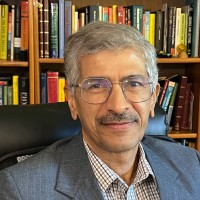 Chandrashekhara M. Bhat合作论文数Fermi National Accelerator Laboratory432
 F. Filthaut (Frank)合作论文数Department of Experimental High Energy Physics, Radboud University430L. Dudko合作论文数Skobeltsyn Inst Nucl Phys, Lomonosov Moscow State Univ427
 Dan Claes合作论文数Department of Physics and Astronomy, College of Arts and Sciences, University of Nebraska-Lincoln427
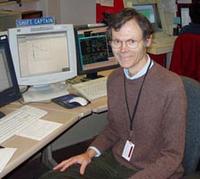 David Cutts合作论文数Brown University426D. Lincoln合作论文数425
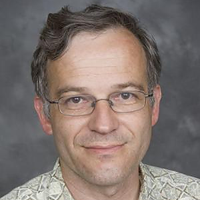 Ulrich Heintz合作论文数Department of Physics, Brown University425
 Bob Hirosky合作论文数Department of Physics, University of Virginia424
 Meenakshi Narain合作论文数Brown University422T. Ferbel合作论文数421
 Philip S. Baringer合作论文数Department of Physics & Astronomy, College of Liberal Arts & Sciences, University of Kansas415
 Alice L. Bean合作论文数Department of Physics & Astronomy, College of Liberal Arts & Sciences, University of Kansas414
 Suyong Choi合作论文数Department of Physics, College of Science, Korea University409
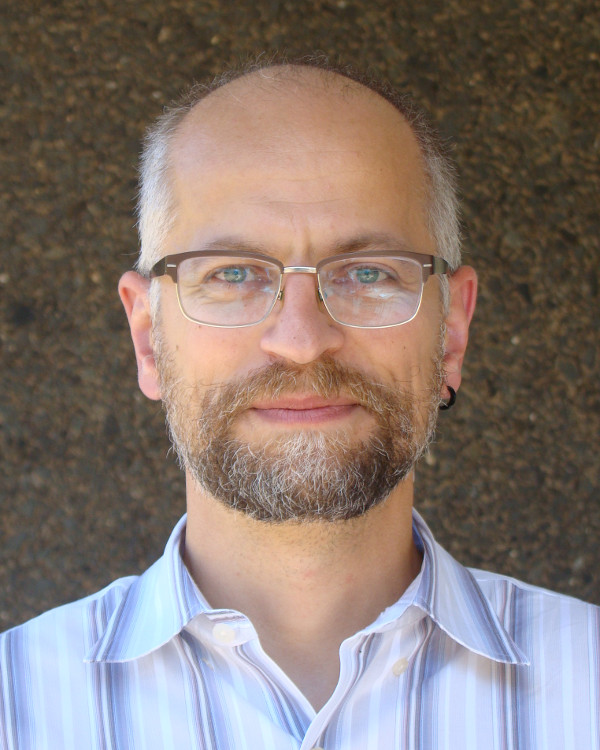 Yuri Gershtein合作论文数Department of Physics and Astronomy, School of Arts and Sciences, Rutgers University409
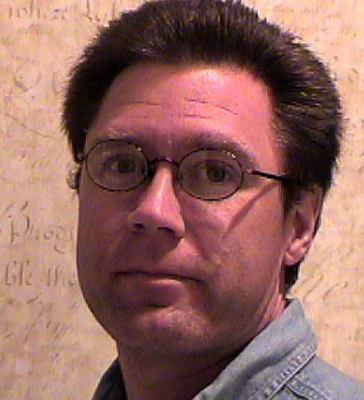 Brad Abbott合作论文数Homer L. Dodge Department of Physics and Astronomy, Dodge Family College of Arts and Sciences, The University of Oklahoma408
 René Luna-García合作论文数Centro de Investigación en Computación, Instituto Politécnico Nacional401
 John Ellison合作论文数Department of Physics and Astronomy, University of California, Riverside400
 Randal Ruchti合作论文数Department of Physics and Astronomy, College of Science, University of Notre Dame400
 B. S. Acharya合作论文数Department of High Energy Physics, Natural Sciences Faculty, Tata Institute of Fundamental Research394Boris Yu Baldin合作论文数389
 Neeti Parashar合作论文数Center for High Energy Physics, Purdue University Northwest;Department of Chemistry and Physics, Purdue University Northwest387
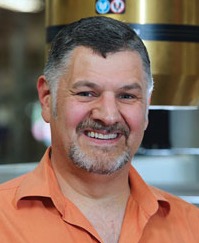 Iain Bertram合作论文数Physics Department, Lancaster University387
 Andrew Brandt合作论文数Department of Physics, College of Science, The University of Texas at Arlington385V. Gavrilov合作论文数383R. Demina合作论文数382
 Gerald C. Blazey合作论文数Department of Physics, College of Liberal Arts and Sciences, Northern Illinois University382Paul L. G. Lebrun合作论文数Experimental Beam Physics Department, Fermi National Accelerator Laboratory379
 Amber S. Boehnlein合作论文数Computational Sciences and Technology Division, Jefferson Laboratory373
 Susan K Blessing合作论文数Department of Physics, College of Arts & Sciences, Florida State University373
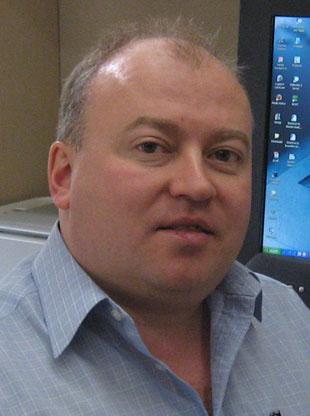 Greg Landsberg合作论文数Department of Physics, Brown University372
 Ia Iashvili合作论文数Department of Physics, College of Arts and Sciences, University at Buffalo372
 Nikos Varelas合作论文数Department of Physics, College of Liberal Arts and Sciences, University of Illinois Chicago;CERN372J Frederick Bartlett合作论文数Fermi National Accelerator Laboratory371Carlos Avila合作论文数369Stephanie L. Hagopian合作论文数365J. Kohli合作论文数364
 a ross合作论文数Fermi National Accelerator Laboratory363Gelio A. Alves合作论文数Centro Brasileiro de Pesquisas Fisicas, Rio de Janeiro, Brazil363
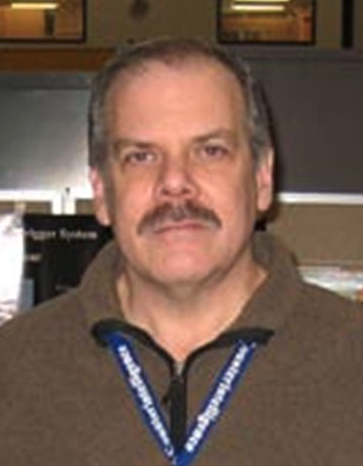 Michael Diesburg合作论文数Fermi National Accelerator Laboratory360
 Andrew Askew合作论文数Department of Physics, College of Arts and Sciences, Florida State University360
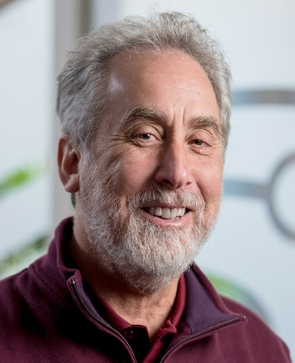 Mitchell Wayne合作论文数Department of Physics & Astronomy, College of Science, University of Notre Dame360
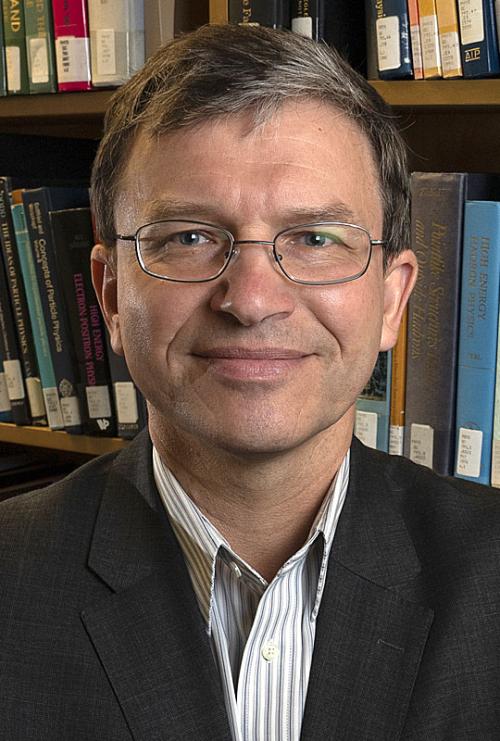 Dmitri Denisov合作论文数Brookhaven National Laboratory359Daniel Edmunds合作论文数Department of Physics and Astronomy, Michigan State University358




