The way a problem is framed shapes its solutions. This article reframes the problem of misinformation and examines the implications of this shift for interventions against misinformation. It advances five arguments that challenge common narratives about misinformation and invite us to rethink both the problem and its solutions. For instance, exposure to misinformation is lower than often believed, people are less gullible than commonly assumed, and misinformation often reflects, rather than causes, underlying sociopolitical issues. These insights point toward strategies that address the root causes of the problem rather than surface symptoms. Key shifts include focusing on the demand for misinformation, fostering trust in reliable sources, and strengthening democratic institutions. Combating misinformation effectively requires a clear understanding of the problem and a break with popular misconceptions about it.
The way a problem is framed shapes its solutions. This article reframes the problem of misinformation and examines the implications of this shift for interventions against misinformation. It advances five arguments that challenge common narratives about misinformation and invite us to rethink both the problem and its solutions. For instance, exposure to misinformation is lower than often believed, people are less gullible than commonly assumed, and misinformation often reflects, rather than causes, underlying sociopolitical issues. These insights point toward strategies that address the root causes of the problem rather than surface symptoms. Key shifts include focusing on the demand for misinformation, fostering trust in reliable sources, and strengthening democratic institutions. Combating misinformation effectively requires a clear understanding of the problem and a break with popular misconceptions about it.
Conspiracy theorists often prompt others to "Do your own research." Could a general desire for such epistemic autonomy-to make up one's own mind rather than deferring to others' testimony-explain why some people are attracted to conspiracy theories? In four pre-registered studies (United States and United Kingdom, N = 1196), we test whether participants more likely to believe in conspiracy theories have a stronger preference for forming their own beliefs independently. Participants chose between doing a difficult perceptual task themselves or relying on an expert's answer. Internal fixed-effect meta-analyses revealed a weak but statistically significant relationship between belief in conspiracy theories and preference for first-hand evidence. By contrast, the relationship between epistemic individualism and this preference was stronger and more robust. This suggests that, although individuals endorsing conspiracy theories express a stronger preference for "doing their own research," their behavior mostly does not match this preference in non-conspiratorial contexts.
What are the distinctive characteristics of misinformation sharers? So far, most studies have focused on the U.S., a two-party system with a highly polarized media landscape, leaving open the question of what misinformation sharers look like in other socio-political contexts. Research has also prioritized testing causal links between cognitive or political variables and misinformation sharing, while paying less attention to fine-grained descriptions of who these users are. To address this gap, we analyze the French Twittersphere using ideological inference methods and a matching procedure. Drawing on four million tweets, we compare 1,907 users who shared at least one URL flagged as false or misleading by fact-checkers with 958 ideologically matched control users who did not. We show that misinformation sharers are more likely to be located at the extremes of the political spectrum, express hostility toward ruling elites and institutions, display political markers in their bios, use pseudonyms, share media content, engage in high-intensity and retweet-oriented activity, and express negative emotions. They also disproportionately circulate topics related to immigration, terrorism, and criticism of mainstream media. However, their language does not indicate lower analytical thinking. By shifting the focus from cognitive vulnerability alone to political self-presentation, anger, and amplification practices, this study contributes to ongoing theoretical debates and calls for further research on the activist practices and party affiliations of misinformation sharers.
How do the professionals charged with fighting disinformation actually understand the problem they are meant to solve? We surveyed 106 French practitioners across military, government, regulatory, and media organizations. They converge on an upstream and offer-driven diagnosis – platforms and amplification structures drive the threat – but describe a field blocked by weak coordination, scarce resources, and fear of censorship accusations. The relationship to science compounds the problem: most practitioners trust peer-reviewed research, yet few engage with it directly, leaving practice disconnected from the evidence base it claims to rely on. Nearly all expect the threat to worsen. Only 13% believe the capacity to respond will catch up.
We agree with Ecker et al. (2025) that misinformation should not be ignored. The specific form that misbeliefs take is indeed shaped by misinformation (e.g., vaccines cause autism). However, this does not imply that misinformation causes behaviors (e.g., vaccine refusal). We view misinformation as a symptom of deeper problems. When many are willing to consume, believe, and act on misinformation, this is diagnostic of broader sociopolitical issues-such as polarization or widespread mistrust-that make misinformation appealing rather than misinformation causing these issues. In particular, we consider that attitudinal and structural roots explain both the consumption and acceptance of misinformation, on the one hand, and the behaviors ascribed to misinformation on the other. (PsycInfo Database Record (c) 2026 APA, all rights reserved).
How effective are user corrections in combatting misinformation on social media, and does adding a link to a fact check improve their effectiveness? We conducted a pre-registered online experiment on representative samples of the online population in Brazil, India, and the United Kingdom (Nparticipants = 3,000, Nobservations = 24,000). We found that in India and Brazil, short user corrections slightly, but often not significantly, reduced belief in misinformation and participants’ willingness to share it. In the United Kingdom, these effects were even smaller and not significant. We found little evidence that fact-check links made user corrections more effective. Overall, our results suggest that short user corrections have small effects and that adding a fact-check link is unlikely to make user corrections much more effective.
How good are people at judging the veracity of news? We conducted a systematic literature review and pre-registered meta-analysis of 303 effect sizes from 67 experimental articles evaluating accuracy ratings of true and fact-checked false news (NParticipants = 194,438 from 40 countries across 6 continents). We found that people rated true news as more accurate than false news (Cohen's d = 1.12 [1.01, 1.22]) and were better at rating false news as false than at rating true news as true (Cohen's d = 0.32 [0.24, 0.39]). In other words, participants were able to discern true from false news and erred on the side of skepticism rather than credulity. We found no evidence that the political concordance of the news had an effect on discernment, but participants were more skeptical of politically discordant news (Cohen's d = 0.78 [0.62, 0.94]). These findings lend support to crowdsourced fact-checking initiatives and suggest that, to improve discernment, there is more room to increase the acceptance of true news than to reduce the acceptance of fact-checked false news.
For fact-checks to be effective, they must first and foremost reach people. Yet, little is known about what determines engagement with fact-checks and how to enhance their reach. We conducted a pre-registered online survey experiment in Pakistan (N participants = 302, N observations = 1208) investigating the effectiveness of fact-checking, and the determinants of engagement with fact-checks and misinformation. We found that fact-checking reduced misperceptions, especially among the most misinformed. Trust was an important moderator of the effectiveness of fact-checking and of engagement with the fact-checks and misinformation. For instance, fact-checks were more effective among participants who trust the news the most and least effective among participants who trust social media the most. Participants more concerned about misinformation were more likely to like and share fact-checks on social media. Understanding and promoting engagement with factual corrections on social media is a pressing challenge to increase the quality of our information ecosystem.
The public's ability to discern the veracity of news has attracted substantial interest. Lack of metacognitive awareness (i.e., knowing one's skill level) is one barrier to improving this skill set. Performance feedback could reduce overconfidence and spur differential responding, or adopting a new evaluation strategy, by providing such information. We randomized the provision of feedback (with the feedback message determined by the respondent's actual performance in a preliminary headline evaluation task) to test this proposition (N = 1,846). We found that feedback reduced relative confidence-to a similar extent for both below and above average performers. However, this reduced relative confidence did not translate into improved performance on a subsequent discernment task. Notably, when re-contacted 1 week later (N = 668), the main effect of reduced relative confidence persisted. These results suggest that although relative performance feedback may target self-assessments, more constructive feedback may be required to improve discernment performance.
Many worry that news on social media leaves people uninformed or even misinformed. Here we conducted a preregistered two-wave online field experiment in France and Germany ( N = 3,395) to estimate the effect of following the news on Instagram and WhatsApp. Participants were asked to follow two accounts for 2 weeks and activate the notifications. In the treatment condition, the accounts were those of news organizations, while in the control condition they covered cooking, cinema or art. The treatment enhanced current affairs knowledge, participants’ ability to discern true from false news stories and awareness of true news stories, as well as trust in the news. The treatment had no significant effects on feelings of being informed, political efficacy, affective polarization and interest in news or politics. These results suggest that, while some forms of social media use are harmful, others are beneficial and can be leveraged to foster a well-informed society.
Can the news help people be more resilient to misinformation? Altay et al. found that news use increases surveillance knowledge and awareness of true and false news, while decreasing belief in false news. We conducted a two-wave panel survey (N = 3,395) to replicate these findings in two new countries: France and Germany. The replication reinforces the conclusions of the original study: we found that higher news consumption predicted greater surveillance knowledge acquisition across the waves, as well as greater awareness of and belief in true news stories. News consumption also increased awareness of false news stories without increasing belief in false news stories. These findings strengthen the idea that news helps people become more informed and better at discerning truth from falsehoods.
Many worry that social media leaves people uninformed or even misinformed. Can people actually learn from following the news on social media? We conducted a preregistered two-wave online field experiment in France and Germany (N = 3,395) to estimate the effect of following the news on Instagram and WhatsApp. Participants were asked to follow two accounts for two weeks and activate the notifications. In the treatment condition the accounts were news-related whereas in the control they were not. Our results show that news consumption on social media has positive consequences: it enhances news knowledge, participants’ ability to discern true from false news stories, awareness of true news stories, as well as trust in the news. The treatment had no significant effects on feeling of being informed, political efficacy, affective polarization, and interest in news or politics. These results suggest that, contrary to popular belief, people actually learn from news on social media and that this form of news consumption should not be dismissed or disdained. While some forms of social media use are harmful, others are positive and can be leveraged to foster a well-informed society.
Science has established the human-caused nature of climate change, yet the prevalence of climate-related misinformation persists, undermining public understanding and impeding collective action. Strikingly, existing research on belief in misinformation about climate change has disproportionately focused on WEIRD (Western, Educated, Industrialized, Rich, and Democratic) countries. To move beyond this, our online survey (N = 8541) includes high-income countries in North America (US), Western Europe (France, Germany, UK) and East Asia (Japan), as well as an upper-middle income country in South America (Brazil) and lower-middle income countries in South Asia (India and Pakistan). By examining the interplay of news media usage, information sources, and trust in these sources, we advance our understanding of how these factors influence belief in climate change-related misinformation in diverse socio-cultural contexts. Across countries, we found that the strongest determinants of belief in misinformation about climate change were identifying as right-wing (compared with left-wing), consuming less offline news, having less trust in scientists, environmental activists, as well as international organizations, and having more trust in politicians, celebrities, and energy companies. Overall, trust in sources of information about climate change and demographic variables were much stronger predictors of belief in misinformation about climate change than reported news consumption (online, offline or on social media). These findings suggest that trust is key to understanding belief in false information about climate change.
The rise of generative AI tools has sparked debates about the labeling of AI-generated content. Yet, the impact of such labels remains uncertain. In two pre-registered online experiments among US and UK participants (N = 4,976), we show that while participants did not equate "AI-generated" with "False", labeling headlines as AI-generated lowered their perceived accuracy and participants' willingness to share them, regardless of whether the headlines were true or false, and created by humans or AI. The impact of labeling headlines as AI-generated was three times smaller than labeling them as false. This AI aversion is due to expectations that headlines labeled as AI-generated have been entirely written by AI with no human supervision. These findings suggest that the labeling of AI-generated content should be approached cautiously to avoid unintended negative effects on harmless or even beneficial AI-generated content, and that effective deployment of labels requires transparency regarding their meaning.
Alarmist narratives about the flow of misinformation and its negative consequences have gained traction in recent years. If these fears are to some extent warranted, the scientific literature suggests that many of them are exaggerated. Why are people so worried about misinformation? In two pre-registered surveys conducted in the United Kingdom (N-study_1 = 300, N-study_2 = 300) and replicated in the United States (N-study_1 = 302, N-study_2 = 299), we investigated the psychological factors associated with perceived danger of misinformation and how it contributes to the popularity of alarmist narratives on misinformation. We find that the strongest, and most reliable, predictor of perceived danger of misinformation is the third-person effect (i.e. the perception that others are more vulnerable to misinformation than the self) and, in particular, the belief that "distant" others (as opposed to family and friends) are vulnerable to misinformation. The belief that societal problems have simple solutions and clear causes was consistently, but weakly, associated with perceived danger of online misinformation. Other factors, like negative attitudes toward new technologies and higher sensitivity to threats, were inconsistently, and weakly, associated with perceived danger of online misinformation. Finally, we found that participants who report being more worried about misinformation are more willing to like and share alarmist narratives on misinformation. Our findings suggest that fears about misinformation tap into our tendency to view other people as gullible.
Digital media are often praised for having offered new ways to participate with news. But how has participation with news changed in recent years? A pre-registered analysis of survey data from 2015 to 2022 in 46 countries ( N = 577,859) shows that participation with news has declined. This decrease is observed in most countries and for most forms of participation, including liking, sharing, commenting on news on social media and talking about the news offline. The only form of participation that has increased is news sharing via private messaging apps. Overall, participation with news was higher among younger people, the university-educated, those with high interest in news and those with low trust in news. Over time, participation has declined more for those with lower trust in news, those without a bachelor’s degree and for women. Within countries, increases in political polarization were associated with lower participation.
In two online experiments (N = 2,735), we investigated whether forced exposure to high proportions of false news could have deleterious effects by sowing confusion and fueling distrust in news. In a between-subjects design where U.S. participants rated the accuracy of true and false news, we manipulated the proportions of false news headlines participants were exposed to (17%, 33%, 50%, 66%, and 83%). We found that exposure to higher proportions of false news decreased trust in the news but did not affect participants' perceived accuracy of news headlines. While higher proportions of false news had no effect on participants' overall ability to discern between true and false news, they made participants more overconfident in their discernment ability. Therefore, exposure to false news may have deleterious effects not by increasing belief in falsehoods, but by fueling overconfidence and eroding trust in the news. Although we are only able to shed light on one causal pathway, from news environment to attitudes, this can help us better understand the effects of external or supply-side changes in news quality.
Does the news media exacerbate or reduce misinformation problems? Although some news media deliberately try to counter misinformation, it has been suggested that they might also inadvertently, and sometimes purposefully, amplify it. We conducted a two-wave panel survey in Brazil, India, and the UK (N = 4732) to investigate the effect of news and digital platform use on awareness of and belief in COVID-19 misinformation over time (January to February 2022). We find little support for the idea that the news exacerbates misinformation problems. News use broadened people's awareness of false claims but did not increase belief in false claims-in some cases, news use actually weakened false belief acquisition, depending on access mode (online or offline) and outlet type. In line with previous research, we also find that news use strengthens political knowledge gain over time, again depending on outlets used. The effect of digital platforms was inconsistent across countries, and in most cases not significant-though some, like Twitter, were associated with positive outcomes while others were associated with negative outcomes. Overall, our findings challenge the notion that news media, by reporting on false and misleading claims, ultimately leave the public more misinformed, and support the idea that news helps people become more informed and, in some cases, more resilient to misinformation.
Alarmist narratives about online misinformation continue to gain traction despite evidence that its prevalence and impact are overstated. Drawing on research examining the use of big data in social science and reception studies, we identify six misconceptions about misinformation and highlight the conceptual and methodological challenges they raise. The first set of misconceptions concerns the prevalence and circulation of misinformation. First, scientists focus on social media because it is methodologically convenient, but misinformation is not just a social media problem. Second, the internet is not rife with misinformation or news, but with memes and entertaining content. Third, falsehoods do not spread faster than the truth; how we define (mis)information influences our results and their practical implications. The second set of misconceptions concerns the impact and the reception of misinformation. Fourth, people do not believe everything they see on the internet: the sheer volume of engagement should not be conflated with belief. Fifth, people are more likely to be uninformed than misinformed; surveys overestimate misperceptions and say little about the causal influence of misinformation. Sixth, the influence of misinformation on people's behavior is overblown as misinformation often "preaches to the choir." To appropriately understand and fight misinformation, future research needs to address these challenges.
 Hugo Mercier合作论文数Institut Jean Nicod, CNRS27
 Anne-Sophie Hacquin合作论文数Institut Jean Nicod.7
 Rasmus Kleis Nielsen合作论文数Department of Politics and International Relations, University of Oxford;Reuters Institute for the Study of Journalism, University of Oxford6
 Richard Fletcher合作论文数Reuters Institute for the Study of Journalism, University of Oxford6
 Waqas Ejaz合作论文数National University of Science and Technology (NUST)5
 Robin Wuyts合作论文数4
 Manon Berriche合作论文数Sci Po Medialab, Ctr Res & Interdisciplinar, Paris, France4Theiss Bendixen合作论文数Sch Culture & Soc, Aarhus Univ4
 Andre Rabelo合作论文数Univ Brasilia4
 Antoine Marie合作论文数Department of Political Science, Aarhus University4
 Renatas Berniunas合作论文数Inst Psychol, Vilnius Univ4Suzanne Hoogeveen合作论文数Dept Psychol, Univ Amsterdam4
 Yoshimasa Majima合作论文数Dept Psychol Well Being, Hokusei Gakuen Univ4
 Michiel van Elk合作论文数Department of Social Psychology, University of Amsterdam4
 Dimitris Xygalatas合作论文数Center of Functionally Integrative Neuroscience, Aarhus University;Institute of Anthropology, Archaeology and Linguistics, Aarhus University;Aarhus University, Aarhus University4
 Brent Strickland合作论文数Institut Jean Nicod, CNRS;Laboratoire Psychologie de la Perception, CNRS;Institut Jean Nicod, CNRS4
 Qiu Lin合作论文数School of Social Sciences, College of Humanities, Arts, and Social Sciences, Nanyang Technological University4
 Neil Levy合作论文数Faculty of Philosophy, University of Oxford/Uehiro Centre for Practical Ethics, University of Oxford/Department of Philosophy, Macquarie University4
 Joseph A Bulbulia合作论文数Religious Studies, Victoria University4
 Alberto Acerbi合作论文数Institute of Cognitive Science and Technologies;National Research Council;Institute of Cognitive Science and Technologies, National Research Council4
 Ryan T Mckay合作论文数3
 Jonathan E. Ramsay合作论文数3
 Emma de Araujo合作论文数CNRS, PSL Univ3
 Hugh Turpin合作论文数3
 Raluca Georgescu合作论文数Int Inst Adv Studies Psychotherapy & Appl Mental, Babes Bolyai Univ3
 Julia Haaf合作论文数Univ Missouri, Dept Psychol Sci, 205 McAlester Hall, Columbia, MO 65211 USA3
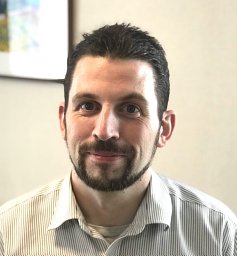 Christopher Kavanagh合作论文数Univ Oxford, Oxford, England3
 Claudio Gentili合作论文数Department of Psychiatry, Neurobiology, Pharmacology and Biotechnologies, University of Pisa3
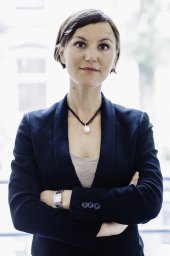 Magdalena Wojcieszak合作论文数ie university3
 Arik Cheshin合作论文数Faculty of Industrial Engineering and Management, Technion - Israel Institute of technology3
 Philipp Schmid合作论文数2
 Alejandra Neely-Prado合作论文数Sch Psychol, Univ Adolfo Ibanez2
 Kenzo Nera合作论文数Ctr Social & Cultural Psychol, Univ Librede Bruxelles2Céline Schöpfer合作论文数2
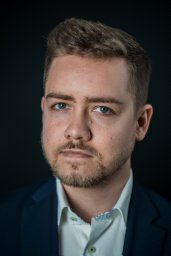 Frederic Tomas合作论文数Lab Cognit Humaine & Artificielle, Univ Paris 082
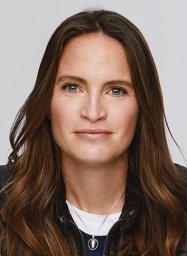 Lene Aarøe合作论文数Department of Political Science and Government, Aarhus University2
 Coralie Chevallier合作论文数Universit ! de Lyon2Marco E. G. V. Cattaneo合作论文数1Jennifer Lorenz合作论文数1Vera Vogel合作论文数1Nandor Hajdu合作论文数1
 Marcel Raphael Schreiner合作论文数1Ben M. Tappin合作论文数1
 Felipe Vilanova合作论文数1
 Balazs Aczel合作论文数1Müge Simsek合作论文数1Simon Joseph Stuber合作论文数1Hilla Inkila合作论文数1Saúl Alejandro Mora Caballero合作论文数1




