As populations expand in the coastal zone and climate change increases the risk of coastal flooding and erosion hazards, there is a growing need to understand how coastal dunes will evolve into the future. In recent decades, the development and extension of numerical models for dune evolution have demonstrated capabilities to successfully replicate ecomorphodynamic interactions at various spatial or temporal scales. Here, we compare the ability of two numerical models, the analytical Dune Response Tool (DRT) [1] and the process-based AeoLiS model [2], to replicate historical dune growth along a rapidly prograding section of coast in Long Beach, WA. After calibrating coefficients in the erosion and accretion modules of the analytical model, the DRT accurately reproduced historical dune evolution using minimal computational resources. AeoLiS was also able to reproduce patterns in dune growth when detailed field observations and a shoreline change rate module were added to the model. The final DRT profile does not perfectly mimic detailed topographic patterns observed in the field, but it has a lower RMSE than results from AeoLiS. Moreover, DRT’s efficiency and minimal calibration requirements make it an easily implementable tool. In contrast, AeoLiS requires extensive field observations as inputs for accurate hindcasts, but the final result better matches the observed complex dune evolution. Both the DRT and AeoLiS models have the potential to offer valuable insight into predicted dune evolution and the coastal protective services dunes may provide in the future.
Abstract Resource subsidies, or the flow of energy across ecosystem boundaries, can influence community structure and function and act as important nutrient sources to less productive ecosystems, particularly in marine and coastal zones. Coastal dunes, connected to the nearshore through sandy beaches, likely depend on the delivery of marine subsidies to regulate the dune building biophysical feedback between vegetation and sand. Here we consider the role of marine subsidies to foliar nitrogen and dune grass production along the US Outer Banks coastline and ask: (1) Do macrophyte wrack biomass and composition, sand nitrate concentration, and dune grass production vary at local and regional scales? (2) Do dune grasses utilize marine‐derived nitrogen (15N) and, if so, how does δ15N and %N vary across species, foredune profile locations, and islands? and (3) What factors, including macrophyte wrack biomass, sand nitrate, sand supply, and dune morphology, are important to foliar nitrogen (δ15N and %N) and dune grass production? We found that sand nitrate concentrations increased with latitude along the Outer Banks coastline but were unrelated to macrophyte wrack biomass. Dune grass δ15N was highest at the foredune toe and decreased landward, suggesting that grasses closer to the beach are using marine‐derived nitrogen. Although dune grass %N content and production (density and biomass) did not vary across the foredune profile, they did increase with latitude. Moreover, sites with slightly negative shoreline change rates, steeper backshore slopes, and taller foredunes had greater sand nitrate concentration, foliar %N and δ15N, and dune grass production at the seaward side of the foredune. At the back dune, foliar δ15N and dune grass production were not correlated with sand supply or sand nitrates, indicating other factors at play on the landward side of the foredune. Given the important role of dune grasses in sand capture and dune building, any shifts in marine‐derived nutrients from changes in ocean productivity or sand flux could have landscape‐level consequences for dune building, coastal protection, and carbon storage services.
Coastal ecosystems such as mangroves, salt marshes, and seagrasses sequester large amounts of carbon per unit area due to their high productivity and sediment accumulation rates. However, only a handful of studies have examined carbon sequestration in coastal dunes, which are shaped by biophysical feedback between aeolian sediment transport and burial-tolerant vegetation. The goal of this study was to measure carbon storage and identify the factors that influence its variability along the foredunes of the US Outer Banks barrier islands of North Carolina. Specifically, differences in carbon stocks (above- and belowground biomass and sand), dune grass abundance, and sand supply were measured among islands, cross-shore dune profile locations, and dune grass species. Carbon varied among aboveground grass biomass (0.1 ± 0.1 kg C m−2), belowground grass biomass (1.1 ± 1.6 kg C m−3), and sand (0.9 ± 0.6 kg C m−3), with the largest amount in belowground grass stocks. Aboveground grass carbon stocks were comparable to those in eelgrass beds and salt marshes on a per-area basis, while sediment carbon values in our study system were lower than those in other coastal systems, including other dune locations. Additionally, sand carbon density was positively related to patterns in dune sand supply and grass abundance, reflecting a self-reinforcing vegetation-sediment feedback at both high and low sand accumulation rates.
Coastal dunes are natural landforms that develop in the backshore of sandy coastlines through complex ecomorphodynamic interactions (Hesp, 2002). They provide a wide range of ecosystem services (Barbier et al., 2011) but are threatened by both increasing anthropogenic pressures and climate change (Vousdoukas et al., 2020). In most ecomorphodynamic numerical models which attempt to understand coastal dune evolution, the influence of vegetation on sediment transport is significantly simplified given the complexity of these interactions. Shear stress partitioning models are widely used to assess the effect of vegetation on wind force (Raupach, 1992; Okin, 2008), but to date only discriminate between vegetation type (e.g., grass, shrub, tree), without differentiating between the species-specific characteristics that play a role in the spatiotemporal evolution of dunes, their response to storms, and their recovery. Indeed, different dune grass species can build dunes of different shapes and sizes due to their unique ecological characteristics (Hacker et al., 2019). Using observations from a wind tunnel experiment that assessed sediment capture efficiency of the three main dune grass species of the U.S Pacific Northwest coast (the two non-native species Ammophila arenaria, AMAR, Ammophila breviligulata, AMAR, and the native species Leymus mollis, LEMO), the objective of this study is to develop model parameterizations that represent the sand capture efficiency of different dune grass species within a process-based aeolian sediment transport and dune evolution model.
Non-native species have traits that indicate invasiveness (e.g., dispersal, fecundity, growth, or functional traits) and invaded communities differ in factors that influence invasibility (e.g., resource availability, disturbance and stress, or biotic interactions), but rarely are species and communities considered together. Here we examine both the invasiveness of three dune grass species and the invasibility of foredune plant communities dominated by each species across a 250 km stretch of coastline in the US Pacific Northwest. A field experiment was performed in which two non-native dune grass species (Ammophila breviligulata and A. arenaria) and one native species (Leymus mollis) were introduced into three community types across a range of sand deposition rates. Our results show that the two non-native beachgrasses were the most invasive, with higher survival, biomass, leaf area, and tiller abundance than the native dune grass species across varying community tiller densities and sand deposition rates. Of the three community types, the native L. mollis community was the most invasible, with higher colonist survival and biomass, especially under increasing tiller densities and sand deposition rates, suggesting facilitation. In contrast, in the two Ammophila-dominated communities, colonist survival decreased with increasing community tiller densities and sand deposition rates, indicating competition and/or sand burial as mechanisms mitigating invasibility. However, of the colonists that survived, increasing sand deposition generally had a positive effect on biomass, indicating sand fertilization. Our invasiveness and invasibility results match observations of species displacement since the introduction of the non-native beachgrasses to the region over a century ago.
On the U.S. Pacific Northwest (PNW) outer coast, there are both naturally occurring dune backed beaches and cliff backed cobble beaches that have inspired nature- based engineering strategies for erosion control (i.e., sandy and vegetated dunes and dynamic revetments). Coastal communities want to mitigate and/or manage sand movement now, so policy and regulatory-based agencies are seeking the best available knowledge regarding the ecosystem services and dynamics associated with coastal foredune and cobble berms. Management needs and gaps in scientific knowledge and engineering practice often go hand in hand. Therefore we are working to develop guidance documents that combine management needs with the best available engineering and scientific knowledge to identify, synthesize, and address community-driven priorities for coastal dunes and dynamic cobble revetments in the PNW.
Long-term, large-scale experimental studies provide critical information about how global change influences communities. When environmental changes are severe, they can trigger abrupt transitions from one community type to another leading to a regime shift. From 2014 to 2016, rocky intertidal habitats in the northeast Pacific Ocean experienced extreme temperatures during a multi-year marine heatwave (MHW) and sharp population declines of the keystone predator Pisaster ochraceus due to sea star wasting disease (SSWD). Here we measured the community structure before, during and after the MHW onset and SSWD outbreak in a 15-year succession experiment conducted in a rocky intertidal meta-ecosystem spanning 13 sites on four capes in Oregon and northern California, United States. Kelp abundance declined during the MHW due to extreme temperatures, while gooseneck barnacle and mussel abundances increased due to reduced predation pressure after the loss of Pisaster from SSWD. Using several methods, we detected regime shifts from substrate- or algae-dominated to invertebrate-dominated alternative states at two capes. After water temperatures cooled and Pisaster population densities recovered, community structure differed from pre-disturbance conditions, suggesting low resilience. Consequently, thermal stress and predator loss can result in regime shifts that fundamentally alter community structure even after restoration of baseline conditions. A 15-year experiment at rocky intertidal sites on the northwestern US coast documents kelp, barnacle and mussel abundances before, during and after a multi-year marine heatwave and an outbreak of sea star wasting disease, including changes to communities that did not recover after return to baseline conditions.
AbstractInvasive plants formed via hybridization, especially those that modify the structure and function of their ecosystems, are of particular concern given the potential for hybrid vigor. In the U.S. Pacific Northwest, two invasive, dune‐building beachgrasses, Ammophila arenaria (European beachgrass) and A. breviligulata (American beachgrass), have hybridized and formed a new beachgrass taxa (Ammophila arenaria × A. breviligulata), but little is known about its distribution, spread, and ecological consequences. Here, we report on surveys of the hybrid beachgrass conducted across a 250‐km range from Moclips, Washington to Pacific City, Oregon, in 2021 and 2022. We detected nearly 300 hybrid individuals, or an average of 8–14 hybrid individuals per km of surveyed foredune. The hybrid was more common at sites within southern Washington and northern Oregon where A. breviligulata is abundant (75%–90% cover) and A. arenaria is sparse and patchy. The hybrid displayed morphological traits such as shoot density and height that typically exceeded its parent species suggesting hybrid vigor. We measured an average growth rate of 30% over one year, with individuals growing faster at the leading edge of the foredune, nearest to the beach. We also found a positive relationship between hybrid abundance and A. arenaria abundance, suggesting that A. arenaria density may be a controlling factor for hybridization rate. The hybrid showed similar sand deposition and associated plant species richness patterns compared with its parent species, although longer term studies are needed. Finally, we found hybrid individuals within and near conservation habitat of two Endangered Species Act‐listed, threatened bird species, the western snowy plover (Charadrius alexandrinus nivosus) and the streaked horned lark (Eremophila alpestris strigata), a concern for conservation management. Documenting this emerging hybrid beachgrass provides insights into how hybridization affects the spread of novel species and the consequences for communities in which they invade.
Vegetation plays a crucial role in coastal dune building. Species-specific plant characteristics can modulate sediment transport and dune shape, but this factor is absent in most dune building numerical models. Here, we develop a new approach to implement species-specific vegetation characteristics into a process-based aeolian sediment transport model. Using a three-step approach, we incorporated the morphological differences of three dune grass species dominant in the US Pacific Northwest coast (European beachgrass Ammophila arenaria, American beachgrass A. breviligulata, and American dune grass Leymus mollis) into the model AeoLiS. First, we projected the tiller frontal area of each grass species onto a high resolution grid and then re-scaled the grid to account for the associated vegetation cover for each species. Next, we calibrated the bed shear stress in the numerical model to replicate the actual sand capture efficiency of each species, as measured in a previously published wind tunnel experiment. Simulations were then performed to model sand bedform development within the grass canopies with the same shoot densities for all species and with more realistic average field densities. The species-specific model shows a significant improvement over the standard model by (a) accurately simulating the sand capture efficiency from the wind tunnel experiment for the grass species and (b) simulating bedform morphology representative of each species' characteristic bedform morphology using realistic field vegetation density. This novel approach to dune modeling will improve spatial and temporal predictions of dune morphologic development and coastal vulnerability under local vegetation conditions and variations in sand delivery.
The ability of non-native species to successfully invade new ecosystems sometimes involves evolutionary processes such as hybridization. Hybridization can produce individuals with superior traits that give them a competitive advantage over their parent species, allowing for rapid spread. Here we assess growth, functional morphology, and species interactions between two non-native beachgrass species (Ammophila arenaria and A. breviligulata) and their recently discovered hybrid (A. arenaria × A. breviligulata) on the U.S. Pacific Northwest coast. We asked whether the hybrid beachgrass differs from its parent species in morphology and growth, whether it competes with its parent species, and, if so, what are the potential mechanisms of competition. Plant taxa were grown in low- and high-density monocultures and in two-way interactions in a common garden environment. We show that the hybrid grew taller and more densely, with greater total biomass, than either parent species. The hybrid was also the better competitor, resulting in the model prediction of competitive exclusion against A. breviligulata and, depending on its relative abundance, A. arenaria. The hybrid displays a mixed ‘guerilla–phalanx’ growth form that allows it to spread laterally and achieve high shoot densities, giving it a competitive advantage. Given the current dominance of A. breviligulata compared to A. arenaria in most of the region where these taxa co-occur, we suggest that the hybrid will grow, compete, and spread quickly with potentially widespread consequences for the two non-native Ammophila congeners and the dunes they build.
Wind flow over coastal foredunes adapts to vegetation, resulting in spatial gradients in bed shear stresses that contribute to the formation of localized bedforms. Understanding, and having the capability to numerically predict, the distribution of sediment deposited within sparsely vegetated dune complexes is critical for quantifying the ecological, protective, and economic benefits of dune management activities. Data from wind tunnel experiments have indicated that there is a spatial lag from the canopy leading edge to a downwind location where sediment deposition first occurs. The length scale of this deposition lag is further quantified here using new field measurements of aeolian sediment transport across sparsely vegetated managed dune systems in Oregon, USA. We develop a deposition lag length scale parameter using both lab and this new field data and then incorporate this parameter into the process-based aeolian sediment transport model, Aeolis, which also includes a new far-field shear stress coupler. Results from numerical simulations suggest that the spatial deposition lag effect is significant for model skill in sparsely vegetated dunes. We observe with field and laboratory observations that, as canopy density increases, the length of the deposition lag decreases. As such, within the model framework the implementation of the deposition lag length does not affect the results of models of coastal dune geomorphological evolution within higher density canopies. Dune canopy density can vary due to natural (e.g., storm overwash, burial, die-off) or anthropogenic (e.g., managed plantings, dune grading) processes.
We design a choice experiment to examine public preferences for coastal dune ecosystem restoration in the U.S. Pacific Northwest. Dunes are a public good whose natural state is now rare. Respondents are asked to choose among hypothetical projects that vary by project size, restoration quality, recreation access, flooding risk, and cost. Restoration quality is defined as closeness to the natural ecosystem. We find that increasing restoration quality results in significantly higher welfare gains than increasing the size of restoration area. Maintaining recreation access is preferred, and programs with recreation restrictions yield positive willingness to pay only if accompanied by the highest restoration quality.
Coastal saltmarshes provide globally important ecosystem services including 'blue carbon' sequestration, flood protection, pollutant remediation, habitat provision and cultural value. Large portions of marshes have been lost or fragmented as a result of land reclamation, embankment construction, and pollution. Sea level rise threatens marsh survival by blocking landward migration where coastlines have been developed. Research-informed saltmarsh conservation and restoration efforts are helping to prevent further loss, yet significant knowledge gaps remain. Using a mixed methods approach, this paper identifies ten research priorities through an online questionnaire and a residential workshop attended by an international, multi-disciplinary network of 35 saltmarsh experts spanning natural, physical and social sciences across research, policy, and practitioner sectors. Priorities have been grouped under four thematic areas of research: Saltmarsh Area Extent, Change and Restoration Potential (including past, present, global variation), Spatio-social contexts of Ecosystem Service delivery (e.g. influences of environmental context, climate change, and stakeholder groups on service provisioning), Patterns and Processes in saltmarsh functioning (global drivers of saltmarsh ecosystem structure/function) and Management and Policy Needs (how management varies contextually; challenges/opportunities for management). Although not intended to be exhaustive, the challenges, opportunities, and strategies for addressing each research priority examined here, providing a blueprint of the work that needs to be done to protect saltmarshes for future generations.
Estuarine macrophytes are proposed to influence ocean acidification and hypoxia (OAH) via the uptake (release) of inorganic carbon (oxygen) during photosynthesis. The extent to which macrophytes mitigate OAH in estuaries depends on the interaction between variable environmental conditions and macrophyte production over space and time. To explore these complexities in detail, we considered the potential causes and consequences of intertidal eelgrass and macroalgae declines in a U.S. Pacific Northwest estuary. We compiled and analyzed a record of eelgrass (Zostera marina) and ulvoid macroalgae along with a broad suite of environmental conditions over 15 years (2004 to 2019) at 3 sites along an estuarine gradient in South Slough, Oregon. The analysis showed that declining macrophyte biomass coincided with increasing temperature (water and air), watershed disturbance, and possibly turbidity. Coincident with macrophyte loss, diel dissolved oxygen (DO) and pH variability were reduced, indicating an influence of macrophytes on water quality at an ecosystem scale. Eelgrass loss was correlated with declining gross production and respiration, which altered the diel dynamics of pH, DO, and partial pressure of carbon dioxide at some sites. Under certain conditions, there was an association between eelgrass biomass and changes in DO and pH of more than 2 mg/l and 0.3 units, respectively. We found that daytime amelioration of low DO and pH was possible at certain locations when macrophyte biomass (especially eelgrass) was high. However, our analyses suggested that the efficacy of macrophyte mitigation of OAH depends on macrophyte abundance and the volume and residence time of overlying water.
Coastal dunes provide many ecosystem services including protection of infrastructure from wave overtopping and habitat for native species. Foredunes grow at different rates and assume different forms (i.e., short and wide to tall and narrow) depending on a range of factors including pre-existing beach and dune morphology, wind, wave, and water levels, sediment grain size, and vegetation characteristics, yet the relative importance of these factors on foredune growth is understudied. Here, we quantify foredune evolution (2016–2019) and explore the relative influence of a suite of metocean, sedimentary, and ecological factors for dune growth on three barrier islands in the U.S. North Carolina Outer Banks (Cape Lookout National Seashore). We incorporate observed and hindcast wind, wave, and water level data into the process-based, coupled beach-dune evolution model, Windsurf, to explore the relative contribution of factors likely to influence foredune growth at the annual timescale (2016–2017). Our cross-shore topographic profile observations show varied interannual foredune change rates and characteristics, including horizontal retreat and progradation at the dune toe and vertical erosion and accretion at the dune crest. Model results indicate that, of the factors explored, pre-existing morphology had the greatest influence on the type of foredune growth that occurred (i.e., incipient dune development, widening of the dune, and/or vertical accretion), which dramatically altered the final shape of the dune. Variations in wind and wave climates were associated with the relative contribution of marine- and aeolian-driven bed elevation changes and were particularly influential during storms. In addition, increases in the minimum elevation of vegetation on the dune profile (analogous to the cross-shore distance between the shoreline and established vegetation line, i.e., the vegetation limit, as coined by Duran and Moore, 2013) increased dune crest height and dune volume. Moreover, variations in the minimum vegetation elevation resulted in a larger range of dune crest elevations and dune volumes than differences in the median sand grain size. We suggest that insights into the relative influence of metocean, sedimentary, and ecological factors to dune growth can assist in the development of practical coastal management strategies.
Key Concepts CONCEPT 19.1 Species diversity differs among communities as a consequence of regional species pools, abiotic conditions, and species interactions. CONCEPT 19.2 Resource partitioning is theorized to reduce competition and increase species diversity. CONCEPT 19.3 Processes such as disturbance, stress, predation, and positive...
Key Concepts <bold>CONCEPT 24.1</bold> Landscape ecology examines spatial patterns and their relationship to ecological processes. <bold>CONCEPT 24.2</bold> Habitat loss and fragmentation decrease habitat area, isolate populations, and alter conditions at habitat edges. <bold>CONCEPT 24.3</bold> Biodiversity can best be sustained by large reserves connected across...
Coastal Sediments 2023, pp. 627-641 (2023) No AccessEXPERIMENTAL TEST OF THE INFLUENCE OF NATIVE AND NON-NATIVE PLANT SPECIES ON SAND ACCRETION ON A U.S. PACIFIC NORTHWEST DUNEQUENTIN LAPORTE-FAURET, RISA ASKEROOTH, MEAGAN WENGROVE, SALLY HACKER, PETER RUGGIERO, JOHN DICKEY, REBECCA EDGELL, and IAN SILVERNAILQUENTIN LAPORTE-FAURETSchool of Civil and Construction Engineering, Oregon State University, Corvallis, OR, USA, RISA ASKEROOTHDepartment of Integrative Biology, Oregon State University, Corvallis, OR, USA, MEAGAN WENGROVESchool of Civil and Construction Engineering, Oregon State University, Corvallis, OR, USA, SALLY HACKERDepartment of Integrative Biology, Oregon State University, Corvallis, OR, USA, PETER RUGGIEROCollege of Earth, Ocean, and Atmospheric Sciences, Oregon State University, Corvallis, OR, USA, JOHN DICKEYSchool of Civil and Construction Engineering, Oregon State University, Corvallis, OR, USA, REBECCA EDGELLDepartment of Integrative Biology, Oregon State University, Corvallis, OR, USA, and IAN SILVERNAILNatural Resources Conservation Service Plant Materials Center, U.S. Department of Agriculture, Corvallis, OR, USAhttps://doi.org/10.1142/9789811275135_0059Cited by:0 PreviousNext AboutSectionsPDF/EPUB ToolsAdd to favoritesDownload CitationsTrack CitationsRecommend to Library ShareShare onFacebookTwitterLinked InRedditEmail Abstract: The U.S. Pacific Northwest (PWN) coastal dunes are mainly colonized by two non-native beachgrass species (i.e., Ammophila arenaria and A. breviligulata) and a native dune grass (Leymus mollis) that capture sand and build dunes of different morphology. Recently, a hybrid beachgrass was discovered with unknown consequences for dune evolution. We set up a common garden experiment including seven treatments and two control plots to understand the effect of native and non-native plant species on sand accretion and dune morphological evolution. After 1.6 years, sand volume increased the most in the non-native species plots with levels at least twice as high for A. arenaria as compared to the other plots. The hybrid species had moderate sand accretion but a survival rate of 1.4 and 2.1 times higher than its parent species and native species, respectively. These results provide new insights for U.S. PNW coastal dune management. FiguresReferencesRelatedDetails Coastal Sediments 2023Metrics History PDF download
Producing accurate hindcasts and forecasts with coupled models is challenging due to complex parameterizations that are difficult to ground in observational data. We present a calibration workflow that utilizes a series of machine learning algorithms paired with Windsurf, a coupled beach-dune model (Aeolis, the Coastal Dune Model, and XBeach), to produce hindcasts and forecasts of morphologic change along Bogue Banks, North Carolina. Neural networks paired with genetic algorithms allow us to fine tune calibration parameters for the hindcast, and then a long short-term memory neural network, trained on the hindcast, produces a 4-year forecast. We compare our hindcasts to observations from 2016 to 2017 and find they successfully reproduce observed modes of dune and beach change except for seaward growth of the dune face. We compare our forecasts to observations from 2016 to 2020 and find that they produce reasonably accurate predictions of dune change except when there are significant instances of erosion during the forecast period.
Abstract Coastal foredunes form via biophysical feedbacks between sand accretion and burial‐tolerant vegetation and can protect coastlines from hazards such as extreme storms and sea level rise. Predicting how coastal dunes, and the services they provide, will change in the future requires an understanding of the relative roles of the physical and ecological processes that shape their structure and function. Here we assess the relative roles of sand supply, beach morphology, and vegetation in determining foredune morphology, and its change, along a 300‐km stretch of the US Central Atlantic coast. In particular, we used the spatial variability inherent in beaches and dunes of this region to determine the relative importance of shoreline change rate (SCR; a proxy for sand supply to the beach), beach morphology, and grass density of four widespread dune grasses (Uniola paniculata, Ammophila breviligulata, Panicum amarum, and Spartina patens) to foredune morphology metrics (height, width, and aspect ratio) along the North Carolina Outer Banks barrier islands. Foredune morphology and change metrics are correlated with three main factors: multidecadal SCR (1997–2016), beach slope, and dune grass density and species identity. Multidecadal SCR and beach width explained the most variation in, and were positively correlated with, foredune height and width, and were negatively correlated with foredune aspect ratio (height divided by width). In addition, grass density and changes in grass density contributed significantly to foredune morphology change. We found a positive relationship between change in A. breviligulata density and foredune width, which aligns with previous studies on the US Atlantic and Pacific Northwest coasts. Our results demonstrate the interactive roles of beach sand supply and dune grass functional morphology in dune building processes on highly vulnerable coastlines.
 David M Hillis合作论文数Department of Integrative Biology, College of Natural Sciences, The University of Texas at Austin49
 David Sadava合作论文数47Jürgen Markl合作论文数47
 H. Craig Heller合作论文数Department of Biology, School of Humanities and Sciences, Stanford University44
 Peter Ruggiero合作论文数Department of Ecology44
 Laura J. Moore合作论文数Department of Earth, Marine and Environmental Sciences, College of Arts and Sciences, The University of North Carolina at Chapel Hill19
 Bruce A. Menge合作论文数Department of Integrative Biology, College of Science, Oregon State University15
 Eric Seabloom合作论文数Department of Ecology, Evolution, and Behavior, College of Biological Sciences, University of Minnesota14
 Phoebe Lehmann Zarnetske合作论文数Department of Integrative Biology, Oregon State University13Michael Itzkin合作论文数Department of Geological Sciences, University of North Carolina at Chapel Hill12Biel Reuben G合作论文数11
 Nicholas Cohn合作论文数Oregon State Univ, Coll Earth Ocean & Atmospher Sci, Corvallis, OR 97331 USA10
 Paige Hovenga合作论文数9
 Katya R. Jay合作论文数Department of Integrative Biology, Oregon State University9
 Brian Reed Silliman合作论文数Nicholas School of the Environment, Duke University9Francis Chan合作论文数8
 Mark D. Bertness合作论文数Department of Ecology and Evolutionary Biology, Brown University7
 Edward Barbier合作论文数Department of Economics, Colorado State University;School of Global Environmental Sustainability, Colorado State University7Brett R. Dumbauld合作论文数7
 Jennifer L. Ruesink合作论文数Department of Biology, University of Washington7
 Karina J. Nielsen合作论文数Department of Zoology;Oregon State University;Department of Zoology, Oregon State University7
 Eric Wolanski合作论文数Center for Tropical Water and Aquatic Ecosystem Research, James Cook University School of Science and Engineering6
 Megan N. Dethier合作论文数Department of Biology, University of Washington6Elise F Granek合作论文数6
 Chris J. Kennedy合作论文数Dept. 3985, University of Wyoming6
 Evamaria W Koch合作论文数Horn Point Laboratory, Center for Environmental Science, University of Maryland6Lorena M. Wisehart合作论文数Department of Zoology, Oregon State University6
 Steve Polasky合作论文数Department of Applied Economics, University of Minnesota;Department of Ecology, Evolution, and Behavior, University of Minnesota5Rebecca S. Mostow合作论文数Department of Integrative Biology, Oregon State University5
 Denise Reed合作论文数Department of Earth & Environmental Sciences, University of New Orleans5
 Wengrove Meagan E合作论文数Department of Civil Engineering, University of New Hampshire5Gerardo M. E. Perillo合作论文数5Shankar Aswani Canela合作论文数Department of Anthropology;Program in Marine Science;University of California , Santa Barbara;Department of Anthropology, University of California , Santa Barbara5
 Jurgenne H. Primavera合作论文数Aquaculture Department, Southeast Asian Fisheries Development Center5
 Lori Cramer合作论文数Department of Sociology, Oregon State University5
 Carrie V Kappel合作论文数National Center for Ecological Analysis & Synthesis, University of California, Santa Barbara5
 Margot Hessing-Lewis合作论文数Hakai Institute4
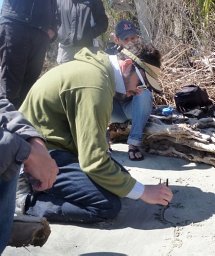 Evan V Goldstein合作论文数Department of Geography, Environment, and Sustainability, University of North Carolina at Greensboro4Jeremy Mull合作论文数4David Bael合作论文数4Tabitha G. Reeder合作论文数4
 David M. Stoms合作论文数Institute for Computational Earth System Science;University of California , Santa Barbara;Institute for Computational Earth System Science, University of California , Santa Barbara4Tarik C. Gouhier合作论文数Department of Biology;McGill University4
 David M. Kling合作论文数Dept Appl Econ, Oregon State Univ3
 Robert Steneck合作论文数School of Marine Sciences, The University of Maine3
 Barner Allison K合作论文数Department of Ecology and Evolution, University of Chicago3
 Jane Lubchenco合作论文数Department of Integrative Biology, College of Science, Oregon State University3
 Nyawira a Muthiga合作论文数Kenya Wildlife Service3




