This conceptual paper argues it is important from an ecological-social (eco-social) whole system point of view for businesses and policymakers to take the interests of and impacts on unvoiced and undervoiced [un(der)voiced] stakeholders into consideration for both strategic and justice reasons. Un(der)voiced stakeholders are classified into three categories: undervoiced, fringe, or marginalized humans who can speak yet are often ignored or disregarded; unvoiced or silent humans who have no voice in the present; and places, species, ecosystems, and nonhuman beings that cannot speak for themselves in human terms. From firms' perspectives, the interests and needs of many un(der)voiced stakeholders may not yet have sufficient salience or voice to gain attention unless specific attention is paid. Yet their salience as stakeholders becomes clearer with considerations of whole system well-being and justice. The Earth System Justice framework is used to identify intergenerational, intragenerational, and interspecies and Earth stability justice considerations for un(der)voiced stakeholders.
This Agenda 2050 argues that we as business in society or other management scholars implicitly too often pretend that the tenets of conventional economics will provide a thriving future for us humans and for the rest of the beings we coexist with, despite all the evidence to the contrary. It further argues that we can no longer ignore the ecological-social (eco-social) and political realities of polycrisis, the intersecting array of civilization-threatening crises now facing humanity. The essay argues that we as scholars need to take the scholarly and intellectual risks to study and speak out about systemic issues, critique conventional economics, and address the very real perils humanity is facing, and do so in both our teaching and research. Incorporating alternative or heterodox economics frameworks, bringing systems thinking, and transformative or systemic change processes into business in society research could be helpful ways to broaden the research agenda to help scholars and leaders better understand and cope with polycrisis.
Social innovation for transformation can be fostered by the involvement of purposeful and self-aware innovators called transformation catalysts, who follow a clear set of design guidelines in their system change efforts. The paper discusses three sets of guidelines, principles, and associated practices central to achieving transformation: (1) connect social innovation efforts through shared life-affirming purposes and intentions; (2) foster values-driven netweaving (network weaving) processes that generate voice and participation for collaborators; and (3) cohere and catalyze a variety of transformation efforts and initiatives through systems stewardship. Use of such guidelines is needed in the underorganized context of bringing together multiple initiatives for the purpose of fundamental systemic change.
In a world where biodiversity loss is only one of numerous intersecting civilization-threatening crises, now labeled polycrisis, calls for transformative change increase daily. Transformative change is fundamental changes in purposes, values, goals, and power organizations and systems. Transformation shifts relationships, power structures, and institutional practices in significant ways. These calls for transformative change are generally normative, involving prospectively envisioning futures where human and nonhuman nature thrive together. Transformative change involves re-imagining how the human enterprise and its institutions, especially businesses, operate through an ecological-social (eco-social) not today’s dominant human-centric or social imaginary. Eco-social imaginaries place humans, economies, and human institutions into the context of nature, in relationship with not dominance over nature. Eco-social imaginaries recognize humans’ integral interdependence with nature and complete reliance on nonhuman nature’s resources and abundance, which is increasingly at risk as a result of human activities that have create the Anthropocene. Such imaginaries also honor and offer equity to other-than-human nature and species as part of that recognition of interdependence. This scale of narrative change and associated economic, social, and political changes creates a need for rethinking economics and business practice and strategies. It re-imagines how all beings, including nonhuman nature, are taken into consideration, and centers justice and equity for all beings. Conventional leadership, like conventional economics, is ill-suited for this challenge. That is because achieving such transformative whole system change requires a stewardship approach that catalyzes transformative change in multiple ways and by multiple people working both independently and collaboratively. Rather than top down ‘leadership’, such change involves the stewardship of people and institutions who can be called transformation catalysts, particularly around reimagining economics and business practice that affects crises like biodiversity loss. Transformation catalysts work by connecting, cohering, and amplifying the efforts of existing initiatives in multiple contexts to achieve needed transformative change. This presentation will explore the changes that are needed, especially in narratives and practices in economics, business strategies, and stakeholder thinking that transformative catalysts work to steward through these connecting, cohering, and amplification approaches.
This conceptual paper builds on understandings of social–ecological systems to advance a systems-based, holistic eco-social (ecological and social or social–ecological, SES) lens for the field of strategic management by taking a whole systems perspective that adds to the field’s currently dominant corporate centric orientation. It particularly focuses on how core strategic management frameworks need to shift to accommodate such a whole systems perspective moving beyond the field’s current firm-centric orientation. The paper examines the ways in which eco-socially informed core strategy frameworks, including SWOT analysis, the five forces framework, the resource-based view of the firm and dynamic capabilities framework, balanced scorecard, and PEST(LE) analysis, need to and can take a whole systems approach and encompass eco-social not just profitability, market share, and competitive advantage considerations, to ensure the wellbeing of all humans and the rest of nature.
Managing multiple paradoxes is critical to transformative systems leadership, particularly in the context of translocal networks. In this paper, we explore a novel aspect of Earth Stewardship: how leaders of these networks harness paradox management to generate and scale innovative sustainability solutions. By integrating seemingly contradictory forces, such as harmony and disruption, cohesion and autonomy, and reflection and action, leaders foster dynamic environments conducive to both innovation and transformative learning. We identify three key paradoxes: (1) the embrace of harmony and disruption, fostering transformative learning; (2) the tension between cohesion and autonomy, which promotes innovation by scaling solutions within diverse contexts; and (3) the interplay between reflection and action, which enhances metis, a crucial strategy for navigating the uncertainties of transitioning systems. These paradoxes, when embraced rather than resolved, enable translocal networks to catalyze systemic changes. This paper explores how these leadership practices drive sustainability solutions, an essential yet underexamined aspect of Earth Stewardship.
Flourishing-for-all as emerged as a concept to respond to the apparent lack of capacity to translate the sustainability discourse into actual practices conducive to more sustainable societies. In this special issue, we assert that flourishing-for-all addresses the gap identified in the sustainability discourse that still needs conversion into practice, and that processes for catalyzing this necessary transformation need to be identified and implemented. The eight papers in this special issue address flourishing-for-all from different ontological, epistemological, and methodological perspectives, demonstrating a wide interest in the topic, and the shared belief that both academia and practice must go beyond sustainability to embrace flourishing-for-all. They bring to the fore three important features of a flourishing-for-all approach: First, it allows for a more profound analysis of systemic sustainability-related problems; secondly, it highlights new relationships among the problem-related variables; thirdly, it extends the repertory and reach of possible solutions.
Transformation of economic systems is widely regarded as essential for tackling interacting global crises. Unconventional economic approaches seeking holistic human and planetary well-being have transformative potential, but mainstreaming them is hampered by vested interests and intellectual lock-ins. They are also diffuse and struggle to develop sufficient discursive power to gain more widespread traction in policy. To bring coherence, we undertake a qualitative content analysis of 238 document sources from science and practice. We identify ten ecological, social, political economy and holistic principles cutting across 38 economic approaches. They include: (1) social-ecological embeddedness and holistic well-being; (2) interdisciplinarity and complexity thinking; (3) limits to growth; (4) limited substitutability of natural capital; (5) regenerative design; (6) holistic perspectives of people and values; (7) equity, equality and justice; (8) relationality and social enfranchisement; (9) participation, deliberation and cooperation and (10) post-capitalism and decolonization. We also consider opportunities and barriers to applying these principles in the context of global crises. Our results can help consolidate transformative economic approaches and support future efforts to synthesize conceptual models, methodologies and policy solutions and to validate the identified principles more explicitly within global south contexts.
This article offers a synthesized perspective on a future-oriented process for transformational change makers, here called transformation catalysts, to catalyze systemic change through processes of connecting, cohering, and amplifying the transformational change work of multiple initiatives in numerous social-ecological contexts. Oriented towards purposeful or deliberate system change towards just, equitable, inclusive, and thriving social-ecological systems, the outlined processes of connecting, cohering, and amplifying provide a template or framework for organizing co-creative approaches. This process brings multiple, typically independent individuals and initiatives into alignment, connecting them through shared understanding of the system and determining what is already happening and who is doing what through mapping key stakeholders and their activities. Through visioning and similar processes, transformation catalysts enable different actors to align and cohere their shared aspirations and develop joint and individual action plans in what can then emerge as a self-aware and potentially more effective transformation system comprised of these actors. The amplification process involves the implementation of planned actions, both independently and in concert with others, evaluating and learning from those processes, and adapting future efforts. The latter includes developing, if appropriate, additional transformational efforts and catalysts in different parts of the system to create ongoing momentum. The example of WE All, the Wellbeing Economy Alliance, with information drawn from the website, is used to illustrate these ideas.
The central question that this special issue poses is ‘What will allow new systemic approaches to emerge that include all humans and all living beings in the benefits of life, rather than expecting some to suffer for the benefit of others?’ This paper argues that a key starting point for systems change, and the changed awareness or awakening that it brings, is developing new narratives or stories that form the basis for new core cultural mythologies, replacing currently dominant social imaginaries, which describe how people envision and act in their worlds, that are no longer fit for purpose. Today’s polycrisis, a set of intersecting, intractable and civilization threatening crises, means that more people need to work considerably more effectively to catalyze the systemic transformations so desperately needed. Developing and deploying new ecological-social (eco-social) imaginaries based in principles (among others) of relationality, equity, inclusiveness, and flourishing for all beings is an important step to moving transformational change efforts forward; indeed, it is core to the catalysis process needed for transformative change. Doing that, change makers can potentially work to build eco-social imaginaries that enable humans to find ways to live, as many Indigenous peoples have done for millennia, within the constraints of Earth’s capacities. Two recent examples, the Natural Social Contract and the Regenerative Lens, underscore the potential and possibilities for creating powerful, positive, and inspiring new narratives to develop holistic new visions that can potential inform needed new eco-social imaginaries.
This paper uses the metaphor of the musical jam to identify a working set of holistic core guidelines and norms useful for transformation catalysts—and participants in transformation systems who are collectively stewarding organizing purposeful, whole system transformative change. Since purposeful whole system change involves bringing together actors and initiatives outside the context of conventional hierarchical organizations, it requires a set of skills and design guidelines associated with musical jams. Jams are musical sessions that enable musicians who do not necessarily play together as a formal group to produce good music over significant periods of time when certain norms are followed. Similarly, system change makers, operate in systems where change agents and initiatives voluntarily come together around (emergent) shared aspirations and actions. Doing that well means that transformation catalysts need to employ a constellation of key skills synthesized here as improvisation, stewardship, pattern recognition, collaboration, connection, generativity, and presence.
‘New economics’ discourses – comprising diverse approaches advocated as more just and sustainable replacements of dominant neoclassical and neoliberal economic perspectives – have been criticised as insufficiently coherent to form the ‘discourse coalitions’ necessary to enter the mainstream. To date there has been little systematic exploration of the agreement or divergence in new economics discourses. Here, we conduct a qualitative systematised review of new economics literature in the context of the COVID-19 pandemic to analyse stances towards the economic status quo and the depth of change advocated in it, such as fundamental and systemic transformation or more superficial reformist or accepting types of change that mostly maintain current economic systems. We interpreted authors’ stances towards six key status quo themes: capitalism; neoliberalism; GDP-based economic growth; debt-based money; globalisation; and the Sustainable Development Goals (SDGs). In the 525 documents analysed, there was relative consensus that neoliberalism needed transforming, stances towards GDP-based growth substantially diverged (from transformative to reformist/accepting), and stances towards the SDGs were mostly accepting, although the status quo themes tended to be infrequently mentioned overall. Different new economics approaches were associated with diverging stances. We suggest that alignment against neoliberalism and towards the SDGs may provide strategic coalescing points for new economics. Because stances towards core problematised aspects of mainstream economics were often not articulated, we encourage new economics scholars and practitioners to remain explicit, aware and reflexive with regard to the economic status quo, as well as strategic in their approach to seeking economic transformation.
Because of its inherent life-centric orientation, Appreciative Inquiry as a research approach plays vital roles in moving thinking from enlightenment to ‘enlivenment’. This piece identifies how systemic purposes, wholeness, relationality and other lifegiving system properties can be embedded in such research.
 Samuel Graves合作论文数Boston College29
 David M. Wasieleski合作论文数Duquesne University18
 Malcolm Mcintosh合作论文数Corporate Citizenship Unit;Warwick Business School;University of Warwick;Warwick Business School, University of Warwick17
 Paul Shrivastava合作论文数Sustainability Institute, The Pennsylvania State University;Department of Management and Organization, Smeal College of Business, The Pennsylvania State University17
 Charles Bodwell合作论文数16S. Waddell合作论文数15
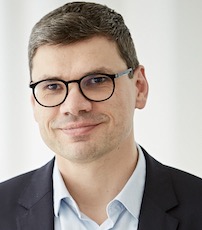 Andreas Rasche合作论文数Department of Management, Society and Communication, Copenhagen Business School12
 Chris Laszlo合作论文数Weatherhead School of Management, Case Western Reserve University10marjorie kelly合作论文数6Jerry M. Calton合作论文数6
 Edwina Pio合作论文数5
 Chellie Spiller合作论文数Management and International Business, University of Auckland Business School5
 Domenico Dentoni合作论文数Department of Agricultural;Food and Resource Economics;Michigan State University;Department of Agricultural|Food and Resource Economics, Michigan State University5Lawrence J. Lad合作论文数4Jennifer Leigh合作论文数4
 Erica Steckler合作论文数Donahue Ctr Business Eth & Social Responsibil, Univ Massachusetts4
 Ian I. Mitroff合作论文数University of Southern California4
 Claus Otto Scharmer合作论文数MIT Sloan School of Management/Department of Urban Studies and Planning, School of Architecture and Planning, Massachusetts Institute of Technology4
 Adam J. Sulkowski合作论文数4
 Chris Riedy合作论文数INSTITUTE FOR SUSTAINABLE;FUTURES University of Technology;University of Technology4
 Georg Kell合作论文数4
 James P. Walsh合作论文数Stephen M. Ross School of Business, University of Michigan4
 Michael Andreas Pirson合作论文数Psychology Department Cambridge, Harvard University4steve payne合作论文数3Sb Graves合作论文数3
 Petra Kuenkel合作论文数Collect Leadership Inst, Int Club Rome3
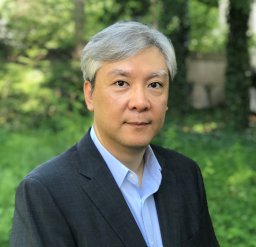 Jegoo Lee合作论文数University of Rhode Island3
 Simone Martino合作论文数Dept Environm & Geog, Univ York3Kathryn Goldman Schuyler合作论文数3
 Jerry Davis合作论文数Stephen M. Ross School of Business, University of Michigan;College of Literature, Science, and The Arts, University of Michigan3
 Thomas Donaldson合作论文数Legal Studies and Business Ethics Department, The Wharton School, University of Pennsylvania3
 Greta Meszoely合作论文数3McLachlan Milla合作论文数3
 Colin Higgins合作论文数deakin university3
 Dawn R. Elm合作论文数University of Minnesota3
 Kathleen Rehbein合作论文数Statistical Computing Lab, Rice University3
 Joan Marques合作论文数Woodbury University3
 Judith a Clair合作论文数3
 Dirk Ulrich Gilbert合作论文数University of Erlangen-Nuremberg;Frankfurt University;University of Erlangen-Nuremberg, Frankfurt University3
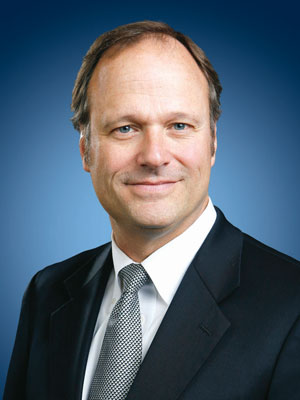 Andrew (Andy ) J. Hoffman合作论文数School for Environment and Sustainability, The University of Michigan3
 Nancy J. Adler合作论文数Desautels Faculty of Management, Desautels Faculty of Management, McGill University3
 Ioan Fazey合作论文数Aberystwyth University3
 Josep A Tribo合作论文数Business Department3
 Constance Bagley合作论文数Business School, Harvard3
 Karen O'Brien合作论文数Department of Sociology and Human Geography, Faculty of Social Sciences, University of Oslo2Jennifer S. A. Leigh合作论文数2S.J Buckton合作论文数2Catherine Lerme Bendheim合作论文数2Donna Hicks合作论文数2




