This work studies the evolution of cortical networks during the transition from escape strategy to avoidance strategy in auditory discrimination learning in Mongolian gerbils trained by the well-established two-way active avoidance learning paradigm. The animals were implanted with electrode arrays centered on the surface of the primary auditory cortex and electrocorticogram (ECoG) recordings were made during performance of an auditory Go/NoGo discrimination task. Our experiments confirm previous results on a sudden behavioral change from the initial naïve state to an avoidance strategy as learning progresses. We employed two causality metrics using Granger Causality (GC) and New Causality (NC) to quantify changes in the causality flow between ECoG channels as the animals switched to avoidance strategy. We found that the number of channel pairs with inverse causal interaction significantly increased after the animal acquired successful discrimination, which indicates structural changes in the cortical networks as a result of learning. A suitable graph-theoretical model is developed to interpret the findings in terms of cortical networks evolving during cognitive state transitions. Structural changes lead to changes in the dynamics of neural populations, which are described as phase transitions in the network graph model with small-world connections. Overall, our findings underscore the importance of functional reorganization in sensory cortical areas as a possible neural contributor to behavioral changes.
Previously the stronger coupling between soil moisture and precipitation in the land-atmosphere interaction have widely been studied. However, few work discusses the causality between them. In this paper, we use Granger causality (GC) and New causality (NC) to detect the causality between soil of different depth moisture and precipitation. Our results demonstrate that the causality between shallow soil moisture and precipitation is greater than that between deep soil moisture and precipitation. And the results also demonstrate that the NC method is much clearer to reveal the causal influence between soil moisture and precipitation than GC method in the time domain.
With the development of intelligent wearable technology, the need for a more effective and practical means of human-computer interaction is becoming increasingly urgent. In this paper, we used only one forehead Electromyogram (EMG) channel to accurately recognize at least 6 different voluntary blink and bite patterns as output interactive commands. Differential square moving average (DSMA) and square moving average (SMA) were used to distinguish blink and bite, voluntary blink and natural blink, respectively. Then, random forests classifier was employed to classify the 6 blink and bite patterns with extracted time-domain features. The accuracy of 92.60 ± 2.55 was obtained for the dataset of 10 subjects. It provides an effective human-computer interaction method with the advantages of rich commands, good real-time performance, low cost and small individual differences. The method proposed can be conveniently embedded in wearable device as an alternative of interaction.
Recently, the Unmanned Aerial Vehicle (UAV) monitoring system based on face recognition technology has attracted much attention. However, partly because of human hair changes, glasses wearing and other camouflage behavior, the accuracy of UAV face recognition system is still not high enough. In this paper, two kinds of data augmentation methods (the hairstyle hypothesis and eyeglass hypothesis) are used to expand the face dataset to make up the shortage of the original face data. In addition, the UAV locates human's face in the air from special distance and elevation, the collected face characteristics are vastly different from those in the public face library. Considering the peculiarity of UAV face localization, the data augmentation program is implemented to improve the accuracy of UAV identification of camouflage face to be 97.5%. The results show that our approach is effective and feasible.
In this paper, Granger causality (GC) and New causality (NC) analysis methods are applied in frequency domain to reveal causality changes from non-fatigue state to fatigue state with EEG signals during video game-playing. EEG signals were recorded while a subject was playing video-games. Results show that fatiguing phenomenon was observed in 15 subjects using NC in [20, 30] Hz while only 13 subjects were identified with GC for comparison. The NC further showed the bi-directional causality changes between the two hemispheres during unilateral forearm movements. We noticed that half of the subjects had predominant active hemisphere while the other half showed the opposite, especially to the ones with higher fatigue level. The findings demonstrate that the NC method is better than the GC to reveal causal influence between homologous motor areas of active and inactive hemispheres in this study.
Previous researchers have made some causality hypotheses: the change of stock index causing volatility of economic data or short-run impact of anticipated unemployment rate on stock price. However, they have not reached a consensus. In this article we apply New Causality (NC) method to investigate the causality between Dow Jones Index and the unemployment rate. The results demonstrate stock market is periodically driven by the unemployment rate during all periods, and the causal direction during one ECP and on-going NECP together is uncertain because there may exist two different causal mechanisms in two periods. In this point of view, we conclude that anticipated unemployment rate change results in Dow Jones Index fluctuation in each period. Our conclusion is consistent with the phenomenon that Dow Jones Index was pushed to historical high level after Donald Trump came into power.
Recently, there have been increasing evidence which supports that multiple brain regions are involved in emotion processing. Therefore, research on emotion from the perspective of brain network is becoming popular. In this study, based on the Granger causal analysis method, we constructed brain effective connectivity network from DEAP emotional EEG data to investigate how emotion affects the patterns of effective connectivity. According to our results, prefrontal region plays the most important role in emotion processing with interactions to almost all other regions. More interactions are found under negative emotion than positive one. Parietal region in charge of human's alert mechanism is more active under negative emotions. These results are consistent with the previous findings obtained in neuroscience, which illustrate the effectiveness of our methods. Furthermore, the brain effective connectivity network shows significant differences to different emotional states, so it can be used to recognize different emotional states with EEG.
Electroencephalography (EEG) and brain-computer interfaces (BCI) are receiving increasing attention and expanding application in stroke study. To identify stroke patients and normal controls during mental rotation task, common spatial pattern (CSP) algorithm is employed to extract features from binary-class EEG which will be further to form the dictionary for sparse representation. In the classification process, sparse representation-based classification (SRC) method is used; specifically, each test trial is sparsely represented over the formed dictionary and the sparse coefficient is obtained by solving a l1-norm regularized least squares minimization objective. A series of experiments demonstrated the effectiveness of features extracted by CSP of both classes and the SRC could obtain excellent results in classification. These result suggest that stroke patients have distinct EEG feature from normal controls. These EEG features may be potential biomarkers to monitor the rehabilitation process of stroke patients.
The effort to integrate emotions into human-computer interaction (HCI) system has attracted broad attentions. Automatic emotion recognition enables the HCI to become more intelligent and user friendly. Although numerous studies have been performed in this field, emotion recognition is still an extremely challenging task, especially in real-world practice usage. In this work, probabilistic neural network (PNN), with advantage of simple, efficient, and easy to train, was employed to recognize emotions elicited by watching music videos from scalp EEG. The publicly available DEAP emotion database was used to validate our algorithms. The powers of 4 frequency bands of EEG were extracted as features. The results show that the mean classification accuracy of PNN is 81.21% for valence(≥5 and <;5) and 81.26% for arousal(≥5 and <;5) across 32 subjects, similar with the results of SVM. In addition, they demonstrate that higher frequency bands (beta and gamma) play more important role in emotion classification than lower ones (theta and alpha). For the purpose of practical emotion recognition system, we proposed a ReliefF-based channel selection algorithm to reduce the number of used channels for convenience in practical usage. The results show that while using PNN, the 98% of the maximum classification accuracy can be obtained with only 9 (for valence) and 8 (for arousal) best channels, however, 19 (for valence) and 14 (for arousal) channels are needed while using SVM.
In 2011 [1] we proposed new causality (NC) method and demonstrated that NC method much better reveals true causality of time-invariant bivariate autoregressive model than the popular Granger causality (GC) method by several examples. In this paper, we provide more evidence that GC cannot reveal true causality, and point out the core difference between GC and NC mathematically. Given a jointly regression model in GC method one has to estimate the autoregressive model. By an illustrative example on one hand we give the exact formula for GC, which is only related to some coefficients and has nothing to do with the other coefficients, and thus GC cannot reveal true causality at all since true causality underlying the joint regression model with different time-invariant coefficients surely be different. On the other hand, we theoretically show a fatal drawback that the estimation of the autoregressive model is equivalent to taking a series of backward recursive operations, which are infeasible however for many irreversible chemical reaction models. Thus, GC method cannot be applied at all. In this case GC value by forcibly estimating the auto regressive model (i.e., taking a series of backward recursive operations) inevitably cannot reveal true causality.
This paper studies causal relationship from grey haze to lung cancer and further identifies the lag relationship between two variables in Guangzhou city.Firstly,establishing a linear regression model of grey haze and lung cancer mortality;secondly calculating Granger causality value and new causality value between two variables to confirm whether there is causality between them.Thirdly, taking significance test for the two causality values to further verify the causality values are of significance.Finally,calculating different lag part values and comparing the proportion of different lag part takes to confirm the lag relationship between lung cancer mortality and grey haze.With the constructing of linear regression model and the application of causality analysis methods,we can draw a conclusion that grey haze is a causal cause of the rising trend of lung cancer mortality and on average lung cancer mortality and aerosol particles has 8 years lag relationship.
Causal interaction between different brain regions has received wide attention recently. Granger causality (GC) is one of the most popular methods to explore causality relationship between different brain regions. New causality (NC) proposed by Hu et. al was shown to be better reveal true causality than GC. In this paper based on scalp EEGs from 6 groups subjects we apply GC and NC methods to study shared intentionality which is an important mental process in cognitive neuroscience and psychology. We are interested in nine regions: F3 (left area of the frontal cortex), Fz (central area of the frontal cortex), F4 (right area of the frontal cortex), C3 (left area of the central cortex), Cz (central area of the central cortex), C4 (right area of the central cortex), P3 (left area of the parietal cortex), Pz (central area of the parietal cortex), P4 (right area of the parietal cortex) which are considered to be optimal locations for observing whether the scalp EEGs can yield information about the timing of episodically synchronized brain activity in higher cognitive function. Our findings show that i) there exists obvious stronger causal influence from F3/Fz/F4/Cz/C4/P3/Pz/P4 to C3 in 8 ~ 13Hz rhythm than that from C3 to F3/Fz/F4/Cz/C4/P3/Pz/P4 for three states (eyes open+finger movement, eyes wandering+finger movement, and eyes close+finger movement) during shared intentionality. ii) NC method can better reveal real causal influence in 8 ~ 13Hz rhythm than GC method during three states.
In this paper we first point out a fatal drawback that the widely used Granger causality (GC) needs to estimate the autoregressive model, which is equivalent to taking a series of backward recursive operations which are infeasible in many irreversible chemical reaction models. Thus, new causality (NC) proposed by Hu et al. (2011) is theoretically shown to be more sensitive to reveal true causality than GC. We then apply GC and NC to motor imagery (MI) which is an important mental process in cognitive neuroscience and psychology and has received growing attention for a long time. We study causality flow during MI using scalp electroencephalograms from nine subjects in Brain-computer interface competition IV held in 2008. We are interested in three regions: Cz (central area of the cerebral cortex), C3 (left area of the cerebral cortex), and C4 (right area of the cerebral cortex) which are considered to be optimal locations for recognizing MI states in the literature. Our results show that: 1) there is strong directional connectivity from Cz to C3/C4 during left- and right-hand MIs based on GC and NC; 2) during left-hand MI, there is directional connectivity from C4 to C3 based on GC and NC; 3) during right-hand MI, there is strong directional connectivity from C3 to C4 which is much clearly revealed by NC than by GC, i.e., NC largely improves the classification rate; and 4) NC is demonstrated to be much more sensitive to reveal causal influence between different brain regions than GC.
Electroencephalogram (EEG) signals recorded from sensor electrodes on the scalp can directly detect the brain dynamics in response to different emotional states. Emotion recognition from EEG signals has attracted broad attention, partly due to the rapid development of wearable computing and the needs of a more immersive human-computer interface (HCI) environment. To improve the recognition performance, multi-channel EEG signals are usually used. A large set of EEG sensor channels will add to the computational complexity and cause users inconvenience. ReliefF-based channel selection methods were systematically investigated for EEG-based emotion recognition on a database for emotion analysis using physiological signals (DEAP). Three strategies were employed to select the best channels in classifying four emotional states (joy, fear, sadness and relaxation). Furthermore, support vector machine (SVM) was used as a classifier to validate the performance of the channel selection results. The experimental results showed the effectiveness of our methods and the comparison with the similar strategies, based on the F-score, was given. Strategies to evaluate a channel as a unity gave better performance in channel reduction with an acceptable loss of accuracy. In the third strategy, after adjusting channels' weights according to their contribution to the classification accuracy, the number of channels was reduced to eight with a slight loss of accuracy (58.51% ± 10.05% versus the best classification accuracy 59.13% ± 11.00% using 19 channels). In addition, the study of selecting subject-independent channels, related to emotion processing, was also implemented. The sensors, selected subject-independently from frontal, parietal lobes, have been identified to provide more discriminative information associated with emotion processing, and are distributed symmetrically over the scalp, which is consistent with the existing literature. The results will make a contribution to the realization of a practical EEG-based emotion recognition system.
Causal relationships between different economic variables are of great significance. Granger causality (GC) is one of the most popular methods to explore causal influence in complex systems. It has been widely applied to economic variables. In 2011, Hu et. al pointed out shortcomings and/or limitations of GC by using a series of illustrative examples and showed that GC is only a causality definition in the sense of Granger and does not reflect real causality at all, and meanwhile proposed a new causality (NC) shown to be more reasonable and understandable than GC. It is a common belief that the factors related to one country's economic growth mainly include consumption, investment, imports and exports. In this paper, we select these five economic variables from five countries, America, France, Spain, Australia and China. We then apply GC and NC method to these data and find that i) the causal influence from consumption among all factors to GDP is the largest in all selected countries. ii) our results imply that NC method is more exact to reveal the causal influence between different economic variables than GC method. So, we believe that NC method will replaced GC method and will be widely applied to economics and many other fields.
Driving fatigue has been identified as one of the main factors affecting drivers’ safety. The aim of this study was to analyze drivers’ different mental states, such as alertness and drowsiness, and find out a neurometric indicator able to detect drivers’ fatigue level in terms of brain networks. Twelve young, healthy subjects were recruited to take part in a driver fatigue experiment under different simulated driving conditions. The Electroencephalogram (EEG) signals of the subjects were recorded during the whole experiment and analyzed by using Granger-Causality-based brain effective networks. It was that the topology of the brain networks and the brain’s ability to integrate information changed when subjects shifted from the alert to the drowsy stage. In particular, there was a significant difference in terms of strength of Granger causality (GC) in the frequency domain and the properties of the brain effective network i.e., causal flow, global efficiency and characteristic path length between such conditions. Also, some changes were more significant over the frontal brain lobes for the alpha frequency band. These findings might be used to detect drivers’ fatigue levels, and as reference work for future studies.
Granger causality has been widely applied to stock markets to study causal relationships between two time series variables. In this paper, we use Granger Causality (GC) and our recently proposed New Causality (NC) to find the causality relationship between the CSI 300 Spot and its index futures which covers the time period from April 7, 2015 to September 8, 2015. The stock market in this period in China experienced Crazy rise and rapid crash. We first use GC and NC methods to analyze the causality between the CSI 300 Spot and its index future for the all sample period. The results by both methods reveal that the causal influence from CSI 300 index futures to CSI 300 Spot is much greater than that from CSI 300 Spot to CSI 300 index futures. We then calculate the rolling causality using two methods. The GC results show that the causal influence from CSI 300 index futures to CSI 300 Spot is always much greater than that from CSI 300 Spot to CSI 300 index, this may not be true in practice. The NC results show that the causal influence from CSI 300 index futures to CSI 300 Spot is greater than that from CSI 300 Spot to CSI 300 index by 80%, this may be true in practice. Anyway, both methods demonstrate that CSI 300 index futures has a major causal influence in CSI 300 Spot.
Multivariate blockwise Granger causality (BGC) is used to reflect causal interactions among blocks of multivariate time series. In particular, spectral BGC and conditional spectral BGC are used to disclose blockwise causal flow among different brain areas in various frequencies. In this paper, we demonstrate that: 1) BGC in time domain may not necessarily disclose true causality and 2) due to the use of the transfer function or its inverse matrix and partial information of the multivariate linear regression model, both of spectral BGC and conditional spectral BGC have shortcomings and/or limitations, which may inevitably lead to misinterpretation. We then, in time and frequency domains, develop two new multivariate blockwise causality methods for the linear regression model called blockwise new causality (BNC) and spectral BNC, respectively. By several examples, we confirm that BNC measures are more reasonable and sensitive to reflect true causality or trend of true causality than BGC or conditional BGC. Finally, for electroencephalograph data from an epilepsy patient, we analyze event-related potential causality and demonstrate that both of the BGC and BNC methods show significant causality flow in frequency domain, but the spectral BNC method yields satisfactory and convincing results, which are consistent with an event-related time-frequency power spectrum activity. The spectral BGC method is shown to generate misleading results. Thus, we deeply believe that our new blockwise causality definitions as well as our previous NC definitions may have wide applications to reflect true causality among two blocks of time series or two univariate time series in economics, neuroscience, and engineering.
 Jianhai Zhang (张建海)合作论文数School of Computer Science, Hangzhou Dianzi University26
 Wanzeng Kong (孔万增)合作论文数Key Laboratory of Brain Machine Collaborative Intelligence of Zhejiang Province, Hangzhou Dianzi University;International Joint Research Center for Brain-Machine Collaborative Intelligence, Hangzhou Dianzi University;School of Computer Science, Hangzhou Dianzi University;College of Computer Science, Hangzhou Dianzi University23
 Yu Cao合作论文数Sch Comp & Informat Syst, Singapore Management Univ10Xun Li合作论文数8
 Qionghai Dai (戴琼海)合作论文数Department of Automation, Tsinghua University;School of Information Science and Technology, Tsinghua University7
 Yu (Kevin) Cao合作论文数Department of Electrical and Computer Engineering, College of Science and Engineering, University of Minnesota7
 Derong Liu (刘德荣)合作论文数School of Artificial Intelligence, Anhui University6
 Guojun Dai (戴国骏)合作论文数Hangzhou Dianzi University6
 Robert Kozma合作论文数Department of Mathematical Sciences, University of Memphis;Obuda University6
 Gregory A. Worrell合作论文数Department of Neurology, Mayo Clinic;Department of Physiology & Biomedical Engineering, Mayo Clinic6
 Bin He (何斌)合作论文数College of Electronic and Information Engineering, Tongji University;Intelligent Robotics and Computational Perception Lab, Tongji University5
 Yuanwei Jing (井元伟)合作论文数College of Information Science and Engineering, Northeastern University5
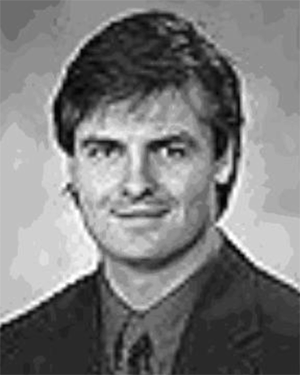 Matt Stead合作论文数5ZHAO Xinxin (赵欣欣)合作论文数4
 Zhipeng Wang (王志鹏)合作论文数Department of Control Science and Engineering, College of Electronic and Information Engineering, Tongji University;Shanghai Research Institute for Intelligent Autonomous Systems, Tongji University4
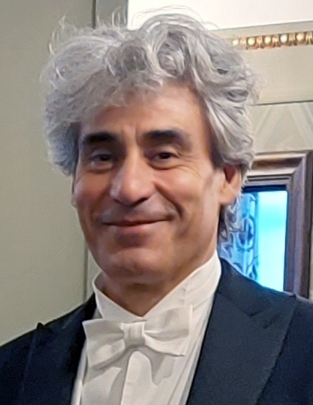 Fabio Babiloni合作论文数Department of Molecular Medicine, Sapienza University of Rome;The Industrial Neuroscience Laboratory, Sapienza University of Rome4Hui Su合作论文数3
 Shaokai Zhao合作论文数3Yuying Zhu合作论文数3Tong Cao合作论文数3Wei Shen合作论文数3
 Yanbin Zhang (张彦斌)合作论文数School of Electrical Engineering, Xi'an Jiaotong University3
 Runjie Shen (沈润杰)合作论文数Intelligent Robotics and Computational Perception Lab, Tongji University;College of Electronic and Information Engineering, Tongji University3
 Y. D. Yao (姚育东)合作论文数Wireless Information Systems Laboratory, Department of Electrical and Computer Engineering, Jr. School of Engineering and Science, Stevens Institute of Technology;College of Medicine and Biological Information Engineering, Northeastern University3
 Hualou Liang (梁化樓)合作论文数Research Institute for Smart Ageing, The Hong Kong Polytechnic University;Department of Language Science and Technology, Faculty of Humanities, The Hong Kong Polytechnic University;School of Biomedical Engineering, Science & Health Systems, Drexel University3
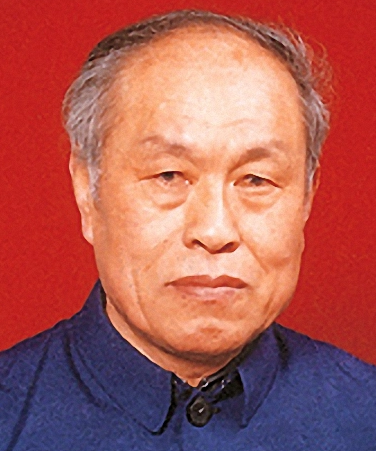 Si-Ying Zhang (张嗣瀛)合作论文数School of Automation, Qingdao University3
 Huicheng Zheng (郑慧诚)合作论文数School of Computer Science and Engineering, Sun Yat-sen University3
 Shihui Chen (陈诗慧)合作论文数Musculoskeletal Res Lab, Chinese Univ Hong Kong3P. F. Jin合作论文数2K. Z. Yang合作论文数2Qiangqiang Tian合作论文数2georgia inst合作论文数2
 Xinxin Jia合作论文数2Ming Chen合作论文数2Yanyang Li合作论文数2
 Wang Bocheng (王博丞)合作论文数2Yong Lian合作论文数2
 Krishnendu Chakrabarty合作论文数School of Electrical, Computer and Energy Engineering, Arizona State University;University of Bremen2
 Tamás Roska合作论文数Faculty of Information Technology, Pázmány P. Catholic University;Computer and Automation Research Institute, Hungarian Academy of Sciences;Cellular Sensory and Wave Computing Research Laboratory2
 Rahul Sarpeshkar合作论文数Department of Physics and Astronomy, Dartmouth College;Geisel Medical School, Dartmouth College2
 Kun Yang合作论文数School of Computer Science and Electronic Engineering, University of Essex2
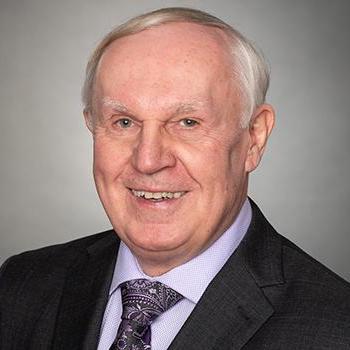 David Allstot合作论文数Department of Electrical and Computer Engineering, College of Engineering, Carnegie Mellon University2
 David Fogel合作论文数Natural Selection, Inc.;LeadCrunch;Effect Technologies, Inc.2
 Giovanni Vecchiato合作论文数Dept. Physiology and Pharmacology, Univ. of Rome Sapienza2
 Amine Bermak合作论文数College of Science and Engineering, Hamad bin Khalifa University;Divison of Information & Computing Technology, Hamad bin Khalifa University2
 Robert J. Butera合作论文数Wallace H. Coulter Dept. of Biomedical Engineering, School of Electrical and Computer Engineering, Georgia Institute of Technology2
 Tobi Delbrück合作论文数Institute for Neuroinformatics, ETH Zurich;Department of Information Technology and Electrical Engineering, ETH Zurich2




