Herbivory is a fundamental biological process that can determine the structure and functioning of ecosystems. On temperate reefs worldwide, herbivory by grazing macro-invertebrates can cause extensive overgrazing of kelp beds when grazers reach hyperabundance. Rising to local dominance, typically it is the grazing activity of a single species amongst others that is responsible for overgrazed ‘barrens’. However, the potential for subordinate grazing species to impact kelp beds is less understood and often overlooked. Here we observe apparent ‘barren’ patches within kelp beds associated with local hyperabundance of a subordinate grazer, the turbinid periwinkle Lunella undulata, in eastern Tasmania. We demonstrate capacity for this periwinkle to overgraze by deploying a caging experiment on a ‘peri-barren’ patch, involving inclusion and exclusion treatments, plus cage and background control plots. Fleshy macroalgae proliferated in cages excluding periwinkles, reaching mean percentage cover of 47 ± 8
Crustose coralline algae (CCA) play a central role in coral reef framework consolidation and vertical accretion, yet their contribution to reef-scale calcification remains poorly quantified, particularly on reefs dominated by algal turfs. We examined how CCA calcification rates differed across ten reef sites with varying benthic composition around Lizard Island, Great Barrier Reef, Australia. Using tiles from calcification accretion units (CAUs), we quantified CCA carbonate production on light-exposed tile surfaces and related these rates to CCA cover and the Epilithic Algal Ratio (i.e. the spectrum of algal states from CCA to turf dominance), quantified on both tiles and the adjacent reef substrata. CCA calcification rates on tiles varied by up to 6.3-fold across sites, ranging from 2.1 to 13.2 g 100 cm−2 year−1. Higher CCA cover and reduced turf dominance on the tile surface were strongly related to increased calcification rates. However, tile-based calcification rates were weakly related to CCA cover/turf dominance on adjacent reef substrata, likely because mounted experimental surfaces elevated above the substratum accumulate less sediment, altering CCA versus turf competition. Indeed, on natural reef substrata, reduced CCA dominance was strongly associated with increased turf length, consistent with sediment‑mediated competitive suppression of CCA by turfs. When tile‑based calcification rates were integrated with on-reef benthic cover, site‑level calcification estimates were substantially lower than site-level estimates derived from tiles alone. These findings highlight that experimental tiles may overestimate on-reef carbonate production and that shifts towards long sediment‑laden algal turfs may reduce exposed CCA cover, CCA-based calcification, and therefore reef accretion.
Shallow reef ecosystems support diverse, functionally important assemblages, spanning bacteria to megafauna, and are shaped by natural gradients and anthropogenic stressors, including pollution. Monitoring these dynamics remains challenging, particularly across microhabitats that are difficult to access or quantify. Environmental DNA (eDNA) offers a non-invasive tool capable of detecting organisms across body sizes and trophic levels, but its utility for assessing pollution impacts requires further validation. We compared eDNA metabarcoding of microbes (16S rRNA), microbial eukaryotes (18S rRNA), and metazoans (COI Leray) with underwater visual surveys (UVS) and epifauna (fucoid algae) sampling, across 18 sites in New South Wales and Tasmania, spanning pollution and habitat gradients. Potential pollutant impacts on reef assemblages were analysed using distance-based linear models. Pollutant-associated variations in assemblages within reef microhabitats (rock, brown algae, coralline algae) were also assessed. eDNA showed comparable sensitivity to that of UVS and epifaunal sampling, with distinct strengths. Epifaunal sampling uniquely detected total nitrogen and dichloroethane effects, while eDNA captured broader pollutant signals and microhabitat-specific assemblage variation. Sea Surface Temperature (SST), metals, Total Organic Carbon (TOC), δ15N, and human pressure (human population index) were significantly associated with assemblage shifts. Bacterial, microbial eukaryote and metazoan assemblages and their microhabitats showed distinct pollutant sensitivities: 16S identified δ15N, TOC, and metals; 18S metals and TOC; COI TOC and SST; and all assemblages responded to the population index across brown and coralline algae. These findings position eDNA as a valuable complement to traditional methods, with strong potential for integration into high-resolution, long-term reef biomonitoring frameworks.
Context Overabundant echinoderms can dramatically alter reefs, with this problem being exemplified along Australia’s coast, with recurrent outbreaks of crown-of-thorns starfish (CoTS) (Acanthaster cf. solaris) on the Great Barrier Reef (GBR) and high densities of long-spined sea urchins (Centrostephanus rodgersii) on the eastern Great Southern Reef (GSR). Aim To foster cross-system knowledge exchange on ‘prickly problems’ across reef systems. Methods Synthesise and compare the ecology and management of CoTS and C. rodgersii, focusing on the GBR and GSR. Key results Population dynamics differ, with recurrent boom-and-bust outbreaks in CoTS, whereas C. rodgersii can increase to high-density stable populations, forming urchin barrens that last decades or more. Differences in nutritional ecology (obligate corallivore, CoTS, v. omnivore, C. rodgersii) and regeneration rate of nutritional resources are linked to population dynamics. For both species, there is evidence of effective, local, top-down active management by culling or harvesting, but large differences in funding exist (funding for GBR CoTS management is >40-fold higher than for Tasmanian urchin management). Conclusions Spatially structured management aimed at prevention is more efficient and cost effective than reactive control efforts. Implications The review emphasises the value in bridging research and sharing knowledge across parallel but largely independent research fields across tropical and temperate reefs.
Sea urchins are renowned for their capacity to shape shallow reef community structure and function, especially when at high densities. However, most quantitative assessments of urchin densities are based on diurnal surveys, despite the nocturnal emergence of urchins being a well-recognised phenomenon. The value of such diurnal density estimates is, therefore, inherently dependent on the extent of nocturnal urchin emergence and the consistency of this diel behaviour under different contexts. Yet, our understanding of nocturnal urchin emergence under different local conditions at broad scales including between tropical and temperate reefs, remains largely unresolved. Here, we evaluate the extent of nocturnal urchin emergence, and assess how this varied with potential predictors, using paired day and night surveys across a total of 42 reef sites spanning tropical (n = 23) and temperate (n = 19) Australia. Among kelp-dominated temperate rocky reefs, urchin densities and biomass were ∼7-8-fold greater than observed on tropical coral reefs. Regardless of realm, urchin densities and biomass were consistently higher at night, with tropical reefs showing the greatest diel differences (3.5-fold higher density and 3.0-fold higher biomass) compared to temperate reefs (1.4-fold and 1.7-fold, respectively). Gradient Boosted Regression Trees revealed that mean sea surface temperature (SST) was the strongest predictor of the relative extent of nocturnal urchin emergence, with higher relative emergence on reefs with warmer SST, corresponding with strong patterns in nocturnal emergence peaking toward equatorial latitudes. Our findings show that daytime surveys likely greatly underestimate urchin activity, population size, and ecological impacts, particularly on tropical reefs, with important consequences for reef monitoring and management.
Algal turfs represent the dominant benthic cover on most coral reefs globally, with the sediments they trap having a marked effect on reef functioning. Yet our quantitative understanding of these sediments remains poorly resolved for most regions. Despite habitat zonation representing one of the strongest ecological gradients on coral reefs, the distribution of turf-associated sediments across this gradient is unresolved beyond some sites on Australia’s Great Barrier Reef (GBR), where reef crests are typified by the lowest sediment loads, shortest turf lengths, and highest herbivorous fish biomass. Here, we quantified the cross-habitat (flat, crest, and slope) distribution of turf length, sediment load, and key herbivores on two Caribbean reefs off Puerto Rico. Cross-habitat distribution of sediments was congruent with previous patterns on the GBR; sediment loads were lowest on the crest and highest on the flat, with a 1.7-fold difference between these habitats. Biomass of parrotfishes and surgeonfishes was inversely correlated with turf-bound sediments across habitats, peaking on the crest. Turf length was shortest on the crest at one reef, however, at the second reef, there was no difference in turf length across habitats, with shorter-than-expected turfs on the flat. The sea urchin, Diadema antillarum, was relatively abundant on the reef flat at this second reef, suggesting that this species may play a role in curtailing long sediment-laden algal turf development. This research extends the cross-habitat understanding of turf-associated sediments to the Caribbean, and suggests the role of urchins in these dynamics warrants specific investigation.
Predator removal can destabilise and devastate ecosystems, particularly if a species released from top-down control can itself fundamentally alter the system1. On Indo-Pacific reefs, coral-eating crown-of-thorns starfish (CoTS, Acanthaster spp.) threaten ecosystem function and resilience due to their propensity to undergo destructive population outbreaks that cause widespread coral loss2,3. One of the foremost hypotheses to explain these outbreaks centres around the overfishing of their putative predators4,5. Notably, outbreaks of CoTS seem to be less prevalent on reefs protected from fishing4,5, but the risk of predation has never been quantified. Here, we show that the predation risk for CoTS inside no-take marine reserves on Australia's Great Barrier Reef is 3.6- and 2.8-times higher than in areas where fishing is permitted and limited, respectively. Moreover, the elevated predation risk inside no-take reserves is directly attributable to a single fish species, the spangled emperor (Lethrinus nebulosus), a fishery species that shows up to 6.3-times greater biomass on no-take versus fished reefs. These findings may explain how no-take reserves protect reefs from CoTS outbreaks4 and highlight targeted conservation of L. nebulosus as a promising management strategy to mitigate reef degradation by CoTS outside of no-take reserves.
Global climate change is shifting thermal gradients in the world's oceans, resulting in the redistribution of species and thermophilisation of reefs. In the Southwest Pacific, warming has underpinned the range extension and population increase of the habitat-modifying sea urchin, Centrostephanus rodgersii. Eastern Tasmania and Northeastern Aotearoa New Zealand (NZ) lie at the forefront of these changes, with increases in C. rodgersii driving declines in kelp in these regions. However, the extent of C. rodgersii increases in both regions remains unclear, although given well-established thermal limits of C. rodgersii there appears greater potential for increases in the warmer waters of NZ than in the cooler waters of Tasmania. Here we leverage a combination of broad spatial scale data and region-specific depth-stratified data to examine regional C. rodgersii abundance changes in recent decades and their relation to minimum sea surface temperature (SST). The abundance of C. rodgersii increased 1.7-fold between 2001/02 and 2016/17 for Tasmania and 3.3-fold between 2012 and 2024 for NZ. Larger C. rodgersii abundance changes in NZ align with predictions based on their modelled abundance against SST. Moreover, modelled estimates suggest C. rodgersii abundance in NZ have the potential to increase further into the future (by ∼2.7-fold at 8.1 m). While the increase in Tasmania has been well documented, these findings demonstrate a greater increase in population density in Northeastern NZ and potential for further increases. Ultimately, increase in C. rodgersii abundance in both regions call for the establishment, or ramping up, of management programs to curb population increases.
Temperate reef ecosystems are increasingly challenged by acute marine heatwaves and chronic overfishing which can lead to trophic cascades. While these disturbances differ in their impact and temporal expression, both can manifest as a collapse of kelp followed by proliferation of filamentous algal turfs. However, the importance of these disturbance types in turf proliferation remains unclear. Here, we investigate whether turf proliferation on Tasmanian reefs is driven primarily by acute kelp loss or chronic urchin grazing. Using standardised settlement tiles, we quantified short-term (2.5 mo) turf proliferation across 4 treatments: (1) intact kelp beds, (2) intact urchin barrens, (3) kelp beds with kelp removed, and (4) urchin barrens with urchins removed. Additionally, we tracked the longer-term (similar to 12 mo) fate of these experimental patches to assess either kelp recovery or turf persistence. Turf proliferated in all treatments where kelp was absent or removed, with approximately 50-fold higher turf cover in disturbed kelp beds. This suggests that acute kelp loss is the predominant mechanism that allows turf proliferation in this system. However, the capacity of turf to persist was dependent on chronic urchin grazing. After 12 mo, our results revealed that at a site with lower urchin densities, kelp recovered within the patches with an associated decline in turf cover. At a site with higher urchin densities, kelp failed to recover, and turf continued to proliferate. Overall, when kelps are lost, competitive release allow turfs to establish, but their persistence appears dependent on chronically elevated levels of herbivory preventing kelp re-establishment.
Predators can play a key role in structuring ecological communities through top-down control, which may be influenced by size-specific relationships, abundance and richness of predatory guilds. In southeastern Australia, the diadematid sea urchin Centrostephanus rodgersii reaches high abundances, overgrazing kelp and maintaining extensive barrens. Despite its ecological importance, predator identity and size-specific nature of predation on this urchin remain incomplete. Here, we conducted urchin tethering assays with remote underwater videos to identify predators across a full size range of urchins (16-110 mm test diameter). We identified 5 predatory fishes from a total of 94 arrays and 61 predation events from 7 sites in the Sydney region, Australia. The eastern blue groper Achoerodus viridis (Labridae) accounted for 75% of events, and the other 4 predatory fishes accounted for the remainder, which involved small urchins only (<= 25 mm test diameter). Overall, predation risk decreased as urchin size increased, while time to predation decreased with predator richness. Smaller urchins were more likely attacked from the aboral side, while larger urchins were flipped and attacked from the oral surface. A. viridis was the only predator observed consuming all urchin sizes. These findings show that predator size and richness are key factors determining the predation pressure on C. rodgersii. As many of these factors have been heavily impacted by historical overfishing, regulating urchin populations through effective predator management may be crucial for sustaining ecosystem services in kelp forests.
Environmental DNA (eDNA) methods are increasingly used to assess marine pollution, offering a promising tool for ecosystem monitoring. However, these approaches still require validation against traditional techniques, such as sediment fauna (macrobenthos) sampling using a van Veen grab to assess the effects of marine pollutants on the benthic assemblage. Using a suite of environmental and pollutant parameters sampled across southeastern Australia, we investigated the sensitivity of three metabarcoding assays (16S rRNA, 18S rRNA, and mitochondrial COI) versus traditional but labour-intensive macrobenthos sampling for detecting potential impacts of pollutants. Both eDNA metabarcoding and macrobenthos sampling detected pollutant-associated impacts, with eDNA more sensitive to heavy metals, and macrobenthos more responsive to organic pollutants.
Biotic interactions in marine ecosystems can create visible patterns on the benthos. An archetypal example of such a pattern is the conspicuous ‘halos’ (i.e., areas largely cleared of macrophytes) that surround many tropical reefs. While early ecological studies identified the role of herbivores and the predators that feed on them in the formation of halos on Caribbean reefs, recent evidence has highlighted the context-dependent nature of these biotic interactions. Widespread ecosystem changes and associated alterations in food webs suggest potential changes in the context for Caribbean reefs since those early studies. However, the extent to which different herbivores and predators contribute to halo formation and/or maintenance on contemporary Caribbean reefs remains unclear. We quantified herbivory on five macrophyte species across adjacent reef, halo, and seagrass zones, in a manner that allowed us to partially partition herbivory between sea urchins and fishes. Furthermore, we directly tethered the urchin Diadema antillarum on reefs and in halos to quantify predation risk for this key herbivore. The removal of macrophyte assays was high on coral reefs and in halos when compared to seagrass beds, with macrophyte selection by herbivores conserved across zones. Fishes, rather than urchins, were the major herbivores in halos. Moreover, we documented higher predation on urchins in halos compared to reefs, revealing that predation may still shape diurnal urchin distribution in exposed habitats. Despite substantial ecological changes on Caribbean reefs since early studies, halo formation/maintenance by selective fish feeding activity is an enduring feature in the functioning of contemporary Belizean seascapes.
Differences amongst diver-based underwater visual census (UVC) methods may influence how fish assemblages are described and interpreted ecologically. Here we compared 2 common UVC protocols across 32 tropical and 10 temperate reef sites spanning Australia to assess observational biases associated with diver counts. Specifically, we examined how fish data collected whilst deploying a transect tape (reel-out survey) compared to observations made along the transect tape following deployment (pre-laid survey). Each method produced comparable community structures for both biomass and abundance. No differences in species richness, family richness, abundance, or biomass were evident in assessments within realms (i.e. tropical and temperate) or protection status (i.e. fished and no-take). Nevertheless, pooling the data at the continental scale revealed 57% more biomass observed during reel-out surveys than pre-laid surveys, primarily due to more large fishes (>= 20 cm) from 3 tropical families and subfamilies: Carcharhinidae, Lethrinidae and Scarinae. Differences in biomass estimates by method altered the contributions of diver-affected families to reef fish trophic structures, with the reel-out method recording more biomass for primary consumers and higher-order predators. Overall, our findings indicate that tape laying prior to UVC has minimal detectable influence on fish community metrics but highlights that methodological differences can affect the interpretation and reporting of ecological patterns when examined over broad biogeographic scales. Pre-diver baselines of fish abundances, including by application of alternative methodologies such as remote underwater cameras, are needed to disentangle observational biases caused by diver-shy and diver-curious fishes, and thus allow more accurate depiction of reef food webs.
Epilithic algae dominate cover on coral reefs globally, forming a critical ecological interface between the benthos and reef organisms. Yet, the drivers of epilithic algal composition, and how composition relates to the distribution of key taxa, remain unclear. We develop a novel metric, the Epilithic Algal Ratio, based on turf cover relative to total epilithic algae cover, and use this metric to assess cross-scale patterns. We reveal water quality and hydrodynamics as the key environmental drivers of the Epilithic Algal Ratio across the Great Barrier Reef (GBR), and reefs globally. On the GBR, the abundance of herbivorous fishes and juvenile corals were also related to the Epilithic Algal Ratio, suggesting that reefs with long-dense turfs support fewer herbivores and corals. Ultimately, epilithic algae represent the interface through which the effects of declining water quality, which impacts a third of reefs globally, can reverberate up through coral reefs, compromising their functioning.
Introduction: Global degradation of natural ecosystems demands urgent action to stem losses and, where possible, identify opportunities for scalable restoration. Giant kelp forests, formed by Macrocystis pyrifera, have declined by similar to 95% along eastern Tasmania in recent decades, with limited propagule supply constraining recovery. Direct interventions to restore giant kelp have been attempted here since the 1990s, although attempts have been constrained by methodological and logistical limitations, underscoring the challenges of scaling restoration in subtidal marine environments. Objectives: This study details the methodological development of a rapid and forest-scale in situ approach to reseed threatened giant kelp forests that have declined. Methods: Here we provide an overview of the "holdfast-graft" method, as a forest-scale technique to reseed reefs with mass-produced hatchery-reared giant kelp sporophytes seeded to twine. Taking inspiration from true grafting of terrestrial vascular plants, we apply an analogous approach of effectively binding the equivalent of a "scion" (i.e., hatchery-reared giant kelp sporophytes) to a "root-stock" (i.e., holdfast stubs of other common seaweed species). By comparing rates of kelp sporophyte attachment between twine seeded to holdfast stubs and directly to boulders, as well as seeded gravel, we evaluate the effectiveness of this method. Results: We reveal a 40-fold higher rate of kelp sporophyte attachment to the reef when twine was wrapped around holdfast stubs compared to twine wrapped over boulders or deployments of hatchery seeded-gravel methods. Refinement of the "holdfast-graft" method led to targeted wrapping of short 60-cm seeded twine lengths directly to individual holdfast stubs, enabling rapid and forest-scalable deployment by divers. Conclusions: The "holdfast-graft" method represents an efficient and scalable method for out-planting giant kelp.
Global warming is reshaping the composition and functioning of temperate reef communities and resulting in the emergence of habitats that resemble those often found on more equatorward reefs. In Tasmania, Australia, such 'tropicalization' has caused the loss of kelp bed habitats and the emergence of urchin barrens, which were historically found on more equatorward reefs in New South Wales (NSW). Despite these regions now sharing both kelp beds and urchin barrens, the extent of similarity in community composition and functioning across habitats and regions is unresolved. Here, we conducted underwater visual census and used experimental macroalgal assays to quantify and contrast community composition (taxonomic and functional) and herbivory, between kelp beds and barrens in two regions (Tasmania and NSW) separated by ∼1000 km. Ultimately, these comparisons revealed that the greatest dissimilarity generally lay between habitat types, rather than regions. Moreover, the sea urchin, Centrostephanus rodgersii, emerged as the most important species driving between habitat dissimilarity, and when present, its biomass was strongly related to the extent of macroalgal assay removal. Overall, these results underscore the similarities in community composition and herbivory that can arise within similar habitats across biogeographical scales.
Conservation of marine biodiversity requires an understanding of the habitats needed to support and replenish species of interest. It also requires knowledge about the abundance and diversity of multispecies assemblages. Variation in the distribution and composition of kelp forests, one of the most productive marine coastal habitats globally, can have major influences on reef fishes-a group of ecologically and socioeconomically important species. In the face of widespread and escalating loss of kelp forests, quantification of these effects is urgently needed to assess and project cascading impacts on biodiversity. Here, we evaluate relationships between kelp forests and associated reef fish populations using a global meta-analysis of experimental kelp removals and comparative surveys of kelp and adjacent non-kelp habitats. These analyses show that kelp forests increase the abundance of reef fishes, though the significance of this effect varied depending on the structural complexity of kelp forests. In experimental studies, kelp forests have a significant positive effect on fish species richness, revealing that kelp act as true foundation species by supporting the diversity of associated multispecies assemblages. Importantly, regardless of kelp forest morphology and type of study (observational or experimental studies), kelp forests enhance the recruitment of early life history stages suggesting they are nursery habitats for many reef fish taxa. Lastly, kelp forests differentially affected species with different functional traits; small body size fishes from low trophic levels (e.g., herbivore and detritivores, micropredators, and mesopredators) and large body size fish from higher trophic level (e.g., piscivores, general carnivores) were both facilitated by kelp forests. Taken together, these results indicate that the loss of kelp forest, particularly those with more complex morphology, can reduce total abundance and diversity of fish, with possible cascading consequences for coastal ecosystem function.
Climate change is driving species to colonize new ranges, sometimes causing uncontrollable damage. Here we present a remarkable scenario in which government-supported incentives have driven the establishment of a commercial fishery targeting a destructive urchin, intentionally encouraging overfishing to protect kelp ecosystems. This ecosystem management strategy is paradoxical in the objective to overfish sustainably. Due to consistent and increasing larval influx, the eradication of urchins in their extended range is implausible. Management, therefore, focuses on maintaining urchin density below a critical threshold while ensuring a viable commercial fishery for long-term species control. Our model dissects the fishery's impact, offering practical strategies for controlling a destructive range extender given economic and spatial dynamics. Beyond the implications of subsidizing a commercial fishery to counteract the impacts of climate change, our study explores the conflict between exploitation and conservation, challenging traditional views and presenting practical pathways to sustainability.
Understanding how cross-system subsidies shape the functioning of recipient ecosystems across trophic levels was unresolved. A new study in PLOS Biology reveals seabird-derived nutrients fuel primary producers on coral reefs, enhancing herbivore productivity.
 Craig Johnson合作论文数Institute for Marine and Antarctic Studies, University of Tasmania57
 Graham Edgar合作论文数Institute for Marine and Antarctic Studies, University of Tasmania27
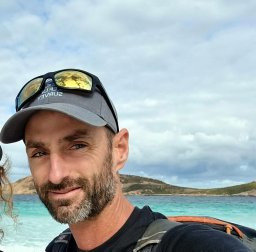 Rick D. Stuart-Smith合作论文数School of Zoology and Tasmanian Aquaculture and Fisheries Institute, University of Tasmania18
 Stewart Frusher合作论文数Australian Institute of Marine Science17
 Alistair Hobday合作论文数CSIRO Environment16
 Sterling Tebbett合作论文数James Cook University13
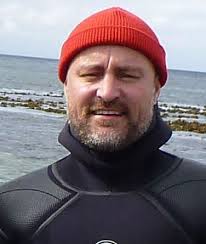 Thomas Wernberg合作论文数School of Biological Sciences, University of Western Australia;Oceans Institute, University of Western Australia;Institute of Marine Research12
 Sean Connell合作论文数Faculty of Sciences, Engineering and Technology, The University of Adelaide;School of Biological Sciences,The University of Adelaid11
 Neville S. Barrett合作论文数Tasmanian Aquaculture and Fisheries Institute, University of Tasmania11
 Simon Reeves合作论文数School of Chemistry, Faculty of Engineering and Physical Sciences, University of Southampton10
 Nina Kriegisch合作论文数9
 J.C. Sanderson合作论文数9
 Nick Shears合作论文数Institute of Marine Science, Faculty of Science, The University of Auckland8
 Ken Ridgway合作论文数CSIRO Marine And Atmospheric Research8
 S. Bennett合作论文数School of Marine and Tropical Biology, James Cook University8
 Morgan Pratchett合作论文数College of Science and Engineering, James Cook University8
 Emma B Flukes合作论文数Institute for Marine and Antarctic Studies, University of Tasmania7
 Marzloff Martin合作论文数7Keane John P合作论文数7Craig N Mundy合作论文数Tasmanian Aquaculture and Fisheries Institute, University of Tasmania7
 Caleb Gardner合作论文数Tasmanian Aquaculture and Fisheries Institute, University of Tasmania7
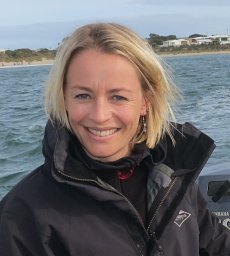 Camille Mellin合作论文数IRD UR 128, BPA5 98848 Nouméa cedex New Caledonia7
 Adriana Vergés合作论文数School of Biological, Earth and Environmental Sciences, Faculty of Science, The University of New South Wales7Kira A Krumhansl合作论文数6
 Anne K. Salomon合作论文数Coastal Marine Ecology and Conservation Lab, School of Resource and Environmental Management, Simon Fraser University6
 Klaas Hartmann合作论文数Biomathematics Research Center, University of Canterbury6
 Elisabeth M A Strain合作论文数University of Bologna, Universit�� di Bologna6Hugh Pederson合作论文数Tasmanian Aquaculture and Fisheries Institute, University of Tasmania6
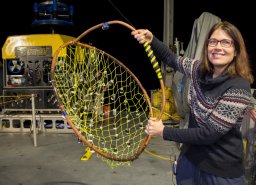 Amanda E Bates合作论文数Portobello Marine Laboratory, University of Otago6
 Ciemon F. Caballes合作论文数NSF EPSCoR) - Guam Ecosystems Collaboratorium for Corals and Oceans, University of Guam - Marine Laboratory5
 Kate M. Fraser合作论文数Inst Marine & Antarctic Studies, Univ Tasmania5
 Jonathan S. Lefcheck合作论文数Coll William & Mary, Virginia Inst Marine Sci5Cooper Antonia T合作论文数5
 Cayne Layton合作论文数5
 Zara-Louise Cowan合作论文数Jutfelt Fish Ecophysiology Lab, Norwegian University of Science and Technology;Natural Resources Institute Finland5
 Fiorenza Micheli合作论文数Biology Department, Stanford University5
 Jemina F. Stuart-Smith合作论文数School of Zoology;University of Tasmania;School of Zoology, University of Tasmania5
 Neil Holbrook合作论文数ARC Centre of Excellence for Climate Extremes, University of Tasmania;Institute for Marine and Antarctic Studies, University of Tasmania5
 Kjell Magnus Norderhaug合作论文数Norwegian Institute for Water Research5
 Jacqueline B. Pocklington合作论文数5
 Alejandro Perez-Matus合作论文数5
 Melinda A Coleman合作论文数University of New South Wales Center for Marine Bioinnovation5r roob合作论文数4j dowdney合作论文数4
 Paul B. Day合作论文数4Mp Marzloff合作论文数4Ella Clausius合作论文数4
 Lara Denis-Roy合作论文数4
 Olivia J Johnson合作论文数Dept Nat Resources & Environm, Univ Connecticut4




