The introduction of Generative Artificial Intelligence (GenAI) tools, like ChatGPT, into higher education heralds a transformative era, reshaping instructional methods, enhancing student support systems, and redefining the educational landscape. Recent literature reviews on GenAI highlight a lack of focus on how these tools are being practically implemented in educational settings. Addressing this gap, the present study systematically examines empirical case studies that demonstrate the integration of GenAI into teaching and learning in higher education, offering actionable insights and guidance for academic practice.We conducted a search of relevant databases and identified 21 empirical studies that met our inclusion criteria. The selected studies cover a diverse range of disciplines, locations, types of participants (from first-year students to postgraduates and academics), and a variety of methodologies. We classified the selected publications based on the pedagogic theory of Laurillard's Conversational Framework (LCF) and the Substitution, Augmentation, Modification, and Redefinition (SAMR) framework. We also synthesized definitions from selected empirical studies and recent research exploring Technological Pedagogical Content Knowledge (TPACK) in the age of GenAI, providing a comprehensive understanding of GenAI-TPACK factors. Limitations and future research opportunities are also discussed. The paper concludes by providing a GenAI-TPACK diagram to guide educators in effectively incorporating GenAI tools into their teaching practices, ensuring responsible and impactful use in higher education.
Generative Artificial Intelligence (GenAI), such as ChatGPT, is reshaping educational paradigms by offering unparalleled benefits and introducing challenges, particularly academic integrity. This study investigates teaching laboratory practices (traditional, recorded, remote, simulation and virtual), considered an academic safe haven due to its authenticity, and examines how assessments align with learning objectives. This should reinvigorate interest in expanding laboratory learning opportunities. However, unsupervised laboratory reports, a dominant assessment type, present significant cheating risks - intensified by GenAI. Given the scant literature on laboratory assessments and their primary focus on cognitive objectives, little guidance is available regarding how to assess non-cognitive objectives. This studies innovative approach utilises a reflective survey with 134 international academic staff to explore how each assessment type can verify cognitive, psychomotor, and affective learning objectives. We introduce a 'Words of Estimative Probability' heatmap to visualise the likelihood of verifying specific learning objectives, providing a snapshot to guide academics in holistic assessment design. This study advocates for diverse assessments, which mitigate GenAI risks and foster comprehensive skill development. This research equips educators to design secure, effective laboratory education in STEM disciplines, ensuring alignment with evolving academic and technological landscapes by offering a framework for improving assessment validity, integrity, and adaptability.
The literature on laboratory objectives in engineering education research is scattered and inconsistent. Systematic literature reviews identified the need for better understanding. This paper ranks the laboratory learning objectives across the cognitive, psychomotor and affective domains to improve scaffolding. It provides an opportunity for reflection, a pathway to confirm assessment alignment, and opens future research areas. To accomplish this, the Laboratory Learning Objectives Measurement (LLOM) instrument is used to survey 160 academics from around the world representing 18 engineering disciplines. The results suggest that the collective ranking order does represent a framework that can be used broadly. However, for greater alignment with consensus thinking, discipline rankings should be used. The cognitive domain was deemed the most important. These results provide the community’s opinion and may not necessarily be best practice, providing an opportunity for reflection.
Generative Artificial Intelligence (GenAI) has significantly impacted higher education, offering numerous benefits alongside notable risks, particularly concerning academic integrity. This paper reviews the assessment landscape in the context of GenAI and critically analyses a key GenAI assessment framework against the latest assessment integrity research in engineering. Our analysis indicates that this framework presents a valuable opportunity for advancing engineering education.
ABSTRACTABSTRACTThere is a considerable body of literature on the challenges that are encountered in the transition from technical engineering research to engineering education research. These challenges include conceptual difficulties, shifts in identities and in paradigms, and changes of cultural and social capital. Many of the studies in this area emphasise the importance of having a network of engineering education researchers, but there is little research on what such a network would look like. Our research builds on this by investigating how the Centre for Research in Engineering & IT Education (CREITE) has established conditions which enable the development of engineering education research capabilities across several universities in NSW. Our novel research approach views six case studies of CREITE members through the lens of three practice theories: community of practice; Bourdieu’s theory of practice; and the theory of practice architecture. The findings reveal a kaleidoscopic understanding of what constrains and enables engineering educators to engage with the field of EER, and the pivotal role played by a research group such as CREITE.Keywords: Engineering Education Researchpractice theoriesresearcher identity AcknowledgmentsWe wish to thank the anonymous reviewers of our manuscript, whose comments helped us to revise and refine the final manuscript.Disclosure statementNo potential conflict of interest was reported by the authors.Additional informationNotes on contributorsRosalie GoldsmithRosalie Goldsmith, PhD, is a senior lecturer in the Institute for Intereactive Media & Learning at the University of Technology Sydney. Her research interests include: research literacies; engineering identity; engineering education research; and the theory of practice architectures.Guien MiaoGuien Miao Guien holds a PhD in Civil Engineering from the University of Sydney. Her research interests are in a range of areas within soil mechanics and engineering education.Scott DanielScott Daniel, PhD, is Senior Lecturer in Humanitarian Engineering at the University of Technology Sydney. He uses qualitative methodologies to explore different facets of engineering education and practice, particularly in humanitarian engineering.Paul BriozzoPaul Briozzo, M.Phil candidate, is a lecturer in Mechanical Engineering at the University of Sydney. His research interests include creativity in mechanical design.Hua ChaiHua Chai is currently a Ph.D candidate in the School of Electrical Engineering and Telecommunications at the University of New South Wales. He received his dual Bachelor's Degrees in both Electrical Engineering and Project Management and his Master's degree in Electrical Engineering from UNSW. His research interests include analysis for large scale renewable-integrated power systems, curriculum design and development in engineering education, and condition monitoring of power system equipment.Anne GardnerAnne Gardner, PhD, is Acting Deputy Dean and Associate Dean, Teaching & Learning in the Faculty of Engineering & IT at the University of Technology Sydney. Her research interests include collaborative learning, self and peer assessment, and the development of engineering education researcher identity.
The laboratory, an integral component of engineering education, can be conducted via traditional, online or mixed modes. Within these modes is a diverse range of implementation formats, each with different strengths and weaknesses. Empirical evidence investigating laboratory learning is rather scattered, with objectives measurement focused on the innovation in question (e.g., new simulation or experiment). Recently, a clearer picture of the most important laboratory learning objectives has formed. Missing is an understanding of whether academics implementing laboratories across different modes think about learning objectives differently. Using a survey based on the Laboratory Learning Objectives Measurement instrument, academics from a diverse range of engineering disciplines from across the world undertook a ranking exercise. The findings show that those implementing traditional and mixed laboratories align closely in their ranking choices, while those implementing online-only laboratories think about the objectives slightly differently. These findings provide an opportunity for reflection, enabling engineering educators to refine the alignment of their teaching modes, implementations and assessments with their intended learning objectives.
ChatGPT, a sophisticated online chatbot, sent shockwaves through many sectors once reports filtered through that it could pass exams. In higher education, it has raised many questions about the authenticity of assessment and challenges in detecting plagiarism. Amongst the resulting frenetic hubbub, hints of potential opportunities in how ChatGPT could support learning and the development of critical thinking have also emerged. In this paper, we examine how ChatGPT may affect assessment in engineering education by exploring ChatGPT responses to existing assessment prompts from ten subjects across seven Australian universities. We explore the strengths and weaknesses of current assessment practice and discuss opportunities on how ChatGPT can be used to facilitate learning. As artificial intelligence is rapidly improving, this analysis sets a benchmark for ChatGPT’s performance as of early 2023 in responding to engineering education assessment prompts. ChatGPT did pass some subjects and excelled with some assessment types. Findings suggest that changes in current practice are needed, as typically with little modification to the input prompts, ChatGPT could generate passable responses to many of the assessments, and it is only going to get better as future versions are trained on larger data sets.
In this interactive session, participants will be led in a discussion about the AJEE, the review process, and how to write for
After decades of increasing evidence in favour of active learning, lecturing remains the dominant face-to-face teaching mode. Just as a rigorous research approach is required to understand how to improve student learning outcomes, we also need research about how to reform teaching practice. Some initial steps in this direction have shown that successful pedagogical reforms are long-term, contextualised, and address teachers’ beliefs about teaching. It is not enough to put in place overarching policy directives about active learning, nor to simply share best practice, because these strategies do not engage with the particular teaching contexts and beliefs of individual academics. Professional development programs to shift academics away from the traditional lecture must incorporate academics’ conceptions of lecturing. Although there has been some research into conceptions of university teaching in general, there is a dearth of literature focusing on conceptions of lecturing in particular. This article addresses that gap, by using a phenomenographic approach to interview 30 academics about their lecturing experiences. From analysing the transcripts, a hierarchy of five ways of experiencing lecturing was identified: (1) Lecturing as soliloquy, (2) Lecturing as connecting meaning, (3) Lecturing as cultivating individuals, (4) Lecturing as transformatively co-creating, (5) Lecturing as enacting research. Three themes of expanding awareness framed this hierarchy: interaction, student diversity, and lecture purpose. By extrapolating these themes downwards, a zeroth category was conjectured: Lecturing as reading. Implications for educators are discussed, along with potentially fruitful avenues of future research.
CONTEXTIn 2020, research was carried out into three, group-work based engineering and IT undergraduate subjects each with approximately 600 students.The research was focused on students' experience of online group work, and what emerged were several factors that contributed to developing a capacity for successful group work online.These factors included common expectations amongst group members, students' confidence in themselves and fellow group members, and a strategic approach to task completion. PURPOSE OR GOALStudents frequently find group work assessments challenging and unenjoyable due to reasons unconnected to the assessment itself.Tensions within the group may result in students not participating in the task, disengaging from the group work, and in extreme cases dropping out of the subject.Meanwhile, other students have to pick up the slack and complete the remaining work.Factors such as group trust, individual attitude and aligned motivation have been identified as indicators of successful group work.We aim to further understand the conditions necessary to creating functional groups and to use this knowledge to develop tools and activities to help create functional groups. APPROACH OR METHODOLOGY/METHODSOver three semesters, focus groups of first-and second-year students in subjects requiring group work discussed factors contributing to their group's success or failure.Focus groups were also run with tutors to determine features they considered important in creating successful groups.The data was analysed for themes that indicated the factors that support and inhibit the development of functional groups.These results have been used to adopt tools and develop activities to improve group dynamics which will be used in future classes. ACTUAL OR ANTICIPATED OUTCOMESThis research provides further indications of the elements contributing to group achievement.It has given insight into conditions that need to be avoided for groups to succeed.The literature suggests that confidence, attitude, and motivation are fundamental to collaboration.Analysis of focus groups has supported this and suggests that developing student agency may help students achieve these.The research has guided the implementation of tools and activities that can be used to help students to improve their ability to work in groups. CONCLUSIONS/RECOMMENDATIONS/SUMMARYSuccess in group work depends on developing student trust in their own abilities and the abilities of their groupmates and these are supported through development of student agency.The research has presented tools and activities that promote and develop individual agency in a group context and foster students' confidence in themselves and fellow group members, and a strategic approach to task completion.
When international students relocate overseas to pursue higher education, they undergo transitions in social culture, educational approaches and professional practice.These transitions shape various aspects of their identity (e.g., personal, professional), engineering identity being one of them.Engineering identity is a complex, contested construct that informs how engineering is perceived, how education curricula are developed, and which student it attracts.Due to stereotypes about engineering, white middle-class males continue to dominate the profession.However, there is a need for a more diverse engineering workforce that better represents the society.With female international students' varied journeys and intersectional identities, a closer look at this population will shed light on ways to attract and retain diverse individuals within engineering. PURPOSE OR GOALAs a first step in a larger study about understanding the identities and experiences of female international students, in this paper we ask the following research question: What research has been conducted on female international students in engineering? APPROACH OR METHODOLOGY/METHODSAs a starting point, the following keywords (and their synonyms) are searched on Scopus and targeted journals: 'international student', 'wom*n', 'engineer*'.After the abstracts are screened based on their relevance to the research question, the remaining abstracts are analysed to determine an appropriate scope for this review, and the inclusion and exclusion criteria are refined.References from the included papers are screened and analysed using the same process. ACTUAL OR ANTICIPATED OUTCOMESBased on the search strategy as well as inclusion and exclusion criteria, 6 papers were identified as relevant to the research question, and the findings were qualitatively analysed based on two categories: university and family/society.Discussion on university focussed on female international students' interactions in the social and academic context, while discussion on family/society focussed on the impact of societal perceptions of engineering and gender roles on female international students. CONCLUSIONS/RECOMMENDATIONS/SUMMARYThe paucity of relevant literature from the initial search strategy suggest that female international students in engineering are understudied.The findings suggest that this population's experience has been underrepresented in both the literature on international students and women in engineering.We conclude with a call for more studies to investigate more nuanced accounts and narratives of female international students in engineering to better inform pedagogical approaches and interventions.
There is both a compelling business case and social justice case for diversity in engineering (and other professions). Diverse teams make better decisions, and cohorts should be representative of the communities from which they are drawn (otherwise some groups are being excluded). However, in Australia the engineering profession continues to suffer from a significant lack of diversity. In this paper, we describe one attempt to address this in three Australian university contexts by seeking to create an inclusive learning environment and to cultivate students' inclusion competencies.
CONTEXT Relational agency is the capacity for professional practitioners working in complex, inter-professional environments to align actions with others, interpret and solve complex problems - a core skill required in engineering practice. As part of a review and redesign of groupwork activities in large cohort, group project based, professional practice subjects at the University of Technology Sydney, we investigated using relational agency as a lens through which to evaluate and update our groupwork activities. Initial research investigated the capacity for relational agency in students and proposed a framework that described the development of this capacity from “novice” to “professional”. This paper extends and reports on this work
An understanding of the social and human dimensions of engineering are increasingly recognised as vital for the engineering graduates of the future. However, such skills are challenging to teach and assess. One subject at an Australian university has sought to address this, but in recent years has suffered from poor student feedback and declining enrolments. In early 2022, the subject underwent substantial revisions, with changes to the online content, assessment, and pedagogical design of the synchronous online classes. In this paper, these changes are briefly described, along with an evaluation. Although student feedback was very positive, there was no compelling evidence for attitudinal shifts in how students perceived the relationship between engineering and society.
Advances in technology offer new opportunities for teaching. Many students engage with online videos that enable them to watch, and re-watch these support materials flexibly and at their own pace. In our large-enrolment introductory first-year physics unit, many students find the content very challenging. To support their learning, we have developed short videos of 4-7 minutes explaining concepts and providing demonstrations of the problem-solving process. Our study was originally designed to evaluate and compare the effect on conceptual understanding and self-efficacy of students engaging with two different types of videos: screencasts (e.g. Khan Academy style) and lightboard videos, where the teacher presents direct to the camera on a writable transparent board (the image is then inverted to be the right way round). Then COVID struck, and all our learning was moved online. Thus, in the second semester of the study, we only used screencasts, and focused our research on exploring the relationship between online engagement, self-efficacy and conceptual understanding of students. We found that students preferred lightboards, and that both semesters’ average survey scores on self-efficacy and conceptual understanding were generally stable or increased only slightly. This is at odds with other studies of similar cohorts. However, the small number of paired responses in our study meant that a self-selection bias may have skewed results. Scores on the conceptual understanding were weakly correlated with assessment performance, suggesting the presence of other contributing variables. Initial self-efficacy scores did not predict subsequent engagement. Instead, missing multiple early assessments was identified as a stronger predictor of failing to pass the subject.
Empirical research on practicing engineers can inform engineering education as it provides evidence for what engineering students ought to learn. Whilst there has been a growing interest and scholarship in this area, there has not been any systematic attempt to map the empirical research on practicing engineers and develop an agenda for research on engineering practice. To address this gap, we conducted a mapping review of empirical research studies of practicing engineers. We limited our search to studies published in peer-reviewed journal articles since 2000 and identified 187 papers. We used inductive content analysis to categorise the papers intofive research themes: 1) learning in the workplace, 2) competencies and attributes needed for practice, 3) activities undertaken by engineers, 4) diversity, and 5) engineers' identity. For each theme, we report common findings and gaps that can inform future research.
At the University of Technology Sydney (UTS), first and second-year students in engineering and IT develop professional practice skills through project-based work with significant group work components in large, 500+ student cohort subjects. Some students find group work challenging and do not appreciate its importance to their professional practice. In looking to improve the transition of our students into and through university, and then into professional practice, we are revising our subject activities. This paper looks at teamwork through the lens of building students’ capacity for relational agency.
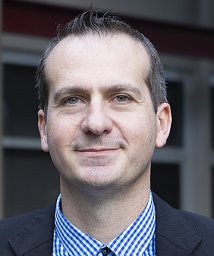 Sasha Nikolic合作论文数Fac. of Eng. & Inf. Sci., Univ. of Wollongong;c;Fac. of Eng. & Inf. Sci., Univ. of Wollongong7
 Rezwanul Haque合作论文数Sch Sci Technol & Engn, Univ Sunshine Coast6
 Sarah Grundy合作论文数School of Chemical Engineering, Faculty of Engineering, The University of New South Wales6
 Sarah Lyden合作论文数Sch. of Eng. & ICT, Univ. of Tasmania;c;Sch. of Eng. & ICT, Univ. of Tasmania6Marina Belkina合作论文数5
 Andrea Mazzurco合作论文数Queensland University of Technology5
 Jeremy Lindeck合作论文数4Tanvi Bhatia合作论文数4
 Timothy Boye合作论文数University of Technology Sydney4
 Tania Machet合作论文数Fac Engn & IT, Univ Technol Sydney4
 Eva Cheng合作论文数School of Electrical, Computer and Telecommunications Engineering, University of Wollongong4
 Rosalie J Goldsmith合作论文数4
 Nick J Brown合作论文数RMIT Univ3
 Sulakshana Lal合作论文数Sch Civil & Mech Engn, Curtin Univ3
 Anne Patricia Gardner合作论文数3
 Kacey Beddoes合作论文数Virginia Tech3
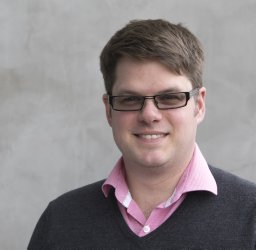 Llewellyn Mann合作论文数Swinburne University of Technology3
 Alexander Mazzolini合作论文数3Thomas Suesse合作论文数3Siva Chandrasekaran合作论文数2
 Jeremy Smith合作论文数College of Engineering and Computer Science, The Australian National University2
 Cook, E.J.合作论文数2
 Ghulam Mubashar Hassan合作论文数2Alex Mazzolini合作论文数2
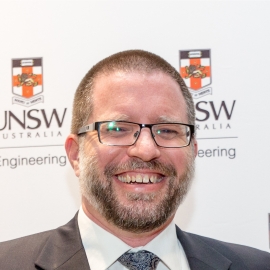 Peter R. Neal合作论文数School of Chemical Engineering, Faculty of Engineering, The University of New South Wales2
 Roger Hadgraft合作论文数University of Melbourne2
 Rosemary Levy Chang合作论文数Clearant Inc2
 Enda Crossin合作论文数2Katreena Thomas合作论文数1Olga Belyaeva合作论文数1Aubrie Pfirman合作论文数1Paul Briozzo合作论文数1Michael Reese合作论文数1Jennifer Goricanec合作论文数1Tamara Knott合作论文数1Robert DeMonbrun合作论文数1george p banky合作论文数1Antony Dekkers合作论文数1Desmond Baccini合作论文数1Richard Aleong合作论文数1Smitha Jose合作论文数1
 Hamish Coates合作论文数Schwarzman College, Tsinghua University;Holmes Institute1
 Brian Faulkner合作论文数1Chelsea Andrews合作论文数1
 Natasha Smith合作论文数1julian fraillon合作论文数1Justine Lawson合作论文数1Grace Panther合作论文数1Doug Hargreaves合作论文数1




