Training is central to police effectiveness, yet officers vary in how they engage with and respond to it. This study examines how gender and organizational context jointly shape officers' training motivation and receptivity. Drawing on uncertainty management theory, we analyze two-wave survey data from 351 newly recruited police officers in South Korea. Female officers reported higher levels of training motivation than male officers. However, no significant gender differences emerge in training receptivity, measured as training satisfaction and perceived skill acquisition. Organizational justice is strongly and positively associated with both receptivity measures, underscoring the importance of fairness perceptions in shaping training experiences. Notably, the influence of organizational justice on training receptivity is stronger among male officers than female officers. These findings suggest that the role of organizational context in shaping training outcomes is more complex and contingent than previously understood.
A large body of research demonstrates support for deterrence and organizational justice perspectives in regulating white-collar and corporate crime. While much of this literature focuses on corporate America, there are nonetheless some established consistencies in "what works" to promote compliance. Parallel to this literature, policing scholars tend to focus on negative outcomes, such as excessive use of force and other forms of misconduct, rather than through a glass-half-full lens of compliance. The current paper takes stock of the literature on the regulation of white-collar and corporate crime, with the goal of extending the lessons learned from corporate America to the context of police organizations. In light of the current legitimacy crisis in policing, the broader organizational justice literature offers a promising avenue for informing better research on compliance in policing, that is, how to get the police to do what the public wants as opposed to reacting to negative events. We recognize that there are inherent levels of accountability present in corporations that are more limited in policing (e.g., federal regulation) but there are still many internal mechanisms and processes common to both organizational settings that deserve more attention by policing scholars. The paper concludes with an overview of theoretically driven and evidence-based directions for future policing research that may simultaneously inform policy and practice in police organizations.
This study developed a framework for diagnosing some of the theoretical mechanisms underlying racial disparities in policing to inform the design and implementation of problem-oriented police reforms. We sample over 1.5 million traffic stops conducted between 2019 and 2023 in a state police agency and use the Veil-of-Darkness (VOD) method on a subset of 299,767 stops within the intertwilight period to demonstrate the utility of the diagnostic framework. This method utilizes weighted logistic regression with daylight as the primary independent variable and driver race as the dependent variable. As part of demonstrating the framework, we found that disparities were largely diffuse across the agency, with some concentration among officers and patrol regions. As such, it would be best to design multi-pronged trainings and interventions that reflect these distinct patterns observed in the agency. The diagnostic framework provides a data-driven tool for researchers and practitioners to begin to understand where different types of racial disparity originate within police agencies. Future research building on this framework should explore the utility of incorporating alternative data sources and theoretical mechanisms, as well as assessing other metrics used to assess different types of racial disparities.
Law enforcement agencies play a critical role in collecting data on firearm violence through the National Incident-based Reporting System (NIBRS). Managed by the Federal Bureau of Investigation, this system stands to replace the Uniform Crime Reporting Program's Summary Reporting System (UCR-SRS). Despite its advantages, NIBRS lacks dedicated reporting criteria for nonfatal shooting injuries, creating a measurement challenge. Our crosswalk study assesses the extent to which NIBRS can be used to accurately measure incidents involving nonfatal shooting injuries, relying on known incidents identified by the Detroit Police Department from 2017 to 2020. Our findings underscore the importance of establishing dedicated reporting criteria in NIBRS to capture such incidents. They also support two current approaches available to researchers, practitioners, and policymakers for measuring nonfatal shooting incidents using law enforcement records. The first approach involves deriving estimates from NIBRS by identifying aggravated assaults committed with a firearm and resulting in an 'other major' injury to the victim. The second approach relies on agency-specific procedures and processes for recording nonfatal shooting injuries.
The literature on "what works" in police training is quickly growing. As we build this evidence base, it is important to not only examine whether a training program works but also develop a better understanding of how and why it works (or fails). Our paper builds on the theoretical framework of officer training motivation and receptivity by addressing several gaps in the existing literature and proposes an analytical model for training evaluation. We conducted a longitudinal police training evaluation by exploring different factors that may motivate officers to complete training, which, in turn, may impact their training receptivity and, ultimately, training outcomes. A sample of 351 newly hired Korean police officers participated in online surveys conducted at two time periods. The results demonstrate several factors are important predictors of training motivation, receptivity, and outcomes, offering empirical insights that can inform police agencies in designing and implementing more effective training programs.
Purpose To enhance the safety of victim-survivors of intimate partner violence who are granted domestic violence restraining orders (DVROs), courts can or must prohibit DVRO respondents’ access to firearms. Law enforcement may be tasked with ensuring that the respondent does not have firearm access through the removal of any firearms the respondent already possesses. However, there is little information on law enforcement officers’ support for, or attitudes regarding this practice. Design/methodology/approach This exploratory study surveyed law enforcement chief executive officers (e.g. police chiefs and sheriffs) from three U.S. states (Michigan, Wisconsin and Minnesota). Using a binary logistic regression model and complete case analysis, we examined factors influencing officers’ support for DVRO firearm relinquishment. Findings Support for firearm relinquishment was associated with three key factors. First, agents concerned with victim-survivor safety in cases of firearm-involved intimate partner violence were more likely to support a firearm relinquishment policy. Second, perceptions of logistical barriers, such as resource constraints or risk to officer safety, reduced support for firearm relinquishment. Third, concerns about infringement on Second Amendment rights negatively influenced levels of support. Originality/value Law enforcement leaders would benefit from more robust guidelines around firearm relinquishment and removal. Offering clarity regarding how firearm relinquishment and removal may be served successfully, and the lethality that firearms pose in intimate settings, may allow for more support of such policies, ensuring the safety of victim-survivors of firearm violence.
PurposeThe current study sought to better understand the factors that contribute to whether officers value procedurally just interaction techniques and contribute to the limited research examining how the effects of warrior and guardian mentalities may vary based on individual officer characteristics.Design/methodology/approachSurvey data collected from patrol officers in two geographically different and ethnically diverse United States police departments allowed for an examination of the generality of warrior and guardian orientations on perceptions of procedural justice across gender, race and/or ethnicity, military service, education, and experience.FindingsThere was a largely invariant effect of the mentalities on officer attitudes toward procedural justice, except for officers of color. In this sample, the guardian effect on prioritizing procedural justice was stronger for officers of color than for White officers.Originality/valueThis study sheds light on our theoretical understanding of the warrior/guardian framework and offers practical implications for police leaders and policymakers in their effort to improve police-community relations.
Objectives: Judgments about police procedural fairness consistently have a stronger influence on how the public ascribes legitimacy to the police than evaluations of police effectiveness. What remains largely underexplored, however, is the potential moderating effect of procedural justice on the relationship between effectiveness and legitimacy and whether this moderation varies by citizen race. Method: We administered two separate surveys to determine whether procedural justice's moderating effect on the relationship between police ineffectiveness and legitimacy varies by citizen race. The first was a mail survey of a random sample of citizens in a southern US city (N = 1,681) conducted in 2013; the second, a national survey of adults (N = 972) administered via Qualtrics in 2022. Results: We found that procedural justice could help protect against the harmful influence of perceived ineffectiveness on police legitimacy in Study 2. However, contrary to expectations, this moderation effect held only for White Americans. Conclusions: The effect of perceived ineffectiveness on legitimacy evaluations does not vary depending on citizens' perceptions of procedural justice. Yet, police still do have control over how they treat people with whom they interact, which is one mechanism that can improve citizens' views on police legitimacy.
The literature on cognitive distortions offers insight on why we continue to face reform challenges regarding police use of force- and citizen interaction-related outcomes. We used two studies of police officers to determine the extent to which one cognitive distortion—dichotomous thinking—was associated with problematic orientations about use of force and citizen interactions. In Study 1, we found that dichotomous thinking was associated with weaker support for de-escalation, procedural justice, and maintaining self-control during hypothetical citizen interactions. Dichotomous thinking also was associated with more support for force-related misconduct. Study 2 showed that officers who engaged in dichotomous thinking were more likely to perceive an immediate and serious threat from watching suspects in body-worn camera videos. Also, they were more likely to believe suspects had greater ability, opportunity, and intent to cause harm. We discuss the practical implications of these findings for policing and police reform.
Research SummaryWe conducted a group randomized-controlled trial of an internal dashboard system deployed by the Michigan State Police to determine its effectiveness in reducing traffic stop racial disparities. Informed by a difference-in-differences design, analyses of traffic stop data from 2019-2022 indicated that the dashboard had no impact on traffic stop racial disparities. Additional analyses of traffic stops, crashes, and crime revealed that the dashboard had no "de-policing" effect on traffic patrols, nor were there any significant changes in traffic safety or crime in treatment patrol areas relative to control patrol areas. Qualitative analyses of interview data from more than 40 troopers in the agency revealed unique barriers to program implementation and opportunities for future improvement.Policy ImplicationsIn an era of policing where the capacity and demand for data-driven decision-making is on the rise, evidence-based policy and practice can provide police agencies with informed solutions for addressing traffic stop racial disparities. Yet, the increased demand for evidence-based reform is fueled by a relatively low supply of evidence-based research. This study adds to this evidence base by providing unique insights into the effectiveness of a program built specifically to reduce racial disparities in traffic stops, while also highlighting implementation challenges.
There is ongoing debate over the latitude of discretion police officers have when conducting stops and searches. While necessary due to resource limitations and need for individualized justice, discretion involves subjective characteristics of suspicion formation, such as race and ethnicity, which could perpetuate disparities in traffic enforcement. Research has yet to explore other marginalizing characteristics of suspicion formation, such as drivers' social class. This study draws on over 550,000 stops conducted by a large state police agency in 2022 and 2023 to explore how vehicle values serve as class signals influencing officers' discretion. We found disparities, whereby lower value vehicles were more likely to be searched than higher value vehicles after matching based on when, where, and under what circumstances stops occurred. However, searches of lower value vehicles were less likely to result in contraband recovery. Our findings highlight potential avenues for officer training and research analyzing inequalities in policing.
Many U.S. cities witnessed both de-policing and increased crime in 2020, yet whether the former contributed to the latter remains unclear. Indeed, much of what is known about the effects of proactive policing on crime comes from studies that evaluated highly focused interventions atypical of day-to-day policing, used cities as the unit of analysis, or could not rule out endogeneity. This study addresses each of these issues, thereby advancing the evidence base concerning the effects of policing on crime. Leveraging two exogenous shocks presented by the onset of the coronavirus 2019 (COVID-19) pandemic and social unrest after the murder of George Floyd, we evaluated the effects of sudden and sustained reductions in high-discretion policing on crime at the neighborhood level in Denver, Colorado. Multilevel models accounting for trends in prior police activity, neighborhood structure, seasonality, and population mobility revealed mixed results. On the one hand, large-scale reductions in stops and drug-related arrests were associated with significant increases in violent and property crimes, respectively. On the other hand, fewer disorder arrests did not affect crime. These results were not universal across neighborhoods. We discuss the implications of these findings in light of debates concerning the appropriate role of policing in the 21st century.
The veil of darkness (VOD) is a practical and rigorous methodology for examining racial disparities in police traffic stop behavior. Past research, however, has been littered with methodological inconsistencies inhibiting cross-study comparison and decisions regarding policy. Accordingly, we clarify four aspects of its implementation: 1) coding daylight, our treatment condition; 2) constructing an intertwilight period; 3) accounting for seasonal differences in driving or patrol patterns; and 4) modeling VOD multivariable regression equations. We discuss the theoretical and practical implications of methodological decisions as they pertain to the method's functionality as a natural experiment. Furthermore, we propose a novel weighting procedure to account for seasonal driving population differences. We examined more than 50,000 traffic stops conducted by Michigan State Police during 2021 to demonstrate our suggested framework for future analyses.
Many U.S. cities witnessed both de-policing and increased crime in 2020, yet it remains unclear whether the former contributed to the latter. Indeed, much of what is known about the effects of proactive policing on crime comes from studies that evaluate highly focused interventions atypical of day-to-day policing, use cities as the unit of analysis, or cannot rule out endogeneity. This study addresses each of these issues, thereby advancing the evidence base concerning the effects of policing on crime. Leveraging two exogenous shocks presented by the onset of COVID-19 and social unrest following the murder of George Floyd, we evaluated the effects of sudden and sustained reductions in high-discretion policing on crime at the neighborhood level in Denver. Multilevel models accounting for trends in prior police activity, neighborhood structure, seasonality, and population mobility revealed mixed results. On one hand, large-scale reductions in stops and drug-related arrests were associated with significant increases in violent and property crimes, respectively. On the other hand, fewer disorder arrests did not affect crime. These results were not universal across neighborhoods. We discuss the implications of these findings in light of debates concerning the appropriate role of policing in the 21st century.
Despite being more prevalent, national efforts to provide a valid and reliable source of data on nonfatal shooting injuries lag behind those focused on fatal shooting injuries. Even more, national data systems that do collect data on nonfatal shooting injuries have severe shortcomings that place limits on their usefulness to inform firearm violence research, including intervention and prevention efforts. Our study focuses on one common source of firearm violence data that is supported by law enforcement agencies (LEAs): The National Incident-Based Reporting System (NIBRS). Recognizing the limitations of NIBRS and to inform internal practices, some LEAs keep records on nonfatal shooting injuries. These records prevent a natural opportunity to compare known incidents of nonfatal shootings to aggravated assaults involving a firearm and injury to the victim, a NIBRS proxy measure for nonfatal shootings. To this end, the purpose of our study is to assess the ability of NIBRS to identify nonfatal shooting incidents through a comparison of known nonfatal shooting incidents identified by the Detroit Police Department from 2017 through 2020. Our findings demonstrate the value of expanding NIBIRS to improve the measurement of nonfatal shooting injuries and the importance of LEAs in driving this change and supporting firearm violence research.
Purpose - This study aims to evaluate a promising community-oriented policing strategy called "front porch roll call" (FPRC), which involves conducting roll calls in public forums. Design/methodology/approach - A mixed methods approach was used by drawing on survey data, field observations and qualitative interviews to describe how FPRCs were implemented in Saginaw, MI from 2019 to 2022, and how they can be successfully implemented to operate in accordance with the theoretical foundations of community-oriented policing. Findings - Survey data from FPRC attendees reported improvements in their perceptions of police legitimacy, trust in the police and procedural fairness-each of which are vital pathways to developing collaborative crime prevention initiatives in community-oriented policing. Qualitative interviews and field observations provided unique insights into areas of improvement and ways to enhance sustainability for future use. Originality/value - Community-oriented policing offers a philosophical approach to addressing crime problems through the formation of localized, collaborative solutions that come from police-community partnerships. A key implementation challenge is that such programs can fail to align their initiatives with the theoretical principles of community policing. FPRCs offer an innovative solution that operates closely with the spirit of community-oriented policing. Data from a mixed-methods evaluation provide further insights into their challenges with implementation and ways to improve upon them.
This study expands research that analyzes the relationship between proactive policing and crime by assessing this dynamic association over several years, at a large jurisdictional level, and across multiple types of crime and proactivity. Cross-lagged panel modeling techniques are used to assess the dynamic relationship between rates of proactivity and crime within police beats in Seattle, WA from 2014-2019. Results indicate that rates of proactivity a year ago are associated with crime rates the following year. However, the relationship between proactivity and crime is highly dependent on the type of proactive strategy employed and the type of crime. This relationship can depend on the rates of overall enforcement as well. This study advances our understanding of the effect of policing on crime by focusing on everyday proactive policing activities rather than intervention-based initiatives that dominant the literature base.
There is little evidence about "what works" in police training. The good news is that training evaluations are becoming more common. As we build this evidence base, we need to explore the factors that predict whether officers are receptive to the training programs they complete. We advance a theory of officer training motivation and receptivity that provides a useful framework for training evaluation and test it using survey data from a group of officers randomly assigned to a long-term, social interaction training program. The results demonstrate that trainees' internal locus of control was associated with their motivation to train. In turn, training motivation was associated with receptivity to the training (i.e., training satisfaction and perceived skill acquisition). Additionally, officers' evaluations of supervisor organizational justice were positively associated with perceived skill acquisition. We conclude the paper by discussing avenues for future refinement and testing of the theoretical framework.
Occupational stress influences many aspects of policing and can contribute to unacceptable attitudes and behaviors among law enforcement officers. Specifically, officers with greater workload stressors may be more likely to hold attitudes favorable toward police misconduct. Yet, we predict that organizational justice may inhibit the effect of such stressors on attitudes toward misconduct. We used survey data from a sample of 437 police officers serving in eight California agencies to examine the role of organizational justice and workload stressor on officers' beliefs in noble-cause corruption (e.g., an end justifies the means attitude). Officers who viewed their workload as taxing held stronger attitudes favorable toward noble-cause corruption (OR = 1.23, 95% CI [1.03, 1.46], p = .019). Furthermore, organizational justice moderated the effect of workload stressor on noble-cause corruption beliefs (OR = 0.75, 95% CI [0.57, 1.00], p = .049), such that workload had a weaker relationship with noble-cause corruption beliefs among officers who believed their command staff was organizationally fair. In the end, perceptions of fair supervisory treatment help buffer police officers from the negative consequences of an overburdened workload. From a practical standpoint, the results underscore the importance of police managers incorporating organizational justice into their managerial practices. However, whether police managers can be trained on the use of organizational justice remains open to empirical scrutiny.
Purpose Despite a common conceptual root, research applying legitimacy theory addresses any number of more or less distinct behaviours, attitudes, and processes. Although this variety in approaches has complicated theoretical development, we argue that it is critical to addressing the breadth of the construct. To address this state of affairs, we offer the Concentric Diagram of Legitimacy as an organizing tool for the literature. The diagram roots itself in the dialogue of legitimacy , and argues that legitimacy theory is fundamentally comprised of five key theoretical propositions. Proposition 1 addresses the link between authority and acquiescence directly while the remaining propositions link organizational support (Proposition 2) and public approval (Proposition 3) with authority, and interactions (Proposition 4) and the social context (Proposition 5) with acquiescence.
 Justin Nix合作论文数20
 George E Higgins合作论文数University of Louisville20Jeff Rojek合作论文数Dept Criminol & Criminal Justice, Univ S Carolina14Catherine D. Marcum合作论文数13Melissa L. Ricketts合作论文数12
 Kyle Mclean合作论文数Coll Criminol & Criminal Justice, Florida State Univ11
 Geoffrey P Alpert合作论文数Department of Sociology, University of Miami10
 David C. Pyrooz合作论文数School of Criminology and Criminal Justice, Arizona State University8Travis M. Carter合作论文数6
 John A. Shjarback合作论文数Dept Law & Justice Studies, Rowan Univ5
 Spencer G. Lawson合作论文数Sch Criminal Justice, Michigan State Univ4
 Kristy Holtfreter合作论文数School of Criminology & Criminal Justice, Arizona State University4
 Michael D. Reisig合作论文数School of Criminology and Criminal Justice, Arizona State University4
 Robert J. Kaminski合作论文数School of Criminal Justice, The University at Albany Albany4J. Andrew Hansen合作论文数3
 Bradley A. Campbell合作论文数3
 Justin T. Pickett合作论文数The School of Criminal Justice, University at Albany3
 Michael R Smith合作论文数Seattle3
 Joseph A Hamm合作论文数University of Nebraska Public Policy Center3
 Travis C. Pratt合作论文数Corrections Institute, University of Cincinnati3Yongjae Nam合作论文数2
 Alaina De Biasi合作论文数University of California, Davis2
 Margaret Chrusciel合作论文数High Point Univ2
 Jessica Huff合作论文数University of Nebraska at Omaha2
 Scott Mourtgos合作论文数Dept Polit Sci, Univ Utah2
 Cassia C Spohn合作论文数School of Criminology and Criminal Justice, Arizona State University2
 Scott H. Decker合作论文数School of Criminology & Criminal Justice, Arizona State University2Edmund F. Mcgarrell合作论文数School of Criminal Justice, Michigan State University2William F. Walsh合作论文数1nick blasco合作论文数1Hayley Tapper合作论文数1Mallory O'Brien合作论文数1
 Frank Valentino Ferdik合作论文数Corresponding author.1
 Sung Uook Lee合作论文数Dept Social Sci, Texas A&M Univ San Antonio1
 Victor M Manjarrez Jr合作论文数Center for Law and Human Behavior, University of Texas at El Paso1Evelyn Gertz合作论文数1
 Marko Prpić合作论文数Fac Educ & Rehabil Sci, Univ Zagreb1Brandon Tregle合作论文数Sch Criminol & Criminal Justice, Univ Nebraska1Tara Martin合作论文数Sch Criminal Justice & Criminol, Univ Arkansas1
 Christi Metcalfe合作论文数Univ South Carolina1
 Caitlin Cavanagh合作论文数Sch Criminal Justice, Michigan State Univ1
 Daniel S Lawrence合作论文数CNA Corporation1
 Keith Durkin合作论文数Dept Psychol Sociol & Criminal Justice, Ohio No Univ1
 Michael Platow合作论文数School of Medicine and Psychology, College of Science and Medicine, Australian National University1
 Yuen J. Huo合作论文数Department of Psychology, College of Life Sciences, University of California, Los Angeles1
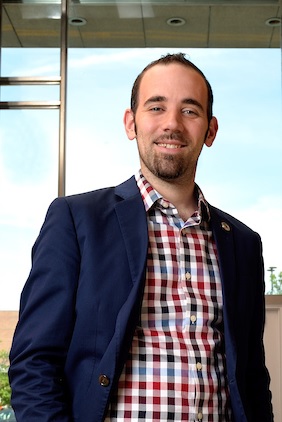 Richard Sadler合作论文数Injury Prevention Center, Medical School, University of Michigan-Ann Arbor1
 Hope M Tiesman合作论文数Division of Safety Research, Analysis and Field Evaluations Branch, National Institute for Occupational Safety and Health1
 Tom R. Tyler合作论文数Yale Law School, Yale University1
 John P. Hoffmann合作论文数Department of Sociology, College of Family, Home, and Social Sciences, Brigham Young University1




