Reciprocity is a fundamental symmetry property observed across many physical domains, including acoustics, elasticity, electromagnetics, and thermodynamics. In systems and control theory, it provides key insights into the internal structure of linear time-invariant (LTI) systems and is closely linked to properties such as passivity, relaxation, and time-reversibility. This paper extends the concept of reciprocity to linear time-and-space-invariant (LTSI) systems, a class of infinite-dimensional systems with spatio-temporal dynamics. It is suggested that, analogously to the LTI case, combining the internal properties of reciprocity and (impedance) passivity results in state-space realizations whose states have a direct physical interpretation. This is of particular relevance for infinite-dimensional systems, where issues of unboundedness can be detrimental to the well-posedness of the system. The results are motivated and illustrated with a physical example.
This work presents the analysis and design of a neuromorphic control system based on a dual Half-Center Oscillator (HCO) architecture. We first perform a theoretical nullcline analysis to characterize the effects of intrinsic neural parameters (including the time constants, coupling gains, and inputs) on HCO dynamics. Based on this analysis, we then propose a design procedure that integrates the specification of key HCO parameters with adaptive control algorithms for rhythmic oscillation with desired amplitude and frequency regulation. Finally, the proposed HCO control system is validated through case studies on a pendulum through simulations. Results successfully demonstrate the controller’s ability to induce and sustain rhythmic swings across a wide frequency range from 1Hz to 100Hz and various damping ratios.
The fading-memory (FM) property captures the progressive loss of influence of past inputs on a system's current output and has originally been formalized by Boyd and Chua in an operator-theoretic framework. Despite its importance for systems approximation, reservoir computing, and recurrent neural networks, its connection with state-space notions of nonlinear stability, especially incremental ones, remains understudied. This paper introduces a state-space definition of FM. In state-space, FM can be interpreted as an extension of incremental input-to-output stability (δIOS) that explicitly incorporates a memory kernel upper-bounding the decay of past input differences. It is also closely related to Boyd and Chua's FM definition, with the sole difference of requiring uniform, instead of general, continuity of the memory functional with respect to an input-fading norm. We demonstrate that incremental input-to-state stability (δISS) implies FM semi-globally for time-invariant systems under an equibounded input assumption. Notably, Boyd and Chua's approximation theorems apply to delta-ISS state-space models. As a closing application, we show that, under mild assumptions, the state-space model of current-driven memristors possess the FM property.
The describing function (DF) and phase response curve (PRC) are classical tools for the analysis of feedback oscillations and rhythmic behaviors, widely used across control engineering, biology, and neuroscience. These tools are known to have limitations in networks of relaxation oscillators and excitable systems. For this reason, the paper proposes a novel approach tailored to excitable systems. Our analysis focuses on the discrete-event operator mapping input trains of events to output trains of events. The methodology is illustrated on the excitability model of Hodgkin-Huxley. The proposed framework provides a basis for designing and analyzing central pattern generators in networks of excitable neurons, with direct relevance to neuromorphic control and neurophysiology.
This article revisits the importance of the internal model principle in the literature of regulation and synchronization. Trajectory regulation, the task of regulating continuous-time signals generated by differential equations, is contrasted with event regulation, the task of regulating only discrete events associated with the trajectories. In trajectory regulation, the internal model principle requires an exact internal generator of the continuous-time trajectories, which translates into unrealistic calibration requirements. Event regulation is envisioned as a way to relieve calibration of the continuous behavior while ensuring the reliability of the discrete events.
A theorem is proved to verify incremental stability of a feedback system via a homotopy from a known incrementally stable system. A first corollary of that result is that incremental stability may be verified by separation of Scaled Relative Graphs, correcting two assumptions in [1, Theorem 2]. A second corollary provides an incremental version of the classical IQC stability theorem.
The paper is a follow-up of the recently introduced kernel-based framework to identify nonlinear input-output systems regularized by desirable input-output incremental properties. Assuming that the system has fading memory, we propose to learn the functional that maps the past input to the present output rather than the operator mapping input trajectories to output trajectories. While retaining the benefits of the previously proposed framework, this modification simplifies the selection of the kernel, enforces causality, and enables temporal simulation.
This article presents input-output stability analysis of nonlinear feedback systems based on the notion of soft and hard scaled relative graphs (SRGs). The soft and hard SRGs acknowledge the distinction between incremental positivity and incremental passivity and reconcile them from a graphical perspective. The essence of our proposed analysis is that the separation of soft SRGs or hard SRGs of two open-loop systems on the complex plane guarantees closed-loop stability. The main results generalize an existing soft SRG separation theorem for bounded open-loop systems which was proved based on interconnection properties of soft SRGs under a chordal assumption. By comparison, our analysis does not require this chordal assumption and applies to possibly unbounded open-loop systems based on their hard SRGs.
We study the contraction of conductance-based models and its role in the reliability of spike timings. Without input, the model is contractive in the region of physiological interest. With impulsive synaptic inputs, contraction is retained provided that the input events are sparse enough. Contraction is lost when the input firing rate is too high. Spike timings are shown to be reliable in the contracting regime.
This paper introduces the ‘rebound winner-take-all (RWTA)’ motif as the basic element of a scalable neuromorphic control architecture. From the cellular level to the system level, the resulting architecture combines the reliability of discrete computation and the tunability of continuous regulation: it inherits the discrete computation capabilities of WTA state machines and the continuous tuning capabilities of excitable biophysical circuits. The proposed event-based framework addresses continuous rhythmic generation and discrete decision-making in a unified physical modeling language. We illustrate the versatility, robustness, and modularity of the architecture through the nervous system design of a snake robot.
Neuromorphic engineering makes use of mixed-signal analog and digital circuits to directly emulate the computational principles of biological brains. Such electronic systems offer a high degree of adaptability, robustness, and energy efficiency across a wide range of tasks, from edge computing to robotics. Within this context, we investigate a key feature of biological neurons: their ability to carry out robust and reliable computation by adapting their input response and spiking pattern to context through neuromodulation. Achieving analogous levels of robustness and adaptation in neuromorphic circuits through modulatory mechanisms is a largely unexplored path. We present a novel current-mode neuron design that supports robust neuromodulation with minimal model complexity, compatible with standard CMOS technologies. We first introduce a mathematical model of the circuit and provide tools to analyze and tune the neuron behavior; we then demonstrate both theoretically and experimentally the biologically plausible neuromodulation adaptation capabilities of the circuit over a wide range of parameters. All the theoretical predictions were verified in experiments on a low-power 180 nm CMOS implementation of the proposed neuron circuit. Due to the analog underlying feedback structure, the proposed adaptive neuromodulable neuron exhibits a high degree of robustness, flexibility, and scalability across operating ranges of currents and temperatures, making it a perfect candidate for real-world neuromorphic applications.
The scaled relative graph (SRG) is a powerful graphical tool for analyzing the properties of operators, by mapping their graph onto the complex plane. In this work, we study the SRG of two classes of nonmonotone operators, namely the general class of semimonotone operators and a class of angle-bounded operators. In particular, we provide an analytical description of the SRG of these classes and show that membership of an operator to these classes can be verified through geometric containment of its SRG. To illustrate the importance of these results, we provide several examples in the context of electrical circuits. Most notably, we show that the Ebers-Moll transistor belongs to the class of angle-bounded operators and use this result to compute the response of a common-emitter amplifier using Chambolle-Pock, despite the underlying nonsmoothness and multi-valuedness, leveraging recent convergence results for this algorithm in the nonmonotone setting.
Inspired by spiking neural feedback, we propose a spiking controller for efficient locomotion in a soft robotic crawler. Its bistability, akin to neural fast positive feedback, combined with a sensorimotor slow negative feedback loop, generates rhythmic spiking. The closed-loop system is robust through the quantized actuation, and negative feedback ensures efficient locomotion with minimal external tuning. We prove that peristaltic waves arise from a supercritical Hopf bifurcation controlled by the sensorimotor gain. Dimensional analysis reveals a separation of mechanical and electrical timescales, and Geometric Singular Perturbation analysis explains endogenous crawling through relaxation oscillations. We further formulate and analytically solve an optimization problem in the singularly perturbed regime, proving that crawling at mechanical resonance maximizes speed by a matching of neuromechanical scales. Given the importance and ubiquity of rhythms and waves in soft-bodied locomotion, we envision that spiking control systems could be utilized in a variety of soft-robotic morphologies and modular distributed architectures, yielding significant robustness, adaptability, and energetic gains across scales.
We present a novel framework for central pattern generator design that leverages the intrinsic rebound excitability of neurons in combination with winner-takes-all computation. Our approach unifies decision-making and rhythmic pattern generation within a simple yet powerful network architecture that employs all-to-all inhibitory connections enhanced by designable excitatory interactions. This design offers significant advantages regarding ease of implementation, adaptability, and robustness. We demonstrate its efficacy through a ring oscillator model, which exhibits adaptive phase and frequency modulation, making the framework particularly promising for applications in neuromorphic systems and robotics.
Physical systems with symmetry structures arise abundantly in applications, often admit scalable control laws, and are important building blocks in synthesis problems. The present paper focusses on linear reciprocal systems and input-output Hamiltonian systems. Their characterization is studied from an input-output, as well as from a state space point of view. Geometrically both are seen to define Lagrangian subspaces with corresponding generating functionals. Furthermore, the relation of reciprocity and input-output Hamiltonian structure with time reversibility is analyzed.
We introduce a gradient modeling framework for memristive systems. Our focus is on memristive systems as they appear in neurophysiology and neuromorphic systems. Revisiting the original definition of Chua, we regard memristive elements as gradient operators of quadratic functionals with respect to a metric determined by the memristance. We explore the consequences of gradient properties for the analysis and design of neuromorphic circuits.
This article introduces the problem of robust event disturbance rejection. Inspired by the design principle of linear output regulation, a control structure based on excitable systems is proposed. Unlike the linear case, contraction of the closed-loop system must be enforced through specific input signals. This induced contraction enables a steady-state analysis similar to the linear case. Thanks to the excitable nature of the systems, the focus shifts from precise trajectory tracking to the regulation of discrete events, such as spikes. The study emphasizes rejecting events rather than trajectories and demonstrates the robustness of the approach, even under mismatches between the controller and the exosystem. This work is a first step towards developing a design principle for event regulation.
We propose a frequency-domain approach to dominance analysis for multi-input multi-output (MIMO) linear time-invariant systems. The dominance of a MIMO system is defined to be the number of its poles in the open right half-plane. Our approach is graphical: we define a frequency-wise notion of the recently-introduced scaled graph of a MIMO system plotted in a complex plane. The scaled graph provides a bound of the eigenloci of the system, which can be viewed as a robust MIMO extension of the classical Nyquist plot. Our main result characterizes sufficient conditions for quantifying the dominance of a closed-loop system based upon separation of the scaled graphs of two open-loop systems in a frequency-wise manner. The result reconciles existing small gain, small phase and passivity theorems for feedback dominance analysis.
A defining property of excitable systems is the existence of a threshold, that is, a sharp distinction between subthreshold and suprathreshold trajectories. Quantifying this distinction calls for a mathematical definition of threshold, which has remained an elusive question in the literature. In this paper, we introduce a novel, energy-based threshold definition for excitable circuits. The definition is grounded in dissipativity theory and uses the classical concept of required supply. We illustrate and validate the proposed definition through analytical and numerical studies of three examples: RC circuits, the FitzHugh-Nagumo circuit, and the canonical conductance-based model of excitability, derived by Hodgkin and Huxley.
 Guillaume Drion合作论文数Department of Electrical Engineering and Computer Science39
 Alessio Franci合作论文数Univ. Paris Sud 11 - L2S - Supélec35
 Fulvio Forni合作论文数Dipartimento di Informatica, Sistemi e Produzione, University of Rome, Tor Vergata, 00133 Rome, Italy30
 Naomi Ehrich Leonard合作论文数Department of Mechanical and Aerospace Engineering, School of Engineering and Applied Science, Princeton University28P. A. Absil合作论文数Department of Mathematical Engineering, School of Engineering, University of Louvain;ICTEAM Institute, University of Louvain23
 Alain Sarlette合作论文数SYSTeMS Res Grp, Univ Ghent18
 Silvère Bonnabel合作论文数University of New Caledonia17
 Vincent Seutin合作论文数Laboratory of Pharmacology, University of Liège17
 Dirk Aeyels合作论文数Ghent University16
 Petar Kokotovic合作论文数Department of Electrical and Computer Engineering, College of Engineering, University of California14
 Renaud Ronsse合作论文数Department of Electrical Engineering and Computer Science (Montefiore Institute),, Université de Liège14
 Dethier Julie合作论文数Department of Bioengineering, Stanford University13Anne Collard合作论文数13
 Alexandre Mauroy合作论文数Departement of Electrical Engineering and Computer Science;University of Li;Departement of Electrical Engineering and Computer Science, University of Li13
 Mrdjan Jankovic合作论文数Ford Motor Company13
 Robert Mahony合作论文数School of Engineering, The Australian National University13
 Pierre Sacre合作论文数12
 Thomas Chaffey合作论文数Department of Engineering, University of Cambridge12
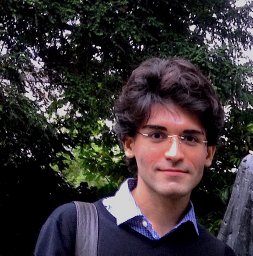 Cyrus Mostajeran合作论文数Department of Engineering, University of Cambridge12
 Philippe Lefèvre合作论文数laboratory of Neurophysiology11
 Christophe Phillips合作论文数Cyclotron Research Center, University of Liège10
 Derek A. Paley合作论文数Maryland Robotics Center10
 Gilles Meyer合作论文数Dept Elect Engn & Comp Sci, Univ Liege9Frédéric Grognard合作论文数Institut Monte'ore, Universit * ed e Li ege9
 Bamdev Mishra合作论文数Microsoft India9
 Thiago B. Burghi合作论文数Department of Engineering, University of Cambridge8
 Raphaël Liégeois合作论文数8
 Eric Bullinger合作论文数Institute for Systems Theory in Engineering, University of Stuttgart8
 Guy-Bart Stan合作论文数Department of Bioengineering, Faculty of Engineering, Imperial College London;European Patent Office8Laura Trotta合作论文数8
 Luca Scardovi合作论文数The Edward S. Rogers Sr. Department of Electrical & Computer Engineering, Faculty of Applied Science and Engineering, University of Toronto7
 Georges Bastin合作论文数Department of Mathematical Engineering, Université Catholique de Louvain7
 F. Jadot合作论文数7
 Michelangelo Bin合作论文数Department of Electrical and Electronic Engineering, Imperial College London6
 Derek A. Paley合作论文数A. James Clark School of Engineering, University of Maryland6
 Alberto Padoan合作论文数6
 Christian Grussler合作论文数6
 Luca Zaccarian合作论文数Department of Industrial Engineering, University of Trento;LAAS-CNRS6
 Timothy O'Leary合作论文数Department of Engineering, University of Cambridge6
 Lorenzo Marconi合作论文数Department of Electrical, Electronic, and Information Engineering, Universita di Bologna6
 Joan Peuteman合作论文数6
 Francois Malrait合作论文数6
 Thomas Parisini合作论文数Department of Electrical and Electronic Engineering, Faculty of Engineering, Imperial College London;Aalborg University;University of Trieste6Manuel Gerard合作论文数6Michel Journée合作论文数6
 Magnus Egerstedt合作论文数Department of Electrical Engineering and Computer Science, Samueli School of Engineering, University of California, Irvine;Department of Mechanical and Aerospace Engineering, University of California, Irvine;Robot Ecology Lab, University of California, Irvine6
 Dirk Roose合作论文数Department of Computer Science, Faculty of Engineering Science, KU Leuven6
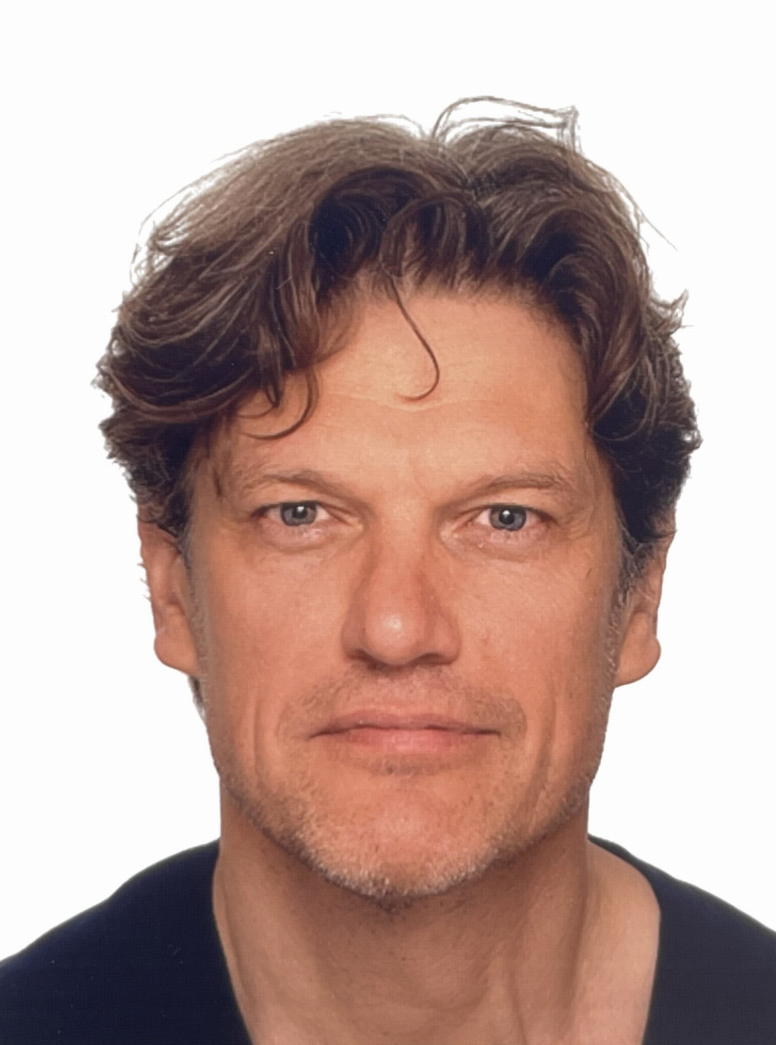 Steven Laureys合作论文数School of Basic Medical Sciences, Hangzhou Normal University;Harvard Medical School, Harvard University;CERVO Brain Research Centre, Université Laval;GIGA Consciousness Research Unit, University of Liège5
 Wim Michiels合作论文数Department of Computer Science|Katholieke Universiteit5




