Recent advances in image generation, often driven by proprietary systems like GPT-4o Image Gen, regularly introduce new capabilities that reshape how users interact with these models. Existing benchmarks often lag behind and fail to capture these emerging use cases, leaving a gap between community perceptions of progress and formal evaluation. To address this, we present ECHO, a framework for constructing benchmarks directly from real-world evidence of model use: social media posts that showcase novel prompts and qualitative user judgments. Applying this framework to GPT-4o Image Gen, we construct a dataset of over 35,000 prompts curated from such posts. Our analysis shows that ECHO (1) discovers creative and complex tasks absent from existing benchmarks, such as re-rendering product labels across languages or generating receipts with specified totals, (2) more clearly distinguishes state-of-the-art models from alternatives, and (3) surfaces community feedback that we use to inform the design of metrics for model quality (e.g., measuring observed shifts in color, identity, and structure).
Retrieval augmentation has primarily been studied in limited settings, such as factoid question answering; more challenging, reasoning-intensive benchmarks have seen limited success from minimal RAG. In this work, we challenge this prevailing view on a set of established, reasoning-intensive benchmarks: MMLU, MMLU Pro, AGI Eval, GPQA, and MATH. We identify a key missing component in prior work: a usable, web-scale datastore aligned with the breadth of pretraining data. To this end, we introduce CompactDS: a diverse, high-quality, web-scale datastore that achieves high retrieval accuracy and subsecond latency on a single-node deployment, making it suitable for academic use. Its core design combines a compact set of high-quality, diverse data sources with in-memory approximate nearest neighbor (ANN) retrieval and on-disk exact search. Using CompactDS, a minimal RAG pipeline achieves consistent accuracy improvements across all benchmarks and model sizes (8B--70B), with relative gains of 11% on MMLU, 34% on MMLU Pro, 26% on GPQA, and 14% on MATH. No single data source suffices alone, highlighting the importance of diversity of sources (web crawls, curated math, academic papers, textbooks), and a combination of ANN and exact search is shown to be critical for balancing usability and accuracy. Finally, we show that our in-house datastore even outperforms commercial search engines like Google Search. We release CompactDS and our retrieval pipeline as a fully reproducible alternative to commercial search, supporting future research exploring retrieval-based AI systems.
Diffusion Large Language Models (dLLMs) have emerged as a promising alternative to purely autoregressive language models because they can decode multiple tokens in parallel. However, state-of-the-art block-wise dLLMs rely on a "remasking" mechanism that decodes only the most confident tokens and discards the rest, effectively wasting computation. We demonstrate that recycling computation from the discarded tokens is beneficial, as these tokens retain contextual information useful for subsequent decoding iterations. In light of this, we propose Residual Context Diffusion (RCD), a module that converts these discarded token representations into contextual residuals and injects them back for the next denoising step. RCD uses a decoupled two-stage training pipeline to bypass the memory bottlenecks associated with backpropagation. We validate our method on both long CoT reasoning (SDAR) and short CoT instruction following (LLaDA) models. We demonstrate that a standard dLLM can be efficiently converted to the RCD paradigm with merely 1 billion tokens. RCD consistently improves frontier dLLMs by 5-10 points in accuracy with minimal extra computation overhead across a wide range of benchmarks. Notably, on the most challenging AIME tasks, RCD nearly doubles baseline accuracy and attains up to 4-5x fewer denoising steps at equivalent accuracy levels.
We show that reinforcement learning with verifiable rewards (RLVR) can elicit strong mathematical reasoning in certain language models even with spurious rewards that have little, no, or outright negative correlation with the correct answer. For example, RLVR training with GRPO improves MATH-500 performance for Qwen2.5-Math-7B in absolute points by 21.4% using randomly assigned rewards, nearly matching the 29.1% gained with ground truth rewards. To explain this counterintuitive observation, we show that GRPO exhibits a clipping bias arising from the clip term, which can amplify high-prior behaviors learned during pre-training even without informative rewards. As a case study, we identify one such high-prior behavior for Qwen2.5-Math models, which we term code reasoning---reasoning in code without actual code execution; code reasoning frequency increases from 65% to over 90% with spurious rewards. However, the presence of such amplifiable behaviors is highly model-dependent. In practice, spurious rewards that are effective for Qwen models often fail to produce gains for other model families, such as Llama3 or OLMo2. Our results highlight the importance of validating RL methods across diverse models rather than relying on a single de facto choice: large performance gains can arise on Qwen models even from random rewards that do not reflect genuine capability improvements.
Recent advances in large language models (LLMs) for mathematical reasoning have largely focused on tasks with easily verifiable final answers while generating and verifying natural language math proofs remains an open challenge. We identify the absence of a reliable, fine-grained evaluator for LLM-generated math proofs as a critical gap. To address this, we propose a systematic methodology for developing and validating evaluators that assign fine-grained scores on a 0-7 scale to model-generated math proofs. To enable this study, we introduce ProofBench, the first expert-annotated dataset of fine-grained proof ratings, spanning 145 problems from six major math competitions (USAMO, IMO, Putnam, etc) and 435 LLM-generated solutions from Gemini-2.5-Pro, o3, and DeepSeek-R1. Using ProofBench as a testbed, we systematically explore the evaluator design space across key axes: the backbone model, input context, instructions and evaluation workflow. Our analysis delivers ProofGrader, an evaluator that combines a strong reasoning backbone LM, rich context from reference solutions and marking schemes, and a simple ensembling method; it achieves a low Mean Absolute Error (MAE) of 0.926 against expert scores, significantly outperforming naive baselines. Finally, we demonstrate its practical utility in a best-of-$n$ selection task: at $n=16$, ProofGrader achieves an average score of 4.14/7, closing 78\% of the gap between a naive binary evaluator (2.48) and the human oracle (4.62), highlighting its potential to advance downstream proof generation.
We present DS SERVE, a framework that transforms large-scale text datasets—comprising half a trillion tokens—into a high-performance neural retrieval system. DS SERVE offers both a web interface and API endpoints, achieving low latency with modest memory overhead on a single node. The framework also supports inference-time tradeoffs between latency, accuracy, and result diversity. We anticipate that DS SERVE will be broadly useful for a range of applications such as large-scale retrieval-augmented generation (RAG), training data attribution, training a search agent, and beyond.
Modern LLM training pipelines increasingly rely on other models to generate data, filter corpora, judge outputs, and guide development decisions. These dependencies are recursive: a model may depend on an upstream artifact whose own dependencies are documented only in separate releases and artifacts. As a result, the full dependency structure is fragmented across heterogeneous public artifacts, with complexity and recursive depth far outpacing humans' ability to trace. We introduce ModSleuth, an agentic system that recursively reconstructs LLM dependency graphs from public artifacts with source-grounded evidence. We find that the primary challenge is no longer information extraction, but defining what constitutes a dependency and reconciling artifact references across inconsistent documentation. We address these challenges through a formalization that distinguishes direct and indirect dependencies, represents heterogeneous pipeline roles through operation-centered relationships, and resolves artifact identities across names, versions, and repositories. Applying ModSleuth to four public-artifact-rich LLM releases, we recover 1,060 source-verified dependencies and construct large-scale dependency graphs of modern LLM development. These graphs reveal multi-hop license obligations, train-evaluation coupling, discrepancies between released and training-time artifacts, and documentation inconsistencies that would otherwise be difficult to uncover. We release ModSleuth and the resulting dependency graphs to support transparent analysis of the increasingly complex ecosystems underlying modern LLMs.
Augmenting large language models (LLMs) with retrieved web text has become a dominant paradigm, yet the web is not natively textual: existing systems depend on complex parsing pipelines that linearize HTML and discard layout, visual structure, and formatting. We introduce PixelRAG, a new retrieval-augmented method that represents websites in their native visual form and performs retrieval and reading entirely in pixel space, enabling an end-to-end architecture that eliminates text abstraction. PixelRAG is, to our knowledge, the first pipeline to operate over a full Wikipedia corpus in this form, scaling to a datastore of 30 million screenshot images with an efficient visual retrieval index. Built on an existing visual embedding model (i.e., Qwen3-VL-Embedding), PixelRAG further fine-tunes this model on screenshot data with carefully curated contrastive training data. Retrieved screenshots are then fed directly as pixel inputs to a VLM, without intermediate text conversion. PixelRAG consistently outperforms both no-retrieval and text-based RAG baselines, most surprisingly on widely studied text-centric tasks such as NQ and SimpleQA. It also achieves strong gains on multimodal open-domain QA (e.g., MMSearch), benchmarks over noisy news corpora (e.g., LiveVQA), and agentic benchmarks (e.g., MoNaCo), improving accuracy by up to 18.1
Large language models are typically deployed as monolithic systems, requiring the full model even when applications need only a narrow subset of capabilities, e.g., code, math, or domain-specific knowledge. Mixture-of-Experts (MoEs) seemingly offer a potential alternative by activating only a subset of experts per input, but in practice, restricting inference to a subset of experts for a given domain leads to severe performance degradation. This limits their practicality in memory-constrained settings, especially as models grow larger and sparser. We introduce EMO, an MoE designed for modularity-the independent use and composition of expert subsets-without requiring human-defined priors. Our key idea is to encourage tokens from similar domains to rely on similar experts. Since tokens within a document often share a domain, EMO restricts them to select experts from a shared pool, while allowing different documents to use different pools. This simple constraint enables coherent expert groupings to emerge during pretraining using document boundaries alone. We pretrain a 1B-active, 14B-total EMO on 1T tokens. As a full model, it matches standard MoE performance. Crucially, it enables selective expert use: retaining only 25% (12.5%) of experts incurs just a 1% (3%) absolute drop, whereas standard MoEs break under the same setting. We further find that expert subsets in EMO specialize at semantic levels (e.g., domains such as math or code), in contrast to the low-level syntactic specialization observed in standard MoEs. Altogether, our results demonstrate a path toward modular, memory-efficient deployment of large, sparse models and open new opportunities for composable architectures.
Retrieval-augmented generation (RAG) has proven effective for knowledge-intensive tasks, but is widely believed to offer limited benefit for reasoning-intensive problems such as math and code generation. We challenge this assumption by showing that the limitation lies not in RAG itself, but in the choice of corpus. Instead of retrieving documents, we propose retrieving thinking traces, i.e., intermediate thinking trajectories generated during problem solving attempts. We show that thinking traces are already a strong retrieval source, and further introduce T3, an offline method that transforms them into structured, retrieval-friendly representations, to improve usability. Using these traces as a corpus, a simple retrieve-then-generate pipeline consistently improves reasoning performance across strong models and benchmarks such as AIME 2025–2026, LiveCodeBench, and GPQA-Diamond, outperforming both non-RAG baselines and retrieval over standard web corpora. For instance, on AIME, RAG with traces generated by Gemini-2-thinking achieves relative gains of +56.3
Extending a fully post-trained language model with new domain capabilities is fundamentally limited by monolithic training paradigms: retraining from scratch is expensive and scales poorly, while continued training often degrades existing capabilities. We present BAR (Branch-Adapt-Route), which trains independent domain experts, each through its own mid-training, supervised finetuning, and reinforcement learning pipeline, and composes them via a Mixture-of-Experts architecture with lightweight router training. Unlike retraining approaches that mix all domains and require full reprocessing for any update (with cost scaling quadratically), BAR enables updating individual experts independently with linear cost scaling and no degradation to existing domains. At the 7B scale, with experts for math, code, tool use, and safety, BAR achieves an overall score of 49.1 (averaged across 7 evaluation categories), matching or exceeding re-training baselines (47.8 without mid-training, 50.5 with). We further show that modular training provides a structural advantage: by isolating each domain, it avoids the catastrophic forgetting that occurs when late-stage RL degrades capabilities from earlier training stages, while significantly reducing the cost and complexity of updating or adding a domain. Together, these results suggest that decoupled, expert-based training is a scalable alternative to monolithic retraining for extending language models.
Model distillation – training on outputs from stronger third-party models – is widely used to boost performance, but raises concerns about unfair advantages and policy violations. This motivates a fundamental question: can we detect whether a model was distilled from another? We show that, while identifying a teacher model from a student in isolation is highly challenging, it becomes tractable in a reference-based setting: given a model and an earlier-generation checkpoint from the same lineage, we can identify the teacher model used to train the later checkpoint. We introduce a distillation detection method based on reference-based membership inference. By comparing how strongly a student model preferentially aligns with outputs from different candidate teachers relative to a reference checkpoint, our method identifies the most likely teacher and detects evidence of distillation. To handle unknown distillation pipelines such as hidden prompts, we infer proxy prompt templates directly from model outputs. We additionally identify a distinctive glyph-level signal specific to o1/o3 models. Evaluating distillation detection is challenging because modern model lineages are already heavily entangled. To address this, we develop a hybrid evaluation spanning both controlled distillation experiments and real-world models. Across both settings, our approach recovers the true teacher with near-perfect accuracy in single-teacher distillation scenarios, even when the underlying distillation pipeline is largely unknown. We further introduce statistical tests for both teacher attribution and distillation detection, and extend our framework to open-world settings where no teacher is guaranteed to be present among the candidates. Applying our method to contemporary models yields new evidence regarding potential distillation relationships involving QwQ, DeepSeek-R1, and GPT-OSS.
Detecting LLM training data is generally framed as a membership inference attack (MIA) problem. However, conventional MIAs operate passively on fixed model weights, using log-likelihoods or text generations. In this work, we introduce \textbf{Active Data Reconstruction Attack} (ADRA), a family of MIA that actively induces a model to reconstruct a given text through training. We hypothesize that training data are \textit{more reconstructible} than non-members, and the difference in their reconstructibility can be exploited for membership inference. Motivated by findings that reinforcement learning (RL) sharpens behaviors already encoded in weights, we leverage on-policy RL to actively elicit data reconstruction by finetuning a policy initialized from the target model. To effectively use RL for MIA, we design reconstruction metrics and contrastive rewards. The resulting algorithms, \textsc{ADRA} and its adaptive variant \textsc{ADRA+}, improve both reconstruction and detection given a pool of candidate data. Experiments show that our methods consistently outperform existing MIAs in detecting pre-training, post-training, and distillation data, with an average improvement of 10.7\% over the previous runner-up. In particular, \MethodPlus~improves over Min-K\%++ by 18.8\% on BookMIA for pre-training detection and by 7.6\% on AIME for post-training detection.
Deep research agents perform multi-step research to produce long-form, well-attributed answers. However, most open deep research agents are trained on easily verifiable short-form QA tasks via reinforcement learning with verifiable rewards, which does not extend to realistic long-form tasks. We address this with , where rubrics are constructed and maintained to with the policy model during training. This allows the rubrics to incorporate newly explored information from search and contrasting model responses, enabling better fact checking and more discriminative on-policy feedback. Using RLER, we develop , the first fully open model that is directly trained for open-ended, long-form deep research. Across four long-form deep research benchmarks in science, healthcare, and general domains, DR Tulu-8B substantially outperforms existing open deep research agents (by 15.6% over Tongyi DR on average) and matches or exceeds proprietary deep research agents (by 0.7% over OpenAI DR on average), while being significantly smaller and cheaper per query (1000x cheaper than OpenAI DR per query).
Human feedback can alter language models in unpredictable and undesirable ways, as practitioners lack a clear understanding of what feedback data encodes. While prior work studies preferences over certain attributes (e.g., length or sycophancy), automatically extracting relevant features without pre-specifying hypotheses remains challenging. We introduce What's In My Human Feedback? (WIMHF), a method to explain feedback data using sparse autoencoders. WIMHF characterizes both (1) the preferences a dataset is capable of measuring and (2) the preferences that the annotators actually express. Across 7 datasets, WIMHF identifies a small number of human-interpretable features that account for the majority of the preference prediction signal achieved by black-box models. These features reveal a wide diversity in what humans prefer, and the role of dataset-level context: for example, users on Reddit prefer informality and jokes, while annotators in HH-RLHF and PRISM disprefer them. WIMHF also surfaces potentially unsafe preferences, such as that LMArena users tend to vote against refusals, often in favor of toxic content. The learned features enable effective data curation: re-labeling the harmful examples in Arena yields large safety gains (+37
We present ReasonIR-8B, the first retriever specifically trained for general reasoning tasks. Existing retrievers have shown limited gains on reasoning tasks, in part because existing training datasets focus on short factual queries tied to documents that straightforwardly answer them. We develop a synthetic data generation pipeline that, for each document, our pipeline creates a challenging and relevant query, along with a plausibly related but ultimately unhelpful hard negative. By training on a mixture of our synthetic data and existing public data, ReasonIR-8B achieves a new state-of-the-art of 29.9 nDCG@10 without reranker and 36.9 nDCG@10 with reranker on BRIGHT, a widely-used reasoning-intensive information retrieval (IR) benchmark. When applied to RAG tasks, ReasonIR-8B improves MMLU and GPQA performance by 6.4 and 22.6 other retrievers and search engines. In addition, ReasonIR-8B uses test-time compute more effectively: on BRIGHT, its performance consistently increases with longer and more information-rich rewritten queries; it continues to outperform other retrievers when combined with an LLM reranker. Our training recipe is general and can be easily extended to future LLMs; to this end, we open-source our code, data, and model.
Modern language models are trained on large, unstructured datasets consisting of trillions of tokens and obtained by crawling the web. The unstructured nature makes it difficult to reason about their contents and develop systematic approaches to data curation. In this paper, we unpack monolithic web corpora by developing taxonomies of their contents and organizing them into domains. We introduce WebOrganizer, a framework for organizing web pages in terms of both their topic and format. Using these two complementary notions of domains, we automatically annotate pre-training data by distilling annotations from a large language model into efficient classifiers. This allows us to study how data from different domains should be mixed to improve models on downstream tasks, and we show that we can combine insights about effective topics and formats to further boost performance. We demonstrate that our domain mixing also improves existing methods that select data based on quality. Furthermore, we study and compare how quality-based methods will implicitly change the domain mixture. Overall, our work demonstrates that constructing and mixing domains provides a valuable complement to quality-based data curation methods, opening new avenues for effective and insightful pre-training data curation.
We introduce OLMoE, a fully open, state-of-the-art language model leveraging sparse Mixture-of-Experts (MoE). OLMoE-1B-7B has 7 billion (B) parameters but uses only 1B per input token. We pretrain it on 5 trillion tokens and further adapt it to create OLMoE-1B-7B-Instruct. Our models outperform all available models with similar active parameters, even surpassing larger ones like Llama2-13B-Chat and DeepSeekMoE-16B. We present novel findings on MoE training, define and analyze new routing properties showing high specialization in our model, and open-source all our work: model weights, training data, code, and logs.
We present OLMoTrace, the first system that traces the outputs of language models back to their full, multi-trillion-token training data in real time. OLMoTrace finds and shows verbatim matches between segments of language model output and documents in the training text corpora. Powered by an extended version of infini-gram (Liu et al., 2024), our system returns tracing results within a few seconds. OLMoTrace can help users understand the behavior of language models through the lens of their training data. We showcase how it can be used to explore fact checking, hallucination, and the creativity of language models. OLMoTrace is publicly available and fully open-source.
Open-ended generation tasks require outputs to satisfy diverse and often implicit task-specific evaluation rubrics. The sheer number of relevant rubrics leads to prohibitively high verification costs and incomplete assessments of a response, making reinforcement learning (RL) post-training with rubric-based rewards difficult to scale. This problem is exacerbated by the fact that often the best way to combine these rubrics into one single reward is also highly prompt-specific. We propose Reinforcement Learning with Adversarial Critic (RLAC), a post-training approach that addresses these challenges via dynamic rubric verification. Our approach employs a large language model (LLM) as a critic that dynamically identifies only the most likely failure modes (e.g., a factual error or unhandled edge case), which are then verified by an external validator to optimize both generator and critic jointly. By training both the generator and the critic, this game enhances the critic's error detection and the generator's output quality while reducing required verifications. Our experiments demonstrate that RLAC improves factual accuracy in text generation and correctness in code generation, while also outperforming exhaustive verification and reward model methods. We show that dynamic critics are more effective than fixed critics, showcasing the potential of RLAC for scaling RL post-training to free-form generation tasks.
 Hanna Hajishirzi合作论文数Paul G. Allen School of Computer Science & Engineering, University of Washington39
 Luke Zettlemoyer合作论文数Paul G. Allen School of Computer Science & Engineering, University of Washington;Facebook AI26
 Scott Wen-Tau Yih (易文韜)合作论文数Facebook AI Research, Meta10
 Pang Wei Koh合作论文数Paul G. Allen School of Computer Science & Engineering, College of Engineering, University of Washington10
 Mike Lewis合作论文数Meta9
 Weijia Shi (施惟佳)合作论文数University of Washington;Meta AI8
 Noah A. Smith (史諾亞)合作论文数Paul G. Allen School of Computer Science & Engineering, University of Washington;Allen Institute for Artificial Intelligence7
 Rulin Shao (邵如琳)合作论文数University of Washington;Meta6
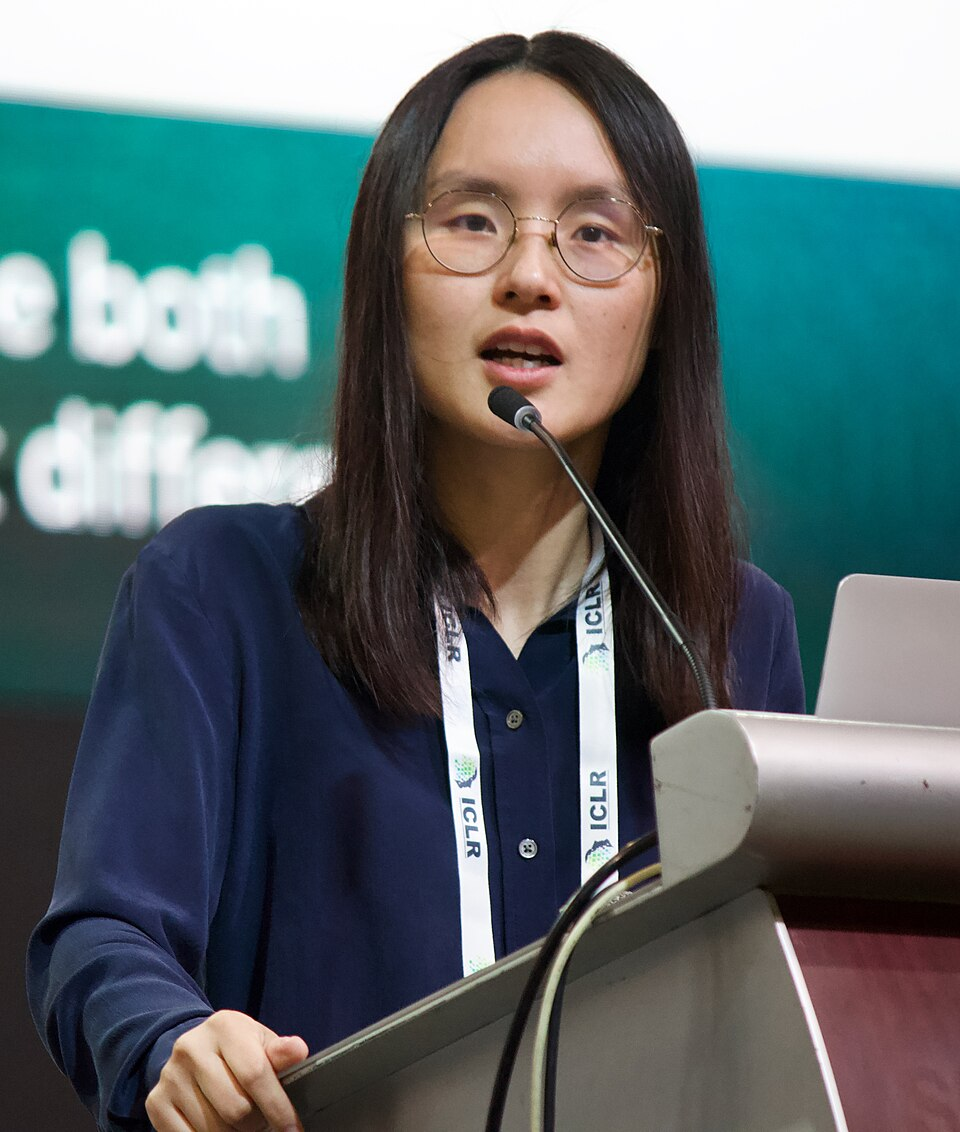 Danqi Chen (陈丹琦)合作论文数6
 Minjoon Seo合作论文数Language & Knowledge Lab, Graduate School of Artificial Intelligence, Korea Advanced Institute of Science and Technology;LBox Co., Ltd.;Config Intelligence6
 Xinxi Lyu合作论文数5
 Luca Soldaini合作论文数Allen Institute for AI5
 Yejin Choi合作论文数Department of Computer Science, Stanford University;Stanford Institute for Human-Centered Artificial Intelligence;NVIDIA5
 Ali Farhadi合作论文数Reasoning, AI, and Vision Lab, Paul G. Allen School of Computer Science & Engineering, University of Washington;Microsoft5
 Matei Zaharia合作论文数Department of Electrical Engineering and Computer Sciences, University of California, Berkeley;Databricks5Akshita Bhagia合作论文数4
 Akari Asai (浅井明里)合作论文数Language Technologies Institute, Carnegie Mellon University;Machine Learning Department, Carnegie Mellon University;Allen Institute for AI4
 Kenton Lee合作论文数Google3
 Dirk Groeneveld合作论文数Allen Institute for Artificial Intelligence3
 Niklas Muennighoff合作论文数Meta;Stanford University;Ai23
 Jacob Morrison合作论文数AllenNLP Team, The Allen Institute for Artificial Intelligence;University of Washington3
 Iz Beltagy合作论文数Envive AI;Allen Institute for Artificial Intelligence3
 Jordan Boyd-Graber合作论文数Department of Computer Science, Brendan Iribe Center for Computer Science and Engineering, University of Maryland3
 Alon Talmor合作论文数Mosaic AI3
 Yashar Mehdad合作论文数Airbnb3
 Sameer Singh合作论文数Department of Computer Science, Bren School of Information and Computer Sciences, University of California3
 Barlas Oğuz合作论文数Meta AI3
 Matt Gardner合作论文数Scaled Cognition3
 Vladimir Karpukhin合作论文数Google3
 Jonathan Berant合作论文数The Blavatnik School of Computer Science, Tel-Aviv University3
 Tim Dettmers合作论文数Allen Institute for Artificial Intelligence;Carnegie Mellon University2
 Nathan Lambert合作论文数Allen Institute for AI2
 Chenglei Si合作论文数Stanford University2
 Victoria Lin (林曦)合作论文数Foundational AI Research, Meta2
 Alexander Wettig合作论文数Department of Computer Science, Princeton University;Allen Institute for Artificial Intelligence2
 Niloofar Mireshghallah合作论文数Paul G. Allen Center for Computer Science and Engineering, University of Washington;Research Group, Microsoft Semantic Machines2
 Ludwig Schmidt合作论文数Anthropic;Department of Computer Science, Stanford University2
 Arman Cohan合作论文数Yale NLP Lab, Department of Computer Science, School of Engineering & Applied Science, Yale University2
 Xilun Chen合作论文数Fundamental AI Research, Meta2
 Varsha Kishore合作论文数School of Computer Science, Cornell University2
 Srinivasan Iyer (斯里尼瓦桑艾耶)合作论文数Facebook AI Research, Meta AI Research2
 Victor Zhong合作论文数Microsoft Research2
 Kyle Lo合作论文数Allen Institute for Artificial Intelligence2
 Patrick Lewis合作论文数Cohere2
 Hao Cheng (程浩)合作论文数Microsoft Research2
 Jiacheng Liu (刘嘉程)合作论文数University of Washington2
 Chen Zhao合作论文数Department of Computer Science, NYU Shanghai2
 Oyvind Tafjord合作论文数Allen Institute for Artificial Intelligence2
 Tushar Khot合作论文数Allen Institute for Artificial Intelligence2