A 27-year-old woman presented with a progressively enlarging subcutaneous swelling on the arm, with prior periocular involvement, and imaging revealed a hypoechoic lesion containing characteristic bilaminar echogenic structures.
BACKGROUND:Rituximab has changed the paradigm for management of pemphigus vulgaris (PV). Despite its widespread use, variability exists in its use, particularly related to dosing protocols, prophylaxis, and use in special populations. This study aimed to assess dermatologists' knowledge, attitude, and practices regarding rituximab in India. MATERIALS AND METHODS:A cross-sectional questionnaire-based survey was conducted among Indian dermatologists with at least six months of clinical experience post-residency between March and June 2024. An 85-question survey was used to gather information on knowledge, attitudes, and practices related to rituximab. Descriptive statistics were employed to analyze the data and identify practice variations. RESULTS:Fifty-five dermatologists with a mean practice experience of 13 years participated. Most (78.2%) preferred rituximab as first-line adjuvant for PV, citing higher remission rates and fewer long-term adverse effects. Knowledge of rituximab's mechanism of action was excellent. However, significant practice variability was observed. The standard dose rheumatoid arthritis protocol for moderate-to-severe disease was preferred by 69.1%, whereas only 14.5% strongly supported low-dose regimens. Screening for latent tuberculosis was commonly performed (80%). Prophylaxis for Pneumocystis jirovecii pneumonia and vaccination practices were inconsistent, with only 12.7% always prescribing prophylaxis. Additionally, 61.8% used rituximab retreatment on clinical relapse, with less emphasis on immunological markers for monitoring. LIMITATIONS:The responses may not be representative of all dermatologists, especially those with less experience with rituximab. CONCLUSION:While dermatologists demonstrated strong knowledge of rituximab, significant variability in dosing, prophylaxis, and retreatment practices exists. Standardized guidelines and educational initiatives may be needed to ensure consistent use of rituximab and improve patient outcomes.
We report a 39-year-old woman presenting with features of both Dowling-Degos disease and hidradenitis suppurativa, along with a milder phenotype in her son, caused by a novel heterozygous nonsense variant in NCSTN.
BACKGROUND:Despite its frequency, there is a lack of comparative evidence evaluating available treatment modalities for xanthelasma palpebrarum (XP). Although surgical excision and trichloroacetic acid (TCA) are commonly used interventions for XP, no study has compared these two modalities. OBJECTIVES:To compare the efficacy and safety of surgical excision vs. 70% TCA in the management of limited XP. METHODS:A prospective, split-face, single-blinded, single-centre randomized clinical trial conducted from November 2024 to August 2025 with a 12-week follow-up. Adults aged ≥ 18 years with bilateral XP limited to ≤ one-third of the palpebral area were included. Key exclusion criteria were lesions larger than one-third of the eyelid height or area and lesions within 2 mm of the canthi. These criteria ensured safe and comparable use of both treatments. Each participant contributed two XP units (XPUs, defined as all XP lesions in one eye). One eye XPU in each patient was randomized to surgical excision and the contralateral eye XPU to TCA application (up to three sessions, 4 weeks apart). The primary outcome was complete clearance (100% reduction in XPU surface area) at week 12. Secondary outcomes included cosmetic outcome, patient satisfaction, percentage reduction in size and adverse effects. The trial is registered with the Clinical Trials Registry of India, no. CTRI/2024/10/074929. RESULTS:All excision-treated XPUs (36/36; 100%) achieved complete clearance compared with 8/36 XPUs (22%) treated with TCA (McNemar test; P < 0.001). The median percentage reduction was 100% for excision and 69.2% for TCA (P < 0.001, Wilcoxon signed-rank test). Excellent cosmetic outcomes occurred in 21/36 (58%) excised XPUs vs. 1/8 (13%) TCA-treated XPUs that achieved complete remission. Dyschromia was more common after TCA (27/36, 75%) than excision (15/36, 42%). Older age independently predicted excellent cosmetic outcomes after surgical excision with receiver operating characteristic analysis identifying 51 years as the optimal cutoff. Papulonodular morphology was associated with TCA treatment failure. CONCLUSIONS:Surgical excision was more effective than 70% TCA for limited XP, providing predictable single-session clearance, superior cosmetic outcomes, fewer pigmentary changes and higher patient satisfaction. Excision can be considered the preferred first-line therapy for localized XP.
Background Surgical management is an important option for patients with stable vitiligo unresponsive to medical therapy, yet standardised guidance on its practice has remained limited. Objective To develop consensus-based, evidence-informed recommendations for the surgical management of vitiligo tailored to clinical practice in India, but relevant across diverse settings. Methods Key domains of vitiligo surgery lacking uniform guidance were identified through literature review and preliminary discussions. Draft statements were circulated among a purposively selected panel of expert vitiligo surgeons. Using a modified Delphi process, experts rated statements over five iterative rounds. Consensus was defined as a mean Likert score ≥3.75. Results The final consensus addressed patient selection, stability criteria, contraindications and minimum age considerations; preoperative evaluation and counselling; anaesthesia choices; determinants guiding selection of tissue versus cellular techniques; and recommendations for surgery at special sites. Technical guidance was provided on recipient-site preparation, donor harvesting, trypsinisation, centrifugation, use of inhibitors and wash media, and postoperative dressing. The panel endorsed non-cultured epidermal suspension (NCES) as the preferred method for large lesions, highlighted role-specific techniques for special sites and recommended dressings to remain undisturbed for 5–7 days. Adjunctive therapies such as phototherapy and topical tacrolimus were considered beneficial. Management of postoperative complications, including perilesional halo, was also addressed. Limitations Some recommendations are based on expert consensus due to limited high-quality evidence. Conclusion These consensus-based guidelines provide practical recommendations across the continuum of vitiligo surgery, aiming to harmonise practice, improve outcomes and support individualised decision-making. They also highlight areas where further research is needed to refine standards of care.
We describe a case of cooked fish poisoning (Haff disease) whose novel dermatological manifestation (livedo rash) led to the unravelling of unexplained neuropathy (axonopathy due to neuronal microangiopathy).
Cutaneous tuberculosis is an uncommon manifestation of Mycobacterium tuberculosis infection and may present diverse and atypical clinical features, often resulting in diagnostic delay. The case of a 72-year-old woman who presented with a gradually progressive nodular swelling on the left side of her nose, associated with epiphora, is reported in the present study. A clinical examination revealed a firm rhino-facial nodular lesion with ipsilateral nasolacrimal duct obstruction. Initial investigations were inconclusive, and the Mantoux test result was negative. Repeat histopathology revealed epithelioid granulomas with multinucleated giant cells consistent with granulomatous dermatitis. A cutaneous tuberculosis-specific assay result was positive, in conjunction with clinicopathological findings, which supported the diagnosis of an atypical nodular type of lupus vulgaris. The patient showed marked clinical improvement after the initiation of standard antitubercular therapy. This case highlights the diagnostic challenges posed by atypical facial lupus vulgaris and underscores the importance of clinicopathological correlation, with adjunctive use of immunological assays when conventional investigations are inconclusive, particularly in tuberculosis-endemic regions.
 Vinay Keshavamurthy合作论文数Postgraduate Institute of Medical Education and Research32
 Anuradha Bishnoi合作论文数Department of Dermatology, Venereology and Leprology, Postgraduate Institute of Medical Education and Research22
 Dipankar De合作论文数20
 Divya Aggarwal合作论文数University College of Medical Sciences18
 Vishal Thakur合作论文数Dept Dermatol Venereol & Leprol, Postgrad Inst Med Educ & Res17
 Sanjeev Handa合作论文数Department of Dermatology, Institute of Medical Education and Research16
 Hitaishi Mehta合作论文数14
 Tarun Narang合作论文数13
 Muthu Sendhil Kumaran合作论文数Department of Dermatology, Venereology and Leprology, Postgraduate Institute of Medical Education and Research12Bishan Radotra合作论文数11
 Mahajan Rahul合作论文数11
 Sunil Dogra合作论文数10
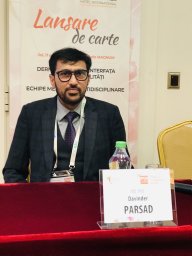 Davinder Parsad合作论文数Department of Dermatology, Venereology and Leprology, Postgraduate Institute of Medical Education & Research10
 Ankur Guliani合作论文数8
 Chatterjee Debajyoti合作论文数Department of Histopathology, (PGIMER), Sector-12, Chandigarh-160012, India.8Rajat Choudhary合作论文数Dept Dermatol Venereol & Leprol, Postgrad Inst Med Educ & Res6Sivaranjini Ramassamy合作论文数5
 Nirav Thosani合作论文数Health Science Center at Houston, The University of Texas5
 Sushovan Guha合作论文数Department of Surgery, McGovern Medical School, University of Texas Health Science Center5Akshay Meena合作论文数3S. Handa合作论文数3
 Amit Dalla合作论文数3Rajsmita Bhattacharjee合作论文数3
 Uma Nahar Saikia合作论文数3Pampa Toi合作论文数Department of Pathology, JIPMER3Bd Radotra合作论文数Department of Histopathology, Postgraduate Institute of Medical Education and Research, Chandigarh, 160012, India3Elisabeth Lazaridou合作论文数2Anastasia Giannakou合作论文数2Priya Kapoor合作论文数2
 Martin Abu Shahid合作论文数2
 Niharika Srivastava合作论文数Dept Dermatol Venereol & Leprol, Postgrad Inst Med Educ & Res2Neirita Hazarika合作论文数All India Institute of Medical Sciences2Marta L Davila合作论文数2
 Kamal Kishore合作论文数Department of Biostatistics (Kamal Kishore).2
 Singh Shubh Mohan合作论文数Department of Psychiatry, Postgraduate Institute of Medical Education &Research (PGIMER), Chandigarh, India.;Department of Psychiatry, Postgraduate Institute of Medical Education & Research (PGIMER), Chandigarh, India.2
 Aikaterini Patsatsi合作论文数2Kyriakou Aikaterini合作论文数2Bakkour Waseem合作论文数2van Beek N合作论文数2Mehnaz A. Shafi合作论文数2
 Kossara Drenovska合作论文数Department of Dermatology and Venereology, University of Medecine2Alexandra Fleva合作论文数AHEPA General Hospital, University of Thessaloniki2Alexander A. Dekovich合作论文数2
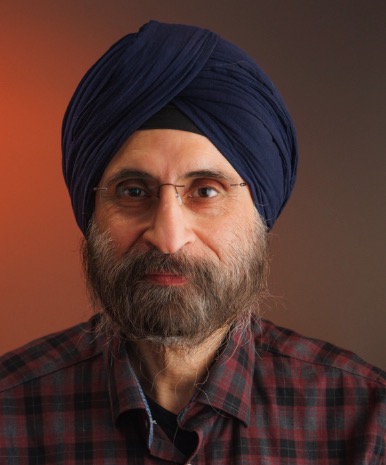 Harminder Singh合作论文数Department of Internal Medicine, Max Rady College of Medicine, University of Manitoba2
 Camilo Jimenez合作论文数2
 Rashmi Kumari合作论文数2Zoann Nugent合作论文数CancerCare Manitoba2Elissaveta Naumova合作论文数2
 Naresh Sachdeva合作论文数Department of Immunopathology, Post Graduate Institute of Medical Education and Research2




