Pre-training world models on large, action-free video datasets offers a promising path toward generalist agents, but a fundamental flaw undermines this paradigm. Prevailing methods train models to predict a single, deterministic future, an objective that is ill-posed for inherently stochastic environments where actions are unknown. We contend that a world model should instead learn a structured, probabilistic representation of the future where predictive uncertainty correctly scales with the temporal horizon. To achieve this, we introduce a pre-training framework, **H**orizon-c**A**librated **U**ncertainty **W**orld **M**odel (HAUWM), built on a probabilistic ensemble that predicts frames at randomly sampled future horizons. The core of our method is a Horizon-Calibrated Uncertainty (HCU) loss, which explicitly shapes the latent space by encouraging predictive variance to grow as the model projects further into the future. This approach yields a latent dynamics model that is not only predictive but also equipped with a reliable measure of temporal confidence. When fine-tuned for downstream control, our pre-trained model significantly outperforms state-of-the-art methods across a diverse suite of benchmarks, including MetaWorld, the DeepMind Control Suite, and RoboDesk. These results highlight the critical role of structured uncertainty in robust decision-making.
Designing dense reward functions is pivotal for efficient robotic Reinforcement Learning (RL). However, most dense rewards rely on manual engineering, which fundamentally limits the scalability and automation of reinforcement learning. While Vision-Language Models (VLMs) offer a promising path to reward design, naive VLM rewards often misalign with task progress, struggle with spatial grounding, and show limited understanding of task semantics. To address these issues, we propose MARVL-Multi-stAge guidance for Robotic manipulation via Vision-Language models. MARVL fine-tunes a VLM for spatial and semantic consistency and decomposes tasks into multi-stage subtasks with task direction projection for trajectory sensitivity. Empirically, MARVL significantly outperforms existing VLM-reward methods on the Meta-World benchmark, demonstrating superior sample efficiency and robustness on sparse-reward manipulation tasks.
The scalability of world models is currently bottlenecked by the scarcity of action annotations. While self-supervised latent action learning offers a potential solution, existing single-view paradigms—relying on information bottlenecks or Vector Quantization (VQ)—often conflate superficial 2D pixel displacements with the underlying physical-spatial dynamics of an action. Consequently, these methods remain highly susceptible to view-dependent noise, such as camera shake. We introduce (lti-view nsistent atent ction learning), a framework that learns robust, view-invariant action representations by enforcing semantic consistency across synchronized video streams. MuCoLA utilizes a Student-Teacher network with DINO-style self-distillation to align action distributions across viewpoints, effectively filtering high-frequency visual noise while preserving motion semantics. Theoretical analysis reveals that our multi-view objective functions as a spectral filter, isolating agent dynamics from environmental nuisances. Empirically, MuCoLA significantly outperforms baselines in action regression, video reconstruction, and downstream visual control tasks. Furthermore, we demonstrate that MuCoLA exhibits favorable scaling properties with respect to model capacity and data volume, paving the way for large-scale action-free world modeling.
Model-based Reinforcement Learning (MBRL) has achieved remarkable success in continuous control by leveraging latent world models. However, prevailing approaches typically rely on monolithic latent dynamics, entangling environment dynamics into a coupled process. This coupling severely limits reusability: altering the agent necessitates retraining the entire world from scratch, even if the environment remains constant. To address this, we introduce BRICKS-WM (Building Reusability via Interface Composition Kinetics for Structured World Models), a framework for the modular assembly of structured world models. Driven by the insight that the physical world is composed of independent entities, we posit that global dynamics can be modeled as a composition of distinct dynamical modules interacting via latent interfaces. As a minimal instantiation, we factorize the latent state space into an actuated Agent module and an external Background module, bridged by a learned latent interface. Unlike prior object-centric methods that prioritize visual segmentation, BRICKS-WM enforces a functional separation in transition dynamics, ensuring that background dynamics remains agnostic to the agent's dynamics. Empirically, BRICKS-WM achieves control performance comparable to strong monolithic baselines when trained from scratch, and enables the reuse of frozen background dynamics across agents.
In reinforcement learning (RL), agents continually interact with the environment and use the feedback to refine their behavior. To guide policy optimization, reward models are introduced as proxies of the desired objectives, such that when the agent maximizes the accumulated reward, it also fulfills the task designer's intentions. Recently, significant attention from both academic and industrial researchers has focused on developing reward models that not only align closely with the true objectives but also facilitate policy optimization. In this survey, we provide a comprehensive review of reward modeling techniques within the deep RL literature. We begin by outlining the background and preliminaries in reward modeling. Next, we present an overview of recent reward modeling approaches, categorizing them based on the source, the mechanism, and the learning paradigm. Building on this understanding, we discuss various applications of these reward modeling techniques and review methods for evaluating reward models. Finally, we conclude by highlighting promising research directions in reward modeling. Altogether, this survey includes both established and emerging methods, filling the vacancy of a systematic review of reward models in current literature.
Effective denoising is critical for managing complex visual inputs contaminated with noisy distractors in model-based reinforcement learning (RL). Current methods often oversimplify the decomposition of observations by neglecting the conditional dependence between task-relevant and task-irrelevant components given an observation. To address this limitation, we introduce CsDreamer, a model-based RL approach built upon the world model of Collider-structure Recurrent State-Space Model (CsRSSM). CsRSSM incorporates colliders to comprehensively model the denoising inference process and explicitly capture the conditional dependence. Furthermore, it employs a decoupling regularization to balance the influence of this conditional dependence. By accurately inferring a task-relevant state space, CsDreamer improves learning efficiency during rollouts. Experimental results demonstrate the effectiveness of CsRSSM in extracting task-relevant information, leading to CsDreamer outperforming existing approaches in environments characterized by complex noise interference.
Foundation Models (FMs) and World Models (WMs) offer complementary strengths in task generalization at different levels. In this work, we propose FOUNDER, a framework that integrates the generalizable knowledge embedded in FMs with the dynamic modeling capabilities of WMs to enable open-ended task solving in embodied environments in a reward-free manner. We learn a mapping function that grounds FM representations in the WM state space, effectively inferring the agent's physical states in the world simulator from external observations. This mapping enables the learning of a goal-conditioned policy through imagination during behavior learning, with the mapped task serving as the goal state. Our method leverages the predicted temporal distance to the goal state as an informative reward signal. FOUNDER demonstrates superior performance on various multi-task offline visual control benchmarks, excelling in capturing the deep-level semantics of tasks specified by text or videos, particularly in scenarios involving complex observations or domain gaps where prior methods struggle. The consistency of our learned reward function with the ground-truth reward is also empirically validated. Our project website is https://sites.google.com/view/founder-rl.
Imitating skills from low-quality datasets, such as sub-optimal demonstrations and observations with distractors, is common in real-world applications. In this work, we focus on the problem of Learning from Noisy Demonstrations (LND), where the imitator is required to learn from data with noise that often occurs during the processes of data collection or transmission. Previous IL methods improve the robustness of learned policies by injecting an adversarially learned Gaussian noise into pure expert data or utilizing additional ranking information, but they may fail in the LND setting. To alleviate the above problems, we propose Denoised Imitation learning based on Domain Adaptation (DIDA), which designs two discriminators to distinguish the noise level and expertise level of data, facilitating a feature encoder to learn task-related but domain-agnostic representations. Experiment results on MuJoCo demonstrate that DIDA can successfully handle challenging imitation tasks from demonstrations with various types of noise, outperforming most baseline methods.
Model-based unsupervised reinforcement learning (URL) has gained prominence for reducing environment interactions and learning general skills using intrinsic rewards. However, distractors in observations can severely affect intrinsic reward estimation, leading to a biased exploration process, especially in environments with visual inputs like images or videos. To address this challenge, we propose a bi-level optimization framework named Separation-assisted eXplorer (SeeX). In the inner optimization, SeeX trains a separated world model to extract exogenous and endogenous information, minimizing uncertainty to ensure task relevance. In the outer optimization, it learns a policy on imaginary trajectories generated within the endogenous state space to maximize task-relevant uncertainty. Evaluations on multiple locomotion and manipulation tasks demonstrate SeeX's effectiveness.
Model-based methods have significantly contributed to distinguishing task-irrelevant distractors for visual control. However, prior research has primarily focused on heterogeneous distractors like noisy background videos, leaving homogeneous distractors that closely resemble controllable agents largely unexplored, which poses significant challenges to existing methods. To tackle this problem, we propose Implicit Action Generator (IAG) to learn the implicit actions of visual distractors, and present a new algorithm named implicit Action-informed Diverse visual Distractors Distinguisher (AD3), that leverages the action inferred by IAG to train separated world models. Implicit actions effectively capture the behavior of background distractors, aiding in distinguishing the task-irrelevant components, and the agent can optimize the policy within the task-relevant state space. Our method achieves superior performance on various visual control tasks featuring both heterogeneous and homogeneous distractors. The indispensable role of implicit actions learned by IAG is also empirically validated.
In many real-world visual Imitation Learning (IL) scenarios, there is a misalignment between the agent's and the expert's perspectives, which might lead to the failure of imitation. Previous methods have generally solved this problem by domain alignment, which incurs extra computation and storage costs, and these methods fail to handle the hard cases where the viewpoint gap is too large. To alleviate the above problems, we introduce active sensoring in the visual IL setting and propose a model-based SENSory imitatOR (SENSOR) to automatically change the agent's perspective to match the expert's. SENSOR jointly learns a world model to capture the dynamics of latent states, a sensor policy to control the camera, and a motor policy to control the agent. Experiments on visual locomotion tasks show that SENSOR can efficiently simulate the expert's perspective and strategy, and outperforms most baseline methods.
Model-based offline reinforcement Learning (RL) is a promising approach that leverages existing data effectively in many real-world applications, especially those involving high-dimensional inputs like images and videos. To alleviate the distribution shift issue in offline RL, existing model-based methods heavily rely on the uncertainty of learned dynamics. However, the model uncertainty estimation becomes significantly biased when observations contain complex distractors with non-trivial dynamics. To address this challenge, we propose a new approach - \emph{Separated Model-based Offline Policy Optimization} (SeMOPO) - decomposing latent states into endogenous and exogenous parts via conservative sampling and estimating model uncertainty on the endogenous states only. We provide a theoretical guarantee of model uncertainty and performance bound of SeMOPO. To assess the efficacy, we construct the Low-Quality Vision Deep Data-Driven Datasets for RL (LQV-D4RL), where the data are collected by non-expert policy and the observations include moving distractors. Experimental results show that our method substantially outperforms all baseline methods, and further analytical experiments validate the critical designs in our method. The project website is \href{https://sites.google.com/view/semopo}{https://sites.google.com/view/semopo}.
Reinforcement learning from visual observations is a challenging problem with many real-world applications. Existing algorithms mostly rely on a single observation from a well-designed fixed camera that requires human knowledge. Recent studies learn from different viewpoints with multiple fixed cameras, but this incurs high computation and storage costs and may not guarantee the coverage of the optimal viewpoint. To alleviate these limitations, we propose a straightforward View-conditional Partially Observable Markov Decision Processes (VPOMDPs) assumption and develop a new method, the MOdel-based SEnsor controlleR (MOSER). MOSER jointly learns a view-conditional world model (VWM) to simulate the environment, a sensory policy to control the camera, and a motor policy to complete tasks. We design intrinsic rewards from the VWM without additional modules to guide the sensory policy to adjust the camera parameters. Experiments on locomotion and manipulation tasks demonstrate that MOSER autonomously discovers task-specific viewpoints and significantly outperforms most baseline methods.
Model-based imitation learning (MBIL) is a popular reinforcement learning method that improves sample efficiency on high-dimension input sources, such as images and videos. Following the convention of MBIL research, existing algorithms are highly deceptive by task-irrelevant information, especially moving distractors in videos. To tackle this problem, we propose a new algorithm - named Separated Model-based Adversarial Imitation Learning (SeMAIL) - decoupling the environment dynamics into two parts by task-relevant dependency, which is determined by agent actions, and training separately. In this way, the agent can imagine its trajectories and imitate the expert behavior efficiently in task-relevant state space. Our method achieves near-expert performance on various visual control tasks with complex observations and the more challenging tasks with different backgrounds from expert observations.
Urban green space plays a crucial role in the construction of ecological city and livable environment. While multitemporal remote sensing images provide strong support for urban green cover monitoring, they often suffer from data shifting, where the data distribution varies from phase to phase. Designing a general multitemporal framework to extract urban green cover is challenging, mainly due to possible time-consuming data labeling and inconsistent prediction. To address that, we propose multi-training, a novel method for land cover classification on multitemporal remote sensing images. Multi-Training is a two-stage method to independently train classifier on each phase in the training stage and then to combine the information from all the classifiers in the communication stage. As a semi-supervised learning method, multi-training adopts a new rule to obtain the confidence of unlabeled samples’ prediction, which reduces the dependence on labeled data and increases the result's consistency between phases. The experimental results show that multi-training outperforms self-training, co-training, tri-training, and super-training on both accuracy and consistency on multitemporal remote sensing image datasets. Furthermore, we have analyzed the necessary parameters in our method and conclude that the number and the combination of phases will dominate the prediction results.
 De-Chuan Zhan (詹德川)合作论文数Learning And Mining from DatA Group, School of Artificial Intelligence, Nanjing University;Learning And Mining from DatA Group, State Key Laboratory for Novel Software Technology, Nanjing University14
 Le Gan (甘乐)合作论文数School of Computer Science and Engineering, Nanjing University of Science and Technology11
 Shuai Feng合作论文数5Xunlan Zhou合作论文数4Hai-Hang Sun合作论文数4Minghao Shao合作论文数4Kaichen Huang合作论文数3Yucen Wang合作论文数3
 Shaowei Zhang (张韶威)合作论文数School of Artificial Intelligence, Nanjing University;National Key Laboratory for Novel Software Technology, Nanjing University3Jiahan Cao合作论文数2
 Lei Yuan (袁雷)合作论文数School of Artificial Intelligence, Nanjing University;National Key Laboratory for Novel Software Technology, Nanjing University2Dian Cheng合作论文数1Rui Yu合作论文数1Ziyuan Chen合作论文数1Ruying Chen合作论文数1
 Chen-Xiao Gao (高辰潇)合作论文数School of Artificial Intelligence, Nanjing University;State Key Laboratory for Novel Software Technology, Nanjing University1
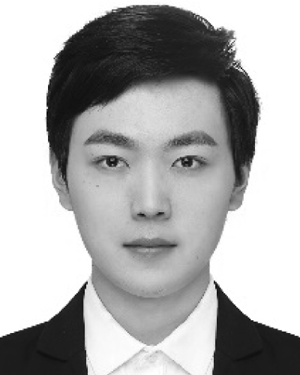 Wenye Wang合作论文数1
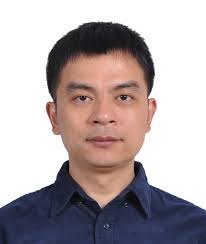 Zongzhang Zhang (章宗长)合作论文数School of Artificial Intelligence, Nanjing University;State Key Laboratory for Novel Software Technology, Nanjing University1
 Xueliang Zhang (张学良)合作论文数Department of Geographic Information Science, School of Geography and Ocean Science, Nanjing University1
 Pengfeng Xiao (肖鹏峰)合作论文数School of Geography and Ocean Science, Nanjing University1




