This article introduces a new class of nonlinear models known as the Z-valued smooth transition GARCH model, designed to accommodate Z-valued time series that display asymmetric, nonlinear and highly persistent volatility. The article outlines the maximum likelihood estimation procedure and establishes its consistency and asymptotic normality of the estimated parameters. Three types of tests are studied, including sup-type linearity test, score-based goodness-of-fit test, and residual-based mixed portmanteau diagnostic checking test. The asymptotic properties of these three test statistics are established. To address the computationally complex problems of estimation, the parameterization of the smooth transition function and the optimization algorithm for the estimation procedure in numerical simulations are discussed. The effectiveness of the tests is demonstrated through numerical simulations, and crime and exchange rate datasets are analyzed to showcase the superior performance of the proposed model. Supplementary materials for this article are available online, including a standardized description of the materials available for reproducing the work.
Tensor time series are increasingly prevalent in economics and finance. However, when tensor time series data have a heavy-tailed feature (such as an infinite second moment) or exhibit dynamics in both conditional mean and covariance, existing tensor time series models lack a valid statistical inference procedure. To solve this problem, we propose a new tensor double autoregressive (TDAR) model that preserves the tensor structure while jointly capturing the conditional mean and covariance dynamics. The TDAR model is based on a novel constant conditional correlation (CCC) specification, which incorporates a tailored trace-normalization treatment to ensure the identification of the CCC-type tensor model. .For the TDAR model, we provide a sufficient condition for its stationarity, establish the consistency and asymptotic normality of its quasi-maximum likelihood estimator (QMLE), and construct portmanteau tests to check its adequacy. Notably, both the QMLE and portmanteau tests are shown to have standard limiting distributions under only a finite fractional moment condition such that our statistical inference procedure is valid for the heavy-tailed tensor time series data. To demonstrate the practical value of the TDAR model, we conduct numerical studies via simulations and two real examples.
In this paper, we study the tail index of a vector generalized autoregressive conditional heteroskedasticity (VGARCH) model ε_t=(ε_1t, …, ε_mt)^'=diag(h_1t^1/2, …, h_mt^1/2)η_t, H_t=(h_1t, …, h_mt)^'=W+∑_i=1^r A_i ε_t-i+∑_i=1^s B_i H_t-i, where ηt is a sequence of independent and identically distributed (i.i.d.) random vectors and ε_t=(ε_1t^2,…,ε_mt^2)^' . The regular variation condition for εt with tail index α > 0 is established. In particular, we show that the tail index of εt is α = 2 when |I - ∑_i=1^r A_i z^i - ∑_i=1^s B_i z^i| = 0 has some roots on the unit circle and other roots lie outside the unit circle. Furthermore, we study the heavy-tailed vector autoregressive (AR) model with VGARCH noise. The limiting distributions of the autocovariance matrices are shown to be the functional of a sequence of vector stable processes. Based on these results, we show that the least squares estimate (LSE) of the parameters in the AR part is not consistent if the tail-index α of GARCH is in (0, 2), is log n-consistent if α = 2, is n1−2/α-consistent if α ∈ (2, 4), and is n1/2/log n-consistent if α = 4, and its limiting distribution is a functional of vector stable processes when α ∈ [2, 4) and is asymptotically normal when α ⩾ 4. The results would offer some helpful insights for practitioners in economic and financial studies.
This paper first studies the least squares estimates (LSE) of an AR(p) model consists of one and two unit roots, called I(1) and I(2) process, respectively, with i.i.d. heavy-tailed noises. It is shown that the rate of convergence of the LSE of the unit root in I(1) process is n (sample size) and those of unit roots in I(2) process are n and n2, and their limiting distributions are stochastic integrals in terms of two stable random processes. The rate of convergence of the LSE related to the stationary component are n1/aL(n) and its limiting distribution is a functional of two stable processes when a E (1, 2), and its rate is n and its limiting distribution is a functional of a stable processes and an integral of stable process when a E (0, 1), where L(n) is a slowly varying function. This paper then formulates the unit-root testing as a model selection problem using the adaptive Lasso estimate (ALE) approach with the LSE. It is shown that the ALE can discriminate between stationary and non-stationary components, and determine the order p by detecting the zero coefficients simultaneously. The ALE achieves the oracle properties, i.e., the estimated parameter performs as good as if the true underlying model were given in a priori. This paper also proposes a data-driven procedure for selecting the tuning parameters. A simulation study is carried out to assess the performance of the method, and two real examples are provided to demonstrate its applicability.
This paper develops a novel two-step estimating procedure for heavy-tailed AR models with nonzero median GARCH-type noises, allowing for time-varying volatility. We first establish the self-weighted quantile regression estimator (SQE) across all quantile levels tau is an element of (0, 1) for the AR parameters theta 0. We show that the SQE, less a bias, converges weakly to a Gaussian process at a rate of n-1/2. The bias is zero if and only if tau equals tau 0, the probability that the noise is less than zero. Based on the SQE, we propose an approach to estimate tau 0 in the second step and feed the estimated tau 0 back into the SQE to estimate theta 0. Both the estimated tau 0 and theta 0 are shown to be consistent and asymptotically normal. A random weighting bootstrap method is developed to approximate the complex distribution. The problem we study is nonstandard because tau 0 may not be identifiable in conventional quantile regression, and the usual methods cannot verify the existence of the SQE bias. Unlike existing procedures for heavy-tailed time series, our method does not require prior information about the symmetry, tail index, or the parametric form of the noise, nor does it require classical identification conditions, such as zero-mean or zero-median.
We extend the noncausal autoregressive models by introducing noncausality into the variance component, allowing the volatility to depend on future prices as well. We refer to this model as the noncausal AR-ARCH model, and it enables us to account for shocks arising from market agents who possess more information and engage in forward-looking trading behaviours, leading to a better fit for financial time series. In terms of parameter estimation, we develop a quasi-maximum likelihood estimation method and establish its asymptotic properties. Building on this, we propose three hypothesis testing statistics to determine whether the data exhibits a noncausal AR structure and whether the innovation term follows a noncausal ARCH model. The simulation results demonstrate the consistency of the parameter estimation as well as the good size control and high power of the hypothesis tests in detecting noncausal structures. In our empirical applications, we employ the proposed model in both stock markets and crude oil futures markets. Our empirical findings indicate that the variance is causal in the US stock market but noncausal in the Chinese stock market. Furthermore, we observe a noticeable distinction between Brent and WTI crude oil futures, as Brent exhibits noncausality in both its mean and variance, whereas WTI follows a purely causal process.
We extend the double-well potential to a three-parameter model in order to capture the momentum and reversal effects in stock price dynamics. The proposed model is characterized by three parameters that control momentum, reversal, and volatility. By varying these parameters, the model can represent two distinct price patterns: (i) a mean-reverting pattern with a unimodal distribution, and (ii) a momentum pattern with a bimodal distribution. We develop an estimation method and establish its asymptotic properties, along with a simulation study to evaluate its finite sample performance. An empirical application using high-frequency data is provided to demonstrate the effectiveness of our proposed model in analyzing price dynamics.
This paper studies the full rank least squares estimator (FLSE) and reduced rank least squares estimator (RLSE) of the heavy-tailed and partially nonstationary ARMA model with the tail index a E (0, 2). It is shown that the rate of convergence of the FLSE related to the long-run parameters is n (sample size) and that related to the short-term parameters are nil' L(n) and n, respectively, when a E (1, 2) and E (0, 1). Its limiting distribution is a stochastic integral in terms of two stable random processes when a E (0, 2) for the long-run parameters and is a functional of some stable processes when a E (1, 2) for the short-run parameters. Based on FLSE, we derive the asymptotic properties of the RLSE. The finite-sample properties of the estimation are examined through a simulation study and an application to three U.S. interest rate series is given.
This paper proposes an iterative neural network estimate (INNE) for the partially linear (PL) time series models. It is shown that the parametric coefficients of INNE are n consistent and asymptotically normal, and the convergence rate of nonparametric function is O(n-alpha), where alpha is a constant independent of the dimension of the nonparametric part. To obtain the INNE, an initial estimator of the parametric coefficients is proved to be asymptotically normal. Our estimation procedure circumvents "curse of dimensionality" incurred by the traditional nonparametric smoothing approach. A simulation study is carried out to assess the performance of the INNE in the finite samples. It is shown that our INNE outperforms the traditional nonparametric smoothing approach according to several criteria used in this paper. One real example is used to illustrate our approach.
Over the last 20 years, there has been an interest in unit root inference in the presence of infinite-variance noises. This article studies the unit root with errors being a short-memory linear process of the heavy-tailed GARCH noises with its tail-index, alpha is an element of(0,2), alpha = 2, and alpha is an element of(2,infinity). The limiting distribution of the Dickey-Fuller (DF) unit-root test is shown to be a functional of two stable processes when alpha is an element of(0,2) and a functional of a standard Brownian motion when alpha is an element of[2,infinity). Since the limit distribution contains some nuisance parameters, it is difficult, if not impossible, to be estimated. This is especially the case when alpha is an element of(1,2). To solve this problem, we propose an m-out-of-n centered residual-based block bootstrap (RBB), which is shown to have the same limit distribution as that of DF test and can be applied to both finite-variance and infinite-variance cases. Simulation studies and a real data analysis show that this RBB approach works well.
We develop a procedure for testing and estimating the change point in the autoregressive moving average (ARMA) model with heavy-tailed general generalized autoregressive conditional heteroskedasticity (G-GARCH) noises. Based on the self-weighted least absolute deviation estimator (SLADE), we propose two score-type test statistics for change point detection. Under the null hypothesis, we show that one of them converges weakly to the maxima of a Brownian bridge, and the other one converges weakly to an extreme distribution. Furthermore, we prove that the SLADE of the change point converges weakly to the location of the maxima of a double-sided random walk, and the SLADE of other parameters is asymptotically normal. Our two score-type tests and SLADE are applicable for the data with an infinite variance, while not specifying the form of G-GARCH noises. Finally, we use simulations and two real examples to demonstrate the usefulness of the proposed tests and estimator in handling the heavy-tailed data with an infinite variance.
It is well-known that the detection of change-points in heavy-tailed time series is an open problem since the traditional tests may not have a power. This article introduces a winsorized cumulative sum (CUSUM) approach to solve this problem. We begin by investigating the winsorized CUSUM process and then use it to construct the Kolmogorov-Smirnov (KS) test and the Self-normalized (SN) test. Under the null hypothesis, it is shown that each weakly converges to the maximum of a function related to the standard Brownian bridge. Under the alternative, we first study the behavior of tests after applying the winsorization technique, and then show that our tests have a power approaching to 1 as the sample size n ->infinity. Furthermore, we extend the winsorizing technique to test for multiple change-points without prior knowledge of the number of change points. Our framework is general and its assumptions are mild, so that our tests can be applied to a wide range of linear and nonlinear time series. The empirical results illustrate the effectiveness of our proposed procedures for change-point detection.
This paper studies the autoregressive and moving average (ARMA) model with time-functional variance (TFV) noises, called the ARMA-TFV model. We first establish the consistency and asymptotic normality of its least squares estimator (LSE). The Wald tests and portmanteau tests are constructed based on the theory for variable selection and model checking. A simulation study is carried out to assess the performance of our approach in finite samples, and two real examples are given. It should be mentioned that the process generated from the ARMA-TFV model is not stationary, and the technique in this paper is nonstandard and may provide insights for future research in this area.
The threshold ARMA model has been extensively studied in the literature. However, except for some special cases, its ergodicity is not clear up to now. This article provides a sufficient condition for the ergodicity of the general multiple threshold ARMA model.
This paper studies a partially nonstationary vector autoregressive (VAR) model with vector GARCH noises.We study the full rank and the reduced rank quasi-maximum likelihood estimators (QMLE) of parameters in the model.It is shown that both QMLE of long-run parameters asymptotically converge to a functional of two correlated vector Brownian motions.Based these, the likelihood ratio (LR) test statistic for cointegration rank is shown to be a functional of the standard Brownian motion and normal vector, asymptotically.As far as we know, our test is new in the literature.The critical values of the LR test are simulated via the Monte Carlo method.The performance of this test in finite samples is examined through Monte Carlo experiments.We apply our approach to an empirical example of three interest rates.
Since investors have diverse perspectives and limited information, their expectations can be subjective and prone to inaccuracies. Hence, price fluctuations are influenced by heterogeneous beliefs regarding future expectations, and both surveys and straightforward models can only partially capture the intricate nature of expectations. To address this issue, we employ a noncausal AR-GARCH model with a quasi-maximum likelihood technique to mitigate the impact of heterogeneous beliefs. Our approach allows us to determine the asymptotic distribution of estimated parameters and perform hypothesis tests. These empirical findings indicate that the error term in the US stock market is causal; in contrast, in the Chinese stock market, noncausal errors significantly impact price volatility. Furthermore, our models have the capability to discern nuanced distinctions between Brent and WTI crude oil prices, indicating that the price pattern of WTI may be more influenced by heterogeneous beliefs among market participants.
This article studies the first-order vector error correction (VEC(1)) model when its noise is a linear process of independent and identically distributed (i.i.d.) heavy-tailed random vectors with a tail index a ? (0,2). We show that the rate of convergence of the least squares estimator (LSE) related to the long-run parameters is n (sample size) and its limiting distribution is a stochastic integral in terms of two stable random processes, while the LSE related to the short-term parameters is not consistent. We further propose an automated approach via adaptive shrinkage techniques to determine the cointegrating rank in the VEC(1) model. It is demonstrated that the cointegration rank r(0) can be consistently selected despite the fact that the LSE related to the short-term parameters is not consistently estimable when the tail index a ? (1,2). Simulation studies are carried out to evaluate the performance of the proposed procedure in finite samples. Last, we use our techniques to explore the long-run and short-run behavior of the monthly prices of wheat, corn, and wheat flour in the United States.
This paper studies the supremum-type score test for the single-index model against a threshold single-index model.It is shown that the test weakly converges a maxima of a Gaussian process under the null hypothesis.The bootstrap method is used to tackle the bias problem and provide the p-values of our test statistic.Simulations are carried out to assess the performance of our procedure and real data examples are given for its illustration.
This paper studies the self-weighted least squares estimator (SWLSE) of the ARMA model with GARCH noises. It is shown that the SWLSE is consistent and asymptotically normal when the GARCH noise does not have a finite fourth moment. Using the residuals from the estimated ARMA model, it is shown that the residual-based quasi-maximum likelihood estimator (QMLE) for the GARCH model is consistent and asymptotically normal, but if the innovations are asymmetric, it is not as efficient as that when the GARCH process is observed. Using the SWLSE and residual-based QMLE as the initial estimators, the local QMLE for ARMA-GARCH model is asymptotically normal via an one-step iteration. The importance of the proposed estimators is illustrated by simulated data and five real examples in financial markets.
This article investigates two test statistics for testing structural changes and thresholds in predictive regression models. The generalized likelihood ratio (GLR) test is proposed for the stationary predictor and the generalized F test is suggested for the persistent predictor. Under the null hypothesis of no structural change and threshold, it is shown that the GLR test statistic converges to a function of a centered Gaussian process, and the generalized F test statistic converges to a function of Brownian motions. A Bootstrap method is proposed to obtain the critical values of test statistics. Simulation studies and a real example are given to assess the performances of the proposed tests.
 Ke Zhu (朱柯)合作论文数Department of Statistics & Actuarial Science, Faculty of Science, The University of Hong Kong13
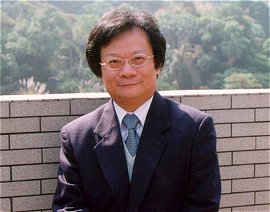 Wai Keung Li (李偉強)合作论文数Department of Statistics & Actuarial Science, University of Hong Kong12
 Michael McAleer合作论文数Department of Finance, College of Management, Asia University12
 H. Tong合作论文数Department of Statistics, The London School of Economics and Political Science9
 Rongmao Zhang (张荣茂)合作论文数Center for Data Science, Zhejiang University6
 Yaxing Yang (杨亚星)合作论文数School of Economics, Xiamen University5
 Rui She合作论文数4
 Shixuan Wang合作论文数Department of Economics, University of Reading, Reading, RG6 6AA, United Kingdom4
 Mi Zichuan (米子川)合作论文数4
 Zhenya Liu (刘振亚)合作论文数School of Finance, Renmin University of China;Department of Finance, Business School, EM Normandie4
 Ngai Hang Chan (陳毅恒)合作论文数Department of Biostatistics, City University of Hong Kong4Chor-yiu Sin合作论文数4
 Heung Wong (黃香)合作论文数Department of Applied Mathematics,The Hong Kong Polytechnic University4
 Zhaoxing Gao合作论文数Ctr Data Sci, Zhejiang Univ3
 Lajos Horváth合作论文数Department of Mathematics, University of Utah3
 Jean-Michel Zakoian合作论文数University of Lille;CREST3
 Fukang Zhu (朱复康)合作论文数Department of Probability Statistics and Data Science, School of Mathematics, Jilin University3Feifei Guo合作论文数2Linlin Dai合作论文数2
 Xingfa Zhang合作论文数2
 Dong Li (李栋)合作论文数Department of Mathematics, School of Science, The Hong Kong University of Science and Technology2
 Ruey S. Tsay合作论文数Booth School of Business, University of Chicago2Istvan Berkes合作论文数National Institute of Sport Medicine2Ngai Sze Han合作论文数1
 Yaosong Zhan (詹钥凇)合作论文数School of Business, Sun Yat-Sen University1
 Mengya Liu合作论文数1
 Qiying Wang合作论文数School of Mathematics and Statistics, Faculty of Science, The University of Sydney1
 John W Galbraith合作论文数Department of Economics, Faculty of Arts, McGill University1
 Tze-Kin Alan Wan (温子堅)合作论文数Department of Management Sciences, City University of Hong Kong1Yuan Li合作论文数1
 Shaojun Guo (郭绍俊)合作论文数Institute of Statistics and Big Data, Renmin University of China1
 Chun Yip Yau (邱俊業)合作论文数Department of Statistics, The Chinese University of Hong Kong1
 Hira Lal Koul合作论文数1
 Qi-Man Shao (邵启满)合作论文数Department of Statistics and Data Science, Southern University of Science and Technology1
 Min Chen (陈敏)合作论文数Academy of Mathematics and Systems Science, Chinese Academy of Sciences1
 Weidong Liu (刘卫东)合作论文数Department of Mathematics, School of Mathematical Sciences, Shanghai Jiao Tong University;Institute of Natural Sciences, Shanghai Jiao Tong University1
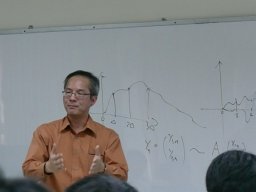 Kung-Sik Chan合作论文数Department of Statistics and Actuarial Science, University of Iowa1
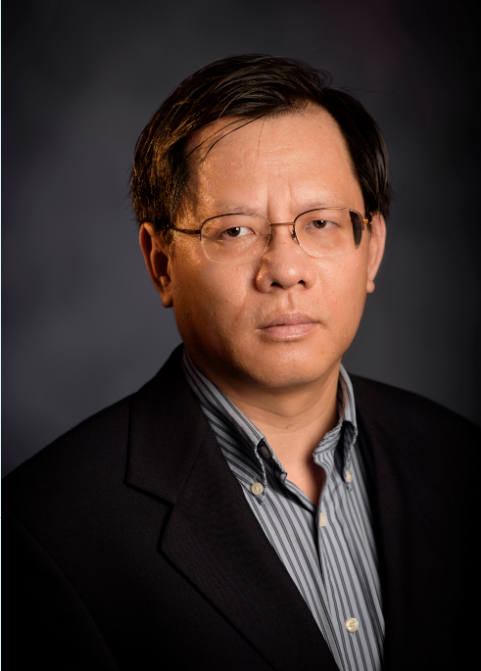 Liang Peng (彭亮)合作论文数Georgia State University1Chialin Chang合作论文数Department of Applied Economics
National Chung-Hsing University1
Liang Peng (彭亮)合作论文数Georgia State University1Chialin Chang合作论文数Department of Applied Economics
National Chung-Hsing University1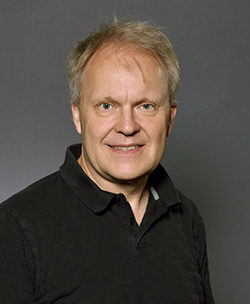 Torben Gustav Andersen合作论文数Department of Finance, Kellogg School of Management, Northwestern University;International Engineering and Technology Institute;Volatility Institute, Stern School of Business, New York University;Center for Research in Econometric Analysis of Economic Time Series;National Bureau of Economic Research1
 Koichi Maekawa合作论文数Department of Urban Innovation, Yokohama National University;Department of Civil Engineering, The University of Tokyo1
 Hiroyuki Hisamatsu合作论文数Graduate School of Information Science and Technology1
 Marie Huskova合作论文数Department of Statistics, Charles University1Judith A. Giles合作论文数1
 Alexander Aue合作论文数Department of Statistics, University of California, Davis1
 Anoop Chaturvedi合作论文数Department of Statistics, University of Allahabad1Johannes Schauer合作论文数1
 Guohua Zou (邹国华)合作论文数Academy of Mathematics and Systems Science, Chinese Academy of Sciences1




