Due to hardware-software co-development in embedded systems, continuous integration (CI) builds frequently fail because of complex cross-compilation, board configurations, and toolchain constraints. Although CI build logs contain valuable diagnostic information, they are short-lived and difficult to reuse due to heterogeneous runners, toolchains, and log formats. To address these challenges, we present PhantomRun, a unified abstraction layer and publicly reusable dataset that standardizes the retrieval, storage, and reproduction of CI build logs and metadata. Across 4628 failing CI runs, we reconstructed 91.8 PhantomRun provides two core capabilities: retrieving the build log of any commit and faithfully re-executing the corresponding build in a controlled environment. By exposing all build artifacts and metadata in a uniform, machine-readable format, PhantomRun enables reproducible and longitudinal studies of CI failures. An empirical evaluation shows that reproduced builds closely match their originals, typically differing only in timestamps or minor nondeterministic reordering, demonstrating the feasibility of large-scale historical CI reconstruction.
As IEEE Software celebrates its 42nd year, it is hard not to think of the book The Hitchhiker’s Guide to the Galaxy by Douglas Adams, where the supercomputer had the answer 42 of “life, universe and everything” but forgot the question. As with any company, government, industry, university, organization, institution, or research funding agency that I have worked with, there has always been a need to measure success, the progress, and the impact, beyond its sales. The answer always being 42 (the correct answer) as most (managers) are aiming to show (good) results, receive bonuses, and please the organization.
Continuous Integration (CI) pipelines for embedded software sometimes fail during compilation, consuming significant developer time for debugging. We study four major open-source embedded system projects, spanning over 4000 build failures from the project's CI runs. We find that hardware dependencies account for the majority of compilation failures, followed by syntax errors and build-script issues. Most repairs need relatively small changes, making automated repair potentially suitable as long as the diverse setups and lack of test data can be handled. In this paper, we present PhantomRun, an automated framework that leverages large language models (LLMs) to generate and validate fixes for CI compilation failures. The framework addresses the challenge of diverse build infrastructures and tool chains across embedded system projects by providing an adaptation layer for GitHub Actions and GitLab CI and four different build systems. PhantomRun utilizes build logs, source code, historical fixes, and compiler error messages to synthesize fixes using LLMs. Our evaluations show that PhantomRun successfully repairs up to 45
The evolution of AI-supported code generation has taken a major step, where focus on specification and verification is the main skill shift happening from coding as industry is creating intelligent agents solving specific tasks in our software.
The use of large language models (LLMs) is being explored for a multitude of tasks in software engineering (SE), ranging from code generation to bug report assignment. Although LLMs provide impressive results, they require more time and energy than some other machine learning models. For some tasks, simpler models may be more sustainable than LLMs. In this paper, we construct natural language classifiers of different complexity for a use case in the SE domain: commit message classification. We compare the performance of each model with the state-of-the-art with regard to energy consumption for training and inference. We find that simpler models based on Naïve Bayes and LSTM perform similarly to LLMs, while using a fraction of the energy, suggesting that choosing a small model can lead to significant reduction in power usage without compromising performance. Replication package: https://doi.org/10.5281/zenodo.15641782 .
The ACM/IEEE International Conference on Software Engineering (ICSE) celebrated its 50th year in May 2025, and while I was there, I was fortunate to listen to Michael Hilton (Carnegie Mellon University, Pittsburgh, PA, USA), who suggested that, currently, the uncertainty of flaky tests was like the uncertainty of quantum computers. How should we handle this uncertainty or nondeterminism? Flaky tests are tests that give different results when executing the test suite, though the software has not changed. The comparison might not be exactly right, but it has a degree of similarity. Quantum can only solve quantum-framed problems, and not NP-complete problems (i.e., the hardest problems to be verified quickly). On the other hand, there are many published works examining flaky tests in quantum,1,2 as there is uncertainty in the results, even if the causes are rather different.
The co-development of hardware and software in industrial embedded systems frequently leads to compilation errors during continuous integration (CI). Automated repair of such failures is promising, but existing techniques rely on test cases, which are not available for non-compilable code. We employ an automated repair approach for compilation errors driven by large language models (LLMs). Our study encompasses the collection of more than 40000 commits from the product’s source code. We assess the performance of an industrial CI system enhanced by four state-of-the-art LLMs, comparing their outcomes with manual corrections provided by human programmers. LLM-equipped CI systems can resolve up to 63 % of the compilation errors in our baseline dataset. Among the fixes associated with successful CI builds, 83 % are deemed reasonable. Moreover, LLMs significantly reduce debugging time, with the majority of successful cases completed within 8 minutes, compared to hours typically required for manual debugging.
From Fagan Inspections to cleanroom practices, agile code reviews, mob programming, and failing fast. This editorial provides a personal reflection of how the practice of code reviews has changed over the decades.
What is the best pathway to acquire new knowledge, create a positive work-life balance, and to plan and adapt successfully? Acceptance, tolerance, and inclusiveness: embracing these practices is key to transforming our outlook and attaining higher motivation and great results.
Achieving automatic, valid, verified answers from generative AI models, is a goal that many of us are working on. We must find a way to make sure we have reliable and trustworthy results despite numerous challenges in the field.
Impact can be anything from a software solution, a product, or even changing people’s minds about something. Successfully turning an idea into something that has an impact requires alignment among many contributing factors. This issue of IEEE Software gives us more insight into this journey from idea to impact.
Industrial embedded systems often require specialized hardware. However, software engineers have access to such domain-specific hardware only at the continuous integration (CI) stage and have to use simulated hardware otherwise. This results in a higher proportion of compilation errors at the CI stage than in other types of systems, warranting a deeper study. To this end, we create a CI diagnostics solution called ``Shadow Job'' that analyzes our industrial CI system. We collected over 40000 builds from 4 projects from the product source code and categorized the compilation errors into 14 error types, showing that the five most common ones comprise 89 % of all compilation errors. Additionally, we analyze the resolution time, size, and distance for each error type, to see if different types of compilation errors are easier to localize or repair than others. Our results show that the resolution time, size, and distance are independent of each other. Our research also provides insights into the human effort required to fix the most common industrial compilation errors. We also identify the most promising directions for future research on fault localization.
This issue is tackling the Future of Software Engineering Education and Training in the Age of AI. Generative AI tools will change how we learn. A new, more precise language is needed to communicate better with AI tools. Learn prompt engineering!— Sigrid Eldh, EIC IEEE Software.
 Andreas Ermedahl合作论文数Department of Computer Science and Electronics15
 Daniel Sundmark合作论文数Software Testing Laboratory, Mälardalen University14
 Kristian Wiklund合作论文数Department of Computer Engineering;Chalmers University of Technology;Department of Computer Engineering, Chalmers University of Technology13
 Hans Hansson合作论文数Division of Computer Science and Software Engineering, Malardalen University;Division of Networked and Embedded Systems, Malardalen University10
 Björn Lisper合作论文数Division of Computer Science and Software Engineering, Mälardalen University10
 Marcus Jagemar合作论文数9
 Sara Abbaspour Asadollah合作论文数Mälardalen University, Västerås, Sweden6
 Serge Demeyer合作论文数Department of Computer Science, University of Antwerp6
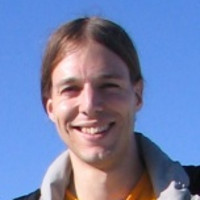 Cyrille Artho合作论文数Artho Software;Division of Theoretical Computer Science, Department of Computer Science, School of Electrical Engineering and Computer Science, KTH Royal Institute of Technology5
 Sasikumar Punnekkat合作论文数Division of Computer Science and Software Engineering, School of Innovation, Design & Engineering, Mälardalen University5
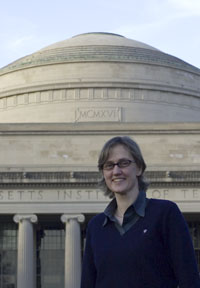 Kristina Lundqvist合作论文数Department of Aeronautics and Astronautics at MIT5
 Philipp Haller合作论文数Division of Theoretical Computer Science, Department of Computer Science, School of Electrical Engineering and Computer Science, KTH Royal Institute of Technology4
 Wasif Afzal合作论文数Computer Science at Malardalen Univesity,4
 Erin Harper合作论文数3
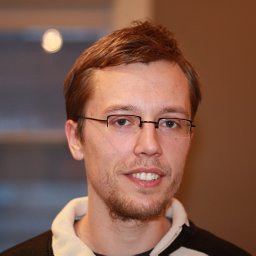 Bram Adams合作论文数MCIS, École Polytechnique de Montréal3
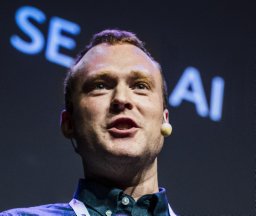 Markus Borg合作论文数RISE SICS AB3
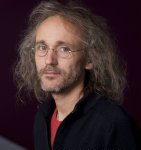 Benoit Baudry合作论文数IRISA, Rennes, France3
 Dorothy Graham合作论文数3
 Andy Zaidman合作论文数Department of Software Technology, Faculty of Electrical Engineering Mathetmatics and Computer Science, Delft University of Technology3
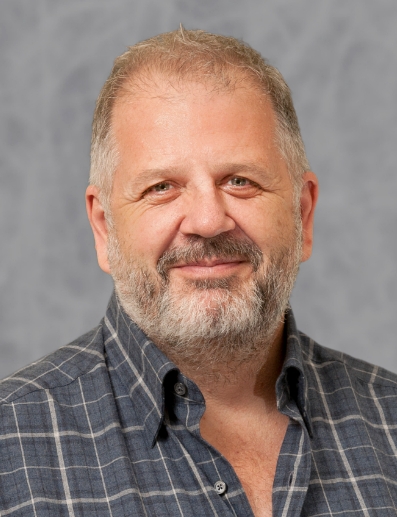 Tim Menzies合作论文数Department of Computer Science, College of Engineering, North Carolina State University3
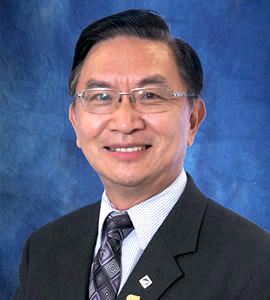 Michael R. Lyu (呂榮聰)合作论文数Department of Computer Science & Engineering, The Chinese University of Hong Kong3
 Anita D. Carleton合作论文数Software Solutions Division, Software Engineering Institute, Carnegie Mellon University3
 Adnan Causevic合作论文数School of Innovation, Design and Engineering, Mälardalen University3
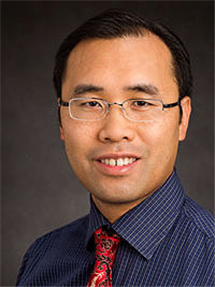 Tao Xie (谢涛)合作论文数Institute of Software, School of Computer Science, Peking University;Department of Software Science and Engineering, School of Computer Science, Peking University;Fudan University3
 Steve Counsell合作论文数College of Engineering, Design and Physical Sciences, Brunel University3
 Kristian Sandahl合作论文数Software Engineering at Linkoping University, Sweden3
 Michael Felderer合作论文数Institute of Computer Science, University of Innsbruck3
 Leif R. Jonsson合作论文数Department of Computer and Information Science, Ericsson AB3
 Tanja E. J. Vos合作论文数Universidad Politécnica de Valencia3
 David Broman合作论文数Division of Software and Computer Systems, KTH Royal Institute of Technology;Department of Computer Science, KTH Royal Institute of Technology3Tatu Kairi合作论文数2
 Kadir Herkiloglu合作论文数2
 Vahid Garousi合作论文数School of Electronics, Electrical Engineering and Computer Science, Queen’s University Belfast;Bahar Software Engineering Consulting Corporation2
 Yuqing Wang合作论文数Henan Polytechnic University, Henan Polytechnic University2
 Per Runeson合作论文数Department of Computer Science, Faculty of Engineering, Lund University2
 Marco Kuhrmann合作论文数Fakultät für Informatik, Technische Universität München2Geoff Thompson合作论文数2
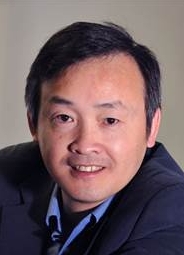 Xiaohui Liu合作论文数Department of Computer Science, College of Engineering, Design and Physical Sciences, Brunel University London2
 Martin Blom合作论文数Computer Science;Karlstad University;Karlstad University2
 Machiel Van der Bijl合作论文数2
 Markus Bohlin合作论文数Division of Product Realisation, School of Innovation, Design and Engineering, Mälardalen University2
 Eduard Paul Enoiu合作论文数2
 Pekka Aho合作论文数VTT Technical Research Centre of Finland2Kivanc Doganay合作论文数2Anders Pettersson合作论文数Cooperate Institute for Research in Environmental Sciences;University of Colorado;Boulder Colorado USA;Cooperate Institute for Research in Environmental Sciences, University of Colorado2
 Mika Mantyla合作论文数School of Science, Aalto University2
 Moris Behnam合作论文数Mälardalen University2Maaret Pyhajarvi合作论文数2




