While Psychology and Anthropology share certain overlapping interests, there is no agreed schema or paradigm for this area. Rejecting both psychoanalysis and the biopsychosocial model as insufficient, this collection brings together studies on Hasidic concepts of illness, the religious origins of schizophrenia, Christian stigmata, the “third sex” in Albania, jinn possession among European immigrants, and reincarnation among the Druze. The volume argues for plural models integrating biological, psychodynamic, and sociocultural perspectives. It highlights the enduring tension between Psychiatry’s naturalistic explanations and Anthropology’s personalistic approach, suggesting that both offer partial yet essential insights into human experience.
This paper examines postsecularism, magic and disenchantment in the West with an emphasis on Wicca. Following a discussion of postsecularism, it provides a critical overview of the Weberian notion of disenchantment which describes the decline in magic in modernity. Magic, far from disappearing in the postsecular, has been transformed through a process of psychologization. While there is substantial evidence for the persistence of magic in modernity, the question is how it persists. The notion of participatory consciousness is deployed to account for its persistence. Participatory consciousness allows us to understand the ways that everyday life blends secular, spiritual, and religious aspects—a central theme of the postsecular condition. This paper deploys secondary ethnographic data pertaining to phenomenological studies of Wiccan rituals. Wiccans demonstrate an interest in spirituality that aligns with nature. There is a complex relationship between secular and religious ideas with a blending of spiritual practices with modern technology and individualized spiritual paths. Through the performance of rituals, practitioners transition from an ‘ordinary’ to a ‘magical’ worldview—a form of participatory consciousness involving analogical thinking, imagination, meaning and affect associated with an holistic and enchanted worldview where there are meaningful connections between people, events, and objects.
This paper focuses upon African witchcraft and the impact of Christianity on this. After discussing the notion of mystical mentality, it examines the role of Pentecostalism with its emphasis on evil spirits and deliverance on the perpetuation of witchcraft convictions in Africa using Ghana as an illustrative example. There are clear parallels between the spiritual cosmology in African traditional religion and the Pentecostal demonic world. It moves on to examine the inequality, capitalism and the Prosperity Gospel in the process of maintaining witchcraft beliefs. Overall, evidence supports the assertion that Pentecostalism in Africa maintains or even intensifies the phenomenon of witchcraft.
Abstract Muslims see the Prophet Muhammad as an exemplar. Thus, Muslims attempt to emulate his deeds in their own lives through observation of his traditions and the Qurʾanic instructions. Treatment from the Islamic perspective is closely linked to the Islamic system of ethics and law (Shariʿah). Moreover, Islam views mental health in the context of the self as it advocates a close relationship between spirituality, morality, and mental health. While religious Muslims self-report better mental health than nonreligious Muslims, the conceptualization of mental disorders from the Islamic perspective may raise ethical challenges for clinicians who encounter Muslim patients in clinical practice.
This review paper focuses upon bereavement related perceptions (also called bereavement hallucinations). It begins with a discussion of the literature on the epidemiology, phenomenology, cultural variation and the transformative nature of such perceptions. There follows a critical discussion of the role of bereavement hallucinations in the origins of early Christianity and more specifically visions of the resurrected Christ. Bereavement related perceptions fail to explain the appearances of Jesus post-resurrection. The paper discusses why stories of Jesus' appearance have been successfully transmitted across generations using ideas from the Cognitive Science of Religion. While social scientists cannot arbitrate upon the nature of the visions of Jesus, they can account for why stories of Jesus resurrection have been successfully transmitted across generations.
This article examines the experience of online worship among 13 participants 'attending' virtual services in Cambridge. We focus upon an online formal Eucharistic service and a more informal Sunday evening non-Eucharistic service. After providing an overview of the literature on online religion, more specifically the possibility of a virtual religious community and the performance of online Eucharist, we present data from semi-structured interviews which were analysed through thematic analysis. The interviews reveal that virtual services, while better than nothing, have significant limitations in terms of participation, belonging, and the kind of religious experience engendered. While only two participants expressed the view that the virtual service was better than the live service, the majority found that the virtual service lacked a sense of connectedness. However, everyone agreed that it was different from a television broadcast in several important ways. The overall view was that celebrating the Eucharist was not possible online, because congregants could not actually partake of the bread and wine blessed by the priest which, for them, was an essential aspect of the ritual. For most people there was neither spiritual communion, nor a belief in consecration at a distance, leaving them feeling they were not really participating in the Eucharist. The participants in the study who engaged with both the Eucharist in the morning and the non-Eucharistic service in the evening generally seem to have preferred the latter. The data from this study are congruent with studies of diverse faiths which reveal the perceived importance of physical presence, contact and connection as being important for ritual effectiveness.
The experience of trauma presents significant challenges to the maintenance of religious faith. Here, we document the role of theodicy in "protecting" religious belief. We argue that the maintenance of religious faith is dependent on the availability of a theodicy framework which can assimilate evil. After defining the concept of theodicy, we critically overview those few studies looking at the relationships among trauma, theodicy, and religious belief. We then analyse the narratives of concentration camp inmates documenting their views pertaining to God and their suffering.
Cryonics is a technique for freezing dead bodies at very low temperatures in the hope they will be revived at some time in the future when medical technology becomes available. At present, there are no known revival methods; however, the role of innovation in medical practice leads certain individuals to hypothesize that death will be reversible in the future. While cryonics might resonate with certain questionable contemporary Western cultural themes of death denial and neoliberalism its uptake remains minuscule. Several reasons may be pertinent. First cryonics does not fit with existing western cultural views of death and medicine. Second, poor marketing, prohibitive cost, and the lack of involvement with the funerary industry may be significant factors impacting poor intake. Third, the cryonics discourse around ideas of ‘death’ constructs a barrier that prevents ‘outsiders’ from relating to the task of cryonicists. Fourth, the general public may have a poor understanding of this technology. Finally, there may be religious objections and cultural reductions due to the lack of ritual and thus no possibility of memorializing the dead, which impacts the human appeal of cryonics.
The experience of severe trauma shatters everyday assumptions about the world and calls for the provision of meaning. Religious and spiritual (R/S) frameworks may facilitate such meaning-making (Park & Ai, 2006), reinterpretation of negative events through a sacred lens and provide resources for coping in the wake of adversity. Initially, religious/spiritual coping was divided into two categories: positive entailing support and meaning from God and negative reflecting questioning, doubt and conflict. The former was generally associated with enhanced mental health indices, while the latter may be detrimental to mental health and may result in diminishing faith (Pargament, 1997). However, in recent years, researchers have used the term “religious/spiritual struggles” in place of negative religious/spiritual coping to make it clearer that the latter form of coping does not necessarily have negative implications (see Pargament & Exline, 2022 for review). How are R/S feelings involved in responding to trauma? Many or all readers will be familiar with Allport’s (1950) classic study of World War II combat veterans, and few would argue with his suggestions that some survivors suffered a loss of faith, while others reported the development of a more mature faith. The papers in this Special Issue of Mental Health, Religion & Culture focus on religious/coping in the context of adverse, major life stressors, and the effects of religious/spiritual coping on measures of well-being and distress, including PTSD. PTSD (Post-traumatic stress disorder) has only relatively recently been identified as a result of trauma. The condition was formally recognised by the American Psychiatric Association (APA) in 1980 when PTSD was added to the anxiety disorders in the APA’s Diagnostic and Statistical Manual, DSM-III (American Psychiatric Association, 1980). Prior to this, a wide range of synonyms was used to identify the effects of trauma: shock, combat fatigue, complete exhaustion, shattered, traumatised. An online thesaurus offers 18 synonyms for PTSD, post-traumatic stress disorder (https://www.thesaurus.com/browse/posttraumatic%20stress%20disorder). PTSD is notoriously persistent and disabling, is now recognised as a significant causal factor in suicide and substance abuse, and probably other disorders. It is usually characterised by intrusive thoughts and often sleep disturbance, and mood and behaviour disturbance. Religious devotees and professionals have struggled to identify and employ various religious/spiritual (R/S) coping strategies to deal with trauma (Pargament, 1997). Some of these feature in the articles in this special issue, as do some R/S outcomes. There are 12 articles which we organise roughly into three groups (with some overlaps): 1. R/S coping methods, 2. The effects of R/S coping on nonR/S factors, and 3. The effects of coping on R/S outcomes.
This review provides responses to four questions on epilepsy, religion, and spirituality. Firstly, have early religious beliefs and writings stigmatized and discriminated against epilepsy and if so, what has been done to correct this? We provide textual evidence suggesting an affirmative response. Secondly, which religious luminaries, gods, saints, and religious symbols have connections with epilepsy? We argue that the evidence to suggest that St Paul, Joan of Arc, the Prophet Mohammed, and others had epilepsy is weak and emphasizes the limitations of imposing contemporary neurological frameworks upon them. Furthermore, we discuss how different faith traditions identify Divine figures, as associated with epilepsy, and the use of religious symbols in healing. Thirdly, why is religiosity associated with having epilepsy? We review empirical studies focusing upon the epileptic personality, religiosity, mysticism, and religious conversion and find that, while some studies suggest that religious experience may be associated with epilepsy, this cannot be taken as proven. Fourthly, in what ways has religion been a force for good for those with epilepsy? We discuss the role of Christian social reform in caring for individuals with epilepsy and that of religion in coping with the condition. We conclude by arguing that the relationship between religion and epilepsy has been overstated in the academic literature.
Ethnic inequalities in the experiences and outcomes of severe mental illness are well established. These include a higher incidence of severe mental illnesses (psychoses), adverse pathways into and through care, including crisis care, police and criminal justice systems involvement, and care under the powers of the Mental Health Act. The situation persists despite awareness and is driven by a mixture of the social determinants of poor health, societal disadvantage and structural racism, as well as conflictual interactions with care systems, which themselves are configured in ways that sustain or deepen these inequalities. Although training and education are often proposed, this is not shown to have sustained effects. Clinical processes (interviewing/assessment/formulation/intervention) need to address systemic influences and improve the cultural precision with which care is delivered, organised and commissioned. We discuss clinical ethnography and present evidence of its value in addressing systemic as well as individual care needs for diverse communities.
Cryonics involves the low-temperature freezing of human corpses in the hope that they will one day be reanimated. Its advocates see it as a medical treatment but as in any medical procedure, this presupposes some scientific evidence. This paper examines the scientific basis of this technology and argues that cryonics is based upon assertions which have never been (and potentially can never be empirically demonstrated) scientifically. After providing a general overview of cryogenic preservation, I discuss how advocates of this technology have conceptualized death and more specifically their notion of information-theoretic death. I conclude that cryonics is based upon a naive faith rather than upon science. It does what David Chidester (2005) calls ‘religious work,’ even if it is not explicitly religious. It offers transcendence over death.
This paper examines conversion from "Hinduism" to Christianity in India and in the UK. To date work in this area has focused upon Hindu-Christian conversion among Hindus in India largely focusing upon Dalits. It explores the experience of Hindu Christian conversion through five case studies and focuses upon antecedents and consequences of conversion. It stresses the central role of profound religious experiences in those converting and the resultant disharmony among families and the wider Hindu community. While structural factors may be important for some of these individuals, all have undergone a form of metaphysical and intellectual conversion. The conversion narratives cited suggest that conversion experiences are beneficial psychologically in terms of providing a new sense of meaning, facilitating coping and increasing contentment.
This article examines the relationship between religion, transcendence and social bonding. I speculate that the capacity to undergo transcendent experiences facilitated social bonding. Following a discussion of Gorelik’s typology of transcendence, it examines the relationship between ritual, transcendence and bonding with an emphasis on singing, dancing and synchrony. It then moves on to explore theory of mind and transcendence. Finally, transcendent emotions like compassion, admiration, gratitude, love and awe will be discussed. I conclude by arguing that transcendence originates from group-level selection.
The extant and rapidly expanding literature on religion and mental health provides support for the beneficial effects of religious involvement on mental health and well-being. Greater church attend...
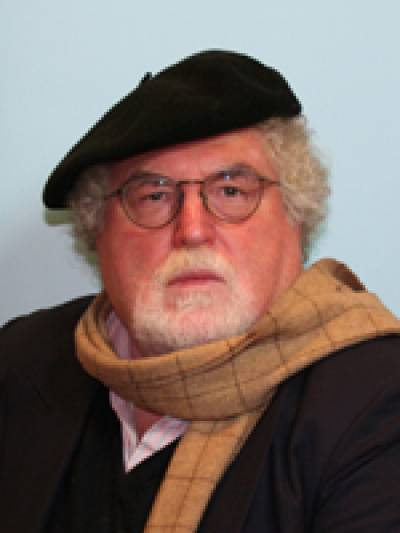 Roland Littlewood合作论文数Department of Anthropology, University College London;Department of Mental Health Sciences, University College London12
 Kamaldeep S Bhui合作论文数7
 Kate Miriam Loewenthal合作论文数Psychology Department;Royal Holloway;University of London;Psychology Department|Royal Holloway, University of London7
 Christopher Charles Holland Cook合作论文数6
 Christopher Alan Lewis合作论文数School of Psychology;University of Ulster;Magee College;Magee College, University of Ulster5Sarah Eagger合作论文数4A. Powell合作论文数3
 Gloria Dura-Vila合作论文数3
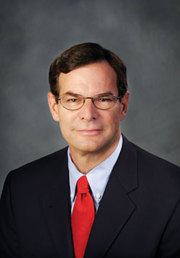 Kenneth I. Pargament合作论文数Department of Psychology, Bowling Green State University;The Center for Family & Demographic Research, College of Arts and Sciences, Bowling Green State University3
 Gerard Leavey合作论文数Bamford Ctr Mental Hlth, Univ Ulster3
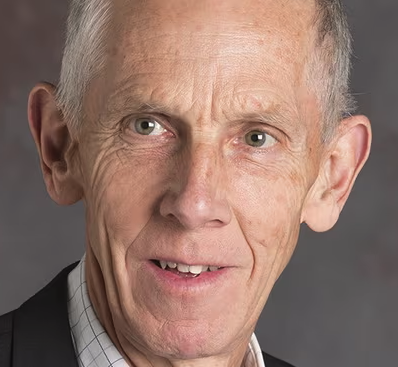 Michael King合作论文数Faculty of Brain Sciences, University College London2
 Sally McManus合作论文数National Centre for Social Research2
 Fraser Watts合作论文数MRC Applied Psychology Unit Cambridge, UK2Limore Racin合作论文数2Michael J. Breslin合作论文数1Ian Bone合作论文数1Meryam Schouler-Ocak合作论文数1Kalpana Dein合作论文数1Geraint Day合作论文数1Marianne Kastrup合作论文数1Syed Qamar Abbas合作论文数1William O’Connor合作论文数1Andrew Powell合作论文数1Khaldoon Ahmed合作论文数1
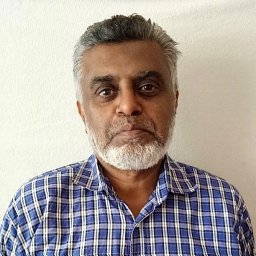 M. S. Mohamed Ali合作论文数Sch Civil Environm & Min Engn, Univ Adelaide1
 Sarah Charles合作论文数Brain Belief & Behav Lab, Coventry Univ1
 Susan M Reverby合作论文数1
 Paul Bebbington合作论文数Division of Psychiatry, University College London1
 Harold G. Koenig合作论文数Department of Medicine, Duke University School of Medicine;Center for Spirituality, Theology and Health, Duke University;Duke University Medical Center1Myrna Lashley合作论文数Department of Psychiatry, Faculty of Medicine and Health Sciences, McGill University1
 Andre Strydom合作论文数Department of Forensic and Neurodevelopmental Science, School of Academic Psychiatry, Institute of Psychiatry, Psychology & Neuroscience, King’s College London1
 Afia Ali合作论文数Division of Psychiatry, Faculty of Brain Sciences, University College London1
 Ruchit Sood合作论文数St James University1Ronald Wintrob合作论文数1Claudia Cooper合作论文数Division of Psychiatry, Faculty of Brain Sciences, University College London1Bache Richard A合作论文数1
 Tarik Qassem合作论文数1
 Rachel Tribe合作论文数School of Life Course Sciences, Faculty of Life Sciences & Medicine, King’s College London1
 Dinesh Bhugra合作论文数Health Service & Population Research Department, School of Mental Health & Psychological Sciences, Institute of Psychiatry, Psychology and Neuroscience, King’s College London1
 Leslie Swartz合作论文数Department of Psychology, Stellenbosch University1
 Angela Hassiotis合作论文数Division of Psychiatry, Faculty of Brain Sciences, University College London;Mental Health Sciences Unit, University College London1
 Rachel Jenkins合作论文数Institute of Psychiatry, Kings College London1
 David Napier合作论文数Anthropology, Faculty of Social & Historical Sciences, University College London1Howard Meltzer合作论文数University of Leicester1
 van Mulukom Valerie合作论文数School of Psychology, The University of Auckland1
 Dheeraj Rai合作论文数School of Social and Community Medicine, University of Bristol1
 Catherine Pope合作论文数Nuffield Department of Primary Care Health Sciences, Medical Sciences Division, University of Oxford1Malcolm Alexander合作论文数1Goffredo Bartocci合作论文数1




